

Code P0171 — “Fuel System Too Lean (Bank 1)” — is one of the most common diagnostic trouble codes on the Honda Civic. The root cause and repair procedure depend almost entirely on which engine is installed. A 1.5T Civic and a 2.0L Civic with the same P0171 code have distinctly different failure patterns and require different repair approaches.
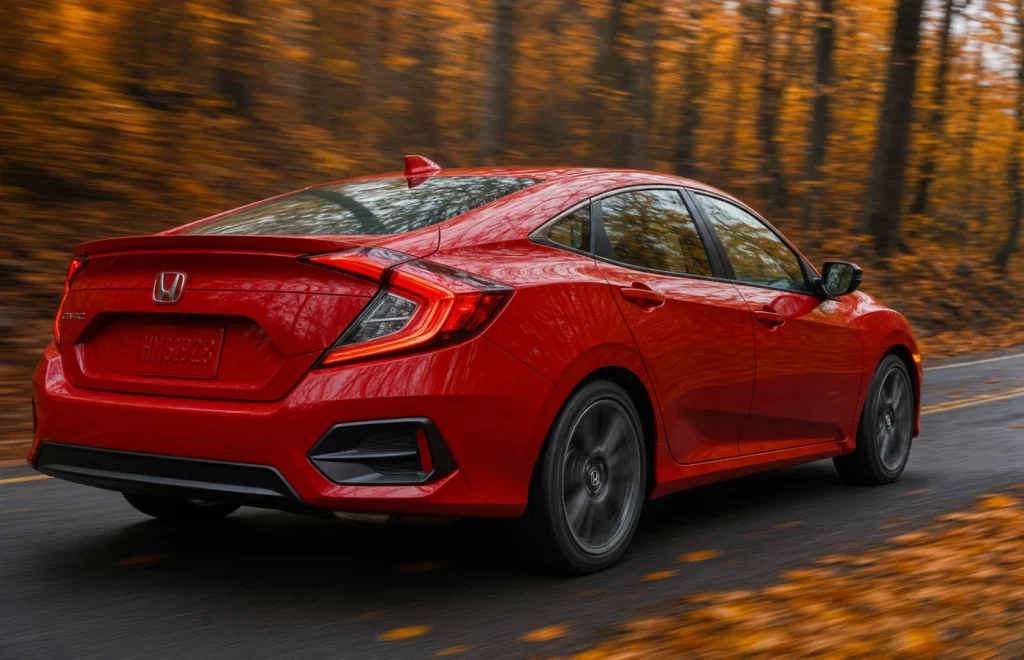
P0171 Diagnostic Overview
P0171 indicates that the ECM has commanded maximum fuel enrichment and the air/fuel mixture remains leaner than the target ratio. The short-term fuel trim (STFT) has reached its correction limit. The ECM detects this through the upstream air/fuel ratio sensor (sensor 1) and stores P0171 after one drive cycle with the fault confirmed. A companion code, P2187 (“Fuel System Too Lean at Idle”), often appears alongside P0171 on 10th and 11th gen Civics and narrows the fault to idle conditions specifically.
A lean condition indicates either excess unmetered air entering the engine or insufficient fuel delivery. The appropriate repair depends on which condition is present.
Symptoms
- Check engine light illuminated
- Rough idle or idle hunting (RPM fluctuation AT a stop)
- Hesitation or stumble under light throttle
- Reduced fuel economy
- On 1.5T models: oil level rising on dipstick, fuel odor in engine oil
- On 1.5T models: companion codes P0300–P0304 (misfires) in cold weather
Engine-Specific Causes
1.5T L15B7 / L15CA (10th gen 2016–2021, 11th gen 2022–present)
This engine has two documented P0171 failure paths that are not addressed in generic DTC guides.
The first is oil dilution. The L15B7’s direct injection system injects fuel directly into the cylinder. In short-trip and cold-weather driving, unburned fuel can pass the piston rings and contaminate the engine oil. As Oil dilution progresses, the PCV system draws fuel-saturated vapor back into the intake, creating an uncontrolled fuel source that can confuse the ECM and trigger lean codes when the vapor supply is inconsistent. Honda addressed this with TSB 18-137 (February 2019, Version 6) covering 2016–2018 Civic 1.5T: the fix includes a PGM-FI software update, TCU update, A/C control unit update, and an engine oil change. Honda Canada issued a formal warranty extension covering engine repairs caused by oil dilution for six years from initial registration with no mileage limit. U.S. owners should check with their dealer — the software update is free regardless of warranty status.
The second is a boost leak from the charge pipe or bypass valve. The 1.5T uses plastic charge pipes between the Turbocharger and the throttle body. These pipes can develop cracks or the couplers may loosen over time, allowing pressurized air to escape after the MAF sensor has already measured it. The ECM delivers fuel for air that never reaches the cylinder, resulting in a lean condition. Honda issued TSB 17-049 for related turbo system issues. Pressure-test the intake tract before replacing any sensors.
2.0L K20C2 (10th gen base, 2016–2021)
The naturally aspirated K20C2 shares its P0171 failure pattern with the older R18 engine. The two most common causes are a contaminated MAF sensor and a stuck-open PCV valve. A dirty MAF sensor underreports incoming air mass, causing the ECM to deliver less fuel than required. Cleaning the MAF with dedicated MAF sensor cleaner resolves the code in approximately 40% of cases. A stuck PCV valve draws excess crankcase vapor into the intake manifold, introducing unmetered air. The PCV valve on the K20C2 is a $15–$25 part and takes under 15 minutes to replace.
2.0L K20C1 Type R FK8 / FL5 (2017–present)
P0171 on a stock Type R is uncommon. When it appears, the most likely cause is an aftermarket cold-air intake or intake pipe that changed the air column diameter without corresponding MAF recalibration in Hondata FlashPro or KTuner. The OEM MAF sensor is calibrated for a specific tube diameter; a larger-diameter intake pipe causes the MAF to underread air mass, resulting in a lean condition. If an aftermarket intake is installed, recalibrate the MAF table before replacing any hardware.
Diagnostic Steps — Before Replacing Components
☐ Did P0171 appear shortly after refueling? Low-quality or water-contaminated fuel can trigger a temporary lean condition. Clear the code, fill with Top Tier fuel, and drive 50 miles. If the code does not return, fuel quality was the cause.
☐ On a 1.5T: check the oil level and odor. If the oil level is above the full mark or has a fuel odor, oil dilution is the root cause. Do not replace the MAF sensor or PCV valve — schedule the TSB 18-137 software update at the dealer first.
☐ Check for vacuum leaks at the intake manifold, brake Booster hose, and EVAP purge line. A cracked hose introduces unmetered air and will cause P0171 regardless of sensor condition.
☐ On a 1.5T: inspect the charge pipe couplers and intercooler connections for cracks or looseness before inspecting any sensors.
Diagnostic Procedure — Step-by-Step
☐ Step 1. Connect an OBD2 scanner and check live fuel trim data. If short-term fuel trim (STFT) is above +10% at idle and long-term fuel trim (LTFT) is above +10% at cruise, the lean condition is consistent — not a sensor glitch.
☐ Step 2. On a 1.5T: check oil level and odor. If diluted, proceed to dealer for TSB 18-137 update. Stop here.
☐ Step 3. Inspect all vacuum hoses, the brake booster line, and the EVAP purge solenoid hose for cracks or disconnection.
☐ Step 4. On a 1.5T: pressure-test the charge pipe system for boost leaks. On a 2.0L: replace the PCV valve ($15–$25 OEM) as the first repair attempt.
☐ Step 5. Clean the MAF sensor with CRC MAF Sensor Cleaner. Clear the code and drive two full warm-up cycles. If P0171 returns, replace the MAF sensor.
☐ Step 6. If fuel trims remain high after all of the above, test fuel pressure at the low-pressure port. Low fuel pressure indicates a failing Fuel Pump or clogged fuel filter.
OEM Part Numbers
| Part | Fits | OEM Part Number | OEM Price |
|---|---|---|---|
| MAF Sensor Assembly | 2016–2021 Civic 1.5T Si & 2.0L K20C2 | 37980-5BA-A01 | ~$138–$228 |
| MAF Sensor Assembly | 2022–present Civic 1.5T | 37980-5BA-A01 | ~$138–$228 |
| PCV Valve | 2016–2021 Civic 2.0L K20C2 | 17130-PRB-A01 | ~$15–$25 |
| Upstream A/F Sensor (Sensor 1) | 2016–2021 Civic 1.5T | 36531-5AA-A01 | ~$95–$130 |
| Charge Pipe / Intercooler Pipe | 2016–2021 Civic 1.5T | OEM or aftermarket (PRL, Mishimoto) | $80–$220 |
Verify fitment by VIN before ordering. MAF sensor part number 37980-5BA-A01 is confirmed for 2016–2021 Civic 1.5T Si and 2.0L K20C2 (does not fit FK8 Type R). Source: PRL Motorsports OEM parts listing and Honda Parts Now.
Repair Cost Estimates
| Repair | DIY Cost | Independent Shop | Honda Dealer |
|---|---|---|---|
| MAF sensor cleaning | $8 (cleaner spray) | $50–$80 | $85–$120 |
| MAF sensor replacement | $138–$228 (part only) | $177–$286 | $200–$320 |
| PCV valve replacement (2.0L) | $15–$25 (part only) | $60–$100 | $80–$130 |
| Charge pipe replacement (1.5T) | $80–$220 (part only) | $180–$470 | $250–$550 |
| Oil dilution TSB 18-137 service (1.5T) | N/A — dealer only | N/A — dealer only | $0 (free) |
| OBD2 diagnosis only | $0 (with own scanner) | $85–$120 | $85–$150 |
Cost data sourced from RepairPal (2024–2025 U.S. national averages) and AmpAuto DTC database. The TSB 18-137 software update is performed free of charge at any Honda dealer for all 2016–2018 Civic 1.5T vehicles regardless of mileage or warranty status. If a dealer quotes a charge for this service, request the update referencing TSB 18-137.
Important: On a 1.5T Civic, do not replace the MAF sensor or upstream O2 sensor before ruling out oil dilution and boost leaks. Both conditions can cause new sensors to fail prematurely if left unaddressed. Diagnose in order: oil dilution first, boost leaks second, sensors third.