

Every Civic owner eventually asks the same question: what tint should I put on my car? The 8th gen is basically a fishbowl with all that glass. The 10th gen hatchback rear window is a nightmare to work with. And if you live in a state with strict tint laws, the wrong percentage can turn a simple upgrade into a fix-it ticket and a wasted afternoon.
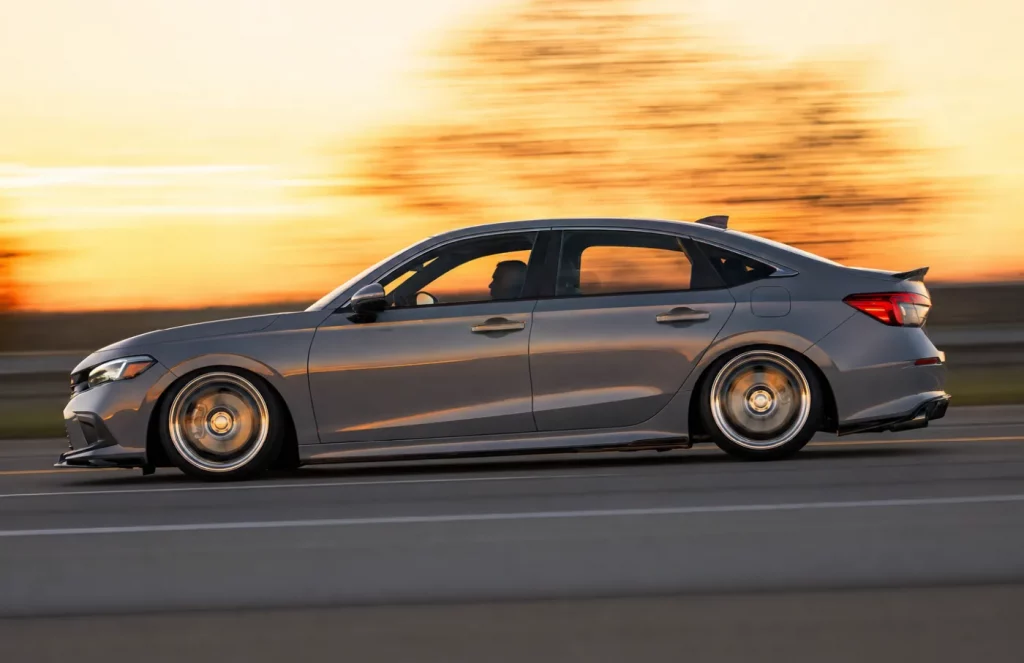
This guide covers everything you actually need to know about window tint on a Honda Civic — what percentages work, what’s legal in your state, which film type makes sense for your climate, and how to avoid the common mistakes that leave you with purple bubbles or a ticket from a bored state trooper.
Quick Answer — What Tint Should I Get for My Civic
Before we get into the details, here is the short version. Tint percentages are measured in VLT — Visible Light Transmission. The lower the number, the darker the film. A 70% film lets 70 percent of light through. A 5% film lets 5 percent through. That is the limo tint look that looks great on Instagram and terrible when you are trying to back out of a dark parking lot AT night.
70% VLT: Almost clear. You will barely notice it is there. Good for windshields and states with strict front-window laws.
50% VLT: Light tint. A subtle smoked look that reduces glare without drawing attention.
35% VLT: The sweet spot for most Civic owners. Dark enough to look clean, light enough to see out of at night, and legal in many states for rear windows.
20% VLT: Dark. Good privacy, decent heat rejection, but you will notice the reduced visibility at night.
5% VLT: Limo tint. Maximum privacy, maximum heat rejection, minimum visibility. Parking at night becomes a guessing game.
Important: The VLT number on the box is not the final VLT on your car. Factory glass already has some tint — typically around 70-80% VLT. When you apply a 35% film over 80% factory glass, the actual measured VLT is approximately 28%. This is why a “legal” film can still fail a tint meter test. The law measures the window as a whole — glass plus film.
Before you order anything, check your state law and understand that the percentage you buy is not the percentage you end up with.
State-by-State Tint Laws — What Is Actually Legal
Window tint laws in the US are a patchwork of state regulations with no federal standard. What is legal in Texas will get you pulled over in New York. The table below covers the key limits for passenger cars, but you should always verify with your state DMV — laws change, and some states have different rules for sedans, coupes, and hatchbacks.
| State | Front Side VLT | Rear Side VLT | Rear Window VLT | Windshield Strip | Notes |
|---|---|---|---|---|---|
| California | 70% | Any | Any | AS-1 line | Front side windows must allow 70% or more light in. Rear any darkness is legal. CHP does check with meters. |
| Texas | 25% | Any | Any | AS-1 line | 25% front side is the limit. Rear any darkness legal. Heat is the main reason people go darker. |
| Florida | 28% | 15% | 15% | AS-1 line | 15% rear minimum. Front 28%. No red or amber tint allowed. Medical exemption available. |
| New York | 70% | 70% | Any | AS-1 line | NY is strict. 70% front and rear sides. Rear window any darkness. State inspection includes tint check. |
| Nevada | 35% | Any | Any | AS-1 line | 35% front side limit. Rear any darkness legal. No reflective or metallic tint above 35%. |
| Illinois | 35% | 35% | 35% | AS-1 line | 35% all around. Rear window exempt if vehicle has dual side mirrors. Inspection required. |
| Pennsylvania | 70% | 70% | Any | AS-1 line | 70% front and rear sides. Rear window any darkness. State inspection includes tint check. |
| Arizona | 33% | Any | Any | AS-1 line | 33% front side limit. Rear any darkness. Medical exemption for darker tint available. |
| North Carolina | 35% | 35% | 35% | AS-1 line | 35% all around. Inspection includes tint meter check. No red or amber tint allowed. |
| Ohio | 50% | Any | Any | AS-1 line | 50% front side limit. Rear any darkness. No metallic or mirrored tint allowed. |
AS-1 Line: This is the dark band at the top of the windshield where a tint strip is legal. On Civics, the AS-1 line is marked on the glass itself — usually about 5-6 inches from the top of the windshield. You can tint above this line. Below it — even on the windshield — is a separate enforcement category.
Medical Exemptions: Many states allow darker tint with a medical exemption for conditions like photosensitivity or lupus. The process varies by state — some require a doctor’s note and a state-issued sticker. If you have a legitimate need, check your DMV website before paying for tint that may not pass inspection without the exemption paperwork.
Enforcement Reality: In states with strict laws (New York, California, Pennsylvania), police use handheld tint meters during traffic stops. In states with heat-driven laws (Texas, Florida, Arizona), enforcement is generally less aggressive unless the tint is clearly below the legal limit or the driver is already stopped for something else.
Civic Tint by Generation — What Fits and What Does Not
Honda Civic glass shapes vary significantly by generation and body style. The 8th gen coupe has a nearly horizontal rear window that requires a skilled installer. The 10th gen hatchback rear hatch is a curved nightmare. And the 11th gen sedan has massive side windows that make heat rejection a priority.
8th Generation Civic (2006–2011): Sedan, coupe, Si, Hybrid. The coupe rear window is the biggest challenge here — the glass slopes back at such a shallow angle that shrinking the film takes real skill. The sedan is straightforward. The hatchback (FN2) has the split rear window design where the lower section is plastic, not glass — you cannot tint that section from the inside because the adhesive will not bond properly to the plastic. Some owners vinyl-wrap that lower section instead.
9th Generation Civic (2012–2015): Similar to the 8th gen, but Honda refined the glass shapes slightly. The sedan and coupe rear windows are less extreme than the 8th gen coupe. The Si trim uses the same glass as the base models. The Hybrid has the same glass but the battery pack location can affect access to the rear window during installation.
10th Generation Civic (2016–2021): Sedan, coupe, hatchback, Si, Type R. The hatchback rear glass is the most difficult window to tint on any Civic. The steep curve and the defroster lines require careful heat shrinking and precise squeegee work. The sedan and coupe are more straightforward. The Type R uses the same glass as the hatchback. The coupe was discontinued after 2020.
11th Generation Civic (2022–present): Sedan, hatchback, Si, Type R, Hybrid. The 11th gen has larger side windows than the 10th gen, which means more heat rejection is needed in hot climates. The rear hatch glass is still challenging but Honda refined the curve slightly. The Hybrid has no unique glass shape differences — it shares the same windows as the standard hatchback.
Sedan vs Coupe vs Hatchback — How Much Film You Actually Need
If you are ordering pre-cut film or buying material by the roll, you need to know how much film each body style requires. Most tint shops charge by the number of windows, not by the amount of film used — but for DIY work, this matters.
| Body Style | Front Doors | Rear Doors | Quarter Windows | Rear Windshield | Sunroof | Total Linear Feet (approx) |
|---|---|---|---|---|---|---|
| Sedan | 2 | 2 | 2 | 1 | Optional | ~10-12 ft |
| Coupe | 2 | 0 | 2 | 1 | Optional | ~8-10 ft |
| Hatchback | 2 | 2 | 2 | 1 (hatch) | Optional | ~12-14 ft |
Coupe rear glass note: The coupe has the largest single piece of glass in the Civic lineup. That rear window is long and shallow, and it requires more skill to shrink than the sedan or hatchback rear windows. Plan for extra material if you are doing this yourself — you will probably make at least one mistake.
Hatchback rear hatch note: The hatchback uses more film than the sedan because the rear window is larger and more curved. You also need to account for the rear wiper and the defroster connections when trimming the film around the edges.
Film Types — Dyed vs Carbon vs Ceramic vs Metallic
Not all window tint is the same. The film you choose affects how long it lasts, how much heat it blocks, and whether it interferes with your car’s electronics.
Dyed Film: The cheapest option. The color is in the adhesive layer. It looks good for the first year or two, then it fades to purple and starts bubbling. Heat rejection is minimal. If you are tinting a beater Civic that you will sell in a year, this is fine. If you plan to keep the car, spend more.
Carbon Film: A significant step up. The color is throughout the film, not just the adhesive. It does not fade to purple. Heat rejection is better than dyed. It does not block GPS, radio, or cell signals because it contains no metal. This is the minimum standard for a daily-driven Civic.
Ceramic Film: The enthusiast standard. Ceramic particles block up to 99% of UV and a high percentage of infrared heat. It rejects heat without needing to be dark — you can run 70% ceramic on the windshield and still get meaningful heat rejection. It does not interfere with electronics. The downside is cost — ceramic is roughly twice the price of carbon.
Metallic Film: Good heat rejection but contains metal particles that can interfere with GPS, radio, toll transponders, and Honda Sensing systems on 10th and 11th gen Civics. Avoid metallic film on modern Civics unless you are willing to risk signal degradation.
| Film Type | DIY Cost | Shop Cost | Heat Rejection | Durability | Electronics Interference | Best Use |
|---|---|---|---|---|---|---|
| Dyed | $50–$100 | $150–$300 | ⭐⭐ | ⭐⭐ | None | Beater cars, temporary tint |
| Carbon | $80–$150 | $250–$450 | ⭐⭐⭐ | ⭐⭐⭐⭐ | None | Daily driver, good balance |
| Ceramic | $150–$300 | $400–$800+ | ⭐⭐⭐⭐⭐ | ⭐⭐⭐⭐⭐ | None | Hot climates, enthusiast cars |
| Metallic | $100–$200 | $300–$500 | ⭐⭐⭐⭐ | ⭐⭐⭐ | Possible | Avoid on modern Civics |
Which film should you choose? For a Civic in Texas, Florida, or Arizona — ceramic is worth the extra cost. The heat rejection difference is noticeable. For a Civic in the Northeast or Pacific Northwest, carbon is a solid choice that gives you good durability without the premium price.
Ceramic vs Carbon vs Dyed — The Real-World Comparison
If you have ever sat in a Civic with cheap dyed tint on a 95-degree day, you know the difference. The car is still hot, but the interior does not feel like an oven. Here is the breakdown of what each film type actually delivers on a 10th gen sedan.
Dyed tint in Texas summer: The car is hot when you get in. The steering wheel is uncomfortable to touch. The AC takes several minutes to cool the cabin. The tint starts fading after two years. By year three, it has a purple hue.
Carbon tint in Texas summer: The car is still warm, but the heat does not feel as intense. The seats are not burning hot. The tint holds its color for five to seven years. The cabin cools down faster because less heat is retained in the glass.
Ceramic tint in Texas summer: The car is noticeably cooler than the carbon car. The seats are warm, not hot. The AC does not have to work as hard. The tint lasts the life of the car with proper care. The only downside is the cost — typically $400-$800 for a full Civic vs $150-$300 for dyed.
Metallic tint: Blocks heat well, but can interfere with the Honda Sensing camera system on 10th and 11th gen Civics. The millimeter-wave radar and the windshield-mounted camera are sensitive to metallic films. Some owners have reported adaptive cruise control errors and lane-keeping assist failures after installing metallic film. Avoid it on modern Civics.
Best Tint Percentages for a Daily-Driven Civic
There is no single “best” percentage — it depends on your state law, your climate, and your personal preference. These are the most common setups used by Civic owners.
Legal Daily Driver: 70% front side windows, 35-50% rear side and rear window. This is the safe choice in states with strict front-window laws. It gives you heat rejection and UV protection without attracting attention. The car looks subtly tinted but not dark.
Balanced Setup: 35% front side windows, 20-35% rear side and rear window. This is the most common Civic tint setup. The front is dark enough to look clean, the rear is dark enough for privacy. Good visibility at night. Legal in states that allow 35% front.
Dark Street Setup: 20% rear, legal front percentage. Common in states where the front windows are limited to 25-35% but the rear can be much darker. The car looks aggressive from the back but stays legal up front.
Limo Look: 5% rear, legal front. This is a Texas and Florida specialty — dark rear windows for heat and privacy, lighter front windows to stay legal. The contrast is noticeable but functional.
Heat-Rejection Setup: 70% ceramic on the windshield, 50-70% ceramic on front side windows, darker ceramic on rear windows where legal. This is the most expensive option but the most effective in hot climates. The car stays cooler without looking overly dark.
Windshield Tint — What Is Legal and What Is Safe
Windshield tint is the most misunderstood part of window tinting. The entire windshield can be tinted with a nearly clear ceramic film — 70% or 80% VLT — that blocks UV and infrared heat without looking dark. This is legal in most states because the film is almost transparent. The visible appearance of the car does not change, but the cabin stays cooler.
The AS-1 line is the only place where darker tint is legal on the windshield. On Civics, this line is about 5-6 inches from the top of the glass. You can apply a dark strip — typically 5% or 20% — above this line to block glare from the sun. Below the AS-1 line, the tint must meet the state’s VLT requirement for windshields.
Do not run dark film on the full windshield. A 35% or 20% windshield is dangerous. Visibility at night is severely reduced, and you are gambling with your safety and a significant ticket. Some owners do it anyway, but it is one of the fastest ways to get pulled over in any state.
Honda Sensing and Tint — What You Need to Know
On 10th and 11th generation Civics with Honda Sensing, the windshield-mounted camera and radar sensors are located behind the rearview mirror. Tinting the windshield can interfere with these systems if the film covers the sensor area or if the film has metallic content.
Camera area: The camera housing behind the mirror needs a clear view of the road. If you tint the windshield, leave the area around the camera housing clear. Most professional installers cut around the housing automatically.
Radar location: The radar is also behind the windshield, typically in the same housing. If you use metallic film, the radar signal can degrade, leading to adaptive cruise control errors and lane-keeping assist failures. Ceramic and carbon films do not cause this issue.
Do not tint over the sensor area. Even clear film can cause issues if it is not designed for optical clarity. If the camera or radar reads a distorted image, the Honda Sensing system may disable itself or behave unpredictably. Leave the sensor area clear or use a high-quality optical-grade ceramic film.
DIY Tint — What You Need Before You Start
Tinting a Civic yourself is doable, but it is not easy. The 8th gen coupe rear window, the 10th gen hatchback rear hatch, and the quarter windows on any generation will test your patience. If you are going to try it, these are the tools you need.
Film: Buy more than you need. You will make mistakes. Order at least two extra feet of film for each window.
Spray bottle: A fine mist spray bottle with a solution of baby shampoo and distilled water. The shampoo acts as a lubricant so you can position the film before it sticks.
Squeegees: A standard squeegee for the flat areas, a narrow squeegee for the edges, and a felt-tipped squeegee to avoid scratching the film.
Heat gun: Essential for shrinking the film around curves. A standard hair dryer will not get hot enough.
Razor blades / Olfa knife: A sharp blade for trimming the film. Change the blade frequently — a dull blade will leave jagged edges.
Microfiber towels: Lint-free towels for cleaning the glass and wiping the edges.
Masking tape: To hold the film in place while you work on the wet side.
Glass scraper: A flat metal scraper to remove old tint residue and stubborn dirt.
Felt squeegee: A soft-edged squeegee that does not scratch the film during the final pass.
Prep Work — 90% of the Job
Tinting a window is mostly about cleaning. If the glass is not perfectly clean, the film will trap dirt and create bubbles. If the edges are not clean, the film will peel.
Wash the glass three times. First pass with a glass cleaner and a scraper to remove any bonded contamination. Second pass with soapy water and a microfiber. Third pass with isopropyl alcohol to remove any remaining residue. Do not use ammonia-based cleaners — they can damage the window tint and are not effective on the final prep step.
Clean the edges. Roll the window down slightly and clean the top edge of the glass. This is where most dirt gets trapped and where peeling often starts. Use a narrow squeegee or a cloth wrapped around a thin card to reach the edge.
Close all doors. Dust is your enemy. Work in a garage or enclosed space. Any breeze will kick up dust that lands on the wet film. If you cannot work in a garage, choose a calm day with no wind.
Heat Shrinking — The Hardest Part of Civic Tinting
Heat shrinking is the process of using a heat gun to shrink the film so it matches the curve of the glass. Side windows are mostly flat and do not require much shrinking. Rear windows — especially the 8th gen coupe and 10th gen hatchback — require significant shrinking.
Dry shrinking: Place the film on the outside of the glass with the liner facing outward. Use the heat gun to warm the film and push out the fingers. This is the standard method used by most shops.
Wet shrinking: Spray the glass with soapy water, lay the film on the glass, and use the heat gun to shrink the film while the water is still wet. This method is less common but works well on tight curves.
Watch for fingers: When the film shrinks, it will create fingers — small folds that need to be pushed out. If you leave a finger, the film will not lay flat and will create a crease. Take your time. Rushing the heat shrink is the most common DIY mistake.
Common DIY Screw-Ups and How to Avoid Them
These are the mistakes every first-time tinter makes. Knowing them ahead of time saves you from wasting film.
Bubbles: Caused by dirt, moisture, or bad squeegee technique. The fix is to use more soapy water during installation and make multiple passes with the squeegee. Some bubbles will disappear as the film cures — do not touch them for a few days.
Purple tint: Caused by cheap dyed film that degrades under UV exposure. The fix is to buy carbon or ceramic film. There is no way to fix purple dyed film — you have to remove it and start over.
Peeling edges: Caused by bad prep or contaminated glass. The film cannot bond to dirty glass. Clean the edges thoroughly before installation. Roll the window up slightly so the film is tucked into the weatherstripping — this prevents the edge from catching on the seal when the window is rolled down.
Hazy film: Trapped moisture that has not cured yet. The film will look hazy for a few days to a week. This is normal with carbon and ceramic films. If the haze persists beyond two weeks, the film may be defective or too much soap was used in the application solution.
Creases: Caused by improper shrinking or a heavy-handed squeegee. The film folds over on itself and leaves a permanent crease. The only fix is to replace the film.
Scratched glass: A dirty razor or excessive pressure during trimming. Always use a fresh blade and light pressure. If the glass is scratched, the scratch is permanent.
Window not rolling down: If you rolled the window down too soon, the film will stick to the weatherstripping and peel. Wait at least 3 days before rolling windows down. In cold weather, wait 5 days.
Old Tint Removal — How to Deal with 8th and 9th Gen Purple Film
If you bought a used Civic with purple bubbling tint, you need to remove it before installing fresh film. The rear defroster lines make this a delicate job — you can easily damage them with aggressive scraping.
Steam method: Use a steamer to heat the adhesive and peel the film off in one piece. This is the safest method for the defroster lines.
Ammonia/bag method: Spray the inside of the window with ammonia, cover with a black trash bag, and park the car in the sun. The heat and ammonia break down the adhesive. After a few hours, the film peels off easily. This works, but it smells terrible and you need to protect the interior trim from the ammonia.
Adhesive removal: After the film is off, use a razor blade to scrape the adhesive residue — carefully around the defroster lines. Use a plastic scraper for the lines themselves. For stubborn adhesive, use a commercial adhesive remover or isopropyl alcohol.
If you damage a defroster line, you can buy a repair kit with conductive paint. The fix is not perfect but it usually restores function for the affected line.
Tint Cost — What to Expect in 2026
Window tint costs vary widely by region, shop, and film type. These are typical US ranges as of 2026.
| Job | DIY | Shop | Notes |
|---|---|---|---|
| Dyed film, all windows | $50-$100 | $150-$300 | Do not buy dyed if you plan to keep the car more than 2 years |
| Carbon film, all windows | $80-$150 | $250-$450 | The best value for a daily driver |
| Ceramic film, all windows | $150-$300 | $400-$800+ | Worth it in hot states |
| Windshield ceramic 70% | N/A | $150-$300 | Almost never DIY |
| Old tint removal | $20-$40 (supplies) | $100-$300 | Rear defroster risk |
Shop vs DIY: If you have tinted a car before and you are patient, DIY can save you money. If you have never done it, pay a shop. The learning curve on Civic rear windows is steep, and the cost of wasted film and frustration can exceed the shop price.
Quick Reference Checklist
☐ Check your state’s tint law before buying film — VLT limits vary widely
☐ Remember: advertised film VLT ≠ final measured VLT — factory glass reduces the final number
☐ 8th gen coupe rear window requires skilled shrinking — consider paying a shop for this one
☐ 10th gen hatchback rear hatch is the most difficult Civic window to tint
☐ Carbon is the minimum standard for a daily-driven Civic; ceramic is worth it in hot states
☐ Avoid metallic film on 10th and 11th gen Civics — it can interfere with Honda Sensing
☐ Leave the Honda Sensing camera and radar area clear when tinting the windshield
☐ Wait at least 3 days before rolling windows down after installation — 5 days in cold weather
☐ AS-1 line is the only place where dark tint is legal on the windshield
☐ Do not put dark film on the full windshield — it is unsafe and illegal in every state
☐ Clean the glass three times before installation — any dirt becomes a permanent bubble
☐ A 35% front / 20% rear setup is the most common Civic tint combination in 2026
☐ If you are unsure about DIY, pay a shop — rear window mistakes are expensive to fix