

If you are shopping for a sporty compact with a six-speed manual transmission and a helical limited-slip differential, your shortlist likely includes two cars built on the same 11th-generation Civic platform: the Honda Civic Si and the Acura Integra A-Spec with Technology package. Both have a 1.5-liter turbocharged four-cylinder making 200 horsepower and 192 lb-ft of torque. Both have a six-speed manual with rev-matching and a single-mass flywheel. Both have helical LSDs. But one costs roughly $7,000 more than the other.
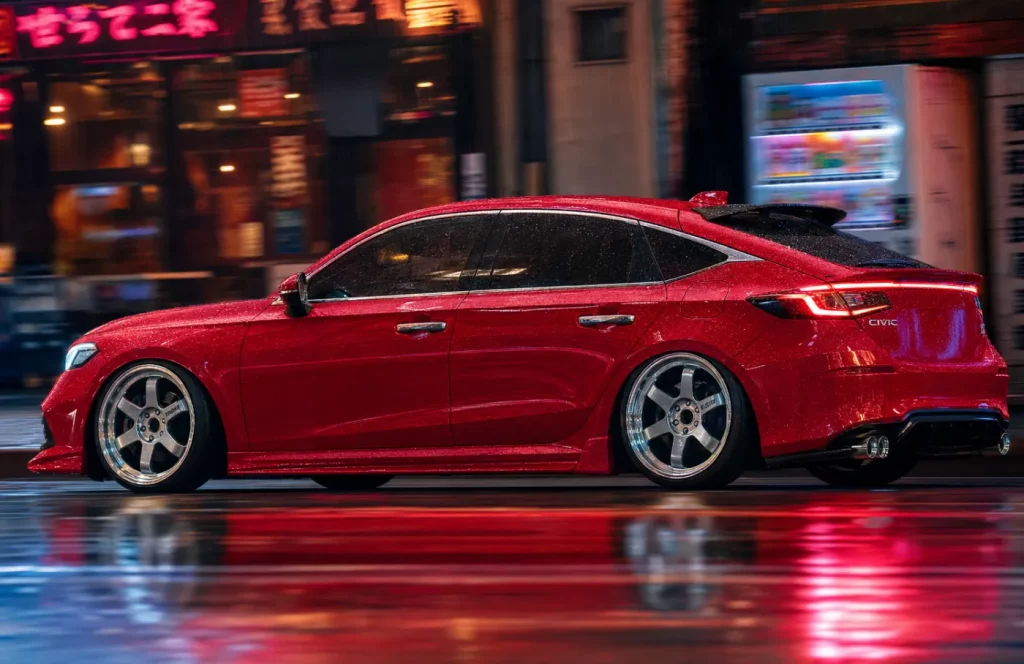
The Civic Si starts around $31,000. The Integra A-Spec with Technology package and the six-speed manual starts AT approximately $39,200. That is a significant gap for two cars that share the same engine, transmission, and platform. The question is not which car is better — it is whether the Integra’s extra equipment justifies the extra money.
This comparison is not about lap times or quarter-mile numbers. It is about what the $7,000 premium actually buys — and whether you would rather have those features from the factory or save the money and spend it on modifications, maintenance, or just keep it in your pocket.
The $7,000 Question
Both cars share the same mechanical foundation:
- 1.5-liter turbocharged inline-four
- 200 HP at 6,000 rpm
- 192 lb-ft of torque from 1,800–5,000 rpm
- Six-speed manual transmission with rev-match
- Helical limited-slip differential
- Front MacPherson Strut suspension
- Multi-link Rear Suspension
- Electric power steering
On paper, they are nearly identical. The differences are in weight, equipment, and tuning. The Civic Si weighs 2,952 lb; the Integra A-Spec Technology weighs 3,073 lb — a difference of 121 lb. The Integra is longer (185.8 inches vs 179.0 inches) and wider (72.0 inches vs 70.9 inches).
The $7,000 premium buys a longer list of equipment: adaptive dampers, a 16-speaker ELS Studio 3D audio system, a 5.3-inch head-up display, 12-way power driver’s seat with memory, microsuede upholstery, parking sensors, rain-sensing wipers, and a more premium interior overall. The question is whether those features are worth the price difference to you.
| Specification | Honda Civic Si | Acura Integra A-Spec Tech 6MT |
|---|---|---|
| Engine | 1.5L turbo I-4 | 1.5L turbo I-4 |
| Horsepower | 200 hp | 200 hp |
| Torque | 192 lb-ft | 192 lb-ft |
| Transmission | 6-speed manual | 6-speed manual |
| LSD | Helical | Helical |
| Curb weight | 2,952 lb | 3,073 lb |
| Adaptive dampers | No | Yes |
| Audio system | Bose 12-speaker | ELS Studio 3D 16-speaker |
| HUD | No | Yes (5.3-inch) |
| Power driver seat | Manual | 12-way power w/memory |
| Starting price | ~$31,000 | ~$39,200 |
What You Actually Get for the Premium
The $7,000 difference between the Civic Si and the Integra A-Spec Technology is not a single option. It is a package of features that Acura has bundled into a specific trim level. Breaking it down into categories helps illustrate what the money buys.
Performance hardware: The Integra’s Adaptive Damper System is the single most significant performance-related feature the Si lacks. The Civic Si uses fixed dampers, meaning the suspension has a single ride quality setting. The Integra has four drive modes — Comfort, Normal, Sport, and Individual — that adjust damper stiffness, steering weight, throttle response, and engine sound. The Civic Si has Normal, Sport, and Individual modes, but without adaptive dampers, the ride remains fixed.
Comfort: The Integra has a 12-way power driver’s seat with two-position memory, microsuede seating surfaces, dual-zone automatic climate control, and a power passenger seat. The Civic Si has manually adjustable sport seats with cloth upholstery. The Integra is quieter, with more sound insulation and thicker glass. The Si is louder, with more road and engine noise.
Technology: The Integra’s ELS Studio 3D audio system has 16 speakers, including overhead speakers and a cargo-area subwoofer. The Civic Si’s Bose system has 12 speakers. The Integra has a 5.3-inch head-up display, parking sensors, rain-sensing wipers, and a more advanced digital instrument cluster. The Civic Si has a 10.2-inch digital cluster but no HUD.
The premium is mostly equipment, not horsepower. The Integra does not have more power than the Si. It has more luxury, more comfort, and more convenience features.
The Mechanical Core Is Surprisingly Close
The two cars are mechanically almost identical. The engine, transmission, and LSD are the same. The suspension geometry is the same. The platform is the same. The differences are in the details.
The Civic Si has a lightweight single-mass flywheel that makes the engine rev more quickly. The Integra’s flywheel is slightly heavier, which makes it smoother for daily driving but less eager to rev. The Si’s clutch engagement is sharper; the Integra’s is more forgiving. Both have rev-match downshifting, but the Si’s is more aggressive.
The Si’s steering is heavier and more direct. The Integra’s steering is lighter and more refined. The Si’s chassis is stiffer; the Integra’s is more compliant. These differences are tuning choices, not hardware limitations.
You aren’t paying $7,000 for a stronger engine. You are paying for how the engine, transmission, and chassis are packaged and refined.
121 Pounds: How Much Does the Integra’s Extra Weight Matter?
The Integra weighs 121 lb more than the Civic Si. That extra weight comes from sound insulation, power seats, larger wheels, the audio system, and additional structural reinforcements. On a scale, it is noticeable. On a back road, it is also noticeable.
The extra weight affects acceleration, braking, and cornering. The Si is more eager to change direction. The Integra feels more planted but less agile. The Si’s lighter weight gives it an advantage in transient response — quick left-right transitions, turn-in, and exit traction.
Does the extra weight matter? It depends on how you drive. If you are commuting and road-tripping, the extra weight buys you a quieter, more substantial-feeling car. If you are driving on a twisty road, the Si’s lighter weight is a clear advantage.
Adaptive Dampers: The Integra’s Biggest Hardware Advantage
The Integra’s Adaptive Damper System is the single most significant hardware advantage it has over the Civic Si. The Si has fixed dampers; the Integra’s dampers adjust stiffness based on drive mode and road conditions. In Comfort mode, the Integra rides like a standard Civic — soft, compliant, and comfortable. In Sport mode, it firms up significantly, reducing body roll and improving control.
The Civic Si’s fixed dampers are tuned for sporty driving. On a smooth road, they work well. On broken pavement, they can feel harsh. The Integra’s adaptive dampers give it a wider operating envelope — it can be comfortable on a long highway drive and sharp on a back road. The Si is always in sport mode, which is engaging but tiring on a long trip.
The question is whether that wider envelope is worth the extra cost. If you live in a city with poor roads, the adaptive dampers are a real benefit. If you drive mostly on smooth pavement, the Si’s fixed dampers are perfectly adequate.
Civic Si’s Counterattack: Less Car, More Driver
The Civic Si is not trying to be a luxury car. It is trying to be an affordable, engaging driver’s car. It has fewer features, less sound insulation, and a simpler interior. But it also has a lighter weight, a sharper chassis, and a more focused driving experience.
The Si’s sport seats are more aggressive than the Integra’s. They have deeper bolsters, better lateral support, and a more driving-focused position. The Si’s steering is heavier and more communicative. The Si’s engine is more responsive, thanks to the lighter flywheel and more aggressive throttle calibration.
The Si is not a car that tries to do everything. It tries to do one thing well: provide an engaging driving experience at an affordable price. If that is what you want, the Si is the better choice.
Seats: Track Hardware vs Long-Distance Comfort
The Civic Si’s sport seats are designed for lateral support. They hold you firmly in place during cornering, with deep bolsters and a high backrest. They are manually adjustable, with no power adjustments, memory, or lumbar support. They are firm, supportive, and focused on performance.
The Integra’s microsuede-trimmed seats are designed for comfort. They have power adjustments, memory, and lumbar support. They are softer, wider, and more accommodating for a range of body types. They are less supportive in corners but more comfortable on long drives.
Which seat is better? It depends on your priorities. If you value cornering support and a focused driving position, the Si’s seats are superior. If you value long-distance comfort and daily usability, the Integra’s seats are better. The difference is not just about luxury — it is about the intended use of the car.
ELS vs Bose: Is the Audio System Worth the Money?
The Integra’s ELS Studio 3D audio system is one of the best factory sound systems in any car, regardless of price. It has 16 speakers, including overhead speakers and a subwoofer. It is tuned for clarity, detail, and soundstage. The Civic Si’s Bose system has 12 speakers and is good, but it is not in the same league.
If you spend two hours a day in your car and enjoy high-quality audio, the ELS system is a significant upgrade. If you primarily listen to podcasts or talk radio, the Bose system is perfectly adequate. The difference is not just about sound quality; it is about the overall cabin experience.
The ELS system is part of the $7,000 package, but it is not the only part. You are also paying for the HUD, the adaptive dampers, and the other features. If you value audio quality, the ELS system alone may justify part of the premium.
HUD and Driver Information
The Integra’s 5.3-inch head-up display projects speed, navigation, and driver-assistance information onto the windshield. It is clear, easy to read, and reduces the need to look down at the instrument cluster. The Civic Si has a 10.2-inch digital instrument cluster but no HUD.
The Civic Si’s cluster is well-designed, with a large tachometer and configurable displays. But it requires you to look down from the road. The HUD keeps your eyes forward. For drivers who prioritize safety and convenience, the HUD is a real benefit.
Is it worth part of the $7,000 premium? That depends on how much you value having information in your line of sight. For some drivers, it is essential. For others, it is a nice-to-have.
What the Si Gives You That the Integra Can’t
The Civic Si has advantages that the Integra cannot match, regardless of options:
Lower purchase price: The Si is roughly $7,000 cheaper. That is a significant amount of money that can be used for modifications, maintenance, or just saved.
Lighter weight: The Si weighs 121 lb less than the Integra. That difference affects acceleration, braking, and cornering.
More aggressive tuning: The Si’s throttle, steering, and chassis are tuned for sporty driving. The Integra is tuned for refinement and comfort.
Simpler interior: The Si’s interior is focused on driving, not luxury. There are fewer distractions, less complexity, and a more straightforward interface.
Better platform for modifications: The Si’s simpler architecture and lower cost make it a better base for modifications. If you plan to change the suspension, wheels, tires, or audio system, you are not paying for equipment you will replace.
What the Integra Gives You That the Si Can’t
The Integra has advantages that the Si cannot match:
Adaptive dampers: The ability to switch between comfortable and sporty ride characteristics is a significant advantage for daily driving.
Power seats with memory: If multiple people drive the car, memory seats are a real convenience.
ELS Studio 3D audio: One of the best factory sound systems available.
HUD: Keeping information in your line of sight is safer and more convenient.
Parking sensors and rain-sensing wipers: Convenience features that make daily driving easier.
More premium interior: Better materials, more sound insulation, and a quieter cabin.
Longer warranty: Acura offers a 4-year/50,000-mile basic warranty, compared to Honda’s 3-year/36,000-mile coverage.
The Integra is not just a Civic Si with a different badge. It is a more refined, more comfortable, and better-equipped car.
The $7,000 Tuning Trap
One common argument is that the $7,000 price difference can be spent on modifications to make the Civic Si faster and better-handling than the Integra. This is true, but it is not as simple as “spend $7,000 and destroy the Integra.”
A few hundred dollars on a tuner and a few thousand on tires, suspension, and brakes can transform the Si. But modifications come with trade-offs: warranty voiding, reduced comfort, increased noise, and potentially lower reliability. The Integra’s features are factory-engineered and covered by warranty. The modified Si’s features are not.
The decision is not just about performance. It is about whether you want to spend money on modifications or on factory equipment. If you enjoy modifying cars, the Si is a better base. If you want a car that works well out of the box, the Integra is the better choice.
What Does the $7,000 Look Like After Five Years?
The $7,000 price difference is not just about the purchase price. It affects financing, insurance, tires, fuel, maintenance, and depreciation.
Financing: At 6% APR over 60 months, the $7,000 difference adds approximately $135 per month to your payment. Over five years, that is roughly $8,100 in payments.
Insurance: The Integra may be slightly more expensive to insure due to its higher value and Acura badge. The difference is likely small but worth checking.
Tires: The Civic Si’s 235/40R18 tires are slightly cheaper than the Integra’s 235/35R19 tires. Over five years, the difference may be a few hundred dollars.
Fuel: Both cars have similar fuel economy. The difference is negligible.
Maintenance: The Integra’s adaptive dampers and more complex equipment may be more expensive to repair out of warranty. The Civic Si’s simpler hardware is cheaper to maintain.
Depreciation: Both cars hold their value well. The Civic Si’s lower purchase price means it loses less absolute value, but the Integra may retain a higher percentage of its MSRP.
The $7,000 difference is not just the purchase price. It is a five-year cost difference that may be larger or smaller depending on your specific situation.
Three Owners, Three Answers
Owner #1 — The Enthusiast: Buy the Civic Si. You do not need 16 speakers, HUD, or power seats. You want 6MT, LSD, lightweight chassis, and a lower price to spend on modifications.
Owner #2 — The Commuter Enthusiast: Buy the Integra A-Spec Technology. You want the manual and LSD, but you also want Comfort mode on your commute, good audio, power seat, and a premium cabin. You are willing to pay for the convenience.
Owner #3 — The Modifier: Buy the Civic Si. The Integra’s premium features will be replaced or unused. Do not pay for equipment you will not use.
There is no single right answer. The best car depends on your priorities.
Final Verdict
The Civic Si is the better value for drivers who prioritize performance and engagement over comfort and technology. It is lighter, more focused, and significantly cheaper. The Integra A-Spec Technology is the better car for drivers who want the same manual transmission and LSD but also want a more comfortable daily-driving experience with better audio, a HUD, and adaptive dampers.
The $7,000 premium buys real equipment: adaptive dampers, ELS audio, power seats, HUD, and a more premium interior. Whether that equipment is worth the money depends on how much you value comfort and technology over pure performance.
If you want a focused, affordable driver’s car, buy the Civic Si. If you want a more refined, better-equipped car with the same mechanical foundation, buy the Integra A-Spec Technology. Both are excellent. They are just excellent in different ways.
Quick Reference — Civic Si vs Integra A-Spec Tech
☐ Civic Si: 2,952 lb, 200 hp, 6MT, LSD, fixed dampers, Bose 12-speaker, manual seats, ~$31,000
☐ Integra A-Spec Tech: 3,073 lb, 200 hp, 6MT, LSD, adaptive dampers, ELS 16-speaker, 12-way power seats w/memory, HUD, ~$39,200
☐ Price difference: ~$7,000
☐ Weight difference: 121 lb
☐ Integra has wider operating envelope: Comfort, Normal, Sport, Individual modes with adaptive damping
☐ Civic Si has fixed sport suspension, more focused but less flexible
☐ Integra’s ELS Studio 3D is one of the best factory audio systems in any car
☐ Civic Si’s Bose 12-speaker is good but not in the same league
☐ Si’s sport seats are more aggressive; Integra’s seats are more comfortable for daily use
☐ Integra’s HUD and power seats are significant daily-driver upgrades
☐ Civic Si is a better platform for modifications — simpler, lighter, cheaper
☐ Integra’s extra cost includes warranty: 4yr/50k vs Honda’s 3yr/36k
☐ The $7,000 premium is not just badge — it is real hardware and equipment
☐ Choose Si for engagement and value; choose Integra for refinement and daily comfort
FAQ — Civic Si vs Integra A-Spec Tech
Is the Integra A-Spec Tech worth the $7,000 premium over the Civic Si?
It depends on your priorities. If you value adaptive dampers, premium audio, HUD, power seats, and a more refined daily-driving experience, the Integra is worth it. If you prioritize engagement, value, and a lower purchase price, the Civic Si is the better choice.
Does the Integra A-Spec Tech have more horsepower than the Civic Si?
No — both cars have 200 hp and 192 lb-ft of torque from the same 1.5-liter turbo engine. The Integra’s power advantage is zero.
Does the Civic Si have adaptive dampers?
No — the Civic Si uses fixed dampers. The Integra A-Spec Technology has Adaptive Damper System with four drive modes.
Which car is lighter?
The Civic Si is 121 lb lighter (2,952 lb vs 3,073 lb). The weight difference comes from the Integra’s additional equipment and larger body.
Does the Integra have a better audio system?
Yes — the Integra’s ELS Studio 3D system has 16 speakers and is one of the best factory audio systems available. The Civic Si has a 12-speaker Bose system that is good but not comparable.
Is the Civic Si a better car for modifications?
Yes — the Civic Si’s simpler architecture, lower weight, and lower purchase price make it a better base for modifications. You are not paying for equipment you will replace.
Does the Integra have a HUD?
Yes — the Integra A-Spec Technology has a 5.3-inch head-up display. The Civic Si does not have a HUD.
Which car has better seats for track driving?
The Civic Si’s sport seats have more aggressive bolstering and better lateral support for cornering. The Integra’s seats are more comfortable for daily driving but less supportive on track.
Is the Integra quieter than the Civic Si?
Yes — the Integra has more sound insulation, thicker glass, and a quieter cabin. The Civic Si has more road and engine noise, which is part of its sporty character.
Which car should I buy?
If you want a focused, affordable driver’s car with a great manual transmission and LSD, buy the Civic Si. If you want the same mechanical foundation with more comfort, better audio, and daily-driver features, buy the Integra A-Spec Technology.