

The Ford Fiesta ST and the 10th Gen Honda Civic Si represent two completely different philosophies in the affordable performance car segment. One is a tiny, turbocharged hatchback that feels like a street-legal go-kart. The other is a larger, more refined Sport sedan with Honda’s legendary reliability. Both are available on the used market for similar money. But they offer very different ownership experiences.
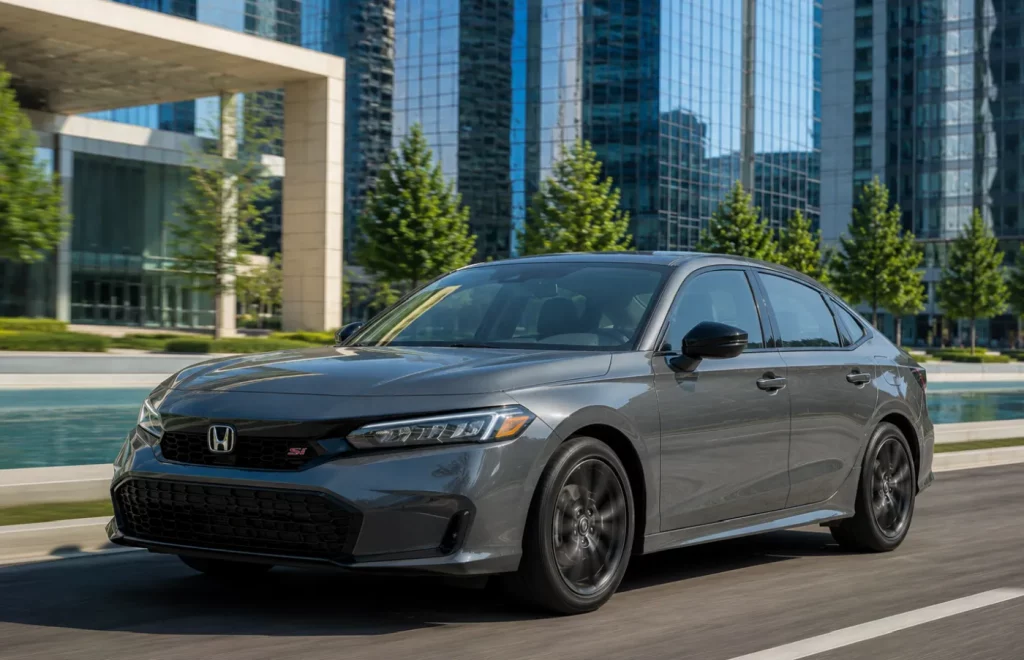
This isn’t a comparison about which car is faster. It’s a comparison about which used car makes more sense for your budget, your priorities, and your tolerance for maintenance surprises. And critically, it’s a comparison between a car that’s still in production (Civic Si) and a car that Ford discontinued in North America after 2019.
The Civic Si is the safer long-term used buy — more reliable, more practical, and cheaper to maintain over time. The Fiesta ST is the more engaging driver’s car — lighter, more playful, and more fun at legal speeds. But the Fiesta comes with documented reliability concerns including clutch slave cylinder failures, transmission bearing wear, and cooling system issues. The Si’s main weak points are the clutch (which slips with tuning) and potential Oil dilution on early 2017-2018 models. Choose the Si for long-term ownership; choose the Fiesta ST for pure driving joy.
The Value Proposition — What Your Money Buys in 2026
Both cars have become affordable used options. The Fiesta ST can be found for $6,000–$17,000 depending on condition and mileage. Civic Si prices typically range from $14,000–$19,000 for clean, lower-mileage examples.
The Fiesta ST is the cheaper entry point, but that lower price often reflects the risk of higher-mileage examples with known issues. A clean, late-year Fiesta ST rarely crests $17,000, while ratty ones that have traveled to the moon and back command as little as six stacks.
The Civic Si commands a premium on the used market, but that premium reflects Honda’s reputation for reliability and stronger resale value. The Si is also the bigger car — significantly larger than the Fiesta ST.
| Metric | Ford Fiesta ST | 10th Gen Civic Si |
|---|---|---|
| Typical used price (2026) | $6,000–$17,000 | $14,000–$19,000 |
| Engine | 1.6L turbo I4 | 1.5L turbo I4 |
| Horsepower | 197 hp | 205 hp |
| Torque | 202 lb-ft | 192 lb-ft |
| Curb weight | 2,740 lb | ~2,950 lb |
| Fuel economy (combined) | ~29 mpg | ~32 mpg |
The Fiesta ST Experience — The Front-Drive Miata
The Fiesta ST has earned a cult following for a reason. It weighs just 2,740 pounds — nearly 200 pounds less than a Civic Si. This lightness translates into handling that enthusiasts describe as “go-kart-like” and “playful.”
The 1.6-liter EcoBoost produces 197 horsepower and 202 lb-ft of torque, which is plenty for a car this size. The 0-60 time of 6.7 seconds and quarter-mile of 15.0 seconds AT 94 mph were competitive in its era.
Owners consistently praise the Fiesta ST’s steering feel, chassis dynamics, and pure driving engagement. As one enthusiast noted: “The ST had similar room with hatch and 4 door utility and felt much more nimble and lively” compared to a Civic Si. Another described it as “a riot to drive.”
In one comparison, a driver who had experienced both cars noted that the Fiesta ST “handles far better” and “feels like a much more expensive car” than expected. The Fiesta ST’s handling is so well-regarded that even Civic Si owners acknowledge it.
However, the Fiesta ST’s interior is a reminder of its budget origins. As one review noted, it features “acres of weirdly textured dashboard plastics that you can probably file your nails on.” The Recaro seats, when optioned, are sublime, but the base seats are more pedestrian.
The Civic Si Experience — Refined Performance
The 10th Gen Civic Si is a larger, more refined car than the Fiesta ST. It’s not as playful, but it’s more practical for daily life. The 1.5-liter turbo produces 205 horsepower and 192 lb-ft of torque, with power peaking higher in the rev range than the Fiesta’s engine.
The Si’s handling is precise and confidence-inspiring, with a helical limited-slip differential that helps put power down effectively. But it doesn’t have the same “go-kart” feel as the Fiesta ST, simply because it’s heavier and larger.
The Si’s interior is a significant step up from the Fiesta’s. Better materials, a more modern design, and Honda’s excellent ergonomics make the Si a nicer place to spend time. As one comparison noted, the Si offers “a bit more size, comfort, and probably long-term reliability & maintenance cost benefits.”
The Civic Si is also more practical for daily driving. The trunk is larger, the rear seat is more spacious, and the overall refinement is higher. If you need a car that can do everything — commute, carry passengers, and still be fun on weekends — the Si is the more versatile choice.
The Reliability Reality — Fiesta ST’s Known Weak Points
The Fiesta ST has several well-documented reliability issues that used buyers should be aware of. These aren’t theoretical concerns — they’re common failures that owners report across the community.
1. Clutch Slave Cylinder Failures: This is one of the most frequently reported issues. The clutch slave cylinder is a common failure point on the Fiesta ST. One owner reported spending $2,500+ on a repair when the slave cylinder failed, only to have it fail again later. Another reported the same issue, calling it “a common failure point on this car.”
2. Gearbox Input Shaft Bearing Wear: The transmission has a history of issues. The input shaft bearing can wear prematurely, producing a whining noise that’s loudest in lower gears. The bearing can be replaced individually, but if the entire gearbox needs replacement, costs rise to $1,500–$2,000. One owner described it as “the beginning of the end of my input shaft and various transmission bearings.”
3. Cylinder Head Overheating (Pre-2015): Early Fiesta STs (2013-2014) had a cylinder head design flaw that could cause cracking if Coolant levels dropped. Ford recalled these cars and installed a coolant level sensor, but if the recall wasn’t completed on an affected car, the consequences can be catastrophic.
4. HVAC Blend Door Actuator Failure: A common annoyance on the Fiesta ST is a clicking noise from behind the dashboard when adjusting climate controls. The driver-side actuator fails most frequently, producing a repetitive clicking or tapping sound.
5. Timing Belt and Carbon Buildup: The Timing Belt should be changed at 100,000 miles, not 150,000. Like many direct-injection engines, the 1.6 EcoBoost can suffer from carbon buildup on intake valves.
6. Passenger-Side Motor Mount Bolt Failure: The passenger-side upper Engine Mount bolt is a well-documented weak point. The stock bolt can work loose or snap, especially with aggressive driving or stiffer motor mounts.
One owner’s experience sums up the Fiesta ST ownership reality: “I’m on the hook for another major repair for a car that doesn’t even have 90k miles. I take care of my car too: regular full synthetic oil changes, quality tires, 93 octane only fill-ups, etc.”
He continued: “I’m frustrated with how many of the known common failure points are affecting my car, and how damn expensive they are. And I’m frustrated that Ford decided to save literal pennies per unit by using plastic in places where sturdier materials were needed.”
- Clutch slave cylinder failure (common, $1,500+)
- Transmission bearing wear (whining noise)
- Cylinder head cracking (pre-2015 recall)
- HVAC blend door actuator failure (clicking noise)
- Timing belt — 100,000 mile interval
- Motor mount bolt failure
- Clutch slips with power upgrades
- Oil dilution (2017-2018 cold climates)
- Carbon buildup (direct injection)
- Fuel Pump recalls (2018-2020)
- Much stronger overall reliability
The Civic Si’s Weak Points — What to Watch For
The 10th Gen Civic Si is generally reliable, but it has documented issues that used buyers should be aware of.
1. Clutch Weakness with Tuning: The factory clutch is the Si’s main weak point. It’s designed for stock power levels and can start to slip with even mild modifications. As one source notes: “We added an intake and a flash and started noticing some slip in the clutch that progressively got worse over time.” A clutch upgrade is nearly a must for anyone planning modifications.
2. Oil Dilution (2017-2018): Early 10th Gen Si models (2017-2018) experienced oil dilution in cold climates with short trips. Fuel could accumulate in the oil, thinning lubrication and potentially causing long-term wear. Honda issued software updates in 2019 to address this. Look for proof that the update was performed.
3. Carbon Buildup: Like all direct-injection engines, the Si’s L15B7 can experience carbon buildup on intake valves. This is a longer-term issue that can cause rough idle, misfires, and power loss. Walnut blasting is the standard cleaning method, typically needed around 60,000-80,000 miles.
4. Fuel Pump Recalls: Various fuel pump campaigns (NHTSA 20V314, 21V215) affect certain 2018-2020 Hondas. Check the VIN for open recalls before purchase.
Despite these issues, the Civic Si is widely considered a reliable used buy. One owner reported “over 250K” miles on their 1.5T Civic without Head Gasket Failure.
Comparing Common Repair Costs
The difference in repair costs is significant. Fiesta ST owners report clutch slave cylinder repairs costing $1,500-$2,500+. Transmission repairs can reach $2,000.
Civic Si repairs are generally less expensive. A clutch replacement is the most common major repair, typically $1,200-$1,800. Carbon cleaning (walnut blasting) runs $400-$700. Routine maintenance is cheaper and parts are more readily available.
As one forum member noted: “The Civic Si is a compelling purchase. The Si has a bit more size, comfort, and probably long-term reliability & maintenance cost benefits as well.”
The Discontinued Factor — What It Means for Fiesta ST Owners
Ford discontinued the Fiesta in North America after the 2019 model year. This is a critical factor for used buyers to understand. It’s not just about choosing between two cars — it’s about choosing between a supported platform and one you’ll maintain without new official parts from the manufacturer.
For Fiesta ST owners, this means:
- A shrinking pool of dealers willing to work on the model
- Potential increases in prices for genuine Ford parts over time
- Fewer specialists familiar with the platform in average service shops
- Limited availability of OEM replacement parts
The Civic Si, by contrast, benefits from Honda’s continued production and support. Parts are readily available, technicians are trained at every Honda dealer, and the tuning community is actively growing rather than fading. As one analysis noted, this is a direct parallel to the importance of a “living” ecosystem of support.
TrueDelta Reliability Data — Hard Numbers
TrueDelta’s repair frequency data (where lower is better) shows a stark contrast:
- Fiesta 2014-2018: ~35.7% repair frequency
- Civic 2016-2018: ~15.7%
- Fiesta 2011-2013: ~62.6%
- Civic 2013-2015: 0% (best result in the sample)
- Civic 2012: 2%
These figures represent completed repairs only — not routine maintenance or recalls. They reflect actual failures, not general ownership costs. The Civic is more than twice as reliable as the Fiesta by this measure.
It’s important to note that the Fiesta ST specifically uses a manual transmission, avoiding the problematic PowerShift automatic that plagued other Fiesta models. This removes the main source of Fiesta reliability complaints, but the other documented issues remain.
The Driving Experience — Where Each Car Wins
These cars serve different purposes. The Fiesta ST is the more engaging driver’s car. It’s smaller, lighter, and more playful. One enthusiast described it as “the Front-Drive Miata” — a car that’s fun at legal speeds and rewards driver involvement.
The Fiesta gives you the feeling of a “go-kart” where you feel everything happening outside, while the Si, despite comparable agility, feels more confident and “grown-up” on the highway.
The Civic Si is the more practical all-rounder. It’s larger, more refined, and more comfortable for daily use. The Si’s handling is precise and satisfying, but it’s not as playful as the Fiesta ST’s.
If pure driving joy is your priority, the Fiesta ST is the better choice. If you need a car that can do everything — commute, carry passengers, and still be fun on weekends — the Civic Si is the smarter buy.
Fiesta ST vs Civic Si — Which Is the Better Used Buy?
There’s no single right answer. Here’s how it breaks down.
| Category | Winner |
|---|---|
| Driving engagement | Fiesta ST |
| Practicality | Civic Si |
| Reliability | Civic Si |
| Repair costs | Civic Si |
| Entry price | Fiesta ST |
| Interior quality | Civic Si |
| Parts availability | Civic Si |
| Resale value | Civic Si |
Final Thought
Buy the Fiesta ST if you want the most engaging driver’s car for the money. It’s lighter, more playful, and more fun at legal speeds. But buy it knowing that you’ll need to budget for potential repairs and that the car is no longer supported by the manufacturer. A clean, well-maintained example with documented service history is essential. As one forum member advised: “The FiST is a great car, but you need a super clean one.”
Buy the Civic Si if you want a car that does everything well. It’s practical, reliable, and refined. The Si is the safer long-term used buy — it’s more likely to start every morning, cost less to maintain, and hold its value better over time. As one owner who had both noted: “I’ve read a lot on civicx that a clutch upgrade is nearly a must,” but beyond that, the Si is a remarkably durable car.
If the Fiesta is your second car, buy the Fiesta. If it’s your only car, buy the Civic Si.
FAQ — Fiesta ST vs Civic Si
Which is more reliable, the Fiesta ST or the Civic Si?
The Civic Si is significantly more reliable. TrueDelta data shows the Civic has roughly half the repair frequency of the Fiesta. The Fiesta ST has documented issues including clutch slave cylinder failures, transmission bearing wear, and cylinder head problems. The Civic Si’s main weak points are the clutch (with tuning) and oil dilution on 2017-2018 models.
Which is cheaper to maintain?
The Civic Si is cheaper to maintain. Fiesta ST owners report major repairs costing $1,500-$2,500+. Civic Si repairs are generally less expensive, and parts are more readily available since the Civic is still in production.
Which car is more fun to drive?
The Fiesta ST is more fun to drive. It’s lighter (2,740 lbs vs ~2,950 lbs), more playful, and has been described as the “Front-Drive Miata.” The Civic Si is more refined and practical, but it’s not as go-kart-like as the Fiesta ST.
Which is the better daily driver?
The Civic Si is the better daily driver. It’s larger, more comfortable, has better interior quality, and is more practical for carrying passengers and cargo. The Fiesta ST is usable daily but feels smaller and less refined.
What should I look for when buying a used Fiesta ST?
Check for clutch slave cylinder repairs, transmission bearing whine, cylinder head recall completion (pre-2015), HVAC blend door actuator clicking, and verify the timing belt has been changed at 100,000 miles. Look for oil change history and avoid heavily modified examples.
What should I look for when buying a used Civic Si?
Check for clutch condition (slip under load), oil dilution history on 2017-2018 models (look for fuel smell on dipstick), carbon buildup symptoms, and verify fuel pump recalls have been completed. A clean service history is essential.
Is the Fiesta ST worth the reliability risk?
If you prioritize driving engagement above all else, yes. The Fiesta ST is one of the most fun cars you can buy for the money. But you need to buy a clean example and budget for potential repairs. If the car is your only vehicle, the Civic Si is the safer choice.
Which car holds its value better?
The Civic Si holds its value better. Honda’s reputation for reliability and strong enthusiast demand keep used Si prices high. Fiesta STs depreciate more significantly, which makes them cheaper to buy but harder to resell.
Should I buy a Fiesta ST or Civic Si?
Buy the Civic Si if you want a reliable, practical, refined daily driver that’s still fun. Buy the Fiesta ST if you want a pure driver’s car and are willing to accept higher maintenance costs and potential reliability issues. The Fiesta is the better toy; the Civic is the better all-around car.
What’s the sweet spot for used Civic Si years?
The 2020-2021 10th Gen Si models are considered the most reliable, with the oil dilution issue addressed and fuel pump recalls completed. 2019+ models are generally preferred, though 2017-2018 examples can still be good with proper maintenance.