

Every Civic 1.5T owner eventually asks the same question. You’ve felt the car’s potential, you’ve seen the dyno sheets, and you know a tune is the best bang for your buck. But then comes the uncomfortable question: how far can you push the stock engine before something breaks?
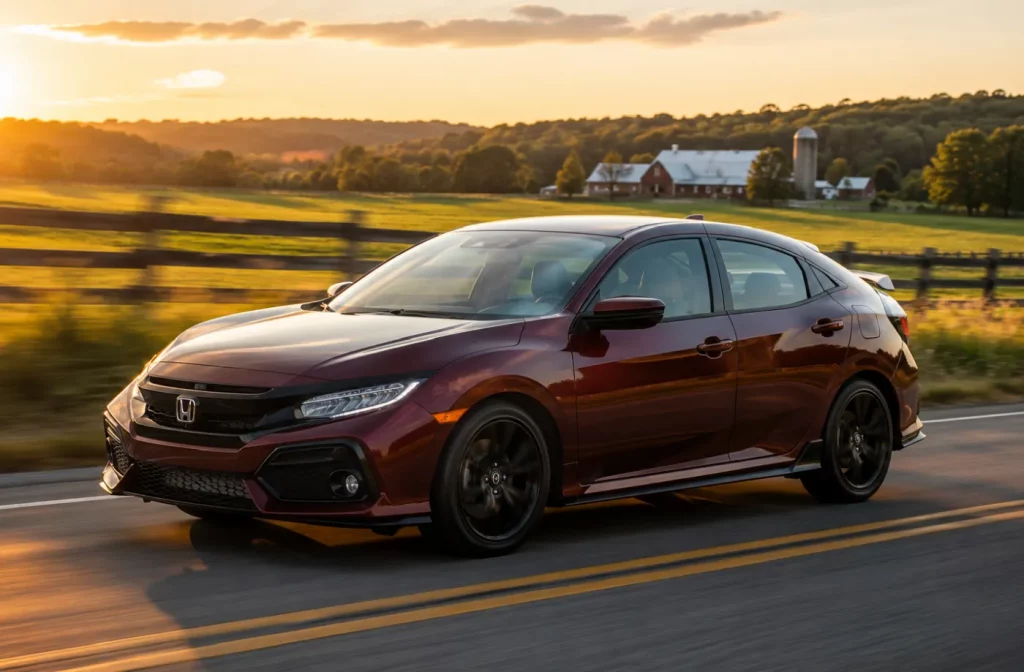
The L15B7 and L15CA engines are surprisingly stout for their size. But they have limits — and understanding those limits is the difference between a reliable daily driver and a broken project car. This guide breaks down the real-world power limits of the stock 1.5T engine, what fails first, and how much power you can safely run without opening the motor.
The stock L15B7 engine is generally safe up to approximately 375 wheel horsepower according to 27WON Performance, based on extensive dyno testing and tuning experience. This is the recommended limit before internal engine upgrades (rods, pistons, head studs) become necessary. With full bolt-ons and ethanol, the stock engine can reach 320–380 whp, but the rods are the primary weak point — aggressive low-end torque spikes are more dangerous than peak horsepower. For the 11th Gen L15CA, the community is still establishing the limits, but early indications suggest similar or slightly lower thresholds.
There Is No Single “Safe HP Limit”
Before we dive into numbers, it’s essential to understand that there is no universal “safe HP limit” for the L15 engine. The same power level on two different cars can produce dramatically different reliability outcomes. The difference comes down to:
- Engine condition — mileage and maintenance history matter
- Tuning quality — the calibration is more important than the peak number
- Fuel quality — 93 octane vs 91 vs E30 changes the risk profile
- Torque curve shape — early torque spikes are more dangerous than peak horsepower
- Supporting hardware — intercooler, fuel system, and cooling all affect reliability
- Transmission — CVT and manual have different limitations
As one forum member noted: “The engine is only weak when you throw 30 psi AT it with a crappy tune.” The quality of the calibration — not just the peak power number — determines reliability.
L15B7 vs L15CA — Which Engine Are We Talking About?
It’s critical to distinguish between the L15 variants, as they have different characteristics and limits.
| Engine | Generation | Application | Factory HP |
|---|---|---|---|
| L15B7 | 10th Gen | EX, Touring, Sport (non-Si), Si | 174–205 hp |
| L15CA | 11th Gen | EX, Touring, Sport, Si | 180–200 hp |
The L15B7 has been extensively documented in the tuning community. Owners have pushed this engine to 300–350 whp on stock internals, though reliability varies significantly. The L15CA in the 11th Gen is newer, and the community is still establishing its limits. Some early reports suggest the L15CA may have weaker internals than the L15B7, though others note that documented failures were caused by extremely aggressive tuning, not inherent engine weakness.
One forum member noted: “I can’t comment on if the 11th gen engine is weaker than the 10th. I’m no expert, but from my readings of the CivicX forum, the 10th gen engine is generally stout when tuned up to 300hp. 11th gen is probably the similar.”
For owners planning to keep their car stock, the engine is entirely reliable. “Hundreds of thousands of turbocharged Civics have successfully used it in a variety of climates,” one owner noted. For those planning significant power builds, the 2.0T K20C1 is a much better platform.
L15A (Honda Fit) — A Historical Precedent
It’s worth briefly noting the L15A engine used in the Honda Fit, which provides a historical precedent. On the older L15A (not the B7 or CA), the community independently concluded that cylinder sleeves can be a weak point before the pistons or rods — a limitation of about 10 psi for the sleeves versus 19 psi that the rods/pistons could handle. This demonstrates that “engine limits” are rarely determined by a single component; it’s usually a Chain of weak links that can differ between engine generations.
What Fails First — The L15’s Weak Points
The L15 engine has several documented weak points that become more apparent as power increases.
1. Connecting Rods — The “Toothpick” Problem: The L15’s connecting rods are the most common failure point at high power levels. They are described by tuners as “toothpicks” or “straws” due to their thin construction. Aggressive low-end torque spikes are more dangerous than peak horsepower. The rods can bend or snap under excessive cylinder pressure, particularly when tuning produces a massive torque surge at low RPM. If wheel torque exceeds approximately 320–330 WTQ, the rod can twist or bend, causing catastrophic engine failure.
2. Open-Deck Block Design: The L15 uses an open-deck block where the cylinders are supported only at the bottom, with an open cooling jacket at the top. At boost pressures above 26-27 PSI, the cylinder liners can “walk” and deform under load, contributing to Head Gasket Failure.
3. Head Gasket Failure: The combination of open-deck design and M10 head studs can lead to Head Gasket failure at high power levels. The stock head studs can stretch under high cylinder pressure, allowing the head to lift and the gasket to fail.
4. Fuel System Limits: The stock high-pressure Fuel Pump and injectors can become a limitation at higher power levels. At approximately 320 WHP, the fuel system duty cycle can exceed 90%, risking lean conditions and engine damage.
5. Clutch — The First Limiting Factor for Manuals: The stock clutch often starts to slip at approximately 220-240 lb-ft of wheel torque — well before the engine’s mechanical limit. For manual-transmission cars, the clutch is usually the first component that needs upgrading.
6. CVT — Torque and Heat Limits: The CVT is torque-limited and heat-sensitive. The belt can slip at approximately 220-240 lb-ft of wheel torque. For serious power goals, a manual transmission is strongly preferred.
- Stage 1 tune: ~220-240 WHP
- FBO 93 octane: ~260-300 WHP
- FBO + ethanol: ~260-280 WHP
- Clutch upgrade required after ~220 WTQ
- Stock engine safe to ~375 WHP
- Connecting rods — primary weak point
- Head Gasket — higher mileage risk
- Fuel system — HPFP limits ~320 WHP
- Clutch — slips at ~220 WTQ (MT)
- CVT — torque-limited, heat-sensitive
Power Levels: Where the Risk Changes
This is the heart of the article. Here’s how the risk changes as you increase power.
| Power Level | Approx. WHP | Risk Level | Required Modifications |
|---|---|---|---|
| Stage 1 | ~220-240 WHP | Low risk | ECU tune, 93 octane |
| Moderate Street | ~250-270 WHP | Moderate | Intercooler, intake, downpipe |
| High-Performance Street | ~280-300 WHP | Elevated | FBO, clutch (MT), custom tune |
| Serious Stock-Internals | ~300-330 WHP | High | FBO, E-blend, upgraded clutch, careful tuning |
| Stock Engine Limit | ~350-375 WHP | Very High | Full bolt-ons, drop-in turbo, fuel system |
| Build Territory | 375+ WHP | Extreme | Forged rods, pistons, head studs |
The 375 WHP Limit — Where the Stock Engine Starts to Risk Failure
According to 27WON Performance, which has extensive experience with the L15 platform through hundreds of dyno sessions and thousands of tuning iterations, the general safe limit for the stock L15B7 engine is approximately 375 wheel horsepower. This is the level at which you should “start to have a serious conversation about the next phase of your build.”
At 375 WHP, the engine is not necessarily going to blow immediately — it’s more of a “hey don’t be surprised if that thing pops” warning. 27WON recommends that if you plan to push past 375 WHP or maintain that power level for a long time, you should “start piecing an engine together on the side.”
Some engines have failed before reaching 375 WHP, while others have surpassed 425 WHP — though 27WON describes those as “a bit of a unicorn.” The variance in failure points highlights the importance of tuning quality, fuel quality, and driving style.
Torque Is More Dangerous Than Peak Horsepower
This is one of the most important concepts in this article. The shape of the torque curve matters more than the peak horsepower number.
Setup A — Safer: 280 WHP with a smooth, progressive torque curve. The torque builds gradually and peaks higher in the rev range. This is easier on the rods because cylinder pressure builds progressively.
Setup B — Riskier: 260 WHP with a massive torque spike at 2,500-3,000 RPM. The rods experience a sudden shock load that can cause bending or failure, even though the peak power is lower.
On CivicX, owners have linked rod failures to excessive early torque. One example discussed was 250-270 WHP with more than 330 WTQ at low RPM. This is why experienced tuners often limit mid-range torque to protect the rods.
Several factors explain the common perception that hatchbacks fail more often than Si models: the Si has a more capable fuel system from the factory, so the first component to fail is often not the metal itself, but the fuel mixture leaning out under load — and a lean mixture can cause detonation, which also bends rods. The Si’s 10.3:1 Compression Ratio vs the non-Si’s 10.6:1 also contributes to increased boost tolerance.
Stage 1 — Tune Only: ~220-240 WHP
A simple ECU calibration is the most cost-effective power upgrade for the 1.5T. With a KTuner or Hondata flash, the L15B7 typically gains 30-40 horsepower and 50-60 lb-ft of torque. A 180 hp engine can reach 215 hp (+33 hp, +18%) and 270 Nm (+30 Nm, +12%) with a Stage 1 tune.
At this level, the stock engine is completely safe. The only concern is the clutch — manual transmission cars may experience clutch slip at this power level if torque exceeds approximately 220 lb-ft at the wheels. The CVT can also handle this power level, but heat management becomes more important.
Stage 2 — Full Bolt-Ons: ~260-300 WHP
With bolt-on modifications — intercooler, cold air intake, downpipe, and exhaust — the 1.5T can reach 260-300 WHP on 93 octane fuel. This is the most common “serious street” build level.
At this power level, the engine remains within safe limits. However, the clutch becomes a significant limitation for manual cars — budget for an upgraded clutch (e.g., Exedy Stage 1 or ACT) at this stage. The CVT is also approaching its torque limit; careful tuning is required to protect the transmission.
FBO + Ethanol: ~260-280 WHP
Adding a flex fuel sensor and ethanol blend (E30-E40) can push power to 260-280 WHP. Ethanol’s higher octane and cooling effect allow more aggressive timing and boost without increasing knock risk.
At this level, the stock fuel system is operating near its limits. The high-pressure fuel pump can become a bottleneck, and monitoring fuel pressure becomes essential. The engine itself remains within safe limits, but careful tuning is critical.
Drop-in Turbo Upgrade: ~320-380 WHP
With an upgraded turbo, the 1.5T can reach 320-380 WHP. This is the point where the engine is operating at or near its mechanical limits. At this level, internal engine components become the concern. The connecting rods are the primary weak point, and aggressive low-end torque spikes can cause failure. A conservative tune that limits mid-range torque is essential for reliability.
The 11th Gen Si L15CA — Is It Weaker Than the L15B7?
There is ongoing debate in the community about whether the 11th Gen Si‘s L15CA engine is weaker than the 10th Gen’s L15B7. Some sources suggest the L15CA may have weaker internals, based on a documented engine failure during aggressive tuning. However, others note that the tuning in that case was extremely aggressive — pushing the engine with 30 psi of boost — and was not representative of a properly tuned street car.
One forum member stated: “I can’t comment on if the 11th gen engine is weaker than the 10th. I’m no expert, but from my readings of the CivicX forum, the 10th gen engine is generally stout when tuned up to 300hp. 11th gen is probably the similar.”
Another noted: “The engine is only weak when you throw 30 psi at it with a crappy tune.” The consensus is that the L15CA is a good engine in stock form, with hundreds of thousands of turbocharged Civics successfully using it in a variety of climates.
CVT vs Manual — Transmission Limits Are Different
The transmission is often the first limiting factor, and the CVT and manual have very different limits.
CVT: The CVT is torque-limited and heat-sensitive. The belt can slip at approximately 220-240 lb-ft of wheel torque. For serious power goals, a manual transmission is strongly preferred. CVT owners should prioritize intercooler upgrades to manage heat and avoid aggressive low-end torque.
Manual: The manual transmission itself is robust, but the stock clutch is the weak point. It can start to slip at 220-240 lb-ft of wheel torque, requiring a clutch upgrade for any serious power build. With an upgraded clutch, the transmission can handle significantly more power.
What to Monitor — Keeping Your Engine Safe
If you’re pushing the 1.5T beyond stock power, monitoring is essential. The key parameters to watch are knock control, fuel pressure, intake air temperature, and boost pressure. For tuned cars, regular oil changes (5,000 miles or less) are critical, especially with ethanol blends.
Intercooler upgrades are essential for any power build — heat soak can cause timing pull and reduce power. Upgraded clutch is required for manual cars at any power level beyond Stage 1.
Final Thought
The L15B7 and L15CA are surprisingly capable engines. With a simple tune, they can produce 220-240 WHP without any hardware changes. With bolt-ons, 260-300 WHP is achievable and reliable. With an upgraded turbo and fuel system, 320-380 WHP is possible — but at that level, you’re operating at or near the stock engine’s mechanical limits.
The stock engine is generally safe up to approximately 375 WHP, according to 27WON’s extensive testing. Beyond that, internal engine upgrades (forged rods, pistons, head studs) become necessary. The connecting rods are the primary weak point, and aggressive low-end torque spikes are more dangerous than peak horsepower.
For most owners, 260-300 WHP with full bolt-ons is the sweet spot — significant power gains without compromising long-term reliability. If you want more than 375 WHP, start planning for a built engine.
FAQ — Civic 1.5T Power Limits
How much power can a stock Civic 1.5T handle?
The stock L15B7 engine is generally safe up to approximately 375 wheel horsepower, according to 27WON Performance’s extensive testing. Some engines have failed before reaching that level, while others have surpassed 425 WHP — but 375 WHP is the recommended limit before internal engine upgrades become necessary.
Is the 11th Gen Si’s L15CA weaker than the 10th Gen L15B7?
There is debate in the community. Some sources suggest the L15CA may have weaker internals, but others note that documented failures were caused by extremely aggressive tuning, not inherent engine weakness. The consensus is that the engine is reliable in stock form and similar to the L15B7 when properly tuned.
What fails first on a tuned 1.5T?
The clutch is the first limiting factor for manual cars — it can slip at approximately 220-240 lb-ft of wheel torque. For the engine itself, the connecting rods are the primary weak point at higher power levels, with aggressive low-end torque spikes being more dangerous than peak horsepower.
How much power can a CVT Civic 1.5T handle?
The CVT is torque-limited and heat-sensitive. The belt can slip at approximately 220-240 lb-ft of wheel torque. For serious power goals, a manual transmission is strongly preferred. CVT owners should prioritize intercooler upgrades to manage heat.
What power level requires a clutch upgrade?
The stock clutch typically starts to slip at approximately 220-240 lb-ft of wheel torque. If you’re planning any power upgrade beyond a simple Stage 1 tune, budget for a clutch upgrade (e.g., Exedy Stage 1 or ACT).
Is 300 WHP safe on a stock 1.5T engine?
Yes — 300 WHP with full bolt-ons (intake, intercooler, downpipe) is generally safe on a healthy engine with proper tuning and good fuel. The engine’s mechanical limit is higher than 300 WHP, but the clutch (for manual cars) and fuel system may need attention.
What modifications are needed for 300 WHP?
For 300 WHP on a 1.5T, you typically need a full bolt-on setup: ECU tune (Ktuner/Hondata), upgraded intercooler, cold air intake, catted downpipe, and a clutch upgrade (for manual cars).
What is the Stage 1 power gain for the 1.5T?
A Stage 1 ECU calibration typically adds 30-40 horsepower and 50-60 lb-ft of torque. A 180 hp engine can reach 215 hp — a gain of 33 hp (+18%) and 30 Nm (+12%).
Is the L15 engine reliable in stock form?
Yes — the L15B7 and L15CA are reliable engines in stock form. Hundreds of thousands of turbocharged Civics have successfully used them in a variety of climates. Oil dilution was addressed with ECU updates on later models, and the engine is generally robust for daily driving.
When should I upgrade connecting rods and pistons?
If you plan to exceed 375 WHP or maintain high power levels for extended periods, you should consider upgrading to forged connecting rods and pistons. At this level, the stock rods become a liability, and internal upgrades are recommended.