

The 8th generation Honda Civic (2006–2011) arrived with three distinct transmission configurations across its model range: a five-speed automatic (standard on DX, LX, EX, and EX-L trims), a five-speed manual (base trims), a six-speed manual (exclusive to the Si), and a continuously variable transmission (CVT) used exclusively in the Civic Hybrid. Each transmission has its own failure patterns, maintenance requirements, and owner complaints. These issues are frequently conflated online with the high-profile class-action lawsuits Honda faced over automatic transmissions—but those lawsuits targeted earlier generations. Understanding what the 8th gen transmission actually suffers from, what Honda acknowledged, and what the fix costs requires separating documented fact from forum mythology.
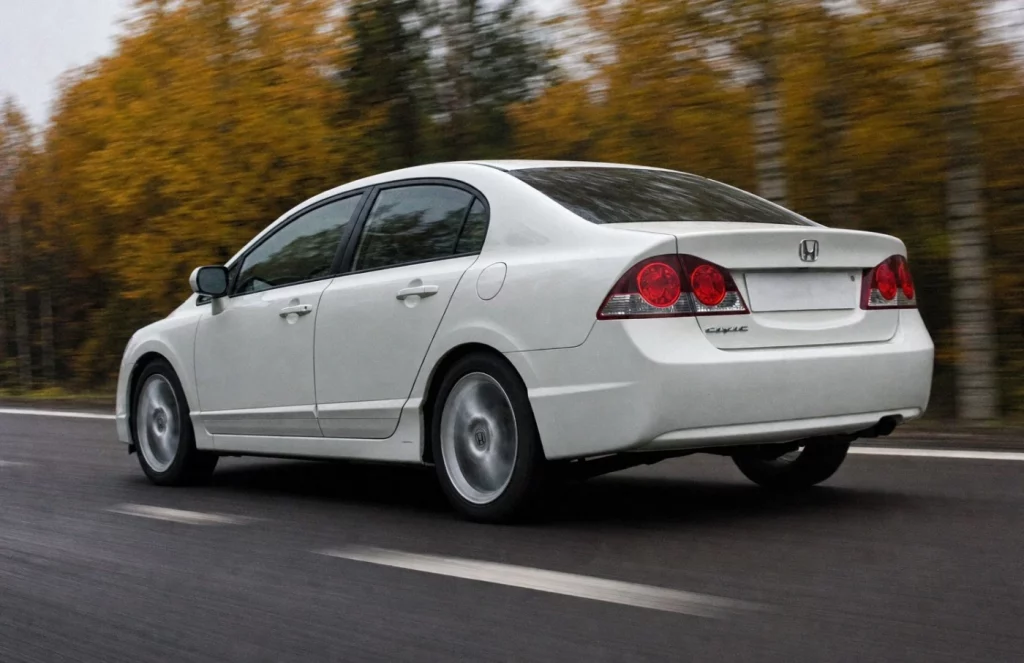
Was There a 8th Gen Civic Transmission Class Action?
This is the most common question owners search for, and the answer is clear: There was not a broad U.S. class-action settlement covering automatic transmission failures in 2006–2011 Honda Civic models.
Honda faced two major automatic transmission class-action lawsuits, and neither one covered the 8th gen Civic directly. The first, settled in 2006, addressed defective automatic transmissions in 1999–2004 Civic, Odyssey, and Accord models. The second, settled in January 2021 in California (Case et al. v. American Honda Motor Co., Inc.), targeted 5-speed automatic transmissions in 2003–2004 Accord, 2002–2004 Odyssey, 2003–2004 Pilot, and 2001–2002 Acura MDX. That lawsuit alleged a defective third clutch pack causing sudden downshifts from 5th to 2nd gear AT highway speed.
What was actually covered by class actions involving the 8th gen Civic:
| Issue | Civic Years | What Happened |
|---|---|---|
| Rear suspension / premature tire wear | 2006–2007 Civic (including Hybrid) | Class action settlement — Keegan v. American Honda — rear control arm causing uneven tire wear |
| Hybrid rear suspension | 2006–2007 | Included in the same Keegan class action |
| Hybrid CVT / start-clutch issues | Various Hybrid years | Honda TSBs and warranty actions, not the same as a broad transmission class action |
| 5-speed automatic transmission failure | 2006–2011 Civic | No broad U.S. transmission class-action settlement found |
Do not confuse these Honda lawsuits:
- 8th Gen Civic rear suspension lawsuit (Keegan v. American Honda) — not a transmission lawsuit
- 1999–2004 Honda transmission lawsuit — not 8th gen Civic
- 2012–2016 Odyssey transmission class action (MacDougall v. American Honda) — not Civic at all
What Honda did acknowledge for the 8th gen Civic transmission was a series of Technical Service Bulletins (TSBs), fluid specification changes, and — for the Si — a specific TSB covering the 3rd gear pop-out issue. None of these constituted a recall or a warranty extension specific to the 8th gen Civic automatic transmission, but they are documented evidence that Honda was aware of the issues.
8th Gen Civic Transmission Overview
The 8th generation Civic was offered with four different transmissions depending on trim level:
| Transmission | Models | Key Characteristics |
|---|---|---|
| 5-speed automatic | DX, LX, EX, EX-L (non-Si) | Standard automatic; torque converter clutch shudder is the most common complaint |
| 5-speed manual | DX, LX (base trims) | Simple, durable design; clutch wear is the main issue at high mileage |
| 6-speed manual (MBS6) | Si (FA5 sedan, FG2 coupe) | Helical LSD; 3rd gear pop-out and synchro grind are documented problems — TSB 08-020 |
| CVT (continuously variable) | Hybrid (exclusive) | Start-clutch judder; separate maintenance requirements from conventional automatics |
Each transmission requires a different diagnostic approach, maintenance schedule, and repair strategy. The most common mistakes are applying automatic transmission diagnosis to the Hybrid CVT, or confusing the Si 6-speed manual problems with the base 5-speed manual.
Part 1: 5-Speed Automatic Transmission — Problems & Solutions
The five-speed automatic fitted to the non-Si 8th gen Civic is a conventional hydraulic automatic with a torque converter. It is a proven design that, when properly maintained, routinely reaches 200,000 miles. However, it has three specific weaknesses that owners commonly encounter: torque converter clutch (TCC) shudder, gear-hunting at highway speeds, and hard shifts at low speed.
The Core Problem: Torque Converter Clutch Shudder
The most consistent complaint across 8th gen Civic automatic owners is torque converter clutch shudder. The symptom appears as a vibration or shaking sensation — described by owners as “shakes like a dog pooping broken glass” in one widely-cited forum post — occurring most often between 40–60 mph as the torque converter lockup clutch engages or disengages. The shudder can also appear at lower speeds during 1st-to-2nd and 2nd-to-3rd transitions, particularly on cold starts or in stop-and-go traffic.
Honda technicians who contacted the Honda Tech Line about this issue were told it was not uncommon for 8th gen Civics to exhibit TCC shudder. The root cause in most cases is not mechanical failure of the torque converter itself — it is fluid degradation. The friction modifier package in Honda ATF breaks down over time, reducing the smooth engagement of the lockup clutch. When the clutch cannot engage cleanly, it chatters, producing the characteristic shudder.
The critical variable is fluid type. Honda originally specified ATF-Z1 for the 8th gen automatic. In November 2010, Honda Service News announced that ATF-Z1 was being replaced by Honda ATF DW-1 across all applicable models. DW-1 has an improved friction modifier package and is backward-compatible with ATF-Z1 applications. Owners who used non-Honda ATF, or who mixed fluid types, reported significantly higher rates of TCC shudder and premature torque converter wear.
Gear-Hunting and Early Upshift: The Software Problem
Separate from TCC shudder, 8th gen Civic automatic owners reported two distinct shift quality complaints from early in the model’s life. The first was aggressive early upshifting at low rpm — the transmission would climb to 5th gear at unusually low speeds to optimize fuel economy, leaving the engine lugging and the car feeling unresponsive. The second was gear-hunting on the highway: the transmission would repeatedly cycle between 4th and 5th gear for no apparent reason, particularly at steady cruise speeds.
Honda acknowledged both behaviors through an ECU/PCM reflash. The software update adjusted shift points and torque converter lockup thresholds to reduce hunting and improve low-speed responsiveness. The reflash did not eliminate the behavior entirely — owners who received it reported improvement rather than a complete fix. The 8th gen automatic uses an adaptive learning algorithm that adjusts shift behavior based on driving history. Resetting the adaptive memory (by disconnecting the battery or using a scan tool) temporarily restored smoother behavior in some cases, which confirmed the software origin of the complaint.
Transmission Mounts Can Mimic Transmission Problems
One of the most overlooked causes of harsh engagement, clunking, and jerking on the 8th gen Civic is worn transmission mounts. The mounts are rubber components that isolate the transmission from the chassis. Over time, the rubber hardens, cracks, or collapses. A worn mount can produce symptoms that feel like internal transmission failure: clunking on engagement, harsh 1–2 shifts, vibration at idle, and jerking during acceleration or deceleration.
The critical distinction: not every transmission jerk is an internal transmission failure. If the transmission shifts smoothly when the car is stationary but clunks or jerks when power is applied, suspect the mounts first. If the shift quality degrades progressively over time and is accompanied by a vibration at idle that disappears when the transmission is in Neutral, mounts are the likely cause.
Replacing the transmission mounts is a $150–$300 repair at an independent shop, compared to $1,000+ for an internal transmission rebuild. Always inspect the mounts before assuming the transmission has failed.
Symptom Map: What You Feel and When
| Symptom | Speed / Condition | Most Likely Cause | First Step |
|---|---|---|---|
| Vibration / shudder at cruise | 40–60 mph, steady throttle | TCC lockup clutch chatter; degraded ATF friction modifier | Double drain-and-fill with Honda ATF DW-1 |
| Shudder on 1–2 or 2–3 shift | 10–30 mph, light acceleration | TCC engaging early; fluid degradation; wrong ATF type | Verify ATF type; drain-and-fill 2–3 times |
| Transmission hunting 4th–5th | Highway cruise, flat road | PCM shift logic; adaptive memory drift | Request ECU reflash at dealer; reset adaptive memory |
| Jerk or clunk at 10–15 mph | Low-speed acceleration from near-stop | TCC engaging at abnormally low speed; adaptive memory | ATF change; PCM reflash; check mounts |
| Loud humming in Park or Reverse | Stationary; engine warm | Torque converter bearing wear; internal pump noise | Transmission inspection; torque converter replacement |
| Hard downshift 2nd–1st on stop | Decelerating to a full stop | Worn clutch pack; fluid breakdown; high mileage | ATF change; if persistent, internal inspection |
| Clunk on engagement (D or R) | Stationary, shifting from P or N | Worn transmission mount or driveline lash | Inspect mounts before assuming internal failure |
The ATF Fix: Why Multiple Drain-and-Fills Work
The most consistently effective repair for 8th gen automatic shudder is a series of ATF drain-and-fills using Honda ATF DW-1. A single drain removes approximately 2.5–3 quarts from the pan, but the torque converter retains roughly 1.5–2 quarts of old fluid. A single drain-and-fill therefore replaces only about 60–65% of the total fluid volume. Performing two or three drain-and-fills in succession — driving briefly between each to circulate fresh fluid through the converter — progressively dilutes and replaces the degraded ATF.
Owners who performed four consecutive drain-and-fills reported the ATF returning to a cherry-red color by the final drain, confirming full replacement of contaminated fluid. Multiple forum members with 200,000+ mile 8th gen automatics attribute their transmission longevity entirely to this practice, performed at 25,000–50,000 mile intervals. One owner documented resolving a 40,000-mile shudder complaint that Honda dealers had failed to diagnose by performing two drain-and-fills at home.
The total fluid capacity of the 8th gen automatic is approximately 4.5 quarts. The drain plug torque specification is 49 N·m (36 lb·ft) with a new crush washer. Fluid level must be checked with the engine warm, running, and after cycling through all gear positions (P–R–N–D–3–2–1 and back). Checking with the engine off produces an inaccurate reading.
When ATF Changes Do Not Fix It: Torque Converter Replacement
If three or four drain-and-fills with Honda ATF DW-1 do not eliminate the shudder, the torque converter lockup clutch has worn beyond the point where fresh fluid can restore proper engagement. At this stage, the converter requires replacement. Honda technicians confirmed to the Tech Line that torque converter replacement is the correct repair for persistent TCC shudder on 8th gen Civics after fluid changes have been exhausted.
Torque converter replacement on the 8th gen Civic requires transmission removal. The converter is not serviceable in-vehicle. An independent transmission specialist will typically charge $600–$1,200 for the converter itself plus $400–$700 in labor, bringing the total to $1,000–$1,900 depending on region and whether the transmission is inspected internally at the same time. A Honda dealer will charge at the higher end of this range. If the transmission shows additional wear internally — clutch pack degradation, worn bands — a full rebuild or remanufactured unit becomes the more cost-effective path.
P0700 and Transmission Codes
When the check engine light illuminates with code P0700 on an 8th gen Civic, many owners panic and assume the transmission is failing. P0700 is not a diagnosis — it is a request to inspect transmission-control fault information. The underlying code matters far more than the P0700 itself.
P0700 means the PCM has detected a fault in the transmission control system and is requesting that a transmission-specific diagnostic trouble code (DTC) be read. To retrieve the actual transmission code, you need a scan tool capable of reading manufacturer-specific transmission codes (not just generic OBD2 codes). The underlying code — such as P0740 (torque converter clutch circuit malfunction), P0753 (shift solenoid A electrical), or P0717 (input speed sensor circuit) — tells you which component is actually at fault.
Common underlying transmission codes on the 8th gen automatic include:
- P0740: Torque converter clutch circuit — often related to the TCC solenoid or lockup clutch
- P0753 / P0758: Shift solenoid A or B electrical — typically a failed solenoid or wiring issue
- P0717: Input speed sensor circuit — sensor failure or wiring damage
- P0843: Transmission fluid pressure sensor — may indicate internal pressure loss
Do not replace the transmission based on P0700 alone. Retrieve the underlying code, check the fluid condition, test the solenoids, and diagnose the specific circuit before committing to a major repair.
Shift Solenoids: Testing and Replacement
The 8th gen automatic uses shift solenoids to control hydraulic pressure to the clutch packs. Solenoid failure is one of the most common electrical causes of shift problems. Symptoms include: delayed engagement into Drive or Reverse, harsh shifts, a transmission that gets stuck in a single gear (limp mode), or no engagement at all.
Testing a shift solenoid is straightforward with a multimeter. Each solenoid has a specified resistance range — typically 3–15 ohms depending on the specific solenoid. A resistance reading outside the specified range (open circuit or short circuit) confirms the solenoid has failed. The solenoids are accessible by removing the transmission fluid pan, which is a straightforward DIY job on the 8th gen Civic.
Replacing a shift solenoid costs approximately $50–$150 for the part and $150–$300 for labor at an independent shop. This is a fraction of the cost of a transmission replacement, and it solves the problem in most electrical-related cases.
Honda ATF DW-1: The Correct Fluid
The 8th gen automatic requires Honda ATF DW-1 or the older ATF-Z1 (which is discontinued). DW-1 is the direct replacement for Z1 and is backward-compatible. Do not use universal ATF, Dexron, Mercon, or any non-Honda fluid. The friction modifier package in Honda ATF is specifically formulated for the clutch materials in Honda transmissions. Using the wrong fluid causes shudder, hard shifts, and eventual clutch failure.
The fluid should be inspected at every oil change. Fresh Honda ATF DW-1 is cherry-red and has a slightly sweet odor. Dark brown or black fluid with a burnt smell indicates internal clutch wear and heat damage — at this stage, the damage may be permanent even after a fluid change.
Honda’s official service interval for ATF changes is every 60,000 miles under normal conditions. However, owners and specialists recommend a 25,000–30,000 mile interval for high-mileage units or cars that are driven hard. The cost of a single DIY drain-and-fill is $20–$35 — a trivial expense compared to a $2,000+ transmission replacement.
Part 2: 5-Speed Manual Transmission — Problems & Solutions
The base 5-speed manual transmission fitted to the DX and LX trims of the 8th gen Civic is a simple, robust unit that is generally reliable. It does not share the 3rd gear problems of the Si’s 6-speed manual. However, like any manual transmission with age and mileage, it suffers from wear-related issues: clutch wear, gear grinding, difficult engagement, and hydraulic problems.
Clutch Wear and Slipping
Clutch wear is the most common issue on high-mileage 5-speed manuals. The symptom is the engine rpm rising faster than vehicle speed under hard acceleration — the clutch is slipping. A slipping clutch is most noticeable in higher gears (3rd, 4th, 5th) under load. If the clutch slips, it must be replaced. The typical lifespan of a Honda clutch on the 8th gen Civic is 80,000–150,000 miles depending on driving style.
Clutch replacement on the 8th gen Civic requires removing the transmission. The parts cost is $150–$350 for a quality clutch kit (Exedy, Luk, or OEM). Labor at an independent shop is typically $500–$800, bringing the total to $700–$1,100. A Honda dealer will charge significantly more.
Grinding Gears and Synchro Wear
Synchro wear on the base 5-speed manual is less common than on the Si’s 6-speed, but it does occur at high mileage. The symptom is a grinding noise when attempting to engage a gear — most often 2nd or 3rd — especially when shifting quickly. The cause is the synchronizer ring (blocker ring) wearing, losing its ability to match the speed of the gear and Hub. The fix for a worn synchro is a transmission rebuild with new synchronizer rings — a specialist job costing $600–$1,200.
Important: Grinding on the base 5-speed manual is usually synchro wear, not the same 3rd gear pop-out defect that affects the Si. Do not apply the Si-specific TSB 08-020 diagnosis to the base manual transmission.
Clutch Hydraulic Issues: Master and Slave Cylinder
The clutch hydraulics — Master Cylinder and slave cylinder — on the 8th gen Civic are known to wear out around 100,000–150,000 miles. The symptom is a clutch pedal that feels spongy, engages very low to the floor, or does not fully disengage (making it hard to shift into gear). The problem is internal leakage in the master cylinder or slave cylinder.
The master cylinder is located in the engine bay, attached to the firewall. The slave cylinder is mounted on the transmission. Replacing either is a straightforward DIY job. Parts cost is $40–$90 each, and labor at a shop is $150–$250. Replacing both cylinders and bleeding the clutch hydraulic system typically resolves the issue.
Do not immediately blame the transmission for hard shifting. A failing master or slave cylinder will cause the exact same symptoms as internal transmission wear — difficulty engaging gears, grinding, and a clutch that does not fully disengage. Check and bleed the clutch hydraulics before assuming the transmission has failed.
Shifter Cables and Linkage
The shifter cables on the 8th gen Civic can stretch, bind, or wear over time. The symptom is a sloppy or vague shift feel — the gear lever has excessive play or does not reliably engage gears. Replacing the shifter cables is a $150–$300 repair at a shop, or a $60–$120 DIY job. Adjusting the cable tension at the transmission end (using the factory adjustment procedure) can also resolve minor issues without replacing the cables.
Part 3: Civic Si 6-Speed Manual (MBS6) — The 3rd Gear Pop-Out
The 6-speed manual transmission (MBS6) in the 8th generation Civic Si (2006–2011) has a documented and widely recognized flaw: the 3rd gear pop-out and synchro grind. This problem was severe enough that Honda issued Technical Service Bulletin 08-020 in April 2008 and, under legal pressure, provided free repairs to owners within the powertrain warranty period.
TSB 08-020: What Honda Acknowledged
Honda issued TSB 08-020 (“Pop-Out or Stiffness When Shifting Into 3rd Gear”) covering 2006–2008 Civic Si models. The bulletin stated that the transmission synchronizer for 3rd gear had a manufacturing defect in the material and geometry of the engagement sleeve and synchronizer cone. Under load, particularly at high rpm in the VTEC range (above 6,000 rpm), the 3rd gear would physically pop out of engagement into neutral — a sudden loss of drive that was described as a safety concern.
Under the terms of the class-action settlement that followed, Honda was required to rebuild the transmission for affected owners free of charge within the 5-year / 60,000-mile powertrain warranty. The repair involved removing the transmission, replacing the 3rd gear set, the synchronizer hub, sleeve, and related components with an updated revision featuring a revised gear tooth angle. The updated parts resolved the issue permanently.
The 2026 reality: All warranty obligations under this TSB and the associated settlement have long expired. If you are buying a used 8th gen Civic Si today and the 3rd gear pops out or grinds, the cost of a full transmission rebuild is $1,800–$2,800 at an independent transmission specialist. There is no free repair program currently active.
Diagnosing the Si 3rd Gear Problem
The symptoms of the Si 3rd gear defect are distinct and easy to identify on a test drive:
- The sudden pop-out: You shift into 3rd, accelerate under heavy throttle, and the gear lever physically jumps into neutral with a loud clunk. This is the classic failure mode.
- The “brick wall” resistance: When trying to shift quickly from 2nd to 3rd at high rpm (especially above 6,000 rpm), the shifter feels like it is hitting a physical stop. The gear refuses to engage until rpm drops.
- High-rpm grind: Engaging 3rd gear produces a grinding, metallic noise even with the clutch pedal fully depressed.
- Shift gate vagueness: The 3rd gear position in the shift pattern feels vague, with no positive detent when the gear is fully engaged.
If the car exhibits any of these symptoms, the transmission requires internal work. There is no external adjustment or fluid change that will fix a worn synchronizer — the only permanent fix is replacing the 3rd gear set and synchronizer components.
The Amsoil Synchromesh Hack
While a mechanical failure of the synchronizer requires internal repair, there is a widely documented fluid swap that can dramatically reduce or eliminate the grind and pop-out symptoms on the Si, provided the transmission is not already severely damaged. The OEM Honda Manual Transmission Fluid (MTF) was found to be too thin at high temperatures, reducing the synchronizer’s ability to match gear speeds.
The forum-developed solution: drain the OEM Honda MTF and fill with Amsoil Manual Synchromesh Transmission Fluid (5W-30). This fluid has a friction modifier package specifically designed for synchronizers made of yellow metals (brass, bronze). In 80% of cases, a simple fluid change to Amsoil Synchromesh eliminates the 3rd gear pop-out and grind on cars with moderate wear.
An alternative is GM Synchromesh Friction Modified (GM #12377916). This fluid works similarly to the Amsoil and is equally effective. Both fluids are readily available at auto parts stores and online retailers.
Important: The fluid change is a band-aid, not a permanent fix. It reduces the grind by improving synchronizer friction, but it does not repair a worn synchronizer ring or a damaged engagement sleeve. If the transmission is already popping out of gear under load, the fluid change may reduce the frequency but will not eliminate the mechanical failure.
Shifter Cable Bushings: An Easy Upgrade
The Si has rubber shifter cable Bushings in the engine bay that harden and crack with age, introducing play in the shift linkage. This slop makes it harder to consistently engage 3rd gear cleanly. Replacing the rubber bushings with aluminum or brass aftermarket bushings (from Acuity Instruments or Hybrid Racing, approximately $40) removes the play and allows the shifter to engage each gear more positively. This is not a repair for a worn synchronizer, but it does improve shift feel and can reduce the frequency of missed shifts.
Part 4: Civic Hybrid CVT — Separate and Different
The 8th generation Civic Hybrid (2006–2011) uses a continuously variable transmission (CVT) that is entirely different from the conventional 5-speed automatic in the non-Hybrid models. Do not apply the conventional automatic-transmission diagnosis in this section to the Civic Hybrid CVT.
The Hybrid CVT has a unique feature: an integrated start clutch that engages and disengages during Auto Idle Stop operation (the engine shutting off at traffic lights). This start clutch is the source of the most common Hybrid-specific drivability complaints.
Hybrid CVT Start-Clutch Judder
The start clutch is a wet clutch integrated into the CVT that engages when the car accelerates from a stop. Over time, the clutch can develop judder — a shuddering or shaking sensation when pulling away from a stop, particularly when the car is cold or when the Auto Idle Stop system has just restarted the engine.
Honda issued multiple TSBs and calibration updates to address start-clutch judder on Hybrid models. In some cases, Honda provided warranty extensions for this issue, but the terms varied by year and mileage. If you are experiencing start-clutch judder on a Hybrid, the first step is to visit a Honda dealer and inquire about any open recalls, warranty extensions, or calibration updates that apply to your specific VIN.
The repair for start-clutch judder typically involves one or more of the following: a software update (recalibrating the CVT control logic), a CVT fluid change with Honda-specific CVT fluid, or, in severe cases, replacing the start clutch assembly or the entire CVT. The cost of a CVT replacement on the Hybrid is $2,500–$5,000, making it a potentially uneconomical repair on an older car.
Important: The Hybrid CVT requires Honda-specific CVT fluid. Using the wrong fluid will cause shudder, slipping, and eventual CVT Failure. Do not use the same ATF as the 5-speed automatic — they are not compatible.
8th Gen Automatic vs. 9th Gen CVT: Which Is More Reliable?
Owners of the 8th gen Civic often wonder whether the 9th generation Civic’s CVT is more or less reliable than the 8th gen’s 5-speed automatic. The table below provides a direct comparison:
| Factor | 8th Gen 5-Speed Auto (2006–2011) | 9th Gen CVT (2014–2015) |
|---|---|---|
| Class-action lawsuit | None specific to this generation | None; federal safety recall 15V574 instead |
| Primary failure mode | TCC shudder; gear-hunting; fluid sensitivity | Belt wear; pulley shaft fracture; fluid sensitivity |
| Fluid change interval | Every 30,000–60,000 miles; 25,000 recommended by specialists | Every 25,000–30,000 miles; non-negotiable |
| Tolerance for deferred maintenance | Moderate — shudder develops but rarely causes sudden failure | Low — belt failure can be sudden and catastrophic |
| Typical high-mileage outcome (maintained) | 200,000+ miles documented with regular ATF changes | 150,000+ miles documented with strict fluid discipline |
| Repair cost (torque converter / belt failure) | $1,000–$1,900 (converter replacement) | $2,500–$5,000+ (CVT replacement) |
| Overall verdict | More forgiving; proven design; cheaper to repair | Better fuel economy; higher failure cost when neglected |
The 8th gen automatic is more reliable and less expensive to repair than the 9th gen CVT. While the 8th gen automatic has its quirks (TCC shudder, gear-hunting), these are almost always resolved with fluid changes and software updates. The CVT in the 9th gen has a higher catastrophic failure rate when maintenance is neglected, and the repair cost is significantly higher.
When a Transmission Is Actually Failing
Not every transmission problem means the transmission is failing. However, there are red flags that indicate irreversible internal damage:
- Persistent slipping: The engine revs but the car does not accelerate — or accelerates slowly — even with the transmission in gear. This indicates worn clutch packs or bands.
- RPM flare: The engine rpm rises unexpectedly between shifts, indicating internal slippage.
- Severe delayed engagement: It takes several seconds for Drive or Reverse to engage after selecting the gear.
- Inability to engage Drive or Reverse: The transmission selects the gear but the car does not move.
- Repeated transmission DTCs: The same transmission codes keep returning after repairs.
- Burnt fluid with metal debris: Dark brown or black fluid with metallic particles in the pan confirms internal wear.
- Loss of multiple gears: The transmission will not engage two or more gears.
- Severe noise: Whining, grinding, or clunking from the transmission area that changes with gear selection.
If any of these symptoms are present, the transmission likely requires internal repair or replacement. In many cases, a remanufactured transmission from a reputable supplier is more cost-effective than a rebuild, especially on high-mileage units with multiple failure modes.
When NOT to Replace the Transmission
Before authorizing a transmission replacement, check the following:
- Fluid condition: Is the fluid at the correct level? Is it the correct type? Has it been changed recently? Many transmission problems are resolved with a simple fluid change.
- Mounts: Are the transmission and engine mounts worn? Worn mounts cause harsh engagement, clunking, and vibration that mimics internal failure.
- Solenoids: Have the shift solenoids been tested? A $50–$150 solenoid can cause the same symptoms as a $2,000 transmission failure.
- Sensors: Have the input and output speed sensors been checked? A failed sensor can cause erratic shifting and transmission codes.
- Wiring: Is there corrosion or damage in the transmission Wiring Harness or connector? A broken wire can cause the transmission to go into limp mode.
- Transmission codes: Have you retrieved the underlying DTC? P0700 is not a diagnosis — it is a request for further inspection.
- Shift-control system: On manual transmissions, have the clutch hydraulics been bled and tested? A failing master cylinder causes the same symptoms as a worn clutch.
These checks can save you from a $2,000+ transmission replacement when the problem was a $50 solenoid, a $100 mount, or a $30 fluid change.
Used 8th Gen Civic Transmission Inspection Checklist
If you are test-driving an 8th gen Civic, use this checklist to evaluate the transmission:
- Cold start — check for abnormal idle or transmission engagement noise
- Reverse engagement — does it engage smoothly without delay or clunk?
- Drive engagement — does it engage smoothly without delay or harshness?
- 1–2 shift — smooth or harsh? Any shudder?
- 2–3 shift — smooth or harsh? Any shudder or grinding (especially important on Si)?
- 3–4 shift — smooth or harsh? Any gear-hunting?
- 4–5 shift — smooth or harsh? Any gear-hunting on the highway?
- Downshifts — smooth or harsh during deceleration?
- Highway cruise — any TCC shudder at 45–60 mph (automatic)?
- Kickdown — does the transmission downshift properly under hard acceleration?
- Slipping — does the engine rpm flare without corresponding acceleration?
- Shudder — any vibration during acceleration or cruise?
- Scan for transmission codes — even if the check engine light is off, stored codes may exist
- Inspect fluid — check color and smell (red = good; brown/black + burnt smell = bad)
- Verify service history — has the ATF been changed regularly (automatic) or MTF (manual)?
On the Si specifically: Perform a full-throttle 2nd-to-3rd shift above 6,000 rpm. If the 3rd gear pops out, grinds, or refuses to engage, the transmission requires the TSB 08-020 repair — a $1,800–$2,800 job today. Walk away or negotiate the repair cost.
On the Hybrid: Pay particular attention to engagement from a stop, especially immediately after the Auto Idle Stop system restarts the engine. Any shudder or hesitation suggests start-clutch issues.
Repair Cost Summary
| Repair | Cost Range (USD) | Notes |
|---|---|---|
| ATF drain-and-fill (single — automatic) | $60–$120 (shop) / $20–$35 (DIY) | Honda ATF DW-1 only; 2.2–2.5 qt per drain |
| ATF double/triple drain-and-fill (automatic) | $120–$300 (shop) / $60–$100 (DIY) | Most effective fix for TCC shudder; resolves majority of cases |
| PCM / ECU reflash (automatic) | $0 (under warranty) / $80–$150 (out of warranty) | Addresses gear-hunting and low-speed jerk; partial improvement |
| Torque converter replacement (automatic) | $1,000–$1,900 | Requires transmission removal; correct repair when ATF changes fail |
| Transmission rebuild (automatic — internal wear) | $1,500–$2,500 | Specialist shop; warranted when clutch packs show wear alongside TCC |
| Remanufactured transmission (automatic — installed) | $2,000–$3,000 | Most cost-effective path for high-mileage units with multiple failure modes |
| Clutch replacement (5-speed manual) | $700–$1,100 | Parts + labor; Exedy, Luk, or OEM clutch kit |
| Manual transmission synchro rebuild | $600–$1,200 | Specialist job; typically required for 2nd or 3rd gear grind |
| Clutch master or slave cylinder (manual) | $150–$250 per cylinder (shop) / $40–$90 (DIY) | Hydraulic issue mimics internal transmission wear |
| Si 3rd gear transmission rebuild (TSB 08-020) | $1,800–$2,800 | Full internal overhaul with updated 3rd gear set; warranty expired |
| Hybrid CVT start-clutch repair | $800–$1,500 | May include software update, fluid change, or clutch replacement |
| Hybrid CVT replacement | $2,500–$5,000 | Catastrophic failure; often exceeds vehicle value on high-mileage cars |
| Transmission mount replacement | $150–$300 (shop) / $60–$120 (DIY) | Often misdiagnosed as internal transmission failure |
| Shift solenoid replacement (automatic) | $200–$450 (shop) / $50–$150 (DIY) | Electrical failure; can mimic total transmission failure |
The Long-Term Verdict
The 8th gen Civic automatic is not a bad transmission. Owners who maintained it with Honda ATF DW-1 at 25,000–30,000 mile intervals routinely reached 200,000 miles without major mechanical failure. The TCC shudder complaint, while widespread, is almost always a fluid problem rather than a structural one — and it responds to the correct fluid change protocol in the majority of cases.
The Si’s 6-speed manual is a legendary transmission — when it works. The 3rd gear pop-out defect is real, documented, and expensive to repair outside of warranty. But the fluid swap to Amsoil Synchromesh and the Acuity/Hybrid Racing shifter bushings buy significant time and can eliminate the problem entirely on cars with moderate wear.
The Hybrid CVT is the most fragile of the three transmissions. It requires strict maintenance with Honda-specific CVT fluid and is the most expensive to repair when it fails. The start-clutch judder is the most common complaint, and while software updates and fluid changes often resolve it, replacement is a $2,500–$5,000 proposition.
What the 8th gen transmission lineup does not deserve is the class-action reputation that follows it online. The lawsuits that defined Honda’s automatic transmission legacy targeted earlier generations with a genuinely defective third clutch pack. The 8th gen units have different, less severe problems: a torque converter lockup clutch sensitive to fluid quality, a 6-speed manual with a synchronizer defect, and a CVT with start-clutch judder. Those are real issues, but they are maintenance and calibration problems — not the structural defects that drove the 1999–2004 litigation.
If you are buying a used 8th gen Civic, the transmission evaluation is straightforward: verify service history, perform fluid changes immediately if history is unknown, test-drive thoroughly at all speeds and conditions, and — on the Si — perform the VTEC-range 3rd gear test. A well-maintained 8th gen transmission will serve you well for many thousands of miles.
8th Gen Transmission Owner Checklist
☐ Identify your transmission type: 5-speed automatic, 5-speed manual, 6-speed manual (Si), or Hybrid CVT — the repair approach is different for each
☐ On the automatic: verify ATF type — must be Honda ATF DW-1; never mix with non-Honda fluid
☐ On the automatic: if ATF history is unknown, perform double drain-and-fill with DW-1 immediately
☐ On the automatic: test-drive at 45–60 mph steady cruise to check for TCC shudder
☐ On the automatic: if shudder persists after three drain-and-fills, schedule torque converter inspection
☐ On the automatic: request PCM reflash at dealer if gear-hunting or low-speed jerk is the primary complaint
☐ On the automatic: schedule ATF changes every 25,000–30,000 miles going forward
☐ On the Si 6-speed: perform high-rpm 2nd-to-3rd shift test above 6,000 rpm — any pop-out or grind requires internal work
☐ On the Si 6-speed: if grinding or pop-out is mild, try Amsoil Synchromesh or GM Synchromesh Friction Modified as a band-aid
☐ On the Si 6-speed: replace rubber shifter cable bushings with aluminum/brass units from Acuity or Hybrid Racing
☐ On the 5-speed manual: check clutch operation — spongy pedal or engagement near the floor indicates hydraulic issues
☐ On the 5-speed manual: bleed clutch hydraulics and check master/slave cylinders before replacing the clutch
☐ On the Hybrid CVT: check for start-clutch judder from a stop, especially after Auto Idle Stop engagement
☐ On the Hybrid CVT: use only Honda-specific CVT fluid — do not use ATF DW-1
☐ On all transmissions: inspect fluid color and smell — red = good; dark brown/black with burnt smell = internal wear
☐ On all transmissions: check engine and transmission mounts — worn mounts mimic internal transmission failure
☐ On all transmissions: retrieve transmission DTCs even if the check engine light is off — P0700 is not a diagnosis
☐ On all transmissions: if replacement is being considered, get a second opinion from a transmission specialist