

The question sounds simple — a $15,000 price gap between two manual-transmission Civic performance variants — but the answer runs deeper than a spec sheet. The Si and Type R share the same basic architecture, the same transmission type, the same front-wheel-drive layout, and the same Honda badge. Everything else is different. Engine, suspension, brakes, body structure, interior, and intent.
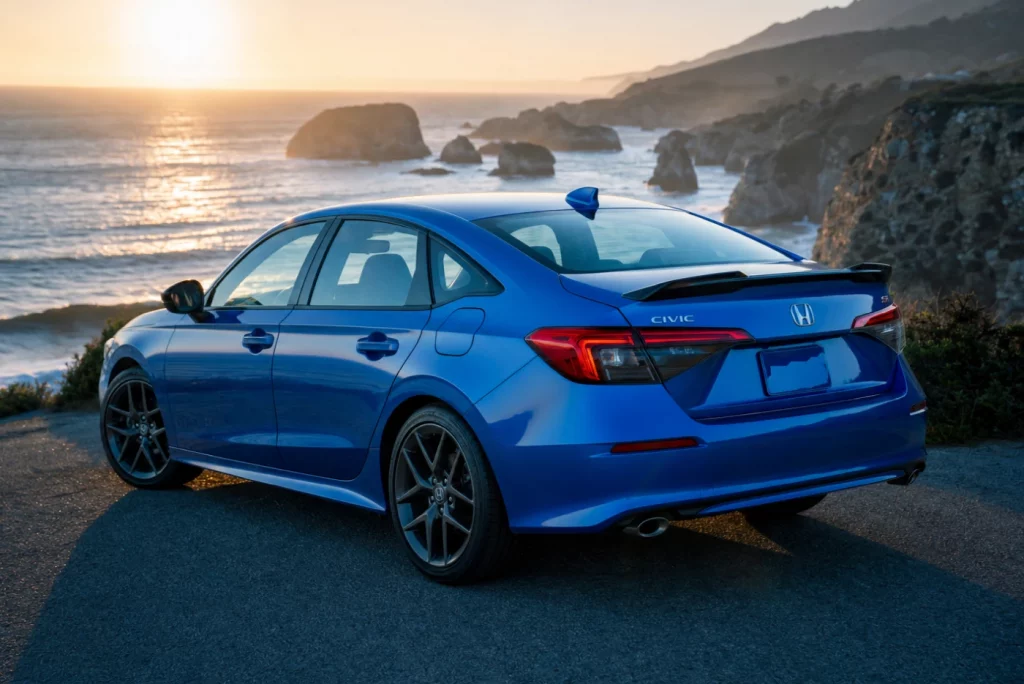
The 11th generation (2022-present) widened the gap compared to the 10th generation. A 10th Gen (2017–2021) Si started around $25,000 and a FK8 Type R at approximately $35,000 — a $10,000 spread. The 11th Gen Si starts at $31,495 and the FL5 Type R at $46,895 (2026 pricing), pushing the gap to roughly $15,400. The Type R has moved upmarket, while the Si remains priced near the top of mainstream compact Sport sedans.
The most important rule of Si vs Type R: The Type R is not a faster Si. It is a fundamentally different car with a different engine, different suspension, different brakes, and a different body structure. The $15,000 buys more than horsepower — it buys a different engineering philosophy.
Quick Verdict — Si vs Type R in 30 Seconds
| Factor | Si | Type R | Winner |
|---|---|---|---|
| Price (2026) | $31,495 | $46,895 | Si |
| Horsepower | 200 hp | 315 hp | Type R |
| Torque | 192 lb-ft | 310 lb-ft | Type R |
| Engine | 1.5T L15B7 | 2.0T K20C1 | Type R |
| Brakes | Single-piston | Brembo 4-piston | Type R |
| Suspension | Adaptive dampers | Adaptive + Dual-Axis | Type R |
| Body width | 70.9 in | 74.4 in | Type R |
| Heated seats | Yes | No | Si |
| Cargo space | 14.4 cu ft (trunk) | 24.5 cu ft (hatch) | Type R |
| MPG combined | 31 mpg | 24 mpg | Si |
| Insurance cost | Lower | Higher | Si |
| Best value | Yes | — | Si |
| Best performance | — | Yes | Type R |
The bottom line: The Si is the best performance value in Honda’s lineup. The Type R is one of the best front-wheel-drive performance cars ever built. The Si is the smarter financial decision. The Type R is the better car for track use and serious enthusiasts. The $15,000 buys a fundamentally different car — not just more power.
The Spec Sheet — Where the $15,000 Goes
| Specification | Civic Si (11th Gen, 2022–2026) | Civic Type R (FL5, 2023–2026) |
|---|---|---|
| Starting MSRP (2026) | $31,495 | $46,895 |
| Engine | 1.5L L15B7 turbo I4 | 2.0L K20C1 turbo I4 |
| Horsepower | 200 hp @ 6,000 rpm | 315 hp @ 6,500 rpm |
| Torque | 192 lb-ft @ 1,800 rpm | 310 lb-ft @ 2,600 rpm |
| Redline | ~6,500 rpm | ~7,000 rpm |
| Transmission | 6-speed manual | 6-speed manual with rev-match |
| Limited-slip differential | Helical (mechanical) | High-performance helical (mechanical) |
| Front brakes | 12.3-inch discs, single-piston caliper | 13.8-inch discs, Brembo 4-piston caliper |
| Rear brakes | 11.1-inch discs | 12.0-inch discs |
| Suspension | Sport-tuned, adaptive dampers | Adaptive dampers (Comfort/Sport/+R) |
| Front stabilizer bar | 26.5 mm | 27.2 mm |
| Rear stabilizer bar | 17.0 mm | 19.5 mm |
| Tires | 235/40R18 all-season | 265/30R19 summer performance |
| Wheel size | 18 x 8.0-inch | 19 x 9.5-inch |
| Curb weight | 2,952 lb | 3,188 lb |
| Body style | Sedan only | Hatchback only |
| Width | 70.9 inches | 74.4 inches |
| Combined MPG | 31 mpg | 24 mpg |
| Annual fuel cost (EPA) | ~$1,850 | ~$2,400 |
| 0–60 mph (estimated) | ~6.6 seconds | ~4.9 seconds |
Sources: TrimAtlas (2026 Si vs Type R comparison), Honda.com (2026 Civic Si and Type R specs), Car and Driver instrumented testing, MotorTrend back-to-back comparison, MAPerformance engineering analysis, CivicX brake specification thread (Rotor/caliper sizes).
The $15,000 Breakdown — Where the Money Actually Goes
To understand whether the Type R is worth the premium, it helps to see exactly where the $15,000 goes. The breakdown below is based on engineering costs and hardware differences, not MSRP line items.
| Component | Estimated Value | What You Get |
|---|---|---|
| Engine (K20C1 vs L15B7) | $6,000 | Larger displacement, forged internals, dual-injection, bigger turbo, better cooling, 115 extra hp |
| Dual-Axis front suspension | $3,500 | Eliminates torque steer, wider track, unique knuckles and control arms, adaptive dampers |
| Brembo brakes | $2,500 | 4-piston calipers, 13.8-inch two-piece rotors, track-ready fade resistance |
| Interior & tech | $3,000 | Track seats, Honda LogR telemetry, wider body panels, unique aero, 19-inch wheels |
Engine Architecture — Same Company, Different Philosophy
The Si’s L15B7. A 1.5-liter turbocharged four-cylinder shared with the base-engine Acura Integra and broadly related to the engine Honda used in the CR-V and Accord. The Si version gets a unique boost MAP peaking at approximately 20.3 psi, a higher redline than the standard 1.5T, and a 6-speed manual as the only transmission. The torque curve is flat from 1,800 rpm, which makes the Si feel responsive in daily driving despite modest peak output.
The L15B7 has known long-term concerns: fuel dilution in the oil (a problem across Honda’s 1.5T family, documented in service bulletins and NHTSA complaints) and carbon buildup on the intake valves from direct injection. These are manageable issues — regular oil changes with the correct specification and occasional intake valve cleaning — but they are real maintenance items the K20C1 largely avoids through its dual-injection system.
The Type R’s K20C1. A 2.0-liter turbocharged four-cylinder with Honda’s most advanced production engine technology. The K20C1 uses both direct injection and port injection — a dual-injection system that keeps the intake valves clean (no carbon buildup issue) and improves low-load fuel economy. The block is reinforced with a closed-deck design and steel liners. The Turbocharger uses an electronically controlled wastegate and produces approximately 23 psi peak boost. The connecting rods and pistons are forged from the factory.
The K20C1 responds exceptionally well to tuning. Hondata and KTuner flash calibrations reliably produce 370–400 whp on the stock turbo with bolt-on modifications. The engine has proven durable at these power levels in the enthusiast community, with documented track cars running 30,000+ hard miles without internal failure.
The K20C1 is fundamentally a different class of engine — not just larger displacement, but engineered for sustained high-load operation in a way the L15B7 is not. This is the single largest cost driver in the $15,000 gap.
The engine difference: The Si’s 1.5T is a great engine for a sporty daily driver. The Type R’s 2.0T is a race engine that happens to be street-legal. The difference is not just in horsepower — it is in durability, cooling, and the ability to sustain high performance lap after lap.
Chassis and Body — The Type R Is a Different Car
This is the part of the price gap that is invisible on a spec sheet but immediately obvious driving the cars back to back.
Body structure. The Type R is built on the Civic hatchback platform with extensive reinforcement. It has additional structural adhesives, a reinforced front bulkhead, extra bracing in the rear, and a stiffer rear Subframe. Honda claims the FL5 body has 15% more torsional rigidity than the FK8, which was already significantly stiffer than the standard Civic. The Si uses the standard sedan body with strut tower bracing and minor structural upgrades — it is stiffer than a standard LX but not in the Type R’s category.
Dual-Axis front suspension. This is the single most significant engineering difference between the Si and Type R. The Type R’s front suspension separates the steering axis from the damper axis, eliminating torque steer entirely. The Si uses a conventional MacPherson Strut setup with sport tuning. On the Type R, you can floor it mid-corner and the steering wheel stays perfectly straight. On the Si, the steering wheel will pull under hard acceleration — the LSD helps, but it cannot completely eliminate torque steer.
Track width and body width. The Type R is 3.5 inches wider than the Si (74.4 inches vs 70.9 inches). The front track is approximately 2 inches wider, the rear track is similarly wider. The FL5 has wider front fenders and rear quarters to accommodate the 9.5-inch-wide wheels and 265-section tires. This is not a bolt-on — it requires unique body panels, suspension knuckles, control arms, and half-shafts.
Suspension hardware. Both cars have adaptive dampers, but they are tuned to different standards. The Si’s dampers are calibrated for sporty road driving with Normal and Sport modes. The Type R’s dampers have three modes (Comfort, Sport, +R) with a significantly wider range between Comfort and +R. In Comfort, the Type R is surprisingly livable for a track-focused car. In +R, the damping is aggressive enough for Nürburgring lapping sessions.
The Type R uses a larger rear stabilizer bar (19.5 mm vs 17.0 mm) and unique spring rates that increase front roll stiffness. The overall chassis balance is neutral with a slight rear-bias rotation under trail braking — the Si understeers earlier and requires more deliberate throttle modulation to rotate.
Brakes. The Si uses 12.3-inch front rotors with single-piston sliding Calipers — adequate for street driving and occasional back-road use. The Type R uses 13.8-inch two-piece floating rotors with Brembo 4-piston fixed calipers. The difference in braking performance is dramatic. The Si will experience brake fade after 2–3 consecutive hard stops from highway speeds. The Type R can lap a track session without significant fade.
The chassis difference: The Si is a sporty version of a commuter car. The Type R is a track car that happens to have Civic badges. The suspension, brakes, and body structure are fundamentally different — you cannot modify a Si to match a Type R’s chassis performance AT any reasonable cost.
Driving Feel — The Intangible Difference
Shifter and clutch. Both cars use 6-speed manual transmissions, but they feel different. The Type R’s shifter has shorter throws, more precise gate engagement, and a more mechanical feel. The Si’s shifter is good for the class — one of the better shifters available in a $30,000 car — but the Type R’s is in a different league. The Si’s clutch is lighter and more progressive, making it easier for daily traffic. The Type R’s clutch is heavier and requires more leg effort but provides better modulation for performance driving.
Auto rev-match. The Type R has defeatable automatic rev-matching on downshifts. The Si does not. The rev-match system on the FL5 is excellent — it blips the throttle with precision that most drivers cannot match — but it also reduces driver involvement. This is a philosophical difference: the Si is deliberately more analog, the Type R is optimized for maximum speed, even if that speed comes from computer assistance.
Steering. The Si’s steering is lighter and has more assist, with noticeable on-center deadiness in Normal mode. The Type R’s steering is heavier, more direct, and communicates more surface texture. Even in Comfort mode, the Type R’s steering is more responsive than the Si’s Sport mode.
Noise and vibration. The Si is quieter at highway speeds. The 265/30R19 summer tires on the Type R generate significant road noise, and the reduced sound deadening in the hatchback body lets more mechanical noise into the cabin. The Si is a better daily driver for the commute. The Type R is always telling you it is ready to go fast.
Interior and Practicality
Seats. The Si gets sport front seats with red stitching and prominent Si branding — comfortable and supportive, with good bolstering for spirited driving. The Type R gets heavily bolstered microsuede bucket seats with red accents. The Type R seats are more aggressive, with pronounced shoulder and thigh bolsters that make entry and exit more difficult but hold the driver in place during high-g cornering. The Type R seats are not ideal for larger drivers or long highway trips.
Heated seats. The Si has heated front seats (standard). The Type R does not — Honda omitted them to save weight and reduce cost. This is a significant daily-driver disadvantage for the Type R in cold climates.
Rear seat and cargo. The Si sedan has a traditional trunk with 14.4 cubic feet of space and a 60/40 split folding rear seat. The Type R hatchback has 24.5 cubic feet of cargo space with the rear seats up and significantly more with them folded. The hatchback configuration is substantially more practical for carrying bulky items. However, the Type R has no spare tire — only a repair kit — while the Si has a temporary spare.
Infotainment and features. The Si comes with a 9-inch touchscreen, wireless Apple CarPlay and Android Auto, a 12-speaker Bose audio system (highly regarded), heated front seats, and single-zone automatic climate control. The Type R has the same 9-inch screen and wireless smartphone integration but omits heated seats. The Type R interior is more focused but less comfortable for cold-weather daily driving.
Honda LogR. The Type R has exclusive access to Honda LogR — a telemetry system that displays boost pressure, oil temperature, Coolant temperature, and G-forces on the infotainment screen. It can also record lap times and driving data. The Si does not have this feature.
No sunroof. Neither car has a sunroof. Honda omitted it in both to save weight and improve chassis rigidity. This is a shared compromise.
Running Costs — The Type R Tax
The $15,000 price gap is only the purchase price. The Type R costs significantly more to own.
Tires. The Type R’s 265/30R19 summer tires cost approximately $250–$350 per tire versus $150–$200 for the Si’s 235/40R18 all-season tires. The Type R tires last about 15,000–20,000 miles in mixed driving, less with track use. The Si’s tires are good for 30,000–40,000 miles.
Brakes. Type R front brake pads and rotors cost roughly double the Si’s. A full brake job on the Type R (pads and rotors all around) runs $1,000–$1,500 at an independent shop versus $500–$800 for the Si.
Insurance. The Type R is classified as a high-performance vehicle and carries significantly higher insurance premiums. Typical estimates: 30–50% more than the Si for comparable coverage.
Fuel. The Type R uses premium fuel (91 octane recommended) and achieves 24 combined mpg. The Si uses regular fuel and achieves 31 combined mpg. The Type R owner spends roughly $550 more per year on fuel at average driving mileage (EPA annual fuel cost estimates: $2,400 vs $1,850).
Aftermarket parts. The Type R aftermarket is robust but expensive. A quality cat-back exhaust costs $1,200–$2,000 for the Type R versus $600–$1,000 for the Si. Intercoolers, intakes, and tuning follow a similar 2x cost ratio.
| Cost Category | Si (Annual) | Type R (Annual) | Difference |
|---|---|---|---|
| Fuel (12K mi/yr) | $1,300 | $1,850 | +$550 |
| Insurance | $1,800–$2,200 | $2,500–$3,500 | +$700–$1,300 |
| Tires (one replacement) | $700 | $1,200 | +$500 |
| Brake pads/rotors | $200–$400 | $400–$800 | +$200–$400 |
| Total annual premium | — | — | +$1,950–$2,750 |
The Type R costs approximately $2,000–$2,800 more per year to own than the Si. Over five years, that is an additional $10,000–$14,000 on top of the $15,000 purchase premium — a total ownership gap of approximately $25,000–$29,000. This is the real cost of owning a Type R vs an Si.
Modification Potential — Can You Build an Si to Type R Performance?
The short answer: no. Not at any reasonable cost.
Engine power. You can modify an Si to produce Type R power levels. A Ktuner or Hondata flash calibration, downpipe, intercooler, and intake will push an L15B7 to approximately 230–250 whp, which is roughly equivalent to the Type R’s 315 hp at the crank. The Si can be made as fast in a straight line as a Type R for $2,000–$4,000 in modifications.
Chassis and suspension. This is where the gap becomes insurmountable. The Type R’s Dual-Axis front suspension, wider track, unique knuckles, and adaptive dampers cannot be retrofitted to an Si without replacing the entire front subframe, control arms, knuckles, and half-shafts — a job that costs $8,000–$12,000 in parts and labor. The Si’s body is narrower, so the wider Type R track would require custom fenders or widebody work.
Brakes. The Brembo brake system from the Type R can be retrofitted to an Si, but it requires custom brackets, different wheels (the Type R’s 19-inch wheels clear the Brembos, the Si’s 18-inch wheels do not), and modified brake lines. Cost: $3,000–$5,000.
Engine internals. The L15B7 in the Si is not built to withstand sustained track abuse at 300+ horsepower. The Si’s L15B7 has an open-deck block, weaker connecting rods, and lighter pistons compared to the Type R’s closed-deck K20C1. For track use, the Si engine needs upgraded internals to survive at power levels above 250 whp.
Total cost to build an Si to Type R specification: Approximately $20,000–$30,000 in parts and labor — more than the $15,000 price gap between the two cars. And the result would be a modified Si with questionable reliability, no warranty, and significantly lower resale value than a factory Type R.
The modification bottom line: You can make an Si as fast as a Type R in a straight line for $2,000–$4,000. You cannot make an Si handle, brake, or lap like a Type R without spending more than the price difference between the two cars. The Type R’s chassis, suspension, and brakes are fundamentally different — not just a parts bin upgrade.
Track Use — Where the Type R Earns Its Keep
The Type R is built for track use. The Si is not.
Brake endurance. The Type R’s Brembo brakes and 13.8-inch two-piece rotors can handle multiple track sessions without fade. The Si’s single-Piston calipers and 12.3-inch rotors will fade after 2–3 hard laps. This is not a driver skill issue — it is a hardware limitation.
Cooling. The Type R has a larger intercooler, an additional radiator, an oil cooler, and functional Hood vents to manage heat. The Si has standard cooling that will overheat on track after 10–15 minutes of hard driving. The Type R can run full sessions without overheating.
Suspension. The Type R’s Dual-Axis front suspension and adaptive dampers provide consistent, predictable handling lap after lap. The Si’s conventional MacPherson Strut setup will feel less precise and more prone to understeer after repeated high-load cornering.
Tires. The Type R’s 265/30R19 Michelin Pilot Sport 4S or Cup 2 tires are designed for track use. The Si’s 235/40R18 all-season tires are not. A tire change helps the Si, but the Si’s narrower track and less aggressive suspension geometry limit its ultimate grip.
Lap times. The Type R is significantly faster than the Si on any track. On a typical 2-mile road course, the Type R is 4–6 seconds per lap faster than a well-driven Si — a difference that demonstrates the fundamental hardware gap.
Daily Driving — Where the Si Wins
The Si is the better daily driver by a significant margin.
Ride quality. The Si’s adaptive dampers in Normal mode are comfortable for commuting. The Type R’s Comfort mode is livable but still firmer than the Si. On broken pavement, the Type R transmits more road noise and impact harshness.
Fuel economy. The Si gets 31 mpg combined on regular fuel. The Type R gets 24 mpg combined on premium fuel. The Type R costs approximately $550 more per year in fuel.
Visibility. The Si’s sedan body has better rear visibility than the Type R’s hatchback. The Type R’s large rear wing and sloping hatch glass restrict rearward vision.
Heated seats. The Si has them. The Type R does not. In cold climates, this is a significant daily-driver disadvantage for the Type R.
Parking. The Type R’s wider body and lower front splitter make parking more difficult. The Si is a standard sedan width and has better ground clearance.
Noise. The Si is quieter at highway speeds. The Type R’s tires, reduced sound deadening, and larger exhaust system generate more cabin noise.
Who Should Buy the Si?
The Si is the better choice for:
- Daily commuters who want a fun car without sacrificing comfort
- First-time performance car buyers
- Budget-conscious enthusiasts who want maximum performance per dollar
- Drivers who plan to modify the car (the Si has a huge aftermarket)
- People who need heated seats in winter
- Anyone who does not plan to track the car regularly
Who Should Buy the Type R?
The Type R is the better choice for:
- Regular track-day attendees
- Enthusiasts who want the best front-wheel-drive performance car available
- Drivers who value chassis precision and brake feel above daily comfort
- People who want a factory-built track car with a warranty
- Collectors who appreciate limited-production performance cars
- Anyone who can afford the higher purchase price and running costs
The Verdict — Is the Type R Worth $15,000 More?
The honest answer: yes — but only for the right buyer.
The Type R’s $15,000 premium buys a fundamentally different car. It is not just a faster Si. It has a different engine, different suspension, different brakes, different body structure, and different interior. The Type R is a street-legal track car. The Si is a sporty daily driver. They are not the same kind of car.
If you plan to track the car regularly, the Type R is worth the premium. The brakes, suspension, cooling, and engine durability are designed for track use. You will spend less time and money modifying the Type R to survive track days than you would modifying an Si.
If you do not plan to track the car, the Si is the better value. The Si is fast enough for back-road fun, more comfortable for daily driving, cheaper to insure and fuel, and offers 90% of the daily driving experience at 65% of the price. The Si is the smarter financial decision.
The Type R is not a rational purchase. It is an emotional one. If you have to ask whether it is worth the money, it probably is not for you. If you already know the answer, you do not need this guide.
Quick Reference Checklist
☐ Si uses 1.5L L15B7 (200 HP/192 lb-ft); Type R uses 2.0L K20C1 (315 hp/310 lb-ft) — different engine architecture
☐ Type R has dual-injection (port + direct) — avoids carbon buildup; Si has direct injection only
☐ Type R uses Brembo 4-piston front brakes (13.8-inch rotors) vs Si single-piston calipers (12.3-inch)
☐ Type R body is 3.5 inches wider with unique fenders, suspension, and track width
☐ Si has heated front seats; Type R has no heated seats (weight/cost saving)
☐ Type R hatchback has 24.5 cu ft cargo capacity; Si sedan has 14.4 cu ft trunk
☐ Both have 6-speed manual; Type R adds defeatable auto rev-match
☐ Si achieves 31 combined mpg on regular fuel; Type R 24 combined mpg on premium
☐ Price gap widened from ~$10K (10th Gen) to ~$15,400 (11th Gen FL5)
☐ Si is the best performance value in Honda’s lineup; Type R is one of the best FWD performance cars ever built
☐ Si is the better daily driver; Type R is the better track car
☐ The Type R costs approximately $2,000–$2,800 more per year to own than the Si
Sources: TrimAtlas (2026 Si vs Type R comparison), Honda.com (2026 Civic Si and Type R specs), Car and Driver instrumented testing, MotorTrend back-to-back comparison, MAPerformance engineering analysis, CivicX brake specification thread, Honda Newsroom (FL5 Type R debut, 2022), CivicX and Civic11 Forum owner reports. Prices are approximate and may vary by region and market conditions.