

The question appears on Reddit every week. It’s debated on CivicX, discussed at car meets, and argued over in countless garage conversations. Should you buy a Civic Si or spend the extra money on a Civic Type R? On paper, the answer seems simple. The Type R has more power, better handling, and track-ready hardware. But the price gap is substantial — and for most buyers, this isn’t a track car. It’s a daily driver.
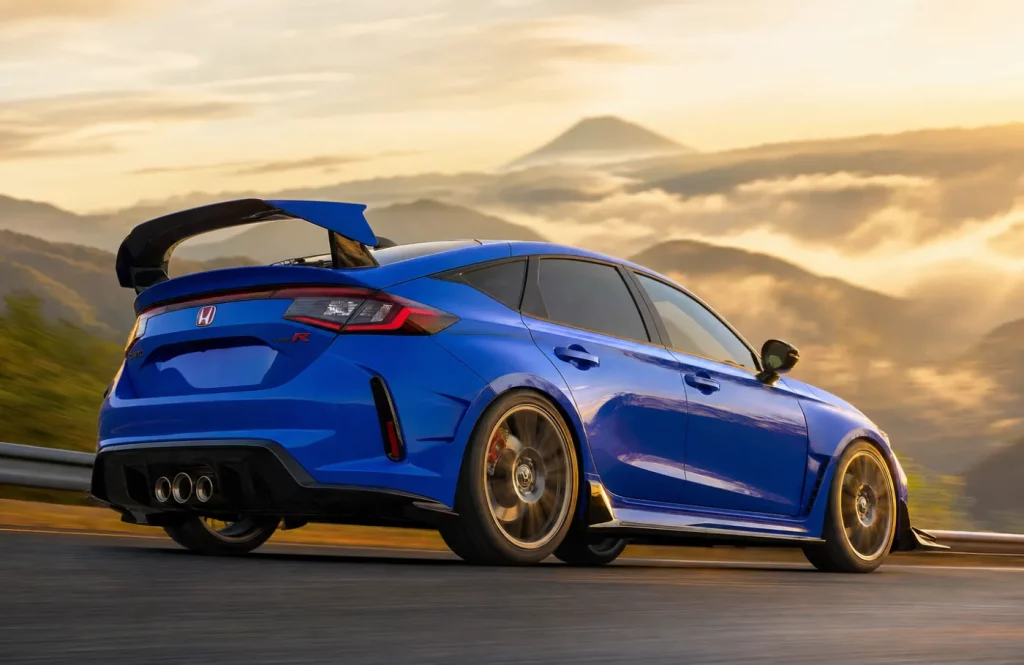
The Civic Si starts AT roughly $31,000. The Civic Type R starts at approximately $45,000–$47,000. With dealer markups, the Type R can easily exceed $55,000–$60,000. That’s nearly double the price of the Si. The question isn’t which car is faster — it’s whether the Type R’s performance advantages actually matter in the way most people drive.
This isn’t a comparison about lap times. It’s a comparison about what the extra money buys you in everyday life, and whether that purchase is justified for the way you actually use your car.
The Civic Si is the smarter daily driver — more comfortable, more fuel-efficient, and significantly cheaper to buy and maintain. The Civic Type R is the better track car — more powerful, better handling, and equipped with serious performance hardware. The Type R is worth the premium if you regularly track the car or value the performance experience above all else. For most daily drivers, the Si offers 80% of the fun for half the price.
The $16,000 Question
Let’s start with the numbers. The 2026 Civic Si starts at $31,495. The 2026 Civic Type R starts at $45,895. That’s a gap of approximately $14,400 before dealer markups. With markups — which are common on the Type R — the real-world difference can easily exceed $20,000.
The question isn’t whether the Type R is a better car. It clearly is. The question is whether it’s $16,000–$20,000 better for the way you actually drive.
Are you paying for performance you’ll actually use, or are you paying for capability that will rarely be tested outside of a track?
| Specification | Civic Si (FE1) | Civic Type R (FL5) |
|---|---|---|
| Engine | 1.5L turbo (L15CA) | 2.0L turbo (K20C1) |
| Horsepower | 200 hp | 315 hp |
| Torque | 192 lb-ft | 310 lb-ft |
| Transmission | 6-speed manual | 6-speed manual |
| LSD | Helical | Helical |
| Adaptive suspension | No | Yes (3-mode) |
| Front suspension | MacPherson strut | Dual-axis strut |
| Brakes | Single-piston | 4-piston Brembo |
| Body style | Sedan | Hatchback |
| Seating capacity | 5 | 4 |
| Cargo space | ~14 cu ft (trunk) | ~24.5 cu ft (hatchback) |
| Fuel economy (city/hwy/comb) | 27/37/31 mpg | 22/28/24 mpg |
| Starting MSRP | ~$31,495 | ~$45,895 |
Performance You Can Actually Use on Public Roads
The Type R is objectively faster. With 315 horsepower and 310 lb-ft of torque, it’s significantly quicker than the Si’s 200 horsepower and 192 lb-ft. The Type R reaches 60 mph in approximately 5.3 seconds, compared to the Si’s 6.6 seconds. The difference is real, and it’s noticeable.
But here’s the question: where do you actually use that performance? On a public road, the Si already has enough power to merge onto highways, pass slower traffic, and have fun on back roads. The Type R’s additional 115 horsepower is reserved for situations where you can actually use it — which, for most drivers, means track days or very aggressive canyon driving.
The Si may actually be more enjoyable on public roads because it’s easier to use its full potential. The Type R’s limits are so high that you rarely approach them without breaking the law or driving recklessly.
The Type R is objectively faster. The Si may be easier to enjoy legally.
The Daily Commute Test
Monday morning. Traffic. Stop-and-go. This is where most of us spend our time behind the wheel. And this is where the Si reveals its strengths.
Civic Si — The Smarter Commuter:
- More comfortable ride — even without adaptive dampers, the Si’s suspension is well-tuned for daily use
- Better fuel economy — 31 mpg combined versus the Type R’s 24 mpg
- Lower tire costs — 235/40R18 tires are significantly cheaper than the Type R’s 265/30R19
- Lower insurance costs — Sport sedan rates are typically lower than high-performance track car rates
- Less attention — the Si blends in more easily than the Type R’s aggressive styling
- Easier entry/exit — sport seats are supportive but not as aggressively bolstered as the Type R’s racing buckets
Civic Type R — The Compromised Commuter:
- Harsher ride — even in Comfort mode, the Type R is firmer than the Si
- Lower fuel economy — 22/28 mpg city/highway adds up over time
- Expensive tires — 265/30R19 tires cost substantially more to replace
- More road noise — the Type R’s cabin transmits more tire and engine noise
- More attention — the Type R’s aggressive styling attracts constant attention
- More challenging ingress/egress — the racing buckets make getting in and out more difficult
The Type R is capable as a daily driver, but it requires more compromises than the Si. The Si is the better car for the morning commute.
Fuel Economy: The Cost of Driving Every Day
The fuel economy gap between the Si and Type R is significant. The Si achieves 27 mpg city, 37 mpg highway, and 31 mpg combined. The Type R achieves 22 mpg city, 28 mpg highway, and 24 mpg combined.
Over 15,000 miles per year, the Si will use approximately 484 gallons of fuel, while the Type R will use approximately 625 gallons. At $4.00 per gallon, the Si costs approximately $1,936 per year in fuel, while the Type R costs approximately $2,500 — a difference of roughly $564 per year.
Over five years of ownership, the Type R costs approximately $2,800 more in fuel alone. That’s a meaningful difference for most buyers.
- 27/37/31 mpg
- Regular 87 octane
- ~$1,936/year fuel cost
- Lower fuel bills
- 22/28/24 mpg
- Premium 93 octane required
- ~$2,500/year fuel cost
- Higher fuel bills
The Hidden Cost Gap: Tires, Brakes, and Consumables
The purchase price difference is just the beginning. The Type R’s performance hardware comes with significantly higher running costs.
Tires: The Type R’s 265/30R19 tires are substantially more expensive than the Si’s 235/40R18 tires. A set of Michelin Pilot Sport 4S tires for the Type R costs roughly $1,400–$1,600, compared to $800–$1,000 for the Si. Over the life of the car, this difference adds up — and the Type R’s tires wear faster under aggressive driving.
Brakes: The Type R’s Brembo brake components are more expensive than the Si’s standard brakes. Brake pads for the Type R cost roughly twice as much as pads for the Si. Rotors are also more expensive and may wear faster with track use.
Insurance: Insurance costs vary dramatically by driver and location, but the Type R typically commands higher premiums than the Si. It’s classified as a higher-performance vehicle with a higher theft risk and more expensive repair costs.
Practicality: The Type R’s Secret Advantage
One of the most overlooked differences between the Si and Type R is body style. The Si is a sedan with a trunk. The Type R is a hatchback with a liftgate.
The Type R’s hatchback body provides significantly more cargo versatility. The 24.5 cubic feet of space behind the rear seats and the large opening make it much easier to load bulky items. With the rear seats folded, you can fit large items that the Si’s trunk simply cannot accommodate.
However, the Type R has four seats instead of five. The rear center seat is replaced by a practical element and cupholders, reducing passenger capacity from five to four. The Si can carry five passengers — a meaningful difference for families.
The Si is better for carrying five people. The Type R is better for carrying big things.
Manual Transmission: Is the Type R Actually $16K Better?
Both cars have six-speed manual transmissions with helical limited-slip differentials. Both have rev-match downshifting. Both are excellent.
But the Type R’s shifter is better. It’s shorter, more precise, and more mechanical in its feel. The throws are tighter, the engagement is more positive, and the overall experience is more satisfying. In back-to-back comparisons, reviewers consistently praise the Type R’s transmission as one of the best manual gearboxes available.
The Si’s shifter is also excellent — light, precise, and easy to use. It’s not as sharp as the Type R’s, but it’s still one of the best manual transmissions in its price class.
Is the better shifter worth $16,000? By itself, no. But combined with the engine, suspension, brakes, and chassis, it becomes part of a different level of vehicle.
The Type R Is Not Just a Faster Si
One of the most common misconceptions is that the Type R is “just an Si with more horsepower.” This is not true. The Type R is a fundamentally different vehicle that shares a platform but was engineered for a different purpose.
The Type R receives:
- A different engine (2.0L K20C1 vs 1.5L L15CA)
- A different front suspension (Dual-axis Strut vs MacPherson)
- Adaptive dampers with three modes
- Brembo four-Piston front brakes
- A wider track and more aggressive alignment
- Functional aero and wider bodywork
- Significantly more cooling capacity
- A hatchback body with more cargo space
The Type R is not just a faster Si. It’s a completely different car that happens to share the Civic nameplate.
The Si Is Not a Cheap Type R
The reverse is also true. Buying an Si and modifying it does not make it a Type R. You can add power, suspension, and tires. You can spend thousands on modifications. But you cannot easily replicate the Type R’s chassis, brakes, cooling, or suspension geometry.
A tuned Si can be very fast in a straight line. But it will still have the Si’s chassis, the Si’s brakes, and the Si’s cooling capacity. The Type R was engineered from the ground up for sustained track use. The Si was engineered as a sporty daily driver.
If you want the complete Type R experience, you need to buy the Type R. A modified Si is not a substitute.
The Tuning Question
The Si is an excellent tuning platform. A simple ECU calibration adds significant power. With bolt-ons and ethanol, the Si can reach 240–260 WHP — making it genuinely quick and capable of surprising more expensive cars.
The Type R has even more tuning potential. Its 2.0-liter turbo engine responds to modifications with even larger gains, and its chassis and brakes can handle the additional power.
But if you’re planning to modify the car, the Si offers significantly better value. The lower purchase price leaves more room in the budget for modifications. A $10,000 modified Si can be a genuinely fast and capable car for less than the cost of a stock Type R.
What Happens After Five Years?
This is where the Type R’s value proposition becomes interesting. The Type R holds its value exceptionally well. Due to limited production, strong enthusiast demand, and the Type R badge, a well-maintained Type R can retain a much higher percentage of its value than the Si.
However, the Si starts at a much lower price. Even if the Type R loses a smaller percentage of its value, the absolute dollar loss can be similar or even higher due to the higher starting price. A $45,000 Type R that retains 65% of its value after five years is worth $29,250 — a loss of $15,750. A $31,000 Si that retains 55% of its value is worth $17,050 — a loss of $13,950.
The Type R’s resale advantage is real, but it doesn’t fully offset the higher purchase price. The Si is the more cost-effective choice for most buyers.
The Attention Factor
This is a detail that often goes overlooked, but it matters. The Civic Type R attracts attention. The massive rear wing, the wide arches, the red interior, the aggressive styling — you cannot be invisible in this car. For some buyers, that’s a positive. For others, it’s a liability.
The Civic Si is more subtle. It looks sporty but understated. It blends in with traffic. You can drive it without constantly being noticed, questioned, or challenged by other drivers.
Do you want strangers to know exactly what you’re driving? The answer affects which car you should buy.
Which One Is More Fun at 7/10?
This is a critical question for daily drivers. The Type R is incredible at 10/10 — on a track, at the limit, with everything working together. But most driving happens at 7/10 or less.
At 7/10, the Si may actually be more fun. You can use more of the car’s capability without exceeding legal limits. You can shift through the gears, feel the LSD working, and enjoy the engagement without driving recklessly. The Si is more accessible, more forgiving, and easier to enjoy on public roads.
The Type R is more rewarding at 8/10 and above, but those moments are rare for most drivers. The Si entertains at normal speeds. The Type R rewards commitment.
Daily Driver Scorecard
| Category | Winner |
|---|---|
| Purchase price | Si |
| Fuel economy | Si |
| Insurance potential | Si |
| Tire and brake costs | Si |
| Cargo versatility | Type R |
| Five-passenger capability | Si |
| Ride adaptability | Type R |
| Engine performance | Type R |
| Manual transmission feel | Type R |
| Track capability | Type R |
| Easy-to-enjoy road fun | Si |
| Tuning value | Si |
| Ultimate performance | Type R |
Who Should Actually Buy Each?
Buy the Civic Si if:
- Daily driving is 90% of your usage
- A manual transmission matters to you
- Budget is a factor
- Track days are a few times a year at most
- You want to modify the car gradually
- You need five seats
- You want a sporty Civic without Type R running costs
The Si is the rational enthusiast’s Civic. It’s the car that makes sense for most buyers.
Buy the Civic Type R if:
- You want the best factory Civic ever built
- You will actually use the performance capability
- You plan regular track days
- You want a hatchback
- The additional costs don’t cause financial strain
- You won’t regret not buying the top model
The Type R is expensive — but it isn’t simply an expensive Si.
Final Thought
The Civic Type R is the better car. It’s more powerful, better handling, more capable, and more special. But it’s also significantly more expensive to buy, more expensive to run, and less practical for everyday use. The Civic Si is the smarter choice for most buyers — it offers 80% of the driving experience for half the money.
The Type R is worth the premium if you regularly track the car, if you value the performance experience above all else, or if you simply want the best Civic ever built. For most daily drivers, the Si is the better choice.
Buy the Si with your head. Buy the Type R with your heart.
FAQ — Civic Type R vs Civic Si
Is the Civic Type R worth the extra money over the Si?
If you regularly track the car or value the performance experience above all else, yes. The Type R offers significantly more power, better handling, and stronger resale value. If daily driving is your primary use, the Si offers 80% of the driving experience for approximately half the price. The answer depends on your budget and how you plan to use the car.
Which is better for daily driving, the Type R or Si?
The Si is better for daily driving. It’s more comfortable, more fuel-efficient, less expensive to maintain, and easier to live with. The Type R can be used as a daily driver, but its firm ride, road noise, and high running costs make it less suitable for everyday use.
How much more expensive is the Type R to maintain than the Si?
Significantly more expensive. Tires, brakes, and fuel are all more expensive on the Type R. A set of tires costs roughly 50-75% more than the Si’s tires. Brake components are more expensive, and fuel consumption is worse. Over five years of ownership, the Type R costs thousands more to run.
Can a tuned Si beat a Type R in a straight line?
In certain conditions, yes. A tuned Si with bolt-ons and ethanol can produce 240–260 WHP and be competitive with a stock Type R from a roll. However, the Type R is faster from a standing start, faster at high speeds, and vastly superior in handling and braking. A modified Si is not a substitute for a Type R.
Does the Type R hold its value better than the Si?
Yes — the Type R holds a higher percentage of its value than the Si due to limited production, strong enthusiast demand, and the Type R badge. However, the Si starts at a much lower price, so the absolute dollar loss can be similar. The Type R’s resale advantage is real but doesn’t fully offset the higher purchase price.
Which car has better fuel economy?
The Si has significantly better fuel economy — 27/37/31 mpg compared to the Type R’s 22/28/24 mpg. The Si is the more efficient car, and it runs on regular 87 octane fuel versus the Type R’s premium 93 octane requirement.
Is the Type R more fun to drive than the Si?
Yes — but the Type R’s extra performance is only fully accessible at track speeds. On public roads, the Si can be just as enjoyable because you can use more of its capability without breaking the law. The Type R rewards commitment; the Si entertains at normal speeds.
Which car has more cargo space?
The Type R has more cargo space due to its hatchback body — approximately 24.5 cubic feet compared to the Si’s 14-cubic-foot trunk. However, the Type R has only four seats, while the Si can carry five passengers.
Should I buy a Type R or Si for track days?
If track days are a priority, buy the Type R. The Type R is designed for track use with better cooling, better brakes, better suspension, and more power. The Si can be tracked, but it will require more modifications and will not match the Type R’s capability or durability.
Which car is the better value?
The Si is the better value for most buyers. It offers excellent performance and driving engagement for approximately half the price of a Type R. The Type R is the better value for buyers who prioritize track capability and the performance experience above all else.