

The $10,000 price point in the 2026 used Civic market occupies a narrow band of the model range. AT this budget, you are not buying a low-mileage 10th-generation car with modern tech and no deferred maintenance. You are also not buying a project car from the early 2000s with structural rust and faded clear coat. The $10,000 Civic buyer is looking for the intersection of three variables — age, mileage, and remaining service life — and the overlap is smaller than most shopping guides admit.
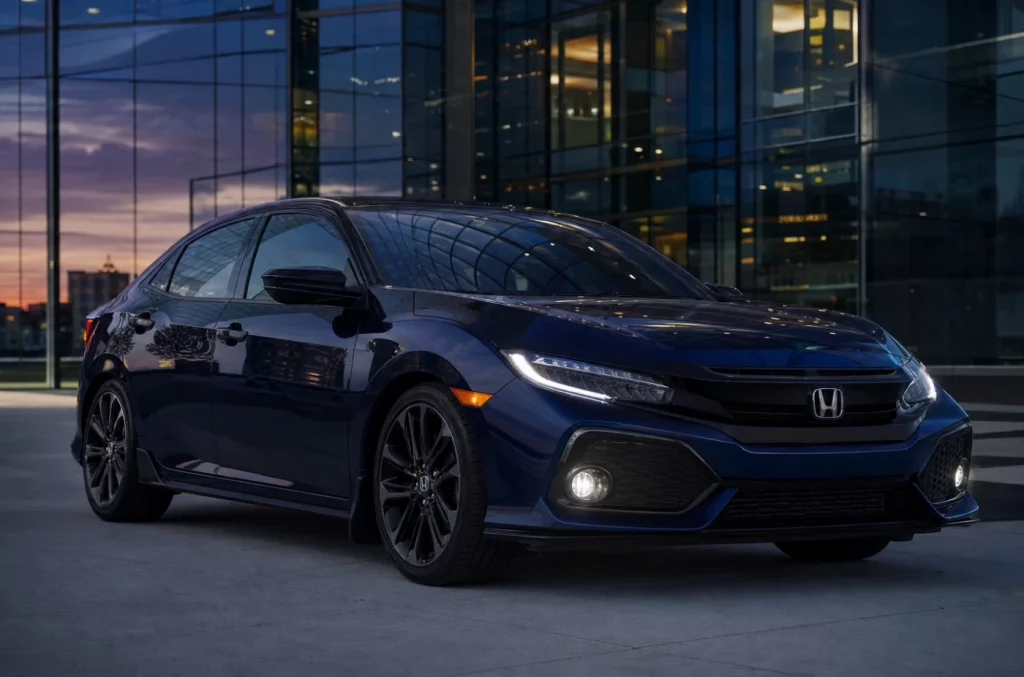
The market has cooled significantly from the 2022 peak. A 2016 Civic EX with 50,000 miles that sold for $18,000–$20,000 in late 2022 now trades for approximately $11,000–$13,000. Below $10,000, the inventory shifts to higher-mileage cars with visible wear, older generations, or accident-history cars that require careful inspection. This article maps what $10,000 actually buys in the current market, which generations and years deliver the best remaining service life, and which ones will cost more in deferred repairs than the purchase price.
The most important rule of $10,000 Civic shopping: A 165,000-mile 9th gen with service records is a better buy than a 90,000-mile 10th gen with no history and a salvage title. Buy the car, not the odometer. Condition and maintenance history matter more than the model year.
Quick Answer — Which Civic Should You Buy for $10,000?
| Budget | Best Target | Engine | Why |
|---|---|---|---|
| Best overall | 2013–2015 9th Gen LX/EX | 1.8L R18 | Simple, reliable, proven 250K+ mile engine, no turbo, no direct injection |
| Best cheap daily | 2009–2011 8th Gen LX/EX | 1.8L R18 | Cheapest entry, huge parts availability, simple to work on |
| Best modern features | 2017–2018 10th Gen 2.0L | 2.0L K20C2 | Better safety, CarPlay, Honda Sensing — but only with the 2.0L engine |
| Best condition, not year | Any generation | N/A | A clean 8th gen with records beats a neglected 10th gen every time |
The bottom line: If I had $10,000 and wanted a Civic I’d actually keep for several years, I’d shop for a clean 2013–2015 1.8L with roughly 100K–150K miles, a clean title, and documented maintenance before I chased a newer generation with 170K+ miles or a questionable history. The 9th gen is the sweet spot for reliability at this price.
What $10,000 Buys in 2026 — The Range
| Generation | Model Years | Typical Mileage at $10K | Typical Trims Available | Remaining Service Life Estimate |
|---|---|---|---|---|
| 8th Gen | 2006–2011 | 130,000–180,000 | LX, EX, EX-L, Si | 30,000–80,000 miles |
| 9th Gen | 2013–2015 | 90,000–130,000 | LX, EX, EX-L (rare Si) | 80,000–150,000 miles |
| 10th Gen (2.0L) | 2017–2018 | 85,000–120,000 | LX, Sport (rare EX) | 80,000–130,000 miles |
| 10th Gen (1.5T) | 2016–2018 | 90,000–130,000 | EX, EX-T, EX-L (higher miles) | 60,000–110,000 miles |
Sources: CarSnipe Facebook Marketplace pricing analysis, Spring 2026; CarGurus national listing sample, April 2026; Kelley Blue Book used values trend since 2022 peak. Remaining service life estimates based on documented Civic longevity data (200,000–300,000 mile typical lifespan with maintenance), adjusted for generation-specific known failure points.
2012 model year note: The 2012 model year (9th Gen) is excluded from the table above intentionally. It is the weakest year of the 9th generation, with documented early-production issues including a poorly received interior downgrade, premature brake wear, and higher complaint volume than 2013–2015 models. Honda addressed most complaints with the 2013 facelift. A 2012 Civic at any price deserves extra scrutiny.
8th Generation (2006–2011) — The Budget Pick With Caveats
The 8th generation Civic is 15 to 20 years old in 2026. At $6,000–$9,000, you can find an 8th-gen LX or EX with 130,000–170,000 miles in clean cosmetic condition. The 8th-gen R18 1.8-liter engine is reliable when maintained — it uses port injection (no carbon buildup issues), and a well-cared-for example can reach 250,000 miles. The generation is known for a widely regarded chassis and responsive steering.
The major concerns are structural and age-related. The 8th gen has documented problems with cracked engine blocks (a casting defect affecting some 2006–2009 R18 engines, documented in NHTSA complaints and forum reports), A/C compressor failures (common across the generation), and premature rear brake wear (rear pads typically last 20,000–30,000 miles, much less than front pads). On 2006–2008 models, the dashboard cracking problem is nearly universal — the dash material degrades and splits, and replacement is expensive.
Safety is a concern. The 8th-gen Civic was designed before the IIHS introduced the small overlap front crash test. Its performance in that test is poor compared to 9th and 10th generation models. If crash safety is a priority, the 8th gen is not the right choice at any price.
The 8th-gen Si is tempting but risky at this budget. A decent 8th-gen Si with the K20Z3 engine (197 hp, 8,000 rpm redline) typically sells for $8,000–$12,000. At $10,000, you are looking at cars with 140,000–180,000 miles, often modified, and frequently driven hard. The K20Z3 is a durable engine, but at this mileage and age, a well-maintained example requires careful proof of service history. Unmodified Si examples at this price point are rare.
Best approach for 8th gen at $10K: Target 2009–2011 model years (post-block-casting fix era), LX or EX trim, automatic transmission (the 5-speed automatic is less problematic than the manual’s 3rd gear synchro issue on some 8th-gen cars). Budget $1,000–$1,500 for immediate deferred maintenance — Timing Chain tensioner inspection, coolant flush, brake system overhaul, suspension bushing replacement, and A/C inspection. An 8th gen with $1,500 of catch-up maintenance can be a reliable 50,000-mile car. One without that maintenance is a ticking clock.
8th gen cracked block warning: The 2006–2008 R18 engines have a documented block casting defect. A cracked block means engine replacement — $3,500–$7,000. Only buy 2009–2011 models or verify the block has been replaced. Do not skip this check.
9th Generation (2013–2015) — The Sweet Spot for Reliability
The 9th-generation Civic, specifically the 2013–2015 models after the mid-cycle refresh, is the strongest recommendation in the under-$10,000 segment. This generation uses the 1.8-liter R18 naturally aspirated engine — the same basic architecture as the 8th gen but refined, with no turbocharger, no direct injection, and no Oil dilution problems. The 2013 refresh improved the interior materials significantly over the 2012 model and added a backup camera as standard equipment on most trims.
At $8,000–$10,000, a 2013–2015 Civic LX or EX sedan can be found with 90,000–120,000 miles. A 2014–2015 model with the CVT transmission (introduced for 2014) delivers 30–36 MPG combined and smooth daily driving. The 5-speed automatic in 2013 models is also reliable but slightly worse on fuel economy.
Known issues on the 9th gen:
- A/C compressor clutch failure (common across the generation, replacement cost approximately $400–$700 at an independent shop)
- Premature brake wear (rear pads typically need replacement at 25,000–35,000 miles)
- Paint quality issues (particularly on darker colors, clear coat peeling on Hood and roof)
- Some CVT hesitation reported on early 2014 models, though no widespread failure pattern
None of these issues are deal-breakers. The 9th-gen R18 engine is one of the most reliable Honda engines of the modern era. The car is simple, easy to maintain, and parts are inexpensive. A 2015 Civic with 100,000 miles and documented service history can realistically reach 250,000 miles with routine maintenance.
The 9th-gen Si is not realistic at $10,000. The 2014–2015 Civic Si with the K24Z7 2.4-liter engine (205 hp) still commands $13,000–$17,000 for clean examples at 80,000–110,000 miles. A $10,000 Si in this generation will be a high-mileage car with cosmetic issues.
Best approach for 9th gen at $10K: Target a 2014 or 2015 LX or EX sedan. Verify that the A/C operates correctly (run it for 5 minutes during a test drive, check for warm air cycling). Inspect the paint condition on the hood and roof. Check the CVT fluid service history — Honda recommends changing CVT fluid every 30,000 miles under severe conditions. A car with 100,000 miles and no CVT fluid change history should have that performed immediately.
The 9th gen verdict: A 2014–2015 Civic LX/EX with 100K miles and documented maintenance is the recommended sweet spot under $10,000. The R18 engine is proven, the car is simple to maintain, and it will last another 100,000 miles with basic care. This is the safest buy in the budget.
10th Generation (2016–2021) — Entry-Level at This Budget
At $10,000, the 10th-generation Civic is available at the lower end of its price range. You are looking at 2016–2018 model year LX or Sport sedan with 90,000–120,000 miles, or higher-mileage EX models at 120,000+ miles. The 10th gen offers a significant upgrade in interior quality, infotainment (Apple CarPlay on 2016+ EX trims), modern safety (Honda Sensing standard from 2016), and crash safety (IIHS Top Safety Pick when equipped with Good-rated headlights).
The key decision at this price point is engine choice.
The 2.0-liter naturally aspirated engine (LX and Sport trims, 2016–2021). This is the safer choice at $10,000. The K20C2 engine (158 hp) uses port injection, has no Turbocharger, and has no known major failure patterns. It is less powerful and less fuel-efficient than the 1.5T, but it is significantly more durable in the 100,000+ mile range that a $10,000 car will have. Owners on CivicX and 10thGenForum report these engines routinely reaching 200,000+ miles with basic maintenance.
The 1.5-liter turbo (EX and above, 2016–2021). The L15B7 engine (174 hp in standard tune, 205 hp in Si tune) offers better torque and fuel economy but has documented oil dilution problems in cold-weather operation. A 2016–2018 model that was primarily driven in short-trip, cold-climate conditions may have experienced fuel contamination in the oil, which accelerates engine wear. Honda issued TSB 18-130 in 2018 addressing the oil dilution issue with a software update and, in some cases, a PCV system revision. A 1.5T car at this budget should have documented proof that the TSB work was performed.
Transmission considerations. The CVT on 10th-gen Civics is generally reliable when maintained. The most common complaint is hesitation or lag from a stop, which is a characteristic of the transmission design rather than a defect. The 6-speed manual (available on LX and Sport through 2021) is reliable but check for clutch wear at 90,000+ miles — clutch replacement on a 10th-gen Civic costs $1,200–$1,800.
Trim trade-offs at $10K. A 2016 LX with 95,000 miles at $9,500 will have steel wheels, cloth seats, a 5-inch non-touch display, and halogen headlights with Poor IIHS ratings. A 2017 EX with 115,000 miles at $10,500 (stretching slightly) will have alloy wheels, the 7-inch touchscreen with Apple CarPlay, blind spot monitoring, moonroof, and the 1.5T engine with the oil dilution risk. The trade-off is clear: lower risk with fewer features, or more features with higher long-term exposure on the turbo engine.
Best approach for 10th gen at $10K: Prioritize a 2017 or 2018 LX or Sport with the 2.0L engine and verify maintenance records. Skip the 2016 model year — 2016 had the highest complaint volume of the 10th generation, including early infotainment glitches, A/C problems, and the unaddressed oil dilution issues on turbo cars. If you must buy a 1.5T car, insist on proof that TSB 18-130 was performed.
10th gen buying rule under $10K: A clean 2017–2018 2.0L with 100K miles and records is a better buy than a 2016 1.5T with 90K miles and no history. Buy the engine, not the trim. The 2.0L is the safer long-term choice at this price.
Years to Avoid at Any Price
| Model Year | Generation | Primary Issue | Why It Matters at $10K |
|---|---|---|---|
| 2006 | 8th Gen | Engine block cracking (R18), dashboard cracking | 20 years old; any 2006 at $10K is likely under-maintained |
| 2007–2008 | 8th Gen | Block casting issues persist, A/C failures common | Lower mileage examples exist but carry structural risk |
| 2012 | 9th Gen | Poor interior quality, premature brake wear, A/C failures, low IIHS small overlap score | Weakest 9th-gen year; 2013 refresh addressed most complaints |
| 2016 | 10th Gen | Early adopter issues: infotainment glitches, unaddressed 1.5T oil dilution, A/C compressor clutch problems | At $10K, a 2016 with 100K+ miles is likely an early build; higher risk than 2017–2018 |
A model year is not automatically a deal-breaker — a 2016 Civic with the 2.0L engine, documented service history, and an inspection pass is still a usable car. But at the $10,000 budget, where mileage and age already work against the buyer, adding a problematic model year to the equation increases the probability of an expensive surprise within the first 12 months of ownership.
What to Avoid Under $10,000 — The Traps
Civic Hybrid (2006–2015). At under $10,000, all hybrids will have old nickel-metal hydride IMA batteries. By 2026, they are guaranteed dead or working at 15% capacity. The car will constantly trigger the check engine light, the CVT on hybrids is fragile, and you will not see the advertised fuel economy. Battery replacement costs more than the car is worth. Avoid.
2012 Civic (Pre-Facelift 9th Gen). Honda rushed this year out at the peak of the crisis. The interior is made of cheap, easily scratched plastic, and sound insulation is virtually non-existent. On the used market, they are cheap, but their liquidity is at rock bottom. Skip this year.
High-Mileage 8th Gen Si (K20Z3). The temptation to buy a legendary Si with an 8,000 rpm redline for $8,500 is strong. But at this price, the car will have burned oil control rings from constant racing, a stretched timing chain, a dead Catalytic Converter, and a grinding 3rd gear. Living, restored Si models cost significantly more than $10,000.
Maintenance Budget — The Hidden Cost
Every Civic under $10,000 will need immediate or near-term maintenance. The question is how much and how soon. Budgeting correctly at purchase time prevents the car from becoming a money pit.
| Maintenance Item | 8th Gen (130K–180K mi) | 9th Gen (90K–130K mi) | 10th Gen (85K–120K mi) |
|---|---|---|---|
| Timing chain inspection | Recommended ($200–$400) | Low priority | Low priority |
| Spark plugs | $80–$150 | $80–$150 | $100–$200 (1.5T: iridium) |
| Coolant flush | $80–$120 | $80–$120 | $80–$120 |
| Brake fluid flush | $80–$120 | $80–$120 | $80–$120 |
| Transmission fluid change | $80–$150 | $80–$150 (CVT fluid: $100–$180) | $100–$180 (CVT fluid) |
| Valve adjustment | $200–$400 | $200–$400 | Not required (hydraulic lash adjusters) |
| Suspension bushing inspection | Likely needed ($300–$600) | Possible ($200–$400) | Unlikely before 120K |
| A/C inspection/service | Likely needed ($150–$700) | Check condition ($100–$700) | Check condition ($100–$400) |
| Estimated first-year maintenance total | $1,200–$2,500 | $600–$1,500 | $400–$1,000 |
Source: RepairPal labor/cost data for Honda Civic by model year; CivicX owner-reported maintenance costs; RockAuto parts pricing (2026). Estimates assume independent shop labor rates ($80–$120 per hour). Dealer labor adds approximately 30–50%.
The 8th-gen Civic at $6,000 with $2,000 of catch-up maintenance costs the same in total first-year outlay as a 9th-gen Civic at $8,000 with $500 in immediate needs. The 9th-gen car is likely to have a longer remaining service life and fewer age-related failures over the next three years. The 8th gen makes sense only if the buyer can perform their own labor or has a trusted mechanic who works at lower rates.
How Much Money to Keep After Buying?
If your total budget is $10,000, do not spend $9,900 on the car. Keep a reserve.
- $7,500–8,500 purchase + $1,500–2,500 reserve
First-year maintenance items to budget for:
- Fluids (oil, Coolant, brake, transmission)
- Brakes (pads, rotors if needed)
- Tires (if worn)
- Battery
- Filters (air, cabin)
- Belts (serpentine)
- Suspension (Bushings, end links if worn)
- Unexpected repairs
The reserve rule: A $7,500 Civic with $1,000 in immediate maintenance is a better buy than a $9,800 Civic with no service history and a clean engine bay. The extra $2,300 you saved covers the work the previous owner deferred. Buy the car, not the appearance.
Decision Block — Which Car to Buy at $10,000
Buy a 2014–2015 9th-gen LX or EX ($8,000–$10,000, 90K–120K miles) if: Reliability is the top priority. The R18 engine, port injection, and simple drivetrain make this the safest long-term bet at this price. Accept the dated interior, the lack of Apple CarPlay on LX trims, and the modest 143-HP output. A 9th-gen Civic at this budget, with documented service history and $500 set aside for immediate maintenance, will be the lowest-stress ownership experience of any option in the $10K range.
Buy a 2017–2018 10th-gen LX or Sport 2.0L ($9,000–$10,500, 85K–115K miles) if: Modern safety and infotainment matter more than lowest-possible maintenance cost. The 10th gen offers a significantly better IIHS crash test performance, Honda Sensing driver assistance standard, and Apple CarPlay on the 5-inch screen (limited) or the 7-inch screen (EX). Stick with the 2.0L engine to avoid the 1.5T oil dilution concern at high mileage. Accept that you will be buying a car with 100,000 miles for $10,000 — depreciation is mostly done, but wear items are mid-life.
Buy an 8th-gen 2009–2011 LX or EX ($5,000–$8,000, 130K–170K miles) ONLY if: Your budget is tight and you can do your own maintenance. The 8th gen is a capable car but requires immediate catch-up maintenance at this age and mileage. Do not buy an 8th gen at $10,000 — that price point should buy a 9th gen in the same condition. If the seller is asking $10,000 for an 8th gen, the car is overpriced by $2,000–$4,000 in the 2026 market.
Do not buy at $10,000:
- A Civic Si of any generation at this price (too many miles, too much deferred risk)
- A 1.5T 10th-gen EX without proof of TSB 18-130 oil dilution fix
- A 2012 9th gen (weak year, poor IIHS small overlap score before 2013 refresh)
- A modified car — modified Civics at $10,000 have almost always been driven harder than stock examples
Frequently Asked Questions
What is the best Civic under $10,000?
The 2013–2015 9th gen LX or EX with the 1.8L R18 engine, 90K–130K miles, and documented maintenance history is the best overall choice. It is the sweet spot for reliability at this price.
Is a Civic with 150,000 miles worth buying for $10,000?
It depends on the generation and maintenance history. A 9th gen with 150,000 miles and records is a better buy than a 10th gen with 100,000 miles and no history. The R18 engine is proven to reach 250,000+ miles.
Is a 10th gen Civic under $10,000 a good buy?
Only if it is a 2017–2018 model with the 2.0L engine, a clean title, and maintenance records. Avoid 2016 models and 1.5T cars without proof of the oil dilution fix.
Is the 8th gen Civic reliable?
The 2009–2011 models are reliable with proper maintenance. The 2006–2008 models have a cracked engine block risk that is not worth taking at any price. Buy only 2009–2011 or verify the block has been replaced.
Should I buy a Civic Si for $10,000?
No. A $10,000 Si will have high mileage, deferred maintenance, or modifications. The repair costs will exceed the purchase price. Buy an Si only if you have a higher budget for a clean example.
How much should I budget for repairs on a $10,000 Civic?
Budget $1,000–$2,500 for first-year maintenance, depending on the generation. 8th gen needs the most catch-up work, 10th gen needs the least. Always keep a repair reserve.
Quick Reference Checklist
☐ $10,000 in 2026 buys — 9th-gen (2013–2015) at 90K–120K miles or 10th-gen LX/Sport 2.0L at 85K–115K miles
☐ 9th-gen R18 1.8L — naturally aspirated engine is the safest long-term reliability bet in the under-$10K segment
☐ 8th-gen (2006–2011) — needs $1,200–$2,500 in catch-up maintenance at 130K+ miles; only viable with DIY labor
☐ 10th-gen 1.5T oil dilution TSB (18-130) — must be verified before buying a pre-2019 EX or above at this budget
☐ Model years to avoid: 2006–2008 (block cracking), 2012 (weak year), 2016 (early adopter issues)
☐ 2016 10th gen — has highest NHTSA complaint volume of the generation — prioritize 2017+
☐ No Civic Si at $10,000 — is a good buy — too many miles or too much deferred risk at this price
☐ A 2014–2015 Civic LX/EX — with 100K miles and service history is the recommended sweet spot
☐ Budget $500–$1,500 — for first-year catch-up maintenance on any under-$10K Civic purchase
☐ Used Civic market — has cooled significantly since 2022 peak; $10K in 2026 buys what $15K bought in 2022
☐ Buy the car, not the odometer — a 165K-mile 9th gen with records beats a 90K-mile 10th gen with no history
Sources: CarSnipe Facebook Marketplace pricing analysis, Spring 2026; CarGurus national listing sample, April 2026; Kelley Blue Book used values trend since 2022 peak; CarMerit year-by-year Honda Civic reliability analysis (2026, NHTSA complaint data cross-referenced); NHTSA complaint counts by model year; CarComplaints worst-model-year data; VINSCRIBE buying guide (2026); RepairPal labor/cost data for Honda Civic by model year; CivicX owner-reported maintenance costs; RockAuto parts pricing (2026). Prices are approximate and may vary by region and market conditions.