

If you are looking for a Honda Civic on a tight budget, the goal is simple: get the most reliable car for the least money. The Civic is the king of cheap daily drivers, but not every cheap Civic is a good Civic. The $4,000 Civic Si with a check engine light and a “cold air intake” is not a bargain — it is a project car that will drain your wallet. This guide covers the best budget Civics, the years and trims to target, what to inspect before buying, and the real cost of ownership for a car in the $5,000–$15,000 range. The golden rule: buy the cleanest, most stock Civic you can afford, not the newest or flashiest one that stretches your budget.
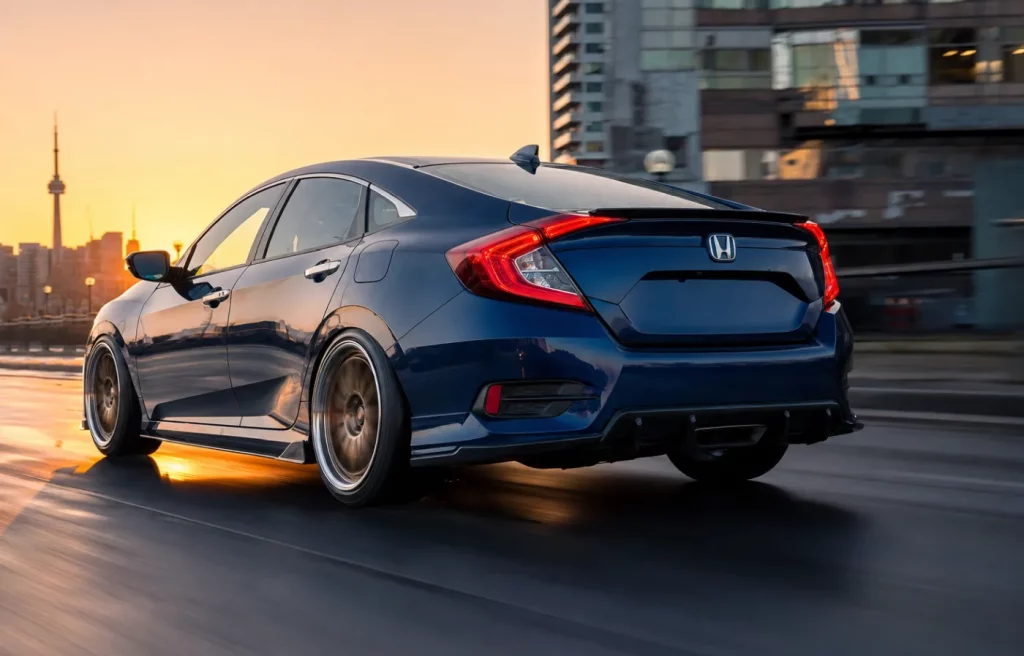
The Golden Rule of Budget Civics: A 150,000-mile Civic with service records and a clean title is a better buy than a 90,000-mile Civic with no history and a $400 set of coilovers. Condition and maintenance history matter more than mileage.
What Counts as a “Budget Civic”?
For the purpose of this guide, a budget Civic is any used Civic priced between $5,000 and $15,000. This covers the late 8th generation (2009–2011), the 9th generation (2012–2015), and early 10th generation (2016–2018) cars. The 11th generation is too new to be in this price range. AT the bottom of this range, you are looking at high-mileage cars with cosmetic wear. At the top, you are looking at clean, lower-mileage examples with modern features.
| Budget Range | Best Years | Typical Mileage | Best Engine | Main Risks |
|---|---|---|---|---|
| $5,000–$8,000 | 2009–2011 (8th gen, late) | 140,000–180,000 | 1.8L R18 | Paint failure, high-mileage suspension wear, cracked block on 2009 examples not covered by warranty |
| $8,000–$12,000 | 2013–2015 (9th gen) | 80,000–120,000 | 1.8L R18 | AC compressor failure, 5AT roughness, VTC actuator noise |
| $12,000–$15,000 | 2016–2018 (10th gen, 2.0L) | 60,000–90,000 | 2.0L K20C2 | AC compressor, CVT shudder, infotainment glitches on 2016 |
Pricing based on Kelley Blue Book fair purchase ranges and market averages for mid-2026. A 2015 Civic LX with 90,000 miles at $9,500 with 10% down at 7% APR over 48 months results in a payment of approximately $210 per month. A 2018 Civic LX with 60,000 miles at $14,500 with 10% down at 6.5% APR over 60 months runs roughly $260 per month. Source: KBB, CarGurus, market data.
The $5,000–$8,000 Range — Is It Worth It?
An 8th-generation Civic (2006–2011) for under $8,000 is a classic budget car buy. The R18 engine is robust when maintained, and examples with 180,000–200,000 miles are common. But there are serious caveats.
The cracked engine block issue affects 2006–2008 and some early 2009 models. Honda issued a warranty extension for this, but it expired in 2019. A cracked block today means a replacement engine at your expense — roughly $2,500 for a used unit plus installation. NHTSA logged 2,948 complaints across the 8th generation, with the engine block crack being the most severe single issue.
Paint and Clear Coat Failure is also common. Owners report chalking, peeling, and fading on 60% or more of the surface. A full repaint costs $3,000–$5,000. The interior materials are subpar, especially on pre-2010 models. The five-speed automatic transmission is widely regarded as unresponsive and prone to rough shifting between 62,000 and 124,000 miles. At this price point, you are accepting visible cosmetic wear and statistical uncertainty about powertrain life. It can work. It is not a low-risk purchase.
8th gen buying advice: If you are looking at an 8th gen for under $6,000, prioritize a 2009–2011 model with a clean title and service records. Avoid modified cars, avoid cars with peeling clear coat on the roof, and absolutely avoid any car with a Coolant leak near the rear of the engine block. That is the cracked block symptom.
The Sweet Spot — 2013–2015, $8,000–$12,000
The 9th-generation Civic (2013–2015) is the best value for a budget buyer. It scores 88 out of 100 on the Auto Reliability Index, with the 2013 model carrying zero active safety recalls. The 1.8-liter R18 engine is the same basic architecture that Honda had been refining since 2006, and with regular oil changes every 7,500 miles, these cars routinely exceed 250,000 miles. The interior quality improved significantly over the 2012 refresh, fixing the cheap dashboard materials that drew criticism in early reviews.
The known issues at this price point are manageable. The AC compressor is the most common failure point, appearing between 60,000 and 100,000 miles, with repair costs between $500 and $1,500 at an independent shop. The five-speed automatic transmission can feel rough between 62,000 and 124,000 miles, but a fluid change every 60,000 miles with Honda-spec fluid prevents most problems. The VTC actuator may produce a rattling noise on cold starts for one to two seconds — this is more alarming than damaging. Engine mounts, particularly the left mount, wear faster than expected and cause vibration at idle — a $300–$500 repair. Source: Auto Reliability Index, NHTSA, OwnerKeep, CivicX forum.
Annual maintenance on a 9th-gen Civic averages $400–$600 per year at an independent shop, according to RepairPal and CarEdge estimates. A 2014 Civic LX purchased at $9,000 with 100,000 miles will need the Timing Chain tensioner checked, the transmission fluid serviced, and the AC system inspected. Budgeting $1,000 for first-year deferred maintenance is a defensible strategy.
The 9th gen sweet spot: The 2013–2015 9th gen Civic is the best budget Civic on the market. It is newer than the 8th gen, has a better interior, and is more reliable than the early 10th gen cars with the 1.5T engine. The 1.8L R18 engine is proven and cheap to maintain. If your budget is $8,000–$12,000, this is the generation to target.
Stepping Up — $12,000–$15,000 for a 10th-Generation Car
At $12,000–$15,000, you enter the early 10th-generation market (2016–2018). The key decision here is the engine. The 2.0-liter naturally aspirated K20C2 found in the LX and Sport trims is the safer choice — it has no Oil dilution issues, no turbocharger complexity, and a proven reliability record. The 1.5-liter turbo (L15B7) in the EX and Touring trims offers more power (174 hp vs 158 hp) but carried oil dilution problems on 2016–2018 models driven in cold climates on short trips. Honda addressed this with software updates, but buyers should confirm completion before purchasing.
The 2016 model year specifically has a higher complaint volume than later 10th-gen years. NHTSA records show AC compressor failures, infotainment freezing, and electrical glitches concentrated on this year. A 2018 LX with 75,000 miles at $13,500 is a stronger buy than a 2016 EX with 65,000 miles at $14,000, because the 2018 had three more years of production refinement. Source: NHTSA complaints, Honda TSBs, forum owner reports.
10th gen buying advice: If you are looking at a 10th gen under $15,000, prioritize the 2.0L engine in the LX or Sport trim. Avoid the 1.5T unless you have confirmed the oil dilution software update has been applied and you are comfortable with the higher maintenance costs of a turbo engine.
The $4,000 Civic Si Trap
A cheap Civic Si is one of the most tempting and most dangerous purchases in the budget market. An 8th-generation Si for $4,000–$6,000 will almost certainly have one or more expensive problems. The K20Z3 engine is fantastic, but it requires premium fuel, has a VTEC system that encourages hard driving, and was often modified by previous owners who did not maintain it properly.
Common issues at this price point: third gear popping out (synchro wear, $800–$1,200 repair), stretched timing chain (engine-out job, $1,500–$2,500), oil consumption from worn Piston rings, and a clutch that is near the end of its life ($1,200–$1,800). The repair costs can exceed the purchase price. A $6,000 Civic Si is not a budget car — it is a project car.
⚠️ Do not buy a cheap Civic Si as your primary car. If you have a $6,000 budget and need a reliable daily driver, buy a clean LX or EX with the R18 engine. The Si is a performance car — it costs more to maintain, insure, and fuel. Buy an Si only if you have extra money set aside for repairs and can afford the higher running costs.
Which Years to Skip Entirely
Not all Civics are good Civics. Some model years have documented problems that make them poor choices for budget buyers.
- 2001 model year: Transmission failures are well-documented across forums and NHTSA records. Hard pass.
- 2006–2009 8th gen: The cracked engine block risk makes these a gamble. The warranty extension has expired. If you buy one, have it inspected by a mechanic who knows how to check for coolant leaks at the rear of the block.
- 2012 model year: Scored 83 out of 100 on the reliability index — five points below the 2013 refresh. Cheap interior materials and excessive road noise. The 2013–2015 models are significantly better.
- 2016 model year (1.5T): Higher complaint volume than later years. AC compressor failures, infotainment issues, and oil dilution on the 1.5T. If you are buying a 2016, prefer the 2.0L LX or Sport.
- 2022 model year: Scored 66 out of 100 on the reliability index due to Sticky Steering (790 NHTSA complaints) and electrical glitches. Not relevant for budget buyers — 2022 models still trade above $22,000.
Budget Buyer’s Pre-Purchase Checklist
Before buying any Civic in the $5,000–$15,000 range, verify these items. Missing any one of them can cost thousands.
- Run the VIN through the NHTSA recall lookup: Some model years (2014, 2016) have open recalls that the seller may not have completed. Check Honda’s official recall portal as well.
- Test the AC system on maximum cold for at least 10 minutes: The most expensive common repair on 9th and early 10th generation cars is the AC compressor. If the AC does not blow cold, budget $500–$1,500 for the repair.
- Cold-start the engine and listen for VTC actuator rattle: A 1-2 second grinding noise on startup is common on K24 engines but signals that the timing Chain tensioner may need attention soon. It is a negotiating point, not necessarily a dealbreaker.
- Check the CVT or automatic transmission fluid color and smell: Burnt-smelling brown fluid indicates neglected maintenance. On a CVT, this is a red flag. On the 5-speed automatic, it is less serious but still a negotiating point.
- On 2016–2018 1.5T models, confirm the oil dilution software update has been applied: The VIN can be checked at any Honda dealership. If the update has not been applied, factor in a dealership visit.
- Inspect the paint and clear coat on the roof, hood, and trunk lid: Peeling clear coat is cosmetic but indicates a car that was parked outside with minimal care. It is also expensive to fix — $1,500–$3,000 for a proper repaint.
- Check the engine mounts: Shift from Park to Drive with the brake held. Excessive movement or vibration at idle indicates worn mounts — a $300–$500 repair at an independent shop.
- Check the suspension: Push down on each corner of the car. If it bounces more than once, the shocks or struts are worn. Clunking over bumps indicates worn Bushings or ball joints.
- Check the tires: Look for uneven wear — this indicates alignment or suspension issues. A set of four tires costs $500–$1,000.
- Get a pre-purchase inspection from an independent mechanic who specializes in Japanese cars: Budget $150–$250. This is the single most effective way to avoid buying a problematic example. If the seller refuses, walk away.
- Compare insurance quotes before signing: A Civic that fits the purchase budget can still produce an insurance payment that changes the monthly math significantly, especially for drivers under 25.
The $1,500 repair reserve: If you are buying a budget Civic, set aside at least $1,000–$1,500 for immediate maintenance and repairs. Tires, brakes, fluids, and worn suspension components are common on high-mileage cars. A $7,000 Civic with $1,500 in repairs is a better buy than a $9,000 Civic with no maintenance history.
Cheap vs Cheap to Own — The Real Cost
The cheapest Civic is not necessarily the cheapest to own. A $5,000 Civic with bald tires, worn brakes, a leaking Valve Cover, and a failing AC compressor will cost more in the first year than a $9,000 Civic with fresh tires, recent brakes, and a working AC system.
This is the most common mistake budget buyers make. They stretch their budget to buy the car, then have no money left for the repairs that the car immediately needs. The result is a car that sits in the driveway while they save up for parts.
| Scenario | Purchase Price | Immediate Repairs (Year 1) | Total Year 1 Cost | Verdict |
|---|---|---|---|---|
| Cheap but rough | $5,500 | $2,200 | $7,700 | You saved $1,500 upfront but spent it on repairs. |
| Clean and maintained | $7,800 | $600 | $8,400 | More expensive upfront, but you know what you are getting. |
| Modified Si (trap) | $6,000 | $3,500+ | $9,500+ | This is a project car, not a daily driver. |
Private Party vs Dealer — Which Is Better for a Budget Buyer?
For a budget Civic, a private party sale is almost always better than a dealer. Private sellers are cheaper, and you can get a better sense of the car’s history by talking to the owner. A dealer will have a markup and may not have any more information about the car’s history than a private seller.
Private party pros: Lower price, direct owner history, easier negotiation. Cons: As-is sale, less consumer protection.
Dealer pros: Financing available, sometimes a warranty. Cons: Dealer fees ($500–$1,500), higher price, less information about the car’s history.
If you are buying a $8,000 Civic from a dealer, you are likely paying $9,000–$9,500 after fees. That extra $1,000–$1,500 could have been spent on maintenance and repairs on a private-party car.
Questions to Text the Seller Before You Drive Out
These questions will save you time. If the seller cannot answer them clearly, do not waste your time driving out to see the car.
- Why are you selling it?
- How long have you owned it?
- How many owners?
- Any accidents or title issues?
- Any engine or transmission work?
- When was the last oil change?
- Has the CVT/automatic transmission fluid been changed?
- Any warning lights?
- Any modifications?
- Do you have service records?
- Can I see it cold?
- Can I take it to an independent shop for a PPI?
If the seller says “no” to the cold start or the PPI, walk away. They are hiding something.
Budget Buyer’s Verdict — Which Civic to Buy
If you have a tight budget and need a reliable daily driver, the 9th-generation Civic (2013–2015) with the 1.8L R18 engine is the best choice. It is newer than the 8th gen, has a better interior, and is more reliable than the early 10th gen cars with the 1.5T engine. The 2013–2015 models are the sweet spot for reliability and value.
If your budget is under $6,000, the late 8th-generation Civic (2009–2011) with the R18 engine is the best option — but only if it has been inspected for the cracked block issue and has service records. A clean, stock, well-maintained 2009–2011 Civic is a solid car. A modified, neglected, or high-mileage 2006–2008 Civic is a risk.
If you can stretch to $12,000–$15,000, the early 10th-generation Civic (2016–2018) with the 2.0L engine is a strong choice. It is more modern, has better safety features, and the 2.0L engine is reliable. Avoid the 1.5T unless you have confirmed the oil dilution update has been applied.
Do not buy: A cheap Civic Si as your primary car. A 2006–2008 8th gen without a cracked-block inspection. A 2012 9th gen. A 2016–2018 1.5T without confirmed service history. Any Civic with a salvage title, flood damage, or hacked wiring.
Final rule: Buy the cleanest, most stock Civic you can afford. Condition and maintenance history matter more than mileage. A 150,000-mile Civic with service records is a better buy than a 90,000-mile Civic with no history and a $400 set of coilovers.
Quick Reference Checklist
☐ Budget: $5,000–$8,000 → 2009–2011 8th gen R18, inspected for cracked block
☐ Budget: $8,000–$12,000 → 2013–2015 9th gen R18 — the sweet spot
☐ Budget: $12,000–$15,000 → 2016–2018 10th gen 2.0L — prefer the 2.0L over the 1.5T
☐ Avoid: 2006–2008 8th gen (cracked block risk), 2012 9th gen (poor interior), 2016 1.5T (oil dilution), any modified Si
☐ Always: Run a VIN check, cold-start the engine, test the AC, check the transmission fluid, get a PPI
☐ Budget $1,000–$1,500 for immediate repairs after purchase
☐ Compare insurance quotes before buying — insurance varies significantly by trim and driver age
☐ Buy from a private seller, not a dealer, to avoid markup and fees
☐ Ask the seller: Why are you selling? Do you have records? Can I see it cold? Can I get a PPI?
Sources: Auto Reliability Index, NHTSA complaint database, OwnerKeep, RepairPal, CarEdge, Kelley Blue Book, CarGurus, Honda service bulletins, CivicX forum. Prices are approximate and may vary by region and market conditions.