

The $15,000 budget in the 2026 used Civic market opens up a significantly wider range of options than the $10,000 threshold. AT this price, the buyer moves out of the high-mileage, deferred-maintenance zone and into the territory of well-maintained 10th-generation cars with reasonable mileage, modern safety equipment, and remaining service life measured in years rather than months.
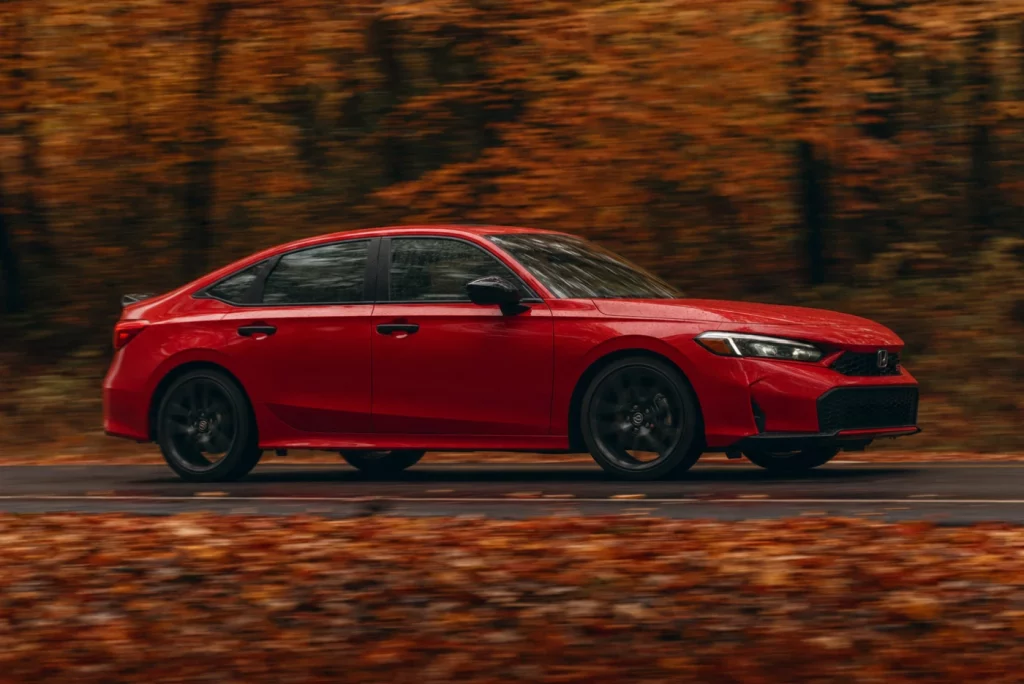
The $15,000 buyer is not shopping for a project. They are shopping for a car that needs nothing beyond routine maintenance for the next three to five years. The question is which generation, model year, and trim combination delivers the best balance of remaining life, features, and ownership cost at this specific price point.
The most important rule of $15,000 Civic shopping: A clean 2015 9th gen with 80,000 miles and service records is a better buy than a neglected 2019 10th gen with 120,000 miles and no history. Buy the car, not the year. At this budget, you can afford to be selective.
Quick Answer — Which Civic Should You Buy for $15,000?
| Budget | Best Target | Engine | Why |
|---|---|---|---|
| Best overall | 2019–2020 10th Gen EX | 1.5T | Best balance of modern features, safety, and reliability |
| Best simple/reliable | 2014–2015 9th Gen LX/EX | 1.8L R18 | Lowest maintenance, proven 250K+ mile engine, no turbo |
| Best enthusiast | 2014–2015 9th Gen Si | 2.4L K24Z7 | Naturally aspirated VTEC, LSD, analog driving feel |
| Best modern daily | 2019–2021 10th Gen 2.0L | 2.0L K20C2 | Reliable, simple, modern safety, no turbo complexity |
| Best entry to 11th gen | 2022 LX | 2.0L | Newest interior, wireless CarPlay, modern chassis |
The bottom line: If I had $15,000 and wanted a Civic I’d actually keep for several years, I’d shop for a 2019–2020 EX 1.5T with roughly 50K–70K miles, a clean title, and documented maintenance. The 10th gen EX is the sweet spot for features and reliability at this price. The 9th gen is the safer mechanical choice. The 11th gen is the nicer interior choice at the entry level.
What $15,000 Buys in 2026 — The Range
| Generation | Model Years | Typical Mileage at $15K | Typical Trims Available | Remaining Service Life Estimate |
|---|---|---|---|---|
| 9th Gen | 2014–2015 | 50,000–80,000 | EX, EX-L, Si (rare) | 120,000–180,000 miles |
| 10th Gen (2.0L) | 2017–2020 | 50,000–80,000 | LX, Sport, EX | 120,000–170,000 miles |
| 10th Gen (1.5T) | 2018–2021 | 45,000–75,000 | EX, EX-L, Touring, Sport Touring | 100,000–150,000 miles |
| 10th Gen Si | 2017–2019 | 60,000–90,000 | Si sedan or coupe | 80,000–130,000 miles |
| 11th Gen (entry) | 2022 | 40,000–60,000 | LX, Sport (rare) | 140,000–180,000 miles |
Sources: CarGurus national listing data, April 2026; HondaRide used Civic price guide by year, March 2026; VMR International 2019 Civic projected retail values; KBB 2021 Civic Sport Touring and EX depreciation data. Remaining service life estimates based on documented Civic longevity (200,000–300,000 mile typical lifespan) adjusted for generation-specific known failure points and turbo vs naturally aspirated engine differences.
The $15,000 budget sits at the intersection of two strong options: a low-mileage late-model 9th-generation car that still has most of its service life ahead, or a mid-mileage 10th-generation car with modern features and proven reliability. The 11th generation is reachable only at the entry level — a 2022 LX with 50,000 miles at approximately $14,500–$15,500 is the cheapest way into the newest generation, but it will be a base-trim car.
10th Generation (2016–2021) — The Primary Target
The 10th-generation Civic is the strongest recommendation in the $15,000 segment. This generation introduced turbocharged engines, a significantly improved interior, Honda Sensing safety technology as standard equipment from 2019 onward, and class-leading rear seat space. At $15,000, the buyer can access the best years of this generation — the 2019–2021 facelift models that addressed the early-production issues.
2019–2021 facelift advantages over 2016–2018:
- Oil dilution issue on 1.5T engines addressed with improved piston rings and software calibration (TSB 18-130 applied at factory level for 2019+ production)
- Updated infotainment with physical volume knob (a major complaint on 2016–2018 models)
- Improved interior materials and sound deadening
- Honda Sensing standard on all trims (was optional on LX and Sport in earlier years)
- More refined CVT calibration
Trim breakdown at $15,000:
2019–2020 LX or Sport with 2.0L engine ($13,000–$15,000, 45K–70K miles). The safest mechanical choice. The K20C2 2.0-liter naturally aspirated engine has no Turbocharger, no direct injection carbon buildup issues, and no oil dilution history. It produces 158 hp — adequate for daily driving but not exciting. The LX has steel wheels, a 5-inch non-touch display, and manual climate control. The Sport adds 18-inch alloy wheels, a center-exit exhaust, and paddle shifters (CVT only). Neither has Apple CarPlay on the base screen, though the Sport can be found with the optional 7-inch display on some 2020+ models.
2019–2021 EX with 1.5T engine ($14,000–$16,000, 45K–70K miles). The best value proposition at $15,000. The EX adds the 1.5T engine (174 HP, 162 lb-ft), the 7-inch touchscreen with Apple CarPlay and Android Auto, blind spot monitoring with Cross Traffic Monitor, moonroof, dual-zone automatic climate control, and Honda Sensing. The 1.5T engine delivers noticeably better torque than the 2.0L — the car feels quicker in everyday driving. At 50,000–70,000 miles, a 2019–2021 EX with documented oil change history is a low-risk buy. The oil dilution concern on 2019+ models is significantly reduced compared to 2016–2018 cars.
2019–2021 Touring or Sport Touring ($15,000–$17,000, 50K–75K miles). Stretching the budget slightly. The Touring sedan adds leather upholstery, a 10-speaker premium audio system (not Bose — Honda’s own premium system on the 10th gen), navigation, and automatic wipers. The Sport Touring hatchback adds the same features in a hatchback body with 18-inch wheels and a more aggressive appearance. These trims are harder to find at $15,000 but appear in the $15,500–$16,500 range with 60,000–80,000 miles.
2017–2019 Civic Si ($14,000–$16,000, 60K–90K miles). The Si is reachable at $15,000 but requires compromise. A clean 2017 Si with 80,000 miles at $14,500 is realistic. The 10th-gen Si uses the L15B7 engine in Si tune (205 hp, 192 lb-ft) with a helical limited-slip differential, adaptive dampers, and the 6-speed manual. At 80,000 miles, the Si will need clutch inspection (clutch replacement at 80K–100K is common on driven Si cars, $1,200–$1,800), and the 1.5T oil dilution concern applies to 2017–2018 Si models. A 2019 Si is the better choice but harder to find under $16,000.
Years to prioritize within the 10th gen at $15K: 2019 and 2020 are the sweet spot. The 2019 model year received the facelift with the physical volume knob and improved 1.5T calibration. The 2020 model year is essentially identical but one year newer. The 2021 model year is the final year of the generation and commands a premium — a 2021 EX with 45,000 miles typically sells for $16,000–$17,500, above the $15,000 budget.
10th gen buying rule at $15K: Prioritize 2019–2020 models over 2016–2018. The facelift addressed the oil dilution issue, added the physical volume knob, and improved interior quality. A 2019 EX with 60,000 miles is a better buy than a 2018 Touring with 50,000 miles at the same price.
9th Generation (2013–2015) — Low-Mileage Alternative
At $15,000, the 9th-generation Civic buyer is not shopping for a high-mileage beater. They are looking at low-mileage, well-preserved examples that have depreciated to their floor. A 2014–2015 Civic EX with 50,000–70,000 miles at $11,000–$13,000 is a car that still has 150,000+ miles of service life remaining and needs nothing beyond routine maintenance.
The 9th gen at this price makes sense for the buyer who values simplicity and proven long-term reliability over modern features. The R18 1.8-liter engine with port injection is one of the most durable Honda engines ever produced. The car has no turbocharger, no CVT (2013 models have a 5-speed automatic; 2014–2015 models have a CVT that is less refined than the 10th gen’s but reliable), and no direct injection carbon buildup concerns.
The 9th-gen Si at $15,000. A 2014–2015 Civic Si with the K24Z7 2.4-liter engine (205 hp, 174 lb-ft) and 6-speed manual can be found at $13,000–$16,000 with 60,000–90,000 miles. The K24Z7 is a naturally aspirated engine with VTEC on both intake and exhaust cams — it revs freely to 7,000 rpm and has no turbocharger complexity. The 9th-gen Si is widely regarded as one of the best-driving front-wheel-drive sport compacts of its era, with precise steering, a mechanical limited-slip differential, and a chassis that communicates well. At $15,000, a clean, unmodified 2014–2015 Si with 70,000 miles is a strong buy for the enthusiast who values analog driving feel over modern tech.
The trade-off. The 9th gen lacks Apple CarPlay, has a smaller infotainment screen (or no screen on LX), no Honda Sensing safety suite, and a lower IIHS small overlap front crash test rating than the 10th gen. The interior is narrower, and the rear seat is tighter. The 9th gen is a better car for someone who values mechanical simplicity and low ownership cost. The 10th gen is a better car for someone who wants modern safety and infotainment.
The 9th gen verdict at $15K: If you want the lowest maintenance cost and longest potential service life, the 9th gen R18 with 50,000–70,000 miles is the best choice. It will outlast almost any modern turbocharged car and costs less to maintain. Accept the dated interior and lack of modern tech.
11th Generation (2022) — Entry Level
The 11th-generation Civic entered production for the 2022 model year. In 2026, a 2022 Civic with 40,000–60,000 miles is the cheapest way into the newest generation, with prices ranging from $14,000–$15,500 for LX and Sport trims.
What $15,000 buys in the 11th gen: A 2022 LX sedan with 50,000 miles at approximately $14,500. The 11th-gen LX has a 2.0-liter naturally aspirated engine (158 hp), a CVT, a 7-inch touchscreen with wireless Apple CarPlay and Android Auto (standard on all 11th-gen trims), Honda Sensing suite, and the significantly improved 11th-gen interior with higher-quality materials and better noise insulation than the 10th gen.
The trade-off at this price. A 2022 LX at $15,000 is a base-trim car with cloth seats, manual climate control, 16-inch steel wheels with covers, and no moonroof. It is also a first-year 11th-gen model, which carries slightly higher risk of early-production issues. The 11th gen has documented complaints of Sticky Steering on some 2022–2023 models (under NHTSA investigation as of 2025–2026), wind noise at highway speeds, and infotainment glitches. These issues affect a minority of cars but are worth noting.
A 2022 Sport ($15,000–$16,000) adds 18-inch alloy wheels, a center-exit exhaust, and a sportier appearance but is harder to find at exactly $15,000.
Is the 11th gen worth the stretch? The 11th gen offers a genuinely nicer interior, better noise isolation, and wireless smartphone integration. If the buyer values a modern, premium-feeling cabin and plans to keep the car for 7–10 years, the 11th gen is worth the premium over a 10th-gen car. If the priority is lowest total ownership cost, a 2019–2020 EX with similar mileage for $2,000–$3,000 less is the better financial decision.
11th gen buying rule at $15K: Only buy a 2022 LX or Sport at this price. EX and above trims are $17,000–$20,000, outside the budget. Accept the base trim and first-year model risk, or stretch the budget for a 2023 model with the steering recall completed.
The Engine Decision — 2.0L vs 1.5T at $15,000
At $15,000, the engine choice is the most important decision. The 2.0L and 1.5T are fundamentally different engines with different ownership costs and reliability profiles.
2.0L K20C2 — The Safe Choice. Naturally aspirated, port-injected, no turbocharger, no oil dilution concerns. It is less powerful (158 hp vs 174 hp) and less fuel-efficient (34 mpg combined vs 36 mpg combined) than the 1.5T, but it is simpler and more durable in the 100,000+ mile range. The 2.0L is the better choice for a buyer who prioritizes reliability and low maintenance costs over performance. At $15,000, the 2.0L is available in 2019–2021 LX and Sport trims with 50,000–70,000 miles.
1.5T L15B7 — The Performance Choice. Turbocharged, direct-injected, more torque, better highway passing power. The 1.5T is more fun to drive and more fuel-efficient, but it has documented oil dilution issues on 2016–2018 models (addressed on 2019+ models). It requires premium fuel for maximum performance and has a more complex service schedule. The 1.5T is the better choice for a buyer who values performance and is willing to maintain the car properly. At $15,000, the 1.5T is available in 2019–2021 EX and above trims with 45,000–70,000 miles.
The engine rule at $15K: If reliability and simplicity are priority #1, buy the 2.0L. If performance and MPG matter, the 1.5T makes sense — but inspect it properly and verify the oil dilution TSB was completed on 2016–2018 models.
Mileage — What Should You Actually Buy?
| Mileage | Verdict |
|---|---|
| Under 75,000 | Excellent — expect a premium, but it’s worth it |
| 75,000–100,000 | Sweet spot — best value at $15K |
| 100,000–125,000 | Very good if maintained — inspection is critical |
| 125,000–150,000 | Buy condition, not mileage — records are essential |
| 150,000+ | Only at the right price — prioritize maintenance history |
Mileage isn’t the enemy. Deferred maintenance is. A 120,000-mile Civic with oil changes every 5,000 miles and CVT fluid changes every 30,000 miles is a better buy than a 70,000-mile Civic with no service records.
The $15,000 Decision Matrix
| Scenario | Best Pick | Why | Compromise |
|---|---|---|---|
| Lowest ownership cost, longest life | 2014–2015 9th Gen EX, 50K–70K mi, $11K–$13K | R18 engine, port injection, no turbo, proven 250K+ mile durability | No Apple CarPlay, no Honda Sensing, dated interior |
| Best all-around value | 2019–2020 10th Gen EX 1.5T, 50K–70K mi, $14K–$16K | Modern safety, Apple CarPlay, good power, proven reliability after facelift | 1.5T requires premium fuel recommended, CVT not for enthusiasts |
| Best modern features on budget | 2022 11th Gen LX, 45K–60K mi, $14K–$15.5K | Wireless CarPlay, best interior, best NVH, newest safety | Base trim, first-year model risk, sticky steering investigation |
| Enthusiast daily driver | 2014–2015 9th Gen Si, 60K–80K mi, $13K–$16K | K24Z7 naturally aspirated, VTEC, LSD, best analog feel | No modern tech, older safety structure, harder to find clean |
| Sporty + modern | 2019 10th Gen Si, 70K–85K mi, $14.5K–$16K | 205 hp, LSD, adaptive dampers, Apple CarPlay, Honda Sensing | Higher miles, clutch wear risk, 1.5T oil dilution history on early cars |
| Hatchback practicality | 2019–2020 10th Gen Sport Hatchback 1.5T, 50K–70K mi, $14K–$16K | Hatchback cargo versatility, 1.5T power, sporty appearance | Sport trim lacks EX features (no blind spot, no moonroof on some) |
Maintenance Expectations at $15,000
The maintenance burden at $15,000 is significantly lower than at $10,000. A 2019 Civic with 60,000 miles is at a well-documented service interval — the 60,000-mile service (spark plugs, CVT fluid, brake fluid, cabin and engine air filters) costs approximately $400–$700 at an independent shop. The Timing Chain does not need replacement. The suspension is still tight. The A/C system should be functional.
| Generation | Typical Mileage | Immediate Needs | First-Year Budget |
|---|---|---|---|
| 9th Gen (2014–2015) | 50K–80K | CVT fluid change, brake fluid flush, A/C check, spark plugs at 100K | $300–$600 |
| 10th Gen (2019–2021) | 45K–75K | 60K service if approaching, CVT fluid, cabin filter | $200–$700 |
| 10th Gen Si (2017–2019) | 60K–90K | Clutch inspection, transmission fluid, brake fluid, valve adjustment not required | $400–$1,800 (if clutch needed) |
| 11th Gen (2022) | 40K–60K | Minimal — cabin filter, oil changes, brake fluid at 3 years | $100–$300 |
The 10th-gen Si is the outlier here. At 80,000 miles, the clutch is a known wear item. A Civic Si that was driven enthusiastically (which most are) may need a clutch replacement within the first year of ownership. Budget $1,200–$1,800 for this job at an independent shop. A pre-purchase inspection that includes a clutch wear measurement is essential before buying any Si at this mileage.
Years and Trims to Avoid at $15,000
2016 10th gen (any trim). The first year of the 10th generation has the highest complaint volume of any 10th-gen model year. Infotainment glitches, unaddressed 1.5T oil dilution on early builds, A/C compressor clutch failures, and general first-year teething issues make the 2016 a weaker choice than 2017–2018, even at a discount. At $15,000, there is no reason to buy a 2016 when a 2017 or 2018 is available for similar money.
2012 9th gen (any trim). The pre-refresh 9th gen has a poorly received interior, premature brake wear, and a lower IIHS small overlap front crash test rating. The 2013 refresh addressed most of these issues. A 2012 Civic at any price requires extra scrutiny.
Modified cars. At $15,000, the market is full of modified 10th-gen Civics — lowered, with aftermarket wheels, intake, exhaust, and tune. A modified Civic at this price has almost certainly been driven harder than a stock example. The modifications may also indicate that the car was tracked or autocrossed. Unless the buyer is an enthusiast who can evaluate the quality of the modifications, a stock car is the safer choice.
Type R at $15,000. Not realistic. A salvage-title or high-mileage FK8 Type R occasionally appears at $18,000–$22,000, but a clean-title Type R at $15,000 does not exist in the 2026 market. If the listing seems too good to be true, it is a rebuilt-title car, a scam, or a car with hidden damage.
How Much Money to Keep After Buying?
If your total budget is $15,000, do not spend $14,900 on the car. Keep a reserve.
- $12,500–13,500 purchase + $1,500–2,500 reserve
First-year maintenance items to budget for:
- Fluids (oil, Coolant, brake, CVT fluid if not documented)
- Brakes (pads, rotors if needed)
- Tires (if worn)
- Battery (if original and over 4 years old)
- Filters (air, cabin)
- Unexpected repairs
The reserve rule at $15K: A $13,000 9th gen with $1,000 in immediate maintenance is a better buy than a $14,800 10th gen with no service history and a clean engine bay. The extra $1,800 you saved covers the work the previous owner deferred.
Decision Block — Which Car to Buy at $15,000
Buy a 2019–2020 10th-gen EX 1.5T ($14,000–$16,000, 50K–70K miles) if: You want the best all-around Civic for the money. The EX gives you the 1.5T engine (174 hp, good torque), Apple CarPlay, blind spot monitoring, moonroof, and Honda Sensing in a package that is modern, reliable, and comfortable. This is the default recommendation for the $15,000 buyer who wants a daily driver with modern features and no major compromises.
Buy a 2014–2015 9th-gen EX or Si ($11,000–$15,000, 50K–80K miles) if: You value mechanical simplicity and long-term durability over modern tech. The 9th gen with the R18 or K24 engine will outlast almost any modern turbocharged compact car. The Si with the K24Z7 is one of the best naturally aspirated sport compacts ever built. Accept the dated interior and the lack of modern safety tech.
Buy a 2022 11th-gen LX ($14,000–$15,500, 45K–60K miles) if: The interior quality and wireless CarPlay matter more than trim features. The 11th gen is a genuinely nicer place to sit than the 10th gen. The LX is a base car, but the base 11th gen is nicer than the mid-trim 10th gen in terms of materials and noise isolation. Accept the first-year model risk and the absence of features like blind spot monitoring and moonroof.
Buy a 2019 10th-gen Si ($14,500–$16,000, 70K–85K miles) if: You are an enthusiast who wants a manual transmission, limited-slip differential, and genuine performance in a practical sedan. The 10th-gen Si is a genuinely quick car that can be daily-driven comfortably. Accept the higher mileage, the clutch wear risk, and the 1.5T oil dilution history (mitigated on 2019+ models).
Do not buy at $15,000:
- A 2016 10th gen of any trim (first-year issues, no reason to choose it over 2017+)
- A modified car without thorough inspection by a Honda specialist
- A Type R at this price (does not exist with a clean title)
- A 2012 9th gen (weakest year of the generation)
- A 2022 11th-gen EX or above (these sell for $17,000–$20,000, above budget)
Frequently Asked Questions
What is the best Civic under $15,000?
The 2019–2020 10th gen EX 1.5T with 50,000–70,000 miles is the best all-around choice. It has modern safety features, Apple CarPlay, good power, and proven reliability after the 2019 facelift.
Is a 9th gen Civic worth buying at $15,000?
Yes — a 2014–2015 9th gen with 50,000–70,000 miles offers the lowest maintenance cost and longest potential service life. It is the best choice for buyers who value mechanical simplicity over modern tech.
Is a 10th gen Civic with 100,000 miles worth $15,000?
Only if it has complete service records and a clean title. A 2019 1.5T with 100,000 miles and no records is overpriced at $15,000. A 2017 2.0L with 100,000 miles and records is a reasonable buy at $12,000–$13,000.
Should I buy a Civic Si for $15,000?
Yes — a 2014–2015 9th gen Si or a 2019 10th gen Si can be found at this price. Inspect the clutch carefully on the 10th gen — replacement costs $1,200–$1,800. The 9th gen Si is the better value for long-term reliability.
Is a 2022 Civic LX worth $15,000?
Yes — it is the cheapest way into the 11th generation. Accept that it is a base trim with steel wheels and no moonroof. The interior quality and wireless CarPlay are significant upgrades over the 10th gen.
How much should I budget for repairs on a $15,000 Civic?
Budget $500–$1,500 for first-year maintenance, depending on the generation. 10th gen needs the least, 9th gen needs moderate catch-up work. Always keep a repair reserve.
Quick Reference Checklist
☐ $15,000 in 2026 buys — 2019–2021 10th-gen EX/Touring at 45K–75K miles or 2022 11th-gen LX at 40K–60K miles
☐ 2019–2020 10th-gen EX 1.5T — is the strongest all-around recommendation at this price point
☐ 2019 facelift — addressed oil dilution, added physical volume knob, and improved interior — prioritize over 2016–2018
☐ 9th-gen (2014–2015) at 50K–80K miles — offers lowest ownership cost and longest remaining service life
☐ 9th-gen Si with K24Z7 at $13K–$16K — is the best naturally aspirated enthusiast choice at this budget
☐ 10th-gen Si at $14.5K–$16K with 70K–85K miles — is reachable but requires clutch inspection and budget
☐ 2022 11th-gen LX at $14K–$15.5K — is the cheapest entry to the newest generation — base trim only
☐ Avoid 2016 10th gen — highest complaint volume, 2012 9th gen — weak year, and modified cars
☐ First-year maintenance budget: $200–$700 for 10th gen, $300–$600 for 9th gen, $100–$300 for 11th gen
☐ No clean-title Type R exists at $15,000 — do not pursue this
☐ For $15,000, buy the best-maintained Civic you can afford — not the newest one
Sources: CarGurus national listing data, April 2026; HondaRide used Civic price guide by year, March 2026; VMR International 2019 Civic projected retail values; KBB 2021 Civic Sport Touring and EX depreciation data; RepairPal labor/cost data for Honda Civic by model year; CivicX owner-reported maintenance costs; RockAuto parts pricing (2026); CarMerit year-by-year Honda Civic reliability analysis (2026); NHTSA complaint data. Prices are approximate and may vary by region and market conditions.