

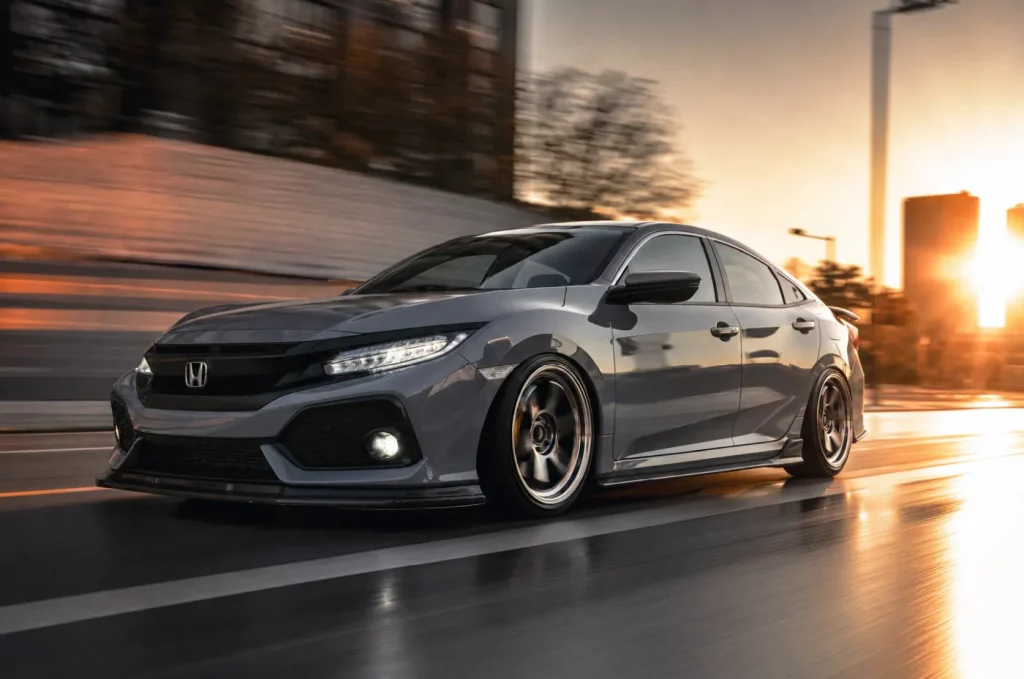
The 10th generation Civic LX was the highest-volume single trim of the entire generation, serving as the default choice for rental fleets, corporate purchase programs, and budget-conscious retail buyers across North America. It carried the 2.0-liter naturally aspirated K20C2 engine — mechanically unrelated to the 1.5-liter turbo that generated most of the generation’s headlines — and it is the trim that most 10th gen Civic owners actually lived with day to day. For used buyers in 2026 who prioritize long-term ownership cost and mechanical simplicity over infotainment and convenience features, the LX represents the most rational choice in the 10th generation lineup.
The most important rule of LX buying: The LX is not a stripped-down penalty box. It is a reliable, simple, and durable daily driver that will outlast most turbocharged Civics with proper maintenance. If you want performance, buy the EX-T or Si. If you want reliability and low ownership cost, buy the LX.
Quick Answer — Is the 10th Gen LX Still Worth Buying in 2026?
| Model Year | Verdict | Best For | Main Concern |
|---|---|---|---|
| 2016–2018 LX | Good budget choice | Cheapest entry to 10th gen, simple K20C2 engine | No Honda Sensing, 5-inch screen, steel wheels |
| 2019–2021 LX | Best overall | Honda Sensing standard, facelift improvements, reliable engine | Still no CarPlay on base screen, steel wheels |
The bottom line: The LX with the K20C2 is the most reliable and cheapest-to-maintain 10th generation Civic. It is slower than the 1.5T, but it avoids all the turbo-related problems. Buy a 2019–2021 LX if you want Honda Sensing. Buy a 2016–2018 LX if you want the lowest possible entry price. The K20C2 will easily reach 200,000+ miles with basic maintenance.
The K20C2 Engine — Why the LX Avoids the 10th Gen’s Biggest Problems
The LX (and mechanically identical EX up to 2018) used the K20C2, a 2.0-liter naturally aspirated DOHC i-VTEC four-cylinder engine with multi-point port injection. This engine shared its basic architecture with Honda’s K-Series family — a lineage that includes the K20A from the 2000s Type R models and the K20Z3 from the 8th generation Civic Si — but it was a de-tuned, economy-focused variant designed for low maintenance and high durability rather than peak power.
| Specification | Details |
|---|---|
| Engine Code | K20C2 |
| Displacement | 2.0L (1996 cc) |
| Horsepower | 158 hp @ 6,500 rpm |
| Torque | 138 lb-ft @ 4,200 rpm |
| Fuel System | Multi-point port injection (MPI) |
| Compression Ratio | 10.8:1 |
| Valvetrain | DOHC i-VTEC (intake cam only) |
| Timing | Chain-driven (no replacement interval) |
| Fuel Requirement | Regular unleaded (87 octane) |
| Oil Capacity | 4.2 quarts (0W-20) |
The K20C2 produced 158 horsepower AT 6,500 rpm and 138 lb-ft of torque at 4,200 rpm, with a redline of 6,700 rpm. It ran on regular unleaded fuel and required no premium gasoline, unlike the 1.5-liter turbo in higher trims under sustained high-load conditions (Honda fuel recommendation: 87 octane for the 2.0L, 87 octane minimum for the 1.5T but 91 recommended for maximum performance — 2016 Civic Owner’s Manual).
The defining difference between the K20C2 and the L15B7 was the fuel injection system. The K20C2 used multi-point port injection, where fuel is sprayed into the intake port behind the intake valves. The L15B7 used direct injection, where fuel is sprayed directly into the combustion chamber. This difference has consequences that become more significant with mileage:
No intake valve carbon buildup: Port injection continuously washes the backs of the intake valves with fuel, preventing carbon deposits from accumulating. Direct injection engines, including the L15B7, have no fuel passing over the intake valves, leading to carbon buildup over time that requires walnut blasting or chemical cleaning at 60,000-100,000 miles. The K20C2 has no such maintenance requirement.
No fuel dilution in engine oil: The 1.5-liter turbo’s documented issue with gasoline mixing into the engine oil during cold-climate short-trip driving is a direct consequence of the direct injection system’s fuel wetting on cold cylinder walls. The K20C2’s port injection system does not have this failure mode. On the CivicX forum poll asking which engine is more reliable for long-term ownership, 81.2% of 133 voters chose the 2.0L naturally aspirated engine over the 1.5-liter turbo (CivicX forum, “What is more reliable for the long term — 2.0L vs 1.5L Turbo,” May 2020).
No turbocharger failure risk: The K20C2 has no Turbocharger, no intercooler, no wastegate actuator, and no charge piping. The MHI TD03 turbo on the L15B7 is generally reliable, but failures do occur — typically from oil starvation, worn bearings, or wastegate rattling — and replacement cost is approximately $1,500-$2,500 at a dealer.
The trade-off is power output and real-world fuel economy. The K20C2 makes 16 fewer horsepower and 24 fewer lb-ft of torque than the L15B7, and it delivers peak torque at 4,200 rpm rather than the turbo’s 1,700 rpm. The LX with the CVT returns 31 city / 41 highway / 35 combined EPA — 4 mpg less combined than the 1.5T with the LL-CVT, which returned 31 city / 42 highway / 35 combined (2016 EPA mileage ratings, Honda Motor Co.). In real-world driving, the turbo engine delivers its torque much earlier and the gap feels larger than the spec sheet suggests.
Source: 2016 Honda Civic Sedan Model Specifications (American Honda Motor Co., 2015); Honda 2016 Civic Owner’s Manual; EPA fueleconomy.gov data.
What the LX Included and What It Left Out
The LX was the entry point into the 10th generation Civic lineup. It was equipped to compete with the base Toyota Corolla L and Mazda3 GX on price, and Honda deliberately stripped out the content that appeared on the EX and above.
What the LX included (vs. the previous generation base model):
- All-aluminum 2.0L K20C2 engine with DOHC i-VTEC
- Drive-by-wire throttle with Eco Assist system
- Electric Parking Brake with automatic brake hold
- Hill start assist
- 16-inch wheels with full wheel covers (steel wheels under covers)
- All-season tires: 215/55 R16 93H
- Projector-beam halogen headlights with auto-on/off
- LED daytime running lights
- Multi-angle rearview camera with static guidelines (no dynamic guidelines — those started on EX)
- LED taillight bars (shared across all trims)
- 160-watt audio system with 4 speakers
- 5-inch color LCD screen (non-touch, basic interface)
- Bluetooth HandsFreeLink and streaming audio
- MP3/WMA playback capability
- Pandora compatibility
- USB audio interface (1.0-amp front port, 1.0-amp center console port)
- Cruise control
- Tilt and telescopic steering column
- Manual climate control (single-zone, no auto temperature setting)
- Cloth seating with manual adjustment (driver height adjustable)
- 60/40 split fold-down rear seatback
- Capless fuel filler
- Security system with remote entry and trunk release
- Body-colored door handles (non-chrome, non-smart-entry)
- Multi-information display (5-inch on non-Honda Sensing models)
What the LX left out (that the EX added):
- 7-inch Display Audio with touchscreen, Apple CarPlay, and Android Auto (LX had a 5-inch non-touch screen)
- 180-watt 8-speaker audio system (LX had 160-watt 4-speaker)
- Moonroof
- Smart entry system (LX required key fob press to unlock)
- Push-button start (LX used a physical key ignition)
- 16-inch alloy wheels (LX had steel wheels with covers)
- Body-colored decklid spoiler
- Heated front seats
- Dual-zone automatic climate control (LX had manual single-zone)
- Honda LaneWatch passenger-side camera
- Multi-angle rearview camera with dynamic guidelines
- SMS text message function
- SiriusXM radio and HD Radio
- 1.5-amp USB charging port in front
- Passenger-side seatback pocket
- Rear-seat center armrest
What the LX left out relative to EX-L and Touring:
- Leather seating and steering wheel
- Power front seats
- Leather-wrapped shift knob
- Heated rear seats
- Automatic climate control
- Navigation system
- LED headlights
- Rain-sensing wipers
- Bose/premium audio system
- Larger wheels (17-inch or 18-inch)
Source: 2016 Honda Civic Sedan Model Specifications and Model Comparison (American Honda Motor Co., 2015).
The Manual Transmission Advantage
The LX was the only non-performance Civic sedan trim in the 10th generation to offer a 6-speed manual transmission. The EX, EX-T, EX-L, and Touring were CVT-only (for the sedan body style). The 6-speed manual remained available on the LX sedan throughout the 2016-2021 production run, although it became increasingly difficult to find on dealer lots as the generation progressed, with Honda allocating most manual-transmission production to the Si and the hatchback.
The 6-speed manual gear ratios for the LX were:
| Gear | Ratio | Final Drive |
|---|---|---|
| 1st | 3.643 | 4.105 |
| 2nd | 2.080 | |
| 3rd | 1.361 | |
| 4th | 1.024 | |
| 5th | 0.830 | |
| 6th | 0.686 |
Source: 2016 Honda Civic Sedan Model Specifications (American Honda Motor Co., 2015).
The manual LX weighed 2,742 lbs — 9 lbs less than the CVT version and 157 lbs less than a 2016 EX-T. The weight savings came from the simpler transmission, the smaller engine, and the absence of the moonroof, power seats, and audio upgrades.
The EPA fuel economy for the 6-speed manual LX was 27 city / 40 highway / 31 combined — notably lower than the CVT’s 31/41/35, a 4 mpg combined penalty for choosing the manual. The manual transmission was paired with the M-CVT’s gear ratios in reverse and final drive were different, but the manual used its own specific ratios as shown above.
Year-by-Year Changes for the LX (2016-2021)
The LX received fewer year-to-year changes than higher trims because it had less electronic content to update.
2016: Launch year. The LX debuted with the spec described above. Early 2016 models had a higher rate of assembly-related issues (panel gaps, trim fitment) common to first-year production. The infotainment system on the LX’s 5-inch screen was basic but functional and did not suffer from the slowness or delamination issues that plagued the 7-inch Display Audio on higher trims. Honda Sensing was not available at any price on the 2016 LX.
2017: Honda added acoustic glass and additional sound-deadening materials to the entire Civic lineup, including the LX. Cabin noise levels at highway speed dropped measurably. The LX saw no other substantive changes.
2018: Honda Sensing became available as an option on the LX for the first time. Cars equipped with this option received the “LX w/Honda Sensing” designation and included the full suite: Collision Mitigation Braking, Road Departure Mitigation, Lane Keeping Assist, and Adaptive Cruise Control. The LX with Honda Sensing also received a slightly different multi-information display to support the driver-assistance system indicator lights. The 5-inch non-touch screen remained unchanged. The physical key ignition remained. This was the first model year where a used LX buyer can find Honda Sensing-equipped cars.
2019 (facelift): The mid-cycle refresh brought visual changes to the LX — updated front fascia with the new piano black upper wing, restyled lower grille, and revised rear bumper. The full-width front splitter and chrome side pod accents of the Touring were not carried over to the LX, which retained a simplified front bumper design. Honda Sensing became standard on all Civic trims, including the LX. This was the single most significant year-over-year change for the LX — every 2019 LX has the full driver-assistance suite. The 5-inch non-touch screen continued. The physical key ignition continued (push-button start remained reserved for EX and above).
2020: Carryover. No changes from the 2019 model year. Production continued with the same specifications.
2021: Final year. Honda limited overall Civic production to prepare for the 11th generation launch. The LX remained in production but allocation was reduced. The 2021 LX is mechanically identical to the 2019-2020 models.
For used buyers, the 2019 LX represents the strongest value-to-year ratio because it has standard Honda Sensing (adding collision avoidance and adaptive cruise control) at a price close to a 2018 without it. The 2016 LX is the cheapest entry point but carries the highest risk of early-production issues and lacks Honda Sensing entirely.
LX vs EX — The $2,000 Question
The EX was approximately $2,000 more than the LX when new. For that premium, the EX added:
- 1.5T turbo engine (174 HP, 162 lb-ft) — significantly more torque
- 7-inch touchscreen with Apple CarPlay and Android Auto
- 8-speaker audio system
- 17-inch alloy wheels
- Moonroof
- Smart entry with push-button start
- Heated front seats
- Dual-zone automatic climate control
- Blind spot monitoring (on some trims)
The EX is the better car for buyers who want modern features and more power. The LX is the better car for buyers who want the lowest purchase price, the simplest maintenance, and the most reliable engine. The $2,000 premium for the EX is justified if you value the features. If you do not, the LX is the smarter financial decision.
The EX rule: If you are buying a used 10th gen and you want CarPlay, a moonroof, heated seats, and more power, buy the EX. If you want the lowest ownership cost and the simplest engine, buy the LX. The LX’s K20C2 will outlast the EX’s L15B7 in the long run, but the EX is a better daily driver in the short term.
LX vs Sport — What Is the Difference?
The Sport trim was positioned above the LX and below the EX. In the sedan and coupe, the Sport used the same K20C2 engine as the LX — no turbo. The Sport added:
- 18-inch alloy wheels (gloss black)
- Center-outlet exhaust (hatchback only)
- Black exterior trim (mirrors, window trim, grille)
- Leather-wrapped steering wheel and shift knob
- 8-speaker audio system
- Paddle shifters (CVT only)
- Sport mode (CVT only)
- Remote start (CVT only)
- Smart entry with push-button start
The Sport is the style-focused trim — it looks more aggressive than the LX but has the same engine and performance. If you want the aggressive appearance without the turbo, the Sport is the better choice. If you do not care about appearance, the LX is the better value.
Known Problems on the 2.0L LX — What Does Not Apply
The LX avoids the most expensive failure points of the 10th generation, but it is not immune to problems shared across all trims.
Problems the LX does NOT have (compared to the 1.5T models):
- Fuel dilution in engine oil — port injection engine has no direct fuel-wetting issue
- Intake valve carbon buildup — port injection cleans the valves continuously
- Turbocharger failure — no turbo on the K20C2
- Intercooler or charge pipe issues — no forced induction system
- Oil dilution class action — 2.0L engines were excluded from the L15B7-related class action filings
Problems shared across all 10th gen Civics (affecting LX):
- Air conditioning Condenser failure — the same AC condenser issue (Service Bulletin 17-087, 10-year/unlimited mile warranty extension) affects the LX. Replacement cost at a dealer is $900-$1,500 if outside the extension.
- Denso Fuel Pump Recall — all 10th gen Civics from 2016-2020 were covered under the Denso fuel pump recall (NHTSA recall 20V-173 for impeller cracking). Verify completion via VIN lookup.
- Moonroof drainage blockage — only affects LX models with the optional moonroof (rare on LX, but some fleet orders included it). The moonroof was not standard on LX.
- Rear brake noise and premature wear — owners have reported rear brake squeal and premature pad wear on 10th gen Civics across all trims (NHTSA complaints, 2016-2021). The rear brakes work harder in the stability control system on this generation.
- Exposed paint and clear coat on Hood and front bumper — the LX uses single-stage clear coat on horizontal surfaces, and owners in sunbelt states have reported premature clear coat degradation and paint chipping on the leading edge of the hood.
- Electrical system Battery Drain — some 2016-2018 LX models have reported parasitic draw issues, typically traced to the telematics control unit or Bluetooth module. Warranty TSB 18-001 covers reprogramming of the BCM on affected vehicles.
CVT maintenance on the LX with M-CVT: The M-CVT used on the 2.0L models is a different unit from the LL-CVT on the 1.5L turbo models. The M-CVT has a slightly better reputation for longevity, but it shares the same maintenance requirement: fluid changes every 30,000-40,000 miles under severe driving conditions. Replacement cost for the M-CVT is $3,200-$4,800 at a dealer — marginally less than the LL-CVT due to lower parts cost, but still a significant expense.
The manual transmission LX avoids CVT risk entirely. Clutch replacement on the 6-speed is approximately $1,200-$1,800 at a dealer and typically lasts 80,000-120,000 miles depending on driving habits.
High-Mileage LX — 100K, 150K, 200K+ Miles
The K20C2 engine is capable of 250,000+ miles with proper maintenance. The key is regular oil changes (synthetic 0W-20 every 5,000–7,500 miles) and CVT fluid changes every 30,000–40,000 miles.
100,000 miles: Spark plugs (100K interval), CVT fluid change, Brake Fluid flush, coolant flush, serpentine belt inspection, suspension bushing inspection. The engine should be running smoothly with no major issues.
150,000 miles: Valve adjustment may be needed — the K20C2 uses solid lifters and requires clearance inspection. Engine mounts may be worn. CVT fluid should be changed for the fourth or fifth time. Suspension components (struts, Bushings, ball joints) may need replacement.
200,000+ miles: The engine should still be strong with regular maintenance. The rest of the car — suspension, brakes, CV axles, wheel bearings — will need attention. A well-maintained 200K LX is a $5,000–$7,000 car that can still go another 50,000–100,000 miles.
High-mileage rule: A maintained 150,000-mile LX is a better buy than a neglected 90,000-mile EX. The K20C2 engine is durable, but the rest of the car needs maintenance. Buy the car with the service records, not the lowest mileage.
Used Market Pricing — The LX Is the Cheapest Entry to the 10th Gen (2026)
The LX depreciated faster than any other trim in the 10th generation because it was the most common fleet and rental car, which drives down resale values across the segment. In 2026, the LX represents the most affordable way into a 10th generation Civic, but the maintenance history from fleet use varies widely.
| Model Year | Typical Used Price (2026) | Typical Mileage | Best Value | Key Consideration |
|---|---|---|---|---|
| 2016 | $9,000-$12,000 | 90k-120k | Lowest cost of entry | No Honda Sensing, early production risks, likely ex-rental |
| 2017 | $10,500-$13,500 | 80k-105k | Moderate | Better NVH than 2016, still no Honda Sensing |
| 2018 | $11,500-$14,500 | 70k-95k | Good | Honda Sensing available as option, check VIN for presence |
| 2019 | $13,500-$16,500 | 55k-80k | Best value | Honda Sensing standard, facelift styling, sweet spot in price vs features |
| 2020 | $15,000-$18,000 | 40k-65k | Good | Same car as 2019, lower mileage, higher price |
| 2021 | $17,000-$20,000 | 25k-50k | Premium | Final year, still under factory warranty, limited production |
Sources: Kelley Blue Book Fair Purchase Price estimates, 2026 market data; Cars.com and Autotrader listing aggregation.
The 2019 LX with standard Honda Sensing at $13,500-$16,500 is the strongest used buy in the trim range. It adds collision mitigation braking, adaptive cruise control, and lane-keeping assist at a price that is typically $2,000-$3,000 below a comparable 2019 EX and $5,000-$7,000 below a 2019 Touring.
LX vs. Alternatives in the Same Price Range
A 2017-2019 Civic LX at $10,500-$16,500 competes with other base-model compact cars and higher-mileage examples of older generations.
2017-2019 Civic EX ($13,000-$16,000): The EX adds the 7-inch display with CarPlay, moonroof, smart entry, push-button start, heated seats, 8-speaker audio, and the same K20C2 engine. The premium over the LX is approximately $1,500-$2,500. For most buyers, the EX’s factory CarPlay alone justifies the upgrade cost. The LX makes sense only if budget is extremely tight or the buyer specifically wants the manual transmission.
2017-2019 Toyota Corolla L ($10,000-$14,000): The base Corolla L has a 1.8L naturally aspirated engine (132 hp, 128 lb-ft) that is significantly slower than the Civic LX’s 2.0L. The Corolla does not offer CarPlay until 2019 and does not offer a manual transmission after 2017. The Corolla’s reliability record is excellent and it avoids the Civic’s AC condenser and Fuel Pump issues. The Civic LX has more power, better handling, and a more modern interior.
2014-2017 Mazda3 i SV ($8,000-$12,000): The base Mazda3 with the 2.0L Skyactiv-G (155 hp, 150 lb-ft) is the closest competitor to the Civic LX in driving dynamics. The Mazda3 handles better, has a more upscale interior for the base trim, and offers a 6-speed manual on the base model. The Civic LX has more rear seat room and a larger trunk (15.1 cu ft vs. 12.4 cu ft). The Mazda3’s infotainment system is also basic on the base trim.
2019-2020 Nissan Sentra S ($10,000-$14,000): The base Sentra is cheaper than the Civic LX but offers less power (149 hp from a 2.0L), a less refined CVT, and a lower-quality interior. The Sentra’s reliability record is below the Civic’s, and the Sentra does not offer Honda Sensing-level driver assists until higher trims.
Who Should Buy the LX in 2026
The LX is not the right choice for every used buyer, but it suits specific priorities well.
The LX makes sense if:
- Budget is the primary constraint and the goal is the lowest total cost of ownership
- The buyer plans to keep the car for 10+ years or 150,000+ miles
- The buyer wants a manual transmission and cannot find or afford a Civic Si
- The buyer is comfortable with aftermarket upgrades for CarPlay (many LX owners add an aftermarket head unit for $300-$600)
- The car will be used for short-trip cold-weather commuting where the 1.5T’s oil dilution risk is highest
- The buyer values mechanical simplicity and wants to avoid turbocharger, direct injection, and complex infotainment failure points
The LX is not the right choice if:
- The buyer wants CarPlay and Android Auto from the factory (requires EX or above, or an aftermarket head unit)
- The buyer wants LED headlight performance (the LX’s halogen projectors rate Poor on IIHS headlight evaluations)
- The buyer wants heated seats, a moonroof, or keyless entry (all features that require EX or above)
- The buyer prioritizes acceleration and low-end torque over reliability
- The buyer needs Honda Sensing for safety (2016-2018 LX may lack it entirely)
LX vs Older Civics — Which Is Better?
8th gen R18 vs 10th gen K20C2: The 8th gen is cheaper to buy ($4,000–$8,000) but older, with more age-related issues (rust, paint, suspension, bushings, and the cracked block risk on 2006–2008 models). The 10th gen K20C2 is more expensive ($12,000–$18,000) but significantly safer (IIHS Top Safety Pick), more modern, and has a better interior. For a long-term daily driver, the 10th gen is the better choice. For a budget beater, the 8th gen is still viable.
9th gen R18 vs 10th gen K20C2: The 9th gen is cheaper ($8,000–$14,000) but has a dated interior and lacks the 10th gen’s safety structure and infotainment. The K20C2 is a more refined engine than the R18, with better power delivery and fuel economy. The 9th gen is a better value for buyers on a tight budget. The 10th gen is the better car overall.
Quick-Reference Checklist
☐ The LX uses the K20C2 2.0L naturally aspirated engine with port injection — no fuel dilution issue, no carbon buildup, no turbocharger failure risk
☐ This is the only non-performance Civic sedan trim that offered a 6-speed manual transmission throughout the generation
☐ The LX has 158 hp and 138 lb-ft — 16 hp and 24 lb-ft less than the 1.5T in the EX-T/EX-L/Touring
☐ Power delivery is linear and peak torque arrives at 4,200 rpm vs. 1,700 rpm on the turbo — the LX feels slower in normal driving
☐ The LX features a 5-inch non-touch screen — no Apple CarPlay or Android Auto from the factory (aftermarket head unit is a common upgrade)
☐ Steel wheels with full covers (16-inch), projector halogen headlights, manual climate control, keyed ignition — this is a true base trim
☐ Honda Sensing was not available on the 2016 LX, optional on 2018, and became standard for 2019
☐ The 2019 LX with standard Honda Sensing and facelift styling is the best used value in the trim range ($13,500-$16,500)
☐ The 2016-2018 LX without Honda Sensing is the cheapest way into a 10th gen Civic ($9,000-$14,500)
☐ AC condenser failure (SB 17-087) and Denso fuel pump recall apply to all 10th gen Civics including the LX — verify completion
☐ CVT fluid on the LX’s M-CVT should be changed every 30,000-40,000 miles — the 6-speed manual avoids this cost entirely
☐ The LX with the manual transmission weighs 2,742 lbs — the lightest 10th gen non-Si sedan by a significant margin
☐ EPA fuel economy: 31 city / 41 highway / 35 combined (CVT), 27/40/31 (6MT)
☐ A 2019 LX buyer paying $14,500 saves approximately $5,000-$7,000 compared to a 2019 Touring — the question is whether the 7-inch screen, CarPlay, moonroof, and heated seats are worth that delta
☐ For long-term ownership (10+ years), the K20C2 LX is the most durable and lowest-maintenance option in the entire 10th generation lineup
Sources: 2016 Honda Civic Sedan Specifications and Highlights (American Honda Motor Co., 2015); 2016 Honda Civic Sedan Model Comparison and Model Specifications (American Honda Motor Co., 2015); Honda 2016 Civic Owner’s Manual; EPA fueleconomy.gov data; Kelley Blue Book Fair Purchase Price estimates, 2026 market data; Cars.com and Autotrader listing aggregation; CivicX forum owner reports. Prices are approximate and may vary by region and market conditions.