

Honda paint is thin and soft — approximately 90-110 microns total with only 30-35 microns of clear coat. On American highways, the front bumper and Hood of a 10th or 11th generation Civic can be covered in rock chips within a single season. Ceramic coatings protect against UV, chemicals, and wash swirls, but they do nothing against gravel and road debris. The only physical barrier against rock chips and deep scratches is Paint Protection Film (PPF) — a thick, self-healing polyurethane layer. This guide covers which panels matter most on a Civic, what it costs, and how to avoid overpaying at the dealership.
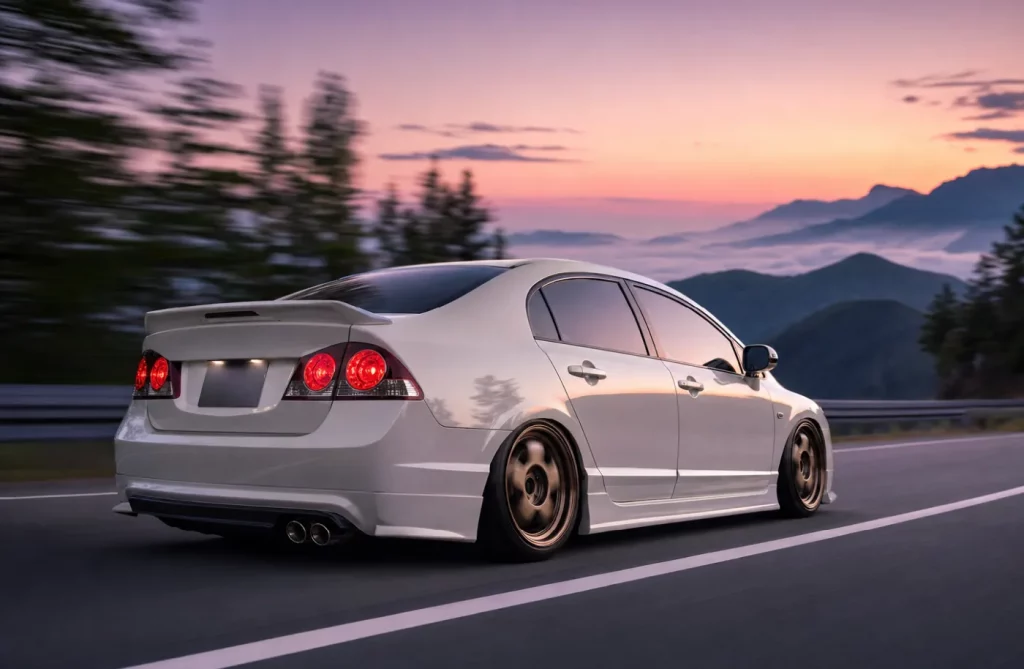
The most important rule of Civic PPF: Partial hood coverage (18-24 inches) leaves a visible edge that collects dirt and looks terrible over time. If you PPF the hood, do the entire hood with wrapped edges. A full hood is the only way to avoid a visible line across the paint.
Quick Answer — Which PPF Coverage Does Your Civic Need?
| Owner Type | Recommended Coverage | Approx. Cost |
|---|---|---|
| Budget daily driver (8th/9th gen) | Front bumper + partial hood + mirrors | $500–$900 |
| Daily commuter (10th/11th gen) | Full front (bumper, hood, fenders, mirrors) | $1,500–$2,500 |
| Highway driver (10th/11th gen) | Full front + rockers + A-pillars + roof leading edge | $2,000–$3,000 |
| Si or Type R | Full front + rockers + rear wheel arches + headlights | $2,500–$3,500+ |
| Full vehicle (show car / collector) | All painted surfaces | $4,500–$7,000+ |
The bottom line: For most Civic owners, a full-front PPF package (bumper, full hood, full fenders, mirrors, and headlights) is the sweet spot. It protects the high-impact areas, preserves resale value, and avoids the ugly cut lines of partial coverage. Full-car PPF is a luxury — worth it for Type R owners and collectors, overkill for a daily-driven LX.
What PPF Actually Protects
Paint Protection Film is a thick (7.5-8.5 MIL) polyurethane layer that forms a physical barrier between the paint and the environment. It protects against:
- Rock chips and gravel impacts
- Road debris and sandblasting
- Bug impacts (acidic bug splatter)
- Light scratches and wash swirls
- UV exposure (prevents fading and oxidation)
What PPF does NOT protect against:
- Major collisions
- Deep gouges from keys or tools
- Vandalism
- Clear Coat Failure underneath (if already failing)
- Dents and dings
Self-healing technology: Modern PPF films (Xpel Ultimate, SunTek Ultra, Stek) have a self-healing top coat. Minor scratches and swirl marks disappear when exposed to heat — either from hot water, a heat gun, or direct sunlight. This keeps the film looking new for years.
Why the Civic Needs PPF
The Civic’s low front end and aggressive grille design make it particularly vulnerable to road debris. The hood is positioned at the perfect angle to catch rocks kicked up by trucks and SUVs. The wide fenders on Si and Type R models catch debris from the tires. The piano black B-pillars scratch if you look at them wrong. And the headlights on Touring, Si, and Type R cost $1,200–$2,000 per side to replace.
Generation-specific notes:
- 8th Gen (2006–2011): These cars are old enough that paint condition varies widely. PPF makes sense only if the paint is already in good condition. If the clear coat is failing, fix the paint first.
- 9th Gen (2012–2015): A solid daily driver. Front bumper and hood are the priority. Rockers are less of an issue on this generation.
- 10th Gen (2016–2021): The aggressive front fascia catches more debris. Piano black B-pillars are a major weak point. Si and Type R need rear wheel arch protection.
- 11th Gen (2022+): The most aerodynamic Civic, but the flat front face is a rock chip magnet. PPF on a new car is the best investment — no existing chips to repair, and the film protects the factory paint from day one.
PPF Coverage Map — Where to Protect and Why
| Area | Risk Level | Priority | Why It Matters |
|---|---|---|---|
| Front Bumper | Extreme | 🔴 Highest | Takes 90% of direct impacts. Complex shape is expensive to repaint. |
| Full Hood | Extreme | 🔴 Highest | Partial hood leaves a visible edge. Full hood with wrapped edges is the only proper way. |
| Front Fenders | High | 🔴 High | Leading edges catch debris from tires. Paint chips are common on the front edge. |
| Side Mirrors | High | 🔴 High | Small area, high risk. Cheap to protect, expensive to repaint. |
| Headlights | Medium-High | 🟡 Medium-High | Touring/Si/Type R LED assemblies cost $1,200-$2,000 per side. PPF prevents pitting and UV yellowing. |
| Rocker Panels | High (Si/Type R) | 🟡 Medium-High | Wide tires on Si/Type R kick up debris. Lowered cars are more vulnerable. |
| Piano Black B-Pillars | High | 🟡 Medium-High | Scratch from wash mitts and door seals. PPF keeps them looking new. |
| A-Pillars | Medium | 🟡 Medium | Highway debris can hit the A-pillars. Worth adding for highway cars. |
| Roof Leading Edge | Medium | 🟡 Medium | Debris from trucks can hit the leading edge of the roof. Small area, good ROI. |
| Door Cups | Low | 🟢 Low | Protects against fingernail scratches. Inexpensive add-on. |
| Rear Wheel Arches | High (Type R) | 🟡 Medium-High | Type R’s wide tires throw debris at the rear arches. Essential on FL5/FK8. |
Partial Hood vs Full Hood — The Most Important Decision
The hood is the most debated PPF area on a Civic. A partial hood (18-24 inches from the leading edge) is cheaper and protects the most vulnerable area. But it leaves a visible line across the hood where the film ends. Over time, this edge collects dirt, wax, and contamination, becoming increasingly visible.
Partial hood pros: Cheaper ($200–$400 less than full hood). Protects the area that takes 80% of impacts.
Partial hood cons: Visible line across the hood. Edge collects dirt. Looks unfinished. Can peel over time.
Full hood pros: No visible line. Complete protection. Wrapped edges prevent peeling. Looks factory-clean.
Full hood cons: More expensive. Requires more film and more labor.
Hood rule: If you can afford it, do the full hood with wrapped edges. A partial hood line on a dark-colored Civic is noticeable from 10 feet away. On a white or light-colored car, it is even more obvious. The extra $200–$400 is worth it for a clean look.
PPF Packages — What Each One Includes
Track Pack (Full Front): Front bumper, full hood, full front fenders, mirrors, and headlights. This is the gold standard for most Civic owners. It protects the entire front face of the car, which takes 90% of road debris impacts.
Highway Essentials: Full Front + A-pillars, roof leading edge, rocker panels. Adds protection for the areas that take highway debris. Recommended for owners who drive more than 15,000 miles per year.
Full Body (Stealth or Gloss): Every painted surface on the car. On a Type R or Si, this is often done with a matte film (Xpel Stealth) that transforms the car’s appearance while providing full protection. Full-body PPF costs $4,500–$7,000+ and is only cost-effective on expensive or collectible Civics.
PPF Cost Breakdown — What You Will Pay in 2026
| Package | Approx. Cost | Includes |
|---|---|---|
| Partial Front | $500–$900 | Bumper + partial hood (18-24″) + partial fenders + mirrors |
| Full Front (Track Pack) | $1,500–$2,500 | Bumper + full hood + full fenders + mirrors + headlights |
| Full Front + Rockers | $1,800–$2,800 | Full Front + rocker panels |
| Highway Package | $2,000–$3,000 | Full Front + rockers + A-pillars + roof leading edge |
| Full Vehicle (Gloss) | $4,500–$7,000+ | Every painted surface |
| Full Vehicle (Stealth/Matte) | $5,500–$8,000+ | Every painted surface with matte finish |
Cost factors: Film brand (Xpel, SunTek, Stek), installer experience, pre-install paint correction, vehicle condition, local labor rates, and coverage complexity. A full front on a 10th gen Civic is less expensive than a full front on an 11th gen Type R due to the more complex front bumper shape.
Si and Type R — Additional Coverage Needed
Si and Type R models have wider tires, more aggressive front aero, and lower ride heights. They are driven harder and see more track or spirited driving use. The following areas are critical:
- Rear wheel arches: The wide tires on Type R (265/30R19) throw debris directly AT the rear arches. The factory has a small PPF patch here, but it is insufficient. Extend the coverage.
- Rocker panels: Lowered suspension means more debris hits the rockers. Full coverage is recommended.
- Rear bumper (lower section): On hatchbacks, the rear bumper catches debris from the tires. Consider coverage here.
- Headlights: Type R headlights are expensive. PPF them.
- Front splitter area: The front lip and lower bumper sections take the most abuse. Ensure full coverage.
Type R warning: The FL5 Type R’s wide fenders and aggressive front aero create a unique debris pattern. The rear wheel arches and the lower rear bumper are must-cover areas. Most Type R owners who skip rear arch coverage regret it within 10,000 miles.
PPF vs Ceramic Coating — Not the Same Thing
This is one of the most common misconceptions among Civic owners. Ceramic coating and PPF serve completely different purposes.
PPF (Paint Protection Film): A physical layer of polyurethane. Protects against rock chips, road debris, and light scratches. The film itself is 7.5-8.5 mil thick. It is a physical barrier.
Ceramic coating: A liquid polymer (SiO2) that bonds with the clear coat. It is a chemical barrier, not a physical one. Ceramic coating protects against UV, chemical contamination, and makes washing easier. It does nothing to stop rock chips.
Best combination: Apply PPF to the high-impact areas (full front, rockers). Then apply ceramic coating over the entire car, including the PPF. This gives you physical protection from PPF and chemical protection/ ease of cleaning from ceramic coating. Some ceramic coatings are compatible with PPF; check with your installer.
PPF vs Ceramic — Quick Comparison
| Protection | PPF | Ceramic Coating |
|---|---|---|
| Rock chips | ✅ Yes | ❌ No |
| Scratches | ✅ Yes (self-healing) | ❌ No (light scratch resistance only) |
| UV protection | ✅ Yes | ✅ Yes |
| Chemical resistance | ✅ Yes | ✅ Yes |
| Hydrophobic (easy washing) | ✅ Yes | ✅ Yes (superior) |
| Cost | High ($1,500+) | Medium ($500–$1,500) |
Pre-Installation Prep — What Happens Before PPF
PPF is only as good as the paint underneath it. Before installing film, the paint must be in excellent condition. If you have rock chips, they must be filled with touch-up paint and leveled. If you have swirl marks, they must be polished out. The film will lock in the current state of the paint — if you leave chips and scratches under the film, they will be visible forever.
Prep process:
- Wash and decontaminate the car (clay bar, iron remover)
- Inspect the paint under strong light
- Fill rock chips with touch-up paint (color-matched to the paint code)
- Level the touch-up paint
- Paint correction (polish to remove swirl marks and scratches)
- IPA wipe to remove polishing oils
- Install PPF
Do not skip paint correction: If you have swirl marks and you PPF over them, the swirl marks will be visible through the film forever. The film will protect the paint, but it will not hide existing defects. A $1,500 PPF installation on a swirled car is a waste of money — correct the paint first.
Badge Removal — The Professional Way
A professional installer will remove the badges (the “C-I-V-I-C” letters and the Honda H emblem) before applying PPF. This allows them to lay a single piece of film across the entire panel without cutting around the badges. The film goes on cleanly, and the badges are reinstalled with fresh 3M tape on top of the film.
If an installer cuts around the badges, the film edges will collect dirt and look bad over time. A proper installation removes the badges. Ask your installer about this before the work begins.
PPF Maintenance — How to Keep It Looking New
PPF is durable but not maintenance-free. Follow these guidelines:
- First 48 hours: Do not wash the car. The film needs time to fully cure.
- First 7-14 days: Avoid high-pressure washing. Use a gentle hand wash.
- Ongoing: Hand wash with a pH-neutral shampoo. Avoid automatic car washes with brushes. The brushes can lift the edges of the film.
- Edges: Inspect the edges periodically. If any edge is lifting, take it back to the installer immediately.
- Contaminants: Remove bird droppings, tree sap, and bug splatter promptly. The film protects the paint, but these contaminants can still etch the film itself.
- Wax/sealant: You can apply wax or sealant over PPF. Ceramic coating over PPF is also an option. Check with your installer for compatibility.
When PPF Is Not Worth It
PPF is not for every Civic. It makes the most sense for:
- New or nearly new cars (no existing paint damage)
- High-value trims (Si, Type R, Touring)
- Owners who keep cars for 5+ years
- Owners who care about paint condition and resale value
- Highway commuters (more debris exposure)
PPF is less worthwhile for:
- Older 8th gen Civics with peeling clear coat
- Cheap daily drivers under $8,000
- Cars with existing heavy paint damage
- Owners who plan to sell in 1-2 years
- Owners who do not care about rock chips
The ROI rule: A $1,500 full-front PPF installation on a $25,000 Civic is worth it if it preserves $2,000–$3,000 in resale value. On a $5,000 8th gen, the math does not work. PPF is a preservation tool, not a repair tool.
Best Coverage by Budget
| Budget | Recommended Coverage |
|---|---|
| $300–$600 | Door cups + small high-impact areas (partial mirrors, partial rockers) |
| $600–$1,000 | Partial front (bumper + partial hood + partial fenders + mirrors) |
| $1,200–$2,000 | Full front (bumper + full hood + full fenders + mirrors + headlights) |
| $2,000–$3,000 | Full front + rockers + A-pillars + roof leading edge |
| $4,000+ | Full vehicle |
Frequently Asked Questions
Is PPF worth it on a Honda Civic?
Yes — for newer Civics (2016+) and higher trims (Si, Type R, Touring). The factory paint is thin and soft, and rock chips are almost guaranteed on the front bumper and hood. A full-front PPF installation preserves the paint and resale value.
How much does Civic PPF cost?
Partial front: $500–$900. Full front: $1,500–$2,500. Full vehicle: $4,500–$7,000+. Costs vary by film brand, installer, and vehicle condition.
Which Civic panels need PPF most?
The front bumper, hood, front fenders, mirrors, and headlights are the highest priority. The hood should be covered fully — partial hood leaves a visible edge.
Should I PPF the entire hood?
Yes. Full hood with wrapped edges is the only way to avoid a visible line across the paint. Partial hood leaves an edge that collects dirt and looks unfinished.
Do Civic Si and Type R need more PPF?
Yes. The wider tires and lower ride height throw more debris. Add rocker panels, rear wheel arches, and headlights to the coverage package.
Is PPF better than ceramic coating?
They serve different purposes. PPF protects against rock chips and physical damage. Ceramic coating protects against UV, chemicals, and makes washing easier. The best setup is PPF + ceramic coating over the PPF.
Can I install PPF myself?
Small areas (door cups, rocker strips) are DIY-friendly. Full bumper and hood installation requires experience, a clean environment, and skill. Leave large panels to professionals.
How long does Civic PPF last?
Modern PPF films typically last 7-10 years with proper maintenance. UV exposure, climate, and washing habits affect longevity. High-quality films from Xpel, SunTek, and Stek have the best durability.
Can PPF be removed?
Yes — PPF can be removed by a professional without damaging the paint. Removal costs $200–$500 for a full car. Old or degraded film may require more labor.
Is full-car PPF worth it on a Civic?
Only on expensive or collectible Civics (Type R, limited editions). On a standard LX or Sport, full-car PPF is overkill. Full-front PPF is the sweet spot for most owners.
Quick Reference Checklist
☐ Identify your Civic generation and trim — 8th/9th/10th/11th, LX/Sport/EX/Touring/Si/Type R
☐ Assess your driving — daily commuter, highway, track, or occasional
☐ Priority areas: front bumper, full hood, front fenders, mirrors, headlights
☐ For highway cars: add rockers, A-pillars, roof leading edge
☐ For Si/Type R: add rear wheel arches, extended rocker coverage
☐ Full front (bumper + full hood + fenders + mirrors + headlights) is the best value
☐ Partial hood leaves a visible edge — do not recommend
☐ PPF requires paint correction before installation — chips and swirls are locked under the film
☐ Professional installation with wrapped edges is preferred over precut kits
☐ Remove badges before PPF — reinstall with fresh tape on top of the film
☐ Budget $1,500–$2,500 for a quality full-front installation
☐ Full-car PPF is a luxury — only for Type R, show cars, or long-term collectors
☐ Ceramic coating over PPF is the best protection combination
Sources: Xpel technical documentation, SunTek PPF installation guides, Stek automotive film specifications, professional detailer industry standards, CivicX and Civic11 Forum owner reports, NHTSA and IIHS vehicle safety data (for headlight replacement cost context). Prices are approximate and may vary by region, installer, and market conditions.