

If you own a 10th or 11th generation Civic in the United States, you have probably noticed how quickly the front bumper and Hood become pitted with tiny white dots. That is not bad luck — that is the reality of Honda’s soft factory paint (typically 90–110 microns) meeting the harsh environment of American highways, semi-truck gravel spray, and winter road salt.
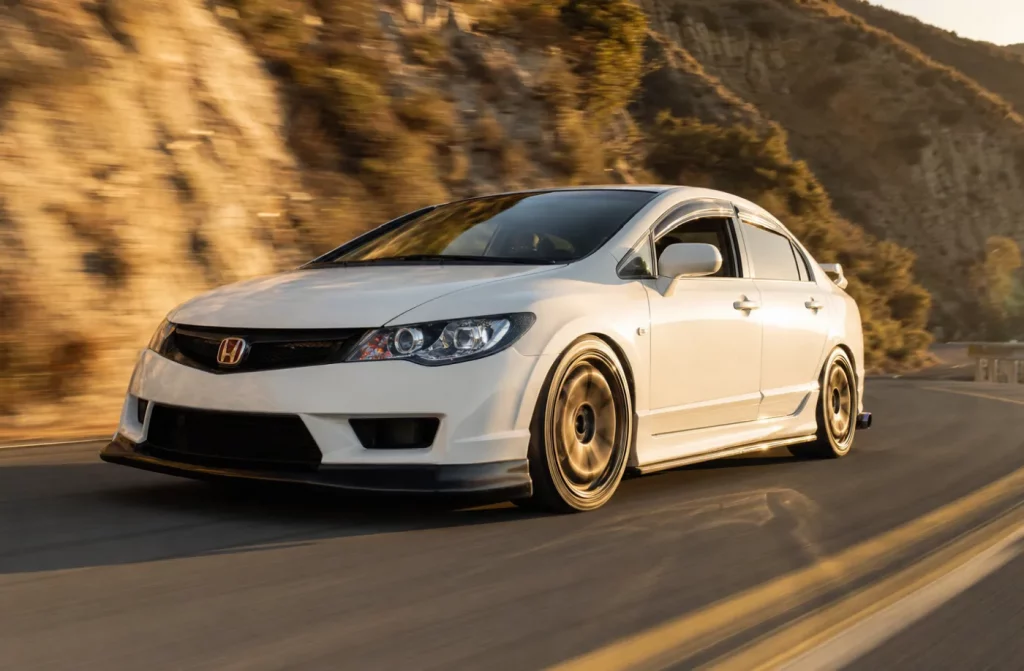
This guide provides a technical, economics-based breakdown of paint protection film (PPF) for the US Civic market. It covers which panels actually need protection, what a professional installation should cost in 2026, how to avoid dealer add-on scams, and when PPF is a waste of money.
Quick Answer: Which Civic Panels Should You Protect?
Best value for most Civic owners — Full Front PPF:
- Full front bumper
- Full hood (not partial)
- Front fenders
- Side mirrors
- Headlights
Budget option — Partial Front PPF:
- Bumper
- Leading edge of hood (6–12 inches)
- Partial fenders
- Mirrors
Highway / high-mileage Civic — add:
- A-pillars
- Rocker panels
- Roof leading edge
- Rear wheel arch impact zones
Si / Type R — consider extended coverage:
- Full front + rockers + A-pillars + rear quarter-panel impact zones
Why the extended coverage for Si and Type R? These models have wider tires and more aggressive aero. The front wheels actively throw gravel into the rear quarter panels and lower rear doors. Factory protection is minimal and insufficient.
What Is PPF?
Paint Protection Film (PPF) is a transparent polyurethane film applied to painted surfaces. Its primary functions are:
- Absorbing stone chip impacts
- Protecting against road debris and bug splatter
- Resisting light abrasion and minor scratches
- Preventing road rash on leading edges
PPF is impact protection, not a magic force field. It will not protect against serious collisions, deep cuts, or heavy impacts. It is a sacrificial layer that takes the damage so your factory paint does not.
Why the Civic Benefits From PPF
The Civic has specific vulnerability zones that make PPF particularly worthwhile:
- Front bumper: First point of contact for every rock and piece of debris. The complex geometry of the 10th and 11th gen bumpers makes them expensive to repaint properly.
- Hood leading edge: The most common location for rock chips on any Civic. Once chips appear, they collect dirt and begin to rust if not touched up.
- Front fenders: The leading edge of the front fenders takes a direct hit from debris thrown by oncoming traffic and your own tires.
- Side mirrors: Protruding from the body, mirrors catch rocks that would otherwise miss the main body panels.
- Rocker panels: The lower body sills get sandblasted by debris from the front tires, especially on highway-driven cars.
- A-pillars: The windshield pillars take impacts from rocks that bounce off the windshield AT highway speed.
Civic PPF Coverage Priority Table
| Panel | Chip Risk | Priority |
|---|---|---|
| Front Bumper | Very High | 🔴 Essential |
| Hood | Very High | 🔴 Essential |
| Front Fenders | High | 🔴 Recommended |
| Side Mirrors | High | 🔴 Recommended |
| Rocker Panels | High | 🟠 Highway / Si / Type R |
| A-Pillars | Medium / High | 🟠 Highway / Si / Type R |
| Headlights | Medium | 🟠 Recommended |
| Roof Leading Edge | Medium | 🟡 Optional |
| Rear Wheel Arches | Medium | 🟡 Si / Type R |
| Door Cups | Low | 🟢 Cosmetic |
| Rear Doors | Low | 🟢 Optional |
| Full Roof | Low | 🟢 Optional |
Front Bumper — Highest Priority
If you can only afford one PPF panel, protect the front bumper.
The bumper is constantly exposed to rocks, sand, bugs, and road debris. On the 11th gen Civic, the flat, vertical nose catches impacts at nearly 90 degrees, which maximizes damage. On the 10th gen, the aggressive edges and complex vents create multiple high-impact zones.
For the Si and Type R, the priority is even higher due to more aggressive aerodynamics, lower ride height, and the type of driving these cars typically see. The front bumper on a Type R is also significantly more expensive to replace or repaint than on a standard Civic.
Hood: Partial vs Full — The Critical Decision
This is the most important buying decision you will make when configuring your PPF package.
Partial Hood (6–12 inch strip):
- Pros: Lower cost, protects the leading edge where most impacts occur
- Cons: Visible film line that collects dirt and wax over time; stones often hit just above the film line; looks unfinished on a new car
Full Hood (entire panel):
- Pros: No visible seam, complete protection, preserves factory appearance, better resale value
- Cons: Higher cost, requires more film and labor
The dealer trap: Many US dealerships sell a “paint protection package” for $1,500–2,000 that includes a partial hood strip, partial front bumper, and mirrors. This is a terrible value. The film line on the hood will look terrible after one winter, and the uncovered areas will get chipped anyway. Never buy a partial hood on a new Civic.
Front Fenders
The front fenders on the Civic are moderately sized panels that take a surprising amount of abuse. While they are not as high-priority as the bumper or hood, they are still in the direct impact zone.
For most Civic owners, full fender coverage is recommended if the budget allows. At minimum, the leading 12–18 inches of the Fender should be covered to protect the area directly behind the headlight and wheel opening.
For Si and Type R owners, full fender coverage is strongly recommended due to wider tires and more aggressive wheel fitment that throws more debris.
Side Mirrors — High-Value Small Area
Side mirrors are a small-area, high-value PPF application. They protrude from the body and catch rocks that would otherwise miss the car. The painted mirror caps are also difficult and expensive to repaint properly.
The cost to PPF both mirrors is typically modest ($100–200) and offers excellent return on investment. Include mirrors in every PPF package.
Rocker Panels — The Overlooked Area
Rocker panels (the lower body sills below the doors) are often overlooked in PPF discussions. However, they take a beating from debris thrown by the front tires.
For highway-driven Civics, lowered cars, Si models, and Type Rs, Rocker Panel PPF is highly recommended. The film protects against the sandblasting effect that occurs at high speeds, which can turn the lower rockers into a rough, pitted surface over time.
A-Pillars — Highway Protection
The A-pillars (the structural pillars on either side of the windshield) are not an obvious PPF location. However, they receive impacts from rocks and debris that bounce off the windshield at highway speeds.
For city-only driving, A-Pillar PPF is optional. For highway commuters who spend significant time on interstates, A-pillar coverage is worth considering. The cost is modest relative to the protection it provides.
Headlights — Optical Protection
Modern Civic headlights (especially the LED units on Touring, Si, and Type R) are expensive to replace — often $1,000+ per unit plus labor. PPF on the headlights protects against:
- Rock pitting and cracking
- Surface scratches from washing
- UV exposure that causes yellowing and clouding
Use only optically clear PPF designed for headlights. Not all films are suitable for optical applications. Poor-quality film can distort light output or yellow prematurely.
Rear Wheel Arches — Si / Type R Specific
On the Si and Type R, the rear wheel arches and the lower section of the rear doors take significant abuse from debris thrown by the front tires. The problem is especially pronounced with the sticky, wide Michelin Pilot Sport tires on the Type R.
Honda installs a small OEM film patch in this area, but it is far too small to provide adequate protection. For Type R owners, extending PPF coverage into the rear wheel arch area is strongly recommended before the factory patch becomes a dirt magnet.
PPF Coverage Packages — Standard US Configurations
| Package | Coverage | Typical US Price (2026) |
|---|---|---|
| Targeted | Bumper + mirrors + headlights (or small custom areas) | $500–900 |
| Partial Front | Bumper + partial hood strip + partial fenders + mirrors + headlights | $900–1,500 |
| Full Front | Full hood + full bumper + full fenders + mirrors + headlights | $1,800–2,800 |
| Track / Extended | Full front + rocker panels + A-pillars + roof leading edge + rear impact zones | $2,500–3,800 |
| Full Body (Gloss / Stealth) | All painted panels, including roof, doors, rear quarters, and trunk | $5,500–8,500+ |
Note: These are typical US installed prices for professional installations using premium films (Xpel Ultimate Plus, SunTek Reaction, STEK Shield). Actual quotes vary by region, installer reputation, vehicle condition, and preparation requirements. Texas, Ohio, and California have slightly different market rates, with California typically being 10–20% higher.
What Are You Actually Paying For?
The cost of PPF is not the cost of the film itself. A professional installation quote includes:
- Film cost: Premium films cost $500–1,200 per roll depending on width and quality
- Labor (installation): The most significant cost — skilled installers charge $100–200 per hour, and a full front installation takes 8–16 hours
- Paint preparation: Decontamination, clay bar treatment, and light paint correction before film application
- Pattern generation: Plotter software and pre-cut templates reduce installation time but add to cost
- Edge wrapping: Wrapping film around panel edges (vs. cutting at the edge) adds labor but improves durability and appearance
- Curing time: The shop needs space to let the film cure properly before the car is released
- Overhead and warranty: Shop facilities, insurance, and the 10-year manufacturer warranty
A $2,000 full-front installation does not mean the film costs $2,000. The film cost is typically 25–40% of the total; the rest is labor and preparation.
PPF Film vs Installer — Which Matters More?
A great installer with a good film is almost always a better choice than a great film installed badly.
When evaluating a shop:
- Check the installer’s warranty and reputation
- Ask about edge wrapping (wrapped edges are superior to cut edges)
- Ask about pre-cut kits vs. bulk film (bulk is generally better for coverage)
- Look at installation photos, especially of complex bumpers and headlights
- Check for visible seams, lifting edges, and contamination under the film
- Ask about the curing process and care instructions
Pre-Cut Kit vs Bulk Installation
Pre-cut (plotter) kits:
- Lower cost, less installation time
- Lower risk of cutting into the paint
- Repeatable fit, consistent coverage
- Edges are exposed (film ends at the panel edge, not wrapped around)
- May not cover the full panel if the template is conservative
Bulk (custom-cut) installation:
- Higher cost, more installation time
- Requires an experienced installer
- Can wrap edges for better durability and appearance
- No visible seams on complex curves
- Can achieve maximum coverage on each panel
For a professional installation on a new Civic, bulk installation with wrapped edges is the superior option. The extra cost is justified by better coverage, longer durability, and better appearance.
DIY PPF — Is It Realistic?
DIY PPF is possible for certain applications on the Civic:
- Door cups (small, flat areas behind door handles)
- Mirror caps (moderate curves, manageable for a patient DIYer)
- Headlights (small, relatively flat surfaces)
- Partial hood strip (pre-cut kits are available)
DIY is not realistic for:
- Full front bumper (complex curves, stretching required)
- Full hood (large panel, difficult to position without contamination)
- Rocker panels (tight clearance, difficult to access)
Common DIY issues include contamination under the film (dust, lint), bubbles, fingers (wrinkles on curves), and improper edge adhesion. A DIY installation on a bumper can look acceptable from 10 feet, but it will rarely match the quality of a professional installation.
PPF on a Used Civic — Is It Worth It?
This is a critical economic decision. Not every Civic is a good candidate for PPF.
When PPF is NOT worth it on a used Civic:
- The car is already heavily chipped and pitted (8th or 9th gen with high mileage)
- The clear coat is failing or oxidized
- The car has poor-quality repaint work
- The ownership period is short (under 2 years)
- The vehicle value is low relative to PPF cost
When PPF IS worth it on a used Civic:
- The car is a 10th or 11th gen with clean, original paint
- The car is an Si or Type R with preservation value
- The owner plans to keep the car for 5+ years
- The car is a daily driver in a high-debris environment (highway, gravel roads)
A $5,000 8th-gen Civic with existing rock chips is not a good candidate for $2,000 PPF. Touch-up paint and a ceramic coating will provide adequate protection at a fraction of the cost.
Don’t Put PPF Over Damaged Paint
This is non-negotiable. PPF does not repair paint defects; it seals them under the film.
Before PPF installation:
- Inspect the clear coat for oxidation or peeling
- Remove all surface contamination (tar, iron particles, industrial fallout)
- Repair rock chips with color-matched touch-up paint
- Perform paint correction (polishing) as needed
- Fix any failing clear coat or poor touch-up work
If a rock chip is not touched up before PPF installation, it will develop a visible air bubble (silvering) around the chip. The film will also not adhere properly to rough edges.
Paint Correction Before PPF
Most professional installations include at least some paint preparation. The scope depends on the vehicle’s condition.
New Civic (0–1 year):
- Wash and decontamination (clay bar)
- Inspection for factory paint imperfections
- Light one-step polish if needed
- No extensive correction required
Used Civic (2–5 years):
- Wash and decontamination
- Clay bar treatment to remove bonded contamination
- One-step or two-step paint correction depending on swirl marks
- Touch-up of existing rock chips
Heavily used Civic (5+ years):
- Multiple-stage correction may be required
- Expect to pay $300–800 for paint correction before PPF
- Some vehicles are simply too far gone for PPF to be cost-effective
PPF vs Ceramic Coating — The Difference
| Feature | PPF | Ceramic Coating |
|---|---|---|
| Rock chip protection | ✓✓✓ Excellent | ❌ None |
| Light scratch protection | ✓ Good (self-healing on premium films) | Limited (harder surface, but not impact-resistant) |
| UV protection | ✓✓ Good | ✓✓ Good |
| Hydrophobicity (water beading) | ✓ Good | ✓✓✓ Excellent |
| Ease of washing | ✓ Good | ✓✓✓ Excellent |
| Impact protection | ✓✓✓ Excellent | ❌ None |
Ceramic coating does not replace PPF for rock-chip protection. The best solution for a new Civic is:
- PPF on high-impact panels (full front, mirrors, headlights)
- Ceramic coating over the entire vehicle (including the PPF)
This combination provides impact protection from PPF and hydrophobic, easy-to-clean properties from ceramic coating.
PPF vs Vinyl Wrap
These are entirely different products with different purposes:
- Vinyl wrap: Primarily for appearance, color change, and styling. Provides minimal rock-chip protection. Typically thinner (2–3 mils) than PPF.
- PPF: Primarily for impact protection. Available in clear (gloss or matte/satin) but not usually used for color changes. Thicker (7.5–8.5 mils) and more durable.
Do not buy a vinyl wrap as a cheaper alternative to PPF for protection. They serve different purposes.
Does PPF Damage Honda Paint?
Quality PPF (Xpel, SunTek, STEK) with proper installation and removal does not damage factory paint. The adhesive is designed to be removable without pulling clear coat.
However, the risk increases if:
- The car has been repainted with poor-quality paint
- The clear coat is already failing or oxidized
- The film has been left on for many years beyond its recommended lifespan
- The film was installed on a car with pre-existing paint defects
For factory-original Honda paint in good condition, PPF is safe and reversible.
How Long Does Civic PPF Last?
Premium PPF films typically carry a 10-year manufacturer warranty against yellowing, cracking, and delamination. However, real-world longevity depends on:
- UV exposure (cars parked outdoors age faster)
- Installation quality (wrapped edges last longer than cut edges)
- Washing habits (aggressive pressure washing can lift edges)
- Climate and storage (extreme heat or cold affect adhesive)
Expect 5–8 years of trouble-free service from a quality installation, with the possibility of 10+ years for garage-kept vehicles.
Maintenance After PPF
Proper maintenance extends the life of the film:
- Use pH-neutral car shampoo (avoid harsh chemicals)
- Do not aggressively pressure-wash film edges
- Remove bugs and bird droppings quickly (they can stain the film)
- Inspect for lifting edges regularly
- Follow the installer’s curing instructions (usually 24–48 hours before washing)
- If an edge begins to lift, do not reattach it with glue or household adhesive — return to the installer
Best PPF Setup by Civic Use
| Use Case | Recommended PPF Setup |
|---|---|
| Daily City Civic (occasional highway) | Full front (bumper + hood + fenders + mirrors + headlights) |
| Highway Commuter | Full front + rocker panels |
| High-Mileage Civic | Full front + rockers + A-pillars |
| Civic Si | Full front + rockers + high-impact rear quarter areas |
| Civic Type R | Full front + rockers + A-pillars + extended rear impact coverage |
| Budget 8th/9th Gen | Partial front only — if paint condition justifies it |
Best PPF Coverage by Generation
| Generation | Recommended Coverage |
|---|---|
| 8th Gen (2006–2011) | Partial or full front depending on paint condition |
| 9th Gen (2012–2015) | Partial or full front depending on condition and ownership plans |
| 10th Gen (2016–2021) | Full front is the sweet spot for long-term ownership |
| 11th Gen (2022+) | Full front or extended — best candidate for PPF |
When PPF Is Not Worth It
PPF is a bad investment in these scenarios:
- The Civic already has severe paint damage that would require expensive correction
- Ownership will be short (under 2 years)
- The vehicle value is low relative to PPF cost
- The car is mostly parked and rarely sees highways or debris zones
- The owner does not care about rock chips or paint condition
- Full-car PPF costs a significant percentage of vehicle value
Do not spend $6,000 protecting a $7,000 Civic. The math does not work.
Best Value by Budget
| Budget | Best Value Option |
|---|---|
| Under $750 | Targeted protection (bumper + mirrors + headlights) or DIY high-impact areas |
| $900–1,500 | Partial front (bumper + partial hood + mirrors + headlights) |
| $1,800–2,800 | Full front (best value for most Civic owners) |
| $2,500–3,800 | Track / extended package |
| $5,500+ | Full body (for Type R or show cars) |
The Sweet Spot for Most Civic Owners
For most Civic owners, full-front PPF is the sweet spot.
This means:
- Full hood (no partial strip)
- Full front bumper
- Full front fenders
- Side mirrors
- Headlights
This configuration provides the best balance of cost, protection, appearance, and long-term ownership satisfaction. The investment of approximately $1,800–2,800 pays for itself in preserved resale value and reduced paint repair costs.
A Civic Si or Type R with a clean, chip-free front end sells for $2,000–3,000 more than an equivalent car with a sandblasted bumper and pitted hood in the US used market.
FAQ
Is PPF worth it on a Honda Civic?
Yes, for 10th and 11th generation Civics, especially Si and Type R models. The factory paint is soft and thin (90–110 microns), making it susceptible to rock chips on US highways. Full front PPF is the best investment for long-term paint preservation.
How much does Civic PPF cost?
Typical US installed prices in 2026: $500–900 for targeted coverage, $900–1,500 for partial front, $1,800–2,800 for full front, $2,500–3,800 for extended coverage, and $5,500–8,500+ for full body.
How much does full-front PPF cost?
Full front PPF (bumper + hood + fenders + mirrors + headlights) typically costs $1,800–2,800 installed in the US, depending on installer reputation, film brand, and vehicle condition.
What Civic panels need PPF?
The priority panels are: front bumper (essential), full hood (essential), front fenders (recommended), side mirrors (recommended), and headlights (recommended). Rocker panels, A-pillars, and rear wheel arches are recommended for highway, Si, and Type R applications.
Should I PPF the entire hood?
Yes, if the budget allows. Partial hood strips collect dirt at the film line and leave the middle and rear of the hood unprotected. A full hood installation has no visible seam and provides complete protection.
Is partial hood PPF worth it?
It is better than nothing, but not recommended on a new or well-maintained Civic. The visible film line collects dirt and wax, and rock chips often occur just above the film line. Invest in full hood coverage if possible.
Should I PPF Civic headlights?
Yes, especially on Touring, Si, and Type R models with expensive LED headlights ($1,000+ per unit). PPF protects against rock pitting and UV damage that causes yellowing.
Should I PPF the side mirrors?
Yes. Mirror caps are small, inexpensive to cover, and take significant abuse from debris. Including mirrors in any PPF package is highly recommended.
Does a Civic Si need PPF?
Yes. The Si has wider tires, lower ride height, and more aggressive driving characteristics that increase stone-chip exposure. Full front PPF is recommended, with rocker and rear quarter coverage as an upgrade.
Does a Civic Type R need PPF?
Absolutely. The Type R has wide, sticky Michelin Pilot Sport tires that throw debris directly into the rear wheel arches and lower doors. Extended PPF coverage (full front + rockers + rear arches) is strongly recommended from day one.
Is PPF worth it on an older Civic?
It depends on paint condition. For an 8th or 9th gen with existing rock chips and wear, PPF is often not cost-effective. Touch-up paint, paint correction, and ceramic coating provide better value. For a clean 10th gen or newer, PPF makes sense.
Can PPF go over rock chips?
It should not. Rock chips must be touched up before PPF installation. If a chip is not repaired, the film will trap air around the chip (silvering) and not adhere properly to the rough edge.
Should I correct paint before PPF?
Yes, at least a light polish is recommended. Paint correction removes existing swirl marks and provides a clean, smooth surface for the film to adhere to. The quality of the final installation depends on the paint surface quality.
Can I install PPF myself?
DIY PPF is possible for small, flat areas like door cups and mirrors. Full bumper and full hood installations are not realistic for most DIYers due to complex curves, stretching, and contamination control.
Is bulk PPF better than pre-cut?
Bulk installation is generally superior because it allows wrapped edges and full panel coverage. Pre-cut kits are faster and cheaper but leave exposed edges that can lift over time. For a premium installation, bulk is the preferred method.
How long does PPF last?
Premium films carry a 10-year warranty. Real-world lifespan is typically 5–8 years, depending on UV exposure, maintenance, and installation quality. Garage-kept vehicles can achieve 10+ years.
Does PPF damage factory paint?
Quality PPF installed and removed correctly does not damage factory paint. The adhesive is designed to be removable without pulling clear coat. Risk increases with repainted panels and failing clear coat.
PPF vs ceramic coating — which is better?
They serve different purposes. PPF provides impact protection against rock chips. Ceramic coating provides hydrophobic properties and UV protection. The best solution is PPF on high-impact panels plus ceramic coating over the entire vehicle.
PPF vs vinyl wrap — what’s the difference?
Vinyl wrap is for appearance and color changes. PPF is for impact protection. Vinyl is thinner (2–3 mils) and offers minimal rock-chip protection. PPF is thicker (7.5–8.5 mils) and designed specifically for protection.
Is full-car PPF worth it on a Civic?
For a standard Civic, full-car PPF ($5,500–8,500+) is usually not cost-effective. The exception is the Type R, where preservation value and collector interest can justify the investment. Full front is the sweet spot for most Civic owners.
Final Verdict
The Bottom Line
Given the soft factory paint (90–110 microns) on 10th and 11th generation Civics, full-front PPF is a mandatory investment for any US-market Civic owner who plans to keep the car for more than three years or drive on highways regularly. The $1,800–2,800 investment fully pays for itself at resale — a clean, chip-free Civic Si or Type R with protected paint sells for $2,000–3,000 above market average on the US used car market.
Avoid dealer add-ons. Do not buy PPF from the F&I office — they sell partial coverage at full-front prices. Find a certified independent detailing studio with a 10-year film warranty and install full hood coverage, not a partial strip.
Sources: US detailing industry data 2026, Xpel and SunTek installation guides, Honda Civic factory service manuals, 8thCivic and 9thGenCivic forum owner reports, Crutchfield vehicle fitment data.