

The 8th generation Honda Civic Si (2006–2011) has reached a point in its lifecycle where the purchase price is low enough to attract a new generation of buyers who were too young to buy one new. As of 2026, the youngest 8th gen Si is 15 years old. The oldest is 20. AT these ages, the initial purchase price is a fraction of what the car cost new — roughly $22,000–$25,000 depending on coupe versus sedan — but the real question for a buyer is not what it costs to buy, but what it costs to own.
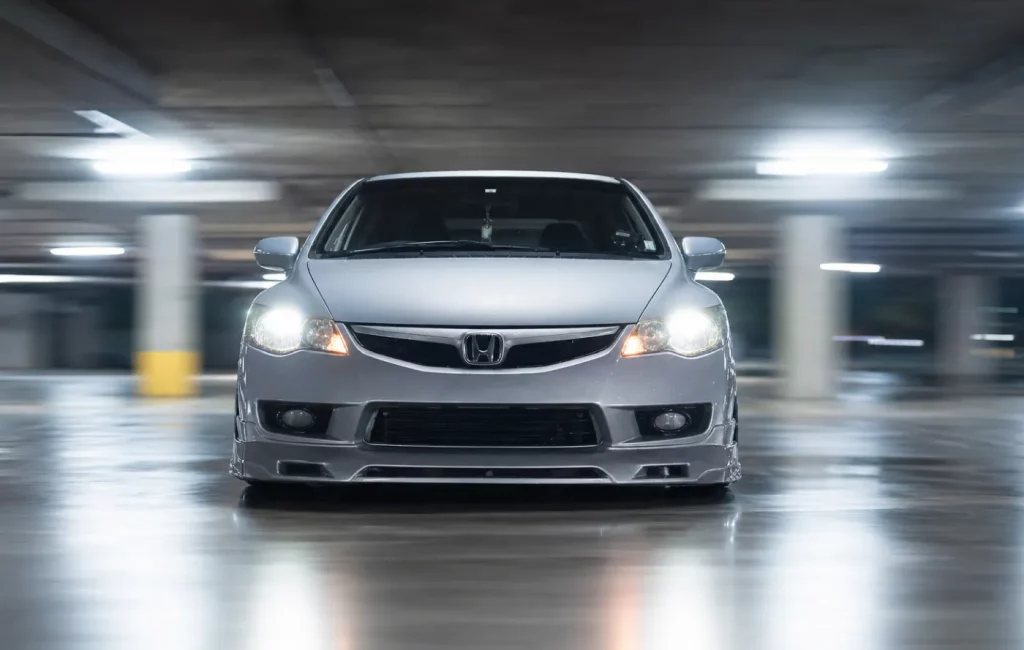
The answer is nuanced. The K20Z3 engine is one of the most durable four-cylinders Honda ever produced, and the aftermarket support for this generation is deeper than for cars at twice its price point. But 15–20 years is enough time for age-related failures that no amount of careful driving prevents. Bushings dry out. Seals harden and leak. Clearcoat fails. Wiring insulation becomes brittle. The 8th gen Si at 15 years old is not the same cost proposition it was at 5 years old, and buyers who expect Civic-reliability-at-any-age numbers are in for a surprise.
The Short Answer — Should You Buy One?
Yes — an 8th Gen Civic Si can still be relatively affordable at 15+ years old, but the economics change completely once age-related repairs start stacking up.
You are no longer maintaining a cheap used car. You are maintaining a 15–20-year-old performance car.
The K20Z3 has excellent fundamentals: a Timing Chain, naturally aspirated 2.0L, and relatively simple construction. The 8th-gen Si also has a 6-speed manual with a helical LSD and requires premium fuel. These are not negatives — they are what makes the car special. But they change the cost equation compared to a base Civic with an R18 engine and an automatic transmission.
What Makes a 15-Year-Old Civic Si Different?
Ownership costs for a 15-year-old performance car fall into three distinct categories, and the third category is what separates this car from a 5-year-old Civic.
Category 1: Routine Maintenance
Oil changes, filters and fluids, spark plugs, brakes, tires
Category 2: Wear Items
Clutch, motor mounts, wheel bearings, suspension bushings, shocks and struts, brake components
Category 3: Age-Related Failures
A/C system, electrical components, seals and gaskets, rubber components, corrosion, paint and clearcoat, interior electronics
Category 3 is where the 15-year-old Si differs most from a newer car. The engine itself — the K20Z3 — is not usually the expensive part. It is naturally aspirated, timing-chain driven, relatively simple, with no Turbocharger, no direct injection, and no complicated emissions hardware. But “reliable engine” does not equal “cheap 15-year-old car.” Problems begin to appear around the engine, not inside it.
What a 15-Year-Old 8th Gen Si Costs to Buy
Purchase price varies significantly by model year, mileage, and condition — but the generation has reached a pricing floor where well-maintained cars hold value better than neglected ones. The typical price range in 2026 spans roughly $5,000 for a tired 2006 with 150,000 miles and visible cosmetic neglect, to $12,000 for a low-mileage 2011 sedan with full service records.
| Model Year | Typical Mileage | Private Party Value (Good Condition) | Trade-In Value | Price Tier |
|---|---|---|---|---|
| 2006 Si Coupe | 130,000–160,000 | $4,000–$6,000 | $2,500–$3,500 | Budget |
| 2007 Si Sedan | 120,000–150,000 | $5,000–$7,000 | $3,000–$4,000 | Budget/Mid |
| 2008 Si | 110,000–140,000 | $6,000–$8,000 | $3,500–$5,000 | Mid |
| 2009 Si | 100,000–130,000 | $7,000–$9,500 | $4,500–$6,000 | Mid/Premium |
| 2010 Si | 90,000–120,000 | $8,000–$11,000 | $5,000–$7,000 | Premium |
| 2011 Si Sedan | 80,000–110,000 | $7,500–$12,000 | $5,500–$7,600 | Premium |
Sources: Kelley Blue Book 2026 valuations for good-condition vehicles. ThreePiece.us 8th gen Si buying guide, April 2026. CivicX forum pricing survey data.
Si examples in particularly clean condition with documented service histories command premiums that reflect the model’s enthusiast following and the relative scarcity of well-maintained high-performance variants. The sweet spot for a buyer looking to minimize total cost of ownership is the $7,500–$8,500 range, where well-maintained 2009–2011 examples with 90,000–120,000 miles can be found. Paying the premium for a 2009+ car over a 2006–2008 car is almost always worth it for the reduced mechanical risk alone — the later cars carry revised synchros from the factory, improved timing Chain tensioner design, and better clearcoat durability.
The Driving Experience Nobody Replicates
Before diving into costs, it is worth understanding what you are actually buying. The K20Z3 doesn’t make power like a turbo four — it makes you earn it. Below 5,800 RPM, the engine is pleasant but unremarkable. Then VTEC engages, the intake note changes, and the motor pulls hard all the way to the 8,000 RPM redline. That top-end rush is the entire personality of this car, and it is something no modern turbocharged Honda replicates.
The 6-speed manual (PNM3 designation) slots with short, precise throws. The factory Helical LSD puts power down cleanly out of corners. And the chassis actually rotates on turn-in — the double-wishbone front suspension geometry gives this car a level of feedback that later Civics abandoned for cost reasons. Owners who’ve had these for 200K+ miles aren’t selling because the car still feels alive every time they start it. That is the kind of ownership experience you read about in S2000 buying guides — except the Si costs a third of the price.
The 8th gen Si is the last Civic generation with hydraulic steering, a mechanical LSD, and an 8,300-rpm naturally aspirated engine — qualities that no new Civic offers at any price.
What Breaks: The 8th Gen Si Failure Map by Mileage and Age
The 8th gen Si has a well-documented set of age-and-mileage failure points. These are not hypothetical — they appear consistently across forum databases, TSB documents, and owner surveys. The pattern is predictable enough that a prospective buyer can budget for each item with reasonable accuracy.
| Issue | Typical Onset Mileage | Severity | Typical Repair Cost | Source |
|---|---|---|---|---|
| 3rd gear synchro (2006–2008) | 60,000–120,000 | High — TSB 08-020 | $1,500–$3,000 | ThreePiece.us, TSB 08-020 |
| Timing chain tensioner / VTC | 80,000–150,000 | High — interference engine | $800–$1,500 | ThreePiece.us, AmpAuto |
| Valve adjustment (every 60–80K) | Recurring | Medium — burnt valves if skipped | $200–$400 | AmpAuto, 8thcivic.com |
| Motor mounts (all 4) | 100,000–150,000 | Medium — vibration, shift feel | $200–$600 per mount | AmpAuto, 8020 Automotive |
| Clutch + throwout bearing | 80,000–120,000 | Medium | $800–$1,500 | AmpAuto, ThreePiece.us |
| A/C compressor clutch | 120,000+ | Medium — no cold air | $767–$1,278 | RepairPal |
| Exhaust cam lobe galling | 100,000+ | Medium — power loss, ticking | $800–$1,300 | 8020 Automotive |
| Front main seal oil leak | 100,000–120,000 | Low — minor drip | $200–$400 | 8020 Automotive |
| VTEC solenoid gasket leak | 80,000–150,000 | Low — oil on exhaust | $50–$200 DIY | AmpAuto |
| Rear wheel arch rust | Age-related (8–15 years) | High — structural if untreated | $400–$1,000 | 8thcivic.com |
| Clearcoat failure / paint peel | Age-related (8–15 years) | Low — cosmetic | $500–$2,000 repaint | CarBuzz, ThreePiece.us |
Transmission: The 3rd Gear Synchro
The most expensive single repair on this generation is the 2nd-to-3rd gear synchro failure. Honda issued TSB 08-020 in April 2008, mandating replacement of the 3rd gear set including synchros, springs, and related components on 2006–2008 models. Repair cost at an independent shop ranges from $1,500 to $3,000 depending on whether OEM or SynchroTech synchro kits are used. The 3rd gear grind is so characteristic of early 8th gens that a test drive for any pre-2009 car should include a firm 2-3 upshift under moderate throttle, both cold and warm. Grinding, notchiness, or pop-out is a red flag.
Typical onset: 60,000–150,000 miles. Symptoms include grinding or difficulty entering 3rd gear (especially when cold), gear pop-out under load or deceleration, and notchy shifting into 3rd even with fresh fluid. The repair requires transmission removal and rebuild with synchro replacement — 8–12 hours of labor. Often, the 2nd gear synchro is also found worn during teardown, so factor in a full rebuild cost if you are in there anyway.
A well-maintained K-Series Si is generally durable, but the FA5 has predictable pain points. The best way to think about them is by prevalence and severity, and by whether the problem is “normal wear” or a sign of abuse.
Timing Chain / VTC Actuator / Chain Tensioner
The K20Z3, especially in 2006–2008 production, develops cold-start rattle from chain slack as the tensioner ratchet teeth wear and the chain guides crack. The VTC actuator solenoid degrades simultaneously, driven by low oil pressure from extended oil change intervals. Budget $800–$1,500 for tensioner replacement, chain guides, and updated VTC actuator.
On the 8th Gen Si, the VTC actuator cold-start rattle is a well-documented issue. The VTC actuator gear develops wear in the locking pin mechanism, causing a 1–3 second metallic rattle at startup. If ignored, the rattle can progress to Timing Chain Stretch and, in severe cases, chain skip. One forum member reported still running the original timing chain at 230,000 miles, but this is not a guarantee — maintenance history matters more than mileage.
Clutch
Clutch life on the Si ranges from 80,000 to 120,000 miles under normal driving. A clutch replacement at an independent shop runs $800–$1,500. Track-driven cars see significantly less. Throwout bearing whine is the early warning sign. The clutch is a wear item, not a failure — replacing it is normal maintenance at this age.
If the transmission is already coming out, don’t automatically replace every transmission component. Inspect first. The flywheel should be checked for hot spots, cracks, excessive surface wear, and runout. If the OEM flywheel is usable, do not replace it just because the transmission is already out.
Motor Mounts
One of the most realistic age-related repairs. The passenger-side hydraulic mount can collapse, leak, cause vibration, create clunking, and become especially noticeable at idle or in reverse. For the 8th-gen Civic, this is a well-documented weak point.
Typical symptoms: cold start vibration, shaking or thumping in Reverse, and vibration becomes more noticeable with the A/C ON. Factory mounts cost $200–$600 per mount. Polyurethane upgrades are popular but transmit significantly more vibration into the cabin — a trade-off many daily drivers find unacceptable.
A/C: The 15-Year-Old Civic Tax
At 120,000+ miles, the A/C compressor clutch is a high-mileage failure point. RepairPal estimates $767–$1,278 for compressor replacement, with labor at $232–$340 and parts at $535–$938. The symptom is no cold air with normal refrigerant pressure — the clutch stops engaging.
However, a failed compressor does not always mean “replace the entire compressor.” First, check the relay, clutch, electrical system, and refrigerant leak diagnosis. A/C clutch, compressor, and relay are all different possible causes of A/C failure.
Wheel Bearings
Typical age-related repair. Symptom: humming that increases with speed and changes during lane changes. Independent shop cost: approximately $250–$450.
Suspension: Where the Money Quietly Goes
Owners often think: “Engine is reliable, so this car is cheap.” But after 15 years, bushings, ball joints, shocks, tie rods, control arms, and wheel bearings may need attention. In UK MOT data for the 8th-gen Civic, suspension and steering-related failures are noticeable; track-rod ends are among the most characteristic problems of the generation.
Rear Suspension & Uneven Tire Wear
Uneven rear tire wear can be more than just a tire problem. Check rear control arms, bushings, alignment, toe, and camber. This is especially important on a car with aftermarket suspension.
Brakes
On a 15-year-old Si, budget for pads, rotors, caliper condition, slide pins, brake hoses, parking-brake hardware, and Brake Fluid. If the car has been driven in the salt belt, inspection becomes much more important.
Tires
The Si sits on performance-oriented tires. Cheap tires are not good tires. For an annual ownership budget, set aside $600–$1,000+ per set depending on brand and size. If the car is driven aggressively, tire life can be much shorter.
Engine Oil Leaks
On a 15-year-old K20, leaks are not necessarily catastrophic. Check the Valve Cover, VTEC spool valve area, oil pan, crank seals, and timing chain cover. The key is distinguishing seepage from an active leak.
Camshaft Lobe Galling
The K20Z3 exhaust cam can develop pitting and galling on the lobe surfaces after 100,000 miles, especially with poor oil maintenance. The repair requires replacing the Camshaft, which runs $800–$1,300 at a shop — the most expensive individual component failure on the K20 short of a complete engine failure, which is rare.
VTEC Solenoid Gasket Leak
A common minor leak. The VTEC solenoid spool valve Gasket fails and leaks oil onto the exhaust, creating a burning smell. DIY cost is $50–$200; shop cost is higher.
Premium Fuel
The K20Z3 has 11.0:1 compression and the Si is designed for premium gasoline. At 10–12k miles per year, this becomes a permanent part of ownership cost.
Example: 10,000 miles/year at 25 MPG → ~400 gallons/year. At $4/gal → ~$1,600/year.
Annual Operating Costs: Fuel, Insurance, Routine Maintenance
Once the big-ticket repairs are addressed, the 8th gen Si is inexpensive to keep on the road for a daily driver doing 10,000–15,000 miles per year. The K20Z3’s fuel economy is reasonable for a 197-hp naturally aspirated Sport Compact: EPA rated at 21 city / 29 highway / 24 combined for 2008–2011 models, with real-world mixed driving returning 24–27 mpg depending on driving style. At $4.20 per gallon for premium fuel (required), fuel costs run roughly $1,650–$1,950 per year at 12,000 miles.
Insurance costs vary significantly by driver age and location. A 40-year-old with good driving history pays roughly $1,200–$2,200 per year for full coverage on a 15-year-old Si, depending on carrier. State Farm and GEICO tend to be cheapest in the $1,800–$2,000 range for a 40-year-old base profile. Younger drivers pay substantially more — a 25-year-old with a clean record can expect $2,500–$3,500. Many owners drop collision coverage once the car’s value drops below $6,000, reducing insurance to roughly $500–$800 per year for liability-only.
Routine maintenance at an independent shop runs roughly $350–$500 per year, covering oil changes with synthetic 5W-30 every 5,000–7,500 miles, tire rotations, and inspection. Tires for the Si’s 17-inch wheels (P215/45R17) run $500–$800 for a set of quality all-seasons with 40,000–50,000-mile treadwear. Brake pads and rotors for the Si’s larger brakes run $300–$500 per axle.
The 15-Year-Old Si Cost of Ownership Projection
The following projection assumes a buyer purchases a well-maintained 2009–2011 Si in the $8,000–$9,000 range with 100,000 miles and plans to keep it for three years and 36,000 miles (12,000 per year). It assumes the car has no deferred maintenance from the previous owner — which is an optimistic assumption.
| Expense Category | Year 1 | Year 2 | Year 3 | 3-Year Total |
|---|---|---|---|---|
| Purchase price | $8,500 | — | — | $8,500 |
| Valve adjustment (60K overdue) | $300 | — | — | $300 |
| Timing chain tensioner (preventive) | $1,000 | — | — | $1,000 |
| Motor mounts (if worn) | $600 | — | — | $600 |
| Clutch (if original, near end of life) | $0–$1,200 | — | — | $0–$1,200 |
| Routine maintenance + tires | $850 | $850 | $1,200 | $2,900 |
| Fuel (12K mi/yr, 25 mpg, $4.20/gal) | $2,016 | $2,016 | $2,016 | $6,048 |
| Insurance (liability-only after year 1) | $1,400 | $800 | $800 | $3,000 |
| Depreciation (loss in value) | $1,000 | $750 | $500 | $2,250 |
| Total annual cost | $8,166–$9,366 | $4,416 | $4,516 | — |
| Cost per mile (12K mi/yr) | 68–78¢/mi | 37¢/mi | 38¢/mi | 47–50¢/mi avg |
Sources: RepairPal, AmpAuto, ThreePiece.us, KBB valuations, CarEdge, Insurance.com, EPA fueleconomy.gov.
The first year of ownership is the most expensive because of catch-up maintenance items that a 15-year-old car almost certainly needs. The timing chain tensioner ($1,000 preventive), motor mounts ($600), and possibly a clutch ($1,200) can push year-one costs well over $9,000 including purchase price. Year two and three settle to roughly $4,500 per year in operating costs — roughly 37–38¢ per mile.
If the previous owner already addressed these items — meaning the car has documented timing chain service, clutch replacement records, and valve adjustments in its history — year-one costs drop by $2,000–$3,000, and the cost-per-mile over three years falls to roughly 38–42¢ per mile. That is the difference between a $5,000 car that needs $3,000 of work and an $8,000 car that needs $500 of catch-up. The premium-tier purchase is the cheaper option on a total-cost basis.
Rust: The Car That Eats Itself from the Inside Out
Rust on the 8th gen Si is a generation-wide problem that no amount of mechanical maintenance prevents. The rear wheel arches and rocker panels are the primary failure points. The rust forms between the inner and outer sheet metal panels — visible first as paint bubbling on the rear arch, then as holes that grow outward from behind the metal. The 8thcivic.com forum has hundreds of threads documenting this exact failure pattern across all model years and all climates, though salt-belt cars are worst affected.
The root cause appears to be debris and moisture trapped between the rear bumper cover and the unibody panel. Salt-laden water sits against the metal and corrodes from the inside out. By the time bubbling appears on the painted surface, the rust has already penetrated the metal behind it. Repair quotes from body shops range from $400 for a partial cut-and-weld patch (hack-level work, not recommended) to $700–$1,000 for a proper repair including cutting out the affected section and welding in new metal.
A permanent fix would require replacing the entire quarter panel, which virtually no owner does on a 15-year-old car worth $5,000–$8,000. The practical approach for most owners is to arrest the rust with a rust converter, primer, seam sealer, and paint, followed by annual Fluid Film or Krown T40 undercoating applications. This is a maintenance item that the previous owner may or may not have addressed — and if they did not, it is money the new owner will spend.
Paint and Clearcoat
On aggregated complaint data, 2006–2007 models show particularly noticeable paint and clearcoat complaints. For a 15-year-old car, this is no longer just aesthetics — paint condition affects resale value.
Which Years to Buy, Which to Skip
The 8th gen Si is not one car across its production run. There are meaningful differences between early and late examples that directly affect ownership cost.
2006–2008: Buy only with proof of synchro repair. The 3rd gear grind is a $1,500–$3,000 repair that the factory did not fix until mid-2008. If a 2006–2008 car does not have documented TSB 08-020 completion, budget for the repair. The clearcoat on these years is also weaker — peeling hoods and roofs are common on dark-colored cars. The timing chain tensioner design is the same across all years, so tensioner rattle is equally likely on any model year.
2009–2011: The preferred buy range. Honda revised the synchro sets from the factory beginning with 2009 production. The transmission is widely regarded as the best Honda shipped in this generation. Clearcoat durability improved. Cooling and emissions hardware saw minor revisions. The mechanical differences are incremental, but collectively they make the 2009–2011 cars cheaper to own. The price premium is typically $2,000–$4,000 over an equivalent 2006–2008, and it is money well spent.
2007 Si Sedan (FA5) vs 2006–2011 Coupe (FG2): The sedan is structurally identical to the coupe and shares all mechanical components. The sedan is slightly heavier but offers more rear seat room and practical cargo access. There is no mechanical reason to prefer one body style over the other, though sedan examples tend to trade at a small premium due to their rarity — roughly 60% of 8th gen Si production was coupe.
Stock vs Modified — Which Costs More?
Two identical 2008 Si: Car A is stock, Car B is modified with a turbo, coilovers, aftermarket clutch, tune, exhaust, and engine mounts. Car B can easily become $2,000–$4,000/year in some years — not because the K20Z3 is bad, but because you are maintaining someone else’s modifications.
After buying a modified Si, the first year can suddenly bring: tires, clutch, alignment, leaking coilover, bad tune, wiring issue, CEL, worn mounts. And a $5,000 repair bill can arise not from one failure, but from five small deferred-maintenance items.
DIY Changes the Economics Completely
If the owner can do brakes, fluids, mounts, suspension, clutch, and basic diagnostics, the 8th-gen Si becomes much cheaper. If every repair goes to a dealer, the economics change dramatically.
How Much Emergency Cash Should You Have?
Minimum: $1,500
Comfortable: $3,000
Modified Si: $4,000–5,000+
Even one major repair can blow the budget.
The $3,000 Rule
If the car needs:
$500–1,500 → repair it.
$1,500–3,000 → inspect the entire car before deciding.
$3,000–5,000 → compare repair cost against market value and replacement cost.
$5,000+ → only makes sense if the chassis, body, and interior are genuinely worth saving.
Does the 8th Gen Si Still Make Financial Sense?
Yes, if: the car is mostly stock, rust is limited, the engine is healthy, the clutch is healthy, the transmission is good, the A/C works, the suspension isn’t completely worn, and maintenance history exists.
No, if: there is severe rust, a bad engine, a bad transmission, dead A/C, a worn clutch, multiple electrical problems, heavy modifications, or deferred maintenance everywhere.
Is It Cheaper Than a New Civic?
8th Gen Si: Low purchase price, higher repair risk, higher fuel and insurance, minimal depreciation.
New Civic: High purchase price, low initial repair risk, higher depreciation, warranty.
Do you want predictable monthly cost or lower total capital tied up?
Who Should Still Buy One?
Good candidate: Enthusiast who can DIY.
Acceptable: Owner with a trusted Honda specialist.
Bad candidate: Owner who needs absolute transportation reliability and has no emergency fund.
Final Verdict
The 8th Gen Civic Si still makes sense at 15+ years old — but only if you buy the condition, not the badge.
A well-maintained 150K-mile Si can be a better financial decision than a neglected 90K-mile Si.
Budget for age-related repairs, not just routine maintenance.
The 8th gen Civic Si at 15 years old is not a cheap car. A $5,000 example with no service records will cost $3,000–$5,000 to baseline in the first year, and the rust issue will continue to progress regardless of what you spend on mechanical components. A $9,000 example with full records and a documented synchro-and-clutch service history will cost roughly $4,500 per year to operate after purchase, landing at a total three-year cost of roughly $22,500–$24,000 including the buy-in.
At 38–50¢ per mile depending on purchase condition, the 8th gen Si is roughly 15–25¢ per mile cheaper than a new Civic Si financed at today’s rates. It is also one of the last Hondas that feels like it was designed for people who genuinely enjoy driving. The hydraulic power steering, the 8,300-rpm redline, the mechanical limited-slip differential, and the complete absence of driver-assistance nannies are qualities that no new Civic offers at any price.
The engine is proven past 200,000 miles with proper maintenance. The annual operating costs are modest once the catch-up items are handled. The depreciation curve has flattened — a $7,500 Si bought today will be worth roughly $4,500–$5,500 in three years, meaning total depreciation is roughly $2,000–$3,000 over the ownership period. That is $55–$83 per month in depreciation for a car that delivers a driving experience no modern equivalent can match.
The financially sound decision is to spend more upfront for a 2009–2011 example with complete service records, timing chain service done, clutch replaced, synchros healthy, and rust addressed or minimal. That car will cost more to buy but significantly less to own. The $5,000 bargain car, by contrast, is almost always the more expensive option when the full three-year cost of catch-up repairs, body work, and lost time is totaled.
Quick Reference Checklist
☐ 8th gen Civic Si purchase price range in 2026: $4,000–$12,000 depending on year, mileage, and condition
☐ 3rd gear synchro failure on 2006–2008 models is the most expensive common repair at $1,500–$3,000
☐ Timing chain tensioner rattle requires $800–$1,500 attention — the K20 is an Interference Engine
☐ Valve adjustments every 60,000–80,000 miles at $200–$400 prevent burnt exhaust valves
☐ Rear wheel arch rust affects nearly all 8th gens that have seen road salt — repair costs $400–$1,000
☐ 2009–2011 models carry revised synchros, improved clearcoat, and better tensioner design — the $2,000–$4,000 premium over 2006–2008 is worth it
☐ First-year ownership costs including catch-up maintenance: $8,000–$9,500 for a $8,500 purchase
☐ Annual operating costs after year one: ~$4,500 per year including fuel, insurance, and routine maintenance
☐ Cost per mile over three years: 38–50¢ depending on catch-up maintenance needed
☐ Full KBB trade-in value floor at 15–20 years old: $2,500–$5,500; private party floor: $4,000–$7,600
☐ Total non-routine lifetime spend on a well-maintained K20 Si typically stays under $3,000
☐ A $9,000 documented car costs less to own over three years than a $5,000 car that needs $3,000 of catch-up work
☐ The 8th gen Si is the last Civic generation with hydraulic steering, a mechanical LSD, and an 8,300-rpm naturally aspirated engine — qualities no new Civic offers
FAQ
How much does it cost to maintain an 8th Gen Civic Si?
$1,500–$3,000 per year for a well-maintained example including routine maintenance, tires, and age-related repairs. First-year catch-up can be higher.
Is a 15-year-old Civic Si reliable?
The K20Z3 is reliable if maintained. Age-related failures — bushings, seals, A/C, rust — are the bigger concern. A well-maintained car can exceed 200,000 miles.
How much does a K20Z3 clutch replacement cost?
$800–$1,500 at an independent shop. More if the flywheel needs resurfacing or replacement.
How long does the Civic Si clutch last?
80,000–120,000 miles under normal driving. Track use significantly shortens this.
Are 8th Gen Civic Si motor mounts a common problem?
Yes — the passenger-side hydraulic mount fails every 60,000–80,000 miles. Symptoms include vibration at idle, especially in Reverse or with A/C on.
How much does Civic Si A/C repair cost?
$767–$1,278 for compressor replacement. Clutch-only repair is less. Check the relay and electrical system first.
Is the K20Z3 expensive to maintain?
No — it is a simple naturally aspirated engine with a timing chain. It requires premium fuel and regular valve adjustments, but major failures are rare with proper maintenance.
How much should I budget for repairs on a 2008 Civic Si?
$1,500–$3,000 per year if you are baselining a car with unknown history. After the first year, $1,000–$2,000 per year is realistic.
Is a high-mileage Civic Si worth buying?
Yes — if it has documentation of major work (clutch, synchros, timing chain, valve adjustment). Maintenance history matters more than mileage.
Is a stock Civic Si cheaper to own than a modified one?
Yes — significantly. Modified cars carry the previous owner’s choices and can have unpredictable maintenance needs.
Does the 8th Gen Civic Si require premium gas?
Yes — 91 or 93 octane is required due to the 11.0:1 Compression Ratio.
How much does it cost to own a Civic Si per year?
$4,000–$6,000 including fuel, insurance, routine maintenance, and repairs. First-year costs are higher.
Is a 2006–2011 Civic Si still worth buying?
Yes — for an enthusiast. It is one of the last naturally aspirated, high-revving Hondas with hydraulic steering and a mechanical LSD. It is not a cheap commuter car.
Should I buy a 150K-mile Civic Si?
Only with a thorough inspection and maintenance records. At 150K, major components may be near the end of their service life. A well-maintained example can be a good buy.
Is a Civic Si cheaper to maintain than a newer car?
The purchase price is lower, but parts and labor are similar. Reliability is high, but age-related failures add cost. It can be cheaper than a new car when depreciation is factored in.