

The Certified Pre-Owned (CPO) market sits between new and used — a vehicle that is not new enough for a full factory warranty but carries enough manufacturer backing to command a premium over a typical used car of the same age. For the Honda Civic, the most-sold compact car in America, the CPO calculation is unusually favorable to the buyer. Data from iSeeCars shows Honda has the lowest CPO cost premium in the industry, averaging roughly $291 above a non-certified Civic of the same year and trim (iSeeCars CPO Study, 2018; Torque News analysis). This article examines what the HondaTrue CPO program actually delivers, how the certification process works, what coverage the buyer gets, and whether the premium is justified.
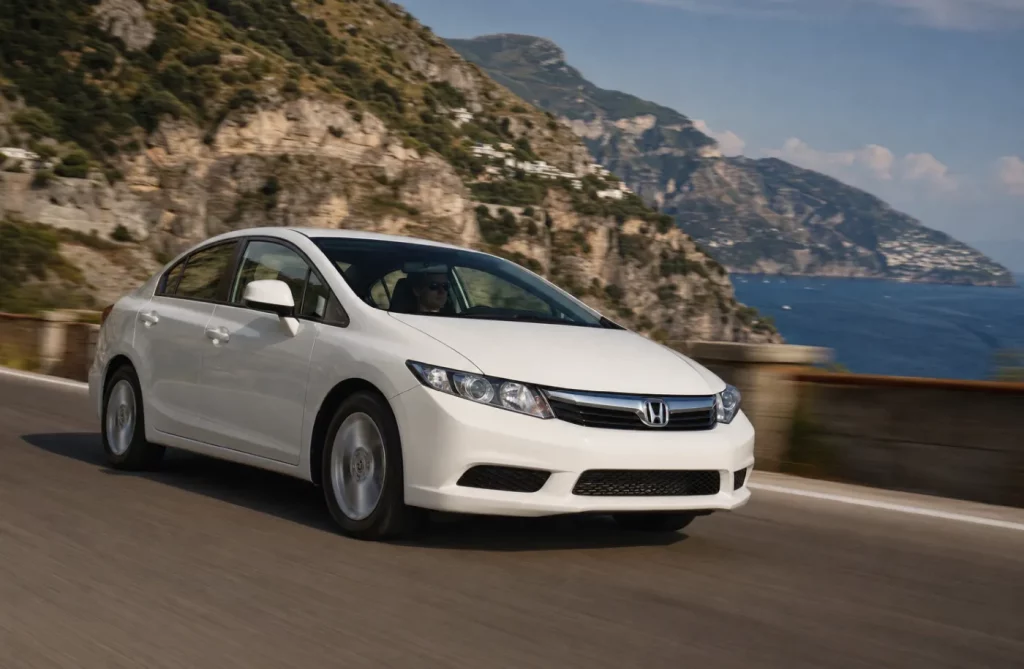
Honda CPO in One Minute
CPO is not simply a “good used Civic.” It is a vehicle that a dealer sells under the Honda Certified program and that must meet specific program requirements. The buyer receives additional warranty coverage, a manufacturer-backed inspection, certain roadside benefits, the ability to purchase Honda Care, and support from the official dealer network. But CPO certification does not magically make a bad Civic a good deal. The main question is: how much are you paying for the certification?
HondaTrue Program Structure: Three Tiers, One Brand
Honda’s certified pre-owned program was rebranded as HondaTrue in the 2020s. It operates three tiers.
HondaTrue Certified is the main CPO tier for internal combustion Civics. Eligibility requires the vehicle to be 6 years or newer from the original in-service date with fewer than 80,000 miles AT the time of sale. Coverage includes a 7-year/100,000-mile powertrain warranty from the original in-service date, plus 2 additional years of non-powertrain coverage from the expiration of the New Vehicle Limited Warranty (NVLW), also up to 100,000 total miles (HondaTrue Certified Warranty Booklet, April 2026).
HondaTrue Certified EV covers battery-electric vehicles under the same age and mileage cap (6 years, 80,000 miles), with 2 additional years or up to 86,000 total miles of non-powertrain coverage and the high-voltage battery covered under the original 8-year/100,000-mile Federal Emissions Warranty.
HondaTrue Used is the entry tier. Eligibility extends to vehicles up to 10 years old from the original in-service date. Warranty coverage is limited to 6 months or 10,000 miles combined (both powertrain and non-powertrain), plus 1 year or 12,000 miles of roadside assistance. This tier does not require a 182-point inspection and the inspection standard is less comprehensive than the Certified tier.
| Feature | HondaTrue Certified | HondaTrue Used |
|---|---|---|
| Max vehicle age | 6 years | 10 years |
| Max mileage at sale | 80,000 miles | Not specified |
| 182-point inspection | Required | Not required |
| Powertrain coverage | 7 yr / 100,000 mi (from original in-service) | 6 mo / 10,000 mi |
| Non-powertrain coverage | 2 yr / 100,000 mi | Same as powertrain |
| Roadside assistance | 2 yr / 100,000 mi | 1 yr / 12,000 mi |
| Complimentary maintenance | 2 oil changes (1 yr/12k mi) | 1 oil change (1 yr/12k mi) |
Sources: HondaTrue Certified Warranty Booklet (April 2026), Honda Certified Pre-Owned program documentation.
HondaTrue Certified vs Ordinary Used Civic
| Used Civic | HondaTrue Certified | |
|---|---|---|
| Dealer inspected | Not necessarily | Yes |
| CPO warranty | No | Yes |
| Certified status | No | Yes |
| Roadside benefits | Depends | Program-dependent |
| Honda Care eligibility | Depends | Potential advantage |
| Price | Lower | Usually higher |
Does CPO Mean the Car Is Mechanically Perfect?
No. CPO reduces risk but does not eliminate it. Even a Certified Civic may have worn tires, cosmetic imperfections, previous repairs, normal wear, or upcoming maintenance. The certification is a risk-reduction tool, not a guarantee of perfection.
The Warranty Is the Main Reason to Pay More
This is where the real value of CPO lies. A normal used Civic may have an expired factory warranty. A Certified Civic carries additional Certified warranty coverage. However, the coverage period must be calculated from the vehicle’s date and mileage and the specific HondaTrue tier — not simply written as “CPO gives X years.”
Factory Warranty vs CPO Warranty
The Honda new-car warranty typically includes 3 years / 36,000 miles bumper-to-bumper and 5 years / 60,000 miles powertrain. A buyer of a 3-year-old Civic may have a very different situation. Always calculate the remaining factory coverage first, then calculate what the CPO certification actually adds.
Example: 3-Year-Old Civic
A 2023 Civic with 35,000 miles. If bought as a normal used car, part of the factory coverage is already nearing its end. If bought as HondaTrue Certified, the additional Certified coverage may have significant value. This is where the CPO premium begins to look reasonable.
Example: 1-Year-Old Civic
A 2025 Civic with 8,000 miles. With factory warranty still almost fully intact, the CPO premium may add much less additional value. The newer the Civic, the less you may need CPO.
Example: 5-Year-Old Civic
A 2021 Civic with 55K miles. Factory warranty is essentially gone or nearly gone. Certified coverage becomes much more valuable.
The CPO Premium
This is the main financial block. For example: a normal used car at $22,000 versus a CPO car at $24,000 — a $2,000 premium. Is the Honda warranty, inspection, and dealer support worth $2,000? The answer depends on the Civic’s age, mileage, and condition.
$500 premium: Usually easy to justify if the car truly meets the program and inspection history is clean.
$1,000 premium: Potentially worth it, especially for a newer turbo Civic, expensive trim, high mileage, or no remaining factory warranty.
$2,000 premium: Requires calculation — compare CPO warranty value against an independent PPI and a cash reserve for repairs.
$3,000+ premium: Do not pay this simply because the listing says “Certified.” For that difference, you can negotiate, buy an independent inspection, set aside a repair reserve, and potentially buy Honda Care separately if eligible.
CPO vs Independent PPI
CPO: Honda or dealer inspection. PPI: Your mechanic’s inspection. The best option is CPO plus an independent PPI, not CPO instead of a PPI. The dealer has already selected the car for sale. An independent mechanic has no financial interest in selling you that particular car. On an expensive Civic, paying $150–$300 for an independent inspection can be one of the best investments of the entire purchase.
Can a CPO Civic Have Accident History?
Yes. Certified does not mean accident-free. The buyer must still check CARFAX, AutoCheck, title status, previous damage, structural repairs, and paintwork.
Can a CPO Civic Have Previous Paintwork?
Yes. The CPO inspection does not replace your own exterior inspection. Check panel gaps, paint texture, overspray, inconsistent color, and replaced panels.
CPO Does Not Mean One-Owner
A Certified Civic may have one owner, multiple owners, lease history, or fleet history depending on program eligibility. CPO status does not equal a perfect history.
CPO Does Not Mean Unmodified
This is especially important for the Civic Si and Sport/Touring enthusiasts. If the car was modified — intake, suspension, exhaust, tune — you need to determine how this affects certification and warranty.
Civic Si: CPO Is More Interesting
For the Si, CPO potentially has greater value. Performance-oriented owners mean a greater probability of aggressive driving, making warranty protection more attractive. But a CPO Si should be inspected even more carefully.
1.5T Civic: CPO Value
For the 10th-gen Civic with the 1.5T, warranty is potentially more valuable. The Turbocharger, direct injection, higher engine complexity, and more expensive potential repairs all contribute. A CPO 1.5T can justify a larger premium than a simple low-mileage naturally aspirated Civic. But this does not mean every CPO 1.5T is worth buying.
Hybrid Civic
For newer hybrid Civics, check hybrid-system coverage, high-voltage battery warranty, CPO terms, and remaining factory coverage. Honda specifies a separate 8-year/100,000-mile high-voltage battery warranty for its hybrid vehicles. On a hybrid, the CPO premium must be compared not only to engine repair risk but also to battery and hybrid system risk.
Honda Care
HondaTrue Certified may also affect the ability or terms of purchasing additional Honda Care coverage. However, CPO does not automatically include Honda Care — they are different products. Honda describes Honda Care as a separate comprehensive vehicle and travel protection product.
Roadside Assistance
Coverage includes towing, lockout assistance, jump-start, flat tire, and fuel delivery. But coverage depends on program terms. Do not mix standard Honda roadside assistance with CPO benefits from different years.
CPO Transferability
If the owner sells the car, does the CPO warranty transfer? The answer depends on current official HondaTrue terms, as transfer rules may differ by program and state. This is one section where referencing the official Honda document is essential.
Can You Buy CPO From Any Dealer?
No. CPO is a manufacturer-backed dealer certification program, not an independent inspection company. The key is a Honda dealer with HondaTrue certification.
CPO vs CarMax vs Carvana
Honda CPO: Manufacturer-backed.
CarMax: Dealer-specific inspection and warranty structure.
Carvana: Different inspection and return model.
The key is not to compare “certified” labels, but to compare the actual warranty and return policy.
Honda CPO vs Private Party
| CPO | Private Party | |
|---|---|---|
| Price | Higher | Lower |
| Warranty | Better | Usually none |
| Inspection | Manufacturer program | Your responsibility |
| Negotiation | Limited | Better |
| Dealer fees | Possible | Lower |
| Risk | Lower | Higher |
When CPO Is Worth the Premium
$500 premium: Usually worth considering.
$1,000 premium: Often reasonable.
$1,500–2,000 premium: Calculate the warranty value.
$2,500+ premium: Demand a very good reason.
$3,000+ premium: Usually shop for another Civic.
When CPO Is NOT Worth It
A 2025 Civic with 8K miles and factory warranty mostly intact with a $2,500 CPO premium — probably poor value.
When CPO IS Worth It
A 2021 Civic with 55K miles, factory warranty expired, with a $1,000 CPO premium — much more attractive.
CPO vs $2,000 Repair Reserve
Option A: Buy used at $21,000, keep a $2,000 emergency reserve.
Option B: Buy CPO at $23,000, no extra reserve.
Which risk profile do you prefer? For a buyer with cash reserves, Option A may be more rational. For a buyer who cannot absorb a $2,000 repair, CPO has greater value.
The CPO Psychological Trap
The word “CERTIFIED” creates a feeling that “this car is safer.” But certification does not mean: no accidents, no wear, perfect maintenance, no future repairs, or a perfect previous owner.
What You Should Request From the Dealer
Before buying, request: the CPO inspection report, vehicle history report, warranty documentation, service records, tire measurements, brake measurements, remaining factory warranty, exact CPO warranty expiration, and the out-the-door price.
Ask for the Out-the-Door Price
Do not compare advertised prices like $24,995 vs $23,995. Compare OTD prices including dealer fees, documentation fees, taxes, registration, and add-ons. The CPO premium can sometimes be hidden here.
Dealer Add-Ons
If the dealer says “CPO package + $1,995 protection package,” this does not mean Honda CPO costs $1,995. Separate the manufacturer certification from dealer-installed products.
Don’t Pay Twice for Warranty
Check remaining factory warranty, then HondaTrue coverage, then Honda Care, and only then purchase additional protection products.
CPO Checklist
☐ Confirm HondaTrue status
☐ Get the CPO inspection report
☐ Verify the VIN
☐ Check CARFAX or AutoCheck
☐ Verify warranty expiration
☐ Confirm mileage
☐ Check service history
☐ Check tires
☐ Check brakes
☐ Test A/C
☐ Test infotainment
☐ Test every electrical feature
☐ Perform an independent PPI
☐ Get the OTD price
☐ Remove unwanted dealer add-ons
How Much Should You Pay for a CPO Civic?
Do not use a fixed percentage like “CPO should cost 5% more.” Calculate the CPO premium as: CPO price minus comparable non-CPO price. Then evaluate the premium against remaining factory warranty, CPO warranty length, vehicle age, mileage, and condition.
CPO Value Formula
CPO Value = Warranty Value + Inspection Value + Dealer Support − CPO Premium
If the result is positive, CPO makes sense. If negative, buy a regular used car.
Best Civic Candidates for CPO
Best: 2–4-year-old Civic with 20–60K miles, clean history, remaining useful life, and a significant warranty gap.
Less compelling: A nearly new Civic with lots of factory warranty remaining.
Questionable: An older or high-mileage Civic where the CPO premium becomes too high relative to vehicle value.
CPO and Older Civic Generations
Do not treat CPO as a universal strategy for 8th Gen, 9th Gen, or older 10th Gen Civics. On older Civics, CPO availability is much more limited, and independent inspection and maintenance history become far more important. CPO strategy is most useful for relatively recent Civics.
The Best CPO Strategy
Buy CPO when it bridges a meaningful warranty gap, not simply because the badge sounds reassuring.
Final Verdict
Buy CPO if: the warranty gap is significant, the premium is reasonable, the car is relatively new, financing makes CPO easier to absorb, you value predictable repair costs, or you do not have a large emergency fund.
Buy normal used if: the price difference is large, the car is already out of factory warranty, you have cash reserves, an independent PPI is excellent, and maintenance history is strong.
For a Civic, the CPO premium is lower than for most other brands. The $291 average premium figure from iSeeCars is a real data point worth considering. The 182-point inspection and $0 deductible warranty are genuine advantages. But the certification does not replace an independent PPI, and the premium is only justified if the warranty gap being filled is meaningful relative to the price.
Quick Reference Checklist
☐ HondaTrue Certified is the main CPO tier — 6 years / 80,000 miles max age at sale
☐ The 182-point inspection covers unibody integrity, history, interior, exterior, under-Hood, under-vehicle, brakes/tires, road test, and replacement items
☐ Vehicles with salvage titles, frame damage, flood/fire history, after-market modifications, or manufacturer buybacks are ineligible
☐ CPO powertrain coverage: 7 years or 100,000 miles from the original in-service date, $0 deductible
☐ CPO non-powertrain coverage: 2 additional years from NVLW expiration, up to 100,000 total miles
☐ Roadside assistance: 2 years or 100,000 miles, including trip-interruption reimbursement up to $300
☐ Complimentary: 2 oil changes within 1 year or 12,000 miles
☐ Honda’s CPO premium is the lowest in the industry — roughly $291 above a non-certified Civic (iSeeCars)
☐ A 2023 Civic CPO Fair Purchase Price is approximately $20,650 (LX sedan), about $1,000-1,500 above private-party non-CPO
☐ CPO coverage transfers fully to subsequent private-party owners
☐ For 1-3 year old Civics, the CPO premium is justified by the 182-point inspection and non-powertrain extension
☐ For 3-5 year old 1.5T Civics, the 7/100 powertrain extension provides meaningful protection against known CVT and Oil dilution risks
☐ For Civics over 6 years old or over 80,000 miles, only HondaTrue Used (6 mo / 10,000 mi) is available — harder to justify vs. non-CPO
☐ HondaTrue Used offers 6 months or 10,000 miles combined coverage, 1 year roadside, 1 oil change — no 182-point inspection required
☐ All open recalls must be completed before a CPO Civic can be sold — one less thing for the buyer to chase
FAQ
What is HondaTrue Certified?
HondaTrue Certified is Honda’s main CPO program for internal combustion vehicles. It requires vehicles to be 6 years or newer with under 80,000 miles, pass a 182-point inspection, and carry a clean history. It provides a 7-year/100,000-mile powertrain warranty and a 2-year/100,000-mile non-powertrain extension.
Is a Honda Civic CPO worth it?
For recent Civics (2–4 years old) with significant warranty gaps, yes — the premium is often justified. For newer cars with lots of factory warranty remaining, the premium is harder to justify. The decision depends on the specific price difference and vehicle condition.
How much more does a CPO Civic cost?
Historically, the Honda CPO premium is about $291 above a non-certified Civic of the same year and trim. Current market premiums range from $500 to $2,000 depending on the car’s age, mileage, and region.
Does Honda CPO include a warranty?
Yes. The CPO powertrain warranty runs 7 years / 100,000 miles from the original in-service date. The non-powertrain coverage runs 2 additional years from the NVLW expiration, up to 100,000 total miles. Both carry a $0 deductible.
How long is the Honda CPO warranty?
Powertrain: 7 years / 100,000 miles from the original in-service date. Non-powertrain: 2 additional years from the NVLW expiration, up to 100,000 total miles.
Does Honda CPO cover the powertrain?
Yes — the CPO powertrain warranty covers the engine, transmission, transaxle, and front-wheel-drive system up to 7 years / 100,000 miles from the original in-service date.
Can a CPO Civic have an accident history?
Yes, as long as there is no unibody or frame damage, no salvage or rebuilt title, and no airbag deployment. Minor reported accidents with no structural damage do not disqualify a vehicle from CPO certification.
Can I get a CPO Civic inspected by my own mechanic?
Yes — and it is recommended. An independent PPI is the best way to verify the condition of any used car, CPO or not.
Is Honda CPO better than CarMax?
Honda CPO is manufacturer-backed and transfers with the car. CarMax has a different inspection and warranty structure. The better choice depends on the specific vehicle and the warranty terms offered.
Is Honda CPO better than buying from a private seller?
Honda CPO provides warranty coverage, inspection, and dealer support. A private-party sale is cheaper but carries more risk. The choice depends on your risk tolerance and budget.
Does Honda CPO transfer to another owner?
Yes — the remaining CPO coverage transfers fully to subsequent private-party owners.
Can I buy Honda Care with a CPO Civic?
Yes — CPO vehicles are often eligible for Honda Care, though the terms and pricing may differ from new-car Honda Care.
Is a CPO Civic worth it with factory warranty remaining?
It depends on how much factory warranty remains. If there is significant remaining warranty, the CPO premium may be harder to justify. If factory warranty is nearly expired, CPO becomes more valuable.
How much should I pay for a certified used Civic?
Compare the CPO price against a comparable non-CPO used Civic. If the premium is under $1,000 and the car is 3–5 years old with 40–60K miles, it is often a good value. Premiums above $2,000 need careful evaluation.
Is a Honda Civic Si worth buying CPO?
Yes — especially for 10th-gen Si models where the turbocharged engine and documented clutch issues make warranty coverage more valuable. But a CPO Si should be inspected even more carefully than a standard Civic.