

The 10th generation Honda Civic (2016–2021) is the last Civic generation where a mainstream non-Si non-Type-R trim offered a manual transmission as a no-cost option. The CVT was the default across most powertrains and body styles, while the 6-speed manual was restricted to a narrow set of trims: the Sport hatchback (1.5T only), the Si sedan and coupe, and the Type R hatchback. This created a natural experiment in resale value: how much, if anything, does the manual add at trade-in time on a generation where automatic buyers outnumbered manual buyers roughly 40 to 1?
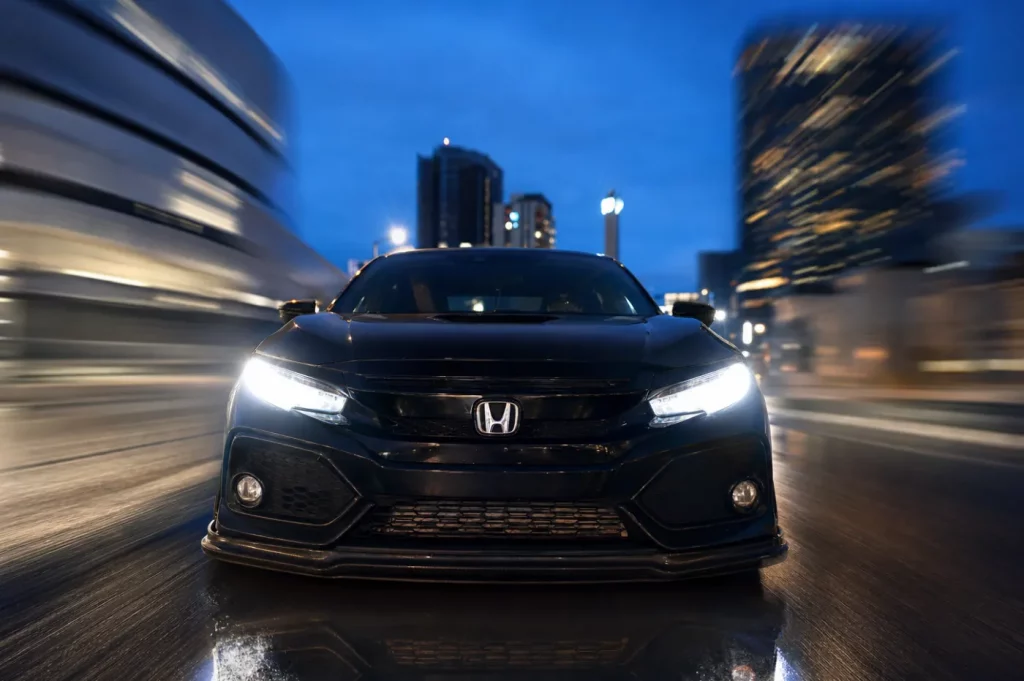
The answer depends entirely on which trim you are talking about. The manual premium on a Sport hatchback works differently than manual retention on an Si or Type R, because the Sport offers a direct CVT-versus-manual comparison on the same car, while the Si and Type R were manual-only — no CVT equivalent exists. The market for each behaves differently, and the trade-in value gap between them is wider than most buyers expect.
The Third-Pedal Calculus
The 10th generation Honda Civic (2016–2021) is the last Civic generation where a mainstream non-Si non-Type-R trim offered a manual transmission as a no-cost option. The CVT was the default across most powertrains and body styles, while the 6-speed manual was restricted to a narrow set of trims: the Sport hatchback (1.5T only), the Si sedan and coupe, and the Type R hatchback. This created a natural experiment in resale value: how much, if anything, does the manual add at trade-in time on a generation where automatic buyers outnumbered manual buyers roughly 40 to 1?
The answer depends entirely on which trim you are talking about. The manual premium on a Sport hatchback works differently than manual retention on an Si or Type R, because the Sport offers a direct CVT-versus-manual comparison on the same car, while the Si and Type R were manual-only — no CVT equivalent exists. The market for each behaves differently, and the trade-in value gap between them is wider than most buyers expect.
CVT vs Manual: What Are You Actually Comparing?
Before diving into resale numbers, it is essential to understand what can and cannot be compared. The 10th Gen Civic — chassis codes FC1 for sedan, FC3 for coupe, FK7 for hatchback — had dramatically different transmission availability across its model range.
The vast majority of 10th Gen Civics sold in North America were CVT-equipped. The CVT was available on every trim except the Si, Type R, and the Sport hatchback with the 6MT. The manual transmission was strictly limited to three specific applications: the Sport hatchback (2017–2021) with the 1.5T engine, the Si sedan and coupe (2017–2020) with the higher-output 1.5T, and the Type R hatchback (2017–2021) with the 2.0T. This means the only trim where a buyer faced a genuine CVT-versus-manual decision on an otherwise identical car was the Sport hatchback.
| Body Style | Trim | Engine | CVT Available | 6MT Available | Direct Comparison? |
|---|---|---|---|---|---|
| Sedan / Coupe | LX, Sport, EX, EX-L, Touring | 2.0L NA or 1.5T | Yes | No | No — CVT only |
| Sedan / Coupe | Si | 1.5T (205 hp) | No | Yes | No — manual only |
| Hatchback | LX, EX, EX-L, Sport Touring | 1.5T | Yes | No | No — CVT only |
| Hatchback | Sport | 1.5T (180 hp MT, 174 hp CVT) | Yes | Yes | Yes — same trim, same engine |
| Hatchback | Type R | 2.0T (306 hp) | No | Yes | No — manual only |
Sources: Honda Newsroom 2016–2021 Civic specs. Driving.ca 10th gen Civic buying guide. The Sport hatchback with the 6MT also received a different tune than the CVT version — 180 HP vs 174 hp — and a mechanical limited-slip differential that the CVT car did not receive. This makes the manual Sport hatchback a meaningfully different driving machine, not just a different transmission.
For the sedan and coupe body styles, there was no manual option outside the Si. For the LX and Sport sedans (2.0L NA with CVT), the manual simply was not offered in North America. This means the CVT-vs-manual resale question for the 10th gen is really a question about the Sport hatchback, the Si, and the Type R — and each behaves differently AT trade-in time.
The Short Answer: Does the Third Pedal Add Value?
The answer is: it depends entirely on how you sell the car.
| Factor | CVT | Manual |
|---|---|---|
| Buyer pool | Larger | Smaller |
| Enthusiast demand | Moderate | High |
| Dealer trade-in premium | Usually small | Potentially higher |
| Private-party premium | Usually small | More noticeable |
| Ease of resale | Higher | Lower |
| Long-term enthusiast appeal | Moderate | Higher |
Don’t expect a dealer to pay you thousands extra simply because your Civic has three pedals. The manual premium exists, but it is not evenly distributed across all sale channels.
Why Manual Civic Can Be Worth More
The economics of manual resale are straightforward: lower supply plus enthusiast demand equals a potential scarcity premium. This is especially interesting now, as manual transmissions become increasingly rare. In July 2026, Cars.com noted the shrinking availability of manual-only Civic Si models and reported that Honda was pausing Si production after 2026. This does not mean that every 10th-gen manual suddenly becomes a collector car, but scarcity does support enthusiast demand.
However, there is a counterargument. The typical used Civic buyer wants a commuter, wants convenience, does not know how to drive a manual, or drives in heavy traffic and prefers an automatic. The CVT has a larger buyer pool, which can partially offset the manual’s enthusiast premium.
Dealer Trade-In Is Different
This is the central section of the article. At trade-in, a dealer asks: how quickly can I sell this car? — not, how much does an enthusiast value the third pedal? A dealer may value a manual far less generously than a private buyer because the dealer must sell the car to a broader audience. A manual Civic sits on the lot longer than a CVT Civic. The typical used Civic turnover time is roughly 15–25 days; a manual Sport hatchback can sit 40–60 days or more in markets where manual drivers are scarce. This holding cost erodes the theoretical premium.
| Scenario | Manual Advantage |
|---|---|
| Dealer trade-in | Low |
| Independent used dealer | Low–moderate |
| Private party | Moderate |
| Enthusiast buyer | Highest |
| Modified Civic | Highly variable |
Sport Hatchback: Manual Premium at Retail, Discount at Trade-In
The Sport hatchback is the cleanest comparison because identical-condition cars differ only by transmission. At retail — private party or dealer used lot — the manual Sport hatchback commands a clear premium. Online listings and forum data from CivicX show manual Sport hatchbacks listing for $1,000–$2,000 more than equivalent CVT Sport hatchbacks, driven by three factors: scarcity (estimated 15–20% of Sport hatchbacks were 6MT), enthusiast desirability, and the LSD that CVT cars lack.
However, trade-in value tells a different story. At the wholesale auction level, the manual Sport hatchback is a niche product. Dealers know that a manual Civic sits on the lot longer than a CVT Civic because the buyer pool is smaller. This holding cost erodes the theoretical premium. The net trade-in effect is a paradox: the manual Sport hatchback sells for more at retail, but dealers offer less at trade-in to compensate for the longer hold time. The actual trade-in difference is roughly $500–$1,000 less for a manual than a CVT at the dealer valuation level, even though the same car retails for $1,000–$2,000 more on the used lot. The private-party seller captures the full enthusiast premium. The trade-in seller takes a hit.
| Market | Sport Hatch CVT | Sport Hatch 6MT | Manual Premium/(Discount) |
|---|---|---|---|
| Private party retail (2019, 40–50K miles) | $17,000–$19,000 | $18,500–$21,000 | +$1,000 to +$2,500 |
| Dealer used lot (2019, 40–50K miles) | $18,500–$21,000 | $19,500–$23,000 | +$1,000 to +$2,000 |
| Dealer trade-in appraisal | $14,000–$16,500 | $13,500–$15,500 | -$500 to -$1,000 |
| Wholesale auction value | $13,000–$15,000 | $12,000–$14,000 | -$500 to -$1,500 |
Sources: TrueCar 2019 Civic hatchback listings (June 2026). HondaRide used Civic pricing guide, 2026. CivicX forum transaction data. AutoGuide Civic trade-in value guide, 2026. Driving.ca 10th gen pricing.
The wholesale discount exists because auction buyers — other dealers — are buying inventory to sell quickly, and a manual Civic requires a specific buyer who may not walk in the door for weeks. The manual’s longer days-on-lot at the retail level feeds back into a lower wholesale bid. This is the fundamental economics of a niche transmission in a mass-market car.
For the private seller, the manual Sport hatchback is a winning proposition: you sell it yourself on CivicX, Facebook Marketplace, or an enthusiast forum, and you capture the $1,000–$2,500 premium. For the trade-in customer, the manual is a subtle penalty — $500–$1,000 less than the CVT equivalent at the dealer’s desk.
Si: Manual-Only, No CVT Comparison, Strong Retention
The 10th gen Si was manual-only in the North American market. There is no CVT Si to compare against, so the resale question shifts: how does the Si’s manual-only status affect its value against other 10th gen trims, and how does it compare to a CVT-equipped Civic with similar performance intent?
The Si sedan started at roughly $25,000 new. In 2026, a well-maintained 2017 Si with 60,000–80,000 miles trades for roughly $14,000–$17,000 at retail (AutoGuide trade-in guide), and $11,000–$14,000 at trade-in. A 2019 LX sedan with the 2.0L CVT, which started at roughly $20,000 new, trades for roughly $9,500–$12,000 at retail with similar mileage. The Si retains a higher percentage of its MSRP despite being older — roughly 56–60% at 8–9 years old vs roughly 48–52% for the base LX.
This is not because the manual is a premium feature. The Si retains value because it is a higher-spec, more desirable car with a limited-slip differential, adaptive dampers, sportier styling, and a dedicated enthusiast following. The manual is a necessary feature of the Si, not an optional extra. If Honda had offered an Si with a CVT, that car would almost certainly be worth less than the manual Si — but the question never came up because the Si was designed around the manual.
The Si’s manual does create one trade-in friction: dealers are cautious about taking manual Si trade-ins from younger owners because modified examples are common. A bone-stock 10th gen Si with a clean Carfax and no tune evidence will command top trade-in dollars. A tuned Si with an aftermarket downpipe will get lowballed or sent to auction, because the dealer knows the enthusiast-buyer pool for a modified car is smaller and the risk of hidden powertrain damage higher.
Type R: The Manual Appreciates
The 10th gen Type R (FK8, 2017–2021) was manual-only globally. There was never a CVT Type R, so the resale question is entirely about manual desirability in a halo car with limited production.
The Type R is the exception to every rule about manual transmission resale. AutoGuide’s 2026 trade-in analysis notes that a 2024 Type R in excellent shape trades in at nearly 90% of its original MSRP — a retention rate usually reserved for limited-production sports cars. The FK8 Type R retains roughly 70–80% of its original MSRP in 2026, depending on model year and mileage.
The manual is not a premium feature on the Type R — it is the only feature. But the Type R benefits from the broader market trend toward manual scarcity: as the supply of new manual performance cars shrinks, the used manual versions of iconic performance models appreciate. The FK8 Type R is widely regarded as one of the best front-wheel-drive performance cars ever built, and the manual transmission is integral to that reputation.
Unlike the Sport hatchback, where the manual creates a trade-in friction, the Type R’s manual is a positive for trade-in because Type R buyers are almost exclusively enthusiasts who seek the manual specifically. A dealer taking a Type R trade-in knows it will sell quickly to a national audience of buyers who want the manual and only the manual. There is no days-on-lot penalty.
CVT Resale Risk: The Oil Depreciation Factor
The manual transmission adds value at resale not just because of its enthusiast appeal, but also because the 10th gen CVT carries known resale risks that the manual does not share.
The 2016–2021 Civic’s 1.5T engine was the subject of a class-action settlement over Oil dilution, where unburned fuel entered the crankcase and contaminated the oil. While the settlement covered engine repairs, the CVT transmission paired with these engines had its own set of documented issues — shuddering, hesitation, and premature failure in high-mileage examples driven under severe conditions. RepairPal data and NHTSA complaint records show that CVT-related complaints on the 10th gen Civic include transmission shudder (2016–2018 models most affected), hesitation during acceleration, and complete transmission failure requiring replacement at $3,000–$4,500 with labor.
At trade-in time, dealers discount CVT Civics that lack documented transmission fluid change records more heavily than manual Civics with the same mileage. A CVT Civic at 80,000 miles without a CVT fluid change on the service record marks down roughly $500–$800 compared to one with documented 30,000-mile fluid changes. A manual Sport hatchback at the same mileage has no equivalent transmission fluid anxiety — the manual transmission fluid change is a $100–$150 service, and even if it was never done, the risk of failure is lower and the repair cost significantly less.
| Transmission | Fluid Change Interval | Service Cost | Replacement Cost (Failure) | Trade-In Discount for No Service Records |
|---|---|---|---|---|
| CVT (10th gen 1.5T) | 30,000 miles (severe) / 60,000 (normal) | $180–$280 | $3,000–$4,500 | $500–$800 |
| 6MT (Sport hatch / Si) | 30,000–60,000 miles | $100–$150 | $1,500–$2,500 | $0–$200 |
| 6MT (Type R) | 30,000 miles (severe) | $120–$180 | $2,500–$4,000 | $0–$300 |
Sources: RepairPal Civic transmission service pricing. NHTSA complaint data for 2016–2021 Civic CVT. CivicX forum CVT Failure reports. Honda Service Manual 10th gen transmission intervals.
This CVT risk creates a subtle but real value advantage for the manual variants at higher mileage (80,000+ miles). A used buyer shopping at this mileage level will often pay more for a manual car to avoid the CVT failure risk, even if they would have preferred an automatic for daily comfort. The manual becomes a reliability premium, not just an enthusiasm premium.
Mileage Matters More Than the Pedal
A 2018 manual with 55,000 miles versus a 2018 CVT with 95,000 miles — the mileage difference is far more important than the transmission choice. A low-mileage CVT can easily be worth more than a high-mileage manual. At the dealer trade-in desk, mileage is one of the first factors considered, often outweighing the transmission type. A well-maintained, low-mileage CVT will appraise higher than a high-mileage manual with visible wear, regardless of the manual’s enthusiast appeal.
Condition Matters More Than Manual
The same logic applies to condition. A clean, stock CVT can be far more attractive than a modified, abused manual — especially to a dealer. The dealer knows that a stock car with a clean history will sell faster and with less risk than a modified car that may have hidden issues. A manual premium is essentially meaningless if the car has accident history, rebuilt title, structural damage, or poor repairs. Vehicle condition comes first; the transmission premium comes second.
The Enthusiast Premium
Manual transmissions attract enthusiasts, younger buyers, driving-focused buyers, Honda fans, and the modification community. This can allow an owner to achieve a higher price in a private-party sale. The right buyer — someone who specifically wants a 6-speed Civic — may pay significantly more than a dealer would offer. This is where the manual truly shines.
The Dealer Discount
But a dealer may say exactly the opposite: “Manual limits our buyer pool.” And offer little or no additional trade-in value. The headline “manual is worth more” is too simplistic. The correct statement is: “manual can be worth more to the right buyer.”
Private Party vs Trade-In
The gap between private-party and trade-in value is where the manual’s true worth is determined. A private seller can access the enthusiast market directly; a trade-in seller cannot. The manual premium is real in the private market but often invisible or negative at the dealer’s desk.
| Scenario | Manual Premium |
|---|---|
| Dealer trade-in | Low to negative |
| Private party | Moderate to high |
| Enthusiast forum | Highest |
The Liquidity Question
CVT: more buyers → easier sale. Manual: fewer buyers → potentially higher price → potentially longer time to sell. Price versus liquidity is a trade-off. A seller who needs cash quickly may prefer the CVT’s faster sale. A seller who can wait for the right buyer will benefit from the manual’s enthusiast appeal.
How Much Does the Third Pedal Actually Add?
There is no single universal number. The manual premium depends on the trim, the market, and the sale channel.
Trade-in: $0–$500 potential manual advantage.
Dealer retail / enthusiast-friendly dealer: $500–$1,500 potential advantage.
Private party / desirable configuration: $1,000–$2,500+ potentially possible.
These are illustrative ranges, not fixed market prices. The actual premium varies by region, condition, mileage, and buyer demand.
Why a $2,000 Premium Isn’t Guaranteed
A manual Civic may cost $1,500 more when buying. Five years later, a dealer may offer only $300 more for the manual. In that case, the original premium was not recovered. The resale premium minus the purchase premium equals the actual transmission value retained. If the manual premium at purchase is $1,500 and the resale premium is only $700, the buyer recovered only 47% of the original premium.
5-Year Ownership Example
CVT purchase: $0 premium. Future resale: $10,500.
Manual purchase: +$1,500 premium. Future resale: $11,200.
Manual retained: $700. But initial premium: $1,500. The buyer recovered only 47% of the original premium.
This type of calculation is far more useful than simply stating “manual holds value better.”
When Manual Wins
The manual makes the most sense if: you enjoy driving, you plan to keep the car long-term, you can sell privately, the car remains stock, the configuration is desirable, and mileage stays reasonable. In this case, resale value is an additional bonus, not the primary reason for choosing the manual.
When CVT Wins
The CVT makes more sense if: you prioritize daily convenience, you live in heavy traffic, you want a larger buyer pool, you plan to trade in, or you are buying based on the lowest total cost. The CVT’s larger buyer pool and easier trade-in process make it the more practical choice for many owners.
Modified Manual vs Stock CVT
A modified manual can have lower trade-in value despite higher enthusiast appeal. Reasons include: tune, clutch wear, suspension modifications, aftermarket wheels, exhaust changes, and questionable modifications. A dealer must factor in resale risk. A stock manual is the sweet spot for resale. OEM+ is usually safer than heavily modified.
Clutch Condition for Manual
For a manual, clutch condition is a critical part of the appraisal. A dealer will check engagement, slipping, pedal feel, gear selection, and clutch noise. If the clutch is near replacement, the manual premium can disappear entirely. A manual with a worn clutch is not worth more than a CVT with a healthy transmission.
CVT Condition
The CVT has its own set of issues. A buyer should check fluid service history, shudder, hesitation, abnormal noises, and transmission behavior. A CVT with documented service history is worth significantly more than one with unknown history. The CVT is not automatically “cheaper to own” — it has its own risks and maintenance requirements.
Service Records
For resale, documented maintenance can be more valuable than a small transmission premium. This is especially true for CVT fluid changes and manual transmission fluid changes. A car with a full service history will always command a premium over one with incomplete records.
What Dealers Actually Want
Dealers want a car that looks clean, has a clean history, is easy to finance, has broad buyer appeal, and does not require immediate reconditioning. The manual is only one variable among many. A clean CVT will often be preferred over a rough manual.
What Enthusiasts Want
Enthusiasts want a manual, stock, low-mileage, clean-history, desirable-trim car. They will pay more for this combination. This is where the real manual premium exists — in the private market, not at the dealer trade-in desk.
Best 10th Gen Manual for Resale
A desirable trim with a manual, stock condition, and clean history will sell better than a base trim with a manual and modifications. The Si and Type R are the best manual trims for resale because they are performance-oriented and manual-only.
Best CVT for Resale
A popular trim with a common configuration and clean history will be very liquid. The CVT wins on volume demand. A base LX or EX with a CVT and low mileage will sell quickly and easily.
The 10th Gen Is Now an Interesting Used-Car Market
The 10th Gen has fully transitioned to the used market. Manual scarcity is becoming more noticeable, but this does not yet mean collector status. A manual 10th-gen Civic is desirable, but most examples are still ordinary used cars — not collectibles.
Trade-In vs Private Sale Calculator
Expected private-party value minus expected trade-in value equals the value of selling privately. The manual premium minus the additional selling effort equals the actual benefit. This calculation helps owners decide which sale channel is right for them.
If You Plan to Trade In
A CVT is not necessarily the wrong choice. Liquidity is often more important than enthusiast premium for a dealer trade-in. If you plan to trade in, the CVT’s easier sale process may be more valuable than the manual’s theoretical premium.
If You Plan to Sell Privately
Here, the manual becomes more attractive because you can find a specific buyer who wants a 6-speed Civic. The private market is where the manual’s enthusiast appeal translates into real dollars.
If You Plan to Keep It 10 Years
If you plan to keep the car for a decade, resale value becomes secondary. If you enjoy driving a manual, buy the manual. Do not pay for a CVT just for a hypothetical $500 additional trade-in value after 10 years.
The Hatchback Factor: Body Style Confounds the Comparison
Any attempt to compare 10th gen CVT vs manual resale value must account for the hatchback premium. AutoGuide’s 2026 trade-in analysis notes that 10th gen hatchback models trade for a $1,200–$1,800 premium over equivalent sedans because of their added utility. Since the manual was only available on the hatchback (Sport trim), the manual’s resale premium is partially a hatchback premium in disguise.
A 2019 Sport hatchback 6MT at $20,000 private party looks like it is $2,500 more than a 2019 LX sedan CVT at $17,500. But the hatchback body alone accounts for $1,200–$1,800 of that difference. The real manual premium is roughly $700–$1,300 once you control for body style. Comparing the Sport hatch 6MT to the Sport hatch CVT directly isolates the transmission effect and confirms a $1,000–$2,000 premium at retail.
The Si comparison avoids this confound because the Si was available as both sedan and coupe in the 10th gen (both manual-only). There is no body-style difference to adjust for within Si trims.
Buying the Third Pedal: What You Pay and What You Get Back
The decision to buy a manual 10th gen Civic depends on which trim you are buying, how long you plan to keep it, and how you plan to sell it.
For a Sport hatchback, the manual adds roughly $1,000–$2,000 at private-party resale but subtracts $500–$1,000 at trade-in. If you plan to sell privately, the manual is a financial win — you get driving satisfaction and a higher resale price. If you plan to trade in, the CVT is the financially smarter choice because the trade-in penalty on the manual more than offsets any theoretical premium.
For an Si, the manual is the only option, so there is no premium to parse. The Si’s strong retention (56–60% at 8–9 years) is a function of the car’s desirability, not its transmission. The manual does not add value over a hypothetical CVT Si — it is the definition of the car.
For a Type R, the manual is a net positive at every stage. The car was engineered around it, the enthusiast market demands it, and the manual scarcity in the broader market boosts Type R values. There is zero financial argument for wishing the Type R had a CVT.
Final Verdict
Best for resale liquidity: CVT
Best for enthusiast demand: Manual
Best chance of private-party premium: Manual
Best chance of easy trade-in: CVT
Best long-term enthusiast choice: Manual
Guaranteed resale premium: Neither
The third pedal can add value, but it does not add the same value everywhere. The manual premium exists in the private market but is often invisible or negative at the dealer trade-in desk. A seller who can wait for the right buyer will benefit from the manual’s enthusiast appeal. A seller who needs a quick sale will be better served by the CVT’s larger buyer pool and easier trade-in process.
The broader lesson for the 10th gen Civic market is that the manual adds value only when it makes a car rarer and more desirable than its automatic equivalent — and only when the seller can access the enthusiast buyer pool directly. At the dealer trade-in desk, the manual is often a liability rather than an asset, because the dealer’s business model prizes fast inventory turnover over niche buyer premiums.
Quick Reference Checklist
☐ The only 10th gen trim offering a direct CVT-vs-manual choice: Sport hatchback (2017–2021) — same trim, same engine, different transmission
☐ Manual Sport hatchback commands $1,000–$2,500 premium at private-party retail vs CVT equivalent
☐ But at trade-in, the manual Sport hatchback appraises for $500–$1,000 less than the CVT version — dealers discount for longer days-on-lot
☐ 10th gen Si was manual-only in North America — no CVT comparison exists; Si retains 56–60% of MSRP at 8–9 years vs 48–52% for LX
☐ FK8 Type R retains 70–80% of MSRP and trades near 90% in excellent condition — manual is a net positive at every stage
☐ CVT carries resale risk: NHTSA transmission shudder complaints, oil dilution class-action settlement on 1.5T, $3,000–$4,500 replacement cost vs $1,500–$2,500 for 6MT
☐ CVT service record gap penalizes trade-in value by $500–$800 at 80,000+ miles — manual has no equivalent anxiety
☐ Hatchback body style itself adds $1,200–$1,800 premium over sedans — confounds the manual premium calculation
☐ Adjusted manual premium on Sport hatch is $700–$1,300 after controlling for body style
☐ Manual Sport hatch: private-party sale = financial win; trade-in = penalty of $500–$1,000 vs CVT
☐ Si: manual is the definition of the car, not a premium feature — no resale comparison possible
☐ Type R: manual is universally positive — no enthusiast buyer wants an automatic FK8
☐ The manual transmission is a seller’s asset in the private market and a dealer’s liability at trade-in
☐ A low-mileage CVT can easily be worth more than a high-mileage manual
☐ A clean, stock CVT is often more attractive to dealers than a modified manual
☐ Documented maintenance history is often more valuable than a small transmission premium
☐ Manual makes sense if you enjoy driving, can sell privately, and plan to keep the car long-term
☐ CVT makes sense if you prioritize convenience, live in traffic, or plan to trade in
☐ Modified manual can have lower trade-in value despite higher enthusiast appeal
☐ Clutch condition is critical for manual appraisal — a worn clutch eliminates the manual premium
☐ CVT fluid service history is critical for CVT appraisal — no records = $500–$800 discount
☐ The 10th Gen is now a used car — manual scarcity is noticeable but not yet collector status
FAQ
Is a 10th Gen Civic manual worth more than a CVT at trade-in?
Usually not. Dealers often value the manual less because it has a smaller buyer pool and takes longer to sell. The manual premium is more visible in private-party sales.
How much more is a manual Civic worth?
At private-party sale, a manual Sport hatchback can be worth $1,000–$2,500 more than a CVT equivalent. At trade-in, it may be worth $500–$1,000 less.
Does the 10th Gen Civic Si hold its value better than the CVT models?
Yes — the Si retains 56–60% of its MSRP at 8–9 years old, compared to 48–52% for base CVT models. But this is due to the Si’s desirability, not just the manual transmission.
Is the Civic Type R manual worth more than a CVT Type R?
There is no CVT Type R — the car was manual-only. The manual is a net positive because Type R buyers are exclusively enthusiasts who want the manual.
Should I buy a manual Civic for resale value?
Only if you plan to sell privately and can wait for the right buyer. If you plan to trade in, the CVT is the financially safer choice.
Does mileage affect manual resale more than CVT resale?
Mileage affects both equally. A low-mileage CVT can be worth more than a high-mileage manual. Condition and mileage are more important than the transmission type.
Is a modified manual Civic worth more?
Usually not — modifications reduce trade-in value and narrow the buyer pool. A stock manual is the sweet spot for resale.
Does CVT fluid service history affect trade-in value?
Yes — a CVT with no documented fluid changes at 80,000+ miles can be discounted $500–$800 at trade-in. The manual has no equivalent anxiety.