

Every Honda enthusiast with an older chassis eventually faces the same question. You have an EG, an EK, a DC2, or maybe an EP3. The stock motor is tired, and you want more power. But the path forward isn’t obvious. Two very different routes have emerged as the gold standards for building a fast Honda.
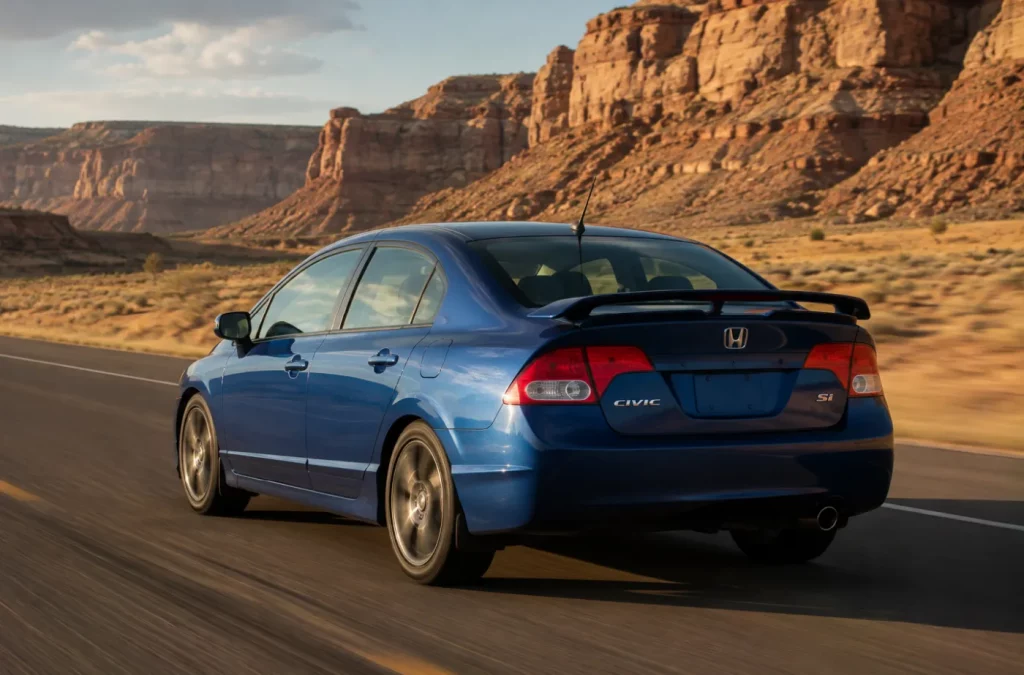
The first is the classic naturally aspirated K-Series build — a high-compression, high-RPM Frankenstein motor that screams to 9,000 RPM and delivers the kind of analog engagement that built Honda’s reputation. The second is the modern K20C1 turbo swap from the Civic Type R — a direct-injected, factory-turbocharged powerhouse that delivers massive torque with modern efficiency.
One path chases RPM. The other chases boost. One is a builder’s project. The other is an engineer’s project. This comparison breaks down the real costs, complexities, and driving experiences of both approaches, so you can decide which path makes sense for your project.
The built K20/K24 naturally aspirated setup offers a more accessible, well-documented swap with instant throttle response and a classic high-RPM character — but peak power is limited and expensive to extract. The K20C1 turbo swap delivers massive torque and modern performance, but requires significant fabrication, complex electronics, and a much larger budget. Choose the K20/K24 for a traditional Honda project; choose the K20C1 if you’re ready for an engineering challenge with higher power potential.
Two Completely Different Ways to Build a Fast Honda
Before we dive into the details, it’s important to understand that these two builds represent completely different philosophies. One is about perfecting the naturally aspirated formula that Honda spent decades developing. The other is about adapting modern turbocharged engineering to a chassis that was never designed for it.
The built K20/K24 naturally aspirated setup is a classic recipe: a K24 bottom end for displacement, a K20 head for flow, high-compression pistons, aggressive cams, and a tune that pushes the engine to 8,000+ RPM. The result is a motor that screams, responds instantly, and delivers power in a way that feels completely connected to your right foot.
The K20C1 turbo swap is a different animal entirely. You’re taking the direct-injected, turbocharged engine from a Civic Type R — with its factory boost, modern electronics, and complex CAN communication — and trying to make it work in a chassis that was built before any of that technology existed. The result is a car with massive torque, huge tuning potential, and a level of modern performance that a naturally aspirated K-series simply cannot match.
But the path to that power is dramatically different — in cost, complexity, and character.
| Specification | Built K20/K24 N/A | K20C1 Turbo (Type R) |
|---|---|---|
| Displacement | 2.0L–2.4L (hybrid) | 2.0L |
| Aspiration | Naturally aspirated | Turbocharged |
| Redline | 8,500–9,000+ RPM | ~7,000 RPM |
| Typical WHP (build) | 240–290 WHP | ~290+ WHP (stock) |
| Typical WTQ | ~190–210 WTQ | ~300+ WTQ (stock) |
| ECU | Hondata KPro | MoTeC / Standalone (recommended) |
| Fuel system | Port injection | Direct injection |
| Swap complexity | Moderate (well-documented) | High (fabrication + electronics) |
| Approx. project cost | $10,000–$15,000+ (complete) | $15,000–$25,000+ (complete) |
Power: Where Does Each Build Actually Land?
Let’s be honest about the numbers. The built naturally aspirated K20/K24 is a beautiful engine, but it’s not going to win a dyno contest against a modern turbo motor. A serious all-motor K-series build — with high-compression pistons, aggressive cams, head work, and a proper tune — typically delivers 240–290 WHP depending on the specific combination and dyno. That’s impressive for a naturally aspirated four-cylinder, but it’s not earth-shattering in an era where factory turbo engines routinely exceed those numbers.
For reference, a strong naturally aspirated K20/K24 hybrid with the right combination of components typically falls in the 260–280 hp range AT the crank, translating to roughly 240–260 WHP on a Dynojet depending on the specific combination. Extreme builds with ITBs and E85 can push higher, but those are exceptional cases, not typical results.
The K20C1 starts at a different level. A stock FK8 or FL5 Type R engine produces approximately 290–310 WHP on a Dynojet, depending on the dyno and conditions. With a simple tune — Hondata FlashPro or similar — it can reach 330+ WHP without changing any hardware. The torque difference is even more dramatic: the K20C1 produces over 300 lb-ft at the wheels, compared to roughly 200 lb-ft for the naturally aspirated build.
The K20C1 wins the power battle. That’s not the question. The question is what it costs to get that power into an older chassis, and what you sacrifice along the way.
The Powerband Battle: 9,000 RPM vs Turbo Torque
This is where the comparison becomes personal. The built K20/K24 naturally aspirated engine delivers power in a way that feels completely different from the K20C1. There’s no boost threshold. There’s no lag. The throttle response is instantaneous, and the power builds linearly as the RPM climbs.
At 4,000 RPM, the K20/K24 is just waking up. By 6,000 RPM, it’s pulling hard. By 8,000 RPM, it’s screaming. The VTEC crossover — typically around 5,000–5,800 RPM depending on the cam profile — adds a surge that feels like a second powerband. The engine rewards revs, and it demands that you keep it in the sweet spot. You earn the power.
The K20C1 is a completely different experience. The torque arrives early and stays flat. At 2,500 RPM, you already have more torque than the K20/K24 makes at peak. The power is always there, always available, and always predictable. You don’t need to downshift to pass. You don’t need to chase the redline. The power comes to you.
One engine asks you to work for the speed. The other hands it to you effortlessly. Which one is “better” depends entirely on what you want from the driving experience.
Cost: The Part Nobody Wants to Calculate
This is where the two paths diverge dramatically. The built naturally aspirated K-series is expensive in its own right, but the K20C1 swap is a different financial category entirely.
Built K20/K24 Naturally Aspirated — Budget Breakdown:
- Engine core (K24 block, K20 head): $1,500–$2,500
- Machine work (Bore/hone, deck, balance): $800–$1,500
- Pistons and rods (forged, high-compression): $1,200–$1,800
- Cams (Stage 2/3): $800–$1,200
- Valve springs and retainers: $400–$600
- Head work (porting, valve job): $600–$1,500
- Intake manifold (RBC/RDX/ITB): $300–$1,500
- Header/exhaust: $600–$1,200
- ECU (Hondata KPro V4): $700
- Machine work, assembly, balancing: $1,000–$2,000
- Dyno tuning: $500–$800
- Total (estimated): $8,000–$15,000+
These are estimated ranges for a complete build, and actual costs vary significantly based on the specific combination, shop rates, and level of assembly. A clean K-swap into a classic chassis can often be completed for $4,000–$8,000 depending on the configuration and how much work the owner performs themselves.
K20C1 Turbo Swap — Budget Breakdown:
- K20C1 engine (complete with turbo): $6,500–$8,500
- Transmission (Type R 6-speed): $2,000–$3,500
- Standalone ECU (MoTeC, Haltech): $3,000–$5,000
- Wiring Harness (custom): $1,500–$3,000
- Custom mounts: $800–$1,500
- Custom axles: $800–$1,500
- Fuel system (direct injection): $1,000–$2,000
- Cooling system: $800–$1,500
- Fabrication (Subframe, engine bay): $1,500–$3,000
- Dyno tuning: $800–$1,500
- Total (estimated): $20,000–$30,000+
The K20C1 is not expensive because of the engine alone. It’s expensive because everything around the engine becomes a project. The wiring, the ECU, the mounts, the axles, the cooling — every system needs to be re-engineered to work with a modern direct-injected turbo motor in an older chassis.
- Lower total project cost
- Well-documented swaps
- Huge aftermarket
- DIY-friendly
- Classic Honda character
- Higher total project cost
- Complex integration
- Requires fabrication
- Electronics challenges
- Modern turbo character
Swap Difficulty: Bolt-In Ecosystem vs Engineering Project
This is where the two paths diverge most dramatically. The K-series swap into EG, EK, and DC2 chassis is one of the best-documented engine swaps in Honda history. Hasport and Innovative offer bolt-in mounts. Hybrid Racing and others offer complete swap harnesses. The chassis modifications are minimal. The wiring is straightforward. With the right parts and a weekend of work, a K-swap can be completed in a garage.
The K20C1 swap is a different story entirely.
Physical Fitment:
The K20C1 is physically larger than the classic K20/K24. The cylinder head is wider, the Turbocharger and exhaust manifold add significant bulk, and the direct-injection fuel system requires additional clearance. In EG and EK chassis, the engine sits low enough that ground clearance becomes a concern, or high enough that the hood doesn’t close without modifications. Some builders have resorted to cutting and reinforcing the hood structure — a significant fabrication job.
Subframe Modifications:
The subframe needs to be modified to clear the K20C1. In EK chassis, some builders have used EG subframes as an intermediate solution because they offer slightly better clearance. In DC2 (Integra) chassis, the longer engine bay provides the best fitment of the three — but even there, modifications are required.
Electronics and ECU:
This is the real headache. The K20C1’s factory ECU uses complex CAN communication, direct injection control, electronic throttle, and a sophisticated boost control strategy. Getting it to work in an older chassis — without triggering immobilizers, without losing communication with the dashboard, without constant warning lights — is a significant challenge.
Most builders recommend abandoning the factory ECU entirely and moving to a standalone system like MoTeC or Haltech. That adds $3,000–$5,000 to the budget and requires a specialized tuner who understands modern direct-injection turbo engines. The wiring harness needs to be custom-built, and the integration with the chassis’s systems requires careful planning.
A stock engine in a bad swap can be less reliable than a built engine in a well-understood platform. The K20C1 is a fantastic engine, but it’s not forgiving of poor installation.
Reliability: Which Build Is More Dependable?
The built K20/K24 engine is a known quantity. The port-injected K-series has been tuned, rebuilt, and pushed to its limits by thousands of enthusiasts over two decades. The failure modes are well understood. The parts are available. And the engines — even highly modified ones — can be reliable with proper assembly and tuning.
However, a high-compression naturally aspirated K-series build does have specific requirements. It needs good fuel (93 octane or E85). It needs a tuner who understands the platform. It needs to be assembled with the right clearances and torque specs. And it needs regular maintenance, particularly oil changes with the correct viscosity.
The K20C1, in stock form, is a remarkably reliable engine. The factory engineering is excellent, and the motor can handle track use without major issues. But the swap itself introduces new points of failure: custom wiring, non-standard ECU integration, cooling system modifications, and custom mounts.
A stock engine in a bad swap can be less reliable than a built engine in a well-understood platform. The K20C1 is a fantastic engine, but it’s not forgiving of poor installation.
Tuning Potential
This is where the K20C1 shows its advantage. The K20/K24 naturally aspirated build has a ceiling. Once you’ve maxed out the cam profile, Compression Ratio, and intake manifold, each additional horsepower becomes progressively more expensive. The naturally aspirated path eventually reaches a point of diminishing returns.
The K20C1 is a turbo engine, and turbo engines respond to boost. With a larger turbo, upgraded fuel system, and proper calibration, the K20C1 can reach 500+ WHP. The ceiling is much higher, and the path to more power is more straightforward — more boost, more fuel, more power.
But reaching that potential in an older chassis requires even more engineering. The cooling system needs to handle the additional heat. The transmission needs to hold the power. The chassis needs to be reinforced. The brakes need to be upgraded.
The K20C1 has more potential. But realizing that potential requires a complete package, not just an engine.
Weight and Chassis Balance
This is an often-overlooked aspect of engine swap comparisons. The K20C1 is heavier than a naturally aspirated K20/K24. The turbocharger, intercooler, and associated plumbing add weight to the front of the car. The additional cooling system components add more weight.
In a lightweight chassis like an EG or EK, the weight distribution changes significantly. The car may become more prone to understeer. The front suspension may need stiffer springs to manage the additional load. The brakes may need upgrading to handle the additional weight and speed.
The naturally aspirated K-series, by contrast, is a relatively straightforward upgrade in terms of weight. The engine is not dramatically heavier than the original B-Series or D-series it replaces, and the chassis balance remains more neutral.
Do you want maximum horsepower, or maximum balance? The K20C1 offers the former. The built K-series offers the latter.
The Sound
This is one of the most subjective — but most important — differences between the two builds. The built K-series is an auditory experience. The intake scream at high RPM, the VTEC crossover, the mechanical whir of the valvetrain — it’s a sound that Honda enthusiasts have loved for decades. With ITBs, the sound is even more dramatic.
The K20C1 sounds like a modern turbo engine. There’s turbo spool, wastegate flutter, and the burble of a performance-tuned four-cylinder. It’s impressive in its own right, but it’s not the same experience.
If you want a car that sounds like a Honda, the K-series is the answer. If you want a car that sounds like a modern performance car, the K20C1 delivers that character.
The Street Build
Choose the K20/K24 if you want a straightforward project, you enjoy DIY work, you don’t need 400+ horsepower, you want a high-RPM character, and you’re building an EG, EK, or DC2 chassis.
Choose the K20C1 if budget is secondary, you want modern turbo power, you have access to a good fabrication shop, your project doesn’t have to be OEM-simple, and you’re ready to solve electronics problems.
The Track Build
On track, the answer isn’t automatically K20C1. For a lightweight chassis like an EG or EK, a 300-horsepower naturally aspirated K-series can be a fantastic track build. The power is predictable, the heat management is simpler, and the electronics are straightforward. The car is balanced and easy to drive at the limit.
The K20C1 offers more power on the straights, but the additional complexity and heat can be a disadvantage on a road course. The cooling system needs to be carefully engineered to handle sustained track use. The ECU integration needs to be flawless.
Both builds can be excellent track cars. The K20C1 is faster on the straights. The K20/K24 is simpler and more predictable.
The $15,000 Question
If you had $15,000 to spend on a complete project, where would the money go?
Option A: Built K24/K20 Naturally Aspirated
- Engine core: $1,500
- Machine work: $1,000
- Pistons/rods: $1,500
- Cams and valvetrain: $1,200
- Head work: $800
- Intake and header: $1,000
- ECU: $700
- Assembly and tuning: $1,500
- Supporting hardware: $1,500
- Total: ~$10,700
Option B: K20C1 Turbo Swap
- K20C1 engine: $7,500
- Transmission: $2,500
- Standalone ECU: $4,000
- Wiring harness: $2,000
- Mounts and axles: $2,000
- Cooling and fuel: $2,000
- Fabrication: $2,000
- Total: ~$22,000+
The K20C1 swap is a significantly larger investment, even before accounting for the additional work required to make the car reliable and balanced.
The Biggest Mistake Buyers Make
Comparing engine prices instead of complete project prices. A $6,000 K20C1 engine does not mean a $6,000 swap. After ECU, wiring, mounts, cooling, axles, fabrication, and tuning, the budget can easily double or triple.
One builder who attempted a K20C1 swap in a classic chassis noted that the engine itself was only about half the total project cost. The real expense came from the fabrication work, the custom wiring, and the standalone ECU — costs that are difficult to anticipate before starting the project.
When budgeting for a K20C1 swap, plan for the engine to be about 30-40% of the total project cost. The rest goes to making it work in your chassis.
Who Wins?
| Category | Winner |
|---|---|
| Peak horsepower | K20C1 |
| Torque | K20C1 |
| High-RPM character | K20/K24 |
| Swap simplicity | K20/K24 |
| Aftermarket maturity | K20/K24 |
| Modern technology | K20C1 |
| Cost efficiency | K20/K24 |
| Ultimate tuning ceiling | K20C1 |
| DIY friendliness | K20/K24 |
| Unique factor | K20C1 |
Final Thought
Choose the built K20/K24 if you want to build a Honda. You get to assemble the motor, choose the cams, set up the VTEC, chase the RPM, and hear the intake scream. It’s a project for builders who enjoy the process as much as the result.
Choose the K20C1 swap if you want to engineer a modern Type R powertrain into an older chassis. You’re buying turbo torque, modern power, and huge tuning potential. But you’re also buying wiring problems, fabrication work, electronics challenges, and a significantly larger budget.
Both paths are valid. They just serve different types of builders.
FAQ — Built K20/K24 vs K20C1 Swap
Which is more reliable, a built K20/K24 or a K20C1 swap?
A well-built K20/K24 is extremely reliable due to the platform’s maturity and well-understood failure modes. A K20C1 swap can be reliable if properly integrated, but the complexity of the swap introduces more potential failure points. The K-series is the safer bet for DIY builders.
Which is cheaper, building a K20/K24 or swapping a K20C1?
Building a naturally aspirated K20/K24 is significantly cheaper. A complete built motor can cost $8,000–$15,000, while a K20C1 swap in a classic chassis often exceeds $20,000–$25,000 when all costs are accounted for. The K20C1 engine alone is expensive, but the real cost is in the ECU, wiring, fabrication, and supporting systems.
Is the K20C1 swap worth the extra money?
If you want maximum power and modern performance, yes. The K20C1 offers significantly more torque, higher tuning potential, and a modern driving experience. But if you’re building a traditional Honda project on a budget, the K20/K24 is the more sensible choice. The extra cost of the K20C1 is only justified if you want the unique character of a modern turbo engine in an older chassis.
What chassis is easiest for a K20C1 swap?
The DC2 Integra chassis offers the best fitment of the three classic platforms (EG, EK, DC2) due to its longer engine bay. EG and EK chassis require more significant modifications. None of them are simple bolt-in swaps — fabrication and custom work are required for all three.
Do I need a standalone ECU for a K20C1 swap?
Most builders recommend moving to a standalone ECU like MoTeC or Haltech. The factory ECU can be used, but it requires extensive integration work, and issues with immobilizers, CAN communication, and dashboard integration are common. A standalone ECU is more expensive but simpler to integrate in the long run.
Can I build a 300 WHP naturally aspirated K-series?
Yes, but it’s expensive and requires significant work. A high-compression, high-RPM naturally aspirated K-series with the right combination of cams, head work, intake, and tuning can reach 300+ WHP, but the cost per horsepower is much higher than with a turbo setup.
Which build has better throttle response?
The naturally aspirated K20/K24 has instant throttle response with zero lag. The K20C1 has turbo lag, though modern turbos spool quickly. The K-series is the clear winner for immediate throttle response and driver connection.
Which engine sounds better?
The naturally aspirated K20/K24 with aggressive cams and a proper intake manifold is widely considered to have a more classic, dramatic Honda sound. The K20C1 sounds more modern and turbocharged. The K-series wins for old-school Honda character.
Should I build a K20/K24 or save for a K20C1 swap?
If you’re on a budget, build the K20/K24. It’s a proven, well-documented platform with excellent aftermarket support. If you have a larger budget and want maximum power and modern performance, the K20C1 is the better choice — but be prepared for the additional complexity and cost of the swap.
What is the realistic budget for a K20C1 swap in an EG/EK?
Most successful K20C1 swaps in EG/EK chassis cost $20,000–$30,000+ when all costs are accounted for — engine, transmission, standalone ECU, custom wiring, mounts, axles, cooling, fuel system, fabrication, and tuning. The engine itself is only a fraction of the total project cost.