

The Scope of the Takata Recall on the Honda Civic
The Takata airbag inflator recall is the largest automotive safety recall in U.S. history, and the Honda Civic is one of the most heavily affected models. According to Honda’s official fact sheet current as of February 2026, approximately 12.9 million Honda and Acura vehicles in the United States have been subject to recall related to ruptures of Takata airbag inflators using phase-stabilized ammonium nitrate (PSAN) propellant. Approximately 21 million individual inflators are covered across the combined recall population. Of those, roughly 17 million have been replaced as of early 2026. Sources: Honda Takata Airbag Inflator Recall Fact Sheet, February 6, 2026; NHTSA Part 573 Safety Recall Reports 15V-320 and 15V-370.
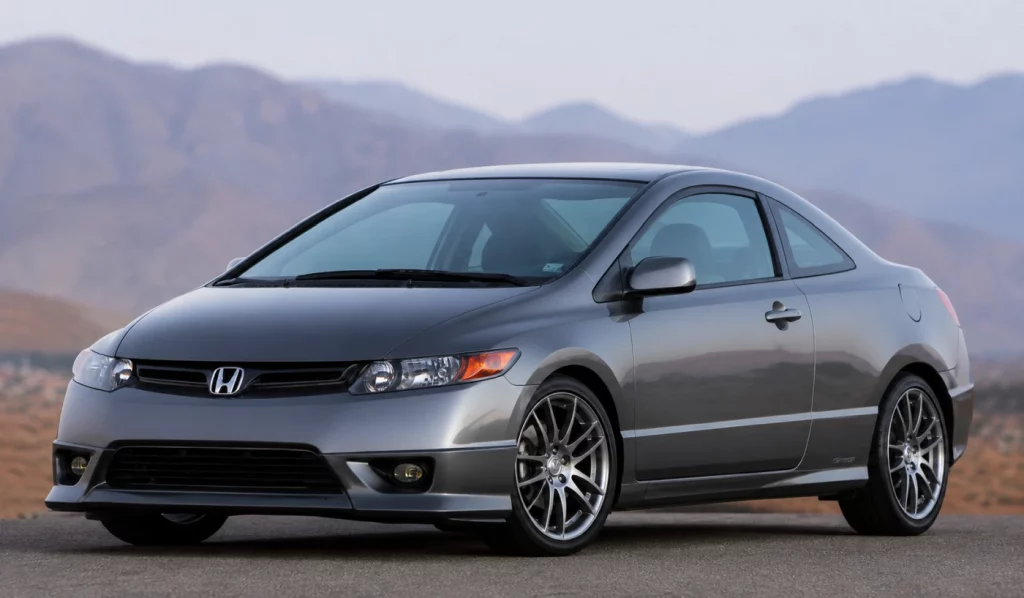
Which Honda Civic Model Years Are Affected
The Civic model years affected by the Takata inflator recall span 2001 through 2011, covering the 7th generation (2001–2005) and the 8th generation (2006–2011). Honda’s official list of affected models includes the following Civic variants:
2001–2011 Honda Civic
2001–2011 Honda Civic GX — the compressed natural gas variant sold primarily in fleet and select retail markets.
2003–2011 Honda Civic Hybrid — the hybrid powertrain variant shares the same chassis and airbag systems as the gasoline Civic for these model years.
| Civic Variant | Affected Model Years | Civic Generation | Chassis Code(s) |
|---|---|---|---|
| Civic (gasoline) | 2001–2011 | 7th (2001–2005) + 8th (2006–2011) | EM/ES/EP / FD/FA/FG |
| Civic GX (CNG) | 2001–2011 | 7th + 8th | Same platforms |
| Civic Hybrid | 2003–2011 | 7th (2003–2005) + 8th (2006–2011) | ES9 / FD3 |
Model years 2012 and newer (9th generation onward) use airbag inflators from suppliers other than Takata or from Takata production lots that are not subject to the ammonium nitrate defect recall. No Civic built after 2011 is covered by the Takata inflator recall. Sources: Honda Takata Fact Sheet model list; NHTSA recall query for 2012+ Honda Civic returns no open Takata inflator recalls.
The “Alpha” Inflators — Highest Risk on the Road
Within the affected population, a subset of inflators designated “Alpha” by NHTSA and Takata poses the most immediate danger. Alpha inflators were installed in driver-side airbag modules of certain 2001–2003 Honda and Acura models, including:
2001–2002 Honda Civic — driver frontal airbag inflator.
According to NHTSA and Takata, Alpha inflators have an alarming rupture rate of as high as 50 percent. The combination of original manufacturing defects (phase-stabilized ammonium nitrate propellant susceptible to moisture degradation), age (these vehicles are now 24–25 years old AT minimum), and exposure to hot and humid conditions makes these inflators particularly prone to rupturing with excessive force, sending metal fragments into the passenger cabin. Honda recommends that owners of vehicles containing recalled Alpha inflators stop driving immediately and arrange for free towing or mobile repair. Sources: Honda Takata Fact Sheet, Section 4: “Alpha” Inflators at High Risk; NHTSA Special Crash Investigations report DOT HS 813 153 (2002 Civic, Arizona, August 2020).
Geographic Scope — High Humidity, Highest Danger
The Takata inflator defect is driven by degradation of the ammonium nitrate propellant over time, a process accelerated by exposure to high heat and humidity. The initial 2008–2009 recalls by Honda were limited to vehicles registered in high-humidity regions: states along the Gulf Coast (Texas, Louisiana, Mississippi, Alabama, Florida), Hawaii, Puerto Rico, the U.S. Virgin Islands, Guam, Saipan, and American Samoa. As Takata and NHTSA continued to investigate inflator ruptures, it became clear that the defect was not limited to humid climates. NHTSA directed Honda to expand the recall nationally in 2014–2015.
All affected Civic model years (2001–2011) are now under a national recall regardless of current or original registration location. However, vehicles that spent their entire life in high-humidity regions — or that were originally sold and registered in those regions before being moved — remain at statistically higher risk because the propellant degradation began earlier and progressed faster. Sources: NHTSA Recall 15V-320 and 15V-370; Honda Takata Fact Sheet, national recall scope.
Confirmed Injuries and Deaths in Honda Vehicles
As of February 2026, Honda has confirmed 20 deaths and more than 200 injuries in the United States related to ruptures of Takata driver-side frontal airbag inflators. All of these events occurred in vehicles that were covered by the recall at the time of the crash. The first confirmed death in a Honda occurred in Oklahoma in May 2009; the most recent occurred in Florida in April 2023. The crash locations span 12 states, with Florida, Texas, and California recording multiple fatalities.
A documented case involving a 2002 Honda Civic occurred in Arizona in August 2020, resulting in a fatality. NHTSA’s Special Crash Investigation report (DOT HS 813 153) confirmed the driver-side Takata inflator ruptured. The vehicle was 18 years old at the time and had spent its life in a hot, dry climate — showing that the risk is not limited to traditionally humid regions once the vehicle is old enough. Sources: Honda Takata Fact Sheet, Section 5: Injuries & Deaths; NHTSA SCI report DOT HS 813 153.
Outside the U.S., Honda has confirmed additional deaths in Brazil, China, Ghana, Malaysia, Mexico, Pakistan, Seychelles, and Thailand. Those incidents involved single-stage Takata driver inflators, a different inflator type not used in U.S.-market Honda vehicles.
Recall Phases and Repair Status
The Takata recall unfolded in phases over more than a decade. The following timeline covers the key milestones for the Honda Civic:
- 2008–2009 — Honda issues the first Takata inflator recalls, limited to high-humidity regions. Driver-side inflators in certain 2001–2002 Civics are the primary focus. NHTSA recall 09V-259.
- June 2014 — Honda expands the driver-side inflator recall nationally for 2001–2005 Civics. NHTSA recall 14V-351.
- May 2015 — Honda announces a national recall of passenger-side inflators in 2001–2005 Civics and 2003–2007 Accords. NHTSA recalls 15V-320 and 15V-370.
- 2016 — Recall extends to additional model years. The 2006–2011 Civic models are added for passenger-side inflator replacement. NHTSA recall 16V-346.
- 2019–2020 — Final expansion covering all remaining affected Civic model years and inflator positions. Remaining unrepaired vehicles from the 2001–2011 range continue to receive mailed notices, phone calls, and door-to-door outreach.
- February 2026 — As of the most recent Honda fact sheet, the national recall completion rate is 96 percent. About 17 million of 21 million recalled inflators have been replaced. Replacement parts are available for all affected Civics with no backorders.
Sources: NHTSA Part 573 reports for 15V-320, 15V-370, 16V-346; Honda Takata Fact Sheet, Section 3: Recall Repair Completion Rate.
Replacement Parts — What Is Being Installed
Honda stopped using Takata as a replacement inflator supplier in 2016. All replacement inflators now come from three alternative manufacturers: Daicel, Autoliv, and TRW. These inflators use different propellant chemistry (not ammonium nitrate) and are not susceptible to the same degradation failure mode. Honda states there are no replacement inflators on backorder for any Civic model currently covered by the recall. The repair is free at any authorized Honda dealership, and Honda authorizes dealers to provide a free loaner or rental vehicle for the day of the repair. Sources: Honda Takata Fact Sheet, Section 6 and 7; Honda statement on replacement suppliers, late 2016.
How to Check If a Specific Civic Is Affected
Not every 2001–2011 Civic necessarily has an open recall — some vehicles may have already been repaired, and the recall population is VIN-specific based on the specific inflator installed at the factory. Owners and potential buyers should check using one of the following methods:
Visit recalls.honda.com and enter the vehicle’s 17-character VIN. The site returns all open recalls for that specific vehicle. Or call Honda Customer Service at 1-888-234-2138. The 2012 and newer Civics will return no open Takata inflator recalls.
Used car buyers considering a 2001–2011 Civic should verify recall completion before purchase. An unrepaired Takata inflator in a 20-year-old Civic is a genuine safety hazard, and the repair is free — there is no reason to buy an unrepaired vehicle and skip the fix. Sources: Honda Takata Fact Sheet, Key Facts section; recalls.honda.com.
The NADI Recall — A Separate Issue
In January 2020, Honda announced a separate, unrelated recall involving a different type of Takata inflator — the non-azide driver inflator (NADI). The NADI recall affects a different set of vehicles and involves a faulty seal that allows moisture ingress. This is not part of the larger ammonium nitrate inflator recall covered in this article. The Civic is not among the models affected by the NADI recall, but the existence of two separate Takata recalls has caused some owner confusion. Sources: Honda Takata Fact Sheet, Section 11: NADI Inflator Recall Information; Honda statement January 21, 2020.
Used Buyer Guidance
The Civic models most affected by the Takata recall — 7th generation (2001–2005) and early 8th generation (2006–2011) — are now 15 to 25 years old and frequently appear on the used market under $8,000. The risk is real but manageable: the recall repair is free, parts are available, and the 96 percent national completion rate means the majority of these vehicles have already been repaired.
Buyers should prioritize Civics with a confirmed completed recall on both driver and passenger inflators. A seller who cannot document recall completion is offering a vehicle with a known safety defect that can kill or injure occupants. The Alpha inflator risk in 2001–2002 Civics is severe enough that Honda recommends not driving the vehicle until the repair is done. For those specific years, recall completion is a mandatory precondition for purchase, not a negotiation point.
Owners of 9th generation (2012–2015) and newer Civics face no Takata inflator risk. The inflator supply Chain had already shifted from Takata by that point, and no 2012 or later Civic is covered by any Takata inflator recall.
Quick Reference
☐ All Honda Civic model years 2001–2011 are subject to Takata inflator recall — including gasoline, GX (CNG), and Hybrid variants.
☐ The highest-risk vehicles are 2001–2002 Civics with Alpha driver inflators (up to 50 percent rupture rate per NHTSA). Honda recommends not driving these until repaired.
☐ 20 confirmed deaths and over 200 injuries in U.S. Honda/Acura vehicles due to Takata inflator ruptures as of February 2026. The most recent confirmed death occurred in April 2023.
☐ National recall completion rate is 96 percent as of February 2026. Approximately 17 million inflators have been replaced across the combined Honda/Acura recall population.
☐ Replacement inflators from Daicel, Autoliv, and TRW are available with no backorders. The repair is free at any Honda dealer, and free loaner/rental vehicles are available.
☐ Civics originally registered in Gulf Coast states, Hawaii, and U.S. territories face the highest degradation risk due to heat and humidity, but the recall is national.
☐ Check any used 2001–2011 Civic at recalls.honda.com before purchase. Do not buy a 2001–2002 Civic with an uncompleted driver inflator recall.
☐ No Civic built after 2011 is affected by the Takata inflator recall. The 9th generation and newer are not part of this defect.
☐ The NADI inflator recall announced in 2020 is a separate issue and does not affect the Civic.
☐ Honda stopped using Takata as a front airbag inflator supplier on all new models by late 2016.