

Let’s cut the polite corporate fluff right now. If you are driving an older, budget-built Civic on US roads, you might be sitting inches away from a literal shrapnel-firing Claymore mine bolted directly into your steering wheel.
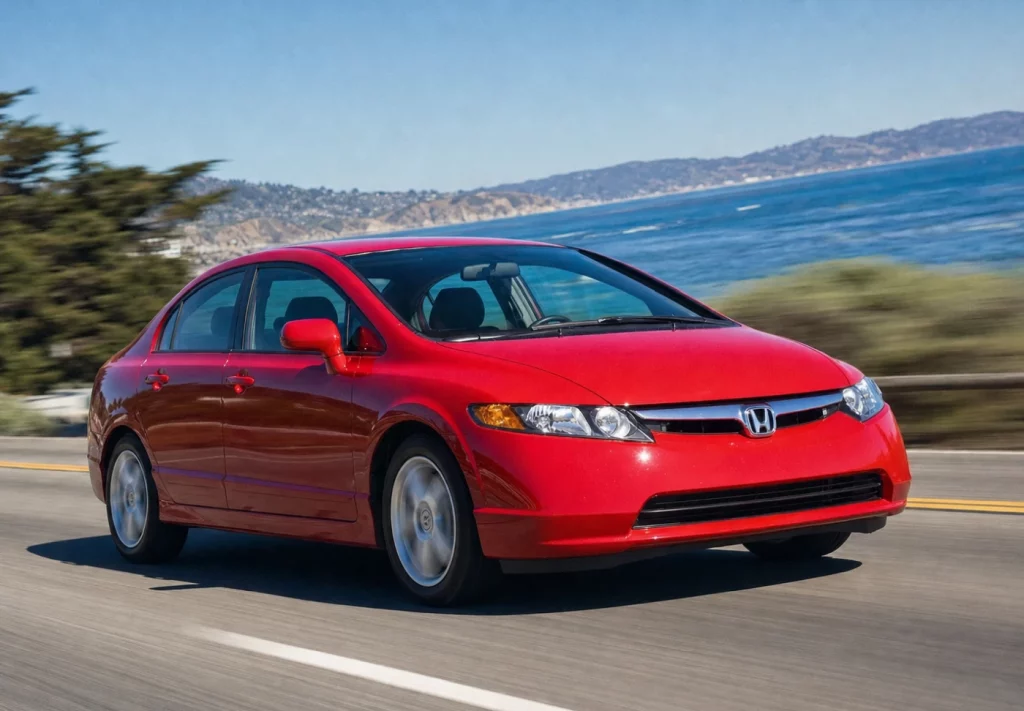
The Takata airbag recall isn’t some boring paperwork issue about a faulty sensor. We are talking about unstable chemical propellants that turn a standard safety device into an explosive metal bomb during a Fender bender. Instead of a soft nylon cushion, you get jagged steel shards blasted through the steering wheel pad directly into your face.
If you own or are planning to buy a used 7th, 8th, 9th, or early 10th Gen Civic, here is the raw, garage-tested guide to checking your VIN, identifying deadly “Alpha” inflators, and getting your car fixed for free without getting bent over by stealer upsells.
The Anatomy of a Shrapnel Bomb — Why They Explode
The engineering failure behind the Takata disaster comes down to cheap chemistry and environmental exposure.
Honda’s supplier used ammonium nitrate as the propellant to inflate the bags. The huge flaw? This chemical is highly sensitive to moisture and temperature swings.
Over years of driving in high-humidity states (like Florida, Texas, or Georgia), moisture crawls into the inflator housing. The propellant degrades, changing from a controlled burn into a violent, hyper-pressurized explosion. Instead of deploying a soft nylon cushion, the steel inflator canister ruptures into jagged metal shards, blasting through the steering wheel pad directly into the cabin. It’s a Claymore mine with your face as the target.
The Death Tier List — Which Civic Generations Are Affected?
Not all recalled Civics carry the exact same threat level. The recall spans a massive 15-year window, but certain platforms are in the extreme red zone.
1. The Red Zone: 7th Gen (2001–2005 — EM2 / ES1)
This is where the absolute deadliest “Alpha” inflators live, specifically in 2001–2003 models. Actuarial data shows these specific sub-models have a terrifying 50% failure rate in high-humidity climates. If you are a college student daily-driving an old EM2 coupe in a southern state and it hasn’t been serviced, stop driving it immediately. This is not a joke. This is your neck.
2. The Warning Zone: 8th Gen (2006–2011 — FA5 / FG2 / R18)
Standard on every baseline R18 and K20Z3 Si. Millions of these cars were packed with recalled passenger and driver-side inflators. Even if the car spent its life in a dry state like Arizona, 15+ years of cabin heat cycling means the chemical propellant is highly unstable. The clock is ticking.
3. The Extended Recall Zone: 9th & 10th Gen (2012–2015 FB6/FG4 & 2016 FC1/FK7)
Later models utilize modified Takata hardware, but out of pure caution, Honda expanded the recalls to cover these years as well. While they don’t carry the raw volatility of the 7th Gen Alpha units, they are still a mandatory fix. Don’t ignore it just because your car is newer.
Step-by-Step — The Ultimate 2-Minute Safety Verification
Do not trust the word of a private seller or a sketchy used car lot saying, “Yeah, bro, all the recalls are taken care of.” Prove it yourself in two simple steps:
Step 1: Grab your 17-digit VIN. Look through the bottom driver-side corner of your windshield or open the driver’s door jamb sticker. Write it down.
Step 2: Run the databases. Go directly to the federal clearinghouse AT nhtsa.gov/recalls or Honda’s official owner portal at owners.honda.com/recalls. Drop your VIN in. If you see an “Open Recall” status for an airbag inflator, your car is unsafe until fixed. Period.
If you see “0 open recalls,” that’s good — but it doesn’t always mean you’re safe. The final-phase recall (19V-500) addressed vehicles that had a like-for-like replacement — meaning the original non-desiccated Takata inflator was replaced with another non-desiccated Takata inflator. These replacement inflators carried the same degradation risk as the originals. If your car was repaired in the early years of the recall, you might need a second replacement.
| Civic Generation | Platform Focus | Primary Danger Tier | Specific Inflator Type | Urgency Level |
|---|---|---|---|---|
| 7th Gen (2001–2005) | EM2 / ES1 Coupe & Sedan | CRITICAL RED | “Alpha” High-Failure Units | Do Not Drive / Immediate Tow |
| 8th Gen (2006–2011) | FA5 / FG2 / R18 / K20Z3 | High Risk | Standard Driver/Passenger | High Priority Fix |
| 9th Gen (2012–2015) | FB6 / FG4 / K24Z7 Si | Moderate Risk | Passenger-Side Focus | Schedule Next Service |
| 10th Gen (2016) | FC1 / FK7 / L15B7 Base | Low / Preventative | Late-Stage Takata Design | Verify at Next Oil Change |
Surviving the Dealership — How to Get Fixed for Free
By federal law, every single Takata airbag replacement is 100% FREE. Honda corporate pays for the parts and the dealership’s shop labor. You should not pay a single penny.
However, service advisors at major dealerships are heavily commission-based, and they see an old, used Civic roll into the service bay as a golden opportunity for The Stealer Upsell. Here is your battle plan:
Be Direct: When you walk to the service desk, tell them: “I am here strictly for the open Takata airbag recall campaign.” No small talk. No “while you’re at it” suggestions. Strictly the recall.
Deny the “Free Inspections”: They will offer a “multi-point safety inspection.” Politely decline. If you accept, they will return with a clipboard claiming your daily driver needs $2,400 in urgent repairs — including new control arms, a Steering Rack, and fluid flushes. Ignore the noise. Focus strictly on the inflator swap.
Demand a Loaner if Parts are Backordered: If the dealership claims they don’t have the specific 7th or 8th Gen inflator kit in stock, do not drive that car home. Honda has corporate mandates instructing dealers to provide a free rental or loaner vehicle if a high-risk Alpha vehicle is waiting on replacement components. Stand your ground until they give you keys to a safe vehicle. You are not being difficult — you are being safe.
The Autoliv Exception — Not Every Civic Needed Replacement
A critical detail that many used Civic buyers and owners do not know: not every 2001–2011 Civic had Takata inflators. Some Civics — particularly 2006–2011 models — left the factory with Autoliv inflators on the driver side, the passenger side, or both.
Honda’s service bulletin explicitly states: “If the airbag is made by Autoliv, the airbag is OK.” These vehicles were never part of the Takata recall for that position, and the Autoliv inflators do not carry the ammonium nitrate propellant chemistry that caused the risk.
The Autoliv inflators are visually distinguishable from Takata inflators. The Autoliv serial number label has 11 characters; the Takata label has 9 characters. A Honda dealer or independent mechanic familiar with the recall can determine the inflator manufacturer in approximately 15 minutes of labor.
This is the most common reason that some 2008–2011 Civics show no recall history while others have multiple completed campaigns. If your VIN shows 0 open recalls, you might already be safe — or you might have Autoliv inflators from the factory.
The Passenger-Side Inflator — Often Overlooked
Many Civic owners and used car buyers check only the driver inflator recall status, assuming that if the driver side was done, the passenger side was done at the same time. This is not always correct.
The passenger inflator recall (15V-370) was issued separately from the driver inflator recall (15V-320). The initial passenger recall covered 2001–2005 Civics. The expanded passenger recall for 2006–2011 models followed later. The recall completion rate for passenger inflators has historically been lower than the driver side because Honda prioritized the driver inflator (which carried a higher risk of injury or death) and because the passenger airbag is more difficult to access — it requires dashboard disassembly.
To confirm the passenger inflator: the VIN lookup will show separate campaigns for the passenger inflator. If the VIN shows only driver inflator recalls, the passenger inflator may still be open. Check both.
Used Buyer Quick Takeaway
The Southern State Penalty: If a used 8th Gen Si (FA5) spent its life in Florida, Texas, Louisiana, or California, treat the airbags as highly volatile until you pull a clean recall report. The humidity accelerates the chemical degradation.
The Hardware Swap: The dealer doesn’t replace the cosmetic steering wheel cover or the actual nylon bag. They drop the assembly and bolt in a re-engineered, moisture-resistant Daicel or Autoliv inflator metal core. The steering wheel looks the same. The safety is completely different.
The 2026 Horizon: Even though it’s July 2026, thousands of old Civics are still rolling around with active bombs in their steering columns because owners ignore the mailers. Don’t be one of them. Run your VIN today.
Verification Methods — Quick Reference
| Verification Method | What It Confirms | What It Misses | Time / Cost |
|---|---|---|---|
| Honda Owners VIN lookup | Open vs completed campaigns per Honda | May not show like-for-like re-replacement need | Free / 2 minutes |
| NHTSA VIN lookup | Open recalls only | Does not show completed recall history | Free / 2 minutes |
| Dealer iN system report | Full campaign history with part numbers | Requires dealer visit | Free–$50 / 15–30 min |
| Physical inflator inspection | Exact manufacturer (Takata vs Autoliv) | Requires removing airbag | ~$50–$150 / 15–30 min |
| Green dot / colored sticker | Informal dealer indicator of replacement | Not a Honda-mandated mark | Free / visual check only |
Quick Reference Checklist
☐ Run the VIN through owners.honda.com/recalls — first check for open campaigns.
☐ Run the VIN through NHTSA.gov/recalls — cross-reference with Honda portal.
☐ Request the dealer iN system printout — confirms part numbers, serial numbers, and dates for every completed campaign.
☐ Have a mechanic inspect the inflator — Takata inflators have 9-character serial numbers; Autoliv have 11-character serial numbers.
☐ If the inflator is Takata and manufactured before 2015, the recall has not been completed.
☐ Check final-phase (19V-500) re-replacement — like-for-like replacements were common in the early recall phase.
☐ Check both driver AND passenger — passenger inflator was recalled separately (15V-370).
☐ 2001–2003 Alpha inflators (50% rupture rate): Do not drive to any destination other than the dealership. Tow it.
☐ The Autoliv exception: If the Civic has Autoliv inflators from the factory, it was never part of the Takata recall. Confirmed by Honda’s official service bulletin.
☐ 2006–2011 Civics are NOT automatically safe — some have Takata inflators. VIN verification is required.
☐ The recall is FREE. Do not pay a single penny for the airbag replacement. Federal law requires it.
☐ Decline the “multi-point inspection.” It’s a trap to upsell you $2,400 in “urgent” repairs.
☐ If parts are backordered, demand a loaner. Honda has corporate mandates for high-risk Alpha vehicles. Don’t drive home in a bomb.