

Why Intake Heat Shielding Matters on Turbo Civics
Intake air temperature has a direct, measurable effect on power output on turbocharged engines. Every 10 degrees Fahrenheit increase in intake air temperature reduces air density by roughly 1%, which translates to a proportional power loss. On a tuned 10th gen Civic Si making 280 whp, a 30-degree IAT increase at the MAF sensor can cost 8-10 whp at the top of a pull. More importantly, the ECU pulls ignition timing aggressively when IATs climb, which compounds the loss.
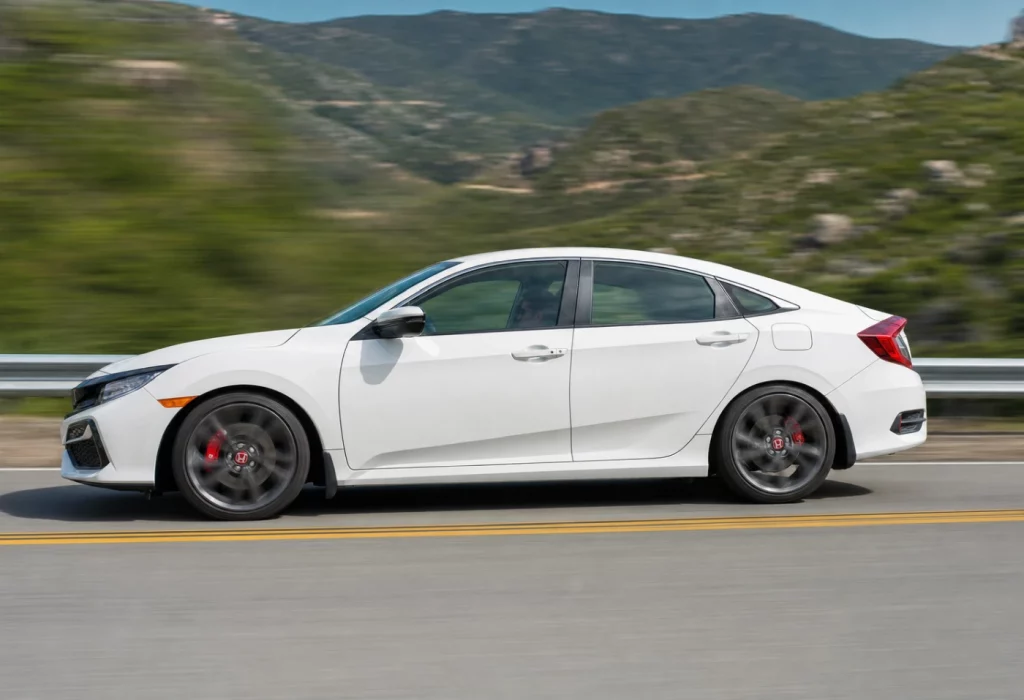
The 10th and 11th generation Civic engine bay is compact and runs hot. The Turbocharger sits close to the intake tract, the radiator fan blows hot air directly across the engine bay at idle and low speed, and the downpipe radiates heat into every surrounding component. How an intake manages engine bay heat — through enclosure, air source location, materials, and shielding — determines real-world IAT performance.
This article covers the three intake categories on the Civic platform — fully enclosed airboxes, open-element intakes with heat shields, and short ram intakes (SRI) — with actual IAT data from owner datalogs, manufacturer testing, and forum-compared results.
Fully Enclosed Cold Air Intakes
A fully enclosed cold air intake uses a sealed airbox that draws air from outside the engine bay, typically from the front grille area or the inner Fender. The filter is enclosed inside a plastic, composite, or metal box that isolates it from under-hood radiant heat. The defining characteristic is that the air filter location is physically separated from the engine bay environment.
The best-known example on the 10th gen Civic platform is the PRL Cobra Cold Air Intake. It routes the filter down into the passenger-side front fender, well away from engine heat. The intake pipe passes through the engine bay but the filter and MAF housing sit behind the fender liner, drawing air from the cavity between the fender and the front bumper skin.
Owner IAT datalogs consistently show the PRL Cobra producing MAF IAT (IAT1 on KTuner, IAT2 on Hondata) readings within 4-10 degrees Fahrenheit of ambient when the car is moving. On a 90-degree day at highway speeds, a PRL Cobra-equipped Civic Si typically sees IAT1 in the 94-100 degree range. At idle in traffic, temperatures rise as the fender cavity heat-soaks, but they recover rapidly once the car starts moving. One CivicX owner reported 4-6 degrees above ambient after 30 minutes of highway driving — the best IAT performance of any intake in their testing.
On the FK8/FL5 Civic Type R platform, the PRL High Volume Intake (HVI) uses a sealed airbox with a duct that routes to the front grille. The airbox bolts to the factory intake mounting points and uses the factory sealing surfaces. Testing by TSP and PRL showed the ducted/sealed design producing approximately 22 more wheel horsepower than the same intake without the duct on a dyno — not because the duct adds flow, but because it feeds cooler air that the turbo compresses more efficiently. IAT data from the FL5 platform shows the PRL HVI staying within 5-10 degrees Fahrenheit of ambient even in stop-and-go traffic, according to SBX Performance’s testing compilation.
27WON’s Hybrid Cold Air Intake for the 10th gen Civic uses a semi-enclosed airbox with a large lower inlet that draws air from the inner fender, similar to the PRL Cobra’s approach. The filter sits high inside the box for hydro-lock protection while the opening at the bottom pulls air from the fender cavity. 27WON’s own dyno testing showed a 30-degree Fahrenheit IAT reduction compared to the stock intake at the MAF sensor. Owner datalogs on CivicX report IAT1 typically running 10-20 degrees above ambient, with some users seeing as little as 10 degrees on highway cruises. The 27WON box does not fully seal against the Hood, so some engine bay air can enter from the top, which explains slightly higher IATs than the fully sealed PRL Cobra in some conditions.
Open-Element Intakes (Short Ram Intakes)
Open-element intakes, commonly called short ram intakes (SRI), replace the factory airbox with an exposed cone filter mounted directly on the intake pipe inside the engine bay. Some include a small heat shield that sits between the filter and the engine block or turbo, but the filter is still exposed to under-hood air.
The Mishimoto intake is the most common example on the 10th gen Civic. It uses a metal airbox with an open design that does not seal against the hood, and the filter is visible from above. In a CivicX comparison test, the Mishimoto intake showed IAT2 running approximately 14 degrees Fahrenheit above ambient AT steady 75 mph cruise — warmer than both the stock airbox (10-12 degrees above ambient) and the PRL Cobra (4-8 degrees above ambient) in the same test conditions. At idle after a hard drive, the metal box heat-soaked quickly because the aluminum construction conducts engine bay heat directly to the filter area. Owners report IAT1 climbing 40-50 degrees above ambient during stopped or low-speed driving on hot days.
The 27WON Cold Air Intake for the 10th gen Civic blurs the line between enclosed and open. Its airbox is enclosed on the bottom and sides but has holes in the top cover for secondary airflow and hydro-lock protection. Some owners describe it as a “hybrid” design. In practice, the 27WON behaves more like a cold air intake than a SRI because the primary air source is the lower fender opening, but the open top allows some engine bay air mixing. IAT performance is better than the Mishimoto but not as consistently low as the PRL Cobra.
The AEM (or Injen) cold air intakes use a long pipe that routes the filter down into the lower fender area, similar to the PRL Cobra approach, though without a sealed airbox. The filter is exposed inside the fender cavity but is still outside the engine bay. These intakes typically show IATs within 15-20 degrees of ambient at speed.
Box vs Open Element Comparison Data
The most useful comparison comes from CivicX forum testing where one owner tested three intake configurations on the same car, same road, same 75 mph cruise setting at approximately 90-95 degrees ambient temperature:
| Intake | Type | IAT2 at 75 mph Cruise | Degrees Over Ambient |
|---|---|---|---|
| PRL Cobra CAI | Fully enclosed, fender-fed | 94-99°F | 4-8°F above ambient |
| Stock airbox + PRL hose + Green filter | Factory enclosed box | 100-102°F | 10-12°F above ambient |
| Mishimoto intake | Open metal box, engine bay-fed | 104-105°F | 14°F above ambient |
Additional owner-reported data from separate testing:
| Intake | IAT1 at Cruise (Above Ambient) | IAT1 at Idle (Above Ambient) | Recovery Time After Idle |
|---|---|---|---|
| PRL Cobra CAI (Street MAF) | +4 to +10°F | +20 to +30°F | ~30 seconds driving |
| 27WON Hybrid CAI | +10 to +20°F | +30 to +40°F | ~45-60 seconds driving |
| Stock airbox (drop-in filter) | +10 to +15°F | +30 to +50°F | ~60 seconds driving |
| Mishimoto SRI | +14 to +25°F | +40 to +60°F | ~90+ seconds driving |
| PRL SRI (open filter, no CAI pipe) | +25 to +40°F | +50 to +70°F | ~120+ seconds driving |
One CivicX owner who converted from PRL SRI to PRL Cobra CAI reported IAT1 dropping by 20-30 degrees on average after the conversion, with highway IAT1 dropping to just 4-6 degrees above ambient. The SRI configuration had consistently shown 30-40 degrees above ambient at the same speeds.
How Heat Shielding Affects IAT at Each Driving Condition
Driving condition matters more for intake temperature comparisons than static peak numbers. Three patterns are repeatable across owner datalogs:
Cruising at speed (45+ mph): At speed, airflow through the engine bay carries away radiant heat from the turbo and exhaust. The difference between a well-shielded CAI and a SRI narrows to 10-20 degrees. The PRL Cobra and stock airbox produce similar IATs at highway cruise. The turbocharger heats intake air far more than the intake itself does at this condition — post-intercooler IAT (IAT2) is the critical number, and the intercooler has enough airflow to do its job.
Stop-and-go traffic: This is where intake location matters most. A SRI with no heat shield sees IAT1 climb 50-70 degrees above ambient within 2-3 minutes of idle after a drive. The PRL Cobra, with the filter in the fender, typically rises only 20-30 degrees above ambient in the same period. The difference is the fender cavity is cooler than the engine bay and recovers faster once the car moves.
WOT pulls (back-to-back): On consecutive full-throttle pulls, the intercooler becomes the limiting factor, not the intake. IAT2 climbs with each pull regardless of intake type because the intercooler heat-soaks. The intake IAT1 stays relatively stable during a pull because the turbo is drawing air faster than heat can transfer to it. The PRL Cobra’s advantage on back-to-back pulls is that IAT1 recovers to near-ambient faster between pulls, which slightly reduces the temperature rise entering the turbo on the next pull.
DIY Heat Shielding — Gold Tape, Turbo Blankets, and Wrap
Owners who already have an open-element or partially exposed intake can reduce IAT through aftermarket heat shielding. The most tested methods are DEI Reflect-a-Gold tape, turbo blankets, and intake pipe wrapping.
DEI Reflect-a-Gold is a heat-reflective adhesive tape with a gold-colored outer layer. It reflects radiant heat rather than absorbing it. Owners have applied it to the underside of the stock intake box, to aftermarket metal intake housings (Mishimoto), to the turbo inlet pipe, and to charge pipes. Testing by one owner on a 2017 Civic Si at 75 mph cruise showed a 2-degree Fahrenheit reduction in IAT1 and a 1-degree reduction in IAT2 after applying Reflect-a-Gold to the intake box and turbo inlet pipe — a modest improvement consistent with the theoretical benefit of reflective shielding. Another owner reported that after wrapping the Mishimoto intake box (inside and outside) plus the MAF housing hose, their heat-soak recovery time improved but peak IATs decreased only marginally.
Turbo blankets have a larger effect on under-hood temperatures. A PTP Turbo Blanket wraps the turbo housing in a calcium-magnesium-silicate wool layer that keeps exhaust heat inside the turbo rather than radiating into the engine bay. One FK8 owner tested a turbo blanket plus gold tape on the turbo inlet pipe and reported MAF IAT dropping approximately 15 degrees Fahrenheit at idle stops compared to pre-blanket baselines, with the intake manifold temperature matching the MAF IAT rather than running 10 degrees hotter. The blanket also reduced spool time slightly because exhaust energy stayed in the turbine housing rather than escaping as radiant heat.
Wrapping the turbo inlet pipe (TIP) with DEI tape has a separate benefit. One CivicX owner used an infrared thermometer on a wrapped vs. unwrapped turbo inlet pipe and measured the wrapped pipe nearly 100 degrees Fahrenheit cooler on the surface than an unwrapped plastic pipe, which translates to less radiant heating of nearby intake components and slower heat transfer into the intake air through the pipe walls.
The consensus from forum testing is that passive heat shielding — tape, blankets, wrap — produces real but small IAT improvements, typically 2-10 degrees depending on driving conditions. The largest gains come from turbo blankets because they address the primary heat source in the engine bay. Gold tape and pipe wrap are worthwhile during an install when parts are off the car but should not be expected to transform a SRI into a CAI.
Open Element vs Box — The Intercooler Factor
A common counterargument to intake IAT concerns on turbo cars is that the intercooler handles intake temperature. This is partially true but misses an important detail.
The intercooler’s job is to cool compressed air from the turbo. If the turbo inlet air is 30 degrees hotter because of a SRI, the turbo outlet air is also 30 degrees hotter at the same boost pressure. The intercooler has a fixed cooling capacity based on airflow, core size, and pressure drop. A 30-degree-higher inlet temperature means the intercooler must work harder to reach the same charge air temperature. At highway speeds with good airflow, the intercooler can compensate. In stop-and-go traffic or on back-to-back pulls, the intercooler heat-soaks and the intake IAT advantage becomes visible at the manifold.
27WON’s own FL5 testing showed that an open-element intake without a shroud (true SRI) consistently produced intake air temperatures 10-15 degrees hotter than a shrouded design once the car warmed up, and significantly hotter in stop-and-go traffic. The aftermarket intercooler could scrub some of that, but the intercooler’s recovery time between pulls was slower when starting from a higher baseline temperature.
For a daily-driven Civic that sees traffic and occasional pulls, an enclosed cold air intake provides a measurable IAT advantage. For a track car where the intercooler is always at speed, the intake choice makes less difference on lap times, though heat management between sessions still favors a cool-air source.
Cost vs IAT Performance by Intake Type
| Intake | Price | Type | IAT Performance at Cruise | IAT at Idle/Stop-and-Go | Tune Required? |
|---|---|---|---|---|---|
| PRL Cobra CAI (Street MAF) | $399 | Fully enclosed, fender CAI | Best — +4 to +10°F above ambient | Good — +20 to +30°F above ambient | No (Street MAF) |
| PRL Cobra CAI (Race MAF) | $399 | Fully enclosed, fender CAI | Best — +4 to +10°F above ambient | Good — +20 to +30°F above ambient | Yes |
| 27WON Hybrid CAI | $329 | Semi-enclosed box, fender-fed | Very good — +10 to +20°F above ambient | Moderate — +30 to +40°F above ambient | No (Street MAF) |
| Stock intake (drop-in filter) | $40-80 | Factory enclosed box | Good — +10 to +15°F above ambient | Moderate — +30 to +50°F above ambient | No |
| Mishimoto SRI | $299 | Open metal box | Moderate — +14 to +25°F above ambient | Poor — +40 to +60°F above ambient | No |
| AEM/Injen CAI | $250-350 | Open filter in fender | Good — +10 to +20°F above ambient | Moderate — +30 to +45°F above ambient | No |
| Generic SRI (open cone filter) | $80-150 | Open filter in engine bay | Poor — +25 to +40°F above ambient | Poor — +50 to +70°F above ambient | No |
Which Intake Design Makes Sense for Your Use Case
Daily driver with occasional pulls: The PRL Cobra CAI or 27WON Hybrid CAI provides the best IAT management in the real-world conditions that matter — stop-and-go traffic leading to highway driving. The fender-fed cold air design recovers quickly after idle and keeps IATs low when the car is moving. The 27WON is louder and slightly less effective at IAT control but costs less and requires no tune with the Street MAF option.
Tuned car targeting maximum consistent power: The PRL Cobra with Race MAF is the proven choice. The sealed fender location provides the most consistent IATs across all driving conditions, which means the tune stays stable. Hondata’s own dyno testing showed the PRL Cobra producing 278 whp (Street MAF) and 281 whp (Race MAF) on an otherwise stock 2017 Civic Si running an OTS ethanol tune — a 16-19 whp gain over the stock intake.
Budget build or sound-focused: A drop-in performance filter (K&N, aFe, Green) in the stock airbox retains good IAT performance (10-15 degrees above ambient at cruise) while adding induction noise and costing under $80. For maximum sound at the expense of IATs, a generic SRI is the cheapest option but the owner should expect IAT1 to run 30-50 degrees above ambient in most conditions and accept the resulting timing pull and power loss.
Drag or track car: IAT management is primarily an intercooler question at the track. The intake matters less during a single pass because airflow is high. For a car that sits in a hot staging lane, a fender-fed CAI with a sealed airbox will have lower heat-soaked IATs when the car finally moves, which gives the intercooler a lower starting temperature for the first pull.
☐ Intake IAT directly affects power — every 10°F increase costs roughly 1% power on average
☐ Fully enclosed CAI (filter in fender or sealed box fed from grille) produces the lowest IATs — 4-10°F over ambient at cruise
☐ Open element SRI intakes in the engine bay produce IATs 25-50°F above ambient at cruise, worse in traffic
☐ Stop-and-go traffic is where intake type matters most — fender-fed designs recover faster than engine bay intakes
☐ The intercooler can partially compensate for higher intake temps but heat-soaks faster with a hotter starting baseline
☐ PRL Cobra CAI is the most tested option on the 10th gen — Street MAF requires no tune, Race MAF adds ~3 whp with tuning
☐ 27WON Hybrid CAI offers a good balance of sound, IAT control (~10-20°F over ambient), and price ($329)
☐ Mishimoto metal box intake posts IATs ~14°F over ambient at cruise (worse than stock airbox with drop-in filter)
☐ DIY heat shielding (DEI Reflect-a-Gold, turbo blanket) produces small but measurable IAT improvements — 2-15°F depending on application
☐ Turbo blankets address the primary under-hood heat source and have the largest effect on heat-soak recovery
☐ Drop-in filter in the stock airbox is the best budget option — retains factory IAT control with more sound
☐ A stock airbox tune baseline vs CAI tune baseline produces different fuel and timing maps — retune recommended if switching intake types