

The Acura Integra Type S (DE5) and Honda Civic Type R (FL5) are the only two front-wheel-drive, manual-transmission hot hatches left on sale in America. They share the same platform, the same engine, and the same six-speed gearbox. Yet they could not be more different in how they are priced, how they are sold, and how the market treats them. This is the story of a $7,000 premium that sometimes becomes a $15,000 discount — and what that means for buyers today.
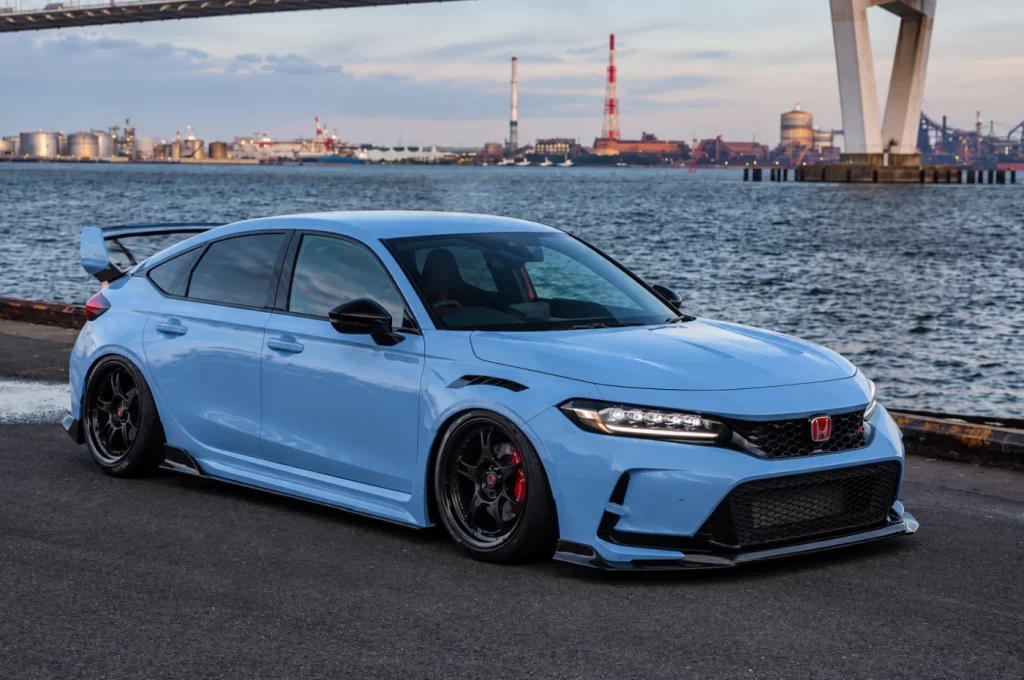
This guide covers the real-world price gap between these two cars, the markup chaos that has defined the Type R’s market, the recall that affects both, and everything you need to know before buying either one used.
The Civic Type R (FL5) has an MSRP of approximately $48,090 and is often marked up by dealers, sometimes by $10,000 or more. The Integra Type S (DE5) has an MSRP of approximately $55,195 but is frequently discounted below MSRP, sometimes by $1,500 or more. Both cars share the same K20C1 engine, 6-speed manual, and FWD layout. The Integra offers more comfort and luxury features; the Civic offers more hardcore track focus and better value at MSRP. Both are subject to the same steering gearbox recall (NHTSA 24V-744). For used buyers, prioritize stock examples with completed recalls and verify cooling system condition if track-driven.
The Price Gap — MSRP vs Reality
On paper, the Acura Integra Type S is the more expensive car. The 2026 Civic Type R starts at $46,895, with destination charges bringing it to $48,090. The 2026 Integra Type S starts at $53,400 (MSRP before destination), and when comparably equipped, the gap is approximately $6,605.
But paper is not reality. The Civic Type R has been subject to dealer markups since its launch — sometimes $10,000, sometimes $15,000, sometimes more. The Integra Type S, by contrast, has frequently been discounted below MSRP. One forum member reported getting $1,500 off MSRP on a new Integra Type S.
This creates an inverted market. The cheaper car can end up costing more. The more expensive car can end up being the better deal. That is the central irony of this comparison.
| Specification | Civic Type R (FL5) | Integra Type S (DE5) |
|---|---|---|
| 2026 MSRP (with destination) | $48,090 | ~$55,195 |
| Typical dealer markup | $5,000–$15,000+ | Often below MSRP |
| Real-world transaction price | $50,000–$65,000+ | $52,000–$55,000 |
| Engine | K20C1 2.0L turbo I4 | K20C1 2.0L turbo I4 |
| Horsepower | 315 hp | 320 hp |
| Torque | 310 lb-ft | 310 lb-ft |
| Transmission | 6-speed manual | 6-speed manual |
| Drivetrain | Front-wheel drive | Front-wheel drive |
| Curb weight | ~3,183 lb | ~3,219 lb |
| 0-60 mph | ~5.5 seconds | ~5.7 seconds |
Why the Civic Type R Gets Marked Up
The Civic Type R’s markup problem is a function of supply and demand. Honda allocates limited numbers to dealers, and demand far exceeds supply. Dealers know they can charge more, and many do.
The markup takes different forms. Some dealers add a flat “Market Adjustment” of $10,000 or more. Others bundle high-margin add-ons — paint protection, VIN etching, nitrogen-filled tires — and mandate them as part of the sale. The result is that a car with a $48,090 sticker can easily exceed $60,000 out the door.
One owner reported financing a Civic Type R for $20,000 above MSRP, bringing the total to $67,000. Commenters on the story noted that $10,000 to $15,000 markups are common in California.
This is not universal. Some dealers sell AT MSRP, particularly to local customers with service history. But finding those dealers requires patience and legwork.
Why the Integra Type S Gets Discounted
The Integra Type S faces the opposite problem. Acura produces more of them relative to demand, and the Acura brand does not carry the same enthusiast cult following as the Type R badge. The result is that dealers are more willing to negotiate.
Motor1’s review of the Integra Type S noted that “Type Rs continue to be marked up and difficult to find at MSRP, while Integra Type S’ trade below MSRP”. This creates a strange situation where the more luxurious, more expensive car is often the cheaper one to buy in practice.
The Integra Type S’s higher MSRP also means there is more margin for dealers to work with. A $1,500 discount on a $55,000 car is easier to absorb than a $1,500 discount on a $48,000 car that is already in short supply.
The $6,605 Question — What the Premium Actually Buys
If you compare the two cars at MSRP, the Integra Type S costs approximately $6,605 more than the Civic Type R. What does that money buy?
Comfort and Refinement: The Integra Type S has a softer suspension tune than the Civic Type R. The adaptive dampers are the same hardware, but Acura calibrated them for more compliance on rough roads and long highway stints. The result is a car that is noticeably more composed on broken pavement and more relaxing to drive over distance.
Interior and Features: The Integra Type S adds heated seats with power adjustment, a head-up display, a 16-speaker ELS Studio 3D audio system (versus the Civic’s 12-speaker Bose), parking sensors, and a USB-C port. The interior materials are also upgraded — the Integra uses Ultrasuede and leather with Type S embossing, while the Civic uses red-and-black suede-effect cloth.
Extended Warranty: Acura includes an extended warranty and one year of complimentary maintenance with the Integra Type S. For buyers planning to keep the car long-term, this is a genuine financial benefit.
What It Doesn’t Buy: The Integra Type S does not buy you more performance. The 5-horsepower bump (320 vs 315) is invisible in daily driving, and the Integra is actually slightly slower to 60 mph due to its extra 31 pounds of weight. The Integra also loses some of the Civic’s track-focused features: the functional gauge cluster readouts for Coolant, intake air, oil pressure, and boost, the shift lights, and the LogR telemetry system.
- Softer, more compliant suspension
- Heated power seats
- Head-up display
- 16-speaker ELS audio
- Parking sensors
- Extended warranty
- More interior color options
- Track-focused gauge cluster
- Shift lights
- LogR telemetry system
- Firmer, more aggressive damping
- Lighter weight (31 lb less)
- Lower MSRP
- Higher resale value
The Steering Gearbox Recall — Affects Both Cars
Both the Civic Type R and Integra Type S are subject to the same critical recall: NHTSA 24V-744, issued in October 2024. The recall affects approximately 1.7 million Honda and Acura vehicles, including the 2023–2025 Civic Type R and 2024–2025 Integra Type S.
The Problem: The steering gearbox worm wheel can expand when exposed to heat and moisture, reducing grease between the worm wheel and worm gear. Combined with excessive spring preload, this can cause increased friction, resulting in Sticky Steering, abnormal noise, or significantly increased steering effort.
The Risk: NHTSA has received reports of 13 crashes related to the issue. Honda has received more than 10,000 warranty claims.
The Fix: Dealers will replace the worm gear spring and redistribute or add grease as necessary, free of charge. Revised steering gearboxes were introduced in models produced after August 30, 2024.
What This Means for Buyers: Before purchasing either car, verify the recall has been completed. Check the VIN through NHTSA or Honda’s official recall portal. This is non-negotiable — the steering issue is a safety concern, not a minor inconvenience.
Track Readiness — FL5 vs DE5
Both cars share the same K20C1 engine, but their track-focused calibrations differ.
Civic Type R (FL5): The FL5 is the more track-focused of the two. It has a stiffer chassis (+15% torsional rigidity versus the FK8), a 48% larger air intake for improved cooling, and a more aggressive suspension tune. It holds the front-wheel-drive production car record at the Nürburgring with a time of 7:44.881. The FL5 also includes the LogR telemetry system, which records detailed track data for later analysis.
Integra Type S (DE5): The Integra Type S is track-capable but tuned for the road. The softer suspension makes it more comfortable on rough surfaces, but it gives up some of the Civic’s razor-sharp edge. It does not include the LogR telemetry system or the track-focused gauge readouts. For occasional track days, it is more than adequate. For serious track use, the Civic is the better choice.
Used Market — Which One Holds Value Better?
The Civic Type R holds its value exceptionally well. Used examples with average mileage still command close to MSRP, and low-mileage, stock examples can sell for more than original MSRP. This is a car that depreciates slowly, especially in unmodified condition.
The Integra Type S depreciates more like a typical luxury car. The first-year depreciation is steeper, and used examples trade below MSRP more frequently. For used buyers, this means the Integra Type S can offer better value — you get a nearly new car at a more significant discount.
| Used Market Factor | Civic Type R (FL5) | Integra Type S (DE5) |
|---|---|---|
| Depreciation (first 3 years) | Minimal | Moderate |
| Used price vs MSRP | Often at or above | Often below |
| Availability | Limited | More plentiful |
| Markup on used market | Common | Rare |
Pre-Purchase Inspection Checklist
Before buying either car used, run through this checklist.
Recalls & Software:
- Verify steering gearbox recall (24V-744) completion
- Verify Fuel Pump Recall completion
- Check for any other open recalls via VIN
Test Drive:
- Steering feel at highway speeds — check for stickiness or abnormal noise
- Transmission — test 1st-to-2nd, 2nd-to-3rd shifts under hard acceleration
- Clutch — check engagement point and slip under load
- Adaptive dampers — test Comfort, Sport, and +R modes
- Brakes — check for vibration or excessive wear
- Cooling system — monitor temperature gauge during hard driving
Visual Inspection:
- Cooling system — check radiator, intercooler, and oil cooler condition
- Brake rotors — check for cracking or heat checking (especially if track-driven)
- Tires — verify even wear and remaining tread
- Wheels — check for curb rash or damage
- Interior — check seat wear, especially driver’s bolster
- Underbody — check for scrapes or damage
Modification History:
- Check for aftermarket cooling components
- Check for ECU tuning (Hondata, KTuner)
- Check for aftermarket intake, downpipe, or exhaust
- Verify all modifications were professionally installed
Final Thought
The DE5 Integra Type S and FL5 Civic Type R are the last of their kind — the only front-wheel-drive, manual-transmission hot hatches left on sale in America. They share the same bones, but they serve different buyers.
The Civic Type R is the purist’s choice. It is sharper, lighter, more track-focused, and holds its value better. But finding one at MSRP requires patience, and many dealers will try to extract thousands in markup.
The Integra Type S is the mature choice. It is more comfortable, better equipped, and easier to live with daily. It is also more likely to be discounted, which can make it the better financial decision despite the higher sticker price.
If you want the sharper car and can find a dealer selling at MSRP, buy the Civic Type R. If you want the more comfortable car and can negotiate a discount, buy the Integra Type S. Either way, verify the steering recall has been completed before you sign anything.
FAQ — DE5 Integra Type S vs FL5 Civic Type R
Which is more expensive, the Civic Type R or Integra Type S?
At MSRP, the Integra Type S is more expensive — approximately $55,195 versus $48,090 for the Civic Type R. However, dealer markups on the Civic Type R often push its real-world price above the Integra Type S, which is frequently discounted.
Why is the Civic Type R marked up?
Limited supply and high demand. Honda allocates few Type Rs to dealers, and enthusiast demand far exceeds availability. Dealers respond by adding market adjustments or mandatory add-ons, sometimes $10,000 or more.
Why is the Integra Type S discounted?
The Integra Type S has more supply relative to demand and does not carry the same enthusiast cult following as the Type R badge. Dealers are more willing to negotiate, and discounts below MSRP are common.
What does the Integra Type S premium actually buy?
The $6,605 premium buys a softer suspension tune, heated power seats, a head-up display, a 16-speaker ELS audio system, parking sensors, an extended warranty, and more interior color options. It does not buy more performance — the 5-HP bump is invisible in real driving.
What is the steering gearbox recall?
NHTSA 24V-744 affects approximately 1.7 million Honda and Acura vehicles, including both the Civic Type R and Integra Type S. The steering gearbox worm wheel can expand, causing sticky steering or increased steering effort. Dealers will replace the worm gear spring and add grease free of charge.
Which car is better for track use?
The Civic Type R is the more track-focused car. It has a stiffer chassis, more aggressive suspension tuning, functional gauge readouts for track data, and the LogR telemetry system. The Integra Type S is capable on track but tuned for road comfort.
Which car holds its value better?
The Civic Type R holds its value significantly better. Used examples often sell at or above MSRP. The Integra Type S depreciates more like a typical luxury car.
Do both cars have the same engine?
Yes — both use the K20C1 2.0-liter turbocharged four-cylinder. The Integra Type S is tuned for 320 horsepower versus the Civic Type R’s 315 horsepower, but the difference is negligible in real driving.
Should I buy a used Civic Type R or Integra Type S?
Buy the Civic Type R if you want the sharper, more track-focused car and can find one at a reasonable price. Buy the Integra Type S if you want more comfort and luxury features and can negotiate a discount. Both are excellent — the choice depends on your priorities.
What should I check before buying either car used?
Verify the steering gearbox recall (24V-744) has been completed. Test drive thoroughly for steering stickiness, transmission grinding, and clutch slip. Check cooling system condition if the car has been track-driven. Verify service history and check for evidence of aggressive modifications.