

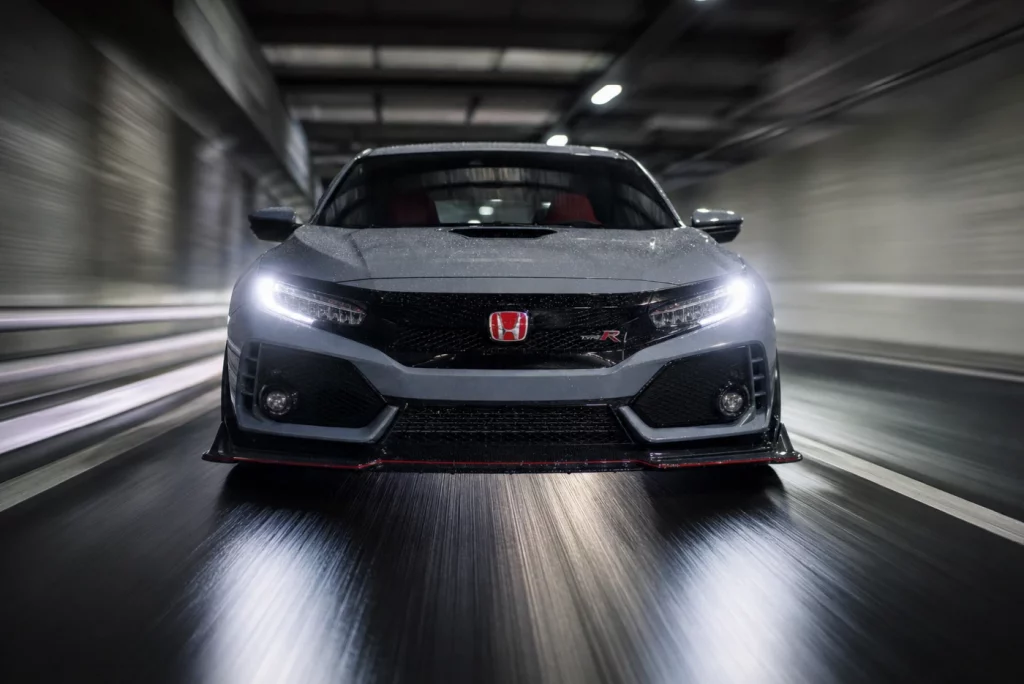
The FK8 Civic Type R has one of the most praised electric power steering systems Honda has ever put in a production car. At launch, the rack is precise, communicative, and direct — the kind of steering that makes the FK8 feel genuinely connected to the road. That reputation makes it more jarring when owners start noticing a front-end clunk over a parking lot speed bump, a sloppy on-center feel that wasn’t there before, or steering that resists returning to center after a slow-speed turn. These symptoms are documented in the FK8 community. But not every clunk is a steering rack, and not every Steering Rack noise requires a $6,500 replacement. This article covers how to distinguish steering rack issues from other front-end noise sources, what to inspect before committing to a repair, and what the actual repair involves.
Is That Really the Steering Rack?
If you hear a clunk, click, knock, or dull thud when turning the wheel or going over bumps, that does not automatically mean the steering rack is bad. On the FK8, similar sounds can come from:
- Steering rack itself
- Inner tie rods
- Outer tie rods
- Ball joints
- Strut mounts
- Sway-bar end links
- CV joints
- Rack mounting hardware
- Steering column / intermediate shaft
This is the central diagnostic challenge of the FK8 steering system. The same clunk can be produced by different components, and misdiagnosis is common.
The FK8 Symptom Map
| Symptom | First Things to Investigate |
|---|---|
| Clunk while rapidly moving wheel left/right | Rack / tie rods / steering linkage |
| Noise only over bumps while turning | Rack + suspension components |
| Play felt at one wheel | Tie rod / ball joint / rack |
| Clicking at full lock | CV joint / brake debris / other front-end components |
| Noise while stationary | Steering linkage / rack / strut mount |
| Noise only after suspension modification | Alignment / sway-bar / strut hardware |
| Steering actually feels loose | Higher-priority steering inspection |
The Stationary Steering-Wheel Test
This is one of the most useful diagnostic tests you can perform without lifting the car. With the engine running and the car stationary, move the steering wheel left and right in small movements. Listen for clunk, knock, or click. But there is an important warning: do not diagnose the rack from the driver’s seat alone. The sound can transmit through the Subframe and body. Have someone listen near the front wheels while you turn the wheel.
Noise vs Actual Steering Play
These are two different things and should be treated differently:
- Noise: The steering feels normal, but there is a clunk or clack. This can be from many sources.
- Play: There is real free movement — steering wheel to steering rack to Tie Rod to wheel — and part of that movement is lost. This is a much more serious symptom.
On CivicX, owners described situations where measurable play was found, but in other cases, the suspected “rack” turned out to be a Ball Joint or another component. Actual play requires immediate investigation.
Why the FK8 Can Fool You
The FK8 has a very stiff suspension and high steering sensitivity. Small amounts of play, impacts, or load changes are felt much more strongly than on a standard Civic. This does not mean every small issue is a rack problem. The sensitivity of the system amplifies symptoms, making diagnosis more challenging.
The Most Important Test: Watch the Tie Rods
With the car safely on jack stands, have someone turn the steering wheel slightly while you watch the inner and outer tie rods. If the steering rack moves normally but the tie rod has separate play, the rack may be innocent. This is much better than immediately ordering a rack.
Inner vs Outer Tie Rod
- Outer tie rod: Connects the steering linkage to the steering Knuckle.
- Inner tie rod: Connects the rack to the Outer Tie Rod.
If play is found AT the outer joint, do not replace the rack. A worn outer tie rod is a simple, inexpensive repair.
Check the Ball Joint
This is an important counter-diagnosis. On CivicX, there is a documented case where a dealer initially indicated a steering rack needed replacement, but the owner found that the main problem was actually worn ball joints. After replacement, most of the issue disappeared. This is a real example worth including.
Check the Sway-Bar Links
This is especially important if the car is lowered, has aftermarket suspension, uses an aftermarket Sway Bar, or has been driven on poor roads. In one FK8 discussion, a clunk disappeared after adjusting the sway-bar end links. Modified FK8 = don’t blame the rack first.
Strut Mounts Can Sound Like a Rack
If noise occurs while turning and the suspension is loaded, check the upper mount, bearing, spring seating, and strut hardware. On CivicX, there are numerous cases where front-end clunks were initially assumed to be steering or rack problems but turned out to be strut mount issues.
Full-Lock Clicking Is a Different Problem
It is important to separate steering rack clunk from CV joint clicking. If the sound is a repeated clicking, proportional to wheel rotation, strongest near full lock, and comes from one front corner, a CV joint is more likely. In a recent FK8 discussion, CV joint and Wheel Bearing were among the first alternatives to steering rack diagnosis.
Rack Mounting Hardware
Check the rack mounting bolts and the condition of the rack housing and subframe mounting points. In one CivicX case, the clunk was related to the rack mounting — loose bolts had caused damage to the rack housing. This is a documented failure scenario, not a statement that FK8 rack bolts routinely loosen.
What Rack Play Actually Looks Like
On a lift: steering input → rack moves → tie rods move → knuckle moves. If some part of the mechanical movement is missing, there is lost motion somewhere in the steering system. The key is determining where exactly that lost motion is.
The “Have Someone Turn the Wheel” Test
This is a very useful DIY diagnostic: one person moves the steering wheel left and right, while a second person watches the steering components, and a third person listens near the suspected area. This reveals tie rod movement, rack movement, mount movement, and abnormal knock. Only perform this with the car safely supported.
Don’t Grab the Wheel and Shake It Randomly
Bad diagnostic technique: “I shook the wheel and it moves.” The wheel can have small allowable movement depending on suspension geometry. The goal is source isolation, not just detecting movement.
Rack Noise While Stationary
This is an interesting symptom: if there is a clunk with stationary, rapid steering input, but the steering feels normal on the road, possible causes include the rack, Inner Tie Rod, mounting, steering linkage, or suspension top mount. These stationary and low-speed noises are regularly discussed on CivicX.
Rack Noise Only Over Uneven Roads
In this scenario — turning plus a bump, with load changes through the suspension — do not limit the diagnosis to the steering rack. Check the strut, ball joint, tie rod, sway bar, and rack mount.
Steering Rack vs Strut Mount
| Behavior | Rack | Strut Mount |
|---|---|---|
| Small steering inputs stationary | Possible | Possible |
| Steering play | More suspicious | Less typical |
| Noise over bumps | Possible | Common possibility |
| Spring binding | No | Possible |
| Wheel-side play | Possible | Less direct |
| Noise changes with suspension load | Possible | Strong clue |
Steering Rack vs Tie Rod
| Symptom | Rack | Tie Rod |
|---|---|---|
| Clunk | Yes | Yes |
| Actual wheel play | Possible | Common |
| Steering looseness | Possible | Possible |
| Noise from one corner | Less specific | More suggestive |
| Easy visual inspection | Moderate | Easier |
Steering Rack vs CV Joint
| Symptom | Rack | CV Joint |
|---|---|---|
| Stationary steering | Possible | Usually no |
| Rapid left/right wheel movement | Possible | No |
| Repeated clicking while moving | Less typical | Strong clue |
| Full-lock acceleration | No | Strong clue |
| Steering play | Possible | Not typical |
Does FK8 Have a “Known Bad Rack”?
Don’t phrase it as a universal FK8 defect. There are documented owner reports of rack noise and play and rack replacement, but the available owner evidence does not justify saying that every FK8 develops a defective rack at a particular mileage. On Reddit in 2026, there is a recent example of an owner who reports having had their rack replaced three times due to gradually returning clunk and play. This is useful owner evidence, but it is an owner report, not a Honda technical finding.
The Rack Replacement Trap
This is a very strong block. If a dealer says “you need a steering rack,” ask:
- Where exactly is the play?
- Was it measured?
- Was the rack movement isolated?
- Were tie rods checked?
- Were ball joints checked?
- Were rack mounts checked?
- Was the vehicle inspected after suspension modifications?
These questions can save owners thousands of dollars.
Rack Replacement Is Not a Simple Bolt-On Repair
After rack replacement, calibration and alignment are required: steering angle and zero-point calibration, alignment, EPS-related initialization and programming depending on the repair procedure, and verification of steering center. On CivicX, owners directly discuss the need for programming after rack replacement. Rack replacement requires calibration, alignment, and road test.
Alignment After Rack Replacement
If the rack is replaced, steering wheel center and toe must be checked. Otherwise, the steering wheel will be off-center, there will be uneven tire wear, and altered handling will result.
Modified FK8s Need a Separate Diagnosis
Lowered FK8: Check end links, strut mounts, tie rods, alignment, and bump steer-related geometry. Aftermarket steering or suspension parts: Return to OEM configuration if diagnosis is unclear. This is especially important for the Type R because owners frequently modify the suspension.
Pothole Damage
After a hard pothole hit, do not immediately blame the rack. Check the wheel, tire, tie rod, ball joint, alignment, control arm, and rack mounting.
Is a Little Rack Noise Safe?
- Noise only: If steering remains precise and there is no measurable play, it is less urgent, but inspect if worsening.
- Noise + actual play: Higher priority.
- Noise + steering looseness or wandering: Stop treating it as cosmetic.
- Sudden change in steering behavior: Inspect immediately.
Warning Signs That Should End the Test Drive
If, when buying an FK8, there is steering wheel free play, wandering, sudden steering changes, obvious wheel-side play, repeated heavy clunk, or uneven steering response, do not buy the car without an independent inspection.
Used FK8 Steering Inspection
Before buying:
- Cold test — steering left and right
- Parking-lot test — slow full-lock turns
- Stationary test — small steering inputs
- Road test — straight-line tracking
- Uneven-road test — steering under suspension movement
- Lift inspection — tie rods, ball joints, rack, and mounts
What to Listen For
- “Clunk”: Mechanical play
- “Click-click-click”: CV or wheel-related possibility
- “Groan”: Suspension, strut, or bushing possibility
- “Knock”: Rack, tie rod, or mount possibilities
Sound alone is not a diagnosis.
What to Measure
Instead of asking “does it feel loose?” check steering free play, wheel play, tie-rod movement, rack movement, rack mount movement, alignment, and EPS fault codes if applicable.
EPS Fault Codes Change the Diagnosis
If there is a steering warning, EPS fault, abnormal steering assist, or steering that becomes heavy, this is no longer just a mechanical noise article. Scan and EPS diagnosis are required.
Don’t Confuse Sticky Steering With Rack Noise
Sticky Steering or steering effort issues and mechanical rack clunk or play are not the same thing. Do not mix different steering complaints just because both relate to the rack.
What If the Noise Comes Back After Rack Replacement?
This is an interesting section, especially with owner reports. If the new rack starts making noise again, do not automatically replace rack #2 with rack #3. Recheck mounting, tie rods, ball joints, suspension, alignment, modifications, and installation torque. Recent owner reports of multiple rack replacements show that recurring clunk and play do occur, but also highlight the need to understand why the symptom returns.
How Much Does a Rack Repair Cost?
- Diagnosis: Relatively cheap
- Tie rod or ball joint: Manageable
- Rack: Expensive
- Rack + calibration + alignment: Most expensive
Labor varies significantly by shop and location. The OEM rack assembly (part 53620-TGH-A10) lists at approximately $5,225, and total installed cost with labor and alignment runs over $6,500.
Repair or Walk Away?
- Minor clunk, no play: Inspect and negotiate.
- Confirmed tie rod: Usually manageable.
- Confirmed rack play: Price the repair before buying.
- Rack + suspension + alignment issues: Walk away unless heavily discounted.
My FK8 Steering Diagnostic Order
Noise → Stationary? → Check rack, tie rods, mounts. Only while moving? → Check CV, wheel, suspension. Actual play? → Locate source mechanically. Rack confirmed? → Check mounting and rack itself. Rack replaced? → Alignment, steering calibration, and road test.
The FK8 Rule
Don’t replace the rack because it sounds like the rack. This is the main takeaway of the entire article. Clunk is a symptom. Play is a finding. Rack failure is a diagnosis.
Quick Reference Checklist
Monitor steering feel in +R mode specifically — sloppy on-center that wasn’t there before is the earliest detectable sign
Any clunk over bumps under 20,000 miles is abnormal — rule out end links and subframe bolts before assuming rack involvement
Disconnect the outer tie rod from the knuckle to isolate rack noise from wheel-end and suspension noise
Check sway bar end links — a known FK8 weak point that produces low-speed clunking and is often mistaken for rack noise
Torque-check subframe bolts before any other diagnosis — loose subframe hardware produces a clunk that mimics rack noise
Sticky or binding steering that worsens in warm weather is the most serious symptom — do not delay dealer visit
Document symptoms with video before going to the dealer — record the steering wheel behavior and conditions
If the dealer can’t replicate on a cold car, return with documented evidence — thermal dependency means cold replication attempts frequently fail
Get to the dealer before 36,000 miles if symptoms appear — bumper-to-bumper warranty covers the rack; out-of-warranty replacement is $6,500+
Check your VIN at NHTSA.gov for open recalls — NHTSA recall RCRIT-18V663 covered 2017–2018 Civic steering gearbox issues
File an NHTSA complaint if you experience the issue — complaint volume influences investigation scope
If symptoms pre-dated 36,000 miles, contact Honda Customer Relations for a goodwill claim — documented pre-existing issues have been honored
OEM rack part number for 2017–2018 FK8: 53620-TGH-A10 — no aftermarket or remanufactured alternative exists
EPS calibration via Honda HDS is required after rack replacement — skipping this step produces incorrect assist levels
Aggressive wheel fitment (+38 offset) and track duty on sticky rubber accelerate rack wear dramatically — budget for earlier replacement
FAQ
Why does my FK8 Type R steering rack clunk?
The clunk can come from the rack itself, but also from tie rods, ball joints, strut mounts, sway-bar links, CV joints, or rack mounting hardware. Proper diagnosis is required before assuming the rack is the cause.
Is steering rack noise common on the FK8?
There are documented owner reports of rack noise and play, but it is not a universal failure. Some cars develop issues, others do not. Maintenance history, driving habits, and modifications all play a role.
How do I check steering rack play on a Civic Type R?
With the car safely supported, have someone turn the steering wheel while you watch the rack, tie rods, and ball joints. Measure free play and locate where the movement is lost.
Can bad tie rods sound like a steering rack?
Yes — worn inner or outer tie rods produce a clunk that can easily be mistaken for a rack problem. Always check tie rods before assuming the rack is bad.
Can a ball joint cause steering play?
Yes — worn ball joints produce play and noise that can mimic rack issues. A documented CivicX case showed a dealer initially suspecting the rack, but the issue was worn ball joints.
Why does my FK8 clunk when turning at low speed?
Possible causes include the rack, tie rods, sway-bar links, strut mounts, or CV joints. The stationary steering-wheel test and visual inspection are the first steps.
Why does my FK8 clunk when turning the steering wheel while stationary?
This can be the rack, inner tie rods, mounting, steering linkage, or suspension top mount. Have someone listen near the front wheels while you turn the wheel.
Is FK8 steering rack replacement covered by warranty?
The rack is covered under the 3-year / 36,000-mile bumper-to-bumper warranty. Owners who caught the issue before 36,000 miles received replacement under warranty. Outside warranty, the repair is owner-paid.
Does a new steering rack require calibration?
Yes — after rack replacement, a Steering Angle Sensor reset and EPS calibration through Honda’s diagnostic software are required. Skipping this results in incorrect assist levels.
Why did my steering rack noise return after replacement?
Recurring noise after rack replacement can be caused by mounting issues, tie rods, ball joints, suspension modifications, or installation problems. Do not automatically replace the rack again — diagnose the root cause.
How much does FK8 steering rack replacement cost?
The OEM rack assembly is approximately $5,225, and total installed cost with labor and alignment runs over $6,500. There is no aftermarket alternative.
Should I buy a used FK8 with steering rack noise?
Only if priced appropriately and you are prepared for the potential repair cost. A minor clunk with no play is less concerning than actual steering play or binding.