

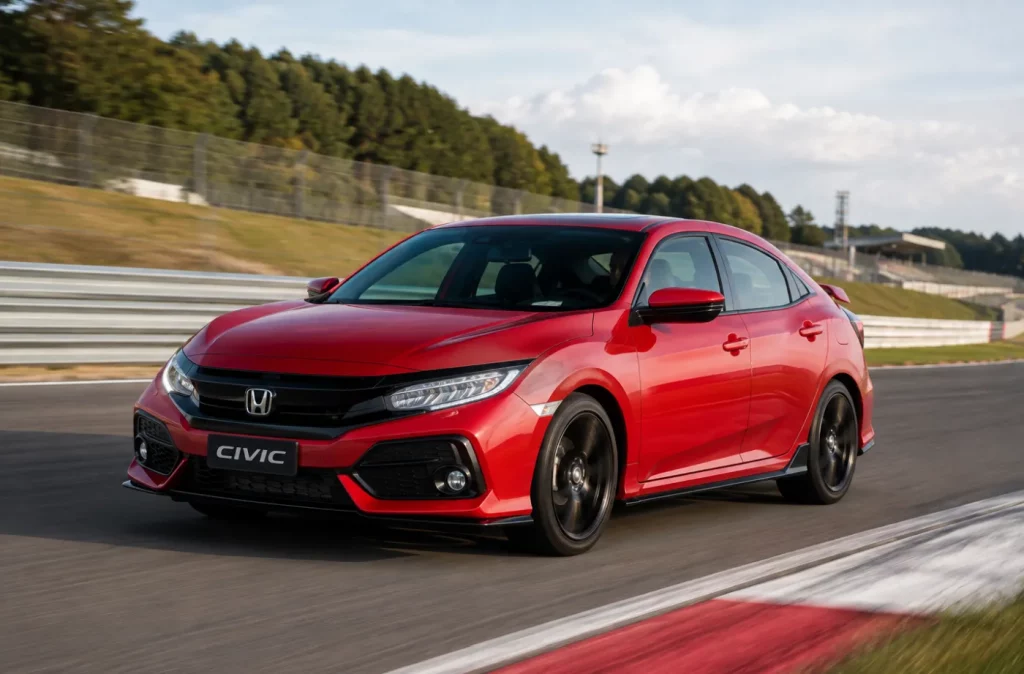
Your 6th Gen (EK/EM), 7th Gen (EM2/ES1), 8th Gen (FA5/FG2), 9th Gen (FB6/FG4), 10th Gen (FC1/FK7), or 11th Gen (FL1/FL5) Civic just threw a P0302 — and Cylinder 2 is experiencing a Misfire.
P0302 is the code for “Cylinder 2 Misfire Detected”. The ECU is indicating that Cylinder 2 is not firing properly. The Crankshaft position (CKP) sensor detected a reduction in RPM momentum following the Cylinder 2 spark event.
If the misfire is intermittent, the check engine light may remain steady. If it is a continuous misfire that is sending unburned fuel into the Catalytic Converter, the light may flash. Continued driving with a flashing CEL is not recommended — catalytic converter damage may occur.
Here is a garage-tested breakdown of what P0302 actually means on these cars, and how to repair it without unnecessary expense AT the dealership.
P0302 Breakdown: Understanding Cylinder 2 Misfire
P0302 (“Cylinder 2 Misfire Detected”) indicates that misfires are being recorded specifically on Cylinder 2.
Honda Cylinder Numbering: Honda counts cylinders 1-2-3-4 from left to right (passenger side/drive belt side to transmission side). Cylinder 2 is the second cylinder from the left — adjacent to Cylinder 1, near the serpentine belt.
The ECU monitors crankshaft speed variations through the crankshaft position sensor (CKP). Each cylinder firing produces a slight acceleration of the crankshaft. When Cylinder 2 fails to fire properly, the crank slows down more than expected, and the ECU stores P0302.
The Symptoms:
- Rough, unstable idle
- Hesitation and loss of power during acceleration
- Reduced performance when VTEC engages
- Fuel odor or sulfur smell from the exhaust
- Flashing check engine light — continued driving is not recommended
The Diagnostic Swap Test
Before replacing components, use the following diagnostic procedure to identify the cause.
Step 1: The Ignition Coil Swap Test.
Turn the engine OFF. Remove the plastic engine cover. Remove the ignition coil from Cylinder 2 (second from the passenger side). Swap it with the ignition coil from Cylinder 1 (adjacent).
Clear the codes with an OBD2 scanner, start the vehicle, and drive until the check engine light returns.
The Verdict:
- If the code changes to P0301 (Cylinder 1 Misfire): The ignition coil is faulty. Replace it.
- If the code remains P0302: The coil is likely functional. Proceed to Step 2.
Step 2: The Spark Plug Swap Test.
Remove the spark plug from Cylinder 2. Inspect the tip. Is it oil-fouled? Is the electrode gap excessive or damaged?
Swap the plug into Cylinder 4. Clear codes and drive.
The Verdict:
- If the code follows the plug to P0304: Replace the spark plug(s). Use NGK Laser Iridiums or equivalent quality plugs.
- If the code remains P0302: The issue may be mechanical (valve clearance) or fuel-related (injector).
Component Quality: Use OEM Denso, Hitachi, or NGK components. Aftermarket coils are known to cause recurring misfire issues.
Common Causes of P0302
1. Ignition Coil Failure.
Honda coil packs (factory Denso or Hitachi) can fail from age and heat cycles. Internal insulation may break down, causing spark to arc against the spark plug tube.
2. Tight Exhaust Valve Clearance.
Mechanical K-series (K20Z3, K24Z7) and R-series (R18) engines do not have hydraulic lifters. Over time, exhaust valve seats may wear, and valve clearance may decrease. When the engine warms up, valve stem expansion can prevent the exhaust valves from closing completely. This can cause compression loss in Cylinder 2, resulting in rough idle and a static P0302 code that may diminish when the engine is revved.
3. Oil Contamination from Spark Plug Tube Seals.
If the Valve Cover spark plug tube seals are leaking, Cylinder 2’s spark plug well may fill with engine oil. The oil can affect the ignition coil boot, preventing proper spark delivery.
4. Clogged or Leaking Fuel Injector (10th/11th Gen Direct Injection).
On direct-injected L15B7 and K20C1 engines, fuel injectors can become restricted or fail. Cylinder 2 running lean or rich can cause a misfire that does not respond to coil or plug swaps.
Generation-Specific Issues
8th & 9th Gen Base Models (R18A1 / R18Z1):
- If coils and plugs are functional but rough idle and P0302 occur on a cold start, a valve adjustment may be required.
- The exhaust valves on the R18 may tighten every 40k–50k miles, affecting compression on Cylinder 2.
- Specifications: Intake: 0.008–0.010 in (0.20–0.25 mm), Exhaust: 0.010–0.012 in (0.25–0.30 mm).
8th & 9th Gen Si (K20Z3 / K24Z7):
- On modified engines with aftermarket tuning, inspect the fuel injector on Cylinder 2 — it may be restricted.
- Also inspect the VTEC solenoid screen — a restricted screen can affect oil pressure and contribute to misfires.
10th & 11th Gen 1.5T (L15B7 / Direct Injection):
- ⚠️ TSB A19-033 (2016–2018 1.5T). Before replacing components, check with a Honda dealer regarding Technical Service Bulletin A19-033, which addresses P0302, P0301, P0303, P0304, and P0172 on 2016–2018 Civics with the 1.5T. The fix may be a PGM-FI and TCM software update, which may be covered.
- Fuel Injector Failure. If the TSB does not apply, the cause may be a leaking fuel injector on Cylinder 2. A fuel odor on the dipstick is a common indicator. Replacement of all four injectors with updated OEM part 16010-59B-315 and the fuel joint pipe is recommended. When one injector fails on the 1.5T, replacing all four as a set is recommended.
- P0302 + P0172 (System Too Rich). If both codes are present, Fuel Injector failure or fuel dilution may be the cause.
- Carbon Buildup. Direct-injected engines may experience carbon buildup on the intake valves. A walnut blasting service may be required by 80k miles.
- The Head Gasket Consideration. A persistent cold-start P0302 accompanied by coolant loss may indicate a head gasket issue. Check the Coolant level and inspect for white smoke on startup.
- LSPI Warning. A static Cylinder 2 misfire under boost may indicate a bent connecting rod or cracked piston ring land due to LSPI (Low-Speed Pre-Ignition).
10th & 11th Gen Type R (K20C1, FL5):
- If running high boost with an aftermarket tune, a misfire on Cylinder 2 may cause the ECU to reduce boost targets and adjust timing.
- Inspect the fuel injector on Cylinder 2 — high-pressure injectors can fail under heavy load.
Parts, Cost Breakdown & US Sourcing
| Part | Fits | OEM Part Number | Online Cost | Dealer Cost |
|---|---|---|---|---|
| Ignition Coil (Hitachi) | 8th/9th Gen K-series | 30520-R40-007 (Hitachi IGC0071) | $35–$55 | $80–$120 |
| Ignition Coil (Denso) | 10th Gen L15B7 1.5T | 30520-5PA-A01 | $45–$65 | $90–$140 |
| NGK Laser Iridium Plug | 8th/9th Gen K-series | ILZKAR8H8S | $12–$15 each | $20–$25 each |
| NGK Laser Iridium Plug | 8th Gen R18 | IZFR6K11S (Stock No. 5266) | $10–$14 each | $18–$22 each |
| Valve Cover Gasket Set | 8th/9th/10th Gen | Verify by VIN | $25–$45 | $60–$100 |
| Fuel Injector Set (4) | 10th Gen L15B7 1.5T | 16010-59B-315 (updated part) | $280–$450 | $400–$600 |
Repair Cost Breakdown
| Repair | DIY Cost | Independent Shop | Honda Dealer |
|---|---|---|---|
| Ignition Coil Replacement (1) | $35–$65 | $100–$180 | $180–$280 |
| Spark Plug Replacement (4) | $40–$70 | $150–$250 | $250–$380 |
| Valve Adjustment (8th/9th Gen) | $25–$45 (gaskets) | $250–$400 | $350–$550 |
| Walnut Blasting (10th/11th Gen) | N/A (special equipment) | $400–$600 | $500–$800 |
| Fuel Injector Replacement (Set of 4) | $280–$450 | $600–$1,000 | $800–$1,400 |
| TSB A19-033 Software Update | $0 (if covered) | N/A | $0 (if covered) |
| Dealer Diagnostic Fee | N/A | N/A | $120–$200 |
Sourcing Tip: We track live market rates and cross-reference part numbers directly from US OEM catalogs such as HondaPartsNow and popular distributors like RockAuto and Fitment Industries.
Used Buyer Warning
If you are test-driving a Civic Si, R18, or 10th Gen Turbo, and the vehicle is idling rough with a P0302 code, proceed with caution.
If the seller claims it is a minor issue — perform the coil swap test or have the vehicle inspected.
Why this matters:
- 8th/9th Gen: If a valve adjustment was neglected, the exhaust valve on Cylinder 2 may be damaged, requiring cylinder head removal and $1,500+ machine shop repair.
- 10th/11th Gen 1.5T: A static Cylinder 2 misfire under boost may indicate a bent connecting rod or cracked piston ring land due to LSPI. This can require a $3,000+ engine rebuild.
- 10th Gen Head Gasket: If the seller mentions “coolant loss” or “white smoke on startup” with P0302, Head Gasket Failure may be the cause — $1,500+ repair.
- 10th Gen TSB Eligibility: Verify if the vehicle is eligible for TSB A19-033. If the seller did not address a free software update, other maintenance may have been neglected.
- If the seller cannot clear the code and demonstrate smooth operation, consider this a warning sign.
Used buyer rule: P0302 with rough idle should be treated with caution — perform a compression test or have the vehicle evaluated by a professional.
Quick Reference Checklist
☐ P0302 = Cylinder 2 Misfire Detected — ECU detected crankshaft deceleration on Cylinder 2
☐ Flashing Check Engine Light? Unburned fuel may be entering the catalytic converter. Continued driving is not recommended.
☐ Cylinder 2 location: Second from the passenger side (drive belt side)
☐ Perform the Ignition Coil Swap Test — swap coil 2 to cylinder 1. Code follows to P0301? Bad coil. Replace it.
☐ Perform the Spark Plug Swap Test — swap plug 2 to cylinder 4. Code follows to P0304? Bad plug.
☐ 8th/9th Gen R18/K-series: Cold start misfire that diminishes when warm = tight exhaust valves — valve adjustment may be required
☐ 8th/9th Gen Si (K20Z3/K24Z7): Inspect VTEC solenoid screen and fuel injector on Cylinder 2
☐ 2016–2018 1.5T Owners: Check TSB A19-033 first — a software update may resolve the issue
☐ 10th/11th Gen L15B7: Fuel odor on dipstick + P0302 = leaking fuel injector — replace all four with updated part 16010-59B-315
☐ 10th/11th Gen L15B7: P0302 + P0172 may indicate fuel dilution or injector failure
☐ 10th/11th Gen L15B7: Carbon buildup on intake valves = walnut blasting may be required at 60k–90k miles
☐ 10th Gen L15B7: Cold-start misfire + coolant loss = possible head gasket failure — check coolant level
☐ 10th/11th Gen Turbo: Misfire under boost may indicate possible bent rod or cracked ring land from LSPI
☐ Avoid low-cost aftermarket coils or plugs — use Hitachi, Denso, or NGK
☐ Used Buyer Rule — P0302 on 8th/9th Gen may indicate valve damage; on 10th/11th Gen, possible bent rod, Head Gasket, or neglected TSB. Thorough inspection is recommended before purchase.