

Every once in a while, the automotive world presents a choice that isn’t about which car is faster or which one has better fuel economy. It’s about something more fundamental. The Honda Civic Si and the Toyota GR86 cost roughly the same money. Both have six-speed manual transmissions. Both are designed to make driving fun. But they approach that mission from completely different directions.
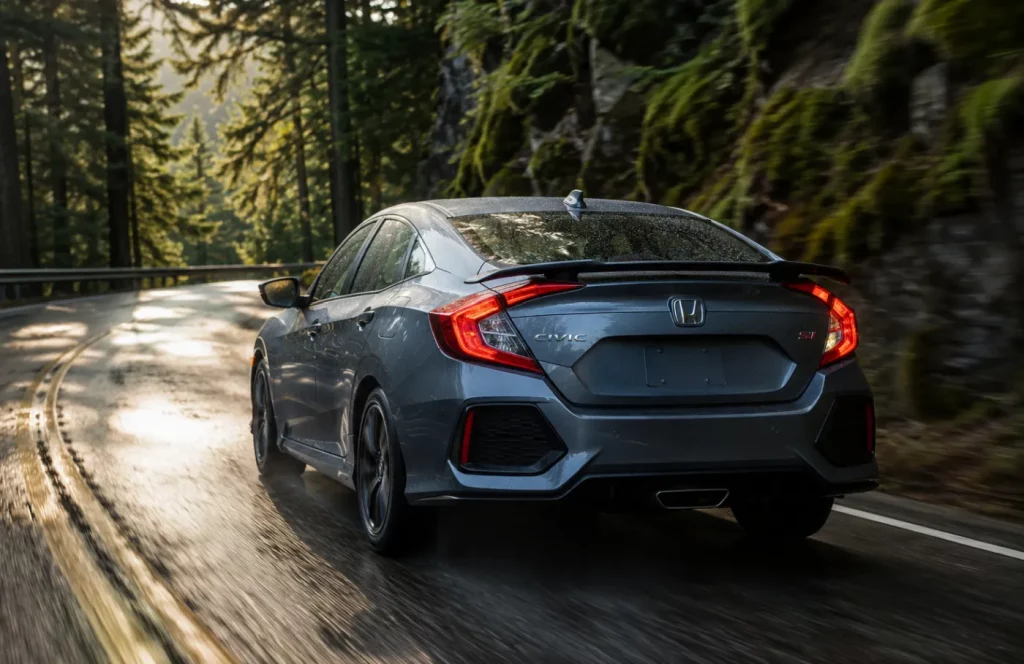
The Civic Si is a practical sedan made fun — a four-door daily driver with a turbocharged engine, a limited-slip differential, and enough space for four adults and their luggage. The GR86 is a fun car made barely practical — a lightweight rear-wheel-drive coupe with a high-revving boxer engine, a chassis designed for balance, and rear seats that exist mostly for insurance purposes.
This isn’t a comparison about which car is objectively better. It’s a comparison about two very different philosophies of driving enjoyment. And the right answer depends entirely on what you value more: practicality or purity.
The Civic Si is the better daily driver — more practical, more fuel-efficient, and more comfortable for everyday use. The GR86 is the better sports car — lighter, rear-wheel-drive, and more engaging when you’re driving for fun. The Si is the car you can live with every day; the GR86 is the car you want to drive on weekends. Choose based on whether you need one car for everything or can afford a dedicated sports car.
Same Money, Completely Different Philosophy
Look AT the price tags and the similarities are obvious. The Civic Si starts at roughly $30,000. The GR86 starts at approximately $28,900 for the base model and around $31,600 for the Premium trim. Both are manual-transmission cars in the sub-$32,000 range. Both are built by Japanese manufacturers with reputations for reliability.
But the similarities end there. The Civic Si is a 3,000-pound front-wheel-drive sedan with a turbocharged 1.5-liter engine producing 200 horsepower and 192 lb-ft of torque. The GR86 is a 2,800-pound rear-wheel-drive coupe with a naturally aspirated 2.4-liter boxer engine producing 228 horsepower and 184 lb-ft of torque.
The Civic Si is a practical car made fun. The GR86 is a fun car made barely practical. That’s the central tension of this comparison.
| Specification | Honda Civic Si (FE1) | Toyota GR86 (ZN8) |
|---|---|---|
| Engine | 1.5L turbo I4 | 2.4L naturally aspirated Boxer |
| Horsepower | 200 hp @ 6,000 rpm | 228 hp @ 7,000 rpm |
| Torque | 192 lb-ft @ 1,800–5,000 rpm | 184 lb-ft @ 3,700 rpm |
| Transmission | 6-speed manual (rev-match) | 6-speed manual |
| LSD | Helical limited-slip | Torsen limited-slip |
| Drivetrain | Front-wheel drive | Rear-wheel drive |
| Curb weight | 2,952 lb | 2,811 lb |
| Body style | 4-door sedan | 2-door coupe |
| Seating capacity | 5 | 4 (2+2) |
| 0-60 mph (manual) | ~6.6 seconds | ~5.4-5.6 seconds |
| EPA Fuel Economy (city/hwy/comb) | 27/37/31 mpg | 20/27/22 mpg (MT) |
The Powertrain Battle: Turbo Torque vs High-Rev Boxer
These engines could not be more different. The Civic Si’s 1.5-liter Turbocharger delivers maximum torque at just 1,800 rpm, holding it through 5,000 rpm. The result is a car that feels responsive and quick in everyday driving. You don’t need to rev the engine to access its power — it’s there from the moment you press the accelerator.
The GR86’s 2.4-liter boxer engine tells a different story. It produces peak torque at 3,700 rpm and peak horsepower at 7,000 rpm. The engine loves to rev, and it rewards drivers who keep the revs high. Below 4,000 rpm, it feels perfectly adequate but not exciting. Above 5,000 rpm, it comes alive with a mechanical, characterful sound that no turbocharged engine can replicate.
The Si feels stronger in normal traffic. The GR86 feels more alive when you chase the redline. The Si rewards smooth, efficient driving. The GR86 rewards enthusiasm and revs.
FWD vs RWD: This Is the Real Reason You’re Here
This is the most important difference between these two cars. The Civic Si sends power to the front wheels. The GR86 sends power to the rear wheels. That single difference changes everything about how they drive.
The Civic Si’s front-wheel-drive layout, combined with its helical limited-slip differential, delivers exceptional grip and predictability. You can get on the power early in corners, and the LSD will pull the car through the apex. The car is forgiving, predictable, and easy to drive quickly. It rewards precision and smoothness.
The GR86’s rear-wheel-drive layout is a different experience entirely. The front wheels handle the steering, the rear wheels handle the power, and the driver manages the balance between them. You can use the throttle to adjust the car’s attitude mid-corner — a little more power to rotate the rear, a lift to tuck the nose. The GR86 is more playful, more adjustable, and more demanding. It rewards skill and car control.
Do you want to attack a corner efficiently — or play with it? The Civic Si is about precision. The GR86 is about rotation.
Which One Is More Fun on a Normal Road?
This is where the comparison gets personal. Most owners don’t drive on track every week. They drive on city streets, highways, and back roads. And on normal roads, the two cars feel very different.
In the city, the Civic Si is clearly better. The turbo torque makes it easy to merge and pass. The higher seating position provides better visibility. Four doors make it easier to carry passengers. The car is simply more practical for everyday life.
On back roads, the GR86 is more emotionally engaging. The low seating position, the responsive steering, the rear-drive balance, and the high-revving engine combine to create an experience that feels more like a sports car. But the Si is no slouch on back roads either — its LSD and stiff chassis make it genuinely entertaining.
The Si allows you to drive fast without constantly chasing the redline. The GR86 demands you work for the speed. One is easier; the other is more rewarding.
Manual Transmission: Both Are Excellent, But Different
Both cars offer excellent six-speed manual transmissions, but they deliver different experiences. The Civic Si’s shifter is light, precise, and easy to use. The throws are short, the engagement is satisfying, and the rev-match system makes downshifts seamless. It’s a transmission that works perfectly in daily driving.
The GR86’s shifter is more mechanical. The throws are longer, the engagement is more deliberate, and the overall feel is more analog. There’s no rev-match system in the GR86 — you need to heel-toe yourself, which is exactly what many enthusiasts prefer. The GR86’s transmission feels more like a traditional sports car gearbox.
The Si has the easier manual. The GR86 has the more sports-car-like manual experience.
Straight-Line Performance: GR86 Has More HP, But
The GR86 is quicker in a straight line. With 228 horsepower and a weight advantage of approximately 140 pounds, the GR86 reaches 60 mph in roughly 5.4 to 5.6 seconds. The Civic Si, with 200 horsepower and more weight, takes about 6.6 seconds.
The difference is significant, but neither car is a drag-race champion. If you want straight-line performance, there are better options in this price range. The value of both cars lies in their handling, not their acceleration.
The Practicality Massacre
This is where the Civic Si wins without argument. The Si is a four-door sedan with five seats and a real trunk. The GR86 is a 2+2 coupe with rear seats that are basically unusable for adults.
Daily Commute: Both cars work, but the Si is more comfortable and easier to live with.
Four Passengers: The Si fits four adults easily. The GR86 fits two adults and two small children at best.
Road Trip: The Si is comfortable and fuel-efficient. The GR86 is louder and less spacious.
Cargo: The Si has a real trunk. The GR86 has a small trunk that can swallow a couple of duffel bags — though owners do manage to fit a set of track wheels with the rear seats folded.
The Si is the car you can use for everything. The GR86 is the car you use when you don’t need to carry anything or anyone.
Fuel Economy: The Si Wins Easily
The Civic Si achieves 27 city, 37 highway, and 31 combined mpg. The GR86 achieves approximately 20 city, 27 highway, and 22 combined mpg. The difference is significant — about 9 mpg combined.
Over 15,000 miles per year, the Si will use roughly 484 gallons of fuel, while the GR86 will use about 682 gallons. At $4 per gallon, that’s a difference of roughly $800 per year. Over five years of ownership, the Si saves approximately $4,000 in fuel costs.
The Si is both the more practical car and the cheaper car to feed.
Daily Comfort: The Hidden Winner
The Civic Si is the more comfortable daily driver. It has more interior space, a higher seating position, better visibility, and a more refined cabin. The 12-speaker Bose audio system, the 9-inch touchscreen, and the wireless Apple CarPlay make the Si a genuinely pleasant place to spend time.
The GR86 is more focused. The seats are supportive, the driving position is low, and the cabin feels purpose-built for driving. But it’s also louder, less insulated, and more demanding. The GR86 is a car you drive for the experience, not for the comfort.
Reliability and Long-Term Ownership
Both cars have solid reputations for reliability, but there are differences worth noting. The Civic Si’s 1.5-liter turbo is well-understood and generally reliable, though it requires attention to Oil dilution in cold climates and carbon buildup on intake valves at higher mileage.
The GR86’s 2.4-liter boxer engine is a more recent design. Some owners have reported oil consumption and RTV sealant concerns affecting the oil Pickup Tube in certain early examples, though Toyota has addressed these issues in production updates. The GR86 is also more likely to be tracked, which can accelerate wear on consumables like brakes, tires, and clutch.
Both cars are reliable, but the Si has a longer track record of trouble-free high-mileage ownership.
Winter and Bad Weather: FWD Reality vs RWD Reality
The Civic Si’s front-wheel-drive layout is easier to manage in snow and rain. The weight of the engine over the driven wheels provides better traction, and the car is more predictable in low-grip conditions. With winter tires, the Si is a capable year-round car.
The GR86’s rear-wheel-drive layout requires more attention in bad weather. The car is lighter, the driven wheels are at the rear, and the lower ground clearance can be an issue in deep snow. With good winter tires, the GR86 is manageable, but it requires more skill and awareness.
Good tires matter more than drivetrain alone, but the Si is the easier car to live with in winter conditions.
Track Day: Which One Actually Teaches You More?
This is where the GR86 shines. The rear-wheel-drive layout, low weight, and responsive chassis make it an ideal car for learning car control. The GR86 teaches you about weight transfer, throttle steering, rotation, and rear-end balance. It’s a car that rewards skill and punishes mistakes — exactly what you want in a learning tool.
The Civic Si is also capable on track, but it teaches a different set of skills. The Si teaches late braking, maintaining momentum, precise corner entry, and smooth driving. It’s a car that rewards efficiency and precision.
The Si teaches efficiency. The GR86 teaches vehicle dynamics.
Modification Potential
Both cars have strong aftermarket support, but they appeal to different types of modifiers. The Civic Si responds well to tuning — a simple ECU flash adds significant power. The engine is well-supported, and parts are readily available.
The GR86 is more about chassis and driving feel. Owners typically start with tires, suspension, and brakes before considering power modifications. Forced induction is available, but it’s more expensive and more complex than a simple Si tune.
The Si is easier to make faster. The GR86 is already designed to feel like a sports car before you modify anything.
Resale Value and Used Market
Both cars hold their value well, but for different reasons. The Civic Si has a strong reputation, enthusiast demand, and practicality. The GR86 has enthusiast demand for a manual RWD coupe.
When buying used, check the Si for ECU tuning, clutch wear, and modifications. Check the GR86 for track use, tire wear, brake wear, and engine service history. A clean, stock example of either car is worth more than a modified one.
The $30,000 Question
If you only have one parking space and you need a car for everything, buy the Civic Si. If you already have a practical car and want something purely for fun, the GR86 becomes much more attractive.
The Si is the car you can live with every day. The GR86 is the car you want to drive on weekends.
Who Should Buy the Civic Si?
Buy the Civic Si if this is your only car, you need four doors, fuel economy matters, you want turbo torque, you drive in winter, and you want a manual transmission without sacrificing everyday usability.
Who Should Buy the Toyota GR86?
Buy the GR86 if driving enjoyment is your top priority, you want rear-wheel drive, you love naturally aspirated engines, you’re willing to sacrifice practicality, you already have a second car, and you plan to spend time on canyon roads and track days.
Verdict: Which Car Wins?
The conclusion should be nuanced. Here’s how it breaks down.
| Category | Winner |
|---|---|
| 0-60 mph | GR86 |
| Quarter mile | GR86 |
| Manual transmission (daily) | Civic Si |
| Manual transmission (sport) | GR86 |
| Handling precision | Civic Si |
| Driving engagement | GR86 |
| Daily comfort | Civic Si |
| Practicality | Civic Si |
| Fuel economy | Civic Si |
| Track-day learning | GR86 |
| Winter driving | Civic Si |
| Pure driving experience | GR86 |
Final Thought
The Civic Si is the better car for your life. The GR86 may be the better car for your soul.
The Si is the car you buy when you need one vehicle that does everything well — commutes, carries passengers, handles winter, and still delivers driving enjoyment. The GR86 is the car you buy when you prioritize driving enjoyment above all else and are willing to sacrifice practicality to get it.
The Si is more practical, more efficient, and easier to live with. The GR86 is more engaging, more playful, and more rewarding when you’re driving for fun.
Both are excellent cars. They just serve different masters.
FAQ — Civic Si vs Toyota GR86
Which is faster, the Civic Si or the Toyota GR86?
The GR86 is faster in a straight line. With 228 horsepower and less weight, it reaches 60 mph in approximately 5.4-5.6 seconds. The Civic Si takes about 6.6 seconds. On a track, the GR86’s RWD balance and lighter weight make it more engaging, while the Si’s FWD and LSD make it more predictable.
Is the Toyota GR86 more fun to drive than the Civic Si?
For many enthusiasts, yes. The GR86’s rear-wheel-drive layout, low weight, and high-revving boxer engine deliver a more traditional sports car experience. The Civic Si is also fun to drive, but its FWD layout and turbo engine prioritize efficiency and predictability over playfulness.
Which car is more practical?
The Civic Si is significantly more practical. It has four doors, five seats, a real trunk, and better fuel economy. The GR86 is a 2+2 coupe with small rear seats and a small trunk. The Si is the car you can live with every day; the GR86 is the car you drive on weekends.
Does the GR86 have a manual transmission?
Yes — the GR86 is available with a six-speed manual transmission, which is the enthusiast’s choice. A six-speed automatic is also available, but the manual is what makes the car special.
Which car is better for winter driving?
The Civic Si is better for winter driving. FWD is easier to manage in snow and ice than RWD. With good winter tires, both cars are manageable, but the Si requires less skill and attention in low-grip conditions.
Which car has better fuel economy?
The Civic Si has significantly better fuel economy — 27/37/31 mpg versus the GR86’s 20/27/22 mpg. The difference is about 9 mpg combined, which adds up to roughly $800 per year in fuel costs.
Is the GR86 reliable?
The GR86 is generally reliable, but the 2.4-liter boxer engine is relatively new. Some owners have reported oil consumption and RTV sealant concerns in early examples. The Civic Si’s 1.5-liter turbo has a longer track record of trouble-free high-mileage ownership.
Which car holds its value better?
Both cars hold their value well, but the GR86’s manual RWD coupe status gives it strong enthusiast demand. The Civic Si also holds value well due to its reputation and practicality. Clean, stock examples of both cars command premium prices on the used market.
Should I buy a Civic Si or Toyota GR86?
Buy the Civic Si if you need one car for everything — daily commuting, carrying passengers, and winter driving. Buy the GR86 if you want a dedicated sports car and can accept the compromises in practicality. The Si is the better all-rounder; the GR86 is the better pure driving experience.
Which car is better for a first manual transmission car?
The Civic Si is better for a first manual car. The shifter is light, precise, and easy to use, and the rev-match system makes downshifts seamless. The GR86’s manual is more mechanical and demanding, requiring heel-toe downshifts for smooth driving.