

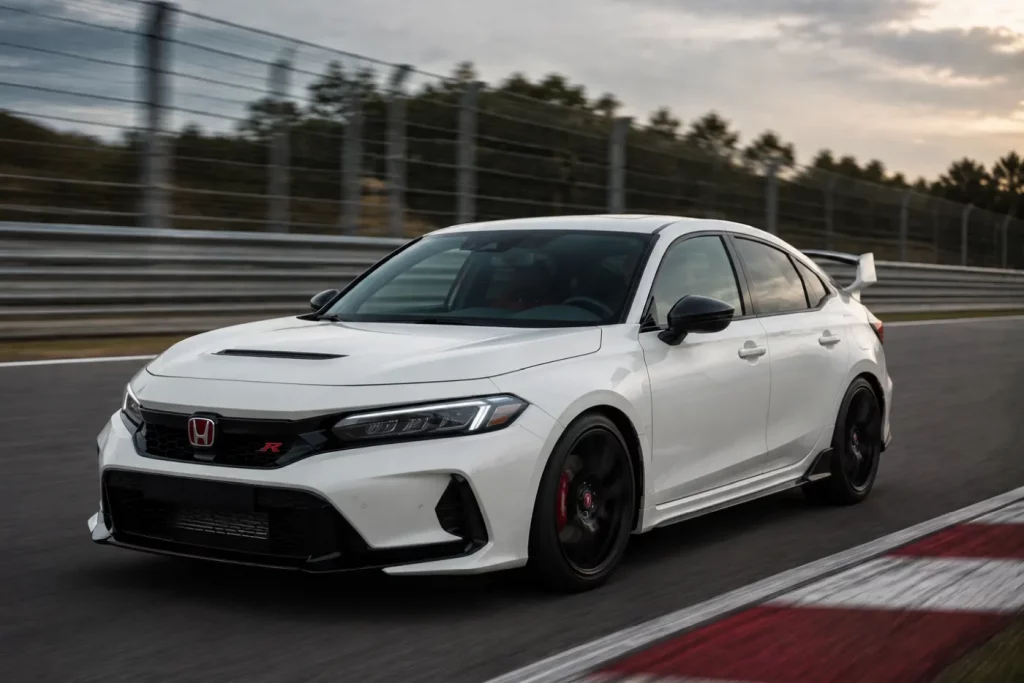
Your 7th Gen (EM2/ES1), 8th Gen (FA5/FG2), 9th Gen (FB6/FG4), 10th Gen (FC1/FK7), or 11th Gen (FL1/FL5) Civic just threw a P0328 — and the Knock Sensor circuit voltage is reading above specification.
P0328 is the code for “Knock Sensor 1 Circuit High Input”. The ECU is indicating that the knock sensor circuit voltage is above 4.5V. Unlike P0325 (open circuit), P0328 indicates that the circuit is shorted to power or the sensor itself is internally shorted.
When this code is set, the ECU may enter a limited-performance mode — retarding timing, disabling VTEC, and enriching the fuel mixture to protect the engine.
Here is a garage-tested breakdown of what P0328 actually means on these cars, and how to repair it without unnecessary expense AT the dealership.
P0328 Breakdown: Understanding the High Voltage Condition
P0328 (“Knock Sensor Circuit High Input”) differs from P0325 in a key aspect.
The Technical Difference:
- P0325: Circuit is open (no signal)
- P0328: Circuit voltage is above 4.5V (short to power or internal short)
The knock sensor is a piezoelectric device that generates a small AC voltage when it detects vibration. The ECU also provides a 2.5V–5V reference voltage on the signal wire. When that signal wire contacts +12V, or the sensor internally shorts, the ECU sees a voltage spike and sets P0328.
Limited Performance Mode: The ECU may disable VTEC, retard timing, and enrich the fuel mixture when this code is set.
The Symptoms:
- Check engine light with P0328 stored
- VTEC disabled — reduced performance above 4,000 RPM
- Power loss — sluggish acceleration
- Reduced fuel economy — retarded timing can affect efficiency
- Increased engine operating temperature — inefficient combustion can raise EGTs
- Potential audible pinging — if timing control is affected
The Common Causes for P0328
On Hondas, P0328 is typically caused by one of these three issues:
1. Short to Power (Wiring Issue).
The knock sensor’s signal wire runs under the intake manifold, near the starter and Alternator wiring. If the harness chafes and contacts a +12V power wire, the ECU may detect battery voltage on the signal line and set P0328. This can occur after a starter or clutch service where the harness is disturbed.
2. Corrosion in the Connector.
Water can become trapped in the knock sensor connector under the intake manifold. Water + salt + heat = corrosion inside the connector, creating a resistive short that affects the voltage reading.
3. Internal Sensor Failure.
The piezoelectric crystal inside the sensor can crack from age, heat, or vibration (particularly with stiff motor mounts). When cracked, it may short internally, sending a constant high voltage to the ECU.
Generation-Specific Considerations
7th Gen (EM2/ES1, D17) & 8th Gen (FA5/FG2, K20Z3/R18) & 9th Gen (FB6/FG4, K24Z7):
- ⚠️ The Starter Area. The knock sensor is located near the starter motor under the intake manifold. If a starter or clutch service was recently performed, the harness may be pinched between the starter and the block.
- Harness Chafing: The signal wire runs along the block and can chafe against the block or intake manifold bracket over time.
- Water Intrusion: The connector faces upward, making it susceptible to water collection. If the rubber boot is damaged, water may enter the connector and cause corrosion.
- Torque specification: 23 ft-lbs (31 Nm). Over-torquing can crack the sensor crystal and cause P0328. Under-torquing can cause P0325.
- Part number: 30530-PPL-A01 (supersedes 30530-PNA-003).
10th & 11th Gen 1.5T (L15B7 / Direct Injection):
- The knock sensor is critical on turbo engines. High-boost engines rely on the knock sensor for timing control.
- P0328 on an L15B7 affects the knock control algorithm. The ECU may not be able to detect detonation reliably. Continued hard driving with this code is not recommended.
- Tune Consideration: If running a Hondata FlashPro or KTuner MAP and P0328 is set, the ECU may reduce boost targets and enter a safety mode.
10th & 11th Gen Type R (K20C1, FK8/FL5):
- If running high boost with an aftermarket tune, P0328 may reduce boost targets and limit performance.
- ⚠️ Important: A faulty knock sensor on a tuned Type R is a safety concern. At elevated boost levels, the ECU may not be able to detect detonation reliably.
The Diagnostic Test — Diagnose Before Replacing
Test the circuit before replacing the sensor.
Step 1: Check for Short to Power (Harness Side).
Disconnect the knock sensor connector. Turn the ignition ON (KOEO). Measure voltage between the signal wire and chassis ground.
The Verdict:
- If 2.5V–5V is present: The ECU reference voltage is normal. The wiring is likely intact.
- If 12V is present: The signal wire is shorted to power. The harness is chafed or pinched. Do not replace the sensor — repair the wiring.
Step 2: Check Sensor Resistance (Sensor Side).
With the sensor disconnected, set the multimeter to Ohms (Ω). Measure resistance between the signal pin and the sensor body (ground).
The Verdict:
- Infinite resistance (OL): The sensor is electrically isolated. It is likely functional.
- Any continuity (low resistance): The sensor is internally shorted and requires replacement.
Step 3: The Tap Test (With Oscilloscope).
If an oscilloscope is available, reconnect the sensor and tap the engine block near the sensor with a wrench. A functional sensor produces a sharp AC voltage spike. A flat line or constant high voltage indicates the sensor is faulty.
Sensor Quality — Use OEM or NTK
⚠️ Do not use inexpensive aftermarket knock sensors.
Inexpensive sensors may:
- Set P0328 immediately due to incorrect internal resistance
- Send false knock signals causing the ECU to pull timing unnecessarily
- Fail prematurely from heat cycling
Recommended parts:
- OEM Honda (Part #30530-PPL-A01 for K-Series)
- NTK / NGK (the OE supplier)
- Denso (also a factory supplier)
The OEM Part Supersession
Honda updated the knock sensor design.
- Old part: 30530-PNA-003 (earlier design)
- New part: 30530-PPL-A01 (revised, more durable)
- Recommendation: Use the updated PPL-A01 part.
Torque Specification — Critical for Proper Operation
The knock sensor functions as a vibration sensor. Correct torque is essential.
Specification: 23 ft-lbs (31 Nm) on a clean, dry thread. No anti-seize, no thread locker.
Recommendation: Use a torque wrench for proper installation.
Parts, Cost Breakdown & US Sourcing
| Part | Fits | OEM Part Number | Online Cost | Dealer Cost |
|---|---|---|---|---|
| Knock Sensor (OEM Updated) | K20Z3, K24Z7, K20A3 | 30530-PPL-A01 (supersedes PNA-003) | $80–$120 | $150–$200 |
| Knock Sensor (NTK/NGK) | K20Z3, K24Z7, K20A3 | NTK/NGK equivalent | $55–$85 | $130–$170 |
| Knock Sensor Pigtail Harness | All Generations | Aftermarket / Honda repair pigtail | $10–$15 | $30–$50 |
| Intake Manifold Gasket Set | 8th/9th Gen K-series | Verify by VIN | $30–$50 | $60–$100 |
| 24mm Deep Socket | All K-series | Aftermarket (Craftsman, GearWrench) | $10–$20 | N/A |
Repair Cost Breakdown
| Repair | DIY Cost | Independent Shop | Honda Dealer |
|---|---|---|---|
| Knock Sensor Replacement (OEM) | $80–$120 | $200–$350 | $350–$500 |
| Knock Sensor Replacement (NTK) | $55–$85 | $180–$300 | $320–$450 |
| Wiring Repair (Short to Power) | $10–$15 | $150–$300 | $250–$450 |
| Connector Replacement | $10–$15 | $150–$250 | $200–$350 |
| Intake Manifold Removal (if needed) | $30–$50 (gaskets) | $100–$200 | $200–$350 |
| Dealer Diagnostic Fee | N/A | N/A | $120–$200 |
Sourcing Tip: We track live market rates and cross-reference part numbers directly from US OEM catalogs such as HondaPartsNow and popular distributors like RockAuto and Fitment Industries.
Used Buyer Warning
If you are test-driving a Civic Si, R18, or 10th Gen Turbo, and the vehicle feels underpowered above 4,000 RPM with a P0328 code, proceed with caution.
If the seller claims it just needs a cheap sensor — negotiate accordingly or consider walking away.
Why this matters:
- Wiring Short: P0328 is often a short to power from pinched wiring. If the seller has not addressed it, the harness may have damage. This can be a $200–$400 electrical diagnosis.
- Low-Quality Sensor Installed: If an inexpensive sensor has been installed, it may be the cause of the code. The ECU may have been affected by the voltage spike — $500+ PCM replacement.
- VTEC Disabled: If the vehicle has been operated in limited-performance mode for an extended period, the Catalytic Converter may be affected from rich running — $800–$2,500 repair.
- If the seller cannot clear the code, consider this a warning sign.
Used buyer rule: P0328 with claims of a simple sensor replacement should be treated with caution — inspect the wiring for shorts and the connector for corrosion, or have the vehicle evaluated by a professional.
Quick Reference Checklist
☐ P0328 = Knock Sensor Circuit High Input — voltage above 4.5V (short to power or internal short)
☐ VTEC disabled? The ECU may disable VTEC when P0328 is set
☐ P0328 is NOT the same as P0325 — P0325 is open circuit, P0328 is high voltage
☐ Check for short to power first — with KOEO and sensor disconnected, check signal wire for 12V. If present, repair the harness
☐ Check for corrosion in the connector — Water Intrusion can cause corrosion
☐ 7th/8th/9th Gen K-series: Sensor is under the intake manifold, near the starter — inspect harness for pinching after starter/clutch work
☐ Test sensor resistance — continuity between signal pin and sensor body indicates an internally shorted sensor
☐ Torque specification: 23 ft-lbs (31 Nm). Over-torque can damage the sensor. Under-torque can cause P0325.
☐ OEM Part Supersession: Old part 30530-PNA-003 → updated 30530-PPL-A01. Use the updated part.
☐ Avoid low-cost sensors — they may fail immediately or send false signals
☐ Use OEM Honda, NTK/NGK, or Denso — these are the only sensors that work correctly with the Honda ECU
☐ 10th/11th Gen 1.5T: P0328 affects knock control. Continued hard driving is not recommended
☐ 10th/11th Gen Type R: A faulty knock sensor at elevated boost is a safety concern — address before tuning
☐ Used Buyer Rule — P0328 is a $200–$400 shop job. If the seller has not addressed it, negotiate accordingly or have the vehicle inspected