

The Big Picture — 94.6% Reliability Rate Across 1,674 Tuned Cars
The headline number from the CivicX dataset: 94.6% of tuned 10th gen Civics have not experienced a major drivetrain failure. That is 1,584 cars running without major issues versus 90 cars with documented failures. The average tuned car in the database has approximately 25,900 tuned miles. Over 331 owners have more than 40,000 tuned miles. Sources: CivicX Tuned CivicX Experience & Reliability Project.
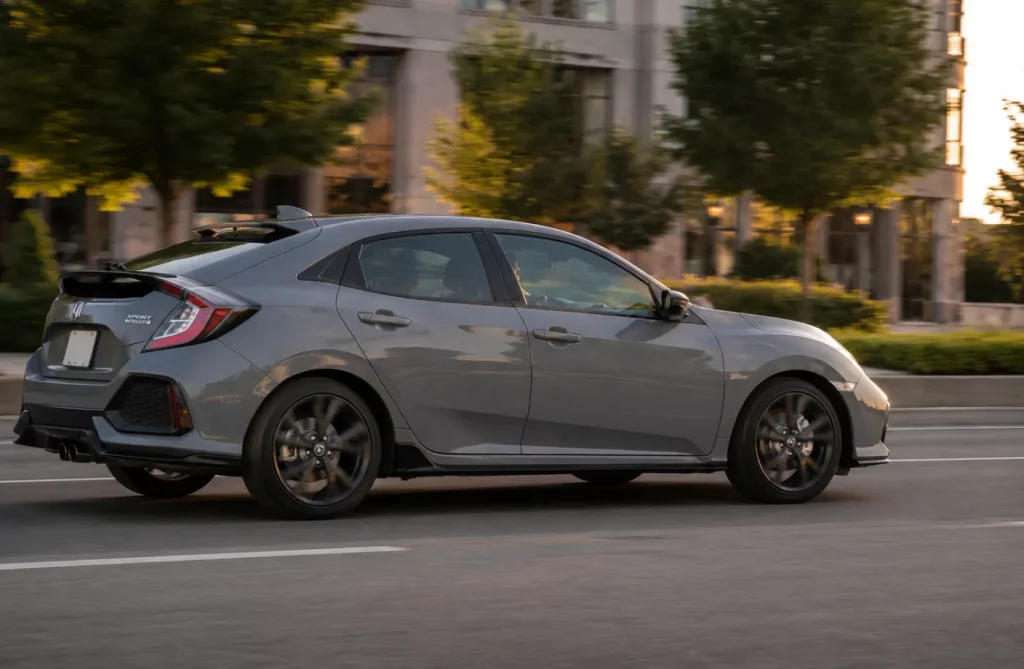
But the headline masks significant variation by model, tune type, fuel, and bolt-on level. The failure rate looks very different depending on what you are driving and how aggressively you tune it.
Failure Rates by Model — Which L15 Cars Break Most Often
| Model | Total Entries | Major Failures | Reliability Rate | Engine Failures | Trans Failures |
|---|---|---|---|---|---|
| Type R (FK8) | 165 | 4 | 97.5% | 4 (3 track) | 0 |
| 2.0 NA | 65 | 2 | 96.9% | 1 | 1 |
| Non-Si Sedan/Coupe (1.5T) | 293 | 14 | 95.2% | 6 (2.1%) | 8 |
| Si (L15B7) | 714 | 39 | 94.5% | 30 (4.2%) | 9 |
| 1.5T Hatchback (FK7) | 437 | 31 | 92.8% | 16 (3.7%) | 13 |
Failure Rates by Tune Type — Custom Tunes Are Riskiest
| Tune Type | Cars | Failures | Failure Rate | Common Failure |
|---|---|---|---|---|
| Base tune (starter maps) | 499 | 19 | 3.8% | Head gasket, rod knock |
| OTS tune (off-the-shelf) | 827 | 36 | 4.4% | Head gasket, clutch slip |
| Custom tune | 348 | 35 | 10.1% | Head gasket, rod, CVT |
Flex Fuel — The Highest Failure Rate
What Actually Breaks — The Four Dominant Failure Modes
1. Head gasket failure — the single most common failure. This accounts for 27 of 68 documented engine failures in the CivicX dataset. On the Si specifically, 53% of engine failures were head gasket failures — 16 of 30. The root cause is the OEM head studs stretching under high cylinder pressure from aggressive tunes, especially on flex fuel. Multiple owners reported lifting the head at power levels above approximately 270–280 whp on the stock gasket and studs. Replacing with ARP head studs and a Cometic head gasket is the standard fix, though some owners reported recurrence even after the upgrade. Several owners on the failures thread noted a design concern: “There is a Coolant channel between each cylinder and therefore only two .090 slivers of gasket between each cylinder.” Source: CivicX Failures thread, bbeem, Civii, fc3Moreno.
2. Thrown or bent connecting rods — the most catastrophic failure. Approximately 24 documented rod failures in the CivicX dataset. Most resulted in windowed blocks requiring a full engine replacement. The hatchback (FK7) 59B rods fail at lower power levels than the Si’s 5PA rods. Rod failures typically occurred during high-load WOT pulls in 3rd or 4th gear, often with boost levels above 26–28 psi or with bad fuel. One owner ran 28–30 psi on a stock hatchback engine for 6 years and 82,000 tuned miles before throwing a rod — an outlier. Most rod failures happened earlier. Source: CivicX Failures thread, ThatBoostedBoy, Myx, kshawn, Zedaine.
3. CVT transmission failure — torque-limited tuning works, abuse does not.
4. 4th gear destruction — the Si manual transmission’s weak point. Fourteen manual transmission failures are documented in the CivicX dataset, most of them Si owners who lost 4th gear during high-power pulls or no-lift shifts. The failure often takes out 1st and reverse as debris spreads through the transmission. PPG gear sets are the standard upgrade path, costing approximately $2,500–3,000 plus labor. Source: CivicX Failures thread, boldMullet, Kotaas, 2020cornfedsi, Treyna123.
High-Mileage Tuned Success Stories — The Cars That Went the Distance
The CivicX failures thread also contains the most impressive tuned endurance stories. These cars prove the L15 platform can be tuned and driven hard for 100,000+ miles, even with failures along the way.
dallasjhawk — 190,000 tuned miles (2016 EX-T CVT). The highest tuned mileage in the database. Ran Hondata +6 and TSP Stage 1. The original CVT failed at 25,000 miles and was replaced under warranty. The replacement CVT lasted 170,000 tuned miles. The turbo failed at 170,000 miles. The head gasket went at 185,000 miles. Still driving. Driving style: “Beat the hell out of it, also cruise, taken 2600 mile road trips.” Source: CivicX Failures thread, dallasjhawk.
Civii — ~175,000 tuned miles (2017 Touring CVT). Out of 223,000 total miles. Ran KTuner with TSP, Phearable, and D-Rob custom tunes. VTT turbo, CVT cooler. Blew the head gasket twice. The CVT is still original and holding up — no CVT Failure despite the mileage and modifications. Source: CivicX Failures thread, Civii.
boibuddha — ~130,000 tuned miles (2018 Civic Si). Since July 2018. KTuner V1.2, TSP Stage 1 and 1+. Head Gasket replaced at ~200,000 km (124,000 miles). Still on the original clutch. Driving style described as “grandpa style with spirited driving when no one’s around.” Source: CivicX Failures thread, boibuddha.
mrburgerUS — 108,000 tuned miles (2020 Civic Si hatchback). Fully built L15B7 with RV6 R365 turbo. 70,000 miles on the built motor. Head Gasket Failure traced to a 0.002-inch deck height variance between cylinders 3 and 4. “Rods and cylinder walls looking nice even after all these miles.” Source: CivicX Failures thread, mrburgerUS.
The 11th Gen L15CA — Drastically Better So Far
The caveat is time and mileage. The 11th gen platform has been on the market since 2022, so the average tuned mileage per car is lower than the 10th gen dataset. The L15CA may develop failure patterns as more cars cross the 100,000-mile mark. But the early data suggests Honda addressed some of the L15B7’s weaknesses — specifically the rod and head gasket vulnerability — in the L15CA design.
Bolt-On Correlation — Every Mod Adds Risk
The CivicX data shows a clear correlation between bolt-on modifications and failure rate. Cars with no bolt-ons and just a tune had 6 failures out of 375 cars — a 1.6% failure rate. Cars with some bolt-ons had 41 failures out of 934 cars — 4.4%. Cars with full bolt-ons (intake, intercooler, downpipe, frontpipe) had 43 failures out of 365 cars — 11.8%. The pattern is not proof of causation — owners who add more bolt-ons also tend to run more aggressive tunes and push the car harder — but it is a useful rule of thumb: every power-add mod increases the probability of a major failure. Source: CivicX Tuned CivicX Experience & Reliability Project.
Tuning Device Preference — KTuner Dominates
Owner Takeaways — What 1,674 Tuned Cars Taught the Community
The thread maintainer (gtman) has been aggregating this data since October 2019. His observations, echoed by dozens of owners who contributed failure reports, form the most practical tuning advice available for the L15 platform.
The safest tuned setup is an OTS tune on 93 octane with no bolt-ons. TSP Stage 1 on a stock Si or Non-Si with 93 octane fuel has produced almost no engine failures in the database relative to its adoption rate (533 users). The failure rate jumps with every variable changed — custom tune, flex fuel, upgraded turbo, track use.
On the Si, ARP head studs should be considered a mandatory first modification before any power-add tuning. Multiple owners who skipped head studs experienced head gasket failure and then installed ARP studs as part of the repair. The ones who did it upfront stayed together.
On the hatchback, the 59B rods are the limiting factor. Keeping boost under 26 psi and never running flex fuel without a conservative tune is the difference between a reliable daily driver and a windowed block. Several owners on the failures thread ran 28–30 psi on hatchback rods and paid for it with a thrown rod.
The CVT can handle a mild tune — TSP Stage 1 or equivalent — but cannot handle brake launches, power braking, or sustained track use. The 11th gen CVT data is encouraging, but the sample is small and the average mileage is low.
The Si manual transmission’s 4th gear is fragile at elevated power levels. No-lift shifting into 4th is the fastest way to destroy it. PPG gear sets are the only permanent fix.
L15B7 vs L15CA Tuned Reliability Comparison
| Metric | 10th Gen L15B7 | 11th Gen L15CA |
|---|---|---|
| Tuned cars tracked | 1,674 | 85 |
| Total tuned miles | 43,423,500 | 707,700 |
| Overall reliability rate | 94.6% | 98.8% |
| Engine failures | 68 (4.1%) | 1 (1.2%) |
| Transmission failures | 22 (1.3%) | 0 |
| Rod failures | ~24 (1.4%) | 0 |
| Head gasket failures | ~27 (1.6%) | 1 (1.2%) |
Quick Reference
☐ The L15B7 tuned reliability rate across 1,674 cars is 94.6% — 1,584 cars without major failure out of 1,674 tracked
☐ The hatchback (FK7) has the highest failure rate at 7.2% due to thinner 59B connecting rods
☐ The Si has a 94.5% reliability rate but 53% of engine failures are head gasket failures
☐ Custom tunes fail at 10.1% — more than double OTS tunes at 4.4%
☐ Flex fuel setups have a 10.3% failure rate — the highest of any fuel category
☐ The safest tuned setup is an OTS tune (TSP Stage 1) on 93 octane with stock hardware
☐ ARP head studs are the single most important supporting mod for any tuned Si
☐ No-lift shifting into 4th gear destroys Si manual transmissions — PPG gears are the fix
☐ The highest-mileage tuned L15B7 (dallasjhawk) reached 190,000 tuned miles across two CVTs
☐ The 11th gen L15CA shows a 1.2% failure rate (1 head gasket) across 85 cars and 707,700 miles
☐ Zero CVT failures recorded among 21 tuned 11th gen CVT cars (small sample, early data)
☐ No engine failures in the CivicX dataset were covered under warranty after tuning was detected
☐ 79% of rod failures in Non-Si cars occurred in hatchbacks — 15 of 19
☐ Owners who skip supporting mods (head studs, clutch, intercooler) are overrepresented in the failure thread