

Every used car buyer faces the same question eventually. You’ve narrowed down your search to a Honda Civic, and now you’re staring AT two generations sitting side by side. The 10th Gen (2016–2021) is cheaper, more plentiful, and available in more configurations. The 11th Gen (2022–present) is newer, more refined, and significantly more expensive. The difference on the used market is typically $4,000–$6,000 between comparable trims. That’s real money, and it deserves a real answer.
The question isn’t which generation is better. The question is whether the 11th Gen’s improvements are worth the extra cost for the way you actually use your car. This isn’t a technical breakdown of every engine variant—it’s a practical guide to choosing between two generations of Civic based on your budget, priorities, and how you plan to use the car.
The 10th Gen offers better value for budget-conscious buyers and tuners—sharper handling, lighter weight, and a more aggressive design. The 11th Gen delivers a significantly better interior, more modern technology, improved refinement, and a quieter cabin. The 11th Gen is worth the premium if you value daily comfort and modern features; the 10th Gen is the smarter buy if you prioritize value or plan to modify the car.
The $5,000 Question
Let’s start with the numbers. A clean 10th Gen Civic (2016–2021) with reasonable mileage typically costs $12,000–$17,000 on the used market, depending on trim, condition, and location. A comparable 11th Gen Civic (2022–present) costs $18,000–$24,000+. That’s a $4,000–$6,000 gap—sometimes more when you factor in dealer markups on newer cars.
The question isn’t whether the 11th Gen is better. It clearly is. The question is whether it’s $5,000 better for the way you actually drive.
The 10th Gen gives you more Civic per dollar. The 11th Gen gives you a better everyday experience.
| Feature/Aspect | 10th Gen Civic (2016–2021) | 11th Gen Civic (2022–present) |
|---|---|---|
| Typical used price (2026) | $12,000–$17,000 | $18,000–$24,000+ |
| Engine options | 2.0L NA / 1.5T / 2.0T (Type R) | 2.0L NA / 1.5T / 2.0T (Type R) / Hybrid (e:HEV) |
| Body styles | Sedan, Coupe, Hatchback | Sedan, Hatchback (coupe discontinued) |
| Manual transmission availability | Sedan, Coupe, Hatchback (limited) | Si, Type R only (2025+) |
| Infotainment screen | 7-inch (base) / 7-inch (higher trims) | 7-inch (base) / 9-inch (higher trims) |
| Wireless Apple CarPlay/Android Auto | No (wired only) | Yes (higher trims) |
| Digital instrument cluster | No (analog with digital display) | 10.2-inch digital (higher trims) |
| Premium audio | Upgraded available | 12-speaker Bose (higher trims) |
| Honda Sensing | Standard (first-gen) | Standard (upgraded second-gen) |
| Curb weight (sedan) | ~2,877–2,950 lb | ~2,952 lb (base) |
Exterior Design: Aggressive vs Mature
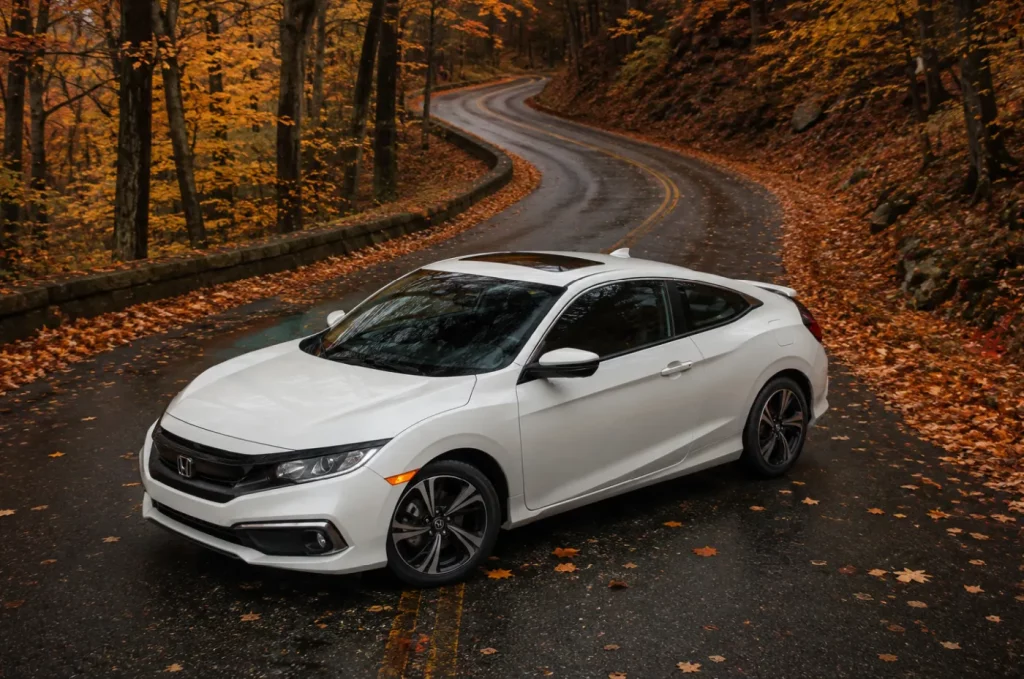
This is purely subjective, but it’s worth discussing because the design language changed dramatically between generations. The 10th Gen Civic has an aggressive, angular design with sharp lines, pronounced vents, and a futuristic look that still turns heads today. The 11th Gen Civic is cleaner, more mature, and closer in spirit to the Accord. It’s less visually busy and likely to age more gracefully.
Opinions among owners are split. Some prefer the 10th Gen’s aggressive character, calling it more exciting and distinctive. Others favor the 11th Gen’s refined, understated look, describing it as more premium and grown-up. MotorTrend noted that the 11th generation is noticeably more restrained in its exterior styling, while the 10th generation had a more aggressive, polarizing appearance.
There’s no objective winner here. The 10th Gen looks younger and more aggressive. The 11th Gen looks more expensive and will likely age more gracefully.
Interior: This Is Where the 11th Gen Wins
This is the single biggest difference between the two generations, and it’s where the 11th Gen justifies its premium. The 10th Gen Civic’s interior is functional but dated. The materials feel cheaper, the infotainment system is slower, and the overall cabin experience is less refined. The 11th Gen Civic’s interior is genuinely premium—cleaner dashboard layout, better materials, improved ergonomics, and a more cohesive design.
The standout features of the 11th Gen interior include the honeycomb mesh dash that spans the entire dashboard, physical climate controls (a welcome return after the 10th Gen’s touch-sensitive controls), a larger 9-inch touchscreen on higher trims, wireless Apple CarPlay and Android Auto, and a 10.2-inch digital instrument cluster on higher trims. The 12-speaker Bose premium audio system available on Touring trims is a significant upgrade over the 10th Gen’s audio offerings.
If you spend two hours a day inside your Civic, the 11th Gen premium starts making sense.
Interior Si Exception: The Seats Are a Step Backward
One notable exception to the 11th Gen’s interior superiority involves the Si model. Owners of both generations have pointed out that the 11th Gen Si’s seats are noticeably less comfortable than the 10th Gen Si’s seats. The newer seats are firmer, provide less lumbar support, and are generally less suited to long drives. Some owners have also noted the loss of features like steering wheel phone controls that were present in the 10th Gen.
For buyers specifically cross-shopping Si models, this can be a decisive factor. If you spend a lot of time behind the wheel, the 10th Gen Si’s more comfortable seats may outweigh the 11th Gen’s interior improvements.
Technology: How Much Does the Newer Civic Actually Give You?
The technology gap between the two generations depends heavily on which model years you’re comparing. A 2020–2021 10th Gen Civic with the upgraded infotainment system is reasonably modern, with Apple CarPlay and Android Auto (wired), a responsive touchscreen, and Honda Sensing. A 2016–2017 10th Gen Civic, by contrast, feels significantly more dated.
The 11th Gen brings wireless Apple CarPlay and Android Auto on higher trims, a larger 9-inch touchscreen, a more responsive interface, and a 10.2-inch digital instrument cluster. The Honda Sensing suite also received significant upgrades, with improved cameras and radar for better performance.
If you’re comparing a late 10th Gen (2020–2021) to an early 11th Gen (2022–2023), the gap isn’t enormous. If you’re comparing a 2016 10th Gen to a 2024 11th Gen, the gap is massive.
Engines: The Biggest Surprise — They Are More Similar Than You Think
Many buyers assume the 11th Gen introduced completely new engines, but that’s not the case. The 11th Gen carried over the 2.0-liter naturally aspirated and 1.5-liter turbocharged engines from the 10th Gen with minor refinements. The 2.0L NA engine produces 158 horsepower in both generations. The 1.5T produces 180 horsepower in the 11th Gen (up from 174 horsepower in earlier 10th Gen models).
In independent testing, an early 2022 Civic Touring 1.5T posted similar 0-60 times to the 10th Gen models, with the additional weight of the 11th Gen offsetting the modest power increase. The newer Civic is not automatically faster. It’s simply more refined.
The major powertrain news for the 11th Gen is the introduction of the e:HEV hybrid system, which produces 200 horsepower and 232 lb-ft of torque. This is a significant step forward in efficiency and performance, offering 0-60 times in the low 6-second range with 49 mpg combined.
Driving Feel: Which Generation Actually Feels Better?
This is where the two generations diverge most noticeably. The 10th Gen Civic feels lighter, sharper, and more playful. The lower curb weight (approximately 100–150 pounds lighter than the 11th Gen in comparable trims) and more direct suspension tuning give it a more eager character. It feels like a Sport Compact, especially in Sport and Si trims.
The 11th Gen Civic feels more composed and refined. The longer Wheelbase, wider rear track, and 8% increase in torsional rigidity translate into better highway stability and a more planted feel. The steering is heavier, the ride is more controlled, and the overall experience is more mature. But in tight corners and canyon roads, the 11th Gen feels heavier and less eager to change direction.
There’s a clear trade-off here. The 10th Gen is more fun at lower speeds. The 11th Gen is more refined at highway speeds.
Manual Transmission: This Can Completely Change Your Decision
If a manual transmission is important to you, the comparison changes dramatically. The 10th Gen offered manual transmissions across a wider range of body styles and trims, including the sedan, coupe, and hatchback (though availability was limited). The 11th Gen manual transmission is now restricted to the Si and Type R models, with the standard Civic becoming CVT-only.
If a manual transmission is non-negotiable, don’t compare generations as a whole—compare the exact body style and trim. The 10th Gen offers more manual options, making it the only choice for buyers who want a manual Civic without moving to the Si or Type R.
Space and Practicality
For the sedan, interior space between the 2021 and 2022 models is very close. Passenger volume is nearly identical, and the differences are minor. For the hatchback, the 11th Gen received more rear legroom, making it more accommodating for rear passengers. Cargo volume saw minor adjustments between generations.
The 11th Gen is not dramatically bigger—it simply uses its space better.
Reliability: Don’t Make This a Simple “Newer Is Better”
This is one of the most important sections for used buyers. The 10th Gen has several known issues that buyers should be aware of, but not every car is affected.
10th Gen Known Issues:
- 1.5T oil dilution: Some early 1.5T models experienced fuel diluting the engine oil, particularly in cold climates with short trips. The issue was less prevalent in later models with ECU updates. Checking service history and oil condition is important.
- AC condenser failures: Many 10th Gen Civics have experienced AC Condenser failures, with Honda extending the warranty on some components. The issue is widespread enough that it should be checked on any used 10th Gen.
- Carbon buildup (1.5T): Direct injection engines can develop carbon buildup on intake valves, typically requiring walnut blasting around 80,000–100,000 miles.
- CVT fluid: The CVT requires regular fluid changes (every 30,000–60,000 miles), and neglected fluid can lead to transmission issues.
11th Gen Reliability Picture:
The 11th Gen is newer, so fewer long-term issues have surfaced. Honda addressed many of the 10th Gen’s known problems in the redesign. The AC System was revised, the 1.5T received improvements, and the CVT software was updated. However, a newer redesign is not automatically a proven design. Consumer Reports notes that redesign years require caution when evaluating reliability, as new generations can introduce their own issues.
Visibility: A Surprising Difference Between Generations
Several owners have noted that the 11th Gen’s more upright pillars and smaller rear window have negatively impacted visibility compared to the 10th Gen. This is particularly noticeable when parking or changing lanes. The 10th Gen’s lower beltline and thinner pillars provide better outward visibility.
If you’re comparing the two generations, sit in both and evaluate the visibility for yourself. It’s a detail that doesn’t show up in spec sheets but matters daily.
Used Market Value: Where Does Your Money Go?
This is the central financial question. The choice depends heavily on your budget.
Budget Under $18,000:
The 10th Gen wins. You can get a clean, well-maintained 10th Gen with reasonable mileage for under $18,000. The 11th Gen starts significantly higher, meaning you’ll either stretch your budget or accept a high-mileage example.
Budget $18,000–$22,000:
This is the interesting zone. You can either buy a top-tier 10th Gen (late model, high trim) or an entry-level 11th Gen (early model, lower trim). In this zone, the choice depends on whether you prioritize features or age. A 2021 Touring will have more features than a 2022 LX, but the 2022 will be newer and have fewer years of wear.
Budget $22,000+:
The 11th Gen becomes the more logical choice. The price gap narrows, and the newer generation’s interior and technology advantages justify the additional cost.
Trim-for-Trim Comparison
Don’t compare a 2019 Touring to a 2022 LX as if they’re the same car. A well-optioned late 10th Gen can have more features than a base 11th Gen.
| Buyer Type | Better Choice | Why |
|---|---|---|
| Budget commuter | 10th Gen | Lower entry price, same reliability |
| Newer daily driver | 11th Gen | Better interior, modern tech |
| Manual enthusiast | Depends on trim | 10th Gen has more manual options |
| Tuner/project car | 10th Gen | Mature aftermarket, cheaper parts |
| Interior/technology priority | 11th Gen | Cleaner design, wireless CarPlay, Bose audio |
| Long-term ownership | 11th Gen | Newer, less age-related wear |
| Type R buyer | Separate comparison | FK8 vs FL5 is a different decision |
The Tuning Question
For owners who plan to modify their Civic, the 10th Gen is the more mature platform. The aftermarket for the 10th Gen is vast, with thousands of proven setups, readily available parts, and a massive community. KTuner and Hondata ecosystems are well-established, and parts are abundant and relatively affordable.
The 11th Gen is gaining aftermarket support, but it’s still catching up. ECU access is more complex, requiring jailbreak procedures in some cases, and parts are generally more expensive. For tuners, the 10th Gen remains the cheaper platform to experiment with.
Who Should Buy the 10th Gen?
Buy the 10th Gen if price is more important than age, you want a manual transmission outside the Si/Type R lineup, you’re planning to modify the car, you prefer the aggressive design, you’re willing to thoroughly inspect a used car, and you want to get a higher trim for the same money.
The 10th Gen gives you more Civic per dollar.
Who Should Buy the 11th Gen?
Buy the 11th Gen if you want a more modern interior, you value refinement over sportiness, the car will be a daily driver, you plan to keep it for a long time, you appreciate modern safety and technology features, and you want a newer car without the age-related wear of a 2016–2021 model.
The 11th Gen gives you a better everyday experience.
The Smartest Used-Buying Strategy
When choosing between generations, compare three things.
1. The actual price difference.
If the gap is $2,000–$3,000, the 11th Gen often makes sense. If the gap is $7,000–$10,000, a clean 10th Gen is likely the better value.
2. The exact trim.
A 2021 Touring is a much better car than a 2022 LX. Always compare features, not just model year.
3. The condition.
A clean 2021 with full service history can be a better purchase than a neglected 2022.
Final Thought
Is the 11th Gen Civic worth the extra money? Yes — if the price gap is reasonable.
The 11th Gen offers a better interior, more modern technology, a more refined driving experience, and a newer ownership experience. But the 10th Gen is still the value king, especially if your budget is limited, you want a manual transmission, you’re interested in tuning, or you prefer the more aggressive design.
The 11th Gen is the better car. The 10th Gen is the better value. Choose based on your budget and priorities.
FAQ — 10th Gen vs 11th Gen Civic
Is the 11th Gen Civic faster than the 10th Gen?
Not meaningfully. The 11th Gen’s 1.5T engine produces slightly more power (180 HP vs 174 hp in earlier 10th Gen models), but the added weight of the 11th Gen offsets the gain. Independent testing shows similar 0-60 times between comparable trims. The new hybrid model is significantly quicker, but that’s a different comparison.
Which Civic generation is more reliable?
The 11th Gen is newer and Honda addressed many of the 10th Gen’s known issues, including Oil dilution and AC condenser failures. However, a redesign year isn’t automatically proven. A well-maintained 10th Gen with a clean service history can be just as reliable as an 11th Gen. The 2.0L naturally aspirated engine in both generations is particularly reliable.
Does the 11th Gen Civic have a manual transmission?
In the standard Civic lineup, no—the 11th Gen sedan and hatchback are CVT-only for non-Si models. The manual transmission is available only on the Si and Type R. The 10th Gen offers more manual options across the lineup, including sedan, coupe, and hatchback configurations.
Is the 11th Gen Civic interior better than the 10th Gen?
Yes—significantly. The 11th Gen has a cleaner dashboard design, better materials, larger screens, wireless Apple CarPlay and Android Auto (on higher trims), a 10.2-inch digital instrument cluster, and a 12-speaker Bose audio system. The 10th Gen’s interior feels dated by comparison.
Which Civic generation is better for tuning?
The 10th Gen is the better platform for tuning. The aftermarket is more mature, parts are more affordable, and ECU tuning options are more accessible. The 11th Gen is gaining support but still playing catch-up. The 10th Gen 1.5T is one of the most tunable engines in the Civic lineup.
Is the 11th Gen Civic worth the extra money?
Yes—if the price gap is reasonable ($2,000–$4,000) and you value a modern interior, improved technology, and a more refined daily driver. The 10th Gen is the better value if your budget is limited or you plan to modify the car.
Which Civic generation holds its value better?
The 10th Gen has already experienced most of its depreciation and offers good value. The 11th Gen is newer and likely to hold value better over the short term, but the 10th Gen’s lower entry price means less absolute dollar risk. If you’re buying used, the 10th Gen is generally the better value.
Does the 11th Gen Civic have better safety features?
Yes—the 11th Gen features an upgraded Honda Sensing suite with improved cameras and radar, offering better performance in adaptive cruise control, lane-keeping assist, and collision mitigation. The 10th Gen’s system is still capable but not as refined.
Should I buy a 10th Gen or 11th Gen Civic in 2026?
Buy the 10th Gen if you’re on a budget, want a manual transmission, plan to modify the car, or prefer the more aggressive design. Buy the 11th Gen if you value interior quality, modern technology, and a more refined daily driving experience. The 11th Gen is the better car; the 10th Gen is the better value.
Which generation has better visibility?
Many owners report that the 10th Gen has better outward visibility due to its lower beltline and thinner pillars. The 11th Gen’s more upright pillars and smaller rear window can make parking and lane changes more challenging. It’s worth sitting in both before making a decision.