

⚠️ The Harness Behind the Fender — A Common Chafing Point
This is a key 6th gen specific electrical consideration that is not covered in standard fuse references.
The main Wiring Harness runs under the driver’s side front fender. Over time — particularly on lowered vehicles — the tire may contact the Fender liner and wear against the wiring harness. This can cause intermittent short circuits where fuses blow repeatedly without an obvious cause.
Diagnosis: If fuses continue to blow without an apparent reason — inspect the harness behind the driver’s side fender liner. Bare copper wires contacting the chassis may be visible.
Fix: Remove the fender liner, wrap the harness with electrical tape and split loom, and secure it away from the tire path.
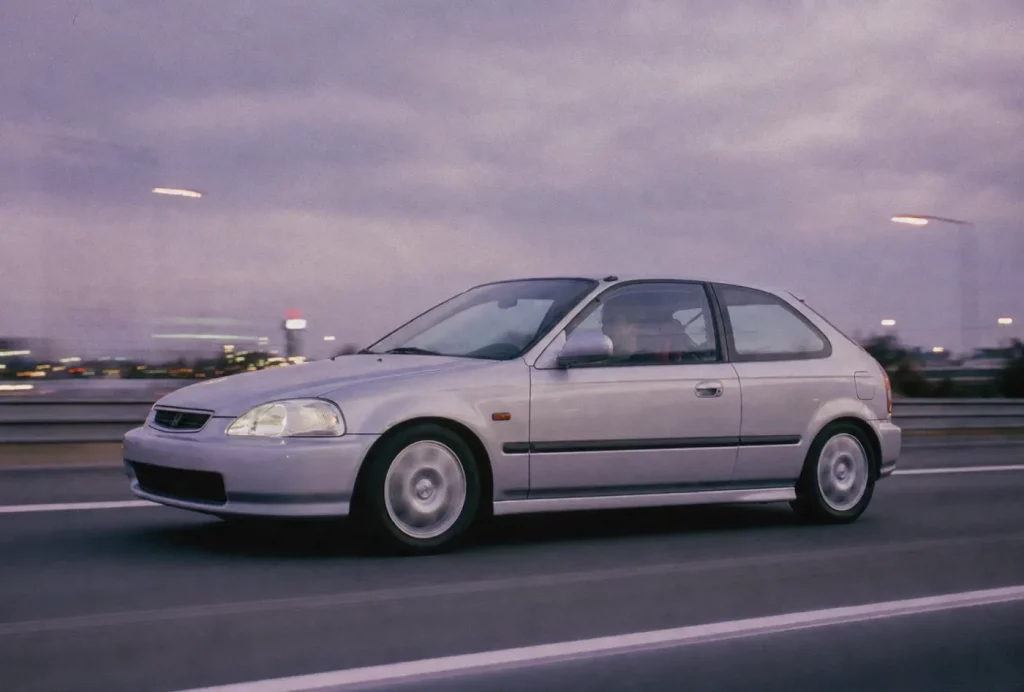
6th Generation — Civic (1996–2000) EK/EM/EJ
Your 6th gen Civic (EK hatchback, EM coupe, EJ sedan) has two fuse boxes: one in the passenger compartment (under the driver’s side dashboard) and one in the engine compartment (on the passenger side, near the battery). This generation is now well into its lifespan — commonly owned by enthusiasts, B-Series swappers, and those seeking reliable transportation. The wiring harnesses on these cars have seen decades of use, often with modifications and repairs.
Here is the breakdown of each fuse you need to know — including the 6th gen specific considerations that are not covered in generic fuse references.
Quick Reference — Where to Find the Fuse Boxes
| Location | Position | Notes |
|---|---|---|
| Under-Dash (Interior) | Under the dashboard, driver’s side — above the pedals, left of the steering column | Access is tight — working in this area requires positioning on the back with head under the dash. The fuse box cover has a locking knob — turn it 90 degrees to remove it. |
| Engine Bay | Passenger side, near the battery | The black plastic cover may become brittle from engine bay heat and battery acid exposure — handle carefully. The fuse puller is stored inside the cover. |
Passenger Compartment Fuse Box (Under-Dash)
Location: Under the dashboard, driver’s side — above the pedals, left of the steering column.
Most commonly blown fuses on the 6th gen:
| № | Amps | Circuit Protected | Common Failure |
|---|---|---|---|
| 18 | 15 A | Cigarette Lighter / 12V Power Outlet | 🔌 The most commonly blown fuse on this generation. Phone chargers and FM modulators — commonly used since the stock 96-00 radio has no AUX or Bluetooth — can overheat and short out. If the power outlet is not functioning, this is the first check. |
| 15 | 10 A | Fuel Pump | ⛽ Critical for engine operation. If the engine cranks but does not start, check this fuse. Also a known issue: the engine may stall when hot — the pump may draw excessive current and blow the fuse after heat soak. Both D-series and B-series fuel pumps are known for this behavior. |
| 6 | 10 A | Alternator / Charging System | 🔋 Important circuit. If this fuse blows, the battery will not charge, and warning lights will illuminate on the dashboard. Often occurs when alternator work is performed without disconnecting the battery. |
| 8 | 10 A | Radio / Accessory (Audio) | 📻 A common failure after DIY audio installations. If the radio is inoperative, check this first. |
| 1 | 15 A | Power Windows (Main) | If all windows are inoperative, this is the main power fuse. If only one window is affected — check the individual switch or motor. |
| 11 | 10 A | Turn Signals / Hazard Lights | If turn signals are not functioning, this is the first location to check. Often caused by a trailer wiring short or a faulty flasher relay. |
| 17 | 15 A | Brake Lights / Stop Switch | 🛑 Brake lights not functioning? Check this fuse. Also affects the shift interlock on automatic transmissions — if the shifter is stuck in Park, this fuse may be blown. |
| 9 | 10 A | Instrument Cluster / Gauges | If gauges are inoperative (speedometer, tachometer, fuel, temperature) — check this fuse. The 6th gen cluster is known for capacitor issues, but the fuse is the first item to check. |
Engine Compartment Fuse Box
Location: Passenger side, near the battery.
These are the higher-amperage fuses — cooling, ECU, and the main battery fuse.
| № | Amps | Circuit Protected | Common Failure |
|---|---|---|---|
| Main (Bolted) | 80 A | Main Battery Fuse (bolted) | 🔧 This fuse is bolted down. Loosen the two screws before removal. Typically blows only when battery polarity is reversed during jump-start procedures. |
| Alternator | 60 A | Alternator Output | Same as #6 in the interior box — if the alternator is overcharging or has a short, this fuse may blow. Check both locations. |
| Ignition | 40 A | Ignition Switch (Main Power) | If the engine will not crank at all and the battery is confirmed good — check this fuse. Also verify the main relay (under the dash) — it is a known failure point on 6th gen Civics. |
| Headlight | 30 A | Headlights (Main Power) | If both headlights are inoperative but interior fuses are intact — check this main headlight fuse. |
| Heater / A/C | 30 A | HVAC Blower Motor | 🌡️ No airflow from the vents? Check this fuse. Also verify the blower motor resistor — it is a common failure point on 6th gen Civics. |
| ECU (Engine Control) | 15 A | Engine Control Unit — Main Power | 💀 The engine management fuse. If this fuse blows, there will be no spark, no fuel injector pulse, and no start. Check this if the fuel pump fuse (#15) is intact but the engine still does not fire. |
| Radiator Fan | 20 A | Radiator Fan Motor | 🌡️ Cooling is critical for D16 and B-series engines. If the fan does not operate in traffic with A/C on, overheating is likely. Overheating can lead to warped aluminum heads and head gasket failure. Check this fuse immediately if the fan is not functioning. |
| A/C Compressor | 15 A | A/C Compressor Clutch | ❄️ If the A/C clutch does not engage and the fuse is intact, check the A/C relay and pressure switch. |
Important Notes — 6th Gen Specific Electrical Issues
⚠️ The Harness Behind the Fender — A Common Chafing Point
This is a key 6th gen specific electrical consideration that is not covered in standard fuse references.
The main wiring harness runs under the driver’s side front fender. Over time — particularly on lowered vehicles — the tire may contact the fender liner and wear against the wiring harness. This can cause intermittent short circuits where fuses (especially #15 and #17) blow repeatedly without an obvious cause.
Diagnosis: If fuses continue to blow without an apparent reason — inspect the harness behind the driver’s side fender liner. Bare copper wires contacting the chassis may be visible.
Fix: Remove the fender liner, wrap the harness with electrical tape and split loom, and secure it away from the tire path.
💡 Main Relay Failure — No Start When Hot
The main relay (PGM-FI relay) on the 6th gen Civic is a known failure component. It is located under the dashboard, above the driver’s side kick panel.
Symptom: The engine starts normally when cold, but may not start when hot — or may stall and not restart. The Fuel Pump does not prime (no audible buzz when the key is turned).
Fix: The relay develops cracked solder joints over time from thermal cycling. The joints can be re-soldered on the circuit board (a cost-effective repair), or the relay can be replaced with a new OEM unit.
🔧 The Fuel Pump Fuse Consideration
On the 6th gen, the fuel pump fuse (#15) may be undersized for older, higher-mileage fuel pumps. If the fuel pump is aged and drawing excessive current, the fuse may blow under load.
If #15 blows repeatedly, do not simply replace the fuse. The fuel pump should be inspected and likely replaced. The D16 and B-series fuel pumps are known wear items — the motor may wear out, increasing current draw and causing the fuse to blow.
Recommendation: Consider upgrading to a Walbro 255 fuel pump for B-series or turbo applications — it is a direct fit and supports higher power levels.
Complete Fuse Chart — 6th Gen Civic (1996–2000)
Passenger Compartment Fuse Box (Under-Dash)
| № | Amps | Circuit Protected |
|---|---|---|
| 1 | 15 A | Power Windows (Main) |
| 2 | 10 A | Daytime Running Lights (DRL) — Canada |
| 3 | 10 A | Instrument Cluster / Gauges |
| 4 | 10 A | Accessory (Power Mirrors, Seat Heat — if equipped) |
| 5 | 10 A | Heated Mirrors (if equipped) |
| 6 | 10 A | Alternator / Charging System |
| 7 | 10 A | SRS (Airbag) Control |
| 8 | 10 A | Radio / Audio System |
| 9 | 10 A | Instrument Panel / Gauges (Backup) |
| 10 | 10 A | Sunroof / Moonroof (if equipped) |
| 11 | 10 A | Turn Signals / Hazard Lights |
| 12 | 10 A | Door Locks (Power Locks) |
| 13 | 15 A | ECU (Back-up / Memory) |
| 14 | 15 A | Heater / A/C (HVAC Control) |
| 15 | 10 A | Fuel Pump |
| 16 | 15 A | O2 Sensor (Heater) |
| 17 | 15 A | Brake Lights / Stop Switch / Horn |
| 18 | 15 A | Cigarette Lighter / 12V Power Outlet |
| 19 | 7.5 A | Interior Lights / Dome Light |
| 20 | 15 A | Tail Lights / Parking Lights |
Engine Compartment Fuse Box (Under-Hood)
| Circuit | Amps | Circuit Protected |
|---|---|---|
| Main | 80 A | Main Battery Fuse (bolted — loosen screws before removal) |
| Alternator | 60 A | Alternator Output (Charging System) |
| Ignition | 40 A | Ignition Switch (Main Power) |
| Headlight | 30 A | Headlights (Main Power) |
| Heater / A/C | 30 A | HVAC Blower Motor |
| Engine Control (ECU) | 15 A | Engine Control Unit — Main Power |
| Radiator Fan | 20 A | Radiator Fan Motor |
| A/C Compressor | 15 A | A/C Compressor Clutch |
| ABS (if equipped) | 30 A | Anti-lock Brake System (Pump) |
| ABS Control (if equipped) | 15 A | ABS Control Module |
❓ 6th Gen Civic Fuse Box — Frequently Asked Questions
1. Where is the cigarette lighter fuse on a 1996-2000 Honda Civic?
Under the dashboard, driver’s side — fuse #18 (15A). The most commonly blown fuse on this generation, particularly when using phone chargers or FM modulators.
2. Why is my D16 or B-series engine overheating but the fuse is intact?
The fuse (#20 in under-Hood box) protects the radiator fan circuit. If it is intact but the fan is not operating: check the radiator fan relay (a common failure on 6th gen), the fan switch on the thermostat housing, or the cooling system condition.
3. Can I put a 20A fuse instead of 15A for the fuel pump?
No. If a 15A fuse continues to blow, there is a short circuit or a fuel pump drawing excessive current. Installing a higher-amperage fuse can cause wiring damage. The root cause should be diagnosed and repaired.
4. Where is the 6th gen Civic interior fuse box located?
Under the dashboard on the driver’s side, above the pedals, left of the steering column. The plastic locking knob must be turned 90 degrees to remove the cover.
5. Where is the 6th gen Civic engine bay fuse box located?
On the passenger side, near the battery. The plastic cover may be brittle — handle carefully.
6. Which fuse is for the fuel pump on a 6th gen Civic?
Fuse #15 (10A) in the interior fuse box. If the engine cranks but does not start, check this first.
7. Which fuse is for the radio on a 6th gen Civic?
Fuse #8 (10A) in the interior fuse box — audio power. If the radio is inoperative after installation, this is the first fuse to check.
8. What is the main fuse amperage on a 6th gen Civic?
The main battery fuse is rated AT 80 A and is secured with bolts in the engine bay fuse box. Do not attempt removal without loosening the bolts.
9. Why does my 6th gen Civic keep blowing the fuel pump fuse?
Two common causes: (1) the fuel pump itself is aged and drawing excessive current — replacement is recommended, and (2) the wiring harness under the driver’s side fender may be worn through — a known 6th gen issue. Inspect the harness before replacing the pump.
10. Does the 6th gen Civic have a fuse for the alternator?
Yes — fuse #6 (10A) in the interior fuse box AND a 60A main fuse in the engine bay. If either blows, the battery will not charge, and warning lights will illuminate.
11. Why does my 6th gen Civic crank but not start when hot?
This is commonly caused by the main relay (PGM-FI relay). It develops cracked solder joints over time. When the relay reaches operating temperature, the connection may fail, and the fuel pump may not prime. Replace or re-solder the relay.
12. Where is the main relay on a 6th gen Civic?
The main relay (PGM-FI relay) is located under the dashboard, above the driver’s side kick panel. It is a green or black box with a 7-pin connector. If the fuel pump does not prime when the key is turned, this is the suspect component.
13. Why does my 6th gen Civic have no power to the windows?
If all windows are inoperative, check fuse #1 (15A) in the interior fuse box. If only one window is affected, check the individual switch or window motor.
14. Why does my 6th gen Civic keep blowing the brake light fuse?
Check the stop light switch on the brake pedal — it may have an internal short. Also inspect trailer wiring if equipped — it is a common source of shorts on 6th gen Civics.
15. Where is the fuse puller stored on a 6th gen Civic?
The fuse puller is stored inside the engine compartment fuse box cover — clipped into the cover. If missing, needle-nose pliers can be used.
💡 Pro Tip: Photograph the fuse box cover before removing fuses. The labeling on the plastic may wear over time — a reference photo helps avoid confusion. The main relay is the most common cause of no-start on 6th gen Civics — consider keeping a spare in the glove box.
Sources: Honda factory service manual, owner’s manual, and verified against real-world owner experience from 6th Gen Civic forums. Fuse assignments may vary by trim and market. Always verify with your owner’s manual.