

The Honda Civic has been sold in the United States continuously since 1973, but the four most relevant generations for used-car buyers today are the 8th (2006-2011), 9th (2012-2015), 10th (2016-2021), and 11th (2022-present). Each generation made distinct powertrain and platform decisions that affect how the car drives, how much it costs to maintain, and which trims are worth hunting down. This comparison covers the standard naturally aspirated models, the Si variants, the 11th-generation hybrid, and the Type R, with verified data from Car and Driver testing, Honda Newsroom specifications, NHTSA complaint records, and EPA fuel economy ratings.
The year ranges that appear on many used-car listings are frequently mislabeled — particularly 8th versus 9th generation cars — so this article uses chassis generations and model years to avoid confusion.
Generation Overview — What Defines Each One
8th generation (2006-2011): The first Civic with a 5-speed automatic transmission option and the last Civic with a double-wishbone rear suspension. The 8th gen Si (2006-2011) used the K20Z3 2.0-liter naturally aspirated engine producing 197 horsepower at 7,800 rpm with an 8,000 rpm redline. This was the last Civic Si with a cable-operated throttle body. The standard models used the R18A1 1.8-liter SOHC i-VTEC engine producing 140 horsepower. The coupe and sedan body styles were both available. A Civic Si sedan was offered for the first time. Source: Honda Newsroom (2008 Civic Sedan Specifications, 2007 Civic Si specifications).
9th generation (2012-2015): A substantial refresh of the 8th generation platform with revised exterior styling, a more rigid body structure, and a completely redesigned interior with a two-tier dashboard. The Si switched from the K20Z3 2.0-liter to the K24Z7 2.4-liter engine producing 201 horsepower at 7,000 rpm and 170 lb-ft at 4,400 rpm — more torque across a broader range. The standard models received an updated R18 1.8-liter making 140 horsepower. The 9th gen is frequently confused with the 10th gen by sellers and buyers because the model-year break (2015 to 2016) straddles a major platform change. Source: Honda Newsroom (2012 Civic Si specifications), Car and Driver (July 2011, November 2011).
10th generation (2016-2021): A ground-up redesign on a new global platform with a 106.3-inch Wheelbase. The Si switched to the L15CA 1.5-liter turbocharged engine — the first forced-induction Si in US history — producing 205 horsepower at 5,700 rpm and 192 lb-ft at 2,100 rpm. Standard models offered either the K20C2 2.0-liter naturally aspirated engine (158 hp) or the L15B7 1.5-liter turbo (174 hp). A hatchback body style returned after being absent since the 5th generation. The Civic Type R (FK8) debuted for the 2017 model year with the K20C1 2.0-liter turbo producing 306 horsepower. Source: Honda Newsroom (2016 Civic Sedan specifications, 2017 Civic Type R specifications).
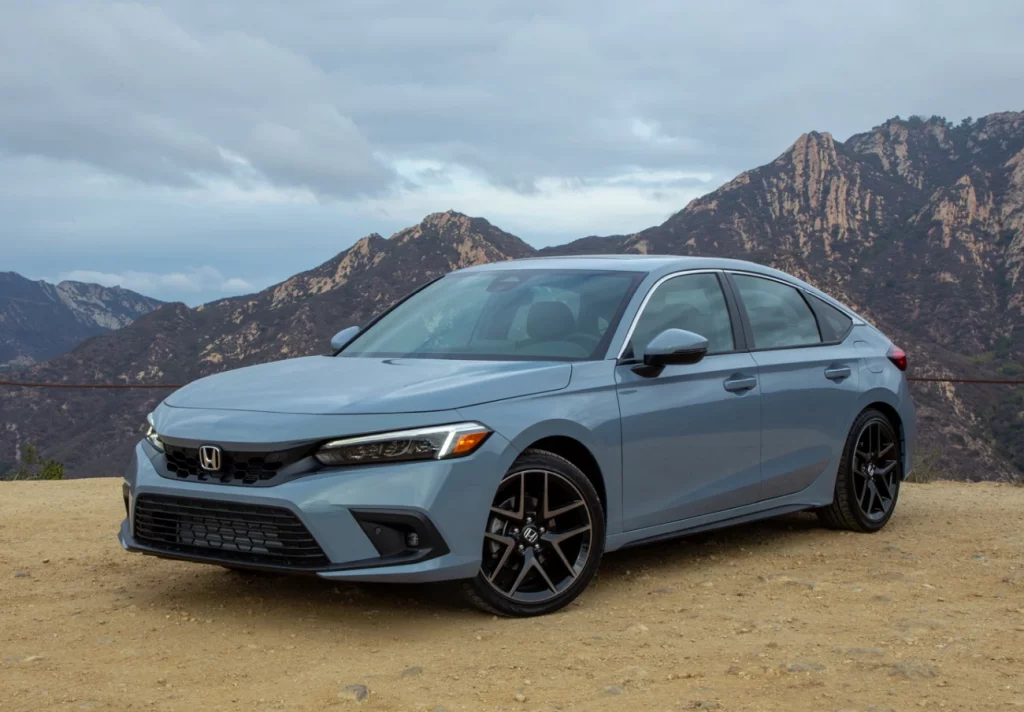
11th generation (2022-present): A new platform with a longer 107.7-inch wheelbase, slightly larger exterior dimensions, and a more restrained exterior design. The Si carries the L15CA 1.5-liter turbo but reduced to 200 horsepower at 6,000 rpm, with peak torque now arriving at 1,800 rpm — 300 rpm sooner than the 10th gen. Standard engine choices shifted: a 2.0-liter naturally aspirated K20C2 (158 hp) and the L15B7 1.5-liter turbo (180 hp for the 11th gen calibration). A two-motor hybrid powertrain (200 horsepower combined, 232 lb-ft, eCVT) was introduced for the 2025 model year and is the quickest non-Type R Civic ever tested at 6.2 seconds to 60 mph. The Type R (FL5) arrived for 2023 with a revised K20C1 producing 315 horsepower. Source: Honda Newsroom (2022 Civic Sedan specifications, 2025 Civic Hybrid specifications, 2023 Civic Type R specifications), Car and Driver.
Si Specs Comparison — The Generations That Matter Most to Enthusiasts
| Specification | 8th Gen Si (2006-2011) | 9th Gen Si (2012-2015) | 10th Gen Si (2016-2021) | 11th Gen Si (2022-present) |
|---|---|---|---|---|
| Engine | K20Z3 2.0L NA | K24Z7 2.4L NA | L15CA 1.5L turbo | L15CA 1.5L turbo |
| Horsepower | 197 hp @ 7,800 rpm | 201 hp @ 7,000 rpm | 205 hp @ 5,700 rpm | 200 hp @ 6,000 rpm |
| Torque | 139 lb-ft @ 6,100 rpm | 170 lb-ft @ 4,400 rpm | 192 lb-ft @ 2,100 rpm | 192 lb-ft @ 1,800 rpm |
| Redline | 8,000 rpm | 7,200 rpm | 6,500 rpm | 6,500 rpm |
| Transmission | 6-speed manual | 6-speed manual | 6-speed manual | 6-speed manual |
| Limited-Slip Diff | Helical LSD | Helical LSD | Helical LSD | Helical LSD |
| 0-60 (C&D) | ~6.5 sec | 6.1 sec (sedan) | 6.3 sec (coupe) / 6.4 (sedan) | 6.6 sec |
| Quarter-Mile | ~15.0 sec @ 91 mph | 14.7 sec @ 97 mph | 14.9 sec @ 93 mph | 14.9 sec @ 95 mph |
| Curb Weight | ~2,877-2,945 lbs | ~2,877-2,902 lbs | ~2,877-2,918 lbs | ~2,918-2,952 lbs |
| EPA MPG (comb) | 21/29/24 | 22/31/25 | 26/36/30 | 26/36/30 |
Sources: Honda Newsroom (Si specifications per model year), Car and Driver (2012 Si sedan tested — 6.1 sec, 14.7 @ 97; 2020 Si sedan tested — 6.4 sec, 14.9 @ 93; 2025 Si sedan — 6.6 sec, 14.9 @ 95). 8th gen Si tested data from Motor Matchup (6.5 sec) and DragTimes forum database. EPA ratings from Honda Info Center and fueleconomy.gov.
Standard Engine Lineup — What Each Generation Offered
The standard (non-Si, non-Type R) engine strategy changed significantly across the four generations.
8th gen (2006-2011): A single standard engine — the R18A1 1.8-liter SOHC i-VTEC inline-four producing 140 horsepower at 6,300 rpm and 128 lb-ft at 4,300 rpm. Transmission options were a 5-speed manual or a 5-speed automatic. A Civic Hybrid was offered with a 1.3-liter gasoline engine paired with an Integrated Motor Assist (IMA) electric system producing a combined 110 horsepower. Source: Honda Newsroom (2008 Civic Sedan specifications).
9th gen (2012-2015): The carryover R18 1.8-liter (140 hp) remained the standard engine. The Si used the new K24Z7 2.4-liter (201 hp). A revised Hybrid with the 1.5-liter gasoline engine and IMA system produced 110 horsepower combined and returned 44/44 mpg EPA. The 1.5-liter turbocharged engine did not arrive until the 10th generation. Source: Honda Newsroom (2012 Civic Sedan specifications).
10th gen (2016-2021): Two standard engines: the K20C2 2.0-liter naturally aspirated inline-four (158 hp at 6,500 rpm, 138 lb-ft at 4,200 rpm) and the L15B7 1.5-liter turbocharged inline-four (174 hp at 6,000 rpm, 162 lb-ft at 1,700 rpm). The 1.5T was available on EX and above trims. A 6-speed manual was available on the 1.5T Sport hatchback. CVT replaced the 5-speed automatic across the lineup. Source: Honda Newsroom (2016 Civic Sedan specifications).
11th gen (2022-present): Two standard engines at launch — the K20C2 2.0-liter (158 hp) on LX and Sport, and the L15B7 1.5-liter turbo (180 hp for 11th gen calibration, 177 lb-ft) on EX and Sport Touring. For 2025, Honda introduced a two-motor hybrid powertrain using a 2.0-liter Atkinson-cycle engine (200 horsepower combined, 232 lb-ft, eCVT) that replaced the 1.5T on Sport Hybrid and Sport Touring Hybrid trims. The hybrid is the quickest non-Type R Civic ever tested by Car and Driver at 6.2 seconds to 60 mph. Source: Honda Newsroom (2022, 2025 Civic Sedan specifications), Car and Driver (2025 Civic Hybrid tested).
| Generation | Base Engine | Optional Engine | Si Engine | Hybrid / Alt |
|---|---|---|---|---|
| 8th (2006-2011) | 1.8L R18 — 140 hp | None | 2.0L K20Z3 — 197 hp | 1.3L IMA Hybrid — 110 hp |
| 9th (2012-2015) | 1.8L R18 — 140 hp | None | 2.4L K24Z7 — 201 hp | 1.5L IMA Hybrid — 110 hp |
| 10th (2016-2021) | 2.0L K20C2 — 158 hp | 1.5T L15B7 — 174 hp | 1.5T L15CA — 205 hp | Type R K20C1 — 306 hp |
| 11th (2022-present) | 2.0L K20C2 — 158 hp | 1.5T L15B7 — 180 hp (2022-24); 2.0H Hybrid — 200 hp (2025+) | 1.5T L15CA — 200 hp | Type R K20C1 — 315 hp |
Sources: Honda Newsroom specifications per model year. EPA fueleconomy.gov.
Which Generation to Buy — And Which to Skip
Buy the 8th gen Si if: you want the highest naturally aspirated redline of any Civic Si (8,000 rpm), a cable-operated throttle body (easier to tune with Hondata), a double-wishbone rear suspension that the 9th gen lost, and a car that is mechanically simple enough to wrench on yourself. The K20Z3 is chain-driven (no Timing Belt), has forged internal components that handle boost well, and is one of the most documented engines in the Honda aftermarket. The valve adjustment interval (every 100,000 miles or when noisy) is the only K-series maintenance that requires specific expertise. Skip the 8th gen if you want modern infotainment, fuel economy above 30 mpg combined, or a car that does not require premium fuel.
Buy the 9th gen Si if: you want the most torque from a naturally aspirated Civic Si (170 lb-ft) and the best straight-line acceleration of any NA Si — 6.1 seconds to 60 mph from the sedan, 14.7 seconds in the quarter-mile at 97 mph. The K24Z7 has a broader torque curve than the K20Z3 and responds well to Hondata reflashes (approximately 215-220 whp with a tune and intake). The interior is more comfortable than the 8th gen, with standard Bluetooth audio (2013+), a backup camera (2014+), and a usable two-tier dashboard. Skip the 9th gen if you care about the highest redline — the 7,200 rpm limit feels lazy compared to the 8th gen’s 8,000 rpm — or if you want a hatchback body style (the 9th gen coupe and sedan do not offer the cargo utility of the 10th gen hatch).
Buy the 10th gen Si if: you want the most horsepower of any US-market Civic Si (205 hp), the widest torque plateau (192 lb-ft from 2,100-5,000 rpm), and the hatchback body style. The 10th gen Si sedan and coupe share the same drivetrain — the coupe is 2.5 inches lower and slightly lighter. The L15CA is responsive to tuning: a K-Tuner or Hondata reflash brings the Si to approximately 220-230 whp on 93 octane, with many owners reporting 250+ whp with a downpipe, intercooler, and flex-fuel sensor running E30. The factory LSD is the same helical unit used in the Type R. Skip the 10th gen if you prefer naturally aspirated engine character — the L-series sounds hollow compared to the K-series — or if you are concerned about long-term L-series reliability. The 10th gen has documented Oil dilution issues on early (2016-2018) 1.5T engines that Honda addressed with a software update and hardware revisions on later models.
Buy the 11th gen Si if: you want the best daily-driver Si — the cabin is significantly quieter, the interior materials are a clear step above the 10th gen, the adaptive dampers (standard) improve ride quality, and the 9-inch touchscreen with wireless Apple CarPlay and Android Auto is standard. The trade-off is slightly less power (200 hp vs 205 hp) and an additional 30-50 pounds of curb weight. The 11th gen Si is the most refined Si in a straight line but the least exciting in terms of power delivery. Buy the 2025 Sport Hybrid instead if straight-line speed matters more than the manual transmission — the hybrid is quicker (6.2 sec 0-60 vs 6.6 sec), cheaper ($30,100 vs $31,395), and returns 49 mpg combined versus the Si’s 30 mpg.
Skip the base 2.0L (K20C2) models on 10th and 11th gen if performance matters AT all. The 158-horsepower naturally aspirated 2.0-liter produces 0-60 times of approximately 8.2-8.5 seconds — significantly slower than the Si and the 1.5T. The 2.0L engine has a cast-iron sleeve and is not intended for performance modifications — it shares no aftermarket compatibility with the Si or Type R powertrains.
Known Problems by Generation
| Generation | Common Issues | Severity | Frequency / Source |
|---|---|---|---|
| 8th Gen | Dashboard cracking (2006-2008); premature clutch wear on tracked Si; cracked engine block on K20Z3 (overheating); A/C compressor failure on early models | Moderate | NHTSA: 1,200+ complaints (structure), 800+ (engine); Honda extended warranty on dash cracks (2006-2008) |
| 9th Gen | Excessive oil consumption on K24Z7 (some units); infotainment system lag; VTC actuator rattle on cold start; 2012 model year infotainment widely criticized | Low-Moderate | NHTSA: ~400 complaints, most on 2012 model year; Consumer Reports: “much improved” over 8th gen reliability |
| 10th Gen | Oil dilution in 1.5T (2016-2018, software patch 2019); A/C condenser failure (2016-2018); fuel injector failure on L15 (carbon buildup on direct injection); CVT shudder on high-mileage examples | Moderate-High (early 1.5T) | NHTSA: 3,900+ complaints (engine, fuel system); Honda extended A/C warranty to 10yr/100k mi; 1.5T oil dilution TSB 18-062 (software update) |
| 11th Gen | Fuel pump recall (2022-2023 models, low-pressure pump failure); BSI camera calibration issues on early models; dual-zone A/C blend door actuator noise (reported on forums) | Low | NHTSA: ~200 complaints total; fuel pump recall NHTSA 24V-321 covering ~11,000 units; J.D. Power reliability score: 82/100 (2024) |
Sources: NHTSA complaint data (safercar.gov), Honda technical service bulletins, CivicX.com and 8thcivic.com forum databases, Consumer Reports owner surveys.
Pricing — What Each Generation Costs in 2025
| Generation | Standard (used, good condition) | Si (used, good condition) | Original MSRP (Si, new) |
|---|---|---|---|
| 8th Gen | $5,000-$9,000 | $8,000-$14,000 | ~$21,310 (2008 Si sedan) |
| 9th Gen | $8,000-$12,000 | $13,000-$18,000 | $23,145-$23,345 (2012 Si) |
| 10th Gen | $14,000-$19,000 | $20,000-$27,000 | ~$26,195 (2020 Si coupe) |
| 11th Gen | $18,000-$24,000 (used) | $28,000-$33,000 (used, low mi) | $31,395 + $1,150 dest (2025) |
Sources: Hagerty valuation tool (2025), Bring a Trailer completed sales, Honda MSRP press releases. Standard model pricing based on 80,000-120,000 mile examples from major used-car listing aggregators. Si pricing favors lower-mileage, unmodified examples. Condition, accident history, and service records significantly affect actual sale prices. Original MSRP figures are approximate base prices excluding destination charges.
Quick Reference — Generation Comparison
☐ 8th gen (2006-2011): K20Z3 2.0L NA, 197 HP, 8,000 rpm redline, 6-speed manual, double-wishbone rear suspension, ~$5,000-$14,000 used
☐ 9th gen (2012-2015): K24Z7 2.4L NA, 201 hp, 170 lb-ft, fastest NA Si (6.1 sec 0-60), 6-speed, updated interior, ~$8,000-$18,000 used
☐ 10th gen (2016-2021): L15CA 1.5L turbo, 205 hp, 192 lb-ft, first turbo Si, hatchback available, oil dilution on early 1.5T, ~$14,000-$27,000 used
☐ 11th gen (2022-present): L15CA 1.5L turbo, 200 hp, 192 lb-ft, most refined Si, adaptive dampers standard, ~$18,000-$33,000 used
☐ 11th gen Hybrid (2025): 2.0L Atkinson hybrid, 200 hp comb., 232 lb-ft, eCVT, 6.2 sec 0-60, 49 mpg comb., $30,100 MSRP
☐ Standard 2.0L K20C2 (10th/11th gen): 158 hp, ~8.2-8.5 sec 0-60, not modifiable — skip if performance matters
☐ 1.5T vs 2.0L NA in standard models: 1.5T is 174-180 hp, 2.0L is 158 hp — the 1.5T is worth the premium
☐ 8th gen Si uses premium fuel (91 octane), return 21/29 mpg; 10th/11th gen Si also recommends premium, 26/36/30 mpg
☐ 9th gen Si is the quickest NA Si in a straight line (6.1 sec) — but the 2025 Hybrid is quicker (6.2 sec) with 49 mpg
☐ The 8th gen dashboard cracking issue (2006-2008) had a Honda extended warranty — verify if repaired before buying
☐ The 10th gen oil dilution was addressed via TSB 18-062 (software update) and hardware revisions on 2019+ models
☐ The 11th gen Fuel Pump Recall (NHTSA 24V-321) covers 2022-2023 models — verify completion before purchase
☐ All four generations use the same 5×114.3mm wheel bolt pattern — 17-inch and 18-inch wheels from any gen fit any other gen