

Every Honda Civic Si Generation Ranked — From 1986 to Today
The Honda Civic Si has existed continuously (with a brief gap in the late 1990s) since 1986. Across nine distinct generations sold in the United States, the Si has evolved from a fuel-injected economy hatchback to a turbocharged Sport sedan with a limited-slip differential, adaptive dampers, and rev-match downshifts. Each generation has a character of its own, and some are more desirable — or more reliable — than others.
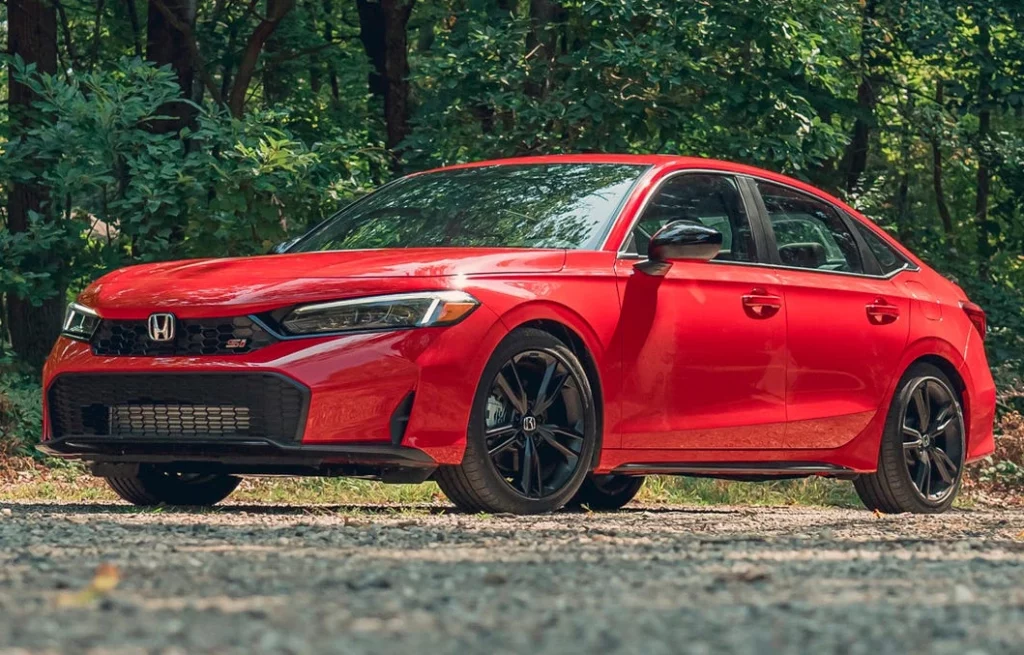
This guide covers every USDM Civic Si generation in chronological order, with verified specifications sourced from Honda Newsroom archives, NHTSA records, and independent testing data. Chassis codes, engine codes, output figures, known issues, and current used-market context are included for each. A ranking section at the end consolidates the verdict.
How the Si Generations Line Up
| Generation | Chassis Codes | Model Years | Body Styles | Engine | Output | Transmission |
|---|---|---|---|---|---|---|
| 3rd gen | — | 1986–1987 | 3-door hatchback | D15A4 (EW4) 1.5L SOHC | 91 hp / 93 lb-ft | 5-speed manual |
| 4th gen | ED9 | 1989–1991 | 3-door hatchback | D16A6 1.6L SOHC | 108 hp / 100 lb-ft | 5-speed manual |
| 5th gen | EH/EJ2 | 1992–1995 | 3-door hatchback | D16Z6 1.6L SOHC VTEC | 125 hp / 106 lb-ft | 5-speed manual |
| 6th gen | EM1 | 1999–2000 | 2-door coupe | B16A2 1.6L DOHC VTEC | 160 hp / 111 lb-ft | 5-speed manual |
| 7th gen | EP3 | 2002–2005 | 3-door hatchback (UK-built) | K20A3 2.0L DOHC i-VTEC | 160 hp / 132 lb-ft | 5-speed manual |
| 8th gen | FG2 (coupe) / FA5 (sedan) | 2006–2011 | 2-door coupe, 4-door sedan | K20Z3 2.0L DOHC i-VTEC | 197 hp / 139 lb-ft | 6-speed manual w/ LSD |
| 9th gen | FB6 (sedan) / FG4 (coupe) | 2012–2015 | 2-door coupe, 4-door sedan | K24Z7 2.4L DOHC i-VTEC | 201–205 hp / 170–174 lb-ft | 6-speed manual w/ LSD |
| 10th gen | FC1 (sedan) / FC3 (coupe) | 2017–2021 | 2-door coupe, 4-door sedan | L15B7 1.5L DOHC turbo | 205 hp / 192 lb-ft | 6-speed manual w/ LSD |
| 11th gen | FE1/FE2 | 2022–present | 4-door sedan only | L15CA 1.5L DOHC turbo | 200 hp / 192 lb-ft | 6-speed manual w/ LSD |
Sources: Honda Newsroom (Si Timeline and Milestones), Honda spec sheets, Wikipedia (each generation), MotorTrend Si history, Edmunds. The USDM Si was absent from 1988 and 1996–1998 model years. The 2001 model year also had no Si — the EP3 arrived as a 2002 model.
1986–1987 Civic Si (3rd Generation) — Where It Started
The first USDM Honda Civic Si arrived for the 1986 model year as a 3-door hatchback. It used Honda’s PGM-FI fuel injection on a 1.5L SOHC 12-valve engine (D15A4/EW4) producing 91 hp at 5,500 rpm and 93 lb-ft of torque at 4,500 rpm — modest by any modern standard, but a meaningful step above the carbureted 76 hp S model it replaced (source: Honda Newsroom Si Timeline). A rear stabilizer bar and a removable glass sunroof were standard. The 1987 model year added Blackburn Black Metallic and Rio Red paint options.
Known issues: Carbureted-era Wiring Harness degradation is common on surviving examples. Parts availability for the D15A4 is limited. Rust in the rear quarter panels and hatch area is the primary structural concern.
Used market notes: Survivors are rare. Clean examples trade AT collector pricing ($8,000–$15,000) when they appear. This is not a practical daily driver in 2026 — it is a collector piece.
1989–1991 Civic Si (4th Generation) — Double Wishbone Arrives
The fourth-generation Civic switched to double-wishbone front and rear suspension, a significant handling upgrade. The Si hatchback (Chassis Code ED9) received a 1.6L SOHC D16A6 engine with 108 hp and 100 lb-ft of torque (source: Honda Newsroom Si Timeline). The engine retained multi-point fuel injection but did not yet have VTEC. The 4th gen Si weighed roughly 2,100 lbs, giving it a favorable power-to-weight ratio despite the modest output.
Known issues: Rear wheel well rust is endemic. The D16A6 is robust but the original distributors are failure-prone. Interior plastic degrades with sun exposure.
Used market notes: Increasingly rare. Clean hatchbacks sell for $4,000–$10,000 depending on rust condition. The double-wishbone suspension makes this generation a favorite among handling purists.
1992–1995 Civic Si (5th Generation) — First VTEC in the US
The fifth-generation Si hatchback was the first US-market Civic to feature VTEC variable valve timing, on the intake cam of the 1.6L D16Z6 engine. Output rose to 125 hp at 6,600 rpm and 106 lb-ft of torque at 5,200 rpm, with a 7,200-rpm redline (source: Honda Newsroom Si Timeline; MotorTrend Si history). The Si also gained four-wheel disc brakes, a power moonroof, and standard power steering. The double-wishbone suspension carried over from the 4th generation.
Known issues: The D16Z6 is prone to oil leaks from the VTEC solenoid and distributor O-ring. Timing belt intervals are 90,000 miles — Interference Engine if the belt fails. Rust in the rear trailing arm mounting points is a known structural concern (NHTSA complaints, forum data).
Used market notes: Prices range from $3,000 for a high-mileage driver to $8,000+ for a clean, low-mileage example. Aftermarket support is extensive. This generation is the most affordable entry point into VTEC-era Civic Si ownership.
1999–2000 Civic Si (6th Generation, EM1) — The COTY Cult Classic
Honda dropped the Civic Si after the 1995 model year, bringing it back for 1999 in coupe form only. The EM1 is the most celebrated Si generation among enthusiasts for one reason: the B16A2 engine. This 1.6L DOHC VTEC four-cylinder produced 160 hp at 7,600 rpm and 111 lb-ft of torque at 7,000 rpm, with VTEC engagement at 5,600 rpm and an 8,000-rpm redline (source: Wikipedia sixth-generation Civic; Edmunds 1999 Si specs). The 5-speed manual was the only transmission offered. The EM1 weighed approximately 2,600 lbs and could reach 60 mph in 7.1 seconds.
The EM1 was only sold for two model years, and it earned a dedicated following for its high-strung, rev-hungry character. It debuted at a time when the compact sport coupe segment was thriving and the B16A2 was the most entertaining engine in its class.
Known issues: The B16A2 burns oil if VTEC has not been engaged regularly — the VTEC solenoid can clog. The cable-operated transmission (Y21 S4C) develops 2nd-gear grind with aggressive driving. Rust in the rear Trailing Arm mounts is common. Original catalytic converters are now 26+ years old and often clogged.
Used market notes: Clean, unmodified EM1s trade at a premium — expect $8,000–$15,000 for a straight, low-mileage example. Modified cars are common and cheaper ($3,000–$6,000) but carry unknown maintenance history. The EM1 is the most collectible mainstream Si generation.
2002–2005 Civic Si (7th Generation, EP3) — The UK-Built Oddball
The seventh-generation Si broke from tradition in several ways. It was built at Honda’s plant in Swindon, England, and imported as a 3-door hatchback — the only body style offered. It used the K20A3 engine (160 hp at 6,500 rpm, 132 lb-ft at 5,000 rpm), the first K-Series in a US-market Civic. A distinctive “rally-style” dashboard-mounted shifter operated the 5-speed manual (source: Honda Newsroom Si Timeline; Wikipedia seventh-generation Civic).
The EP3 was heavier than the EM1 (2,744 lbs versus ~2,600 lbs) and used MacPherson Strut front suspension instead of double-wishbone, resulting in less responsive handling. It was the least enthusiast-focused Si until the current generation’s refinement direction.
Known issues: 2nd-gear grind is common on the EP3 transmission. The K20A3 consumes oil at higher mileage. Rust in the rear hatch area. The dashboard-mounted shifter develops play over time.
Used market notes: The EP3 is the least expensive Si generation on the used market — $2,500–$5,000 for a running example. The hatchback body is practical, and the K-series engine responds well to aftermarket upgrades. It is an underappreciated daily driver for someone who wants a practical Si on a budget.
2006–2011 Civic Si (8th Generation, FG2/FA5) — The High-Revving Golden Era
The eighth-generation Si debuted as a coupe for 2006 (FG2) and added a sedan (FA5) for 2007 — the first Si sedan in history. The 2.0L K20Z3 engine produced 197 hp at 7,800 rpm and 139 lb-ft at 6,200 rpm, with a VTEC changeover at 5,800 rpm and an 8,300-rpm rev limiter (source: Honda Newsroom Si Timeline; DSPORT Magazine K20Z3 teardown). The Si received a 6-speed manual transmission for the first time, plus a standard helical limited-slip differential. The coupe weighed approximately 2,850 lbs and the sedan around 2,900 lbs.
The 8th gen Si is widely regarded as the sweet spot in the Si lineage: high-revving naturally aspirated power, a 6-speed with LSD, double-wishbone rear suspension (the last Si generation with double-wishbone), and a strong aftermarket. A limited edition Mugen Si sedan (2008, 1,000 units) added a sport-tuned exhaust, suspension, and body kit. The 2009 facelift revised the front bumper, grille, and taillights.
Known issues: The K20Z3 burns oil at higher mileage — typically 1 quart per 1,000–2,000 miles above 100,000 miles. 3rd-gear lockout is a common transmission complaint. The factory clutch is marginal at stock power levels and does not tolerate repeated hard launches. NHTSA complaint data shows a cluster of airbag-related issues (Takata recalls apply to this generation). The 2006 model has additional recalls for the passenger airbag sensor.
Used market notes: Clean, stock examples trade for $8,000–$14,000 depending on mileage and condition. The sedan (FA5) commands a slight premium. Modified cars are abundant and cheaper — finding an unmodified example is increasingly difficult. This generation has the strongest enthusiast following of any post-2000 Si.
2012–2015 Civic Si (9th Generation, FB6/FG4) — The K24 Torque Step
The ninth-generation Si moved to the largest-displacement engine ever offered in a US Civic Si: the K24Z7, a 2.4L DOHC i-VTEC four-cylinder. The 2012–2013 models produced 201 hp at 7,000 rpm and 170 lb-ft of torque at 4,400 rpm. A 2014 exhaust retuning raised output to 205 hp at 7,000 rpm and 174 lb-ft at 4,400 rpm, with the redline raised from 7,000 to 7,500 rpm (source: Wikipedia ninth-generation Civic; Honda The Other Side K24Z7). The 6-speed manual with Helical LSD remained standard. No CVT, no turbo, no automatic — the Si was exclusively manual across all four model years.
The K24Z7 engine delivered stronger mid-range torque than the K20Z3, but the redline was lower (7,000–7,500 rpm versus 8,300 rpm), giving the 8th gen a more theatrical top-end experience. EPA highway fuel economy rose to 31 mpg — the best of any naturally aspirated Si (source: Honda Newsroom 2012 Si specs).
Known issues: The K24Z7 is generally reliable, but oil consumption at higher mileage (100,000+) is documented. The 9th gen chassis has fewer NVH issues than the 8th gen. Clutch Master Cylinder failures are reported on early 2012 models. The infotainment system on 2012–2013 models is dated and slow.
Used market notes: Prices range from $7,000–$13,000 depending on condition and mileage. The 2014–2015 facelift models (with the 205 HP engine and improved redline) command the higher end. The 9th gen Si is the most practical daily driver among the naturally aspirated Si generations.
2017–2021 Civic Si (10th Generation, FC1/FC3) — First Turbocharged Si
The tenth-generation Si marked a fundamental shift: turbocharging from the factory for the first time. The 1.5L L15B7 turbocharged engine produced 205 hp at 5,700 rpm and 192 lb-ft of torque from 2,100 to 5,000 rpm — the most torque ever from a factory Si (source: MotorTrend 2017 Si first test; Honda Newsroom 2017 Si specs). The 6-speed manual with helical LSD remained standard. Adaptive dampers (Normal and Sport modes) were introduced for the first time on the Si.
The 10th gen Si was available in both coupe (FC3) and sedan (FC1) body styles. Car and Driver recorded 6.3 seconds to 60 mph for the 2017 Si coupe — the quickest Si ever tested. Curb weight was 2,885 lbs for the sedan, making the 10th gen Si lighter than the 9th gen despite gaining a Turbocharger and intercooler.
Known issues: The L15B7 has documented issues with Oil dilution in cold climates (fuel mixing with oil in the crankcase, primarily on short-trip winter driving). Honda issued several TSBs and a software update to mitigate this, but the design is inherently more prone to dilution than naturally aspirated engines. Intercooler heat soak in hot weather reduces power — the factory intercooler is undersized for sustained performance. The clutch is notably the weakest link — it slips under increased torque levels with off-the-shelf tunes. NHTSA complaint data shows approximately 50+ complaints related to engine and drivetrain for the 2017–2020 Si.
Used market notes: Clean, stock examples trade for $18,000–$24,000 depending on mileage and year. The 2020–2021 models (with the most refinements and infotainment updates) command the top of the range. The Si coupe was discontinued after 2021 — expect coupe prices to hold steady among enthusiasts.
2022–Present Civic Si (11th Generation, FE1/FE2) — Refinement Over Peak Power
The eleventh-generation Si returned exclusively as a sedan — no coupe, no hatch. The 1.5L L15CA turbo engine produces 200 hp (5 hp less than the 10th gen) and 192 lb-ft of torque, with Honda re-tuning to deliver more torque lower in the RPM range and a flatter power curve. The 6-speed manual with helical LSD remains the only transmission. Honda added rev-match downshifting (defeatable) and a lighter flywheel for improved throttle response (source: Honda Newsroom 2022 Civic Si specifications; MotorTrend 11th gen Si review). Curb weight rose to 2,952 lbs — 67 lbs heavier than the 10th gen sedan.
The 11th gen Si trades peak power for daily usability. The cabin is noticeably quieter than previous generations, the ride is less harsh, and the rev-match system makes the car easier to drive smoothly. Honda’s Google Built-In infotainment with wireless Apple CarPlay and Android Auto is standard. The Bose 12-speaker audio system is a major upgrade over the 10th gen’s standard system. The 2025 model year Si is priced at $29,950 MSRP ($31,100 with destination), with optional summer tires adding $300.
Known issues: The 11th gen is still early in its lifecycle. Reports of oil dilution are reduced compared to the L15B7 but not eliminated. NHTSA complaint data for 2022–2024 Si models is minimal — the most common reports are infotainment-related (wireless CarPlay dropouts). No major drivetrain recalls as of mid-2026.
New/pre-owned notes: New 2025 examples are available near MSRP. Used 2022–2024 examples trade from $26,000–$30,000. The Si currently represents good value in a market where most sport compacts start above $32,000.
Key Issues by Generation — Quick Reference
| Generation | Most Common Issues | NHTSA Recalls | Best Used Pick |
|---|---|---|---|
| 3rd gen (86–87) | Wiring degradation, rear rust, parts availability | None active | Collector only — skip for daily use |
| 4th gen (89–91) | Wheel well rust, distributor failure | None active | Rust-free survivor only |
| 5th gen (92–95) | Oil leaks (VTEC solenoid), timing belt, trailing arm rust | None active | Most affordable VTEC Si — $3,000+ driver |
| 6th gen EM1 (99–00) | Oil consumption (VTEC), 2nd-gear grind, cat clogging, rust | Takata airbag | Stock unmodified — $8,000+ collector tier |
| 7th gen EP3 (02–05) | 2nd-gear grind, oil consumption, shifter play | Takata airbag, ignition switch | Best budget daily — $2,500–$5,000 |
| 8th gen (06–11) | Oil consumption (1 qt/1k mi+ after 100k), 3rd-gear lockout, weak clutch | Takata airbag, passenger sensor (2006) | 2009–2011 FA5 sedan — $8k–$14k |
| 9th gen (12–15) | Oil consumption (100k+), slow infotainment (2012-13), clutch MC (2012) | Takata airbag | 2014–2015 FB6 sedan — $7k–$13k |
| 10th gen (17–21) | Oil dilution (cold climate), IC heat soak, weak clutch | Fuel pump, engine software (dilution) | 2020–2021 FC1 sedan — $18k–$24k |
| 11th gen (22–present) | Infotainment dropouts (minor), still early lifecycle | None significant as of mid-2026 | 2025 new at ~$31k — best outright value |
Sources: NHTSA complaint data (safercar.gov), CivicX and Reddit r/Civic forum threads, Honda Newsroom TSB archives, Wikipedia recall data, owner survey data.
Ranking — Every Si Generation
1. 8th gen (2006–2011 FG2/FA5) — The best Si. High-revving K20Z3 (197 hp, 8,300 rpm), 6-speed with LSD, last generation with double-wishbone rear suspension, available as coupe and sedan, and the strongest aftermarket of any generation. The FA5 sedan is the most collectible Si from this era. Weak clutch is the only consistent drawback.
2. 6th gen EM1 (1999–2000) — The B16A2 is the most iconic Si engine. The EM1 is light (~2,600 lbs), rev-happy (8,000 rpm redline, VTEC at 5,600 rpm), and genuinely quick for its era (7.1 seconds to 60). Only a two-year run, coupe-only, and the second most collectible Si after the Mugen edition. The premium pricing reflects genuine scarcity.
3. 10th gen (2017–2021 FC1/FC3) — The fastest Si in a straight line (6.3 seconds to 60 mph per Car and Driver). The 1.5T with 205 hp and 192 lb-ft is the most torque-rich Si ever. The FC1 sedan is civilized and practical. Oil dilution and heat soak are real concerns but manageable with informed ownership. The coupe (FC3) is the last Si coupe — values will hold.
4. 9th gen (2012–2015 FB6/FG4) — The K24Z7 delivers the strongest mid-range torque of any naturally aspirated Si. The 2014–2015 facelift (205 hp, 7,500 rpm redline) is the standout. EPA highway at 31 mpg is excellent. The cabin is less special-feeling than the 8th gen, and the lack of a 8,000+ rpm redline dulls the experience.
5. 5th gen (1992–1995) — First USDM Si with VTEC. 125 hp is modest even by 1990s standards, but at ~2,200 lbs the Si hatchback is genuinely entertaining. Four-wheel Disc brakes and the double-wishbone suspension are substantial upgrades over the standard Civic. Best used buy for under $5,000.
6. 11th gen (2022–present FE1/FE2) — The most refined, quietest, and best-equipped Si. Google Built-In, Bose audio, defeatable rev-match, and the best cabin quality in Si history. But 200 hp is a downgrade from the 10th gen’s 205, sedan-only is restrictive, and the 2,952 lb curb weight is the heaviest Si ever. It is the most mature Si — and the least exciting.
7. 4th gen (1989–1991 ED9) — Double-wishbone suspension and 108 hp. Fun in its era, but underpowered by modern standards and nearly impossible to find rust-free. Only for dedicated collectors.
8. 7th gen (2002–2005 EP3) — The only Si built in the UK. The K20A3 is a K-series but a detuned one (160 hp, 6,800 rpm redline) shared with the Acura RSX base model. The MacPherson Strut suspension and heavy curb weight (2,744 lbs) make it the worst-handling Si. The rally-style shifter is a gimmick. Cheap to buy, but there is a reason.
9. 3rd gen (1986–1987) — Historically significant as the first US Si (91 hp, fuel injection), but realistically not a usable performance car in 2026. Collector interest only.
☐ First US Si: 1986–1987, 91 hp, 3-door hatch, D15A4, 5-speed manual
☐ First VTEC Si: 1992–1995, 125 hp, D16Z6, 5-speed manual, double-wishbone
☐ EM1 (1999–2000): 1.6L B16A2, 160 hp/111 lb-ft, 5-speed, 8,000 rpm redline, highest collector value
☐ EP3 (2002–2005): 2.0L K20A3, 160 hp/132 lb-ft, UK-built, 5-speed, MacPherson strut, least expensive used
☐ 8th gen (2006–2011): 2.0L K20Z3, 197 hp/139 lb-ft, 6-speed w/ LSD, 8,300 rpm, best Si overall
☐ 9th gen (2012–2015): 2.4L K24Z7, 201–205 hp/170–174 lb-ft, 6-speed w/ LSD, 7,500 rpm redline (facelift)
☐ 10th gen (2017–2021): 1.5T L15B7, 205 hp/192 lb-ft, 6-speed w/ LSD, first turbo, quickest 0-60 at 6.3 sec
☐ 11th gen (2022–present): 1.5T L15CA, 200 hp/192 lb-ft, 6-speed w/ LSD, rev-match, most refined
☐ Every Si generation has a 6-speed manual w/ LSD except: 3rd–7th gens (5-speed), 3rd–4th gens (no LSD)
☐ 2006 was the first year for 6-speed manual and first Si sedan
☐ 1988 and 1996–1998 had no Si model sold in the US