

The 9th generation Honda Civic (2012–2015) occupies an unusual position in the Civic timeline. It was rushed to market to replace the 8th gen quickly, received a critical reception so poor that Honda issued an early facelift after only one year, and then quietly became one of the most reliable used Civics available. For buyers in 2026, the 2014–2015 models represent arguably the strongest value proposition in the used Civic market: the proven R18 engine in its most refined form, the option of a conventional 5-speed automatic or a CVT, and prices between $8,000 and $15,000 depending on trim and mileage.
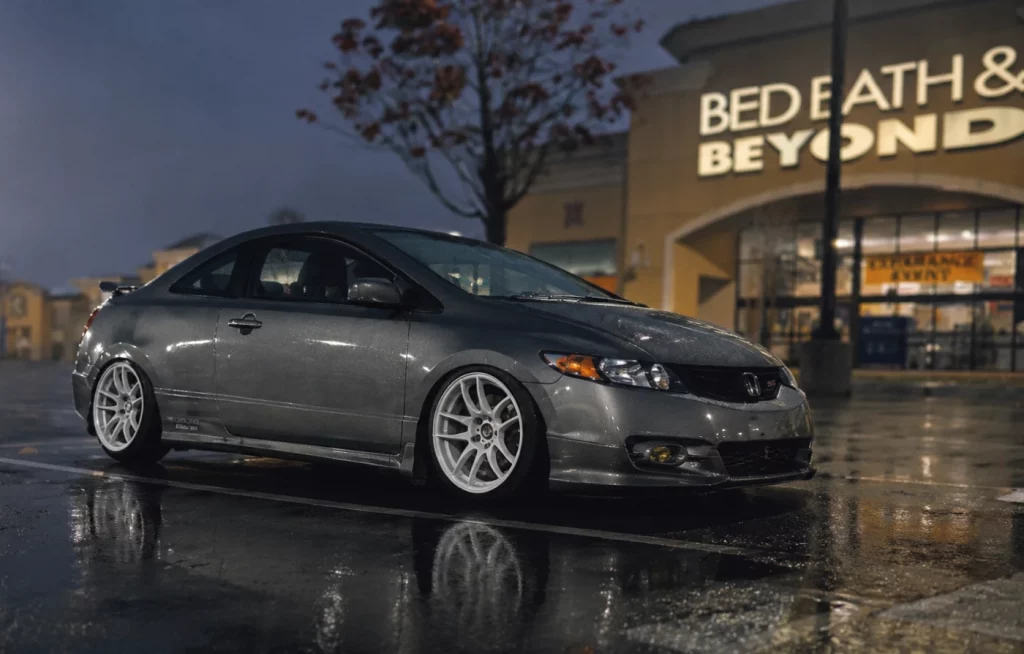
The most important rule of 9th gen Civic buying: The 2012 model year is a different car from the 2013–2015 models. Honda rushed the 2012 to market with cheap interior plastics and poor seats. The 2013 refresh fixed nearly every complaint. If you are looking AT a 9th gen, prioritize 2013–2015 cars.
Quick Answer — Is a 9th Gen Civic Still a Good Buy Under $15,000?
| Year | Target | Verdict |
|---|---|---|
| 2012 | Budget only | Inspect carefully — poor interior, but mechanically similar |
| 2013 | Best value | Good buy — first year of refresh, affordable |
| 2014 | Best all-around | Excellent — refreshed interior, CVT option, mature platform |
| 2015 | Best 9th gen | Best overall — final year, most refined, holds value best |
| 2012–2015 Si | Performance | Modified-car risk — check clutch, VTC rattle, and modifications |
Don’t spend the whole $15,000 on the newest Civic you can find. Spend it on the cleanest, best-maintained 9th gen you can find. A 2014 EX with 100,000 miles and service records is a better buy than a 2012 LX with 70,000 miles and no history.
What $15,000 Gets You in 2026
The 9th gen Civic sits in a sweet spot for the $8,000–$15,000 budget. At the lower end, you are looking at higher-mileage 2012–2013 cars with cosmetic wear. At the upper end, you are looking at clean 2014–2015 EX or EX-L models with moderate mileage.
| Budget | What You Get |
|---|---|
| $7,000–$9,000 | Higher mileage 2012–2013, LX-level cars, cosmetic flaws, potentially 150K+ miles |
| $9,000–$12,000 | Sweet spot — 2013–2015 with reasonable mileage, LX or EX, clean title, decent maintenance history |
| $12,000–$15,000 | Cleaner 2014–2015 with lower mileage, EX or EX-L, very clean examples, possibly Si (condition critical) |
Chassis Codes and Platform Overview
The 9th gen was sold in sedan (FB4), coupe (FG3/FG4 for Si), and hatchback (European-market only) body styles, with North America receiving only sedan and coupe configurations. The platform was heavily carried over from the 8th gen — the Wheelbase remained 2,670 mm (105.1 in), though Honda shortened the overall length by 28 mm. Curb weight ranged from 2,755 lb for an LX sedan to 3,037 lb for an Si sedan.
The real story of the 9th gen is the interior. The pre-facelift 2012 and early 2013 cars were criticized harshly for cheap plastics, uncomfortable seats with inadequate lumbar support, and excessive road noise. Honda responded with a significant mid-cycle refresh for the 2013 model year (sold as 2013.5 or “2014 model year” in some markets), updating the front and rear bumpers, grille, and headlights, but more importantly replacing the seats with redesigned units, adding sound deadening, and upgrading interior materials. The difference between a 2012 and a 2014 Civic is immediately noticeable.
Engine Lineup
| Engine | Displacement | Horsepower | Torque | Found In | Fuel Economy (EPA combined) |
|---|---|---|---|---|---|
| R18Z1 | 1.8L SOHC i-VTEC | 140 hp @ 6,500 RPM | 128 lb-ft @ 4,300 RPM | LX, EX sedan/coupe | 30–32 mpg (5AT) / 33 mpg (CVT 2014+) |
| K24Z7 | 2.4L DOHC i-VTEC | 205 hp @ 7,000 RPM | 174 lb-ft @ 4,400 RPM | Si sedan (FB6) and coupe (FG4) | 23–31 mpg |
The R18Z1 is an evolution of the 8th gen’s R18A1 with minor changes — the block casting defect was fully resolved. It uses a Timing Chain, requires 0W-20 oil (3.9 quarts), and is documented reaching 300,000 miles with basic maintenance. Oil consumption below 1 quart per 5,000 miles is normal after 100K miles.
The K24Z7 in the Si is the largest-displacement engine ever fitted to a non-hybrid Civic. It uses dual VTEC on both intake and exhaust cams, with VTEC engagement at approximately 5,200 RPM on the intake cam. The engine requires 5W-20 oil (5.0 quarts) and premium fuel. Redline is 7,000 RPM. The K24Z7 is known for excellent reliability but has one well-documented issue: the VTC actuator can produce a rattle on cold start, particularly in colder climates. This does not cause immediate damage but can worsen over time; replacement parts cost approximately $150–$300 plus labor.
Why the R18 is the reason to buy this generation: Naturally aspirated, no turbo, no direct injection, timing Chain, simple layout, cheap parts, huge aftermarket, easy to service, capable of very high mileage when maintained. The R18 is the most reliable engine in the 9th gen.
Transmission Options
| Transmission | Engine Match | Years | Known Issues |
|---|---|---|---|
| 5-speed automatic | R18 (LX/EX) | 2012–2013 | Generally reliable. Early upshifting tendency for fuel economy noted by owners. Fewer complaints than 8th gen 5AT |
| 5-speed manual | R18 (LX) | 2012–2015 | Rare — few LX manuals were sold. Notchy but reliable |
| CVT | R18 (LX/EX) | 2014–2015 | Low-speed judder reported on early units. CVT fluid changes at 30K miles critical to longevity (Honda TSB 14-009) |
| 6-speed manual | K24Z7 (Si) | 2012–2015 | Improved over 8th gen. 2nd gear pop-out reported by some owners under hard deceleration. No widespread synchro issue like 8th gen |
2013 Mid-Cycle Refresh — What Changed
The refresh addressed nearly every criticism of the 2012 model. Changes included:
- Seats: Completely redesigned front seats with better lumbar support and longer cushions
- Interior materials: Soft-touch dashboard panels replaced hard plastic on upper surfaces; revised door panel armrests
- Sound deadening: Increased insulation in floor pan, door cavities, and firewall. Road noise dropped measurably
- Exterior: Restyled front bumper and grille, new wheel designs, LED taillight accents
- Suspension: Revised damper tuning for improved ride quality
For used buyers, the 2014–2015 models are the clear recommendation. The refresh fixed the interior quality complaints that made the 2012 a poor ownership experience. The difference in cabin refinement is enough that 2014–2015 cars command a premium of roughly $500–$1,500 over equivalent 2012–2013 examples.
Known Problems by Model Year
| Model Years | Problem | Severity | Repair Cost Range |
|---|---|---|---|
| 2012–2013 | Poor interior quality — cheap plastics, uncomfortable seats, high road noise | Comfort | Addressed in 2013 refresh; not economically repairable |
| 2012–2015 | AC compressor failure — clutch seizes or bearings fail, no cold air | Moderate | $400–$1,200 |
| 2012–2015 (Si) | VTC actuator rattle on cold start (K24) — timing chain tensioner related | Minor–Moderate | $150–$400 parts + labor |
| 2014–2015 (CVT) | Low-speed CVT judder — hesitation or shudder from stop | Minor | $150–$300 fluid change; $3,000+ replacement |
| 2012–2015 | Cracked intake rubber duct — causes lean condition, rough idle, check engine light | Minor | $30–$60 part |
| 2012–2015 | Premature brake caliper sticking — rear calipers seize, uneven pad wear | Moderate | $200–$600 per axle |
| 2012–2015 | Battery life shorter than average — OEM battery often fails by 3 years | Minor | $100–$200 |
Sources: NHTSA complaint database, CarComplaints.com, 9thGenCivic.com forum owner surveys, Honda TSB 14-009.
Important: Engine block cracking, which plagued 2006–2008 8th gen Civics, is not a documented issue on the 9th gen. The R18Z1 block casting was corrected. This is one of the strongest reliability arguments for choosing a 9th gen over an 8th gen R18 car.
2012 — Is It Really That Bad?
The 2012 model year has a reputation that is partly deserved and partly exaggerated. The interior quality is genuinely poor by Honda standards — hard plastics, uncomfortable seats, and excessive road noise. Consumer Reports criticized it heavily, and Honda responded with the 2013 refresh.
However: A 2012 Civic is mechanically identical to a 2013 Civic. The engine, transmission, suspension, and electronics are the same. If you can tolerate the interior quality, a 2012 is a good value because it is cheaper than 2013–2015 cars. A 2012 with 100,000 miles is typically $1,500–$2,000 less than a 2014 with the same mileage.
When to buy a 2012: When the price is significantly discounted and you do not care about interior comfort. A $7,000 2012 with 100,000 miles and service records is a better buy than a $10,000 2012 with 70,000 miles and no records.
2012 buying rule: The 2012 is a cheap entry point, but do not pay a premium for it. If the price gap to a 2014 is less than $1,500, buy the 2014. The interior improvement is worth the extra money.
Trim-by-Trim Buying Guide
LX: The base model. Power windows, A/C, cruise control, and the reliable R18 engine. Available with 5-speed manual, 5-speed automatic (2012–2013), or CVT (2014–2015). Best value in the 9th gen lineup. The LX is the cheapest way into a 9th gen, and it has the same engine as the EX.
EX: Adds alloy wheels, power moonroof, Honda LaneWatch camera, and upgraded audio. The EX is the sweet spot — it adds meaningful features without the EX-L premium. The LaneWatch camera is genuinely useful for highway merging and city driving.
EX-L: Adds leather seats and a leather-wrapped steering wheel. The EX-L is nice but commands a premium over the EX. On a $10,000–$12,000 budget, the EX is usually a better value.
Si: The enthusiast choice. K24Z7 engine (205 hp, 174 lb-ft), 6-speed manual, helical LSD, sport suspension, and larger brakes. Buy only if you want a performance car — running costs are higher than the R18 models. Check VTC actuator rattle and clutch condition carefully. Unmodified examples with service records are the best buys.
HF (High Fuel Efficiency): A fuel-economy-focused trim with 16-inch alloy wheels, underbody aero panels, and a rear spoiler. The HF gets 32 mpg combined (versus 30–31 mpg on the LX). It is a good value if you find one, but they are rare.
5AT vs CVT — Which One to Choose
5-speed automatic (2012–2013): The conventional automatic is the simpler, more familiar choice. It is durable and cheap to service. The downside is fuel economy — 30–31 mpg combined versus 33 mpg on the CVT. The 5AT also has a reputation for early upshifting to save fuel, which can make the car feel sluggish. This is normal behavior, not a defect.
CVT (2014–2015): The CVT improves fuel economy to 33 mpg combined and is smoother in stop-and-go traffic. The downside is the low-speed judder issue on early units. Honda TSB 14-009 addresses this with a software update and fluid change. Ask the seller whether the TSB has been performed. Check for hesitation or shudder when accelerating from a stop. If the CVT fluid has been changed every 30,000 miles with genuine Honda HCF-2 fluid, the CVT is reliable.
Transmission recommendation: If you want the simplest, most predictable transmission, buy a 2013 with the 5AT. If you want the best fuel economy and are willing to maintain the CVT properly, buy a 2014–2015 with the CVT and a documented fluid change history.
High-Mileage 9th Gen — 100K, 150K, 200K Miles
The R18 engine is capable of 300,000+ miles with proper maintenance. The key is oil changes every 5,000 miles with synthetic 0W-20. The timing chain is good for the life of the engine — it does not need replacement unless it rattles on startup.
Under 100,000 miles: Don’t overpay just because of mileage. A clean 120,000-mile car with records is a better buy than a neglected 80,000-mile car.
100–150,000 miles: The sweet spot for value. The car has depreciated significantly but still has plenty of life left. Check the CVT fluid history (2014–2015), AC function, and suspension Bushings.
150–200,000 miles: Maintenance history becomes everything. The car should have had at least one valve adjustment, multiple transmission fluid changes, and recent suspension work. Budget $1,000–$1,500 for deferred maintenance.
200,000+ miles: Buy the car, not the odometer. A maintained 200K-mile car can be a better buy than a neglected 120K-mile car. Check compression and oil consumption. Expect to replace engine mounts, suspension bushings, and the AC compressor.
Mileage rule: A maintained 180,000-mile Civic is a better buy than a neglected 100,000-mile Civic. The owner who kept records is the owner who changed the oil on time. Buy the car, not the odometer.
Used Market Notes by Year
Prices for the 9th gen Civic in mid-2026 range from approximately $7,000 for a 2012 LX sedan with 130K+ miles to $14,000 for a 2015 EX sedan with under 60K miles. The Si premium is significant: clean Si coupes with under 80K miles are listed between $13,000 and $18,000, with unmodified examples commanding the highest prices.
The best value in the generation is a 2014 EX sedan with the CVT. The 2014 benefits from the interior refresh, the CVT improves fuel economy to 33 mpg combined, and the EX trim adds alloy wheels, power moonroof, and Honda LaneWatch. Typical price: $9,000–$11,500 for one with 70K–90K miles.
The 2012 models should be avoided unless the price is significantly discounted for the interior quality shortcomings. The engineering is the same underneath, but the cabin experience is noticeably worse.
For Si buyers, the 2014–2015 Si received the same interior improvements and the K24Z7 remained unchanged. The 9th gen Si is the last Civic Si with a naturally aspirated K-Series engine, and prices have been rising gradually since 2023.
Modified vs Stock — What to Look For
Green flags: Stock intake, stock exhaust, OEM suspension, OEM wheels, documented maintenance. The best 9th gen Civic is an unmodified one that was maintained by an attentive owner.
Yellow flags: Coilovers, intake, exhaust, tune, aftermarket wheels. These are not dealbreakers, but the car was likely driven harder than stock. Check the condition of the clutch, transmission, and suspension bushings.
Red flags: Turbo kit, hacked wiring, engine swap with no documentation, stripped interior, welded differential, track build, salvage title. These cars are projects, not daily drivers. Avoid unless you are an experienced mechanic looking for a project.
Si buying rule: A stock, documented Si is worth more attention than a cheap, heavily modified Si. Modifications almost always lower resale value and increase maintenance costs.
What to Check Before Buying — The Inspection Checklist
Interior check (2012–2013): Sit in the driver seat for at least 5 minutes. If the seat is genuinely uncomfortable and the lumbar support feels inadequate, that is characteristic of the pre-refresh models — not a defect. Decide whether you can live with it or pay the premium for a 2014+ car.
AC test: Run AC on max for 5 minutes. If it blows cool initially but warms up after 10 minutes of driving, suspect a failing compressor. This is a known expense on the 9th gen.
CVT test drive (2014–2015): Accelerate gently from a complete stop on a flat road. Any hesitation, shudder, or delay in forward movement after releasing the brake could indicate early CVT Judder. Check whether the CVT fluid has been changed at 30K mile intervals.
VTC rattle (Si models): Cold-start the engine after the car has sat for at least 6 hours. A brief rattle (1–3 seconds) from the front of the engine on startup is the VTC actuator. If the rattle persists longer than 3 seconds or is accompanied by a check engine light, the actuator needs replacement.
Brake caliper check: Jack the rear wheels and spin them. Resistance or grinding noise indicates a sticking caliper. Check inner pad wear — the inside pad wears faster than the outer when the caliper is sticking.
Intake duct: With the engine off, inspect the rubber intake tube between the air filter housing and throttle body. Cracks here cause unmetered air entry and a lean condition.
Engine mounts: The passenger-side hydraulic Engine Mount fails on most 9th gen Civics. With the engine running, shift from Park to Drive while holding the brake. Excessive movement or vibration at idle indicates worn mounts — a $300–$500 repair.
Sedan vs Coupe — Which to Choose
Sedan: More practical, easier rear-seat access, better resale value, more common. The sedan is the better choice for 90% of buyers. Rear doors make it easier to live with, and the trunk is larger.
Coupe: Sportier styling, slightly lighter, but rear-seat access is difficult and rear headroom is limited. The coupe is harder to sell and often priced lower than the sedan. Only buy a coupe if you never carry rear passengers or if you specifically want the Si coupe.
Best 9th Gen Civic Configurations Under $15,000
| Goal | Best Target |
|---|---|
| Cheapest reliable daily | 2013 LX, R18 + 5-speed automatic |
| Best value | 2013–2014 EX, R18 + CVT (2014) or 5AT (2013) |
| Best overall | 2015 EX, R18 + CVT — most refined 9th gen |
| Best automatic | 2014–2015 LX or EX, R18 + CVT — smooth, fuel-efficient |
| Best manual | 2013–2015 LX, R18 + 5-speed manual — rare, engaging |
| Best enthusiast | 2014–2015 Si, K24Z7 + 6-speed manual — last naturally aspirated Si |
| Best family car | Sedan EX, 2014–2015 |
| Best fuel economy | 2014–2015 LX/EX, R18 + CVT — 33 mpg combined |
| Best project | Clean manual chassis — R18 or Si, stock or well-documented |
Should You Buy a 9th Gen Civic Under $15,000?
The 9th gen Civic is one of the safest used car buys under $15,000 in 2026. The R18 engine is proven and reliable. The 2014–2015 interior is comfortable and quiet. The cars are old enough to have depreciated significantly but young enough to have years of life left.
The best overall buy: A 2014 or 2015 EX sedan with the CVT, under 90,000 miles, clean title, and service records. Priced around $10,000–$12,000. This car will comfortably last another 100,000 miles with routine maintenance.
The budget buy: A 2013 LX with the 5-speed automatic, under 120,000 miles, clean title, and service records. Priced around $8,000–$9,500. The 5AT is simpler and cheaper to maintain than the CVT, and the 2013 has the refreshed interior.
The enthusiast buy: A 2014–2015 Si, unmodified, with under 80,000 miles and service records. Priced around $13,000–$16,000. The K24Z7 is the last naturally aspirated Si engine, and values are holding steady.
Frequently Asked Questions
Is a 9th gen Civic reliable?
Yes. The R18 engine is proven and reliable. The 2014–2015 CVT is reliable with proper fluid changes. The Si’s K24Z7 is durable but check for VTC actuator rattle.
Is 2012 Civic worth buying?
Only if the price is significantly discounted. The interior quality is poor compared to 2013–2015 models. A 2012 with 100,000 miles for $6,000 is a better buy than a 2012 with 70,000 miles for $9,000.
Is 2014 Civic reliable?
Yes. The 2014 has the refreshed interior and the CVT (if equipped) is reliable with proper maintenance. The R18 engine has no major issues.
Is 2015 Civic the best year?
Yes. The 2015 is the most refined 9th gen. It has all the updates, the fewest production issues, and the highest resale value. It is the best 9th gen overall.
Which 9th gen Civic engine is best?
The R18 is the most reliable and cheapest to maintain. The K24Z7 in the Si is more fun but costs more to maintain and requires premium fuel. For a daily driver, the R18 is the better choice.
Does the R18 have a timing belt?
No. The R18 uses a timing chain that is good for the life of the engine. No scheduled replacement is required.
How long does an R18 last?
300,000+ miles with regular oil changes (synthetic 0W-20 every 5,000 miles) and valve adjustments every 30,000–50,000 miles.
Is the CVT reliable in the 9th gen?
Yes — with proper fluid changes every 30,000 miles using genuine Honda HCF-2 fluid. Check for low-speed judder on 2014–2015 models. The Honda TSB 14-009 addresses this issue.
Is the 5-speed automatic better than the CVT?
The 5AT is simpler and cheaper to maintain. The CVT is smoother and more fuel-efficient. Choose the 5AT if you want the simplest transmission. Choose the CVT if you want better fuel economy and are willing to maintain it properly.
How many miles is too many?
There is no fixed number. A maintained 180K-mile car is a better buy than a neglected 100K-mile car. Focus on condition and maintenance history.
Quick Reference Checklist
☐ 2014–2015 models strongly preferred — interior quality, seats, sound deadening
☐ 2013 is a good budget alternative — first year of refresh, affordable
☐ 2012 only if price is significantly discounted — interior quality is poor
☐ Verify CVT fluid change history — on 2014–2015 CVT cars (every 30,000 miles)
☐ Cold-start Si models — listen for VTC actuator rattle lasting more than 3 seconds
☐ Test AC output over a 10-minute drive — compressor failure is common
☐ Check rear brake calipers — for sticking and uneven pad wear
☐ Inspect rubber intake duct — for cracks causing lean condition
☐ Check engine mounts — passenger-side hydraulic mount fails
☐ Get a pre-purchase inspection — from a mechanic who knows 9th gen Civics
Sources: NHTSA complaint database, CarComplaints.com, 9thGenCivic.com forum owner surveys, Honda TSB 14-009, Samarins.com 9th gen Civic guide, CarBuzz 9th gen Civic review, CarScout market snapshot (June 2026). Prices are approximate and may vary by region and market conditions.