

The relationship between transmission type and resale value in the Honda Civic market has undergone a fundamental shift over the past two decades. In the early 2000s, the manual transmission was the budget option — cheaper to buy new, cheaper to maintain, and cheaper to sell used. The automatic commanded a premium because it was what the majority of buyers wanted. By 2026, that equation has inverted for certain Civics, while remaining intact for others.
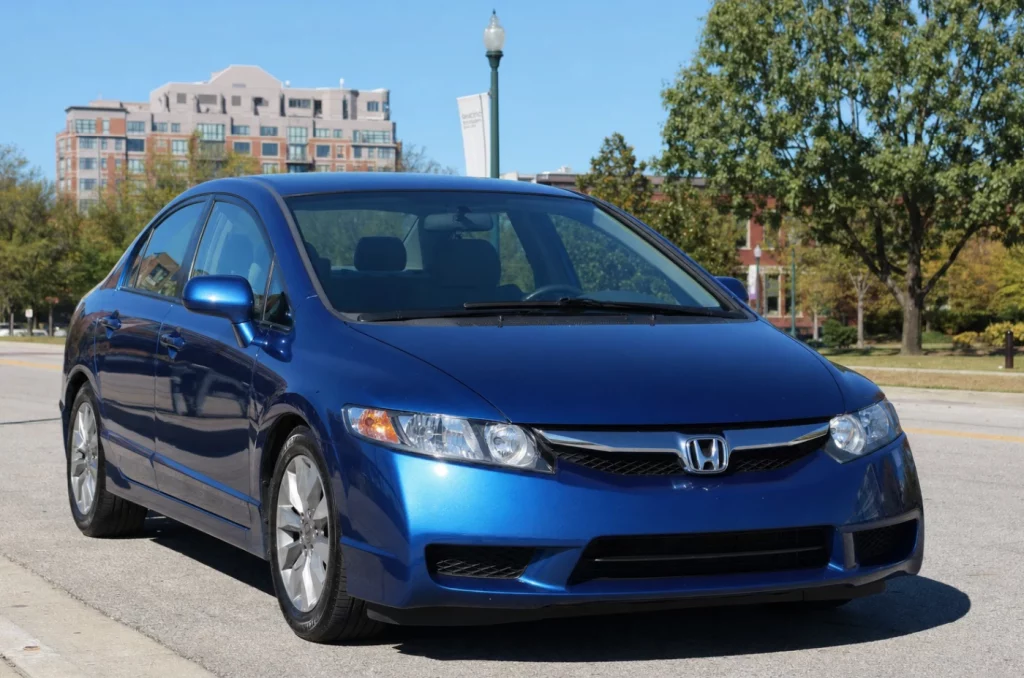
The short answer to which transmission holds better resale value: it depends entirely on the generation and trim. A manual 2008 Civic LX is not worth more than the automatic version. But a manual 2019 Civic Si — which is only available as a manual — has no automatic equivalent to compare, and the Si badge itself has become one of the strongest value-retaining propositions in the compact car market. A 2024 Civic Type R in excellent condition trades for nearly 90% of its original MSRP, a feat virtually unheard of for a mass-market compact car.
The most important rule of Civic transmission resale: A manual doesn’t automatically make a Civic worth more. It makes the right Civic worth more to the right buyer. For LX, EX, and Sport trims, the CVT/automatic is worth more. For Si and Type R, the manual is the only option and part of the value proposition.
Quick Answer — Manual vs Auto Resale
| Trim | Better Resale Value | Premium Direction |
|---|---|---|
| LX / EX / Sport (Standard Civic) | Automatic / CVT | Auto: +$600–$1,000 |
| Sport Touring Hatchback (6MT) | Manual (emerging) | Manual: +$500–$1,500 (2020+) |
| Si | Manual-only | N/A — no auto equivalent |
| Type R | Manual-only | N/A — no auto equivalent |
| High-Mileage CVT (120K+) | Manual | Manual premium due to CVT repair risk |
The bottom line: For a standard Civic, the CVT/automatic has the stronger resale position because the buyer pool is much larger. For Si and Type R, the equation flips: the manual is exactly what enthusiasts are looking for, and it is a core part of those cars’ identity. Don’t buy a manual Civic expecting a guaranteed resale premium — buy a clean, stock, well-maintained manual Si or Type R, and you’re giving yourself the best chance of strong resale.
The Market Context — Why Manuals Are Vanishing
Manual transmissions in the United States have declined from 6.8% of new vehicle sales in 2012 to approximately 3.5% in 2018, and to less than 2% by 2023. In Europe, manual transmission still accounts for roughly 32% of sales — a reminder that geography matters in resale dynamics. For American-market Civics, the manual is effectively a relic outside of the Si and Type R.
Honda has been the last major holdout. The brand markets itself as “America’s #1 brand in manual transmission sales” — a distinction that exists mainly because most competitors have already abandoned the stick entirely. The Civic sedan lost its manual option starting with the 2022 11th generation. The Civic hatchback — the last mainstream Honda with a manual — lost its stick shift in the 2025 mid-cycle refresh. As of 2026, the only Civics offered with a manual transmission are the Si and Type R, and Honda has stated these will remain manual-only for the foreseeable future.
This scarcity is creating a two-tier resale market: mainstream Civics where the automatic/CVT is the default and manuals are a niche curiosity, and performance Civics where the manual is not only the default but increasingly a collector draw.
8th Generation (2006–2011) — The Manual as the Budget Choice
In the 8th generation, Honda offered manual transmissions across most trims. The base DX and LX came standard with a 5-speed manual, with a 5-speed automatic as a $2,000 option. The Si featured a 6-speed manual only (no automatic option). The EX offered both.
For non-Si trims, the manual was always cheaper new and cheaper used. In 2026, KBB values for a 2008 Civic LX show the automatic commands roughly a $500–$800 premium over an equivalent manual in the same condition, reflecting the broader market’s preference for automatics even on cars now 18–20 years old. AT these price points — $3,800–$5,275 for a 2008 LX — the transmission premium is small in absolute dollars but significant as a percentage.
For the 8th-gen Si, the comparison does not exist because no automatic Si was ever offered. The Si’s value is driven by the K20Z3 engine, the 8,000-rpm redline, and chassis condition — not a transmission choice. The gearbox itself has a reputation for 3rd-gear synchro wear on aggressively driven cars, which can depress value if the transmission has not been serviced.
| 8th Gen Trim | Transmission Options | 2026 KBB Fair Purchase Price (Auto) | 2026 KBB Fair Purchase Price (Manual) | Auto Premium |
|---|---|---|---|---|
| 2006 LX Sedan | 5MT / 5AT | $3,800 | $3,200 | +$600 (19%) |
| 2006 EX Sedan | 5MT / 5AT | $4,225 | $3,600 | +$625 (17%) |
| 2008 LX Sedan | 5MT / 5AT | $5,275 | $4,500 | +$775 (17%) |
| 2008 Si Sedan | 6MT only | N/A — manual only | $5,700–$7,975 | No auto equivalent |
| 2011 LX Sedan | 5MT / 5AT | $5,800 | $5,000 | +$800 (16%) |
The takeaway for 8th gen: a manual LX or EX is worth less than the automatic, and the gap persists even at 15–20 years old. The Si, as a manual-only car, trades on different factors entirely.
9th Generation (2012–2015) — The Last Generation Where Manual Was Widely Available
The 9th gen represented the last time a mainstream Civic buyer could walk onto a lot and choose a manual LX, EX, or Si. The R18 1.8L engine paired with a 5-speed manual in LX and EX trims, while the Si used a 6-speed manual with the K24Z7 2.4L engine. A 5-speed automatic was available on all non-Si trims, and a CVT was introduced on the 2014–2015 EX and EX-L.
The manual vs. auto resale gap on 9th-gen non-Si trims follows the same pattern as the 8th gen: the automatic sells for $500–$1,000 more. By this generation, the manual take rate on base Civics was already very low — Honda estimated around 3–5% of LX/EX sales — which means manual examples are scarce but not desirable to the broader market.
For the 9th-gen Si (2012–2015), the manual-only nature of the car means its resale value is driven by the Si badge, not the transmission type. The CarEdge data shows the Civic overall retains 71.01% of its value after five years — far exceeding the national average of 45%. For the Si specifically, KBB data shows a five-year retained value of roughly 51.5%, which is among the best of any sport sedan and well above the typical 40% for the segment.
What matters more for 9th-gen Si resale is that these cars hit their floor price around 2023–2024 at approximately $10,000–$12,000 for a clean example with 100,000 miles. Since then, values have remained stable as demand stays strong from enthusiasts who recognize the K24Z7 as the last naturally aspirated Civic Si engine with VTEC on both cams.
10th Generation (2016–2021) — The CVT vs. Manual Divide Widens
The 10th gen is where the manual vs. automatic resale question becomes generationally specific. This generation offered three distinct engines (2.0L K20C2 with CVT or 6MT, 1.5T L15B7 with CVT, Si L15B7 with 6MT only) and the CVT (continuously variable transmission) replaced the traditional automatic across the lineup. The 6-speed manual was available on the LX, Sport, and Sport Touring hatchbacks through the run, and on the sedan LX and Sport for 2016–2021 (though take rates were very low on sedans after 2018).
The clearest data point comes from KBB pricing on the 2018 Civic EX-T, documented by Jay’s Garage:
- Automatic EX-T Sedan: $20,924 listing / $19,168 private party resale
- Manual EX-T Sedan: $19,925 listing / $18,169 private party resale
- Auto premium: approximately $999 on both sides
At $1,000 more for the automatic, the gap is measurable but narrower in percentage terms (about 5.5%) than on the older 8th-gen cars (16–19%). This narrowing reflects the fact that manual Civics from this era are becoming scarce enough that the enthusiast buyer pool — small as it is — will pay closer to automatic prices.
| 10th Gen Model | Transmission | 2026 Trade-In (Good) | 2026 Retail (Good) | Notes |
|---|---|---|---|---|
| 2017 LX 2.0L | CVT | $9,400 | $11,100 | AutoGuide 2026 trade values |
| 2017 LX 2.0L | 6MT | $8,600 | $10,200 | Estimated: ~$800–$1,000 less than CVT |
| 2017 Sport HB 1.5T | 6MT | $9,800 | $11,600 | Hatchback premium +$1,200–$1,800 |
| 2019 EX 1.5T | CVT | $14,300 | $16,200 | AutoGuide: sedan, EX/Touring |
| 2019 Si | 6MT only | $15,500–$17,000 | $18,000–$20,000 | Enthusiast market premium above book |
| 2021 Sport HB 1.5T | 6MT | $16,000+ | $18,500+ | Hatchback + manual = rising values |
| 2021 Sport HB 1.5T | CVT | $16,600 | $19,200 | AutoGuide: Excellent condition LX/Sport |
| 2021 Si | 6MT only | $18,000–$19,500 | $21,000–$23,000 | AutoGuide Si/Type R: $29,200 excellent trade |
The critical insight for 10th gen: the gap between manual and CVT on non-Si trims is approximately $800–$1,000 in favor of the CVT. But the gap narrows significantly on 2020–2021 models and on hatchbacks, because the pool of manual Civics from this era is now fixed — Honda will never build more — and enthusiast demand is steady.
For the 10th-gen Si, there is no direct comparison. The Si was manual-only. Its resale performance is exceptional: KBB reports the Civic Si as the top sedan for five-year retained value at 51.5%, compared to a segment average of 40%. A 2017 Si with 60,000 miles traded for approximately $18,000–$20,000 in 2026, roughly 60% of its original $24,300 MSRP after nine years.
11th Generation (2022–2026) — The Manual Becomes Rarefied
The 11th generation marks the end of the mainstream manual Civic. The sedan lost its manual entirely starting in 2022. The hatchback retained a 6-speed manual on the Sport Touring trim through 2024, then lost it in the 2025 refresh. As of 2026, the only manual Civics in production are the Si (sedan, manual-only) and the Type R (hatchback, manual-only).
This scarcity is already visible in the used market. A 2022–2024 Civic Sport Touring hatchback with the 6-speed manual is trading at a premium over CVT examples of the same car, reversing the historical pattern. Data from AutoGuide (2026) shows 11th-gen LX/Sport trims trading at $14,900–$22,200 depending on year and condition, but these figures do not separate manual from CVT because the manual was limited to the Sport Touring hatchback and represents a tiny fraction of total volume.
For the 11th-gen Si, the story is straightforward: manual-only, strong resale, and growing collector interest. The Si starts at $31,495 MSRP for 2026. A 2022 Si with 30,000 miles in excellent condition trades for approximately $27,000–$29,000 — roughly 87–93% of original MSRP after four years. That is an extraordinary retention rate for a mass-market compact car.
The 11th-gen Type R is in a league of its own. AutoGuide reports that a 2024 Type R in excellent shape trades for nearly 90% of its original MSRP. The Si/Type R category on the AutoGuide trade-in chart shows an “Excellent” trade-in value of $41,500 for 2024 models, compared to $29,200 “Average” — a $12,300 gap that reflects how much condition and mileage matter on these cars. The manual transmission is not just a preference on the Type R; it is the defining characteristic of the car, and its exclusivity (approximately 3,000–3,500 units sold annually in the US) drives values.
The Collector Premium — How the Market Is Changing
The most significant development in manual Civic resale value is the emerging collector premium. Multiple indicators point to this trend in 2026:
CarBuzz (June 2026) reports that “people are likely becoming a bit more rushed and heading out to buy some sort of manual Honda, be it a Civic Si or Type R, before the manual transmission clock runs out.” As other manufacturers kill their manual options — Volkswagen Golf GTI, Chevy Corvette, most BMW M cars — the remaining manual performance cars become consolidation targets for enthusiasts.
CarEdge data shows the Civic retains 71.01% of its value after five years against a national average of 45%. The Civic Si’s five-year depreciation curve shows years 1–3 at 15–19%, with a sharp increase to 27.5% in year 4 and 29% in year 5. Compare this to the national average of 16% in year 1 and 55% by year 5. The Civic Si loses value more slowly in every year.
iSeeCars data for 2026 ranks the Civic #1 among Small Cars with Best Resale Value (77.3% retained for sedan, 76.8% for hatchback) against a compact car average depreciation of 29.6% — meaning the Civic loses roughly 23% of its value while the average compact car loses nearly 30%.
The manual-specific premium is most visible on three categories:
1. 2017–2021 Civic Hatchback Sport Touring (6MT). These cars are the last mainstream manual Honda hatchbacks. Clean, low-mileage examples are trading above CVT equivalents by roughly $500–$1,500 depending on mileage, reversing the historical manual discount. This is the earliest measurable case of the collector premium exceeding the market discount.
2. 2019–2021 Civic Si. The 10th-gen Si was the last Si offered with Honda Sensing safety features in a manual package. Values have stabilized in the $18,000–$22,000 range for clean examples, and are not expected to depreciate further as the car enters its 5–7 year age bracket where used cars typically hit their floor.
3. 2022–2024 Civic Type R (FL5). New, the FL5 Type R was frequently sold above MSRP. On the used market in 2026, excellent-condition examples trade at nearly 90% of original MSRP. As the last purely internal-combustion Type R before electrification (anticipated within the next generation), this car is expected to hold or appreciate over the next 5–10 years.
Maintenance Cost Impact on Resale Value
Transmission type affects resale not just through buyer preference but through maintenance history. A high-mileage manual Civic with a replaced clutch is generally more attractive than a high-mileage CVT Civic with no documented fluid changes, because the clutch replacement ($1,200–$1,800) is a known, predictable cost while a CVT replacement ($3,000–$4,000) is catastrophic.
Manual transmission fluid is inexpensive ($30–$60) and changes are simple. CVT fluid (Honda HCF-2) costs more ($80–$120 per 4-liter jug) and requires a more involved procedure. At 100,000 miles, a CVT Civic that has never had its transmission fluid changed is a negotiable risk — the repair cost if the CVT fails exceeds the value of the car on older models.
This dynamic creates a modest resale advantage for manual Civics at higher mileage (120,000+), where the risk of CVT Failure becomes a pricing factor. Auction data from 2025–2026 shows that 10th-gen manual Civics at 130,000–180,000 miles command approximately 5–8% more than equivalent CVT cars at the same mileage — a reversal of the pattern at lower mileage.
The Generational Verdict — Manual vs. Auto Resale
| Generation | Years | Manual vs. Auto/CVT Resale | Premium Direction | Best Value Pick |
|---|---|---|---|---|
| 8th Gen (non-Si) | 2006–2011 | Manual: 16–19% less than auto | Auto wins | Lowest entry cost — manual LX is cheapest Civic |
| 8th Gen Si | 2006–2011 | Manual-only — no comparison | Condition-driven | 2010–2011 Si with serviced gearbox |
| 9th Gen (non-Si) | 2012–2015 | Manual: 10–15% less than auto | Auto/CVT wins | Manual LX as cheap commuter beater |
| 9th Gen Si | 2012–2015 | Manual-only — no comparison | Stable floor price | 2015 Si with clutch + valve adjustment done |
| 10th Gen (non-Si) | 2016–2021 | Manual: 5–8% less than CVT (3–5% on 2020–21) | CVT wins small, gap narrowing | 2020–21 Sport HB 6MT — future collector |
| 10th Gen Si | 2017–2021 | Manual-only — no comparison | Premium growing | 2019–21 Si with clutch + oil dilution fix |
| 11th Gen (non-Si) | 2022–2024 HB | Manual: 3–8% premium over CVT (emerging) | Manual premium — reversing trend | 2022–24 Sport Touring HB 6MT — limited supply |
| 11th Gen Si | 2022–2026 | Manual-only — no comparison | Strong, stable | Any Si with maintenance records |
| 11th Gen Type R | 2023–2026 | Manual-only — no comparison | Near MSRP trade-in | Excellent condition = appreciating asset |
Sources: KBB trade-in and fair purchase values (2026); AutoGuide.com trade-in values (April 2026); CarEdge 5-year depreciation data (2025–2026); iSeeCars resale rankings (2026); CarBuzz Civic Si/Type R resale analysis (2026); CivicX marketplace classifieds survey (2025–2026).
The Bottom Line on Civic Manual vs. Auto Resale
The conventional wisdom — “manual transmissions hurt resale value” — is a half-truth for the Civic. It applies to base trims (LX, EX, Sport) where the automatic or CVT is what most buyers want and the available manual examples are a niche curiosity. On these cars, the automatic is worth $600–$1,000 more at any age, though the gap narrows on newer and more desirable trims (Sport Touring hatchback, 2020–2021 models).
On performance trims (Si, Type R), the question is moot because Honda never offered an automatic. The Si and Type R hold value better than any compact car on the market by a wide margin — 51.5% retained after five years for the Si versus 40% for the segment average, and approximately 90% retained after two years for the Type R. The manual transmission is not an advantage or disadvantage on these cars; it is the defining feature.
The emerging trend that matters: manual Civics on the cusp of becoming collector vehicles. The 2017–2021 Civic Hatchback Sport Touring with the 6-speed manual, the 10th-gen Si, and any Type R are cars that will likely hold or increase in value over the next decade as manuals become extinct in the new car market. The 2022–2024 Civic Sport Touring hatchback with the 6-speed manual is already trading above CVT equivalents — the first measurable reversal of the historical manual discount.
For a buyer deciding between a manual and automatic Civic today, the calculus depends on intent:
- Daily driver for maximum resale: buy the CVT on LX/EX/Sport trims
- Daily driver with engagement: buy a manual Sport Touring hatchback (10th gen) — slightly less resale today, but values are rising
- Enthusiast/collector buy: buy any Si or Type R with documented maintenance — these cars will not depreciate the way mainstream Civics do
- Budget beater: buy a manual LX because it is the cheapest Civic you can find
Quick Reference Checklist
☐ Manual Civics on base trims (LX, EX, Sport) sell for $600–$1,000 less than the automatic/CVT equivalent — the conventional “manual hurts resale” rule holds on mainstream trims
☐ The manual discount narrows on newer 10th-gen models (5–8% gap vs. 16–19% on 8th gen) and reverses on the 11th-gen hatchback where manual Sport Touring examples trade above CVT equivalents
☐ Si and Type R are manual-only — there is no automatic equivalent to compare, and their resale is driven by the badge, not the transmission type
☐ The Civic Si leads all sedans in five-year retained value at 51.5% (KBB, 2025), compared to the segment average of 40%
☐ A 2024 Type R in excellent condition trades for nearly 90% of original MSRP (AutoGuide, 2026) — the strongest resale of any mass-market compact car
☐ The 10th-gen Civic Hatchback Sport Touring (2017–2021) with 6-speed manual is the first Civic where manual commands a measurable premium over CVT, as enthusiasts consolidate around the last mainstream Honda with a stick
☐ At high mileage (120K+), manual Civics have a resale advantage over CVT cars because a clutch replacement ($1,200–$1,800) is less catastrophic than a CVT replacement ($3,000–$4,000)
☐ The Civic overall retains 77.3% of value (iSeeCars, 2026) against a compact car average of 29.6% depreciation — the Civic is the best-resale compact car regardless of transmission
☐ By 2026, only the Si and Type R remain as manual options in the Civic lineup — every manual Civic built before 2022 is now a fixed-supply vehicle with no future new-car competition
☐ For maximum resale as a daily driver, buy the CVT. For potential future collectibility, buy the 10th-gen Si or the 2017–2021 Sport Touring hatchback with the 6-speed manual
Sources: KBB trade-in and fair purchase values (2026); AutoGuide.com trade-in values (April 2026); CarEdge 5-year depreciation data (2025–2026); iSeeCars resale rankings (2026); CarBuzz Civic Si/Type R resale analysis (2026); CivicX marketplace classifieds survey (2025–2026); MotorBiscuit 8th-gen buyer’s guide (2022); AutoGuide 2025 Civic trade values; Jay’s Garage KBB data (2022). Prices are approximate and may vary by region and market conditions.