

The 10th gen Civic with the L15B7 1.5-liter turbo has a reputation for being quick, efficient, and genuinely fun to drive. That reputation holds — until the odometer clicks past 100k and the oil consumption numbers start telling a different story. What begins as a fuel dilution quirk in the early years can, over time, transition into something more serious: piston ring wear that causes measurable oil burning, bearing degradation from years of compromised lubrication, and in the worst cases, an engine that needs to come apart. This article covers the full picture — how the L15B7’s Oil dilution problem works mechanically, what happens to the rings after extended mileage, how to diagnose where your engine actually stands, and what the repair options look like.
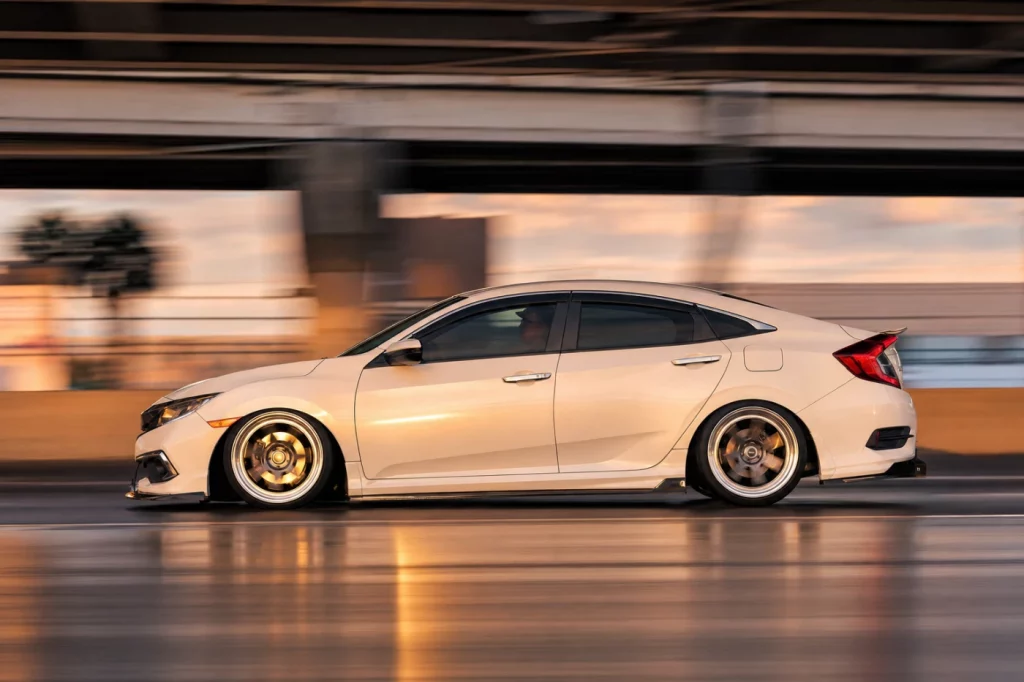
Does the 1.5T Really Have a 100K-Mile Piston Ring Problem?
Short answer: not as a universal failure point. High-mileage 1.5T engines deserve closer monitoring for oil consumption, compression, blow-by, and cylinder condition, particularly if the engine has a history of oil dilution or poor maintenance. This is a critical distinction. The L15B7 does not have a confirmed, widespread 100K-mile Piston ring failure pattern like some other engines. Instead, it has a known vulnerability: the combination of low-tension piston rings, direct injection, and cold-weather operation can lead to fuel dilution, which over time can contribute to ring wear and oil consumption. But not every 1.5T will develop this problem.
Which Civic 1.5T Are We Talking About?
| Generation | Engine | Relevance |
|---|---|---|
| 10th Gen (2016–2021) | L15B7 1.5T | Main focus — this is where oil dilution and ring wear have been documented |
| 11th Gen (2022+) | L15CA 1.5T | Different generation — do not automatically apply 10th-gen issues |
| Civic Si | 1.5T (higher boost) | Different calibration and use case — separate evaluation required |
Do not mix 10th Gen L15B7 with other Honda 1.5T engines without confirmation. The 11th Gen and Si have different calibrations, different ECU strategies, and different thermal management. Issues that appear on one may not apply to the others.
Why Piston Rings Matter
Piston rings perform three critical functions: they control combustion gases, control oil on cylinder walls, help maintain compression, and return excess oil to the crankcase. When rings are functioning correctly, the engine maintains compression, burns minimal oil, and runs efficiently. When rings develop problems, you can see oil consumption, blue smoke, low compression, increased blow-by, fouled spark plugs, and Catalytic Converter damage.
Oil Consumption Is the Symptom — Not the Diagnosis
This is one of the most important principles in this article. Low oil level does not automatically mean bad piston rings. Oil consumption can be caused by piston rings, valve seals, the Turbocharger, the PCV system, external leaks, cylinder wear, or oil dilution measurement issues. Do not diagnose piston rings from the dipstick alone.
The Oil Dilution Connection
Honda issued a product update and warranty extension for certain 2016–2018 Civic 1.5T vehicles because fuel and moisture could accumulate in engine oil, particularly with repeated short trips in very cold conditions. The Chain of events can look like this: short trips and cold operation → fuel dilution → reduced oil protection → increased engine wear risk. Oil dilution does not automatically mean the piston rings have failed. This is an important distinction.
Why 100K Miles Is an Important Inspection Point
It is not because 100K is a magic failure threshold. It is because by 100K miles, the engine has accumulated thermal cycles, oil-change intervals, driving habits, fuel dilution exposure, turbocharger use, cylinder-wall wear, and ring deposits. 100K = inspection milestone, not failure threshold.
The First Warning Sign: Oil Level Keeps Dropping
A typical pattern: oil AT full level, then 1,000 miles later it is below full, and another 1,000 miles later it is noticeably lower. But do not draw conclusions from this alone. What you need is a proper oil consumption test.
How to Perform a Proper Oil Consumption Test
Record the oil level, oil specification, odometer reading, date, and engine condition. Drive a known mileage — typically 1,000 miles — then recheck under the same conditions. Honda’s diagnostic procedures for oil-consumption complaints start with an oil consumption test before deciding on engine disassembly. After the test, if consumption exceeds a certain threshold, Honda service procedures move to inspection and replacement of pistons and rings.
Don’t Use “One Quart Every 1,000 Miles” as a Universal Failure Number
This is especially important. Forum discussions often mention dealer thresholds like 1 quart per 1,000 miles, but these should not be treated as universal rules. Such thresholds depend on the specific service procedure, model, and warranty context. Measure, document, and compare with Honda’s applicable service procedure.
Blue Smoke — What It Means
Blue exhaust smoke can indicate oil entering the combustion chamber. But even here, blue smoke does not automatically mean piston rings. Possible causes include turbo seals, valve seals, rings, and PCV-related issues.
Smoke on Startup vs Under Boost
Smoke after sitting overnight points toward valve seals or oil entering the cylinder while parked. Smoke during acceleration or boost points toward rings, the turbo, or PCV issues. Smoke after deceleration has a different diagnostic pattern. These are directional clues, not definitive proof.
Spark Plug Evidence
Remove the spark plugs and compare cylinders. One cylinder that is oily can indicate a localized problem. All cylinders showing similar deposits point more toward a systemic cause. Heavy deposits can be a consequence of oil consumption. Spark plug appearance is supporting evidence, not proof of ring failure.
Compression Test
A compression test checks cylinder-to-cylinder consistency, absolute compression, and repeatability. But a compression test alone does not always catch oil-control-ring problems. It measures sealing, but oil control rings can be worn while compression rings are still functioning.
Wet vs Dry Compression Test
The dry test measures baseline compression. The wet test adds a small amount of oil to the cylinder. If compression significantly increases in the wet test, the rings become more suspicious. If it barely changes, investigate the valves, head, or Gasket. Do not use this as a standalone diagnosis.
Leak-Down Test Is Better for Some Questions
A leak-down test tells you where the compression is escaping. Air at the intake indicates an intake valve issue. Air at the exhaust indicates an exhaust valve issue. Air at the crankcase indicates rings or cylinder leakage. This is much more useful than simply saying “compression is low.”
Crankcase Blow-By
If piston rings are not sealing properly, combustion gases pass past the rings and enter the crankcase, increasing crankcase pressure. But some blow-by is normal. Do not open the oil cap and declare “bad rings” based on vapor alone. Excessive blow-by — significant pressure pulses and smoke from the oil fill port — is a stronger indicator.
The PCV System Can Confuse the Diagnosis
A PCV problem can affect crankcase pressure, oil consumption, intake deposits, and turbo or intake oil. Before committing to an expensive engine teardown, check the PCV system. A failed PCV valve can mimic ring failure symptoms.
Turbocharger vs Piston Rings
This is one of the most useful diagnostic sections. Oil in the intake or intercooler can be associated with the turbo or PCV. Oil in the combustion chambers can be rings, valve seals, or the turbo. Do not see oil in the intake and immediately conclude “piston rings are worn.”
Oil Dilution Can Make the Dipstick Misleading
If fuel enters the crankcase, the oil level may actually rise. This is the opposite of the classic oil-consumption scenario. Falling oil level points to consumption or leaks. Rising oil level with a fuel smell points to dilution. Honda explicitly documented this type of fuel and moisture accumulation in affected 2016–2018 Civic 1.5T vehicles.
Fuel Smell in the Oil
If the oil smells strongly of gasoline, the level rises, or the oil appears unusually thin, do not look for piston rings first. First, diagnose fuel dilution.
Does Oil Dilution Cause Ring Failure?
It can contribute to accelerated wear, but you cannot diagnose ring damage from a history of oil dilution alone. Honda’s campaign documentation describes the oil-dilution condition and its potential engine symptoms, but it does not establish a blanket rule that every affected 1.5T will develop piston-ring failure. This is an important EEAT distinction.
What About Carboned-Up Oil Control Rings?
Honda has documented other engines where carbon deposits could clog oil-control rings and increase oil consumption, with piston and ring replacement prescribed after the oil-consumption test. Do not automatically transfer those older TSBs to the Civic 1.5T.
High Mileage + Perfect Oil Consumption
A Civic 1.5T with 120K miles, no measurable consumption, regular oil changes, and good compression does not need preventive disassembly. Mileage alone is not a repair diagnosis.
High Mileage + 1 Quart Every 1,000 Miles
Now the situation is different: 120K miles, repeatedly losing significant oil, blue smoke, low compression, and high crankcase leakage. This is when piston rings become the primary suspect.
Signs That Make Me Suspicious of Rings
| Suspicion Level | Indicators |
|---|---|
| Low suspicion | No smoke; stable oil level; normal compression; no misfires |
| Medium suspicion | Increasing consumption; oily spark plugs; occasional smoke |
| High suspicion | Significant oil consumption; low cylinder compression; leak-down into crankcase; persistent blue smoke; cylinder-wall damage |
One Bad Cylinder vs All Four
This is a crucial diagnostic distinction. One bad cylinder points to piston damage, ring damage, localized cylinder wear, or a valve issue. All four cylinders showing problems points more broadly to engine-wide wear, maintenance history, oil-control issues, PCV, turbo, or systemic condition.
Borescope Inspection
If compression and leak-down tests provide justification, use a borescope through the spark plug hole. Look for cylinder scoring, abnormal piston crown deposits, cylinder-wall condition, and oil traces. This is a good intermediate step before engine teardown.
Cylinder Wall Scoring Changes the Equation
If there is vertical scoring, ring sealing may be compromised, and oil consumption can increase. The conversation then goes beyond just “replace rings” and may require piston, ring, and cylinder-wall assessment.
Don’t Assume a Ring Job Is Cheap
Replacing rings is not just “$100 rings.” It involves engine removal and disassembly, head removal, pistons, rings, bearings and bolts as required, gaskets, machine-shop work if needed, and labor. Before committing to a repair, you need a proper diagnosis.
Short Block vs Rings Only
Rings only: If cylinders are healthy, pistons are serviceable, and the problem is limited to ring sealing.
Short block or larger engine repair: If there is cylinder damage, piston damage, severe wear, or contamination.
Warranty Is VIN- and Model-Specific
Do not write “Honda covers piston rings to 100K” without confirmation. Honda had specific warranty extensions for certain engines, models, and conditions. The official 1.5T Civic campaign was associated with 2016–2018 oil dilution, not a universal 100K piston-ring warranty. For a US buyer, run the VIN through Honda before paying for an engine repair.
Buying a 100K+ 1.5T Civic
Before buying, ask for oil-change records, oil dilution campaign or update history, maintenance history, oil-consumption history, and previous engine repairs. On the test drive, check cold start, acceleration, idle, smoke, compression if concerns exist, and scan for misfires.
The Cold Start Is Your Friend
On a test drive, do not start with a warmed-up engine. A cold start can reveal smoke, misfires, abnormal noises, rough idle, fuel smell, and turbo-related issues. Ask the seller not to warm the car before your arrival.
What a Good 120K-Mile 1.5T Looks Like
Green flags: stable oil level, regular oil changes, no blue smoke, no persistent misfires, smooth cold start, healthy compression, no excessive blow-by, and no major oil leaks. Such an engine can be much more attractive than a poorly maintained 70K-mile car.
What a Bad 80K-Mile 1.5T Looks Like
80K miles with neglected oil changes, repeated short trips, oil dilution history, low oil, misfires, and smoke can be much worse than a well-maintained 120K-mile engine. Maintenance history matters more than the odometer alone.
100K-Mile Inspection Checklist
| Check | Why It Matters |
|---|---|
| Oil level | Consumption or dilution |
| Oil smell | Fuel dilution |
| Cold start | Smoke or misfire |
| Spark plugs | Combustion and oil clues |
| Compression | Cylinder sealing |
| Leak-down | Leakage location |
| PCV system | Crankcase pressure |
| Turbo | Oil entry |
| Borescope | Cylinder condition |
| Service history | Long-term risk |
What I Would Do Before Spending $5,000+
Do not approve an engine rebuild because someone says “rings.” Spend money sequentially: inspection → oil consumption test → compression → leak-down → borescope → repair decision. This is much more rational than committing to a $5,000 repair without evidence.
Repair Options and Realistic Costs
| Repair Path | When It Applies | Indie Shop Cost | Dealer Cost (out of warranty) | Notes |
|---|---|---|---|---|
| Piston and ring replacement (TSB repair) | Worn rings, bores within spec | $2,500–$4,500 | $3,500–$5,500 | Free under warranty extension (8yr / 125K mi) — VIN-specific |
| Short-block replacement | Bores worn beyond spec, bearing damage | $3,500–$5,500 installed | $4,500–$6,500 installed | Reman short-block part alone: $1,800–$2,800 |
| Managed maintenance (no repair) | Moderate consumption, not yet at failure threshold | $80–$120 per oil change at 3–5K mi intervals | Same | Slows progression; does not fix worn rings |
| Oil analysis (Blackstone / Polaris Labs) | Any stage — baseline and monitoring | $30–$40 per sample | N/A | Most cost-effective diagnostic — reveals fuel percentage and wear metals |
The 100K+ Verdict
Should you avoid a 1.5T Civic with 100K+ miles? No. But do not buy one based solely on “Honda 1.5T is reliable.” And do not avoid one just because “it is over 100K.” Look at oil history, current consumption, cylinder health, dilution history, and turbo condition. Maintenance history is the real indicator of long-term health, not the odometer reading.
Quick Reference Checklist
Pull the dipstick cold before the first start — level rising above full with a gasoline smell means active fuel dilution
Level dropping between oil changes means active oil consumption — ring wear has progressed past the dilution stage
NHTSA TSB MC-10152428 covers piston and ring replacement up to 8 years / 125,000 miles from original purchase — check VIN for eligibility
Confirm the Honda software update (warm-up calibration) was applied — check service history for the TSB
Run an oil analysis (Blackstone or Polaris Labs, $30–$40) — fuel percentage and wear metals are the key data
Change oil every 3,000–5,000 miles regardless of the Maintenance Minder — the 9,000-mile recommendation is too long for cold-climate or short-trip use
Use Top Tier gasoline — the detergent package reduces carbon deposits that contribute to ring sticking
Get the engine fully up to operating temperature on every drive — highway runs help evaporate accumulated fuel from the oil
If you see blue smoke on startup or under hard acceleration, do a compression test and leak-down test to confirm ring failure severity
High wear metals in oil analysis alongside active consumption means bearings may need attention — factor this into the repair decision
Piston and ring replacement at an independent shop: $2,500–$4,500; short-block replacement installed: $3,500–$5,500
CVT-equipped cars are higher risk than manuals — if buying used, a manual 1.5T is the lower-risk choice
Do not assume a ring job is cheap — it requires significant disassembly and labor
Warranty coverage is VIN- and model-specific — verify with Honda before paying for repairs
Oil consumption is a symptom, not a diagnosis — investigate before assuming ring failure
FAQ
Do Honda Civic 1.5T piston rings fail after 100,000 miles?
Not as a universal failure point. Some engines develop ring wear and oil consumption, particularly if they have a history of oil dilution, short trips, or extended oil change intervals. Others reach 150K+ with no issues. Maintenance history matters more than the odometer.
How much oil consumption is normal for a 1.5T Civic?
Honda’s official position is that some oil consumption is normal on modern engines. The service threshold varies by model and warranty context. Measure your consumption and compare with Honda’s applicable service procedure.
Does oil dilution damage piston rings?
Oil dilution can contribute to accelerated ring wear by reducing oil viscosity and lubrication properties. However, you cannot diagnose ring damage from a history of oil dilution alone. Proper diagnosis requires compression, leak-down, and borescope inspection.
How do I test piston rings on a Honda 1.5T?
Start with a compression test and leak-down test. If compression is low and air escapes into the crankcase, the rings are likely worn. A borescope inspection can reveal cylinder scoring. Oil analysis reveals wear metals.
Can a compression test detect bad piston rings?
A compression test can indicate poor cylinder sealing, but it does not definitively separate ring wear from valve or Head Gasket issues. A wet compression test (adding oil to the cylinder) helps isolate ring problems.
Is a leak-down test better than compression testing?
A leak-down test is more informative because it tells you where compression is escaping — intake valves, exhaust valves, or the crankcase (rings/cylinder). It is the preferred diagnostic tool for isolating ring issues.
Why is my 1.5T Civic burning oil?
Possible causes include worn piston rings, valve seals, turbocharger seals, PCV system issues, or external leaks. Proper diagnosis is required before committing to a repair.
Can the turbo cause oil consumption?
Yes — worn turbo seals can allow oil to enter the intake tract and be burned in the combustion chamber. This can mimic ring failure symptoms.
Can a bad PCV valve cause oil consumption?
Yes — a failed PCV valve can affect crankcase pressure and cause oil to be drawn into the intake system. Check the PCV system before assuming ring failure.
Should I buy a 100K-mile Honda Civic 1.5T?
Yes — if it has a strong maintenance history, stable oil consumption, and passes a cold-start inspection. Maintenance history is more important than mileage.
Does Honda have a warranty extension for 1.5T piston rings?
Honda issued NHTSA TSB MC-10152428 extending warranty coverage for sticking piston rings and high oil consumption on affected 1.5T engines up to 8 years / 125,000 miles. Coverage is VIN-specific — verify with a dealer.
What should I inspect on a 100K+ Civic 1.5T?
Check oil level and smell, cold start behavior, spark plugs, compression, leak-down, PCV system, turbo condition, and maintenance history. A borescope inspection is recommended if concerns arise.