

Some oil consumption is normal in any internal combustion engine. The Piston rings do not form a perfect seal; a thin film of oil remains on the cylinder wall after each stroke, and some of that film burns during combustion. Manufacturers establish an acceptable consumption threshold, and for Honda, that threshold has historically been one quart every 1,000 miles — a figure that has appeared in Honda service literature and dealer communications for decades. Many owners discover this number only when they complain about adding a quart between oil changes and are told by a service advisor that 1,000 miles per quart is “within specification.”
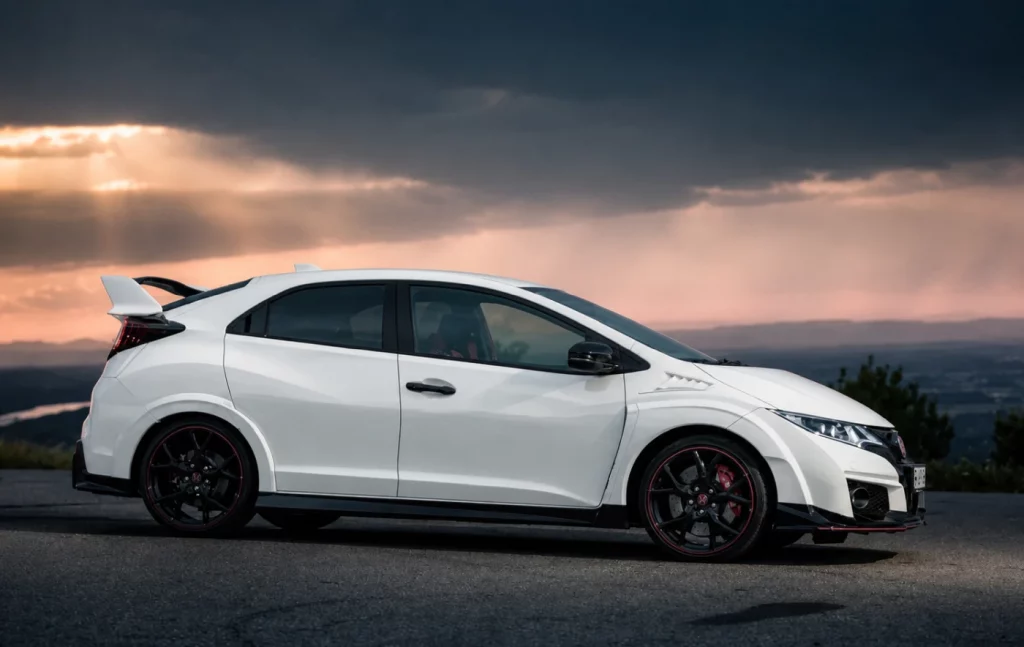
The Civic’s three mainstream engines from the 2006–2015 period — the R18 1.8-liter, the K20Z3 2.0-liter, and the K24Z7 2.4-liter — all have documented oil consumption patterns. Some of these patterns are normal wear. Some are design-related. And in the case of the 2012 Civic Si, the oil consumption was significant enough that Honda issued a formal service bulletin requiring piston and ring replacement under an extended warranty program.
The most important takeaway: Oil consumption does not automatically mean the engine is bad. A Civic that uses some oil is not automatically a bad engine. A Civic that is losing oil rapidly is a different story. Measure it, find the leak or combustion path, check the PCV, inspect the plugs, perform a leakdown test if needed — then decide whether you are dealing with maintenance, stuck rings, worn rings, valve seals, or an engine that needs major work.
Quick Answer — What You Need to Know
Oil level dropping? Not necessarily bad piston rings, a blown Head Gasket, bad valve seals, or a bad engine. First: measure consumption → check leaks → inspect PCV → inspect plugs → compression/leak-down → determine where the oil is going.
Key facts:
- Honda considers 1 quart per 1,000 miles to be within normal specification — this matters for warranty claims
- The R18 (2006–2015) commonly develops PCV and ring-related consumption after 100,000 miles
- The K20Z3 (2006–2011 Si) consumes oil as a function of its high-rpm design — VTEC operation increases consumption
- The K24Z7 (2012 Si) had a documented piston ring defect — TSB 12-069 covers specific VIN ranges
- 2013–2015 K24Z7 engines do not have a TSB, but individual cases of consumption exist
- Do not rebuild an engine based on oil consumption alone — find out where the oil is going first
Honda’s Oil Consumption Standard — The 1 Quart Per 1,000 Mile Rule
Before examining each engine individually, the threshold needs to be stated clearly. Honda’s internal oil consumption test procedure (documented in a February 2019 job aid, version 5, superseding earlier versions dating to September 2016) specifies a formal measurement process: the engine oil is drained and weighed, the car is driven for a measured distance under controlled conditions, and the oil is drained and weighed again. The result is expressed in quarts per 1,000 miles. Honda considers consumption at or below 1 quart per 1,000 miles to be within normal specification.
This standard matters because it sets a very high bar for warranty intervention. A Civic burning a quart every 1,500 miles is technically within Honda’s spec, even though the owner is adding oil between every other fuel fill. Only when consumption exceeds 1 quart per 1,000 miles — and passes the formal test procedure — does Honda authorize a repair under warranty or a service bulletin program.
The critical distinction: A manufacturer’s tolerance is not the same thing as a healthy engine. Just because Honda will not pay for repairs does not mean a quart per 1,000 miles is acceptable to you as an owner. Many enthusiasts consider 1 quart per 3,000–5,000 miles to be a more reasonable threshold for a well-maintained engine.
What Counts as Excessive Oil Consumption?
Not every oil top-off is a crisis. Here is how to classify consumption:
- Low consumption: Occasional top-off between oil changes — less than 0.5 quart per 3,000 miles. This is normal for any engine.
- Moderate consumption: Oil level noticeably drops between changes — 0.5 to 1 quart per 1,000–2,000 miles. Worth investigating, but not necessarily an immediate failure.
- Severe consumption: Approximately 1 quart per 1,000 miles or worse — the engine is consuming oil AT a rate that requires constant monitoring and frequent top-offs.
- Extreme consumption: 1 quart per 500 miles or worse — the engine has a significant mechanical problem that needs repair.
The rule to remember: A quart every 1,000 miles may be “within specification” by Honda’s definition, but it is still a quart of oil that has to go somewhere. It is either burning, leaking, or both.
First Rule — Measure It Correctly
Do not start with repairs. Start with accurate measurement. The procedure is simple but must be consistent:
- Park the car on level ground
- Let the engine sit for at least 5–10 minutes to allow oil to drain back to the pan
- Check the dipstick and record the level
- Record the mileage
- Bring the oil to the proper level (if needed)
- Drive normally for a set distance (1,000 miles is ideal)
- Recheck the oil level at the same conditions (level ground, cold engine)
- Record every top-off amount
Keep a log:
| Mileage | Dipstick Level | Oil Added |
|---|---|---|
| 0 | Full | — |
| 500 | 7/8 | 0.1 quart |
| 1,000 | 3/4 | 0.25 quart |
| 1,500 | 1/2 | 0.5 quart |
This is much more useful than saying: “My Civic burns a lot of oil.” With accurate data, you know exactly what you are dealing with.
Engine-Specific Oil Consumption Profiles
Each of the three main Civic engines has a different oil consumption profile, different failure modes, and different repair economics. Understanding the engine in your car is the first step to diagnosing the problem.
R18 (1.8L NA — R18A1 / R18Z1): The Stuck Ring Syndrome
The R18 is the workhorse engine of the 8th and 9th generation Civic non-Si lineup — a 1.8-liter single-cam i-VTEC four-cylinder with a cast-iron sleeved aluminum block. It is not a high-strung engine. It makes 140 horsepower and is designed for fuel economy and longevity. Yet the R18 has a persistent oil consumption pattern that appears across the 2006–2015 production run.
The root cause: Due to pistons with thin ring grooves and delicate piston rings designed for fuel economy (reducing friction for MPG), by 120,000–150,000 miles the oil-control rings become completely carbonized and stuck in their grooves. They lose mobility and stop scraping oil from the cylinder walls. The oil begins to burn directly in the combustion chamber, clogging the Catalytic Converter with soot and triggering P0420 (catalytic converter efficiency below threshold).
The primary source of oil consumption on the R18 is often the PCV system. The PCV valve routes crankcase blowby gases — a mixture of combustion byproducts, oil vapor, and moisture — back into the intake manifold to be burned. On the R18, the PCV valve is located on the left (passenger) side of the engine, behind the Valve Cover. It is a $12 part that takes ten minutes to replace. A sticking or partially clogged PCV valve prevents the crankcase from venting properly, creating positive pressure that forces oil past the piston rings and into the combustion chamber. The result is blue smoke from the exhaust on acceleration, a drop in oil level between changes, and — if left unchecked — accelerated ring wear from the oil starvation caused by the low oil level.
When the PCV valve is functioning properly and oil consumption persists above 1 quart per 1,000 miles, the next likely cause is piston ring wear or stuck oil-control rings. On the R18, the rings are a common wear item at higher mileage — typically above 100,000 miles, but sometimes earlier on cars that have been run low on oil repeatedly. The symptom is consistent oil consumption with no external leaks and no smoke under deceleration (which would point to valve guide seals). A leakdown test will confirm ring wear: cylinder leakage above 15 to 20 percent with audible hissing from the crankcase (oil fill cap removed) indicates the rings are not sealing.
The R18’s valve guide seals are a secondary contributor on high-mileage engines. When the seals harden with age, oil passes down the valve stem into the intake or exhaust port. The symptom is a puff of blue smoke on cold start-up and a puff after extended idle (the oil that has pooled on the closed valve burns off when the engine is started or when the throttle is opened after idling). Replacing the valve stem seals requires removing the Camshaft and is a $600 to $1,000 job at an independent shop.
R18 oil consumption repair costs: A ring job (new rings, re-hone cylinders, new head Gasket) costs $1,800 to $3,000 depending on shop rates and whether the cylinder head is machined. At that price point, many owners elect to replace the engine with a used R18 from a 2010–2015 donor car, which runs $800 to $1,500 installed. The R18 itself, post-casting correction, is a durable engine. A 2010–2015 R18 Civic with a good transmission and clean maintenance history is a genuinely reliable car.
K20Z3 (2.0L NA — 8th Gen Si): VTEC Abuse and Oil Consumption
The K20Z3 is the 2.0-liter engine that powered the 2006–2011 Civic Si. It is a high-revving naturally aspirated engine with a forged crank, a dual-stage intake manifold, and VTEC on both intake and exhaust cams. It makes 197 horsepower at 7,800 rpm and has a redline of 8,000 rpm on most model years (8,200 on the 2006–2007 cars). It is also an engine that consumes oil as a function of its design, not just its age.
The root cause on the K20Z3: The piston ring design has a known tendency to allow higher-than-expected oil consumption. Owners report consuming one quart of oil every 1,000 miles from 42,000 miles onward, with no external leaks, no visible smoke, and dealers declining to repair because the consumption rate was within Honda’s acceptable threshold. The K20Z3’s VTEC engagement at 5,800–6,000 rpm (depending on model year) increases oil consumption when the engine is driven hard. Under VTEC operation, the engine rpm is higher, cylinder pressures are higher, and the piston rings see more blowby. An Si that is regularly driven to redline will burn more oil than one that is driven gently, and the difference can be dramatic — a quart every 500 to 800 miles on a tracked car versus a quart every 1,500 to 2,000 miles on a highway commuter.
The secondary issue on the K20: At high RPM (7,000+), the valve stem seals (valve guide seals) harden from extreme heat, and oil begins to seep into the cylinders through the cylinder head valves. A drop in oil level below 1 quart on the K20 can cause the timing chain tensioner to lose hydraulic pressure, stretching the chain and throwing P0341 (Camshaft Position Sensor/correlation error). This is a critical warning sign — if the chain stretches or jumps, the engine can suffer catastrophic valve-to-piston contact.
K20Z3 diagnostic path: Same as the R18: check the PCV valve first ($15 part, easy to replace on the K20), perform a leakdown test to confirm ring seal, and inspect the valve guide seals for cold-start smoke. The repair cost for a K20Z3 ring job is $2,000 to $3,500 at a specialty shop, and a used K20Z3 replacement runs $1,500 to $2,500 installed. Many Si owners accept the consumption as a characteristic of the engine and keep a quart of oil in the trunk.
K24Z7 (2.4L NA — 9th Gen Si): The Piston Ring Class Action
The 2012 Civic Si introduced the K24Z7 engine — a 2.4-liter naturally aspirated four-cylinder making 201 horsepower. It was a significant departure from the high-revving K20Z3: longer stroke, lower redline (7,000 rpm), more torque lower in the rev range. It was also the subject of the most clearly documented oil consumption issue Honda has acknowledged for the Civic.
The root cause on the K24Z7 was the piston ring pack. The rings were not providing sufficient sealing against the cylinder wall, and the resulting blowby consumed oil at a rate that exceeded Honda’s already generous 1 quart per 1,000 mile threshold. The revised piston and ring package from the TSB used a different ring tension specification that improved sealing. Si owners who had the TSB work performed reported oil consumption dropping to approximately 1 quart per 3,000 to 5,000 miles — still not zero, but within a range that allowed normal oil change intervals without topping off between services.
TSB 12-069 details: On October 23, 2012, Honda issued Service Bulletin 12-069, titled “Excessive Engine Oil Consumption.” The bulletin applied specifically to 2012 Civic Si models, two-door and four-door, within specific VIN ranges:
- Coupe: 2HGFG4A…H700001 through H703398
- Sedan: 2HGFB6E…H700001 through H703802
The symptom was straightforward — “the engine oil level is low on the dipstick, and the low oil pressure indicator may come on.” The corrective action was to replace all four pistons and piston rings. The bulletin was updated on February 27, 2013 (version 2) and again on February 28, 2018 (version 4), the latter adding a note under the repair procedure.
The TSB was not a safety recall — it was a warranty extension that covered the repair for the affected VIN range during the powertrain warranty period. For owners outside the warranty window, the cost of the TSB repair (new pistons, new rings, gasket set, labor) was approximately $2,500 to $4,000 at a Honda dealer.
Later 2013–2015 Civic Si models (K24Z7 continued through 2015) do not appear in a TSB for oil consumption. The 2012 model year alone had the defective ring pack. However, individual 2013–2015 Si owners have reported oil consumption at rates similar to the 2012 cars, which suggests that a subset of engines from the later production years may have the same ring specification or that ring wear develops under consistent high-rpm use regardless of the initial spec.
The Secondary Culprits — Cheap Leaks That Mimic Oil Burning
Before condemning the piston rings to a rebuild, the owner must eliminate cheap external leaks specific to these Civic engines. These leaks can mimic oil burning and account for significant oil loss.
VTEC Solenoid Gasket Leak (K20 and R18): The VTEC solenoid block is mounted on the rear of the cylinder head on both K-Series and R18 engines. The rubber gasket with an integrated metal mesh filter hardens over time and turns to plastic. Oil under pressure begins to spray out, running down the back of the block onto the exhaust, mimicking oil burning and causing a burning oil smell in the cabin. The fix: replace the gasket and clean the filter screen. Cost: $20–40 for the gasket, 30 minutes of labor.
Camshaft Thrust Cover Plate (R18): A plastic round plug on the end of the cylinder head (camshaft thrust cover) shrinks by 100,000 miles. The fix costs $10 on Amazon and takes 10 minutes, but the leak from behind it can consume up to 0.5 quart of oil between changes.
PCV Valve Clogging (all engines): If the ball-type PCV valve is stuck in the closed position, excessive crankcase pressure pushes oil out through the Crankshaft seals or pushes oil mist directly into the intake manifold. The PCV valve is a $10–15 part and takes 5–10 minutes to replace. This should be the first step in any oil consumption diagnosis.
Valve Cover Gasket Leak (all engines): The valve cover gasket hardens and leaks oil onto the exhaust manifold or down the side of the engine. A $20–40 gasket set and 1–2 hours of labor will stop the leak.
Oil Pan Gasket / Drain Plug (all engines): A slow weep from the Oil Pan or a loose drain plug can account for a quart over 3,000–5,000 miles. Always check for external leaks before assuming the engine is burning oil.
Front Main Seal / Rear Main Seal (all engines): These seals can leak oil onto the Timing Cover or flywheel area. A rear main seal leak will often show as oil dripping from the transmission bell housing. Front main seal leaks are visible at the front of the engine behind the crank pulley.
The key principle: Oil that leaks onto the ground is not oil the engine is burning. Check for external leaks first — they are easier and cheaper to fix than internal engine work.
How to Diagnose Oil Consumption — Step by Step
This is the diagnostic sequence that separates a professional diagnosis from parts-throwing:
- Check for external leaks — valve cover, VTEC solenoid, oil pan, front/rear main seals, drain plug
- Check the PCV valve — replace it if it does not rattle freely or if it is original with high mileage
- Check the dipstick and measure consumption accurately — use the procedure described above
- Check the spark plugs — oily plugs indicate oil burning in that cylinder; one oily plug points to a cylinder-specific issue
- Perform a compression test — check cylinder-to-cylinder consistency (170–200 psi is typical, with less than 10% variation between cylinders)
- Perform a leakdown test — more informative than compression; listen for air escaping from the intake, exhaust, or crankcase
- Borescope inspection (if needed) — inspect cylinder walls for scoring, piston crowns for carbon, and valve faces for deposits
- Check for blue smoke — cold start (valve seals), acceleration (rings), deceleration (rings/valve seals)
Compression vs Leakdown vs Oil Consumption
| Test | What It Tells You |
|---|---|
| Compression test | Cylinder sealing under cranking conditions |
| Leakdown test | Where compression is escaping — rings, intake valves, exhaust valves, head gasket |
| Spark plug inspection | Combustion clues — oily plugs, deposits, one cylinder different from the others |
| Borescope inspection | Visual clues — cylinder wall scoring, piston crown deposits, valve condition |
| Oil consumption test | Actual consumption measured over distance — the only definitive measure |
| PCV inspection | Check valve function — stuck/clogged PCV can increase consumption |
Why good compression does not prove the rings are good: A compression test primarily evaluates compression sealing. The oil-control ring can have problems while compression remains acceptable. Good compression ≠ zero oil-consumption problem. This is especially relevant for the R18, where stuck oil-control rings often allow oil consumption even when compression remains good.
Blue Smoke — What It Tells You
Blue smoke from the exhaust is the classic sign of oil burning. The pattern of the smoke gives clues about the source:
- Blue smoke under acceleration: Rings — oil is being pulled past the rings under load
- Blue puff after idle (cold start): Valve seals — oil has pooled on closed valves and burns off when started
- Blue smoke after deceleration: Valve seals or rings — oil is sucked past seals or rings under high vacuum
- Constant blue smoke: Significant oil burning — rings are likely the primary cause
- No visible smoke: Does not rule out consumption — modern catalytic converters can hide smoke, and small amounts of oil may burn without visible smoke
Spark Plug Inspection
Spark plugs provide valuable diagnostic evidence. Remove all four plugs and inspect them:
- Oily plug: Oil is entering that cylinder — check rings, valve seals, or valve guide on that cylinder
- Heavy carbon deposits: Oil burning in that cylinder
- One cylinder different from the others: Cylinder-specific issue — likely a ring or valve seal problem on that cylinder
- All plugs similar: More likely a system-wide issue — PCV, general ring wear, or valve seals
Plug condition is evidence, not final diagnosis. It points you in the right direction but does not replace compression or leakdown testing.
PCV Valve — The Cheap Fix
The PCV valve is the single most overlooked and cheapest fix for oil consumption on all three engines. A sticking PCV valve can cause:
- Increased oil consumption
- Crankcase pressure buildup
- Oil leaks from seals
- Oil mist entering the intake
- Rough idle
- Reduced fuel economy
How to check it: Pull the PCV valve out of its grommet and shake it. A functioning PCV valve rattles freely. A valve that does not rattle — or that rattles with resistance — is sticking and should be replaced. This is a $10–15 test that can be done in any driveway in thirty seconds.
Always replace the PCV valve with an OEM Honda valve. Aftermarket PCV valves on the R18 and K20 have been known to have different cracking pressures that cause the same issue or make it worse.
The Piston Soak — DIY Decarbonization
If the rings are stuck due to carbon deposits (rather than physically worn), a piston soak can sometimes free them without rebuilding the engine. This is a well-known technique among US Honda owners:
Step 1 — Mechanical evaluation: Remove the spark plugs and perform a compression test. If compression is even (e.g., 175–180 psi across all cylinders) but oil is still being consumed, the cylinder walls and rings are likely intact — the problem is stuck oil-control rings.
Step 2 — The piston soak: Park the car in the garage, bring each piston to the same level (top dead center), and pour a chemical decarbonizer through the spark plug holes into each cylinder. American garage classics include Berryman B-12 Chemtool, Berryman 0116, or Berryman B-60.
Step 3 — The soaking window: Leave the chemical in the cylinders for 12 to 24 hours. Periodically turn the crankshaft by hand a few degrees to allow the chemical to penetrate past the compression rings to the stuck oil-control rings, dissolving the hard carbon deposits.
Step 4 — The flush and oil step-up: Suck the remaining chemical out with a syringe, blow out the cylinders with compressed air, and start the engine. Drain the old oil immediately after the engine has run for a few minutes. Garage rule for resale: For K20, K24, and R18 engines with over 150,000 miles in the US, switch from thin 0W-20 to a thicker high-mileage synthetic 5W-30 (e.g., Pennzoil Platinum High Mileage or Mobil 1 High Mileage). The thicker oil film immediately reduces oil consumption by up to 50%.
Does the piston soak always work? No. It works when the rings are stuck from carbon deposits. It does not work when the rings are physically worn. If the piston soak does not reduce consumption, the engine likely needs a ring job or replacement.
Oil Grade — Should You Use Thicker Oil?
This is a common question and a good SEO query. The answer is nuanced:
Do not jump from 0W-20 to 20W-50 simply because the engine burns oil. First, diagnose the cause of the consumption. If the engine has high mileage and moderate consumption, switching to a 5W-30 high-mileage synthetic can reduce consumption by providing a thicker oil film at operating temperature. However, going too thick (10W-40, 20W-50) can cause cold-start oil pressure issues, reduced fuel economy, and potential Oil Pump strain.
The recommended approach: For a high-mileage Civic (150,000+ miles) with moderate oil consumption, switch from 0W-20 to 5W-30 high-mileage synthetic from a reputable brand (Pennzoil, Mobil 1, Valvoline). This is a proven method that many US owners use to reduce consumption without rebuilding the engine.
If the car is still under warranty or has a service contract: Stay with the factory-recommended viscosity. Deviating from the owner’s manual specification can be used as grounds to deny a warranty claim.
Oil Additives / Engine Flush
Can chemical additives reduce oil consumption? Potentially — if the rings are stuck from carbon deposits. A piston soak (described above) is more aggressive and more effective than adding a bottle of flush to the oil. However, chemical treatments cannot fix worn rings. If the rings are physically worn, the oil control ring has lost its tension, and no chemical will restore the metal. If the rings are physically worn, chemical treatment won’t restore metal.
How Driving Style Affects Consumption
Driving style has a significant effect on oil consumption in Honda engines, especially the high-revving K20 and K24:
- High RPM operation: VTEC engagement (5,800–6,000 rpm on K20, 5,000–5,500 on K24) increases blowby and oil consumption
- Long highway pulls: Sustained high-speed driving increases oil temperature and consumption
- Aggressive acceleration: Hard throttle opening increases cylinder pressure and ring load
- Track use: Repeated high-RPM operation can double oil consumption compared to highway driving
However: A quart every 500 miles is not “because VTEC.” Driving style is a contributing factor, not an excuse for excessive consumption.
Short Trips and Oil Consumption
Short trips contribute to oil-related issues in a different way:
- More condensation in the crankcase
- Fuel contamination from cold starts
- Less stable operating temperature
- Increased crankcase contamination
- More frequent oil changes required
But short trips themselves are not proof of piston-ring failure. They can accelerate wear, but the root cause of consumption is still mechanical.
How Often to Check the Oil
For any high-mileage Civic (100,000+ miles) with known consumption:
- Check the oil every fuel fill or at least every 500–1,000 miles
- Keep a quart of oil in the trunk
- Record the level and top-off amount
- Do not let the oil level drop below the low mark
This is one of the most practical pieces of advice for any high-mileage Honda owner.
The Biggest Mistake — Driving It Low on Oil
This is the most common and expensive mistake owners make:
- Oil consumption is noticed but ignored
- Owner does not check the oil level
- Oil level drops below the low mark
- Low oil pressure warning light comes on
- Bearings, rings, and camshafts are damaged
- Engine fails
The original oil-consumption problem becomes an engine-destruction problem simply because the level was not monitored. A $500 diagnostic and ring cleaning turns into a $3,000 engine rebuild because the car was driven low on oil.
Used Civic Buyer Inspection — Oil Consumption Checklist
Before buying any 2006–2015 Civic:
- Check the oil level on a cold engine — is it at the proper level?
- Ask the seller how much oil the car uses between changes
- Look under the engine for external leaks (valve cover, VTEC solenoid, oil pan)
- Inspect the valve cover area for oil residue
- Check the exhaust for blue smoke on cold start and under acceleration
- Inspect the spark plugs if possible — oily plugs are a red flag
- Scan for Misfire codes (P0300–P0304) and fuel trim codes (P0171/P0172)
- Ask for oil change records — frequency and mileage
- Look for evidence of engine rebuild or replacement
- Ask about piston/ring replacement (especially important for 2012 Si)
- Check whether the engine has been replaced
- For the 2012 Si, check whether TSB 12-069 has been performed (ask the seller or check with a Honda dealer using the VIN)
Red Flags on a Used Civic
- Seller says: “They all burn a little oil.” — Ask exactly how much. “A little” could mean a quart every 1,000 miles.
- Seller says: “I just top it off.” — Ask how often. If it is every fuel fill, that is a red flag.
- Dipstick is below minimum: — Walk away or price the car as if an engine repair is needed.
- Fresh engine bay wash: — Could be hiding oil leaks. Look for residue in hard-to-reach areas.
- Blue smoke after sitting at idle: — Valve seals are likely worn.
- 1 quart every 1,000 miles: — Treat as significant consumption, even if Honda considers it “within specification.”
- 2012 Si with no TSB 12-069 record: — The original ring pack is still in the engine. Consumption is likely to worsen with mileage.
Repair Options — By Severity
- Minor external leak: Repair the gasket or seal ($20–200)
- PCV issue: Replace the PCV valve ($10–15, 5–10 minutes)
- Valve seals: Cylinder head work ($600–1,000)
- Stuck rings: Piston soak with Berryman B-12 ($50–100 in chemicals) — can free carbon-stuck rings
- Worn rings / cylinders: Engine rebuild or replacement ($1,800–4,000)
- Severe engine damage: Replacement engine may be more cost-effective than a rebuild
Rebuild vs Used Engine
For an older Civic (2006–2015), this is a key economic decision:
Rebuild (ring job):
- Pros: You know what is inside; new rings; inspected cylinders; renewed seals; fresh head gasket
- Cons: Expensive ($1,800–4,000); requires a competent machine shop; downtime
Used engine:
- Pros: Potentially cheaper ($800–2,500 installed); faster than a rebuild
- Cons: You are buying someone else’s mileage and maintenance history; unknown condition; no warranty or limited warranty
The best approach: If the car is in excellent condition and worth keeping, a rebuild with new rings and bearings is a better long-term investment. If the car is a budget daily driver, a used engine from a reputable salvage yard with a compression test is a practical option.
R18 vs K20 vs K24 — What Buyers Should Know
| Engine | Buyer Concern | Key Advice |
|---|---|---|
| R18 (1.8L) | High-mileage oil consumption — rings, PCV, valve seals | Check the PCV valve first. A piston soak can free stuck rings on high-mileage cars. If compression is good, a ring cleaning may be all that is needed. |
| K20Z3 (2.0L Si) | Generally durable, but consumption can develop with mileage and high-rpm use | Accept some consumption if the car is driven hard. Keep a quart in the trunk. Valve seals are a common wear item after 100,000 miles. |
| K24Z7 (2.4L Si) | Consumption and ring issues on some applications; 2012 models have TSB 12-069 | For 2012 Si, check VIN and TSB history. 2013–2015 cars do not have a TSB but can still develop consumption. Inspect carefully. |
Do not make a simplistic ranking: R18 bad / K20 good / K24 bad. Each engine has its own characteristics, and each car should be evaluated individually based on maintenance history, mileage, and actual oil consumption.
FAQ
Why is my Honda Civic burning oil?
Common causes include stuck piston rings, worn piston rings, valve guide seals, a clogged PCV valve, or external oil leaks. The specific cause depends on the engine (R18, K20, or K24) and mileage.
How much oil consumption is normal for a Civic?
Honda considers 1 quart per 1,000 miles to be within normal specification. However, many owners consider 1 quart per 3,000–5,000 miles to be a more reasonable threshold for a well-maintained engine.
How much oil should a Honda Civic use between changes?
Ideally, less than 0.5 quart between oil changes (every 5,000–7,500 miles). Any more than that warrants investigation.
Why does my R18 burn oil?
Common causes on the R18 include a clogged PCV valve, stuck oil-control rings, and valve guide seals. The R18’s thin piston rings are designed for fuel economy, but they can become carbonized and stuck by 100,000–150,000 miles.
Why does my K20 burn oil?
The K20Z3 in the 8th gen Si burns oil as a function of its high-rpm design. VTEC operation increases consumption. Valve guide seals are also a common wear item after 100,000 miles.
Why does my K24 burn oil?
The 2012 K24Z7 had a piston ring defect addressed by TSB 12-069. 2013–2015 cars can also develop consumption with high mileage. Check the PCV valve and perform a leakdown test.
Do Honda R18 engines have piston ring problems?
Yes, the R18’s thin piston rings can become carbonized and stuck by 100,000–150,000 miles. This is a common cause of oil consumption on high-mileage R18 engines.
Does the Honda Civic K20 burn oil?
Yes, the K20Z3 consumes oil as a function of its high-rpm design. Consumption increases under VTEC operation. Some consumption is normal, but excessive consumption should be diagnosed.
Does the K24 have an oil consumption problem?
The 2012 K24Z7 has a documented piston ring defect (TSB 12-069). 2013–2015 cars can also develop consumption with high mileage. The K24 is generally durable but requires monitoring.
What causes excessive oil consumption in a Civic?
Most common causes: stuck piston rings, worn piston rings, valve guide seals, clogged PCV valve, or external oil leaks. Diagnosis requires a systematic approach.
Can bad piston rings cause oil consumption?
Yes. Worn or stuck piston rings allow oil to pass into the combustion chamber, where it burns. A leakdown test will confirm ring wear.
Can valve seals cause a Civic to burn oil?
Yes. Hardened valve guide seals allow oil to pass down the valve stem into the combustion chamber. The classic symptom is a puff of blue smoke on cold start.
Can a bad PCV valve cause oil consumption?
Yes. A stuck PCV valve creates crankcase pressure that forces oil past the rings or into the intake. This is the cheapest and most common fix on all three engines.
Can a Civic burn oil without blue smoke?
Yes. Small amounts of oil can burn without visible smoke, especially with modern catalytic converters that clean up exhaust emissions. No visible smoke does not rule out oil consumption.
Does good compression rule out bad piston rings?
No. A compression test evaluates compression sealing. The oil-control ring can have problems while compression remains acceptable. Good compression ≠ zero oil-consumption problem.
How do I test a Civic for excessive oil consumption?
Measure the oil level accurately, drive for 1,000 miles, recheck the level, and record every top-off. This is the only definitive way to measure consumption.
Should I use thicker oil if my Civic burns oil?
For high-mileage Civics (150,000+ miles) with moderate consumption, switching to a 5W-30 high-mileage synthetic can reduce consumption. Do not jump to 20W-50 without diagnosing the cause first.
Does engine flush fix oil consumption?
It can help if the rings are stuck from carbon deposits. A piston soak with Berryman B-12 is more effective than adding a flush to the oil. Chemical treatments cannot fix worn rings.
Can piston rings be cleaned without rebuilding the engine?
Yes, if the rings are stuck from carbon deposits. A piston soak with a decarbonizer (Berryman B-12, etc.) can free stuck rings without removing the engine. This is a proven DIY technique on US Honda forums.
How much does a Civic piston ring replacement cost?
R18: $1,800–3,000. K20Z3: $2,000–3,500. K24Z7: $2,500–4,000. Prices vary by shop, region, and whether the cylinder head is machined.
Should I rebuild or replace a high-mileage Civic engine?
If the car is in excellent condition, a rebuild with new rings and bearings is a better long-term investment. If the car is a budget daily driver, a used engine with a compression test is a practical option.
Is a Civic burning 1 quart per 1,000 miles normal?
Honda considers it “within specification.” However, it is excessive by most owner standards and indicates the engine needs attention.
Which Civic engine burns the least oil?
A well-maintained R18 or K24 with the revised ring pack can consume very little oil. The K20Z3 tends to consume more due to its high-rpm design.
Which R18 years have oil consumption problems?
All R18 engines (2006–2015) can develop consumption with high mileage. The problem is not year-specific — it is mileage and maintenance-specific.
Which K24 Civic years have oil consumption problems?
The 2012 Si has a documented piston ring defect (TSB 12-069). 2013–2015 cars can also develop consumption with high mileage. Check the specific car’s condition rather than relying on model year alone.
Final Verdict
The Bottom Line
A Civic that uses some oil is not automatically a bad engine. A Civic that is losing oil rapidly is a different story. Measure it — find the leak or combustion path — check the PCV — inspect the plugs — compression/leakdown if needed — then decide whether you are dealing with maintenance, stuck rings, worn rings, valve seals, or an engine that needs major work.
For owners of high-mileage R18, K20, and K24 Civics, the most practical approach is: replace the PCV valve, perform a piston soak if rings are stuck, switch to 5W-30 high-mileage synthetic, and check the oil regularly. For buyers of used Civics, check the oil level, ask about consumption, inspect the exhaust for smoke, and verify whether the 2012 Si has had TSB 12-069 performed. The rule to remember: A quart every 1,000 miles may be “within specification” by Honda’s definition, but it is still a quart of oil that has to go somewhere. Do not ignore it — monitor it, diagnose it, and address it before it becomes a more expensive problem.
Sources: Honda Engine Oil Consumption Test Job Aid (February 2019), Honda TSB 12-069 (October 2012, updated 2013 and 2018), 8thCivic.com R18 and K20 oil consumption threads, 9thGenCivic.com K24Z7 oil consumption and TSB discussions, HondaPartsNow.com pricing data, American Honda powertrain warranty documentation.