

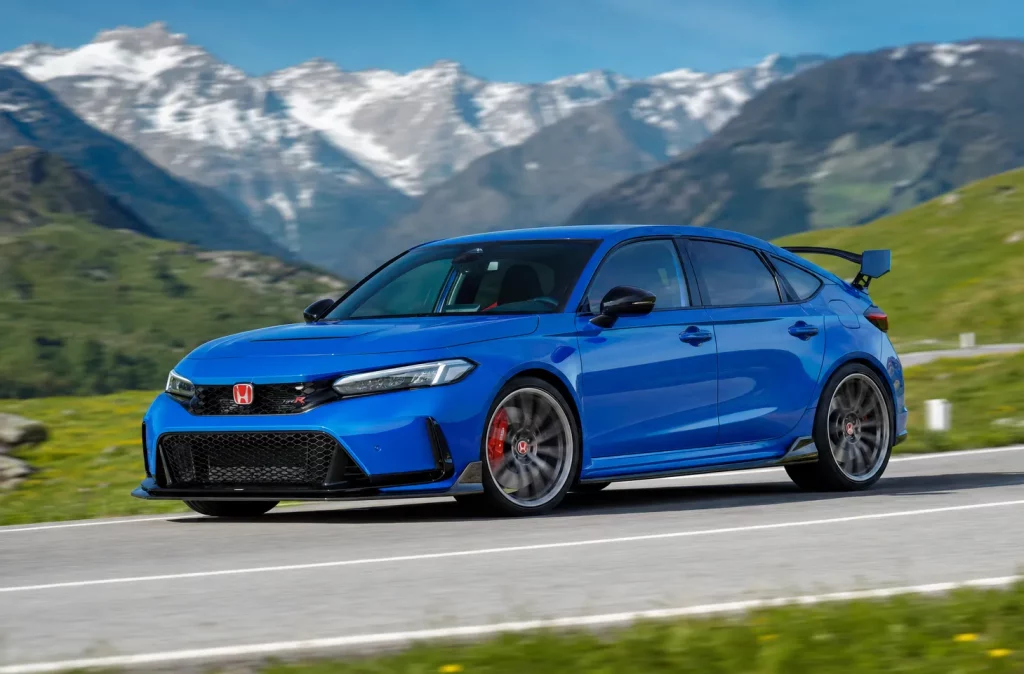
The Honda Civic Si and Civic Type R have built reputations as class-leading handlers across their respective generations. The Si has consistently delivered front-wheel-drive cornering benchmarks since the 8th generation, while the Type R has set production front-wheel-drive records for lateral grip and braking since its 2017 reintroduction. This article compiles instrumented skidpad (lateral acceleration), 60-0 mph braking, and figure-eight test data from Motor Trend, Car and Driver, and Grassroots Motorsports across every generation of Civic Si (8th through 11th) and both generations of Civic Type R (FK8 and FL5).
Understanding the Tests — What Skidpad, Braking, and Figure-Eight Actually Measure
Before diving into the numbers, it is essential to understand what each test measures and why the results are not directly comparable across different publications.
Skidpad (Lateral G): The skidpad test measures a car’s maximum cornering grip on a circular track, typically 200–300 feet in diameter. The car is driven around the circle AT increasing speed until it begins to slide, and the lateral acceleration is recorded in G-forces. A higher number indicates more grip, which generally translates to better cornering capability. The test is highly tire-dependent: a car on 200-treadwear semi-slicks will generate significantly more grip than the same car on all-season tires. Skidpad results also depend on surface condition, temperature, and tire pressure. Motor Trend and Car and Driver use slightly different procedures, so a 0.97 g result from one publication may not be directly comparable to a 0.97 g result from another.
Braking (60-0 mph and 70-0 mph): Braking tests measure the distance required to stop from a specific speed with maximum pedal pressure and ABS engaged. The test is highly tire-dependent and also affected by brake pad temperature, Rotor condition, and surface grip. A car that stops from 60 mph in 106 feet is stopping shorter than one that needs 115 feet, but the difference may be due to tires more than brakes. Motor Trend typically uses 60-0 mph braking tests, while Car and Driver uses 70-0 mph. These cannot be directly compared: stopping from 70 mph requires significantly more distance than stopping from 60 mph due to the square relationship between speed and kinetic energy.
Figure-Eight: The figure-eight test is a combined handling test that measures a car’s acceleration, braking, and cornering capability in one lap around a figure-eight course. The result is reported as a lap time and an average lateral g figure. Motor Trend uses a standardized 25-foot cone spacing. The figure-eight test is the best single indicator of overall chassis capability because it combines all aspects of handling into one metric. A car with a fast figure-eight time is generally well-balanced and easy to drive quickly.
Throughout this article, Motor Trend data is used as the primary reference because they have consistently tested every generation of Civic Si and Type R using the same procedures. Car and Driver data is noted where it provides additional insight.
Civic Si: Skidpad and Braking by Generation
The Civic Si has been tested by Motor Trend across every generation since the 8th, providing a consistent data set for comparison. The 10th-generation Si (2017–2021) represents the high-water mark for both lateral grip and braking, while the 11th-generation Si (2022+) regressed slightly in both metrics despite improvements in chassis rigidity and daily drivability.
8th Generation (2006–2011, K20Z3): The 8th-generation Si marked a significant step forward in handling compared to the EP3. Motor Trend tested a 2007 Civic Si coupe and recorded 0.85 g on the skidpad and 60-0 braking from 115 feet. The car’s double-wishbone front suspension provided excellent camber control, but the chassis was less rigid than later generations. Car and Driver’s 2006 Si test recorded 0.87 g and 60-0 braking from 110 feet. The 8th-gen Si rode on 215/45R17 all-season tires as standard (Michelin Pilot HX MXM4), with summer tire options available. The all-season tires were the primary limitation on cornering grip and braking.
9th Generation (2012–2015, K24Z7): The 9th-generation Si switched from double-wishbone front suspension to MacPherson struts, a change that reduced ultimate grip potential but improved packaging and reduced weight. Motor Trend tested a 2013 Civic Si coupe with the optional Michelin Pilot Sport 3 summer tires ($200 option) and recorded 0.87 g on the skidpad and 60-0 braking from 109 feet. The figure-eight lap was 26.5 seconds at 0.66 g average. The 9th-gen’s 0.87 g matched the 8th-gen’s best but did not improve, despite the summer tire option.
10th Generation (2017–2021, L15B7): The 10th-gen Si represented a massive leap in handling capability. Motor Trend recorded 0.97 g on the skidpad and 60-0 braking from 106 feet — the shortest stopping distance of any Si tested at the time. The figure-eight lap was 25.4 seconds at 0.72 g average. Car and Driver recorded 0.97 g on the skidpad and 70-0 braking from 159 feet. The improvement came from a stiffer chassis (the 10th-gen platform was 25 percent stiffer in torsion than the 9th-gen), a more sophisticated Multi-link Rear Suspension, wider 235/40R18 Goodyear Eagle F1 Asymmetric 2 summer tires, and larger 12.3-inch front brake rotors. The 10th-gen Si’s 0.97 g skidpad figure remains the best ever recorded for a Civic Si.
11th Generation (2022+, L15CA): The 11th-gen Si regressed slightly in objective handling metrics. Motor Trend recorded 0.93 g on the skidpad and 60-0 braking from 110 feet — 0.04 g less grip and 4 feet longer stopping than the 10th-gen. The figure-eight lap was 26.3 seconds at 0.67 g average, compared to 25.4 seconds at 0.72 g for the 10th-gen. The regression was attributed to the switch from two-mode adaptive dampers to fixed dampers, stability control that never fully disengages, and the carryover 235/40R18 Goodyear Eagle F1 Asymmetric 2 tires that may have been out-performed by the tire technology available on the 10th-gen test cars.
| Generation | Years | Skidpad (g) | 60-0 (ft) | Figure Eight | Tires (tested) |
|---|---|---|---|---|---|
| 8th (K20Z3) | 2006–2011 | 0.85–0.87 g | 110–115 ft | ~27.0 sec @ 0.64 g | 215/45R17 all-season |
| 9th (K24Z7) | 2012–2015 | 0.87 g | 109 ft | 26.5 sec @ 0.66 g | Michelin PS3 215/45R17 |
| 10th (L15B7) | 2017–2021 | 0.97 g | 106 ft | 25.4 sec @ 0.72 g | Goodyear F1 Asym 2 235/40R18 |
| 11th (L15CA) | 2022+ | 0.93 g | 110 ft | 26.3 sec @ 0.67 g | Goodyear F1 Asym 2 235/40R18 |
Figures from Motor Trend testing unless otherwise noted. Skidpad values are average lateral g on a 200–300 ft diameter circle. Braking distances are from 60-0 mph with ABS. Figure-eight values are lap time and average lateral g.
Civic Si Skidpad Evolution — 30 Years of Cornering Grip
The Civic Si’s lateral grip has improved dramatically over three decades. The progression is a clear demonstration of chassis, suspension, and tire technology evolution:
- 1999 EM1 Si: 0.80 g — the baseline, on 195/55R15 all-season tires with a less rigid chassis
- 2002 EP3 Si: 0.82 g — modest improvement, still on modest tires
- 2006 FG2 Si: 0.89 g — the double-wishbone chassis and wider tires made the first big leap
- 2009 FA5 Si: 0.90 g — the sedan matched the coupe’s grip
- 2012 FB6 Si: 0.87 g — the MacPherson Strut switch cost some grip, but summer tires partially compensated
- 2017 FC1 Si: 0.97 g — the massive leap: stiffer chassis, multi-link rear, adaptive dampers, and wider tires
- 2022 FE1 Si: 0.93 g — the regression: loss of adaptive dampers and more intrusive stability control
The total improvement from 0.80 g to 0.97 g is a 21 percent increase in lateral grip, which is substantial. However, the improvement is not linear: the 10th generation made the biggest leap, and the 11th generation took a step backward.
Civic Type R: Skidpad and Braking by Generation
The Civic Type R has been tested by Motor Trend across both the FK8 (2017–2021) and FL5 (2023+) generations, with additional data from Car and Driver. The Type R has consistently set front-wheel-drive benchmarks for lateral grip and braking, with the FL5 matching or exceeding the FK8’s performance depending on tire specification.
FK8 (2017–2021, K20C1): Motor Trend tested a 2017 Civic Type R on its standard 20-inch wheels with 245/30R20 Continental SportContact 6 tires. The car recorded 0.99 g on the skidpad and 60-0 braking from 104 feet. The figure-eight lap was 24.7 seconds at 0.78 g average. Car and Driver recorded 1.02 g on the skidpad and 70-0 braking from 153 feet on the same tire specification. The FK8’s skidpad performance of 0.99–1.02 g made it one of the highest-grip front-wheel-drive production cars ever tested.
FK8 Limited Edition (2021, K20C1): The 2021 Type R Limited Edition, equipped with lighter 20-inch BBS wheels and Michelin Pilot Sport Cup 2 tires, improved to 1.04 g on the skidpad and 60-0 braking from 99 feet — the best braking distance ever recorded for a Civic Type R. The figure-eight lap improved to 24.1 seconds at 0.81 g average. The Cup 2 tires were the primary driver of the improvement, demonstrating that tire compound can be more important than chassis changes for skidpad performance.
FL5 (2023+, K20C1): Motor Trend tested a 2023 Civic Type R on its standard 19-inch wheels with 265/30ZR19 Michelin Pilot Sport 4S tires. The car recorded 1.03 g on the skidpad and 60-0 braking from 104 feet. The figure-eight lap was 24.8 seconds at 0.76 g average. Car and Driver recorded 1.02 g on the skidpad and 70-0 braking from 153 feet. The FL5‘s skidpad performance (1.03 g) is slightly behind the FK8 Limited Edition’s 1.04 g but matches the Porsche Cayman GTS 4.0. The braking distance of 104 feet is 5 feet longer than the FK8 LE’s 99 feet but matches the standard FK8. The FL5’s smaller 19-inch wheels (versus the FK8’s 20-inch) reduce unsprung weight, but the Pilot Sport 4S tires are less aggressive than the Cup 2 tires available on the FK8 LE.
| Model | Years | Skidpad (g) | 60-0 (ft) | Figure Eight | Tires (tested) |
|---|---|---|---|---|---|
| FK8 (standard) | 2017–2021 | 0.99–1.02 g | 104 ft | 24.7 sec @ 0.78 g | Conti SportContact 6 245/30R20 |
| FK8 Limited Ed. | 2021 | 1.04 g | 99 ft | 24.1 sec @ 0.81 g | Michelin Cup 2 245/30R20 |
| FL5 (standard) | 2023+ | 1.02–1.03 g | 104 ft | 24.8 sec @ 0.76 g | Michelin PS4S 265/30ZR19 |
Motor Trend figures used for primary comparison. Car and Driver skidpad values noted where they differ. The FK8 LE’s 99-foot braking distance from 60 mph is the best recorded for any Civic Type R and matches the Porsche 911 GT3.
Si vs Type R: The Gap Within Each Generation
Within the 10th generation, the gap between the Si and the Type R was substantial: the Si pulled 0.97 g and stopped from 106 feet, while the Type R pulled 0.99–1.02 g and stopped from 104 feet. The Type R’s advantage came from wider tires (245 mm vs 235 mm), larger brakes (13.8-inch front rotors vs 12.3-inch), a stiffer chassis, and more aggressive suspension tuning with adaptive dampers.
Within the 11th generation, the gap widened. The 11th-gen Si regressed to 0.93 g and 110 feet, while the FL5 Type R improved to 1.03 g and 104 feet. The Si’s regression was driven by the loss of adaptive dampers and more intrusive stability control, while the Type R benefited from a completely redesigned suspension geometry, wider 265 mm tires, and larger 13.8-inch front brake rotors with improved cooling.
The 10th-gen Si actually outperforms the 11th-gen Si in every objective handling metric, despite being a generation older. The 10th-gen Si’s 0.97 g skidpad figure remains the best ever recorded for a Civic Si, and its 106-foot braking distance is 4 feet shorter than the 11th-gen’s. This is an unusual reversal in the typical pattern of generational improvement.
| Generation | Model | Skidpad (g) | 60-0 (ft) | Figure Eight |
|---|---|---|---|---|
| 10th | Si | 0.97 | 106 | 25.4 sec @ 0.72 g |
| 10th | FK8 Type R | 0.99–1.02 | 104 | 24.7 sec @ 0.78 g |
| 11th | Si | 0.93 | 110 | 26.3 sec @ 0.67 g |
| 11th | FL5 Type R | 1.02–1.03 | 104 | 24.8 sec @ 0.76 g |
Braking System Comparison by Generation
The Civic Si’s braking system has evolved significantly across generations. The 8th-gen Si used 11.8-inch front rotors with single-piston sliding Calipers. The 9th-gen Si used 12.0-inch front rotors. The 10th-gen Si introduced 12.3-inch front rotors, which remain the largest rotors fitted to any Civic Si. The 11th-gen Si uses 12.0-inch front rotors (larger than the standard 11th-gen Civic’s 11.1-inch rotors but smaller than the 10th-gen Si’s).
The Civic Type R uses substantially larger brakes. The FK8 used 13.8-inch front rotors with two-piece construction and four-piston Brembo calipers. The FL5 retains the same 13.8-inch front rotor size and Brembo calipers but adds improved brake cooling ducts and revised pad compound. The rear brakes on both Type R generations are 12.0-inch solid rotors with single-piston calipers.
| Model | Front Rotors | Front Calipers | Rear Rotors | 60-0 Distance |
|---|---|---|---|---|
| 8th Gen Si | 11.8 in vented | Single-piston sliding | 10.2 in solid | 110–115 ft |
| 9th Gen Si | 12.0 in vented | Single-piston sliding | 10.2 in solid | 109 ft |
| 10th Gen Si | 12.3 in vented | Single-piston sliding | 11.1 in solid | 106 ft |
| 11th Gen Si | 12.0 in vented | Single-piston sliding | 11.1 in solid | 110 ft |
| FK8 Type R | 13.8 in vented (2-piece) | 4-piston Brembo | 12.0 in solid | 99–104 ft |
| FL5 Type R | 13.8 in vented (2-piece) | 4-piston Brembo | 12.0 in solid | 104 ft |
Tire Impact — The Single Largest Variable
Tire specification is the single largest variable in both skidpad and braking performance across all Civic generations. The 10th-gen Si’s 0.97 g was achieved on 235/40R18 Goodyear Eagle F1 Asymmetric 2 summer tires, which were a $200 option over the standard all-season tires. The 11th-gen Si’s 0.93 g was achieved on the same tire model, suggesting that the chassis and suspension changes, not the tires, caused the regression.
The Type R’s tire impact is even more dramatic. The FK8 Limited Edition’s switch from Continental SportContact 6 to Michelin Pilot Sport Cup 2 tires improved skidpad grip from 0.99 g to 1.04 g and braking from 104 feet to 99 feet — with no other changes to the car. The Cup 2 tire is a semi-slick with a treadwear rating of 180, compared to the SportContact 6’s 240 and the Pilot Sport 4S’s 300. The trade-off is reduced wet weather performance and faster tread wear.
The FL5’s standard 265/30ZR19 Michelin Pilot Sport 4S tires are wider than the FK8’s 245/30R20 tires, which partially compensates for the less aggressive compound. The FL5’s 1.03 g on PS4S tires is impressive for a 300-treadwear tire and suggests that the FL5 chassis generates more mechanical grip than the FK8 chassis, even with less aggressive rubber.
Car and Driver’s testing of the 2017 Si coupe with summer tires recorded 0.97 g, while the Si sedan with less aggressive tires recorded 0.88 g. The difference of 0.09 g is entirely attributable to the tire compound, not the chassis. This demonstrates why comparing skidpad numbers across different test vehicles without considering the tire specification is meaningless.
For a Civic owner, the most cost-effective handling upgrade is almost always a tire upgrade. A set of 200-treadwear summer tires can transform a Civic Si’s cornering grip and braking performance more than any suspension modification.
Figure Eight — The Complete Handling Picture
The figure-eight test combines acceleration, braking, and cornering into a single metric. Motor Trend’s figure-eight results for the Civic lineup show the Si peaking with the 10th generation (25.4 seconds at 0.72 g) and the Type R peaking with the FK8 Limited Edition (24.1 seconds at 0.81 g).
The 10th-gen Si’s 25.4-second figure-eight time is 1.1 seconds faster than the 11th-gen Si’s 26.3 seconds, a substantial gap that reflects the 11th-gen’s slower acceleration, longer braking, and reduced cornering grip. The 10th-gen Si’s figure-eight time is also closer to the FK8 Type R’s 24.7 seconds than any other Si generation has managed.
The FL5 Type R’s 24.8-second figure-eight time is 0.1 seconds slower than the standard FK8’s 24.7 seconds and 0.7 seconds slower than the FK8 LE’s 24.1 seconds. The FL5’s slower figure-eight time relative to the FK8 LE is primarily due to the tire difference: the Cup 2 tires on the LE provide significantly more cornering grip, which is the dominant factor in figure-eight performance.
| Model | Figure Eight Time | Avg Lateral G | Notes |
|---|---|---|---|
| 8th Gen Si | ~27.0 sec | 0.64 g | All-season tires, older chassis |
| 9th Gen Si | 26.5 sec | 0.66 g | Summer tires, MacPherson strut |
| 10th Gen Si | 25.4 sec | 0.72 g | Adaptive dampers, stiff chassis |
| 11th Gen Si | 26.3 sec | 0.67 g | Fixed dampers, intrusive stability control |
| FK8 Type R | 24.7 sec | 0.78 g | Brembo brakes, adaptive dampers |
| FK8 LE | 24.1 sec | 0.81 g | Cup 2 tires, lighter wheels |
| FL5 Type R | 24.8 sec | 0.76 g | PS4S tires, revised suspension |
Why 1.03 G Doesn’t Mean the FL5 Corners 6% Faster Than the Si
A common mistake when interpreting skidpad numbers is to assume that lateral grip scales directly with lap time or cornering speed. A car with 1.03 g does not corner 6% faster than a car with 0.97 g. The relationship between lateral grip and cornering speed is non-linear because other factors — tire temperature, weight transfer, aerodynamic downforce, and suspension geometry — affect cornering capability.
On a real track, a Type R with 1.03 g of lateral grip may be only 2–3 mph faster through a corner than an Si with 0.97 g. The Type R’s larger advantage comes from its power, braking, and ability to maintain grip over a full session, not just its peak skidpad number.
The skidpad is a steady-state test that does not measure transient response, which is how a car reacts to quick steering inputs. A car with a slightly lower skidpad number but better transient response can be faster on a real track than a car with a higher skidpad number but sluggish response. The FK8 and FL5 Type Rs have excellent transient response due to their Dual-Axis Front Strut geometry, which is not reflected in the skidpad number.
Why Braking Distance Is Not Just About Brake Size
Braking distance is often attributed to brake rotor size, but the tires are actually more important. The 10th-gen Si’s 106-foot stopping distance is 3 feet shorter than the 11th-gen Si’s 110 feet, despite having nearly identical brake hardware. The difference is primarily due to the 10th-gen’s more aggressive summer tire compound and better ABS calibration.
The FK8 Type R’s 99-foot stopping distance on Cup 2 tires is 5 feet shorter than the FL5’s 104 feet on PS4S tires, despite the FL5 having the same 13.8-inch front rotors and Brembo calipers. The tire compound alone accounts for the difference. On equivalent tires, the FL5 would likely stop shorter than the FK8 due to its wider tires and improved brake cooling.
For a Civic owner, the most cost-effective braking upgrade is tires, followed by brake pads and fluid. Brake rotors and calipers are the last components that should be upgraded for stopping distance improvement. The stock Si brakes are already capable of locking the wheels; the tires are the limiting factor.
Skidpad vs Real Track Performance
Skidpad numbers should not be used as a proxy for lap time. The FK8 Type R and FL5 Type R have similar skidpad numbers (0.99–1.03 g), but the FL5 is faster on most tracks due to its improved cooling, better power delivery, and revised suspension geometry. The skidpad does not measure cooling, power delivery, or suspension response — it only measures steady-state cornering grip.
The Si’s 10th-generation skidpad number (0.97 g) is closer to the Type R’s (0.99 g) than the 11th-gen Si’s (0.93 g) is to the FL5’s (1.03 g). But on a track, the 10th-gen Si is still substantially slower than the FK8 Type R because the Type R has more power, better brakes, and a more sophisticated suspension. The 0.02 g difference on the skidpad does not tell the full story.
The most useful single metric is the figure-eight time, which combines acceleration, braking, and cornering. The 10th-gen Si’s 25.4-second figure-eight time is 1.3 seconds slower than the FK8’s 24.1–24.7 seconds, a gap that reflects the difference in overall chassis capability.
Quick Reference — Civic Si and Type R Skidpad and Braking
☐ 8th Gen Si skidpad: 0.85–0.87 g (all-season tires) — 0.89 g with summer tires according to Car and Driver
☐ 9th Gen Si skidpad: 0.87 g (Michelin PS3 summer tires) — 0.85–0.89 g across different tests
☐ 10th Gen Si skidpad: 0.97 g — the highest ever recorded for a Civic Si; achieved on Goodyear F1 Asymmetric 2 summer tires
☐ 11th Gen Si skidpad: 0.93 g — regression due to loss of adaptive dampers and more intrusive stability control
☐ FK8 Type R skidpad: 0.99–1.02 g on Conti SportContact 6; 1.04 g on Cup 2 tires (Limited Edition)
☐ FL5 Type R skidpad: 1.02–1.03 g on Michelin PS4S — matches Porsche Cayman GTS 4.0
☐ Best Si 60-0 braking: 106 ft (10th gen, 2017, Motor Trend) — 110 ft for 11th gen
☐ Best Type R 60-0 braking: 99 ft (FK8 LE, 2021, Cup 2 tires) — 104 ft for standard FK8 and FL5
☐ Tire compound is the single largest variable in both skidpad and braking performance
☐ A tire change can be worth 0.05–0.07 g on the skidpad and 5–10 feet in braking distance
☐ The 10th-gen Si outperforms the 11th-gen Si in every objective handling metric
☐ Figure-eight is the best single indicator of overall chassis capability
☐ The FK8 LE’s 99-foot braking distance matches the Porsche 911 GT3
☐ The FL5’s 1.03 g on 300-treadwear tires is more impressive than the FK8 LE’s 1.04 g on 180-treadwear Cup 2s
☐ Skidpad numbers should not be used as a proxy for lap time; they only measure steady-state cornering grip
☐ Braking distance is primarily determined by tires, not brake rotor size
FAQ — Civic Si and Type R Skidpad and Braking
What is the best skidpad number for a Civic Si?
The best skidpad number recorded for a Civic Si is 0.97 g, achieved by the 10th-generation Si (2017–2021) on Goodyear Eagle F1 Asymmetric 2 summer tires (Motor Trend).
What is the best braking distance for a Civic Si?
The best 60-0 mph braking distance for a Civic Si is 106 feet, achieved by the 10th-generation Si (2017) (Motor Trend). The 11th-gen Si is 4 feet longer at 110 feet.
How much lateral grip does the FK8 Type R have?
The FK8 Type R generates 0.99–1.02 g on Continental SportContact 6 tires (Motor Trend and Car and Driver). The FK8 Limited Edition generates 1.04 g on Michelin Pilot Sport Cup 2 tires.
How much lateral grip does the FL5 Type R have?
The FL5 Type R generates 1.02–1.03 g on Michelin Pilot Sport 4S tires (Motor Trend and Car and Driver).
Why is the 11th-gen Si worse on the skidpad than the 10th-gen?
The 11th-gen Si regressed from 0.97 g to 0.93 g due to the loss of adaptive dampers, more intrusive stability control that never fully disengages, and potentially different tire compound or test conditions. The chassis is stiffer, but the suspension tuning and electronic aids are less aggressive.
How much do tires affect skidpad and braking?
Tires can affect skidpad numbers by 0.05–0.07 g and braking distance by 5–10 feet. The FK8 Limited Edition’s switch from SportContact 6 to Cup 2 tires improved skidpad from 0.99 g to 1.04 g and braking from 104 ft to 99 ft — with no other changes to the car.
What is the figure-eight time for a Civic Si?
The 10th-gen Si runs 25.4 seconds at 0.72 g average (Motor Trend). The 11th-gen Si runs 26.3 seconds at 0.67 g average — a 0.9-second slower time and 0.05 g lower average grip.
What is the figure-eight time for a Civic Type R?
The FK8 Type R runs 24.7 seconds at 0.78 g average. The FK8 Limited Edition runs 24.1 seconds at 0.81 g average. The FL5 Type R runs 24.8 seconds at 0.76 g average.
Is the FK8 or FL5 Type R better on the skidpad?
The FK8 Limited Edition (1.04 g) has the highest skidpad number. The FL5 (1.03 g) is slightly behind on PS4S tires but would likely match or exceed the FK8 LE on equivalent Cup 2 tires. The standard FK8 is 0.99–1.02 g.
Which Civic handles better on a track?
The FL5 Type R is the best-handling Civic on a track due to its improved cooling, revised suspension geometry, wider tires, and more consistent performance over a full session. The skidpad number alone does not capture the FL5’s advantages.