

For Civic Si enthusiasts, few debates are as heated as the clash between the 10th generation and the 11th generation. On the surface, both cars share the same formula: a 1.5-liter turbocharged four-cylinder, a six-speed manual transmission, front-wheel drive, and a helical limited-slip differential. But beneath the skin, Honda made changes that fundamentally altered what the Si badge means.
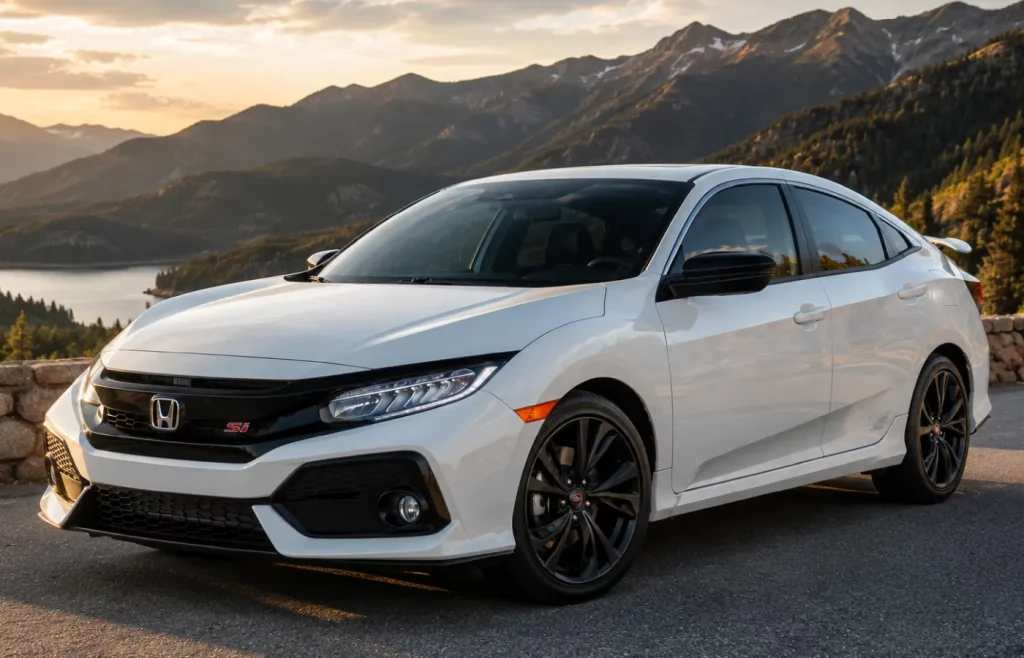
The 10th Gen Civic Si (2017–2020) arrived as a sharp, aggressive Sport Compact with adaptive dampers and a coupe option that appealed to enthusiasts who wanted a pure driving machine. The 11th Gen Civic Si (2022–present) arrived as a more mature, more refined sedan that prioritized daily comfort and modern technology over raw track performance.
This is not a debate about which car is objectively better. It’s a debate about what Honda optimized for — and whether the newer Si is a better car for the way most people actually drive.
The 10th Gen Si offers sharper track performance, adaptive dampers, and a lighter, more compact feel — but its interior feels dated. The 11th Gen Si delivers a more modern cabin, better daily comfort, and a more mature driving experience — but lost adaptive suspension and the coupe body style. The 11th Gen is the better car to own every day; the 10th Gen may still be the better Si for enthusiasts.
The Same Recipe, a Different Personality
Both cars share the same fundamental formula. Both have a 1.5-liter turbocharged four-cylinder, a six-speed manual transmission, front-wheel drive, and a helical limited-slip differential. Both are practical, fun-to-drive Sport compacts that deliver excellent value for money.
But the shift from the 10th generation to the 11th generation represents a change in philosophy. The 10th Gen Si was a lighter, more compact sport compact car built for engagement. The 11th Gen Si is a larger, more mature vehicle designed to balance daily comfort, passenger space, modern technology, and practicality with its sporting character.
This distinction is confirmed by real-world track testing. Car and Driver directly notes that the 11th Gen Si is the most comfortable and versatile Si yet, but part of its sporting advantage on larger tracks was lost in the transition.
The same recipe, but a very different flavor.
| Specification | 10th Gen Si (FC1/FC3) | 11th Gen Si (FE1) |
|---|---|---|
| Engine | L15B7 1.5L turbo | L15CA 1.5L turbo |
| Horsepower | 205 hp | 200 hp |
| Torque | 192 lb-ft | 192 lb-ft |
| Transmission | 6-speed manual | 6-speed manual |
| LSD | Helical | Helical |
| Adaptive dampers | Yes (ADS) | No |
| Body styles | Sedan & Coupe | Sedan only |
| Curb weight | ~2,897–2,950 lb | ~2,952 lb |
| Final drive ratio | 4.10:1 | 4.35:1 |
Performance on Paper: Why the Newer Car Isn’t Automatically Faster
On paper, the 11th Gen Si actually loses horsepower. The 10th Gen Si made 205 horsepower. The 11th Gen Si makes 200 horsepower. Torque remains identical at 192 lb-ft. The newer car is also heavier, longer, and has a longer Wheelbase.
This creates an interesting dynamic. Honda made the newer Si bigger, heavier, and slightly less powerful. But that doesn’t automatically mean it’s worse. The 11th Gen Si has a revised engine with VTEC on the exhaust cam, a single-mass flywheel from the Type R, and a shorter final drive ratio. These changes alter the character of the car significantly.
But the numbers tell a story. The 10th Gen Si has a better power-to-weight ratio. The 11th Gen Si has more modern technology and a more refined interior. The question is which matters more to you.
Lap Time: The Old Car Actually Has an Argument
This is where the debate gets interesting. In comparable testing, the 10th Gen Si Coupe outperformed the 11th Gen Si Sedan on track. In Car and Driver’s Lightning Lap testing AT VIR Grand Course, the 2017 Civic Si Coupe recorded a time of 3:14.6, while the 2023 Civic Si Sedan recorded 3:16.9 — a difference of approximately 2.3 seconds.
But this doesn’t automatically mean the 10th Gen is better on every track. Car and Driver identified several factors contributing to the difference: the 11th Gen is longer, has a longer wheelbase, weighs more, makes 5 less horsepower, and has a shorter final drive ratio that caused the car to be in less optimal gears on some sections of the track.
The 11th Gen Si is not slower because Honda forgot how to build a sports sedan. It is slower because Honda changed what the Si was optimized for.
- VIR Lap Time: 3:14.6
- Lighter weight
- Adaptive dampers
- Coupe body style
- 4.10:1 final drive
- VIR Lap Time: 3:16.9
- Heavier weight
- Fixed suspension
- Sedan only
- 4.35:1 final drive
Coupe vs Sedan: The Comparison Problem Nobody Talks About
This is an important detail that often gets overlooked. The best-known Lightning Lap result for the 10th Gen was achieved with the Civic Si Coupe. The 11th Gen Si is sedan-only.
The Si Coupe was shorter, lighter, and had a different weight distribution than the sedan. The 11th Gen Si is approximately 6.6 inches longer, has a longer wheelbase, and weighs more than the tested 2017 Si Coupe.
It’s not fair to say the 10th Gen Si is definitively faster. The best available track comparison favors the 10th-gen coupe, but body style is part of the reason. A sedan vs sedan comparison would tell a different story, but such data is not readily available.
The death of the Si Coupe is a significant loss for enthusiasts who valued that body style.
Adaptive Dampers: Did Honda Remove One of the Best Features?
This is one of the most controversial decisions Honda made with the 11th Gen Si. The 10th Gen Si had Adaptive Damper System (ADS) that allowed drivers to adjust suspension stiffness between Normal and Sport modes. Car and Driver noted that the 10th Gen Si combined excellent grip with surprisingly good ride quality, thanks to the adaptive setup.
The 11th Gen Si removed adaptive dampers entirely. Instead, it uses fixed sport suspension with stiffer springs (8% stiffer) and thicker anti-roll bars. But you can’t adjust it from the cabin.
This is especially notable because the new Si costs more, has a more premium feel, and is heavier — but lost one of the key technical features that made the previous generation both faster and more comfortable.
Did Honda remove technology that actually made the 10th Gen both faster and more comfortable? That’s a valid question.
Ride Quality: Here’s the Surprise
Many people assume the 11th Gen Si automatically has better ride quality. The reality is more nuanced. The 10th Gen Si, despite its sporty tuning, was surprisingly comfortable thanks to the adaptive dampers. Car and Driver noted that the 10th Gen Si combined serious handling capability with a surprisingly compliant ride.
The 11th Gen Si has a more mature chassis setup, better isolation from road imperfections, and feels more grown-up overall. The fixed suspension is well-tuned, but you can’t soften it when you want a more relaxed drive.
The 10th Gen Si is more adjustable. The 11th Gen Si is more naturally refined. Neither is clearly superior — it depends on what you value.
| Ride Quality Aspect | 10th Gen Si | 11th Gen Si |
|---|---|---|
| Adjustability | Yes — Normal and Sport modes | No — fixed suspension |
| Ride comfort (Normal mode) | Surprisingly compliant | More refined, less harsh |
| Ride comfort (Sport mode) | Firm, controlled | Not applicable |
| Road isolation | Less isolated | Better insulated |
| Overall character | More adjustable | More naturally refined |
Steering and Chassis: Raw vs Mature
The steering and chassis character changed significantly between generations. The 10th Gen Si feels more compact, changes direction more quickly, and has a lighter, more eager attitude. The coupe body style contributed to this feeling, but even the sedan had a sharper character than the 11th Gen.
The 11th Gen Si has a longer wheelbase and a more stable, predictable character. It’s better suited for fast, flowing roads where stability matters more than quick direction changes. Car and Driver describes the 11th Gen as still very well-coordinated in medium-speed direction changes, but the overall character is more composed and less frantic.
The 10th Gen feels eager. The 11th Gen feels composed.
The Gear Ratio Change: Why the New Si Feels Different
This is a technical detail that has a significant impact on how the car drives. The 11th Gen Si has a shorter final drive ratio — 4.35:1 compared to the 10th Gen’s 4.10:1. This shorter gearing helps with responsiveness, autocross performance, and tight tracks where acceleration matters more than top speed.
But on faster tracks like VIR, the shorter gearing meant the 11th Gen Si was sometimes in a less optimal gear in certain sections, contributing to the lap time difference. Shorter gearing is not automatically faster — it depends on the track.
For autocross and tight roads, the 11th Gen’s shorter gearing is an advantage. For high-speed tracks, the 10th Gen’s taller gearing may be better.
Interior: This Is Where the 11th Gen Pulls Away
This is one area where the 11th Gen Si wins decisively. The 10th Gen Si’s interior feels dated today. The infotainment system is slow, the materials feel cheaper, and the overall cabin lacks the refinement of the newer car.
The 11th Gen Si has a cleaner dashboard design, a 9-inch touchscreen with wireless Apple CarPlay and Android Auto, a 12-speaker Bose audio system, and a more modern overall look. The honeycomb dash vents and improved materials make the cabin feel genuinely premium.
The 10th Gen Si has the better track hardware. The 11th Gen Si has the better place to spend time.
Features: What Did You Gain — and What Did You Lose?
The 11th Gen Si gained a lot, but it also lost some features that enthusiasts valued.
11th Gen gained:
- More modern interior with better materials
- 9-inch touchscreen with wireless CarPlay/Android Auto
- 12-speaker Bose premium audio system
- Improved sound insulation and NVH
- More mature, refined driving experience
- Better rear-seat space and practicality
10th Gen kept or offered:
- Adaptive dampers (ADS)
- Coupe body style option
- 5 more horsepower
- Lighter weight
- More compact, eager feel
- More mature aftermarket support
Honda added convenience but removed hardware. That’s the central trade-off between these two generations.
The Daily Commute Test
Imagine a 60-minute commute with city traffic, highway stretches, bad pavement, and passengers. Which Si would you rather drive to work every day?
The 10th Gen Si offers a more compact feel, adjustable suspension, and a more sporting character. It’s engaging and fun, but it can be tiring in heavy traffic.
The 11th Gen Si offers a better interior, more mature ride, larger cabin, and modern technology. It’s easier to live with day after day, especially if you spend a lot of time in the car.
The 11th Gen is the easier car to live with daily. The 10th Gen is the more engaging car for a weekend drive.
The Back Seat and Practicality Test
The 10th Gen Si was available as both a coupe and a sedan. The 11th Gen Si is sedan only. This means Honda is forcing buyers to choose practicality regardless of their preference.
The 11th Gen Si has more rear legroom, better rear access, and a more usable trunk. It’s a better car for carrying passengers or installing child seats. The 10th Gen Si coupe prioritized style over utility.
Did the death of the Si Coupe make the Si a better car — or simply a more practical one? The answer depends on your priorities.
The Tuning Question
Both platforms have a 1.5-liter turbo engine, a manual transmission, and a massive aftermarket. But they’re not the same tuning platform.
The 10th Gen Si has a more mature aftermarket with years of accumulated knowledge, countless proven setups, and a larger community of owners who have tested every possible modification. There are more options, more suppliers, and more documented results.
The 11th Gen Si has a newer platform with a developing aftermarket. The ECU is more protected, requiring jailbreak for tuning. The clutch is more delicate, slipping even with Stage 1 tunes. The single-mass flywheel makes the engine rev faster but exposes the clutch to more stress.
Which Si is easier to build around? The 10th Gen, for now. The 11th Gen will get there, but the 10th Gen has a head start.
Used Market: The Question New-Car Reviews Ignore
In 2026, the real buyer decision is often between a used 2017–2020 Si and a newer or used 2022+ Si. This is a different question than a new-car comparison.
The 10th Gen Si is now a used-car value decision. It’s depreciated, available at lower prices, and offers excellent value for the money. But you’re buying an older car with potentially higher mileage, less warranty, and a dated interior.
The 11th Gen Si is closer to a modern ownership decision. It’s newer, has more modern technology, a better interior, and potentially more remaining warranty. But it costs more.
The 10th Gen is now a used-car value decision. The 11th Gen is still closer to a modern ownership decision.
The Modified-Car Problem
On the used market, the 10th Gen Si is often heavily modified. Many examples have intakes, downpipes, flash tunes, suspension modifications, and other aftermarket parts. Finding a clean, unmodified stock example is becoming increasingly difficult.
The 11th Gen Si is generally newer, with fewer heavily modified examples available. It’s easier to find a lower-mileage, stock car that hasn’t been tampered with.
This is an important buying consideration. A clean stock car beats a cheaper modified car more often than buyers want to admit.
Which One Is Actually More Fun?
This is the question that matters most to enthusiasts. The 10th Gen Si is more fun for the driver who wants a lighter feel, the coupe option, adaptive suspension, and a more raw sport-compact character. It feels eager, responsive, and engaging.
The 11th Gen Si is more fun for the driver who wants a better cabin, a more mature ride, more space, and a modern ownership experience. It feels composed, refined, and grown-up.
The 10th Gen feels like a Civic made sporty. The 11th Gen feels like a sport sedan made practical.
Verdict: Which Generation Wins?
The conclusion should be nuanced. Here’s how it breaks down.
| Category | Winner |
|---|---|
| VIR lap time comparison | 10th Gen |
| Power-to-weight | 10th Gen |
| Adaptive suspension | 10th Gen |
| Compact feel | 10th Gen |
| Coupe option | 10th Gen |
| Interior | 11th Gen |
| Technology | 11th Gen |
| Rear-seat practicality | 11th Gen |
| Daily refinement | 11th Gen |
| Autocross potential | Depends |
| Used-car value | 10th Gen |
| Newer ownership experience | 11th Gen |
Final Thought
The 11th Gen Civic Si is the better car. The 10th Gen Civic Si may still be the better Si.
Buy the 10th Gen Si if you want the better enthusiast package for the money. You get more power, less weight, adaptive dampers, the coupe option, and a more mature used aftermarket. It’s the car that rewards effort and skill.
Buy the 11th Gen Si if you want the better car to own every day. You get a modern interior, more space, a more mature character, and a contemporary platform. It’s the car that makes daily life better.
The 10th Gen Si is the car you buy for the weekend. The 11th Gen Si is the car you buy for the week.
Both are excellent cars. They just serve different masters.
FAQ — 10th Gen vs 11th Gen Civic Si
Which Civic Si is faster, the 10th Gen or the 11th Gen?
In comparable track testing, the 10th Gen Si Coupe was faster at VIR (3:14.6 vs 3:16.9). However, this comparison involves different body styles — coupe vs sedan. The 10th Gen has 5 more horsepower and is lighter, but the 11th Gen has a shorter final drive ratio that benefits autocross and tight tracks. The answer depends on the track and body style.
Does the 11th Gen Si have adaptive dampers?
No — the 11th Gen Si uses fixed sport suspension with stiffer springs and thicker anti-roll bars. The adaptive damper system (ADS) was removed to reduce costs and differentiate the Si from the Type R. The 10th Gen Si had adaptive dampers with Normal and Sport modes.
Which Civic Si has the better interior?
The 11th Gen Si has a significantly better interior with a 9-inch touchscreen, wireless Apple CarPlay, a 12-speaker Bose audio system, improved materials, and a more modern design. The 10th Gen Si’s interior feels dated with slower infotainment and cheaper materials.
Is the 11th Gen Si still available as a coupe?
No — the 11th Gen Si is sedan only. Honda discontinued the Si coupe after the 10th generation. The 10th Gen Si was available as both a coupe and a sedan, giving buyers more choice.
Which Civic Si is better for daily driving?
The 11th Gen Si is better for daily driving. It has a more refined ride, better interior, more modern technology, improved sound insulation, and more rear-seat space. The 10th Gen Si is more engaging but less refined and more tiring in traffic.
Which Civic Si has more tuning potential?
The 10th Gen Si currently has more mature aftermarket support with more proven setups, more options, and a larger community. The 11th Gen Si has a newer platform with developing aftermarket support and a more delicate clutch that slips even with Stage 1 tunes.
Why does the 11th Gen Si have less horsepower?
The 11th Gen Si produces 200 horsepower compared to the 10th Gen’s 205 horsepower. The 5-hp reduction is likely due to emissions regulations and changes in the engine calibration. The L15CA engine in the 11th Gen has VTEC on the exhaust cam, which changes the character of power delivery even if peak power is slightly lower.
Which Civic Si is better for the money in 2026?
The 10th Gen Si offers better value as a used car purchase, with lower prices, a more mature aftermarket, and adaptive suspension. The 11th Gen Si offers a more modern ownership experience with better technology, interior, and daily refinement. The choice depends on whether you prioritize performance or daily comfort.
Does the 11th Gen Si have a shorter final drive ratio?
Yes — the 11th Gen Si has a 4.35:1 final drive ratio compared to the 10th Gen’s 4.10:1. This shorter gearing improves responsiveness and benefits autocross and tight tracks but can be less optimal on high-speed tracks where the car is more often between gears.
Should I buy a 10th Gen or 11th Gen Civic Si?
Buy the 10th Gen Si if you want the raw enthusiast experience with adaptive dampers, a coupe option, lighter weight, and a more mature aftermarket. Buy the 11th Gen Si if you want modern technology, a better interior, a more refined daily driver, and a newer platform. The 11th Gen is the better car; the 10th Gen is the better Si.