

Walk into any Honda dealership in America and you’ll see them lined up side by side. Same body. Same basic shape. Same Honda badge on the grille. But the price tags tell a different story — the gap between the cheapest LX and the top-of-the-line Sport Touring Hybrid is nearly $8,000.
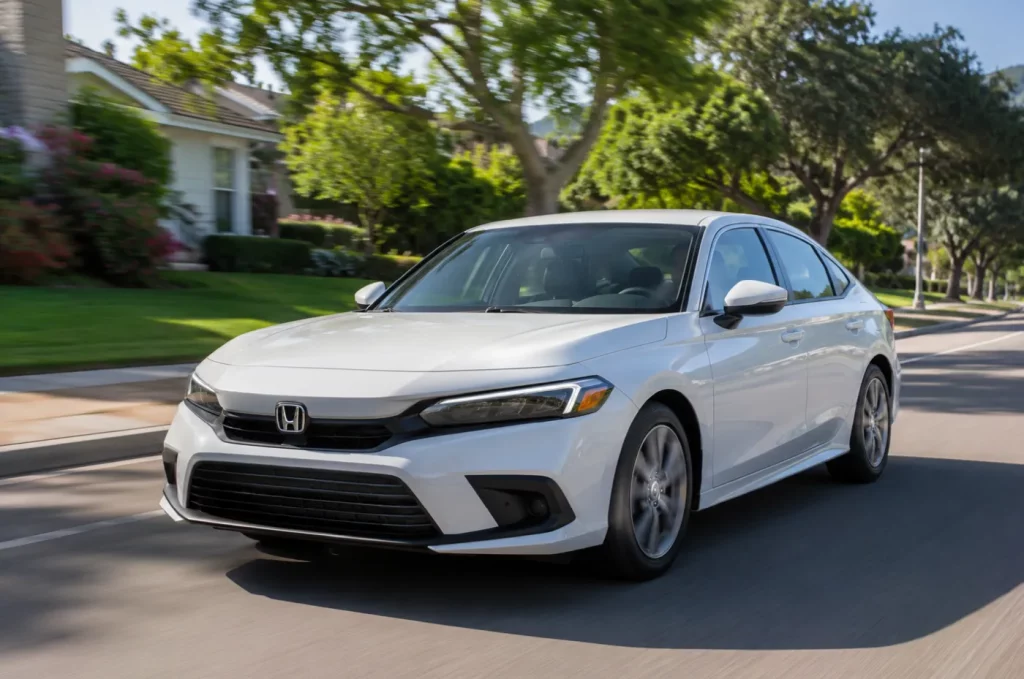
The average buyer looks AT the lineup and asks the same question: what am I actually paying for? Is the extra money going toward real performance and comfort upgrades, or is it just marketing fluff designed to separate you from your wallet?
This guide cuts through the dealer talk. We’ll break down exactly what each trim offers, where the value actually is, and which Civic you should buy based on how you actually plan to use the car.
Buy the LX if you want the lowest price and don’t care about styling or technology. Buy the Sport if you want aggressive looks without spending extra on performance you don’t need. Buy the Hybrid if you want the best balance of fuel economy and power. Buy the Sport Touring if you want every feature Honda offers and plan to keep the car for years.
The Price Ladder: How Much More Are You Actually Paying?
For the 2026 model year, the Civic sedan lineup starts at $24,695 for the LX. The Sport adds roughly $2,000. The Sport Hybrid jumps another $2,700. And the Sport Touring Hybrid tops the range at approximately $32,395. That’s a spread of nearly $8,000 between the cheapest and most expensive versions of the same car.
What does that money buy? That’s the question this guide answers. Some upgrades are worth every penny. Others are purely cosmetic. And some trims exist primarily to make the dealer more money.
Let’s start with the most important fact: the LX and Sport share the exact same powertrain. Same engine. Same transmission. Same horsepower. Same torque. They don’t drive any differently.
| Trim | Engine | Horsepower | Transmission | Starting MSRP (2026) |
|---|---|---|---|---|
| LX | 2.0L NA I4 | 150 hp | CVT | $24,695 |
| Sport | 2.0L NA I4 | 150 hp | CVT | $26,695 |
| Sport Hybrid | 2.0L Hybrid | 200 hp system | eCVT | $29,395 |
| Sport Touring Hybrid | 2.0L Hybrid | 200 hp system | eCVT | $32,395 |
What Doesn’t Change Between the Trims?
This is a crucial point that many buyers miss. The LX and Sport share the same 2.0-liter naturally aspirated engine producing 150 horsepower and 133 lb-ft of torque. They both use the same CVT. They’re both front-wheel drive. They’re both equally slow.
If you’re expecting the Sport to feel faster than the LX, you’re going to be disappointed. The Sport looks sportier, but it doesn’t drive sportier. The 18-inch wheels and black trim don’t change the engine or transmission.
The Sport also doesn’t get any of the turbocharged performance of the higher trims. The engine is the same. The power output is the same. The driving experience is the same.
LX: The Smartest Civic for People Who Don’t Care About the Badge
The LX is the entry-level Civic, but it’s not a stripped-down penalty box. Honda still gives you LED headlights, automatic climate control, a 7-inch touchscreen with wired Apple CarPlay and Android Auto, and the full Honda Sensing suite of safety technology.
You get a reliable, efficient, and well-equipped car for under $25,000. That’s a genuinely good deal in today’s market. The LX is the rational choice — the car you buy with a calculator, not with your heart.
What you miss by buying the LX:
- 18-inch alloy wheels (you get 16-inch steel wheels with covers)
- Blind Spot Information System
- Paddle shifters
- Leather-wrapped steering wheel
- Upgraded audio system
- Sportier styling
The LX is for buyers who want a new Honda Civic at the lowest possible price. It’s for people who see a car as transportation, not as a statement.
Sport: Are You Paying for Looks?
The Sport is the most popular trim in America for a reason. It looks aggressive. The 18-inch gloss-black wheels, black mirrors, black spoiler, and dual exhaust outlets make the Civic look faster and more expensive than it actually is.
But here’s the reality: the Sport is a visual upgrade, not a performance upgrade. Under the skin, it’s the same 150-horsepower Civic as the LX. The Sport adds styling, not speed.
What the Sport adds over LX:
- 18-inch gloss-black alloy wheels
- Black mirrors and spoiler
- Dual exhaust outlets
- Leather-wrapped steering wheel
- Paddle shifters
- Blind Spot Information System
- Upgraded audio system
The Sport looks faster than it is. That’s not a criticism — it’s simply the truth. Buy the Sport because you want the equipment and styling, not because you’re expecting a major performance upgrade.
- Lowest price
- Same engine as Sport
- Better fuel economy
- Cheaper tires
- Best value
- Aggressive appearance
- 18-inch black wheels
- Blind Spot Monitoring
- More expensive tires
- Same engine as LX
The Hidden Cost of Sport: 18-Inch Tires
The LX rides on 16-inch wheels with 215/55R16 tires. The Sport has 18-inch wheels with 235/40R18 tires. The difference matters more than you might think.
Sport advantages:
- Looks better
- Sharper steering response
- Wider tires provide more grip
LX advantages:
- Cheaper replacement tires
- Taller sidewalls absorb road imperfections better
- Less risk of wheel damage from potholes
- Better fuel economy
Will you still like the 18-inch wheels when it’s time to replace four tires? A set of 18-inch performance tires costs significantly more than a set of 16-inch tires. That’s a real ownership cost that many buyers overlook.
Fuel Economy: The LX Quietly Wins
The LX gets approximately 36 mpg combined. The Sport gets approximately 34 mpg combined. The difference is small but real — about 2 mpg. Over 50,000 miles, that difference adds up to roughly $200 in fuel costs, depending on gas prices.
It’s not a huge difference, but it’s worth noting. The LX is the more efficient car. The Sport’s larger wheels and wider tires create more rolling resistance, which reduces fuel economy.
Sport Hybrid Changes the Whole Equation
This is where the Civic lineup gets interesting. The Sport Hybrid uses a 2.0-liter Atkinson-cycle engine paired with two electric motors, producing a combined 200 horsepower and 232 lb-ft of torque. It delivers 49 mpg combined — significantly better than both the base LX and Sport.
The Hybrid is quicker than the base engine, with a 0-60 time around 6.5 seconds. It’s also smoother and more refined in city driving, thanks to the instant torque from the electric motors. The eCVT has no belts to wear out — it uses planetary gears and electric motors, making it more durable than the standard CVT.
Why buy the regular Sport instead of the Sport Hybrid?
- Lower initial purchase price (saving about $2,700)
- No need for hybrid complexity if you don’t drive many miles
- Styling is identical
- Regular Sport uses regular gasoline; Hybrid also uses regular but with lower consumption
The Hybrid makes financial sense for drivers who cover more than 12,000 miles per year. The fuel savings will eventually offset the higher purchase price. For lower-mileage drivers, the regular Sport may be the smarter financial choice.
Sport Touring: Luxury Civic or Smart Overpayment?
The Sport Touring Hybrid is the top of the line. It starts at approximately $32,395 and includes everything the lower trims offer — plus a long list of premium features.
What the Sport Touring adds:
- Leather-trimmed seats
- Bose 12-speaker premium audio system
- 10.2-inch digital instrument cluster
- 9-inch touchscreen
- Wireless Apple CarPlay and Android Auto
- Wireless phone charger
- Google built-in
- Dual-zone automatic climate control
- Heated front seats
- Heated steering wheel (on some models)
- Power driver’s seat
The question isn’t whether these features are nice — they are. The question is whether they’re worth the additional cost to you. If you’re the type of person who keeps a car for 8-10 years, the extra comfort and technology may be worth it. If you trade cars every 3-4 years, you’re paying for features that won’t add much to resale value.
The 3 Features Worth Paying For — and the 3 That Aren’t
Worth paying for:
- Blind Spot Information System — This is a genuine safety upgrade that makes a real difference in daily driving. The LX lacks it.
- Hybrid powertrain — Better fuel economy, more power, and more refinement. The Hybrid is the best powertrain in the lineup.
- Wireless CarPlay and Android Auto — Once you’ve used it, you won’t want to go back to plugging in a cable every time you get in the car.
Depends on the buyer:
- Bose audio — If you’re an audiophile, the upgrade is worth it. If you listen to podcasts and talk radio, the base system is fine.
- Leather seats — Some people love them. Others find them too hot in summer and too cold in winter. The Civic’s cloth seats are comfortable and durable.
- 18-inch wheels — They look great but cost more to replace tires. If you drive on rough roads, the 16-inch wheels are more practical.
The Daily Driver Test
Let’s break this down into real-world scenarios.
Scenario A: 50-Mile Daily Commute
Winner: LX or Sport Hybrid
The LX gets better fuel economy than the regular Sport and costs less. The Hybrid gets even better fuel economy and has more power. If you drive a lot of miles, the Hybrid will save you money in the long run.
Scenario B: You Keep Cars for 10 Years
Winner: Sport Hybrid or Sport Touring Hybrid
The hybrid powertrain is proving to be exceptionally durable. The eCVT has no belts to wear out. The fuel savings over a decade are significant. And you won’t spend the next ten years wishing you had bought a better-equipped car.
Scenario C: You Live in an Area With Bad Roads
Winner: LX
The 16-inch wheels with taller tire sidewalls absorb potholes better than the 18-inch wheels. Replacement tires are cheaper. You’re less likely to damage a wheel. The LX is the practical choice for rough roads.
Scenario D: You Care About Appearance
Winner: Sport
The black wheels, black mirrors, and sporty styling make the Sport look genuinely good. It’s the best-looking car in the lineup for the money.
Scenario E: You Hate Buying Cars With Missing Features
Winner: Sport Touring
If you know you’ll regret not getting the leather seats, the Bose audio, and the larger screen, just buy the Sport Touring. The regret of missing features lasts longer than the pain of spending money.
LX vs Sport: The Most Important Comparison
This is where most buyers will make their decision. The LX and Sport share the same engine, transmission, and basic chassis. The difference is primarily appearance and a few convenience features.
| Feature | LX | Sport | Is It Worth It? |
|---|---|---|---|
| Engine | 2.0L NA | 2.0L NA | ❌ Same |
| Horsepower | 150 hp | 150 hp | ❌ Same |
| Torque | 133 lb-ft | 133 lb-ft | ❌ Same |
| Transmission | CVT | CVT | ❌ Same |
| Wheels | 16″ steel | 18″ alloy | ⚡ Depends |
| MPG combined | 36 | 34 | LX |
| Blind Spot Monitoring | No | Yes | ✓ Sport |
| Styling | Basic | Sportier | ⚡ Personal |
The Bottom Line: The Sport is a feature and styling upgrade — not a power upgrade. If you’re buying the Sport hoping it will feel faster than the LX, you’ll be disappointed. If you’re buying it because you want the looks and the blind spot monitoring, it’s money well spent.
Sport vs Touring: The Luxury Tax
The gap between the Sport and the Sport Touring Hybrid is about $5,700. What does that buy you? A hybrid powertrain, leather seats, Bose audio, a larger screen, wireless CarPlay, and a host of other premium features.
Is it worth it? That depends on how much you value comfort and technology. The Civic underneath is still a Civic — it doesn’t become a luxury car just because you bought the top trim. But the Sport Touring is undeniably a nicer place to spend time.
If you’re the type of person who wants the best of everything and plans to keep the car for a long time, the Sport Touring is worth considering. If you’re looking for value, the Sport or Sport Hybrid is the smarter choice.
Should You Buy the Cheapest Trim and Add Accessories?
This is a question that comes up often. Can you buy the LX and add the features you want? The answer is yes — but only for some things.
You can add aftermarket wheels, better tires, and even a decent audio system. You can add a wireless CarPlay adapter. You can add leather seat covers.
But you cannot add:
- The hybrid powertrain
- Blind Spot Information System (factory hardware is integrated)
- Factory-integrated wireless CarPlay (with the same level of integration)
- The 9-inch touchscreen
- The Bose audio system (properly integrated)
Some features are worth paying for from the factory. Others are easier and cheaper to add later. Plan accordingly.
5-Year Ownership Cost Comparison
This is where the numbers get real. Let’s estimate the total cost of ownership for each trim over five years and 75,000 miles.
| Cost Category | LX | Sport | Sport Hybrid | Sport Touring Hybrid |
|---|---|---|---|---|
| Purchase price | $24,695 | $26,695 | $29,395 | $32,395 |
| Fuel (75k miles) | ~$6,800 | ~$7,200 | ~$5,000 | ~$5,000 |
| Tires (2 sets) | $800 | $1,200 | $1,200 | $1,200 |
| Insurance (estimate) | $6,500 | $7,000 | $7,000 | $7,500 |
| Maintenance | $2,000 | $2,200 | $2,200 | $2,400 |
| Depreciation | $10,000 | $10,500 | $11,000 | $12,000 |
| Total (approx.) | $50,795 | $54,795 | $55,795 | $60,495 |
The LX is the cheapest to own. The Hybrid saves money on fuel but costs more up front. The Sport Touring is the most expensive overall — you’re paying for premium features and comfort.
What Trim Has the Best Resale Value?
Civics generally hold their value well across all trims. But there are differences.
The LX has the broadest appeal, which helps resale. The Sport is popular for its looks. The Hybrid is becoming more desirable as fuel prices fluctuate. The Sport Touring has the highest initial price, which means the most to lose, but it also has the most features to attract used buyers.
On average, Civics retain about 60-70% of their value after three years. The difference between trims is smaller than the difference between well-maintained and neglected cars. A clean LX with good service history will sell faster than a neglected Sport Touring.
The Used Market Question: Is a Used Touring Better Than a New LX?
This is a genuine dilemma for buyers with a limited budget. With $27,000 to spend, you have a choice: a brand new LX or a used Sport Touring from a few years ago.
A new LX offers warranty, modern technology, and the peace of mind of being the first owner. A used Sport Touring offers more features, better performance (if it’s a turbo model), and a more premium interior — but you’re buying someone else’s car with unknown maintenance history.
The right answer depends on how long you plan to keep the car. If you keep cars for 5+ years, the new LX may be the smarter financial choice. If you value features more than a warranty, the used Sport Touring might be more satisfying.
The Trim You Should Skip
This is a strong CTR block that adds editorial value.
Skip the LX if:
- You need Blind Spot Monitoring
- You hate the look of basic 16-inch wheels
- You want leather, heated seats, or a premium audio system
- You plan to keep the car for a long time and will regret the missing features
Skip the Sport if:
- You’re buying it expecting better performance than the LX
- You live in an area with bad roads where 18-inch wheels are a liability
- You want the hybrid powertrain (buy the Sport Hybrid instead)
Skip the Sport Touring if:
- You’re stretching your budget to afford it
- You don’t care about leather seats, Bose audio, or wireless CarPlay
- You trade cars every 2-3 years (you won’t recoup the premium)
- You prefer the simpler, lighter feel of the base car
Best Civic for Different Buyers
| Buyer Type | Best Trim | Why |
|---|---|---|
| Lowest price | LX | Cheapest way into a new Civic |
| Bad roads | LX | 16″ wheels and taller sidewalls |
| Best styling for the money | Sport | Looks aggressive without the Hybrid price |
| Best fuel economy | Sport Hybrid | 49 MPG combined |
| Best performance for the money | Sport Hybrid | 200 hp and quick acceleration |
| Maximum comfort | Sport Touring Hybrid | Leather, Bose, all the features |
| Best value overall | Sport Hybrid | Balances price, MPG, and performance |
Final Thought
The LX is the Civic you buy with your calculator. The Sport is the Civic you buy with your eyes. The Hybrid is the Civic you buy when you look at both fuel costs and performance. And the Sport Touring is the Civic you buy when you don’t want to spend the next five years wishing you had checked another option box.
There is no single right answer. The best Civic trim depends on your budget, your priorities, and how you plan to use the car. If you drive a lot of miles, the Hybrid is the smart choice. If you care about looks more than anything, buy the Sport. If you want the best of everything, buy the Sport Touring.
And if you just want a reliable, affordable car that will last for years without drama, the LX is still a very good car.
FAQ — Civic LX vs Sport vs Hybrid vs Touring
What is the difference between the Civic LX and Sport?
The LX and Sport share the same 2.0L engine and CVT. The Sport adds 18-inch black wheels, black mirrors and spoiler, Blind Spot Monitoring, paddle shifters, a leather-wrapped steering wheel, and sportier styling. The Sport looks faster but isn’t any faster than the LX.
Does the Civic Sport have more horsepower than the LX?
No — both the LX and Sport have the same 2.0L naturally aspirated engine producing 150 horsepower and 133 lb-ft of torque. The only way to get more power is to choose the Hybrid (200 HP) or the Si (not part of this comparison).
Is the Civic Hybrid worth the extra money?
For most buyers, yes. The Hybrid offers 200 hp, 49 MPG, and a more refined driving experience. The eCVT has no belts to wear out, and the instant torque from the electric motors makes the car feel quicker. The fuel savings will offset the higher purchase price for high-mileage drivers.
What does the Sport Touring add over the Sport?
The Sport Touring adds the Hybrid powertrain (or turbo engine in some models), leather-trimmed seats, Bose 12-speaker audio, 10.2-inch digital cluster, 9-inch touchscreen, wireless CarPlay, wireless charging, heated seats, dual-zone climate, and other premium features. The price gap is significant but the features are substantial.
Which Civic trim has the best fuel economy?
The Sport Hybrid and Sport Touring Hybrid both get approximately 49 MPG combined. The LX gets about 36 MPG. The Sport gets about 34 MPG. The Hybrid trims are significantly more efficient.
Does the Civic LX have a turbocharged engine?
No — the LX uses a 2.0L naturally aspirated engine. The turbocharged 1.5L engine (180 hp) was previously available on higher trims, but the current lineup focuses on the Hybrid as the performance upgrade.
Is the Civic Sport worth the extra money over the LX?
That depends on whether you value style and Blind Spot Monitoring over saving money. The Sport does not offer better performance than the LX. If you want the aggressive look, the Sport is worth it. If you don’t care about appearance, buy the LX and save the money.
Which Civic trim is the best value for the money?
The Sport Hybrid is the best overall value for most buyers. It offers 200 hp, 49 MPG, and a good balance of features for a reasonable price. The LX is the best value for buyers on a tight budget. The Sport Touring is the best value for buyers who want maximum features.
Does the Civic Touring have a CVT?
Yes and no. The standard Civic with the 1.5T engine uses a CVT. The Civic Hybrid uses an eCVT, which is a different transmission design with no belts or pulleys — it uses planetary gears and electric motors for greater durability.
Which Civic trim should I buy in 2026?
For most buyers, the Sport Hybrid is the best choice. It offers the best balance of price, fuel economy, and performance. Buy the LX if you want the lowest cost. Buy the Sport if style matters more than performance. Buy the Sport Touring if you want all the features.