

Every 10th-gen Civic Si owner eventually asks the same question. You’ve spent money on the intake, the intercooler, the downpipe, the tune. The car feels fast — faster than it has any right to be for a 1.5-liter four-cylinder. Then you see a stock FK8 Type R at a meet, or on the highway, or at the track. And the question hits you: did I make a mistake? Should I have just bought the Type R?
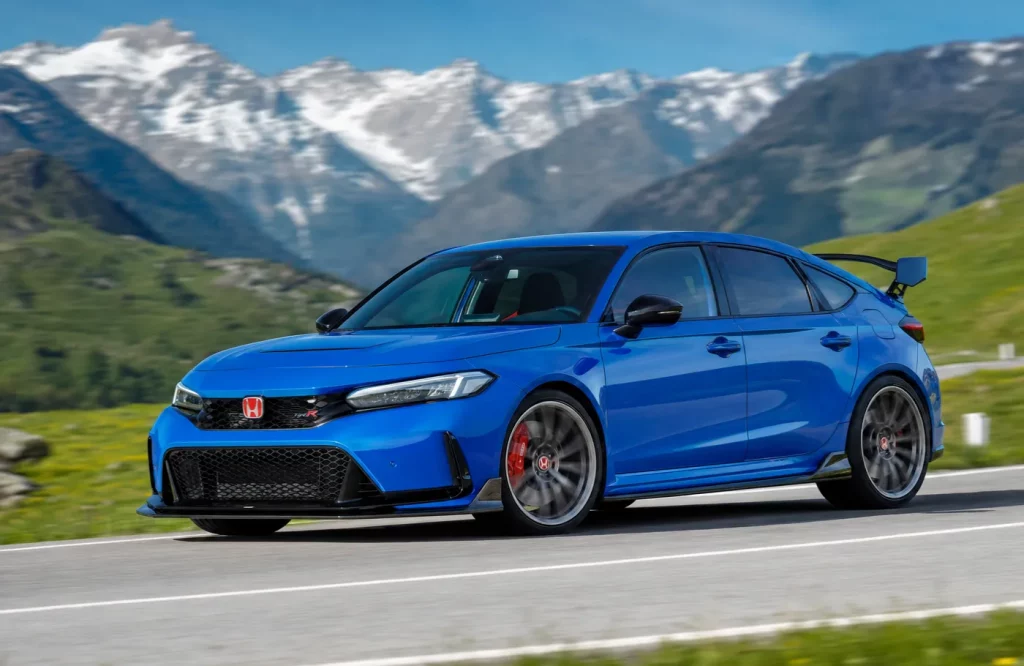
It’s one of the most heated debates in the Honda community. On one side, you have the FK8 owners who paid $40,000+ for a factory-built track weapon. On the other, you have the Si owners who spent $25,000 on the car and another $5,000 on modifications, insisting they can hang with — or even beat — the more expensive car.
The answer is complicated. In some situations, a properly modified Si can genuinely challenge a stock Type R. In others, the FK8’s factory engineering advantage becomes painfully obvious. This isn’t a debate about which car is better overall — it’s a debate about whether a modified Si can close the gap to a stock FK8, and AT what cost.
In straight-line conditions, a well-tuned FBO Civic Si can be surprisingly competitive with a stock FK8 Type R — especially from a roll. But the Si cannot match the FK8’s track capability, braking performance, chassis composure, or high-speed stability. The Type R is the better complete performance car; the Si is the better value for straight-line speed on a budget.
The Question Everyone Eventually Asks
You’ve already spent the money. The Ktuner V2 is plugged in, the PRL Cobra intake is under the hood, the intercooler is mounted behind the grille, and the custom tune from your chosen calibrator has transformed the car. The Si feels like a completely different machine. The torque hits hard in the mid-range, the car surges forward with an urgency that wasn’t there before, and you start to wonder just how close you are to the vaunted Type R.
Then you line up next to one, or you look at the dyno sheets, or you take both cars to the same track, and the reality sets in. The Type R is a different car — not just a faster version of the same platform, but a fundamentally different machine designed from the ground up for a different purpose. The Si is a sporty compact. The Type R is a track car that happens to be street-legal.
Should you keep building the Si, or should you have just bought a Type R? That’s the central question of this article.
| Specification | 10th Gen Civic Si (FBO) | 10th Gen Civic Type R FK8 (Stock) |
|---|---|---|
| Engine | L15B7 1.5L turbo I4 | K20C1 2.0L turbo I4 |
| Factory horsepower | 205 hp | 306 hp |
| Factory torque | 192 lb-ft | 295 lb-ft |
| Typical FBO WHP (93) | 240-255 WHP | 275-285 WHP (stock) |
| Typical FBO WTQ (93) | 280-295 WTQ | 280-290 WTQ (stock) |
| Transmission | 6-speed manual | 6-speed manual |
| LSD | Helical | Helical |
| Front suspension | MacPherson strut | Dual-axis strut |
| Adaptive dampers | Yes | Yes (3-mode) |
| Brakes | Single-piston | 4-piston Brembo |
| Curb weight | ~2,900 lb | ~3,117 lb |
Define What “FBO Si” Actually Means
Before we compare anything, we need to define what we’re actually talking about. FBO stands for “full bolt-ons,” but the term is used loosely. A car with an intake and a tune is sometimes called FBO by optimistic sellers. A car with every possible bolt-on modification and a custom ethanol tune is also called FBO. These are not the same thing.
Mild FBO (Stage 1-ish):
- Cold air intake
- Intercooler (sometimes)
- Front pipe / downpipe (sometimes)
- Base OTS tune (KTuner base MAP, TSP Stage 1, Phearable Stage 1.5)
- ~220-230 WHP on 93 octane
Full Power-Oriented FBO:
- High-flow cold air intake (PRL Cobra, 27WON)
- Upgraded intercooler (PRL, 27WON, Mishimoto)
- 3-inch downpipe (catted or catless)
- Front pipe
- Cat-back exhaust
- Custom calibration (DRob, Phearable, TSP custom maps)
- ~240-255 WHP on 93 octane
FBO + Ethanol:
- All of the above
- Flex fuel sensor
- E30-E40 blend
- Custom ethanol tune
- ~265-275 WHP
Two cars can both be called “FBO” and make dramatically different power. For this comparison, we’re talking about the full power-oriented FBO setup on 93 octane — the kind of build that’s common, achievable, and represents the typical enthusiast’s investment in their Si.
Stock FK8: The Baseline You Have to Beat
The FK8 Type R is not just a Civic with more horsepower. It’s a fundamentally different car that shares a platform but was engineered for a different mission. Understanding what the Type R has — and what the Si lacks — is essential to understanding why this comparison is more complicated than a dyno sheet.
What the FK8 Has That the Si Doesn’t:
- K20C1 engine: 2.0-liter turbo with substantially more displacement than the 1.5-liter in the Si
- Larger turbocharger: The FK8’s turbo flows significantly more air at high RPM
- Dual-axis front suspension: Eliminates torque steer in a way the Si’s MacPherson Strut cannot match
- Larger brakes: 4-piston Brembo Calipers versus single-piston sliding calipers on the Si
- Wider track: More stability and grip in corners
- More aggressive aero: Functional downforce that the Si lacks
- Better cooling: Larger radiator, additional oil cooler, more robust thermal management
- Forged internals: The K20C1‘s rotating assembly is stronger than the L15B7’s
On one published dyno comparison, a completely stock FK8 measured roughly 306 WHP and 305 WTQ — though dyno numbers vary significantly based on the specific unit, conditions, and calibration.
The Si hits harder early. The Type R keeps pulling.
The Power Comparison: Where the Si Can Close the Gap
Let’s talk about what a well-tuned Si can actually do. In one documented comparison, a 10th-gen Si grew from approximately 182 WHP and 206 WTQ in stock form to 237 WHP and 281 WTQ on a Stage 1 calibration. That’s not a universal guarantee for every car, but it demonstrates how dramatically the L15B7 responds to tuning.
With a full FBO setup on 93 octane, the Si typically lands in the 240-255 WHP range with peak torque of 280-295 lb-ft. The torque figure is the key — the Si actually matches or slightly exceeds the stock FK8’s torque in the mid-range, thanks to the smaller turbo that spools more quickly.
With ethanol, the Si can push into the 265-275 WHP range, which brings it much closer to the stock FK8’s wheel horsepower. But the ethanol also makes the torque curve even stronger in the mid-range, which creates traction problems on street tires.
The dyno sheets tell a story of two very different engines. The Si makes its power early and runs out of breath at high RPM. The FK8 builds power progressively and keeps pulling to redline. The Si is a sprint engine. The FK8 is a marathon engine.
- 240-255 WHP
- 280-295 WTQ
- Early torque peak
- Drops off at 5,500 RPM
- ~2,900 lb weight
- 275-285 WHP
- 280-290 WTQ
- Linear torque curve
- Pulls to 7,000 RPM
- ~3,117 lb weight
Torque Wins the Screenshot. Power Wins the Long Pull.
This is the single most important concept in this comparison. The FBO Si makes its torque early and hits hard in the mid-range. The FK8 makes its power smoothly and keeps it through the top end.
From 30-60 MPH:
The FBO Si can look genuinely dangerous. The car is lighter, the torque hits hard, and the smaller turbo responds quickly. In this speed range, a well-tuned Si can hang with — and occasionally beat — a stock FK8, especially if the Type R isn’t in the optimal gear.
From 60-100 MPH:
The gap starts to appear. The Si is still strong, but the FK8’s larger turbo and bigger engine begin to show their advantage. The FK8 is making more power at higher RPM, and the Si’s power curve is starting to drop off.
From 100 MPH Up:
This is where the Type R walks away. The Si’s small turbo is running out of flow. The FK8’s K20C1 is just getting into its stride. The gap that was close at lower speeds becomes a canyon at higher speeds. Owners who have experienced both setups often describe exactly this pattern — the Si can hold its own at lower speeds, but the FK8 pulls away in the upper range.
Where does the Type R start walking away? Usually above 100-110 mph, depending on the specific setup and conditions.
| Race Scenario | Likely Advantage |
|---|---|
| Low-speed roll (30-60) | Depends on Si tune and traction |
| Midrange pull (60-100) | Close with strong FBO setup |
| High-speed pull (100+) | FK8 advantage |
| Track (full lap) | FK8 advantage |
| Braking | FK8 advantage |
| Corner exit | FK8 advantage |
| Cost per horsepower | Si advantage |
The Turbo Is the Real Divider
This is where the engine comparison gets honest. The FBO Si is still using the stock Turbocharger. You can improve airflow, reduce restriction, improve cooling, and optimize the calibration. But you cannot tune the stock Si turbo into becoming a K20C1 setup.
The L15B7’s small TD03 turbo is the bottleneck. It flows enough air for 240-250 WHP on 93 octane, and perhaps 265-275 WHP with ethanol. Beyond that, the turbo is out of its efficiency range. The compressor wheel is physically too small to move the air required for high-RPM power, regardless of the tune.
The FK8’s turbocharger is larger, flows more air, and supports the engine’s high-RPM breathing. This is why the Type R keeps pulling while the Si runs out of steam. It’s a fundamental hardware difference that no bolt-on modification can fix.
With an upgraded turbo, the Si can become much closer to the FK8 in straight-line performance. Some owners who have gone this route have reported rolling comparisons where the Si approaches or matches the stock Type R’s straight-line speed. But that’s a much more serious build — and it’s no longer an FBO Si.
Straight Line vs Track: Stop Calling Them the Same Thing
This is where the Si’s advantage ends and the FK8’s engineering begins. On a drag strip or a highway roll, the FBO Si can be surprisingly fast — and significantly closer to the FK8 than the factory numbers suggest. But on a road course, the FK8 has a fundamental advantage that no Si modification can fully overcome.
Straight-Line Race:
The FBO Si can be competitive. The lighter weight, strong mid-range torque, and good power-to-weight ratio make it a legitimate threat to a stock FK8 in certain conditions. With ethanol and good tires, the gap narrows further.
Road Course:
The FK8 is in a different league. The wider track, dual-axis front suspension, Brembo brakes, cooling system, chassis tuning, and wider wheels and tires add up to a car that is fundamentally more capable in corners. Owners who have driven both on track consistently highlight the dramatic difference in handling and braking — even when the Si is significantly modified.
Making the Si faster doesn’t automatically make it a better track car. It makes it a faster straight-line car. The FK8 is a complete package.
The $5,000 Question
This is where the Si makes its financial case. What happens if you spend the price gap between a used Si and a used FK8 on modifications?
Modification Budget:
- KTuner V2 or Hondata FlashPro: $650
- Cold air intake (PRL Cobra): $400
- Intercooler upgrade: $700
- Downpipe: $600
- Cat-back exhaust: $800
- Custom calibration: $400
- Better tires: $800
- Total: ~$4,350
With that budget, the Si becomes dramatically faster than stock — faster than it has any right to be for a 1.5-liter car. It can genuinely challenge a stock FK8 in a straight line, especially from a roll. And the total cost is still significantly less than a used Type R.
But there’s a catch. The money you spend on modifications doesn’t come back when you sell the car.
The Money You Don’t Get Back
This is the part that dyno threads and YouTube races don’t show you. Modding is not investing. If you spend $5,000 modifying your Si, you will not get $5,000 back when you sell it. Modified cars are worth less than stock cars to most buyers, not more.
The FK8 Type R, on the other hand, holds its value exceptionally well. The Type R badge, limited production, and enthusiast demand create strong resale value. A clean, stock FK8 will sell for significantly more than a modified Si — even a modified Si that can match it in a straight line.
Owners who have gone from modified Si to Type R often describe this exact issue: the money spent on modifications rarely returns, and the Type R’s resale value is a significant financial advantage over the long term.
The cheapest way to make a Si faster isn’t always the cheapest way to own a fast car. That’s a distinction worth understanding.
Reliability: The Part Nobody Posts About After the Dyno
A dyno sheet shows peak power. It doesn’t show the wear on the clutch, the strain on the fuel system, the heat soak in the intercooler, or the reduced safety margin in the engine.
Stock FK8:
- 315 horsepower from the factory
- Engine components designed for that power level
- Transmission built for that power level
- Cooling system designed for track use
- Brakes designed for repeated hard stops
- Factory warranty (for new cars)
Aggressively Tuned Si:
- More power than the factory designed for
- Increased stress on the turbo, clutch, fuel system, and cooling system
- No factory support for the modified power level
- More frequent maintenance required
- Potential for reduced longevity
This doesn’t mean an FBO Si is unreliable. Many owners run these setups for years without major issues. But more power means less factory safety margin. The FK8 was engineered for its power level from the factory. The Si was engineered for 205 horsepower, not 250.
The Driver Matters More Than the Comments Section Admits
On the highway, the driver who shifts better, who chooses the right gear, who reacts faster, will often win regardless of the car’s theoretical power advantage. On the track, the driver who brakes later, who carries more corner speed, who is smoother on the throttle, will beat the car with more power but less skill.
A YouTube race is not a laboratory test. The conditions change. The tires wear. The temperature affects the power. The fuel quality varies. And the driver’s skill is the biggest variable of all.
Three Builds, Three Different Answers
Instead of one final verdict, let’s look at three different scenarios.
Build #1: FBO Si on 93 Octane
Can it beat a stock FK8? Occasionally close. Usually not consistently across the full speed range. The Si has a torque advantage in the mid-range but gives up top-end power and high-speed performance. It can be competitive in certain situations, but it’s not a consistent threat.
Build #2: FBO Si + Ethanol
Can it beat a stock FK8? Much more competitive in certain roll-race scenarios. The additional power from ethanol closes the gap significantly. But traction becomes an even bigger issue, and the fuel system is now operating near its limits.
Build #3: Bigger-Turbo Si
Can it beat a stock FK8? Yes, straight-line performance can move beyond a stock FK8. But then you are no longer comparing FBO to stock. You’re comparing a heavily modified Si to a stock Type R — and the cost gap has narrowed considerably.
Verdict: Should You Build the Si or Buy the Type R?
The conclusion should be nuanced. Here’s how it breaks down.
| Category | Winner |
|---|---|
| Straight-line performance (low speed) | Si (with good tune) |
| Straight-line performance (high speed) | FK8 |
| Track performance | FK8 |
| Braking | FK8 |
| Chassis composure | FK8 |
| Torque steer | FK8 |
| Cooling | FK8 |
| Resale value | FK8 |
| Cost per horsepower | Si |
| Modification satisfaction | Si |
Final Thought
An FBO Civic Si can make a stock FK8 nervous in the right race. But making the Si fast enough to challenge the Type R doesn’t give it the brakes, cooling, chassis, or high-speed composure that Honda engineered into the FK8 from the factory.
Build the Si if you already own it, if you want the most power per dollar, if you enjoy the tuning process, and if straight-line performance matters more than track capability. Buy the FK8 if you want a complete performance car from the factory, if handling and braking matter to you, if you want power without deep modification, and if you plan to use the car on track.
The Si is the better value for straight-line speed. The FK8 is the better car for everything else.
FAQ — FBO Civic Si vs Stock FK8 Type R
Can a tuned Civic Si beat a stock Type R?
In certain situations, yes. A well-tuned FBO Si on ethanol can be competitive with a stock FK8 in straight-line conditions, especially from a roll. The Si’s lighter weight and strong mid-range torque help it close the gap. But the Type R is the better track car and pulls away at high speeds.
How much power does an FBO Civic Si make?
A typical FBO Si on 93 octane makes 240-255 wheel horsepower and 280-295 lb-ft of wheel torque. With ethanol, the Si can reach 265-275 wheel horsepower. The torque is the key — the Si’s torque curve is strong in the mid-range, which helps it feel quick in everyday driving.
Why is the Type R faster than a tuned Si at high speeds?
The Type R’s larger K20C1 engine and bigger turbocharger flow more air at high RPM. The Si’s small TD03 turbo runs out of breath above 5,500 RPM. The Type R keeps pulling to redline while the Si’s power drops off.
Is the Civic Si worth modifying instead of buying a Type R?
If you already own the Si and want more straight-line speed without spending Type R money, yes. The Si responds well to modifications and can be dramatically faster than stock. But if you want a complete track car with strong resale value, the Type R is the better long-term investment.
Does an FBO Si handle like a Type R?
No. The Type R has wider track, dual-axis front suspension, Brembo brakes, better cooling, and a more rigid chassis. The Si can be improved with suspension modifications, but it cannot fully match the FK8’s factory engineering in handling and braking.
What does FBO mean on a Civic Si?
FBO stands for “full bolt-ons.” It typically includes a cold air intake, upgraded intercooler, downpipe, front pipe, cat-back exhaust, and a custom tune. But the term is used loosely — some cars with only a few modifications are also called FBO.
Is the Type R worth the extra money over an FBO Si?
That depends on your priorities. The Type R is the better complete performance car with stronger resale value. The FBO Si is the better value for straight-line speed on a budget. If you care about track performance, buy the Type R. If you care about cost-effective straight-line speed, build the Si.
Does ethanol make the Si faster than a Type R?
Ethanol closes the gap significantly. An FBO Si on E30 can make 265-275 WHP and be very competitive with a stock FK8 in straight-line conditions. But traction becomes a major issue, and the fuel system is operating near its limits. The ethanol Si is faster than a 93-octane Si, but it’s still not a match for the Type R’s complete package.
Should I trade my Si for a Type R?
If you want a better track car, stronger resale value, and more high-end power, yes. If you want to keep modifying your Si for straight-line speed and enjoy the tuning process, keep the Si. The Type R is the better car; the Si is the better project.
What’s the cheapest way to beat a Type R?
In a straight line, a tuned Si with ethanol and good tires is the cheapest way to get close to a stock Type R. But “close” is not the same as “beat,” and the Type R’s advantages in handling, braking, and resale value remain. The cheapest way to beat a Type R in a straight line is to buy a used Si and modify it. The cheapest way to beat it on track is to buy a Type R.