

Every few years, the used car market presents a choice that isn’t about horsepower or lap times. It’s about something more fundamental: how much risk are you willing to accept for how much reward? The 9th-generation Honda Civic (2012–2015) and the 10th-generation Honda Civic (2016–2021) represent two very different answers to that question. One is the last of the simple, naturally aspirated Civics. The other is the first of the turbocharged, high-tech Civics that defined the modern era.
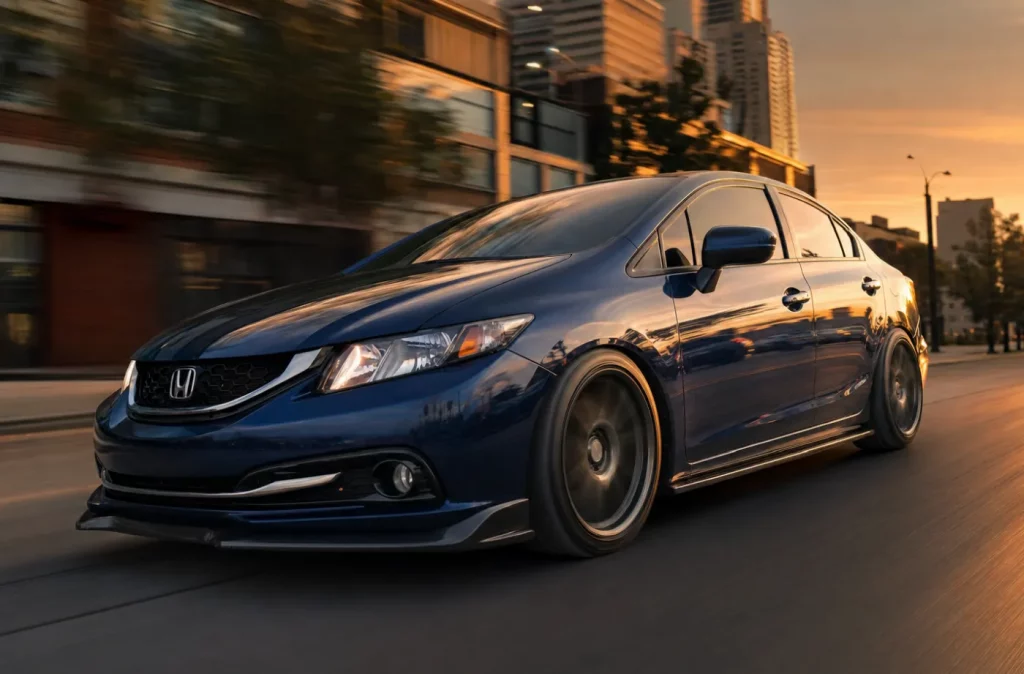
In 2026, the 9th Gen is now 11–14 years old. The 10th Gen is 5–10 years old. Both are available on the used market AT very different price points, with very different ownership experiences. If you’re shopping with a budget of $12,000–$18,000, these are the two generations you’re likely considering.
This isn’t a comparison about which car is objectively better. It’s a guide to which used Civic makes sense for your budget, your priorities, and your tolerance for risk.
The 9th Gen is the safer bet for buyers who value simplicity and low ownership costs — it’s cheaper, simpler, and more forgiving of neglect. The 10th Gen is the better car if you buy the right engine and year — the 2.0L NA is a smart middle ground, while the 1.5T offers modern performance but requires careful inspection. The 10th Gen is the better daily driver; the 9th Gen is the better long-term value.
The Used Civic Dilemma: Simple or Modern?
Walk onto any used car lot in America and you’ll find both generations sitting side by side. The 9th Gen looks dated — a compact sedan with simple lines and a practical interior. The 10th Gen looks modern — sharper angles, a lower stance, and a more aggressive presence. The price difference is significant, and the choice is rarely obvious.
The 9th Gen Civic (2012–2015) represents the end of an era. It was the last generation to offer a simple naturally aspirated engine across the majority of the lineup. The 1.8-liter R18 and the 2.4-liter K24 in the Si were both proven, reliable, and well-understood. There was no Turbocharger. No direct injection. No complex electronics to worry about. The 9th Gen was the final chapter of the old Honda formula.
The 10th Gen Civic (2016–2021) represents the beginning of a new era. It was the first generation to embrace turbocharging across the lineup. The 1.5-liter L15B7 turbo engine delivered significantly more torque and better fuel economy than the 9th Gen’s 1.8-liter. But it also introduced new complexities: direct injection, carbon buildup, Oil dilution concerns, and a more complex cooling system. The 10th Gen was the first step into the modern Honda era.
The 9th Gen is the safer bet for a buyer who values simplicity. The 10th Gen is the better car — if you buy the right engine and year.
| Specification | 9th Gen Civic (2012–2015) | 10th Gen Civic (2016–2021) |
|---|---|---|
| Engine (base) | 1.8L NA I4 (R18Z1) — 143 hp | 2.0L NA I4 (K20C2) — 158 hp |
| Engine (optional) | 1.8L Earth Dreams (2014–2015) — 143 hp | 1.5L Turbo (L15B7) — 174–180 hp |
| Engine (Si) | 2.4L NA (K24Z7) — 201 hp | 1.5L Turbo (L15B7) — 205 hp |
| Transmission options | 5-speed auto / 6-speed manual | CVT / 6-speed manual |
| Fuel system | Port injection | Direct injection (1.5T) |
| Body styles | Sedan, Coupe | Sedan, Coupe, Hatchback |
| Typical used price (2026) | $9,000 – $13,000 | $14,000 – $19,000 |
The Engine Question: This Is Where the Decision Starts
The most important difference between these two generations isn’t the styling, the interior, or the technology. It’s the engine. And the decision starts with understanding what’s under the Hood.
9th Gen R18 1.8-Liter:
This is the engine that defined the 9th Gen for most buyers. It’s a 1.8-liter naturally aspirated four-cylinder producing 143 horsepower. It’s port-injected, which means no carbon buildup on the intake valves. It has no turbocharger, which means no turbo-related failures. It’s simple, proven, and remarkably durable. The trade-off is that it’s slow by modern standards. With 143 horsepower and a 5-speed automatic, the 9th Gen Civic is adequate but not exciting. It requires revs to get moving, and it doesn’t feel particularly quick in any situation.
10th Gen K20C2 2.0-Liter:
This is the engine that many buyers overlook. The 2.0-liter naturally aspirated engine in the base 10th Gen produces 158 horsepower — more than the 9th Gen’s 1.8, with better fuel economy and a more modern feel. It’s also port-injected, avoiding the carbon buildup issues of direct injection. The 2.0-liter 10th Gen is the smart middle ground: you get the modern platform, the better interior, and the improved handling, but you avoid the complexity and potential issues of the turbo engine.
10th Gen L15B7 1.5-Liter Turbo:
This is the engine that changed everything. The 1.5-liter turbo produces 174 horsepower in standard form and 180 horsepower in the Si. It delivers significantly more torque than any naturally aspirated Civic before it. The turbo spools quickly, and the car feels genuinely quick in everyday driving. But it’s also direct-injected, which means carbon buildup is a concern at higher mileage. And in early years (2016–2018), some owners experienced oil dilution — gasoline getting into the oil, especially in cold climates with short trips.
- 143 HP, naturally aspirated
- Port injection — no carbon buildup
- No turbo — fewer failure points
- Runs on regular 87 octane
- Proven reliable
- 174-180 hp, turbocharged
- Direct injection — carbon buildup risk
- More torque, better driving feel
- Premium fuel recommended (91+)
- Oil dilution risk (early years)
Last Naturally Aspirated Civic vs First Turbo Civic
This is the central hook of the article. The 9th Gen was the last Civic to offer a naturally aspirated engine across the lineup. The 10th Gen was the first to embrace turbocharging. The difference in philosophy is significant.
9th Gen Philosophy:
- More engine, less technology
- Simplicity over performance
- Predictability over excitement
- Lower risk of expensive repairs
10th Gen Philosophy:
- More technology, more performance
- Modern driving experience
- More things to inspect before buying
- Higher potential rewards — and higher potential risks
When you buy a 9th Gen, you’re buying predictability. You’re buying a car that has been proven over a decade of ownership. You’re buying a car that doesn’t require you to check the oil level every 500 miles to make sure gasoline hasn’t diluted it. You’re buying a car that will start every morning, run on regular gas, and get you where you need to go without drama.
When you buy a 10th Gen, you’re buying a more modern driving experience. You’re buying a car that handles better, accelerates more confidently, and feels more premium inside. But you’re also buying a car that requires more attention. You need to check the oil. You need to use the right fuel. You need to be aware of the potential issues that come with modern turbocharged direct-injection engines.
Reliability: Is the 9th Gen Actually Better?
This is the question every used Civic buyer asks. And the answer is more nuanced than a simple yes or no.
The 9th Gen is simpler. It has fewer complex systems. It doesn’t have a turbocharger, direct injection, or a CVT. The 5-speed automatic is a traditional torque-converter transmission — not the most efficient, but proven and durable. The manual transmission is Honda’s standard, well-regarded gearbox.
The 10th Gen is more complex. The 1.5T has a turbocharger, direct injection, and a CVT in many models. The CVT is reliable if maintained, but it requires regular fluid changes. The turbo system adds complexity. The direct injection system can lead to carbon buildup.
But the 10th Gen also benefits from more modern engineering. The chassis is stiffer, the suspension is better, and the overall driving experience is more refined. The 2.0-liter naturally aspirated 10th Gen offers the best of both worlds — modern chassis and interior with a simpler engine.
| Area | 9th Gen | 10th Gen |
|---|---|---|
| Engine simplicity | Winner | More complex |
| Turbo risk | None | 1.5T-specific |
| Electronics complexity | Simpler | More systems |
| A/C reliability | Varies | Important inspection point |
| Long-term ownership | Excellent potential | Excellent if right spec |
| Technology | Dated | Winner |
What to Check When Buying a Used 9th Gen
If you’re considering a 9th Gen Civic, here’s what to look for.
2012 Model Year: Avoid if possible. The 2012 was the first year of the generation and had the most complaints about interior quality and build issues. Honda made significant improvements for 2013, including better materials and the addition of a backup camera on many trims.
Transmission History: The 5-speed automatic is reliable but check for smooth shifts. The manual transmission is also reliable but check for clutch wear, especially on higher-mileage cars.
A/C System: Some 9th Gen Civics had A/C issues, particularly with the compressor. Check that the A/C blows cold air at idle and on the highway.
Oil Consumption: The 1.8-liter R18 is generally reliable, but some owners report mild oil consumption at higher mileage. Check the oil level and look for signs of leaks.
Suspension Wear: At 100,000+ miles, suspension components will need attention. Listen for clunks over bumps and check for uneven tire wear.
Rust: Check the rear wheel arches and undercarriage for rust, especially in salt-belt states.
What to Check When Buying a Used 10th Gen
The 10th Gen requires more careful inspection. Here’s what to look for.
Engine Choice: The 2.0-liter naturally aspirated engine is the safer choice for long-term reliability. The 1.5T offers better performance but requires more attention.
1.5T Oil Dilution: Check the oil level and smell for gasoline. If the oil smells like fuel or is overfilled, walk away. This was a known issue on early (2016–2018) 1.5T models. Later years (2019–2021) received ECU updates that reduced the risk.
Service History: Look for oil changes every 5,000–7,500 miles. More frequent changes are better for the 1.5T.
CVT Fluid Changes: The CVT requires fluid changes every 30,000–60,000 miles. If there’s no record of CVT service, be cautious.
A/C System: The 10th Gen had more A/C issues than the 9th Gen. Check that the A/C works properly and listen for unusual noises from the compressor.
Carbon Buildup: At higher mileage, direct-injection engines can suffer from carbon buildup on intake valves. Listen for rough idle or misfires.
Modifications: Many 10th Gen Civics have been modified. Look for aftermarket parts, and be cautious about heavily modified cars — they may have been driven hard and tuned aggressively.
The Smart Middle Ground: 10th Gen 2.0 NA
This is the overlooked option that many buyers should consider. The 2.0-liter naturally aspirated 10th Gen Civic offers the modern platform, better interior, improved handling, and updated safety features, but with a simpler engine that avoids the potential issues of the turbo.
If you want a modern Civic but don’t want to deal with the potential complexity of the 1.5T, the 2.0-liter 10th Gen is your answer. It’s not as quick as the turbo, but it’s more reliable and simpler to maintain.
Performance: The 10th Gen Feels Like a Different Class
The 9th Gen 1.8-liter is adequate for daily driving, but it’s not fast. It requires revs to get moving, and it doesn’t feel particularly quick in any situation. The 10th Gen 2.0-liter is noticeably quicker, with more horsepower and a more responsive feel. The 10th Gen 1.5T is significantly quicker than either, with torque arriving early and staying strong through the mid-range.
If you’re coming from an older car, the 9th Gen will feel fine. If you’re coming from a modern car, the 9th Gen will feel slow. The 10th Gen feels modern — even the base 2.0-liter is a step up from the 9th Gen.
Highway Driving: Where the 10th Gen Pulls Away
This is a real-world scenario that matters for daily drivers. On the highway at 70 mph with passengers, A/C, and a slight grade, the 9th Gen’s 1.8-liter works hard. The 10th Gen’s 1.5T handles it with ease — the turbo torque makes passing effortless.
The 9th Gen gets you there. The 10th Gen gets there without planning the pass three seconds in advance.
Fuel Economy: Don’t Assume the Old Car Is Cheaper
The 9th Gen 1.8-liter gets approximately 28/39/32 mpg city/highway/combined. The 10th Gen 1.5T gets approximately 32/42/36 mpg. The 10th Gen is more fuel-efficient despite having more power — that’s the benefit of turbocharging.
Fuel Economy vs Maintenance Risk: The 1.5T is more efficient, but it’s also more complex. The 9th Gen uses regular 87 octane fuel; the 1.5T benefits from premium (91+) fuel for optimal performance.
Interior: This Might Be the Biggest Daily Difference
The 9th Gen’s interior is simple and functional. The split-level dashboard is unusual — some love it, some hate it. The materials are basic, and the infotainment system is dated by modern standards. The 9th Gen’s interior is a place to sit, not a place to spend time.
The 10th Gen’s interior is significantly better. The materials are improved, the layout is more modern, and the infotainment system (with Apple CarPlay on higher trims) is genuinely usable. The driving position is better, and the seats are more comfortable.
The 9th Gen’s advantage is simplicity — fewer complex systems means fewer potential electronic problems as the car ages.
Safety: How Much Does Age Matter?
The 9th Gen has basic safety features: multiple airbags, stability control, and a backup camera on later models. The 10th Gen adds more modern safety tech, including Honda Sensing on higher trims. That includes adaptive cruise control, lane-keeping assist, and collision mitigation braking.
A late 10th Gen generally gives you more modern active-safety technology, but trim and model year matter.
Sedan, Coupe, or Hatchback?
The 9th Gen is available as a sedan or coupe. The 10th Gen adds a hatchback to the lineup, significantly increasing cargo versatility. If you specifically want a practical Civic hatchback, the 10th Gen changes the conversation completely.
The Price Gap: What Are You Actually Paying For?
A clean 9th Gen Civic with 80,000–100,000 miles typically costs $9,000–$13,000 in 2026. A comparable 10th Gen Civic with similar mileage costs $14,000–$19,000. That’s a $4,000–$6,000 difference.
The price gap buys you a more modern car: better handling, better interior, more safety features, and a more refined driving experience. It also buys you a newer car that will likely have fewer age-related issues in the short term.
The 100K-Mile Question
If you’re buying at 80,000–100,000 miles, the choices are different. A 9th Gen at 100,000 miles is just getting broken in. A 10th Gen at 100,000 miles is entering a different phase of its life cycle.
At 100,000 miles on a 9th Gen:
- Check for oil consumption, suspension wear, starter condition, A/C function, and maintenance records.
At 100,000 miles on a 10th Gen:
- Check turbo condition, oil dilution history, CVT fluid service history, A/C repair history, and modifications.
At 100,000 miles, condition matters more than the generation badge.
Best Configurations to Buy
Best Budget Pick: 2013–2015 Civic 1.8L. For someone who needs reliability, simple maintenance, and a cheap ownership experience, this is the answer.
Best Modern Reliability Pick: 2019–2021 Civic 2.0L. A modern car with a simpler engine. This is the best compromise between the two generations.
Best Performance Pick: 10th Gen 1.5T with documented maintenance. Only if you’re willing to pay attention to the oil and use the right fuel.
What About the Si?
The Si models deserve a brief mention. The 9th Gen Si (2013–2015) has the K24 2.4-liter naturally aspirated engine. It’s a more analog, more old-school experience — fun, but older and less modern than the 10th Gen Si.
The 10th Gen Si (2017–2020) has the 1.5T turbo engine. It’s faster, more modern, and has significantly more tuning potential, but it also has the same turbo-related concerns as the standard 1.5T.
Which Generation Ages Better?
The 9th Gen will age technically and visually. The interior will feel dated, and the infotainment system will continue to lag behind modern standards. But mechanically, it will remain simple and understandable.
The 10th Gen will age better in terms of styling and technology. It will continue to look modern, and the Apple CarPlay infotainment will remain usable for years. But the mechanical complexity will become more of a concern as the car ages.
The 9th Gen may age more gracefully mechanically. The 10th Gen ages more gracefully as a car you actually have to live with.
Verdict: Which Used Civic Should You Buy?
The conclusion should be specific. Here’s how it breaks down.
| Category | Winner |
|---|---|
| Reliability | 9th Gen |
| Performance | 10th Gen 1.5T |
| Fuel economy | 10th Gen 1.5T |
| Interior quality | 10th Gen |
| Safety | 10th Gen |
| Cargo practicality (hatchback) | 10th Gen |
| Purchase price | 9th Gen |
| Maintenance cost | 9th Gen |
| Long-term ownership simplicity | 9th Gen |
| Best overall value | Depends on budget |
Buy the 9th Gen if:
- Your budget is limited
- Reliability is your priority
- You don’t need modern infotainment
- You don’t need turbo torque
- You want a simple car
- You plan to keep the car for a long time with low costs
Buy the 10th Gen if:
- You want modern technology
- You drive on the highway often
- You want better performance
- You want a hatchback
- You’re willing to choose carefully
The smartest choice: 10th Gen 2.0 NA — modern chassis, simple engine.
Final Thought
The 9th Gen is the Civic you buy with your head. The 10th Gen is the Civic you buy because you still want to enjoy driving every day.
The best used Civic isn’t automatically the newer one. A clean, well-maintained 2014 Civic can be a smarter purchase than a neglected 2018 turbo car.
The 9th Gen is the safer bet. The 10th Gen is the better car — if you buy the right one.
FAQ — 9th Gen vs 10th Gen Civic
Which Civic generation is more reliable, 9th or 10th?
The 9th Gen is generally more reliable because it has a simpler naturally aspirated engine with port injection and no turbocharger. The 10th Gen 1.5T has more complex systems and known issues like oil dilution and carbon buildup. However, the 10th Gen 2.0-liter naturally aspirated version is also very reliable. The 9th Gen is the safer bet for long-term trouble-free ownership.
Is the 10th Gen Civic a reliable used car?
Yes, with caveats. The 10th Gen Civic is reliable if you choose the right engine and maintain it properly. The 2.0-liter naturally aspirated version is very reliable. The 1.5T turbo version requires more attention — use premium fuel, check the oil regularly, and follow service intervals. Early years (2016–2018) had more oil dilution issues than later years (2019–2021).
What is the oil dilution issue on the 10th Gen Civic?
Oil dilution occurs when gasoline gets past the Piston rings and mixes with the engine oil, especially in cold climates with short trips. It was more common on early 2016–2018 1.5T models. Honda released ECU updates to address the issue. Check the oil level and smell for fuel when inspecting a used 1.5T Civic.
Which 10th Gen Civic engine is most reliable?
The 2.0-liter naturally aspirated K20C2 is the most reliable engine in the 10th Gen lineup. It has port injection (no carbon buildup), no turbocharger (fewer failure points), and runs on regular 87 octane fuel. The 1.5T turbo is more powerful but more complex.
Is the CVT in the 10th Gen Civic reliable?
Honda’s CVT is generally reliable if properly maintained. The key is regular CVT fluid changes every 30,000–60,000 miles. If there’s no record of CVT service, be cautious. The CVT is not as durable as a traditional automatic but can last 150,000+ miles with proper maintenance.
Which Civic generation has better fuel economy?
The 10th Gen has better fuel economy. The 1.5T achieves approximately 32/42/36 mpg city/highway/combined, compared to the 9th Gen 1.8L’s 28/39/32 mpg. The 10th Gen is more efficient despite having more power, thanks to turbocharging and improved aerodynamics.
Should I buy a 9th Gen or 10th Gen Civic in 2026?
Buy the 9th Gen if you want the cheapest, simplest, and most reliable Civic — but you’re willing to accept an older interior and less performance. Buy the 10th Gen if you want a modern daily driver with better performance, technology, and handling — and you’re willing to choose the right engine and inspect carefully.
Which Civic generation has better handling?
The 10th Gen has significantly better handling. The platform is stiffer, the suspension is more sophisticated, and the overall driving experience is more refined. The 9th Gen feels more like a traditional economy car; the 10th Gen feels genuinely sporty.
Is the 9th Gen Civic slow?
By modern standards, yes. The 1.8-liter produces 143 horsepower in a 2,800-pound car. It’s adequate for daily driving but not quick. The 10th Gen 1.5T is significantly faster, with more torque arriving earlier in the rev range.
What should I check before buying a used 10th Gen Civic?
Check the engine type (2.0L NA is safer than 1.5T), oil level and smell (for fuel contamination), service history (especially CVT fluid changes), A/C operation, and whether any recalls or TSBs have been addressed. Check for modifications — tuned cars may have been driven hard. A pre-purchase inspection by a mechanic is strongly recommended.