

Honda Civic Engine Specs Face-Off — 1.5T, 2.0L NA, 2.0L Hybrid, K20C1
The Honda Civic is available with four fundamentally different powertrains across its 11th generation lineup: a naturally aspirated 2.0-liter (K20C2), a turbocharged 1.5-liter (L15), a 2.0-liter hybrid with two-motor eCVT, and a turbocharged 2.0-liter Type R (K20C1). Each has different output characteristics, fuel requirements, driving dynamics, and reliability profiles. This article covers every engine offered in the 2022-2025 11th generation Civic, with specifications, performance data, and comparison to the 10th generation powertrains.
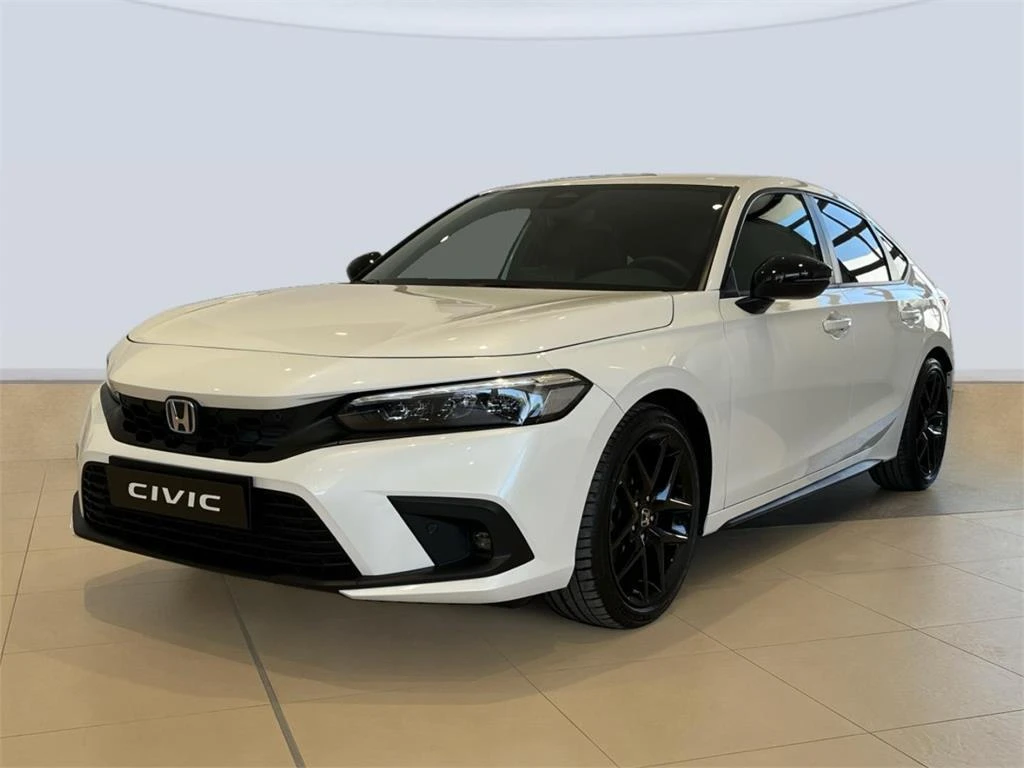
Engine Lineup Overview — 11th Generation (2022-2025)
| Specification | 2.0L NA (K20C2) | 1.5L Turbo (L15) | 2.0L Hybrid | 1.5L Turbo Si (L15CA) | 2.0L Turbo R (K20C1) |
|---|---|---|---|---|---|
| Displacement | 1,996 cc | 1,498 cc | 1,993 cc | 1,498 cc | 1,996 cc |
| Horsepower | 150 hp @ 6,500 rpm | 180 hp @ 6,000 rpm | 200 hp combined* | 200 hp @ 6,000 rpm | 315 hp @ 6,500 rpm |
| Torque | 133 lb-ft @ 4,200 rpm | 177 lb-ft @ 1,700 rpm | 232 lb-ft combined* | 192 lb-ft @ 1,800 rpm | 310 lb-ft @ 2,600 rpm |
| Compression Ratio | 10.8:1 | 10.3:1 | 13.9:1 (Atkinson) | 10.3:1 | 9.8:1 |
| Redline | 6,700 rpm | 6,700 rpm | 6,250 rpm | 6,600 rpm | 7,000 rpm |
| Fuel Required | Regular 87 | Regular 87 | Regular 87 | Regular 87 | Premium 91+ |
| Transmission | CVT | CVT | eCVT (2-motor) | 6-speed manual | 6-speed manual |
| Available Trims | LX, Sport | EX, Touring (2022-24) | Sport Hybrid, Sport Touring Hybrid | Si | Type R |
| 0-60 mph (C&D) | ~8.5 sec | ~7.4 sec | 6.2 sec | 6.6 sec | ~4.9 sec |
*Hybrid system horsepower and torque are peak combined output of the 2.0L Atkinson-cycle engine (141 hp, 134 lb-ft at the Crankshaft) plus two electric motors (propulsion motor: 181 hp, 232 lb-ft). The 200 hp and 232 lb-ft figures represent the concurrent peak of both electric motors and the gasoline engine measured at the drive wheels, per Honda’s SAE certification. Sources: Honda Newsroom (2025 Civic Sedan specs, 2025 Civic Si specs, 2025 Civic Type R specs), Car and Driver testing.
1.5L Turbo (L15) — The Ubiquitous Workhorse
Honda’s L15 series has appeared in the Civic in two distinct calibrations. The standard L15B7/L15BE produces 180 hp and 177 lb-ft of torque in the EX and Touring trims of the 2022-2024 11th gen sedan, with a CVT as the only transmission option. The Si uses the L15CA variant, which received a higher-capacity Turbocharger (17.8 psi boost vs 16.5 psi), a larger intercooler, a higher-flow exhaust, and a specific engine calibration to produce 200 hp and 192 lb-ft, paired exclusively with a 6-speed manual transmission and a helical limited-slip differential.
A common misconception is that the 11th gen Si has more power than the 10th gen Si. It does not: the 10th gen Si (2017-2021) produced 205 hp AT 5,700 rpm and 192 lb-ft. The 11th gen Si produces 200 hp at 6,000 rpm — a decrease of 5 hp. The torque figure is identical at 192 lb-ft, but the 11th gen engine makes peak torque at a lower 1,800 rpm versus the 10th gen’s 2,100 rpm, improving part-throttle response. Source: Honda Newsroom (2017 Civic Si specifications, 2025 Civic Si specifications).
Honda discontinued the 1.5T gas-only powertrain in the Civic after the 2024 model year. For 2025, the turbocharged L15 is available only in the Si and the Acura Integra. The standard Civic lineup shifted entirely to the 2.0L naturally aspirated engine on base trims and the 2.0L hybrid on upper trims.
2.0L Naturally Aspirated (K20C2) — The Base Engine
The K20C2 is a port-injected 2.0-liter naturally aspirated engine producing 150 hp at 6,500 rpm and 133 lb-ft at 4,200 rpm. It powers the LX and Sport trims of the 11th generation sedan and hatchback. The engine shares the same bore and stroke (86.0 mm x 85.9 mm) as the Type R’s K20C1 but with a higher 10.8:1 Compression Ratio, no turbocharger, and a completely different cylinder head design without VTEC on the intake cam.
In the 10th generation, the K20C2 was rated at 158 hp at 6,500 rpm and 138 lb-ft at 4,200 rpm. The 11th generation version lost 8 hp and 5 lb-ft due to emissions tuning and revised exhaust geometry. On the road, the difference is negligible — the 11th gen LX sedan still feels adequately powered for commuting, but the 2.0L is noticeably slow with four passengers or on highway grades. Car and Driver recorded an 8.5-second 0-60 time for the 2022 LX sedan; the 10th gen LX was approximately 8.2 seconds. Source: Honda Newsroom (2016 Civic Sedan specifications, 2022 Civic Sedan specifications), Car and Driver testing.
2.0L Hybrid (eCVT) — The Performance Surprise
The 2025 Civic Hybrid uses a 2.0-liter Atkinson-cycle engine (13.9:1 compression ratio) paired with Honda’s two-motor hybrid system. The gasoline engine alone produces 141 HP at 6,000 rpm and 134 lb-ft at 4,500 rpm, but the total system output is 200 hp and 232 lb-ft — measured as the concurrent peak of both electric motors and the gasoline engine. The electric propulsion motor contributes 181 hp and 232 lb-ft independently, and the system can layer electric torque on top of engine output for brief periods.
The hybrid is the quickest non-Type R Civic tested by Car and Driver, recording a 6.2-second 0-60 mph time — 0.4 seconds quicker than the Si and competitive with the Volkswagen GTI. MotorTrend recorded 6.1 seconds with a quarter-mile of 14.8 seconds at 96 mph. The eCVT is fundamentally different from a conventional CVT: it uses two electric motors (one generator, one propulsion motor) and a fixed-gear planetary set with no belts, pulleys, or steel bands. It has no shift points and no rubber-band feel. Source: Car and Driver (2025 Civic Hybrid tested), MotorTrend (2025 Civic Hybrid vs Si comparison), Honda Newsroom.
Crucially, the hybrid achieves this acceleration while returning an EPA-rated 50/47/49 mpg (sedan) or 50/45/48 mpg (hatchback). Fuelly owner data shows a real-world average of 46.7 mpg across 212 vehicles as of mid-2025. The hybrid requires regular 87-octane fuel despite having a higher compression ratio than the Type R — the high compression is managed by Atkinson-cycle timing (late intake valve closing) and the electric motor assist at low RPM.
K20C1 — The Type R Engine
The K20C1 in the FL5 Civic Type R produces 315 hp at 6,500 rpm and 310 lb-ft at 2,600-4,000 rpm from 1,996 cc — the highest specific output of any Honda production engine in the US market at 157.8 hp per liter. The FK8 generation (2017-2021) produced 306 hp and 295 lb-ft, so the FL5 gained 9 hp and 15 lb-ft. Both use a 25.2 psi turbocharger (up from 22.8 psi on the FK8), a dual-pass intercooler, and direct injection with VTEC on both intake and exhaust cams.
The FL5 Type R is 71 pounds heavier than the FK8 (3,188 lbs vs 3,117 lbs), but the power increase keeps the power-to-weight ratio approximately equal at 10.1 lbs/hp. Car and Driver recorded a 4.9-second 0-60 mph for the FL5. The K20C1 requires premium 91+ octane fuel and has a recommended 100,000-mile no-scheduled-tune-up interval. Source: Honda Newsroom (2017 FK8, 2025 FL5 specifications), Car and Driver.
10th vs 11th Gen — Engine Specs Comparison
The 10th generation (2016-2021) offered the same basic engine families but with different output ratings and availability. The following table shows how each engine changed between generations:
| Engine | 10th Gen Output | 11th Gen Output | Change | Key Difference |
|---|---|---|---|---|
| K20C2 (2.0L NA) | 158 hp / 138 lb-ft | 150 hp / 133 lb-ft | -8 hp / -5 lb-ft | Emissions tuning, revised exhaust |
| L15B7 (1.5T CVT) | 174 hp / 162 lb-ft | 180 hp / 177 lb-ft | +6 hp / +15 lb-ft | Larger turbo, revised calibration |
| L15CA (1.5T Si) | 205 hp / 192 lb-ft | 200 hp / 192 lb-ft | -5 hp / 0 lb-ft | Lower peak hp, lower torque peak RPM |
| K20C1 (2.0T Type R) | 306 hp / 295 lb-ft | 315 hp / 310 lb-ft | +9 hp / +15 lb-ft | Higher boost (25.2 psi), revised intercooler |
| 2.0L Hybrid | N/A in US Civic | 200 hp / 232 lb-ft | All-new for 2025 | Atkinson cycle, 2-motor eCVT, no belts |
Sources: Honda Newsroom (2016 Civic Sedan, 2017 Civic Si, 2017 FK8 Type R, 2022 Civic Sedan, 2025 Civic Sedan, 2025 Civic Si, 2025 FL5 Type R specifications).
Bore, Stroke, and Engine Architecture
The Civic’s engine lineup splits into two distinct families: the K-Series (2.0L engines) and the L-series (1.5L engines). The K-series engines share the same 86.0 mm bore and 85.9 mm stroke across all three variants — naturally aspirated (K20C2), hybrid Atkinson cycle, and turbocharged Type R (K20C1). The L-series engines share a 73.0 mm bore and 89.5 mm stroke, which is an undersquare design favoring torque production over high-RPM power. This long-stroke architecture is why the L15 produces peak torque at only 1,700-1,800 rpm.
The hybrid’s Atkinson-cycle engine is the only Civic powertrain that does not use the Otto cycle. Its 13.9:1 compression ratio is substantially higher than any other Civic engine, but the effective (dynamic) compression is lower because the intake valves stay open longer into the compression stroke — the standard Atkinson approach. This is why it runs on regular 87-octane fuel despite a compression ratio that would normally require premium on an Otto-cycle engine. Source: Honda Newsroom (engine specification sheets), SAE papers on Honda LFA hybrid system.
Acceleration and Performance Context
The 2025 Civic Hybrid is quicker to 60 mph than the Si by a meaningful margin — 6.2 seconds vs 6.6 seconds per Car and Driver. MotorTrend recorded an even larger gap: 6.1 seconds for the Hybrid versus 7.0 seconds for the Si on the same day. The Si’s advantage is not straight-line speed but engagement: the 6-speed manual’s shift feel, the helical limited-slip differential that pulls the car through corners, the adaptive dampers, and the mechanical connection that the hybrid’s eCVT cannot replicate. The Si also holds a significant dynamic edge, with 0.94 g of lateral grip (with the $300 high-performance tire option) versus the hybrid’s 0.83 g, and a 102-foot 60-0 braking distance versus 120 feet. Source: MotorTrend (Si vs Hybrid comparison, December 2024), Car and Driver (Civic Si tested, Civic Hybrid tested).
| Metric | Civic Si (2025) | Civic Hybrid (2025) | Type R (FL5) |
|---|---|---|---|
| 0-60 mph (C&D) | 6.6 sec | 6.2 sec | 4.9 sec |
| Quarter-Mile (C&D) | 14.9 sec | 14.8 sec | ~13.5 sec |
| Braking 60-0 (MT) | 102 ft (HPT) | 120 ft | ~99 ft |
| Lateral Grip (MT) | 0.94 g (HPT) | 0.83 g | ~1.00 g |
| Top Speed | 135 mph | ~130 mph | 169 mph |
Sources: Car and Driver tested figures (2025 Civic Si, 2025 Civic Hybrid, 2025 FL5 Type R), MotorTrend (Si vs Hybrid comparison, December 2024). 0-60 times vary by test conditions and tire choice. The Si’s HPT (High-Performance Tire) option reduces braking distance and increases lateral grip versus the standard all-season tire.
Reliability and Known Engine Issues
The K20C2 (2.0L naturally aspirated) is the most reliable engine in the lineup. It has no documented widespread issues, no class actions, and fewer than 30 NHTSA complaints specifically related to engine failure across the 2016-2025 model years. The port injection system avoids carbon buildup on intake valves — a problem that plagues direct-injection engines like the L15 and K20C1.
The L15 series has well-documented issues. The most common is Head Gasket Failure on earlier 10th generation examples (2016-2018), particularly on tuned cars. NHTSA complaint data shows approximately 60 reports of head gasket or coolant-loss issues on 2016-2018 Civics. Fuel dilution of the engine oil is another documented pattern on the L15B7 — the direct injection system can wash fuel past the piston rings during cold starts, raising the oil level. Honda addressed this with a revised PCV system and ECU calibration on 2019+ models. The L15CA in the Si has fewer fuel dilution reports, likely because the engine operates at higher loads more consistently. The L15 is also prone to carbon buildup on intake valves (typical of direct injection engines), requiring walnut blasting at approximately 60,000-80,000 miles.
The K20C1 in the Type R has proven reliable in stock form. The FK8 had early reports of Oil dilution in cold climates, but Honda revised the ECU calibration under TSB 18-065. The main concern on the K20C1 is the direct injection carbon buildup pattern, which is similar to the L15. The K20C1 uses VTEC on both intake and exhaust cams, which helps keep valves cleaner at high RPM but does not eliminate carbon buildup.
The hybrid powertrain is too new (launched early 2025) to have long-term reliability data. The 2-motor eCVT design eliminates belts, pulleys, starter motors, alternators, and the conventional transmission — all of which are failure points on the gas-only models. The hybrid is expected to be the most reliable Civic powertrain long-term, consistent with Honda’s hybrid track record on the Accord and Insight, but that is a prediction, not a documented outcome. Source: NHTSA complaint database, Honda TSB 18-065, CivicX forum owner surveys.
Which Engine Should You Buy?
Buy the 2.0L naturally aspirated (LX/Sport) if budget is the priority and you do most of your driving in the city. The K20C2 is the cheapest to buy, cheapest to maintain, and the most reliable long-term. Accept that highway passing requires planning.
Buy the 1.5L turbo (EX/Touring, 2022-2024) if you want mid-range torque and highway cruising refinement and can find a clean used example. The L15B7 is responsive and efficient at highway speeds. Watch for carbon buildup and verify the Head Gasket on pre-2019 examples.
Buy the Si if you value a manual transmission, a limited-slip differential, and the most engaging driving experience in the Civic lineup. The Si loses to the hybrid in straight-line acceleration but wins on track feel. The Si’s used market premium (typically $2,000-3,000 over a comparable 1.5T Touring) reflects its enthusiast demand.
Buy the Hybrid if you want the fastest non-Type R Civic, the best fuel economy, and the lowest long-term ownership cost. The hybrid is quicker to 60 mph than the Si, returns 49 mpg combined (EPA), and has the simplest drivetrain architecture. The trade-off is less steering feel, no manual, and no spare tire. At approximately $30,100-$33,100 before options, the hybrid also undercuts the Si’s $31,100 base price at the Sport Hybrid level.
Buy the Type R if you want the most powerful production Honda in the US and are willing to spend approximately $46,000-$50,000. The K20C1 rewards skilled drivers and holds value better than any other Civic powertrain.
Quick Reference — Engine Specs Summary
☐ K20C2 (2.0L NA): 150 hp / 133 lb-ft — LX, Sport — port injection, no carbon buildup issues
☐ L15B7 (1.5T CVT): 180 hp / 177 lb-ft — EX, Touring (2022-2024) — direct injection, monitor carbon buildup
☐ L15CA (1.5T Si): 200 hp / 192 lb-ft — Si — 6-speed manual, Helical LSD, 6.6 sec 0-60
☐ 2.0L Hybrid: 200 hp / 232 lb-ft — Sport Hybrid, Sport Touring Hybrid (2025) — eCVT, 6.2 sec 0-60, 49 mpg combined
☐ K20C1 (2.0T Type R): 315 hp / 310 lb-ft — Type R — 25.2 psi boost, 6MT, 4.9 sec 0-60, premium fuel required
☐ 10th gen Si had 205 hp — 11th gen Si lost 5 hp but gained torque at lower RPM
☐ 10th gen K20C2 had 158 hp — 11th gen K20C2 lost 8 hp due to emissions tuning
☐ Hybrid uses Atkinson cycle (13.9:1 static compression) on regular 87 octane
☐ Type R requires premium 91+ octane — the only Civic engine that does
☐ All 11th gen non-Type R engines use regular 87 octane
☐ CVT and 6MT (Si/Type R) — no conventional automatic in the Civic lineup
☐ L15 head Gasket issues concentrated on 2016-2018 models; post-2019 revised
☐ K20C2 is the most reliable engine; K20C1 is the most durable under high stress
☐ Hybrid eCVT has no belts, pulleys, starter, or Alternator — mechanically simplest drivetrain