

The Honda Civic is a front-wheel-drive compact car weighing between 2,700 and 3,200 pounds depending on the generation and trim. It has approximately 5.3 to 5.7 inches of ground clearance. These three facts define its winter capability more than any traction control system or drivetrain technology.
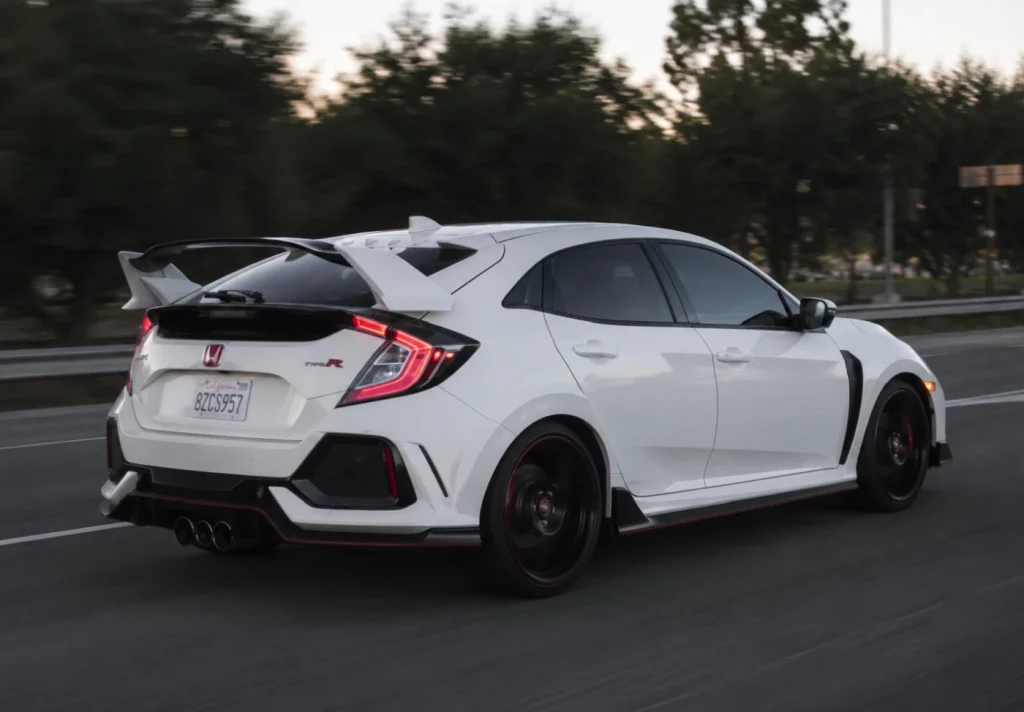
Front-wheel drive has a natural advantage in snow: the engine sits directly over the driven wheels, which means the tires that accelerate the car also carry the most weight. A FWD Civic with proper winter tires stops shorter and corners more securely than an all-wheel-drive SUV with all-season tires, a finding confirmed by independent winter-traction tests across multiple publications. The limitation is not whether the car can move in snow but how much snow it can clear with its underbody, and whether the driver understands how VSA and traction control behave on low-friction surfaces.
This article covers how each Honda Civic generation handles rain, snow, and ice, how the VSA and traction control systems work, which tires transform the car’s winter behavior, and what owners should know before driving a Civic through a winter season.
Honda VSA: What It Does and How It Works in Low Traction
Vehicle Stability Assist (VSA) is Honda’s name for electronic stability control. It has been standard on all Civics since 2007, and was federally mandated on all new passenger vehicles sold in the United States from the 2012 model year. VSA integrates three functions: anti-lock braking (ABS), traction control (TCS), and yaw stability control.
The system uses steering angle, yaw rate, lateral acceleration, and individual wheel speed sensors to detect when the car is not following the driver’s intended path. If the rear wheels begin to slide outward (oversteer) or the front wheels push wide (understeer), VSA applies the brake at a specific wheel and reduces engine power to bring the car back in line. On slippery surfaces, it also brakes the spinning wheel on one side to transfer torque to the wheel with more grip, improving acceleration on split-friction surfaces such as one wheel on ice and the other on dry pavement. Source: Honda Global, “Vehicle Stability Assist Technology”; Honda Owner’s Manual (2022–2026 Civic).
The traction control function within VSA reduces engine power when the drive wheels spin. This is the most noticeable intervention during winter driving. When attempting to accelerate from a stop on snow or ice, the TCS cuts throttle aggressively — sometimes to the point where the car barely moves. This is by design: the system prioritizes stability over momentum.
Owners on 9thCivic.com and 11thGenForum.com report that VSA intervention during low-speed snow driving can be excessive. Multiple owners describe the car becoming “bogged down” in deep snow with VSA active, requiring the driver to manually disable the traction control to maintain forward momentum. On the 9th-generation Civic Si, one Ottawa owner wrote: “Turning TC off is a must in my opinion. On ice one has to have a light foot on the throttle or you get nowhere.” Another 9th-gen owner added: “Shutting off the traction control is the key to driving in the deep snow. It just bogs you down otherwise.”
The VSA OFF button (located on the driver-side control panel on 10th and 11th generation models) disables the traction control function while maintaining ABS and some yaw stability intervention. Holding the button for a longer press (until a beep) on newer models completely disables VSA. The system resets to full-on every time the engine is started. Source: Honda Owner’s Manual, “Vehicle Stability Assist (VSA) System” (2024–2026 Civic).
How FWD Affects Snow Behavior
Front-wheel drive provides a traction advantage in snow because the weight of the engine and transmission presses down on the drive wheels. A typical Civic has approximately 60 percent of its weight over the front axle. This weight transfer, combined with the forward motion of the car, gives the front tires more grip than the rear tires in low-friction conditions — the opposite of a rear-wheel-drive car, which has less weight over the drive wheels and is prone to spinning out.
The Civic’s FWD behavior in snow is predictable: it understeers AT the limit. When the front tires lose grip, the car continues straight instead of turning. This is safer than the snap oversteer that RWD cars can exhibit, and it gives the driver a clear signal — the steering wheel lightens and the car pushes wide — to lift off the accelerator and regain grip. Owners on 9thCivic.com describe the Si’s winter behavior as “slides in a nice controllable manner. Understeer is more prominent but then again so are all FWD and you can fight it by throwing the tail around.”
The limitation of FWD in snow is not traction but ground clearance. The 10th-generation Civic sedan has 5.3 inches of ground clearance; the 11th generation has approximately 5.7 inches. In deep snow — anything over 4 to 5 inches of unplowed accumulation — the Civic’s underbody can become a plow. The front bumper lip, plastic underbody panels, and exhaust system can contact snow and create drag or lift the front wheels enough to lose traction. One owner on TheHondaForums.com reported: “The floor pan stuck on the mound that was created. The wheels lost their grip as the weight of the car came off them, and I came to a quick stop.” This is not a failure of the car; it is a limitation of a low ground-clearance vehicle in deep snow.
Adding weight to the trunk is counterproductive on a Civic, a point confirmed by multiple forum sources. Weight in the rear increases the moment of inertia and shifts mass away from the drive wheels, reducing front traction and potentially causing the rear end to step out during cornering. The “sandbags in the trunk” advice applies to rear-wheel-drive pickup trucks from the 1970s, not to a modern FWD compact car. Source: Bogleheads.org discussion on Civic winter driving; 9thCivic.com owner reports.
Tire Choice: The Single Most Important Winter Decision
The difference between a Civic that feels unsafe in snow and one that inspires confidence is almost entirely the tires. Multiple independent tests from TireRack, Bridgestone, and Consumer Reports have confirmed that a FWD car with dedicated winter tires outperforms an AWD car with all-season tires in braking, cornering, and stability on snow and ice. AWD helps the car accelerate; winter tires help it stop and turn. Braking distance on snow and ice depends on tires, not drivetrain.
The OEM tires on modern Civics are a particular concern. The 11th-generation Civic Sport and Touring trims ship with Goodyear Eagle Sport all-season tires. These tires are not winter-rated and perform poorly in snow. Owners on Civic11Forum.com report that the factory tires have “completely unacceptable performance on snow” and that the rear end “kicks out” at any cornering speed in snow, even at crawling pace. One owner wrote: “All-season really means three-season.” The Eagle Sport tires were designed for dry and wet performance, not for cold-weather grip.
Dedicated winter tires transform the car. The standard recommendations from Civic owners in snow-heavy regions (Ottawa, Minnesota, Northern New England, Colorado) are:
Bridgestone Blizzak WS90: The most commonly recommended winter tire for the Civic. Provides excellent snow and ice grip. The tread compound is soft enough that wear accelerates on dry pavement, but owners report 3–5 seasons of winter-only use. One 11th-gen owner reported “no issues in snow” on Blizzak WS90s. Price: approximately $150–$200 per tire in 205/55R16 or 215/50R17 sizes.
Michelin X-Ice Snow: Slightly harder compound than the Blizzak, which provides longer tread life at the cost of some ultimate ice grip. Owners recommend putting them on late in the fall and removing them early in spring, as the soft compound “disintegrates” in warm temperatures. Price: approximately $160–$210 per tire.
Nokian Hakkapeliitta R5: Widely considered the best winter tire available for severe snow and ice conditions. Manufactured in Finland by a company that specializes in winter rubber. Owners report 10-year lifespans with seasonal use. One Minnesota owner who rallies in snow stated: “Nokian Hakkapeliittas are by FAR the best and last the longest.” Price: approximately $180–$240 per tire.
Continental VikingContact 8: A newer winter tire that owners on Civic11Forum report as excellent. Comparable to the Michelin X-Ice in snow performance.
For owners who cannot store a second set of wheels, all-weather tires such as the Michelin CrossClimate 2 and Goodyear WeatherReady 2 offer a compromise. These tires carry the three-peak mountain snowflake rating (indicating severe snow service certification) while remaining usable year-round. Owners report that the CrossClimate 2 “rocks” on the 10th-gen Civic and that the WeatherReady 2 eliminates the fear of driving in bad weather. The trade-off: all-weather tires do not match dedicated winter tires on pure ice, and the CrossClimate 2’s speed rating can cause some tire shops to refuse installation.
Narrower tires perform better in snow. A 205-width tire cuts through snow better than a 235-width tire, which tends to float on top of the snow surface. The recommendation from experienced winter drivers on Civic11Forum is to use 205/60R16 tires on 16×6.5-inch steel wheels for maximum snow traction, with the narrower contact patch and taller sidewall providing better flotation and impact absorption.
| Tire Type | Snow Traction | Ice Grip | Dry Road Wear | Cost per Set (4) | Best For |
|---|---|---|---|---|---|
| OEM All-Season (Eagle Sport) | Poor | Poor | Moderate | $0 (factory fit) | Mild wet climates only |
| Premium All-Weather (CrossClimate 2) | Good | Fair | Good | $600–$800 | Moderate snow, no storage for second set |
| Dedicated Winter (Blizzak WS90) | Excellent | Excellent | Rapid above 45°F | $600–$800 + steel wheels $200–$300 | Frequent snow and ice, winter-only use |
| Premium Winter (Hakkapeliitta R5) | Best in class | Best in class | Moderate (below 45°F) | $720–$960 + wheels | Severe winter, lake-effect snow, ice roads |
Prices approximate based on 205/55R16 sizing. Sources: TireRack (2025–2026 catalog prices), Civic11Forum owner tire reports, 9thCivic.com winter tire discussions, Bridgestone and Michelin official product data.
Generation-by-Generation Winter Driving Notes
6th generation (EM1 Civic Si, 1996–2000): These cars did not have VSA or traction control. ABS was optional on the Si and not available on base models. The double-wishbone front suspension and hydraulic power steering provided good steering feedback, which helped the driver sense traction loss at the front wheels. Ground clearance was approximately 5.5 inches, comparable to modern Civics. The lack of stability control meant the driver was fully responsible for managing slides — a capable driver could extract good winter performance, but a less experienced driver was more likely to spin out. Snow tires on all four wheels are essential for these cars.
7th generation (EP3 Civic Si, 2001–2005): VSA was optional on higher trims but not standard. Ground clearance dropped slightly to approximately 5.3 inches. The EP3’s electric power steering provided less feedback than the hydraulic systems of earlier cars, making it harder to feel traction loss through the wheel. Owners on TheHondaForums.com reported that 7th-gen Civics with two snow tires on the front only were “decent but not great” and that four winter tires transformed the car. The lower-profile tires on the Si (205/55R16) provided adequate snow performance with winter rubber.
8th generation (FA5 Civic Si, 2006–2011): VSA became standard on all models. This was a significant improvement for winter safety. The 8th gen’s hydraulic steering provided the best feedback of any modern Civic, allowing the driver to feel traction loss earlier than in EPS-equipped cars. Ground clearance was approximately 5.5 inches. Owners report that the 8th-gen Civic with winter tires is “very sure footed” in snow, with predictable understeer at the limit and no VSA-related throttle cutting issues in normal driving. The VSA system on 8th-gen cars was less aggressive than later iterations, which some experienced winter drivers preferred.
9th generation (FB6 Civic Si, 2012–2015): VSA was federally mandated. The 9th gen introduced EPS, which filtered out road texture and made it harder to feel the front tires losing grip. This was the generation where owners most commonly reported the traction control being too aggressive in snow — the “bogging down” issue appears repeatedly in forum threads from this generation. Owners in Ottawa and other heavy-snow regions reported that disabling VSA was necessary for deep snow. Ground clearance was approximately 5.3 inches, among the lowest of any Civic generation.
10th generation (FC1 Civic Si, 2017–2021): The 10th gen introduced brake-based torque vectoring, which helps the car rotate in corners by braking the inside front wheel. In snow, this system can feel aggressive — the ABS pump noise is audible when the system activates. The VSA calibration was revised to be less intrusive than the 9th gen’s, but owners on CivicX.com still report that the traction control cuts power aggressively when trying to accelerate from a stop in snow. The 10th gen Si’s limited-slip differential provides a genuine traction advantage in snow: both front wheels receive power, reducing the single-wheel spin that open-differential Civics experience. Ground clearance was 5.3 inches on the sedan, 5.5 on the hatchback. The FK8 Type R with its 306 horsepower requires extreme throttle discipline in snow; the LSD and summer-only tires (Michelin Pilot Sport 4S) are dangerous below 45°F regardless of road surface condition.
11th generation (FE1 Civic Si, 2022–present): The 11th gen has the most refined VSA calibration of any Civic. The system intervenes less abruptly than the 10th gen, and the brake-based torque vectoring is tuned with less pump noise and more gradual intervention. The dual-pinion EPS provides faster steering response (2.2 turns lock-to-lock), which helps the driver catch slides more quickly. Ground clearance increased to approximately 5.7 inches — the highest of any Civic since the 6th generation. The 11th gen’s wider rear track (0.5 inches wider than the 10th gen) improves stability on slippery roads. The main winter concern is the factory Goodyear Eagle Sport tires, which owners on Civic11Forum describe as dangerously bad in snow. The 11th gen Si retains the helical limited-slip differential, which remains a significant winter traction advantage.
Rain Driving: How Civics Handle Wet Roads
In rain, the Civic’s FWD architecture is an advantage. The engine weight over the drive wheels provides good directional stability at highway speeds, and the weight distribution (approximately 60/40 front/rear) reduces the risk of rear-end lift-off oversteer compared to a rear-heavy car.
The principal rain limitation is tire choice. The OEM Goodyear Eagle Sport and similar all-season tires lose grip on standing water at highway speeds. Hydroplaning resistance depends on tread depth and tread pattern: tires with 4/32-inch or less tread depth should be replaced before extended highway driving in heavy rain. The 10th and 11th generation Civics have adequate water channeling in their brake ducts and undertray design, but standing water at speeds above 60 mph can still induce hydroplaning on worn tires.
The 11th generation Civic received a wider rear track and a lower center of gravity (dropped 0.6 inches from the 9th generation), which improves wet-road stability. The VSA system’s brake-based torque vectoring helps maintain the intended line during cornering on wet pavement by braking the inside front wheel to reduce understeer.
Rain driving on a Civic with good tires (Michelin Pilot Sport All Season 4, Continental ExtremeContact DWS06 Plus, or any dedicated summer tire with adequate tread depth) is drama-free. The car communicates well through the steering wheel, the chassis is balanced, and the VSA intervention is predictable. Owners on Civic forums consistently note that the Civic feels more planted in rain than many of its competitors due to the lower curb weight and neutral chassis tuning.
Serviceable Winter Driving Checklist for the Honda Civic
☐ Install four dedicated winter tires (Blizzak WS90, X-Ice Snow, or Hakkapeliitta R5) on all four wheels before the first snowfall. Never run winter tires on only one axle — this creates a stability imbalance during braking and cornering.
☐ Use narrower winter tires (205-width rather than 235-width) on 16-inch steel wheels for better snow penetration and flotation.
☐ Do not add weight to the trunk. The Civic’s front wheels need maximum weight for traction; adding rear weight reduces front grip and can induce oversteer.
☐ Disable VSA traction control when driving in deep snow over 3 inches. The system’s throttle cutting prevents forward momentum. VSA resets to full-on at every restart; the button is on the driver control panel.
☐ Re-enable VSA on cleared roads. The stability control function (yaw correction) is valuable on icy corners and should remain active for normal winter driving.
☐ Check ground clearance before driving through unplowed snow. The Civic’s 5.3–5.7 inch underbody clearance is sufficient for plowed roads and 3–4 inches of fresh snow. Deep snow over 6 inches will cause underbody contact.
☐ Replace winter tires when tread depth reaches 5/32-inch. Winter tires lose snow and ice performance rapidly below this depth, even when the tire appears to have usable tread remaining.
☐ For Type R owners: do not drive on the factory Michelin Pilot Sport 4S tires below 45°F. The Summer compound hardens and loses grip, producing unpredictable handling even on dry cold pavement. A set of winter or all-weather tires is required for cold-weather Type R operation.
☐ For Si owners with limited-slip differentials: the Helical LSD provides measurable snow traction improvement over open-differential Civics. The LSD does not help braking or cornering — it only improves forward traction during acceleration.
☐ For owners without VSA (6th and early 7th generation): left-foot braking (applying brake pressure while maintaining throttle) can help rotate the car through corners in snow. Practice this technique in an empty parking lot before using it in traffic.