

The aftermarket suspension industry has convinced a generation of Civic owners that coilovers are the first upgrade and that more stiffness always equals faster lap times. The data does not support this. A Civic with worn-out Bushings, no camber adjustment, and all-season tires will not gain time from a $2,000 coilover set. It will gain time from a $300 rear sway bar, a $200 alignment, and a $700 set of 200TW tires.
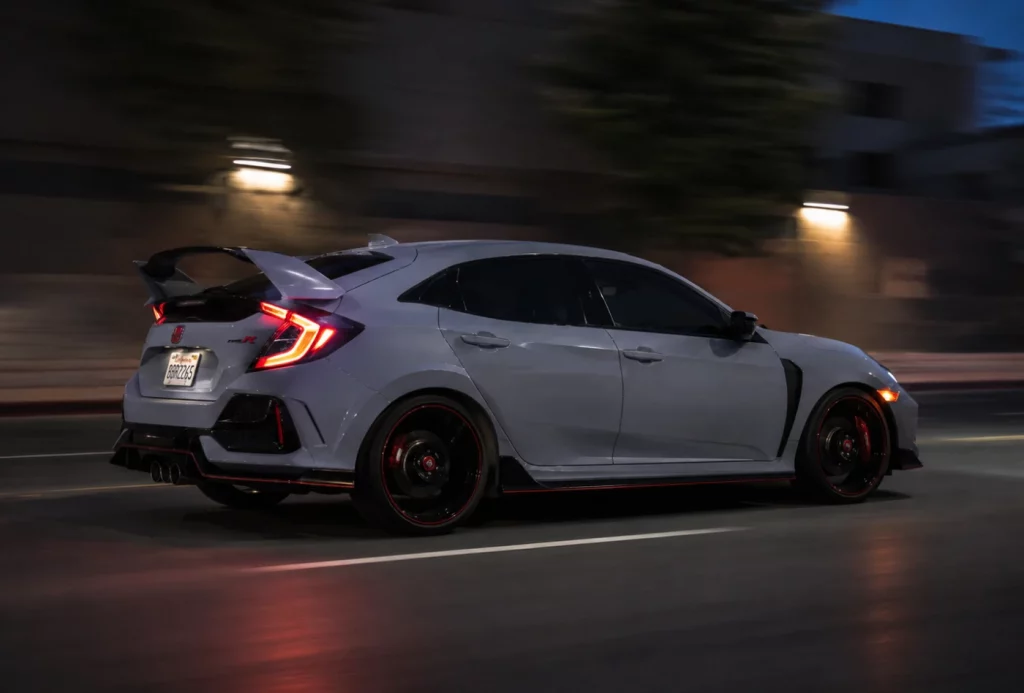
The order of impact on lap times for a Civic is consistent across every generation: tires first, driver second, rear sway bar third, damper and spring package fourth, bushings fifth, and chassis bracing sixth. Anything beyond that — adjustable control arms, big brake kits, solid engine mounts — addresses specific problems that only appear after the first five steps are complete.
This article covers the upgrades that actually cut lap times for each Civic generation, the spring rates and damper choices that balance street comfort with track performance, and the parts that enthusiasts consistently report as transformative versus those that add weight without measurable benefit.
What Cuts Lap Times and What Does Not
Every Civic generation, from the 5th to the 11th, understeers from the factory. Honda tunes the suspension for safety — a car that pushes wide at the limit is safer for the average driver than one that oversteers. The fastest single modification for any Civic is a larger rear sway bar, which reduces understeer by increasing the rear roll stiffness relative to the front. The effect is immediate: the car rotates more willingly on turn-in, the driver can apply power earlier at corner exit, and the front tires do not overheat as quickly because they are not doing all the turning work.
The second most impactful upgrade is tires. A 200TW summer tire (Bridgestone RE-71RS, Falken RT660, Hankook RS-4, Yokohama A052) provides 0.10–0.15 g more lateral grip than a standard all-season tire — equivalent to roughly 2–3 seconds per minute on a typical road course. This is more improvement than any suspension modification can deliver. On a Civic that is still on all-season tires, no other suspension upgrade should be considered before tires.
The third tier is dampers and springs. The factory dampers on most Civics (excluding the 10th-gen Si with adaptive dampers and the Type R) are tuned for cost and comfort, not control. Replacing them with a quality monotube coilover or a matched shock-and-spring set reduces body roll, improves transient response, and allows the car to carry more speed through corners. The improvement is incremental compared to tires and sway bars, but it is the difference between a car that is fast and a car that is confidence-inspiring at speed.
Chassis bracing — strut tower bars, lower tie bars, C-pillar bars — provides measurable benefit only on the 5th, 6th, and 7th generations. On the 8th generation and newer, the body is stiff enough that a strut tower bar is mostly weight. CivicX forum members who track 10th-gen Civics report: “I feel like a strut bar on these chassis is only adding weight. Anything post 2014 is insanely rigid.” Source: CivicX.com, “Best three upgrades for suspension/handling” (2017).
Bushing upgrades are transformative on cars with more than 80,000 miles. Rubber bushings harden and crack with age, introducing slop in the suspension geometry that no amount of damper tuning can fix. Replacing the front Lower Control Arm bushings with polyurethane or spherical bearings restores the steering precision and suspension compliance that the car had when new. On the 8th and 9th generations specifically, the front compliance bushings are the single largest source of lost steering precision.
| Upgrade | Lap Time Impact | Cost | Street Comfort | Best Generation For |
|---|---|---|---|---|
| 200TW summer tires | High (2–3 sec/lap) | $600–$900 | Reduced wet traction, shorter life | All generations |
| Rear sway bar (22–24mm) | Medium-High (1–2 sec/lap) | $150–$250 | Minimal change; stiffer rear over bumps | 6th–9th gen (biggest effect) |
| Coilovers (monotube, $1,000–$2,000) | Medium (0.5–1.5 sec/lap) | $1,000–$2,000 | Firmer ride; good kits remain daily-drivable | 8th–11th gen (best damper tech) |
| Camber plates / adjustable arms | Low (gains only with track alignment) | $150–$500 | No change if aligned properly | 8th–11th gen (limited factory camber) |
| Polyurethane bushings | Medium on high-mileage cars | $100–$400 | Slightly stiffer, more NVH | 5th–8th gen (old bushings) |
Lap time estimates based on CivicX forum owner data, Grassroots Motorsports $20xx Challenge data, and The Drive suspension tuning series. Individual results vary by track, driver, and tire compound.
5th and 6th Generation (EG, EK, EM1 — 1992–2000)
The double-wishbone Civics respond to suspension upgrades differently than the strut-based cars. The front double-wishbone geometry already provides excellent camber control, so the upgrade priority shifts to chassis rigidity and bushing condition.
The factory bushings on these cars are 25 to 34 years old. The single largest improvement for any 5th or 6th generation Civic is a full polyurethane bushing kit from Energy Suspension or Hardrace ($200–$400). The rubber compliance bushings in the front lower control arms degrade steering precision more than any other component. Owners on Honda-Tech.com consistently recommend the Energy Suspension full bushing kit as the first upgrade: “do a full bushing kit on your car, you’ll cut down on the suspension slop and body roll and really feel your suspension after that.”
The 6th-gen EM1 Si came from the factory with 201 lb/in front springs and 99.8 lb/in rear springs — very soft by modern standards. The Integra Type R (DC2) billet-style rear Sway Bar is a direct bolt-on for the EM1 and provides the most cost-effective reduction in understeer. Whiteline sells a 22mm adjustable rear sway bar kit for the 6th generation (part BHR83XZ) that is the standard upgrade. A 27mm front bar is also available but should be used with caution — increasing front roll stiffness pushes the car back toward understeer. Source: Whiteline Performance catalog; Honda-Tech.com suspension spring rate reference tables.
For dampers and springs, the Koni Yellow / Ground Control coilover sleeve combination is the most proven setup for these generations. The Koni Yellows provide adjustable rebound damping, and the Ground Control sleeves allow ride height adjustment with selectable spring rates. The recommended starting spring rates for a street-and-track car are 375–450 lb/in front and 250–350 lb/in rear. The Koni/GC combination costs approximately $700–$1,000 and has a lifetime warranty on the dampers. Source: Honda-Tech.com, “EM1 suspension upgrade” (2013); Ground Control catalog.
A 3-point front strut tower bar (Carbing or equivalent) provides measurable benefit on the 6th generation hatchback, which has less structural rigidity than the sedan or coupe. Upper rear strut bars are also effective on the hatchback body style. These are approximately $100–$250 and are not needed on the coupe or sedan, which have stiffer body structures from the factory.
7th Generation (EP3/EM2 — 2001–2005)
8th Generation (FA5/FG1/FG2 — 2006–2011)
The 8th-generation Civic Si is one of the most well-supported platforms in the aftermarket. The combination of the K20Z3 engine, the hydraulic power steering, and the available limited-slip differential makes it a natural track car, and the suspension market reflects that demand.
The single most transformative upgrade for the 8th gen Si is a 22mm rear sway bar from Progress or Whiteline. The Progress bar (part 62.1009, $172) includes a reinforcement kit for the lower control arm mounting points, which prevents the thin stamped-steel arms from bending under the increased bar load. This reinforcement is necessary — owners on 8thCivic.com have reported bent control arm brackets when using a large rear bar without the brace. Installation takes approximately one hour and requires a 14mm socket, a 3/16-inch Allen wrench, and 32 ft-lb of torque on the mounting bolts. Source: 8thCivic.com, “Progress Rear Sway Bar Install (Si)” (2008).
Koni Yellow dampers paired with Ground Control coilover sleeves are the proven street-and-track solution for the 8th generation. The Koni Yellows provide adjustable rebound damping, and Ground Control offers spring rates from 375 to 550 lb/in. For a daily-driven track car, 450 lb/in front and 550 lb/in rear is a common setup that provides excellent rotation without being abusive on the street. One 8thCivic.com owner running 450F/550R on Koni Yellows described the ride as “seriously awesome in the twisty bits” but noted that his passenger did not agree. The Progress Competition Series coilover ($1,095) offers 275 lb/in front and 400 lb/in rear rates — softer than the Koni/GC combo and better suited to mixed street and autocross use. Source: 8thCivic.com, “Koni Yellows with Ground Control Coilovers” (2013).
The 8th generation benefits significantly from front compliance bushing replacement. The factory rubber bushings in the front lower control arms allow the front wheels to deflect under braking and cornering, producing a vague on-center feel. Whiteline and Energy Suspension offer polyurethane replacements. Replacing these bushings alone restores the steering precision that the car had when new and is recommended before any damper upgrade on cars over 60,000 miles.
SPC front camber bolts ($40–$60) provide approximately 1.5 degrees of additional negative camber, which is sufficient for 200TW tires on a street-and-track car. Adjustable rear control arms ($200–$350) allow rear camber adjustment, which is necessary when the car is lowered more than 1.5 inches. Source: The Drive, “Honda Civic Suspension Modding” (2023).
9th Generation (FB6/FG4 — 2012–2015)
The 9th generation shares its suspension architecture with the 8th generation, but the aftermarket support is smaller. The EPS system and increased curb weight (~2,900 pounds) make the car slightly less track-focused than the 8th gen, but the suspension upgrade path is similar.
The 22mm rear sway bar is again the first upgrade. Progress and Eibach both offer bars for this generation. The 9th gen’s rear subframe is similar enough to the 8th that the Progress reinforcement kit is also recommended.
Coilover options for the 9th generation are well-documented. The BC Racing BR series ($950, 5k/4k spring rates) is the most commonly recommended entry-level coilover for street driving. For track use, the Godspeed MAXX monotube coilover ($800–$900) offers 40-way damping adjustment and 10k/14k spring rates, providing significantly more roll resistance. The spring rates on the MAXX are stiffer than most street coilovers — 10k front (560 lb/in) and 14k rear (784 lb/in) — which means the car will be firm on public roads. Source: ShiftMaxx, “Best Coilovers for the 9th Gen Civic” (May 2026).
The 9th gen’s EPS system benefits from Steering Rack bushing inserts ($15–$30). The factory rubber bushings allow the steering rack to move under load, and the polyurethane inserts eliminate that play. This is the cheapest improvement to steering feel on the 9th generation.
The front compliance bushings on the 9th gen are the same design as the 8th gen and benefit from the same Whiteline or Energy Suspension polyurethane replacement. Owners on 9thCivic.com recommend this as the first modification for cars over 50,000 miles.
10th Generation (FC1/FK7/FK8 — 2016–2021)
The 10th-generation Civic’s platform is significantly more rigid than any previous generation (25 percent torsional improvement over the 9th, per Honda). The dual-pinion EPS, hydraulic rear subframe bushings, and Multi-link Rear Suspension mean that the base chassis is already well-sorted. The upgrade strategy is therefore different: the chassis does not need stiffening, but it does need more tire and better damper control.
The FC1 Civic Si came with Adaptive Damper System (ADS) from the factory. ADS eliminates the need for aftermarket dampers for most driving — the Normal mode provides good ride quality, and the Sport mode firms the dampers adequately for track use. For Si owners who track the car more than four times per year, a set of dedicated track coilovers (KW Variant 3, approximately $2,200) provides better damper control than the factory ADS in Sport mode. Owners on CivicX.com report that KW is “the only company that will give you a boost in performance and comfort.” For non-Si 10th-gen Civics (Sport, EX, Touring), the factory dampers are softer and benefit from a BC Racing BR or Tein Flex Z coilover ($950–$1,100) with 5k/4k spring rates.
The FK8 and FL5 Type R do not need suspension upgrades for track use in stock form. The continuously variable adaptive dampers, dual-axis strut front suspension, and 1.02 g skidpad grip mean that the car’s suspension is not the limiting factor. The upgrade path for the Type R is pad compound and brake fluid, not springs and dampers.
The base non-Si 10th-gen Civics benefit from a rear sway bar upgrade more than the Si does, because the Si already has a larger factory rear bar. The Eibach 25mm rear sway bar (pro-kit) is the standard upgrade for the hatchback and sedan.
Camber plates are recommended for any 10th-gen Civic that sees track time. The MacPherson strut front suspension generates approximately 0.5–0.7 degrees of negative camber from the factory, which is insufficient for 200TW tires on a road course. SPC front camber bolts provide up to 2.5 degrees of additional negative camber. SPC rear camber arms ($120–$160) are necessary when the car is lowered more than 1 inch, as the factory rear suspension has no camber adjustment.
The 10th generation does not benefit from chassis bracing. Owners on CivicX.com report that strut tower bars produce no measurable improvement in lap times and add approximately 5–8 pounds of dead weight. The body is stiff enough that the strut towers do not deflect measurably under cornering loads. Source: CivicX.com, “Best three upgrades for suspension/handling” (2017).
11th Generation (FE1/FL1/FL5 — 2022–Present)
The 11th-generation Civic is the stiffest production Civic ever built (19 percent torsional improvement over the 10th generation). The chassis is not the limiting factor for lap times.
The 11th-gen Si (FE1) lost the adaptive dampers that the 10th-gen Si had. This makes aftermarket dampers more relevant for the Si than they were on the previous generation. The factory fixed-rate dampers are firm enough for street driving but lack the control needed for sustained track driving. KW Variant 1 or BC Racing BR coilovers ($1,100–$2,200) restore the damping adjustability that the 10th-gen Si had from the factory.
The 11th-gen Si’s coilover options are early in their development cycle. BC Racing BR (5k/4k rates) and KW Variant 1 are available and bolt onto the FE1 without modification. Spring rates for street use should stay at or below 5k front / 5k rear to maintain ride quality with the fixed-rate dampers. Track-focused builds can go to 7k/7k with a monotube damper.
The non-Si 11th-gen Civic (Sport, EX, Touring) benefits most from a rear sway bar upgrade and a set of 200TW tires. The factory Goodyear Eagle Sport all-season tires are the limiting factor on the base chassis — replacing them with a set of Michelin Pilot Sport 4S or Continental ExtremeContact Sport 02 produces a larger improvement than any suspension modification.
The FL5 Type R (2023–present) does not need suspension upgrades for track use. The dual-axis strut front, continuously variable adaptive dampers, and factory alignment provide 1.02 g of lateral grip. The limiting factor on track is pad compound and Brake Fluid, not spring rate or damper tuning.
Budget Breakdown: What to Spend and Where
The correct budget allocation for a track-capable Civic follows the same pattern regardless of generation. For a total budget of $2,500:
$700 — 200TW tires (Bridgestone RE-71RS or Falken RT660 in 205/55R16 or 215/50R17 depending on generation)
$200 — Rear sway bar (Progress 22mm or Whiteline 22mm adjustable)
$1,000 — Coilovers (BC Racing BR or Tein Flex Z with streetable spring rates)
$200 — Front camber bolts and rear control arms (SPC or equivalent)
$150 — Alignment, corner balance, and installation labor for the sway bar
$250 — Polyurethane front compliance bushings (on 8th and 9th generation)
For a tighter budget of $1,000, skip the coilovers and invest in tires, a rear sway bar, and camber adjustment. The tire and sway bar combination accounts for approximately 75 percent of the lap time improvement of the full $2,500 package.
For a street-only car that will never see a track day, the best suspension upgrade is a rear sway bar and a proper alignment with increased front negative camber. The sway bar transforms the car’s cornering behavior without sacrificing ride quality, and the alignment ensures that the factory suspension geometry is working correctly.
Alignment Settings That Actually Work
Alignment is the most commonly skipped suspension upgrade. A Civic with proper track alignment gains 0.5–1.0 seconds per lap compared to the same car with factory alignment settings, even without any other suspension modifications.
For a Civic that sees both street and track use:
Front camber: -2.0 to -2.5 degrees (achievable with SPC camber bolts on most generations)
Front toe: 0 to 1/16 inch total toe out
Rear camber: -1.0 to -1.5 degrees
Rear toe: 1/16 to 1/8 inch total toe in
Front toe-out improves turn-in response at the cost of straight-line stability and tire wear. For a daily-driven car, zero front toe is the correct compromise. Source: The Drive, “Honda Civic Suspension Modding” (2023); RedShift Koni/GC spring rate comparison data (Wayback Machine archive).
For a dedicated track-only Civic, increase front camber to -3.0 to -3.5 degrees and use 1/8 inch total front toe-out. Rear camber should match or slightly exceed the front to maintain cornering balance. These settings require adjustable upper control arms on the front (for Strut-based generations) and adjustable rear camber arms.
Checklist for Suspension Upgrades by Use Case
☐ Street daily, no track use: rear sway bar upgrade (Progress 22mm or Eibach 25mm depending on generation) + alignment with -1.5 degrees front camber. Total: $250–$400. No ride quality compromise.
☐ Street + 1–3 autocross or track days per year: rear sway bar, 200TW tires, front camber bolts, alignment. Skip dampers until the factory shocks wear out (typically 60,000–80,000 miles). Total: $1,000–$1,400.
☐ Street + 4–6 track days per year: full coilover set (BC Racing BR, Tein Flex Z, or KW V1 AT $1,000–$2,200), rear sway bar, 200TW tires, front camber bolts, rear camber arms, alignment. Total: $2,500–$3,500.
☐ Dedicated track car (10+ days per year): 2-way adjustable monotube coilovers ($2,000–$3,500), full polyurethane bushing kit, adjustable rear control arms, spherical-bearing front lower control arms, solid-steel rear sway bar with reinforcement, 200TW or DOT slick tires, race alignment. Total: $4,000–$6,000.
☐ 8th gen Si specifically: Koni Yellow + Ground Control coilover sleeves ($1,000) + Progress 22mm rear sway bar with reinforcement kit ($200) + SPC front camber bolts ($50) + Whiteline front compliance bushings ($80). This is the most proven and well-documented setup for any Civic generation at this price point. Total under $1,500.
☐ 10th gen Si with factory ADS: do not replace dampers. Invest in tires, rear sway bar, and alignment. The factory ADS in Sport mode is better than entry-level coilovers. If the ADS fails or track usage exceeds four days per year, replace with KW Variant 3 coilovers ($2,200).
☐ 11th gen Si (no ADS): aftermarket dampers are more relevant than on the 10th gen. BC Racing BR ($1,100) or KW Variant 1 ($1,800) restore damping adjustability. Combine with a 22mm rear sway bar and 200TW tires for a complete package.
☐ Type R (FK8 or FL5): do not modify the suspension. Replace brake pads, brake fluid, and tires. The factory dampers, spring rates, and geometry are already optimized for track performance. Aftermarket suspension on a Type R most likely degrades the car’s balance unless tuned by a professional race shop with damper dyno access.
☐ Any Civic with over 80,000 miles: replace the front lower control arm bushings with polyurethane before installing new dampers. Worn bushings produce more deflection than tired dampers and are the most common source of vague steering and inconsistent cornering on high-mileage Civics.