

The 8th generation Honda Civic (2006–2011) occupies a specific space in the used market. It was the last Civic generation offered with naturally aspirated engines across the entire lineup, including the K20Z3 in the Si, and it introduced the two-tier instrument panel that remains divisive today. For buyers in 2026, this generation represents the oldest Civic that still feels modern enough for daily use, priced between $4,000 and $12,000 depending on condition and trim.
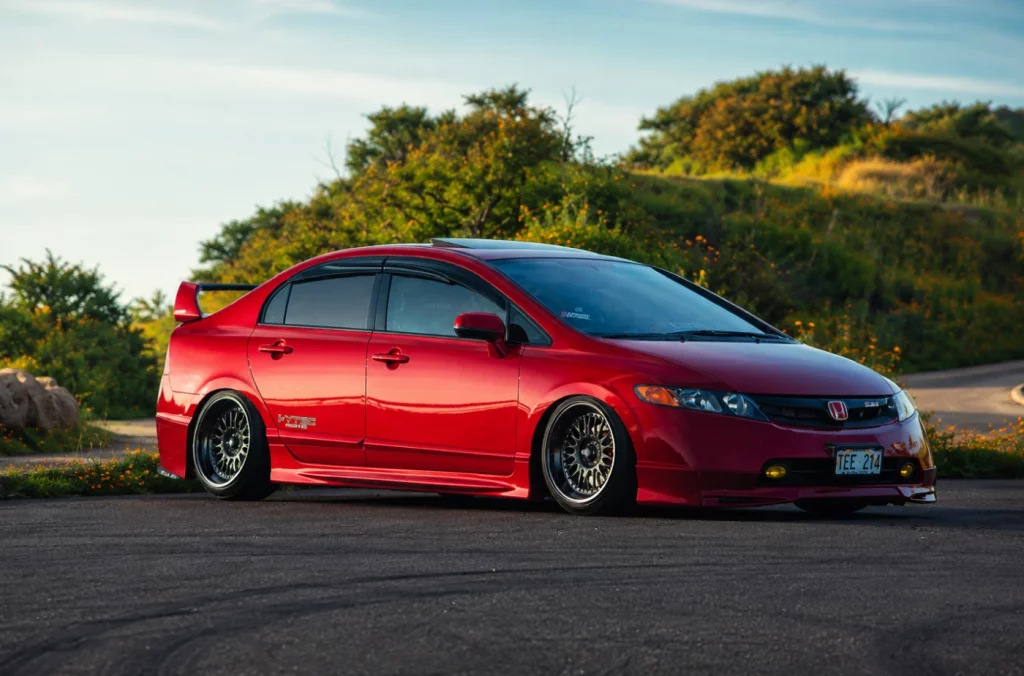
But the 8th gen is also a minefield. The 2006–2008 models have a cracked engine block issue that can total the car. The 2006–2008 Si has a third-gear synchro problem that costs $800–$2,500 to fix. The clear coat fails on almost every car. And the rear suspension eats tires on early models. This guide covers the best and worst years, what to inspect before buying, and how to avoid the most expensive mistakes.
The most important rule of 8th gen Civic buying: A 2006 Civic with a cracked block is not a project car — it is a parts car. The repair cost exceeds the value of the vehicle. Verify the engine condition before you buy.
Quick Verdict — Which 8th Gen Civic Should You Buy?
| Year | Verdict | Best For | Main Concern |
|---|---|---|---|
| 2006 | ⚠️ Inspect carefully | Cheapest entry, project car | Early-build issues, cracked block risk |
| 2007 | ⚠️ Inspect carefully | Budget buy | Engine block, 3rd gear synchro (Si) |
| 2008 | ⚠️ Inspect carefully | Budget/trim choice | Engine block, age-related wear |
| 2009 | ✅ Best buy | Daily driver, value | Age, maintenance history |
| 2010 | ✅ Best buy | Daily driver, reliability | Age, condition |
| 2011 | ✅ Best overall | Long-term ownership | Usually highest price |
Year matters less than condition: A clean 2007 with a documented engine replacement and service records is a better buy than a neglected 2011 with no history. Buy the car, not the year.
8th Gen Civic at a Glance
The 8th generation Civic was sold from 2006 through 2011 in sedan (FA1/FA5 for Si), coupe (FG1/FG2 for Si), and Si-only body styles. Honda built the 8th gen on a 2,700 mm wheelbase (106.3 in), a 50 mm stretch over the 7th gen, with a Multi-link Rear Suspension that improved handling at the cost of rear tire wear on earlier cars. Curb weight ranged from 2,600 lb for a base LX coupe to 2,980 lb for a fully loaded Si sedan.
The defining visual feature is the two-tier instrument panel: a digital speedometer mounted high near the windshield line and a traditional analog tachometer below. It was polarizing when new, but owners generally report that the layout becomes natural within days.
Engine Lineup
| Engine | Displacement | Horsepower | Torque | Found In | Fuel Economy (EPA) |
|---|---|---|---|---|---|
| R18A1 | 1.8L SOHC i-VTEC | 140 hp @ 6,300 RPM | 128 lb-ft @ 4,300 RPM | LX, EX, EX-L sedan/coupe | 25–36 mpg |
| K20Z3 | 2.0L DOHC i-VTEC | 197 hp @ 7,800 RPM | 139 lb-ft @ 6,100 RPM | Si sedan (FA5) and coupe (FG2) | 21–29 mpg |
| LDA (1.3L) | 1.3L + IMA hybrid | 110 hp (net) | 123 lb-ft (net) | Hybrid sedan | 40–45 mpg |
The R18 is an Interference Engine with a timing chain, not a belt. Honda spec is 0W-20 oil, capacity 3.9 quarts with filter. Oil changes at 5,000-mile intervals with synthetic are critical — the R18 has small oil passages that sludge easily under extended intervals (Honda service manual, 2006).
The K20Z3 in the Si uses 5W-20, capacity 5.2 quarts. It requires premium fuel. Honda employed a Chain-driven valvetrain here as well. The engine is known to tolerate 200,000+ miles on stock internals with proper maintenance, per multiple owner surveys on 8thCivic.com.
Transmission Options
| Transmission | Engine Match | Known Issues |
|---|---|---|
| 5-speed manual | R18 (LX/EX) | Notchy shift feel reported on higher-mileage cars; reverse lockout can fail |
| 5-speed automatic | R18 (LX/EX) | Generally reliable; some 2006–2007 units had premature failure between 80–120K miles (NHTSA complaints) |
| 6-speed manual | K20Z3 (Si) | 3rd gear grind / synchro failure documented on 2006–2008 models; updated synchros in 2009+ |
The Si 6-speed manual is the unit to check carefully on a pre-purchase inspection. The 3rd gear synchro issue is well-documented across the 8th gen Si community, with repair costs ranging from $800 for synchro replacement to $2,500 for a full transmission rebuild (CivicX forum data, 2023–2025). The 2009 facelift brought revised synchro materials that improved durability.
The 2009 Facelift — What Changed
The 2009 model year brought a mid-cycle refresh that significantly improved the 8th generation. The exterior received a restyled front bumper with three lower air intakes, a reshaped grille, and revised wheel designs. Inside, Honda updated seat fabric materials and added a USB input to replace the earlier AUX-only connection.
Critical mechanical changes:
- The engine block casting defect on R18 engines was corrected for 2009 production. Cars built after early 2009 do not carry the same crack risk (Honda warranty extension bulletin 10-048, July 2017).
- Revised rear upper control arms to address the excessive negative camber that caused premature inner tire wear on 2006–2008 cars (Honda Technical Service Bulletin 06-021).
- Revised 3rd gear synchro materials on Si transmissions.
- Updated seat fabrics and interior materials.
- USB input added to replace AUX-only connection.
The 2009–2011 cars are the safest bet in the 8th generation. They have the corrected engine block, better transmission durability, and improved suspension geometry. The price premium over a 2006–2008 car is typically $1,000–$2,000 — which is less than the cost of fixing a cracked engine block or rebuilding a transmission.
Known Problems by Model Year
| Model Years | Problem | Severity | Repair Cost Range |
|---|---|---|---|
| 2006–2008 | Cracked engine block (R18) — casting defect allows coolant leak and overheating | Critical | $3,000–$5,000 for replacement |
| 2006–2009 | Premature inner tire wear — rear upper control arm geometry excess camber | Moderate | $150–$400 for adjustable control arms |
| 2006–2008 | 3rd gear synchro failure (Si 6MT) | Moderate | $800–$2,500 rebuild |
| 2006–2011 | Sun visor failure — hinge separation, class action settlement | Minor | $29–$39 aftermarket |
| 2006–2011 | Dashboard crack — UV degradation on dash pad | Cosmetic | $150–$500 replacement |
| 2006–2011 | Fading clear coat / peeling paint — especially dark colors | Cosmetic | $800–$2,500 repaint |
| 2006–2011 | AC compressor clutch failure — stops engaging, no cold air | Moderate | $400–$1,200 compressor replacement |
| 2007–2008 | Passenger airbag occupant sensor mat failure | Moderate | $800–$1,200 dealer replacement |
Sources: NHTSA complaint database (2006–2011 Civic), Honda warranty extension 10-048, CarComplaints.com 8th gen Civic data, 8thCivic.com forum owner surveys.
The Cracked Engine Block — The 8th Gen’s Biggest Problem
The R18 engine block crack is the single most expensive problem on the 8th generation. It affects 2006–2008 models and some early 2009 production. The casting defect allows Coolant to leak from the block near the exhaust manifold, leading to overheating and eventual engine failure.
How to check for it:
- Look for dried pink/green coolant residue on the front of the engine block below the exhaust manifold.
- Check the passenger side floor for coolant from the heater core.
- Run the car to full operating temperature and watch for coolant loss.
- Check the overflow tank — if it is consistently low, there is a leak.
- Pressure test the cooling system — a cracked block will show pressure drop without external leaks.
The warranty situation: Honda issued an extended warranty for this issue (10 years / unlimited miles), but it expired in 2019. A cracked block today is a $3,000–$5,000 repair, which exceeds the value of most 8th gen Civics. Do not buy a 2006–2008 car without verifying the engine condition.
⚠️ If you see coolant residue or the seller says “it just needs a head gasket,” walk away. The R18 rarely blows head gaskets — the leak is almost always the block. A Head Gasket repair will not fix a cracked block, and you will be out $1,500 with the same problem.
The Si 3rd Gear Synchro — What to Check
On 2006–2008 Si models, the 3rd gear synchro is a known weak point. The transmission can grind when shifting into 3rd AT high RPM, or the gear can pop out under load. Honda revised the synchro design for 2009, and later cars are significantly better.
How to check it:
- Test drive the car and do multiple 2nd-to-3rd shifts at 4,000–5,500 RPM.
- Any grinding, resistance, or pop-out means synchro failure is beginning.
- Avoid the car unless the price accounts for an $800–$2,500 transmission service.
- Some owners report that switching to GM Synchromesh friction modified fluid helps, but it is a band-aid, not a fix.
Trim-by-Trim Buying Guide
DX: The base model. No air conditioning on early cars, crank windows, manual locks. Only buy if you want a cheap beater and understand the trade-offs. Hard to sell later.
LX: The sweet spot for a cheap daily. Power windows, A/C, cruise control, and the reliable R18 engine. Available with 5-speed manual or automatic. Best value in the 8th gen lineup.
EX / EX-L: Adds a sunroof, alloy wheels, upgraded audio, and (on EX-L) leather seats. The EX is worth the premium over LX if you want a sunroof. The EX-L is rare and often overpriced — a 9th gen is usually a better value at that price point.
Si: The enthusiast choice. K20Z3 engine (197 hp, 8,000 rpm redline), 6-speed manual, Helical LSD, sport suspension, and bigger brakes. Buy only if you want a performance car — running costs are higher than the R18 models. Check 3rd gear synchro carefully. Unmodified examples with service records are the best buys.
Hybrid: Hard pass. The IMA battery is dead or dying on every 8th gen hybrid by 2026. Replacement cost is $2,000+ and exceeds the value of the car. Fuel economy with a dead battery is worse than the R18. Avoid entirely.
Sedan vs Coupe — Which to Choose
Sedan: More practical, easier rear-seat access, better resale value, more common. The sedan is the better choice for 90% of buyers. Rear doors make it easier to live with, and the trunk is larger.
Coupe: Sportier styling, slightly lighter, but rear-seat access is difficult and rear headroom is limited. The coupe is harder to sell and often priced lower than the sedan. Only buy a coupe if you never carry rear passengers or if you specifically want the Si coupe.
Automatic vs Manual
5-speed automatic: The most common transmission on R18 cars. It is reliable with regular fluid changes (Honda ATF DW-1 every 30,000 miles). Some 2006–2007 units had premature failures between 80–120K miles — check the transmission fluid color and smell. Brown/black fluid with burnt smell indicates neglect. A transmission replacement is $2,000–$3,000.
5-speed manual: Available on LX and EX trims. Simple, durable, and cheap to repair. Clutch replacements are $800–$1,200. The manual is the better choice if you want a more engaging drive and lower maintenance costs.
6-speed manual (Si): Excellent transmission, but check 3rd gear synchro on 2006–2008 models. 2009+ cars have revised synchros and are more durable. Clutch replacements are $1,200–$1,800.
High-Mileage 8th Gen — 150K, 200K, 250K+ Miles
The R18 engine is capable of 300,000+ miles with proper maintenance. The key is oil changes every 5,000 miles with synthetic 0W-20. The Timing Chain is good for the life of the engine — it does not need replacement unless it rattles on startup.
100–150K: Normal territory. Check the engine mounts, suspension Bushings, and AC compressor. The transmission fluid should have been changed at least once.
150–200K: Need maintenance records. The car should have had at least one valve adjustment (every 30,000–50,000 miles), multiple transmission fluid changes, and recent suspension work. Budget $1,000–$1,500 for deferred maintenance.
200–250K: Condition matters more than mileage. A well-maintained 200K car is a better buy than a neglected 150K car. Check compression and oil consumption. Expect to replace engine mounts, suspension bushings, and the AC compressor.
250K+: Only buy if the car has documented maintenance and a clean title. The engine may still be strong, but everything else is worn out. Budget $1,500–$2,500 for immediate repairs.
Mileage rule: A maintained 210K-mile Civic can be a better buy than a neglected 120K-mile Civic. The owner who kept records is the owner who changed the oil on time. Buy the car, not the odometer.
What to Check Before Buying — The Inspection Checklist
Engine block (2006–2008 R18): Look for dried coolant residue on the front of the block. Check the overflow tank. Pressure test the cooling system. If the seller says “it just needs a head Gasket,” walk away — it is almost certainly the block.
Rear tire wear (2006–2008): Inspect the inner edge of both rear tires. If the inner shoulder is worn significantly more than the outer, the car needs updated rear upper control arms or adjustable arms. Factor $150–$400 into the purchase.
3rd gear synchro (Si): Test drive and do multiple 2nd-to-3rd shifts at 4,000–5,500 RPM. Any grinding, resistance, or pop-out means synchro failure is beginning. Avoid unless the price accounts for an $800–$2,500 transmission service.
Dashboard and sun visor: Inspect the dashboard for cracks along the top surface near the windshield. Check both sun visors for hinge separation. These are negotiable items.
Paint condition: Check the roof, hood, and trunk lid for Clear Coat Failure. Dark colors fade faster. A car with peeling paint will cost $800–$2,500 to address.
AC test: Run the AC on max cold for 5 minutes. If the compressor clutch engages but the air remains warm, the compressor may be failing. If the clutch does not engage, check refrigerant level first — undercharged systems often disable the clutch to protect the compressor.
Engine mounts: The passenger-side hydraulic Engine Mount fails on most 8th gen Civics. With the engine running, shift from Park to Drive while holding the brake. Excessive movement or vibration at idle indicates worn mounts — a $300–$500 repair.
Suspension: Clunks over bumps indicate worn bushings or ball joints. Push down on each corner — if it bounces more than once, shocks are worn.
Modified vs Stock — What to Look For
Green flags: Stock intake, stock exhaust, OEM suspension, OEM wheels, documented maintenance. The best 8th gen Civic is an unmodified one that was maintained by an attentive owner.
Yellow flags: Coilovers, intake, exhaust, tune, aftermarket wheels. These are not dealbreakers, but the car was likely driven harder than stock. Check the condition of the clutch, transmission, and suspension bushings.
Red flags: Turbo kit, hacked wiring, engine swap with no documentation, stripped interior, welded differential, track build, salvage title. These cars are projects, not daily drivers. Avoid unless you are an experienced mechanic looking for a project.
Rust and Regional Buying
Northeast / Midwest: Road salt destroys Civics. Check the Subframe, suspension bolts, brake lines, rocker panels, and rear suspension for rust. A clean Southern car is worth $1,000–$2,000 more than a rusty Northern car.
Southern states: No rust, but UV damage is common. Check clear coat condition, interior plastics, and rubber seals. The AC System works harder in the South — test it thoroughly.
Coastal: Salt air causes corrosion on underbody components and electrical connectors. Check the underbody and the condition of the Wiring Harness connectors.
Regional buying tip: A clean Southern Civic with service history can be worth shipping north rather than buying a rusty local car. Rust repair is expensive and often incomplete.
How Much Should You Pay?
| Condition | Typical Price (2026) | What to Expect |
|---|---|---|
| Rough driver | $3,000–$5,000 | High mileage, cosmetic damage, deferred maintenance, likely needs work |
| Decent commuter | $5,000–$7,500 | 120K–150K miles, clean title, some maintenance records, daily-driver condition |
| Clean low-mile example | $7,500–$10,000 | Under 100K miles, good paint, documented service history, no issues |
| Clean Si | $8,000–$12,000 | Unmodified, under 100K miles, service records, enthusiast-maintained |
| Exceptional/collector | $12,000+ | Ultra-low miles, concours condition, rare color, full documentation |
Price depends heavily on mileage, title status, rust, transmission, trim, and modification history. Si models consistently command a premium over non-Si trims. The 2009–2011 models are generally $1,000–$2,000 more expensive than 2006–2008 cars with similar mileage and condition.
Best 8th Gen Civic Configurations
| Goal | Configuration |
|---|---|
| Cheapest reliable daily | 2009–2011 LX, R18 + 5-speed automatic |
| Best value | 2009–2010 EX, R18 + 5-speed automatic |
| Best late-model daily | 2011 LX or EX, R18 |
| Manual commuter | 2009–2011 LX, R18 + 5-speed manual |
| Fun car | 2009–2011 Si, K20Z3 + 6-speed manual |
| Project car | Cheap R18 shell — only if mechanically sound |
| Family car | Sedan, 2009–2011 EX |
| Enthusiast | Si Coupe, unmodified, 2009–2011 |
Frequently Asked Questions
Is the 2006 Civic reliable?
The 2006 Civic has the highest risk of engine block failure. Buy only after a thorough inspection. The 5-speed automatic on 2006 models also has a higher failure rate than later years.
Is 2007 Civic worth buying?
Only if the engine block has been inspected and the transmission (if automatic) has been serviced. The 2007 models share the same cracked block risk as 2006. A documented engine replacement makes it a viable buy at a reduced price.
Is 2008 Civic reliable?
Still has the cracked block risk on early production. Late 2008 cars may have the revised block casting — check the production date. A 2008 with the revised block is a moderate-risk buy.
Is 2009 the best 8th gen?
The 2009 is the first year with the corrected engine block, revised transmission synchros (Si), and improved rear suspension geometry. It is an excellent value because it has the updates without the price premium of a 2010 or 2011.
Is 2010 Civic reliable?
Yes. The 2010 has all the 2009 improvements plus an additional year of production refinement. It is a strong buy if you find a clean example.
Is 2011 Civic the best year?
The 2011 is the most refined 8th gen. It has all the updates, the fewest production issues, and the highest resale value. It is the best 8th gen overall, but it commands a price premium over earlier years.
Which 8th gen Civic engine is best?
The R18 is the most reliable and cheapest to maintain. The K20Z3 in the Si is more fun but costs more to maintain and requires premium fuel. For a daily driver, the R18 is the better choice.
Does the R18 have a timing belt?
No. The R18 uses a timing chain that is good for the life of the engine. No scheduled replacement is required.
How long does an R18 last?
300,000+ miles with regular oil changes (synthetic 0W-20 every 5,000 miles) and valve adjustments every 30,000–50,000 miles.
How many miles is too many?
There is no fixed number. A maintained 200K-mile car can be a better buy than a neglected 120K-mile car. Focus on condition and maintenance history.
What causes the cracked engine block?
A casting defect in the R18 block. The defect allows coolant to leak from the block near the exhaust manifold. Honda corrected the casting in late 2008 / early 2009.
How do I check for the cracked block?
Look for dried coolant residue on the front of the block, check the overflow tank level, and pressure test the cooling system. If the seller says “it just needs a head gasket,” walk away — it is almost certainly the block.
Is the Civic Si reliable?
The K20Z3 engine is reliable with proper maintenance. The weak point is the 3rd gear synchro on 2006–2008 models. Check it carefully before buying. 2009+ cars have revised synchros.
Which Si year is best?
2009–2011. The revised synchros, corrected engine block (Si uses K20, not R18), and facelift improvements make these the best Si years.
Is the automatic transmission reliable?
Generally yes, but 2006–2007 units had premature failures between 80–120K miles. Check the fluid condition and service history. Brown/black fluid with burnt smell indicates neglect.
Is the manual transmission better?
Yes — for durability and driving engagement. The 5-speed manual is simple and reliable. The 6-speed in the Si is excellent but check 3rd gear synchro on 2006–2008 models.
Should I buy a modified Civic?
Only if you understand what you are looking at and the modifications are documented. A modified Si is a higher-risk purchase than a stock one. Buy the cleanest stock car you can find.
Should I buy a rebuilt-title Civic?
No. The savings are not worth the risk. Rebuilt-title cars often have hidden structural damage or electrical issues. Avoid.
How much should I pay for an 8th gen Civic?
$3,000–$5,000 for a rough driver, $5,000–$7,500 for a decent commuter, $7,500–$10,000 for a clean low-mile example, $8,000–$12,000 for a clean Si. Prices depend heavily on mileage, condition, and region.
Is an 8th gen Civic good for a first car?
Yes — specifically a 2009–2011 LX with the R18 engine and a clean service history. It is reliable, cheap to maintain, and easy to drive. Avoid the Si as a first car — insurance and maintenance costs are higher.
Can an 8th gen Civic reach 200K miles?
Yes — easily. Many R18 engines reach 250K–300K miles with proper maintenance. The key is regular oil changes and valve adjustments.
What should I check before buying one?
Engine block (2006–2008 R18), rear tire wear (2006–2008), 3rd gear synchro (Si), dashboard cracks, paint condition, AC function, engine mounts, and suspension bushings. Get a PPI from a Honda specialist.
Quick Reference Checklist
☐ 2009–2011 models preferred — corrected engine block and suspension geometry
☐ Verify engine block crack history — on 2006–2008 R18 cars
☐ Check rear tire inner edge wear — on 2006–2008 models
☐ Test 3rd gear synchro under load — on Si models
☐ Inspect dashboard for UV cracking — common on all years
☐ Verify AC blows cold consistently — compressor clutch failure is common
☐ Check paint clear coat condition — especially on dark colors
☐ Confirm timing chain tensioner noise — at 100K+ miles
☐ Check engine mounts — passenger-side hydraulic mount fails
☐ Test transmission fluid condition — brown/black fluid means neglect
☐ Get a pre-purchase inspection — from a mechanic who knows 8th gen Civics
Sources: NHTSA complaint database (2006–2011 Civic), Honda warranty extension 10-048, CarComplaints.com 8th gen Civic data, 8thCivic.com forum owner surveys, Honda factory service manuals, CarScout market snapshot (June 2026). Prices are approximate and may vary by region and market conditions.