

The Architecture Problem: Why L15 and K20C1 Manifolds Are Different From Older K-Series
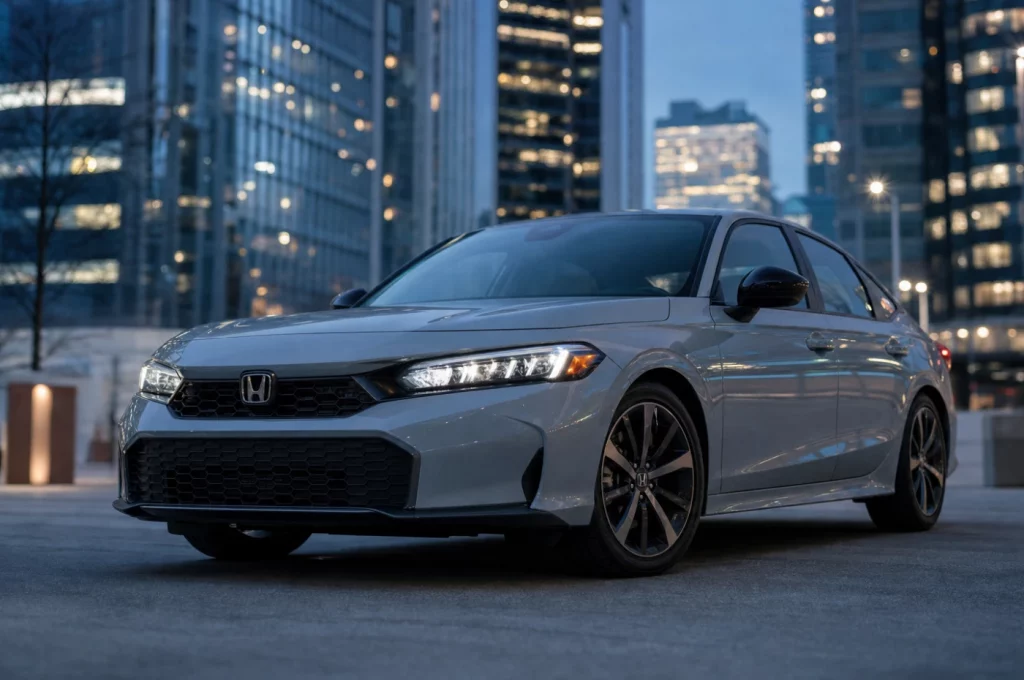
Honda’s turbocharged Civic engines — the L15B7 (10th-gen 1.5T, 2016+) and the K20C1 (FK8 Civic Type R, 2017+; FL5, 2023+; DE5 Integra Type S, 2024+) — do not use a traditional separate exhaust manifold like the K20A/K24 found in 8th and 9th-gen Civics. The exhaust manifold is integrated into the Turbocharger housing on the L15B7 and into the cylinder head casting itself on the K20C1. This fundamental design choice limits aftermarket manifold options compared to older K-series engines where the manifold is a standalone component.
On the L15B7, the exhaust manifold is cast into the turbine housing as a single unit. The manifold does not exist as a separate component. The turbocharger assembly bolts directly to the cylinder head at four studs, and the exhaust exits the ports into a cast log-style internal passage within the turbine housing (enginetechspecs.com; Honda OEM service documentation). This design shortens exhaust path length for faster spool and reduced packaging volume, but it means there is no manifold to replace independently.
On the K20C1, the exhaust manifold is integrated into the cylinder head casting itself. The four exhaust ports merge into a single passage within the head before exiting to the turbocharger flange (Honda K20C1 service manual; Full-Race technical documentation). The turbocharger bolts to a flat flange on the rear of the cylinder head. Because the manifold is part of the head, replacing it requires either a manifold adapter that bolts to the stock flange location or a custom fabricated solution.
L15B7 Manifold Options: Integrated Housing, Drop-In, Adapter, and Custom
The L15B7’s integrated turbine housing means most owners never touch the manifold. Power upgrades on the 1.5T follow a ladder: stock turbo, drop-in replacement turbo, or full big-turbo adapter kit. Each step brings a different manifold configuration.
| Turbo Configuration | Manifold Type | How It Works | Power Ceiling | Typical Cost |
|---|---|---|---|---|
| Stock turbo (TD025) | Cast log (integrated into turbine housing) | Single cast piece mounting directly to head; no separate manifold | ~220 whp pump / ~260 whp ethanol | $0 (factory) |
| Drop-in upgrade (27WON W1/W2, RV6, MHI) | Cast log (integrated into aftermarket turbine housing) | Replaces the entire turbo; same integrated log design with larger internal passages | ~300–350 whp (fuel-dependent) | $900–$1,500 (turbo only) |
| Adapter flange kit (PRL Big Turbo) | Adapter plate + log transition | Cast or billet adapter bolts to head using OEM bolt pattern; transitions to T3/T4 flange for standard Garrett turbos | ~350–450+ whp | $3,000–$4,500 (full kit) |
| Custom tubular manifold (full-frame) | Equal-length tubular | Fabricated stainless steel manifold; relocates turbo from stock position; requires extensive custom fab | 500+ whp | $2,000–$5,000 (custom fab only) |
The stock integrated log manifold is the baseline. It works well because the L15B7 produces strong low-end torque from the small turbo and short runner path. The manifold itself is not a restriction until power exceeds roughly 350 whp, AT which point the internal turbine housing passage and wastegate porting become limiting factors. Drop-in turbos like the 27WON W1 and RV6 retain this same integrated log architecture but with larger A/R turbine housings and repositioned wastegate passages (CivicX, 2021; 27WON blog series).
The PRL Big Turbo Kit represents the first step away from the integrated design. PRL’s kit uses a turbocharger adapter flange that bolts to the factory mounting location on the cylinder head and adapts to standard Garrett T3-based turbochargers (GT2860RS, GTX2860R, GTX2867R). This adapter functions as a short log-style manifold. PRL’s own testing showed 354 whp and 359 lb-ft on 93-octane with a GT2860RS and .86 A/R turbine housing on a stock engine and fuel system (PRL Motorsports, Project Snow White Part 4, 2018; CivicX results thread). The adapter is essentially a log manifold because the runners from ports 2 and 3 merge directly into a common plenum below the turbo flange, with no provision for equal-length primary tubes.
True equal-length tubular manifolds exist for the L15B7 but are limited to custom-fabricated setups used in full-frame turbo configurations. These relocate the turbo away from the stock position using long, equal-length primary runners. No mass-market bolt-on equal-length manifold is available for the L15B7 because the chassis packaging constraints of the 10th-gen Civic engine bay make it extremely difficult to fit tubular runners between the head and the front of the engine.
L15B7 Drop-In Turbo Manifold: Integrated Log Limitations
The drop-in turbo upgrades share the same integrated log manifold limitation as stock. The turbine housing contains the exhaust runner passage, and the wastegate port is internal. On the 27WON W1, the turbine housing is cast with a 5-bolt outlet (as opposed to the OEM 4-bolt), and the wastegate has been re-shaped to improve flow at higher boost levels. On the RV6, the turbine housing is a larger A/R design with improved internal contouring.
Forum data indicates that the 27WON W1 has experienced reliability concerns at sustained high boost, with reports of turbine housing cracking in early production batches (CivicX, 2022–2023). The RV6 uses a different casting source and has addressed some of these issues, though with comparatively less long-term data. Both are log-design integrated housings — neither offers the flow advantages of an external tubular manifold.
For owners at the 300–350 whp level, the drop-in turbo path with integrated log housing is adequate. Beyond this power level, the PRL adapter kit (still log-style) or a custom equal-length manifold becomes necessary.
PRL L15B7 Adapter Kit: Why It Uses a Log Design
The PRL big turbo kit adapter flange is a log-style manifold because the stock turbo mounting location on the L15B7 is positioned directly below the intake ports, leaving no room for separate equal-length runners. The adapter must fit within the same physical envelope as the factory turbo while accommodating the larger Garrett T3 turbine housing and external wastegate port.
PRL’s adapter is a cast aluminum or billet piece that transitions from the oval-shaped cylinder head exhaust port exits to a standard T3/T4 turbo flange orientation. It also includes a port for an external wastegate (Turbosmart 34mm, included with the kit). The design is functionally identical to a traditional log turbo manifold: a short, wide plenum that collects exhaust gases from all four cylinders and directs them into a single turbo inlet.
The advantage of this approach on the L15B7 is that it retains the stock turbo location, uses the factory Coolant and oil line routing, and does not require relocating any engine bay components. The trade-off is that the log design produces higher backpressure at the turbine inlet compared to an equal-length design, which increases pumping losses and exhaust gas temperatures. This backpressure penalty is partially offset by the Garrett turbo’s more efficient turbine wheel and ball bearing CHRA, which require less exhaust energy to drive than the factory journal bearing turbo.
K20C1 Manifold Options: Head-Integrated to Full Tubular
The K20C1 presents a different problem. Because the exhaust manifold is cast into the cylinder head, the aftermarket manifold solutions are not true manifolds — they are manifold adapters or replacement turbo-mounting pieces that bolt to the existing head flange. The internal head passage collects exhaust from all four cylinders and feeds a single exit opening on the rear of the head.
| Manifold Type | Design | Turbo Compatibility | Wastegate | Power Ceiling | Price |
|---|---|---|---|---|---|
| Stock K20C1 (head-integrated) | Internal head casting; single 3-bolt flange exit | MHI TD04 family (factory) | Electronic (internal, OEM) | ~400 whp (fuel-limited) | $0 (factory) |
| Full-Race V-band Manifold | Cast 304 SS short-runner adapter (log/tubular hybrid) | BorgWarner EFR, Garrett G25/G35 V-band | Electronic (retained OEM or external) | 550+ whp | $1,200–$1,650 |
| Rampage Fab billet 304L V-band | CNC-machined billet 304L SS; short direct path | Garrett G25-G35, T3 V-band | External 40–50mm port | 600+ whp | $1,500+ (with install kit $299 extra) |
| Artec cast SUS347 stainless | Investment-cast SUS347; equal-length tubular runners | Garrett G40-G45, Precision 6870-8685, 70mm V-band | External 50mm (Turbosmart) | 800+ whp | ~$1,500–$2,000 |
| Custom tubular full-frame | Fabricated 304 SS equal-length sidewinder | Any T3/T4/T6 V-band | External (varied) | 800+ whp | $2,000–$5,000 (custom) |
Full-Race V-Band Manifold: The Type R Standard
Full-Race Motorsports developed the most widely used K20C1 manifold solution for the FK8 platform. It is a cast 304 stainless steel V-band manifold that bolts to the stock cylinder head flange and transitions to a V-band connection for BorgWarner EFR or Garrett G-series turbos. Full-Race describes it as “CAD/CFD designed” with “machined perfectly flat sealing surfaces” for leak-free operation (Full-Race, FK8 V-band manifold product page).
The Full-Race manifold is not a true equal-length tubular design. It is a short-runner log-style adapter that prioritizes the retention of the factory electronic wastegate actuator. The K20C1’s Bosch engine management system uses a stepper-motor electronic wastegate that provides more consistent boost control than mechanical wastegates — Full-Race worked extensively with Hondata and MHI (the OE turbo supplier) to retain this electronic control (4Piston Racing; Full-Race FK8 EFR kit documentation; CivicX FK8 official turbo discussion thread, 2021).
Hondata’s testing on a FK8 with the Full-Race kit and an EFR 7163 showed 506 whp on race gas with the stock ECU (Full-Race; CivicX FK8 aftermarket turbo thread, 2021). 4Piston Racing’s shop car produced “well over 450 whp” with the Full-Race kit and their own DI fuel system on stock injectors, and later exceeded 550 whp with additional fuel system development (4Piston Racing product page).
The casting approach allows Full-Race to maintain smooth internal runner transitions without the cracking risk of welded tubular joints. The manifold is ceramic-coated (2,000°F coating recommended) to reduce under-Hood heat. The trade-off is that the runners are not equal-length — cylinder 1 and 4 exhaust pulses travel slightly different distances to the collector. Full-Race’s CFD work shows this penalty is negligible at the power levels these kits target.
Rampage Fab Billet 304L Manifold: Precision Machining
Rampage Fabrication offers a CNC-machined billet 304L stainless steel V-band manifold specifically for the FK8/FL5 Type R engine. Unlike cast manifolds, the Rampage unit is machined from solid 304L billet stainless, which provides superior material consistency and eliminates the risk of casting porosity. The manifold is designed to transition from the OEM head flange to Garrett V-band housings found on G25 through G35 and GTX 28R through 35R turbo families (Rampage Fab product page).
The Rampage manifold is purely an adapter piece — it retains the single-pulse collection design of a short-route manifold rather than equal-length primary tubes. It is a log-style manifold machined to very tight tolerances. The install kit ($299) includes the manifold, Gasket, M10x1.25 titanium studs, and hardware.
Equal-Length Tubular Options for K20C1: Artec and Custom
For builders pursuing 700+ whp, equal-length tubular manifolds become relevant. Artec offers an investment-cast SUS347 stainless steel manifold for K-Series engines with a 70 mm V-band flange designed for Garrett G40/G42/G45 or Precision 6870-8685 turbochargers. The Artec manifold uses a “Big Daddy” design with merge collector optimization and a 50 mm Turbosmart wastegate flange (Pro Speed Racing; Artec product documentation). At roughly $1,500–$2,000, it is the closest mass-market equal-length option for the K20C1.
The main challenge with any equal-length tubular manifold on the K20C1 is that it requires relocating the turbo away from the stock position, which means custom downpipe, intake, and charge pipe fabrication. The electronic wastegate cannot be retained in this configuration because the factory stepper motor actuator is designed to mount directly on the MHI turbo housing. Equal-length tubular setups require an external wastegate with a pneumatic or MAC-valve boost controller.
Several custom fabricators (Full-Race’s full-frame kit, PT Motorsport Electrics Type C manifold, Bull Boost sidewinder) offer equal-length sidewinder configurations for K20/K24 swaps, but none are direct bolt-ons for the FK8/FL5 chassis without significant modification. The Bull Boost sidewinder is designed primarily for K-swapped older chassis (EG, EK, DC2) rather than the FK8 (Bull Boost product page; CX-Racing manifold kits for 8th-gen Civic Si).
Equal-Length vs Log: What the Data Actually Says for These Engines
The traditional argument about equal-length vs log turbo manifolds was shaped on older K-series and B-Series engines where standalone manifolds were the only option. Full-Race published a B-series log vs equal-length comparison that remains widely referenced. The core findings apply to the K20C1 and L15 platforms with important caveats:
| Factor | Log / Integrated Design | Equal-Length Tubular | Relevance to L15B7 / K20C1 |
|---|---|---|---|
| Spool threshold | Short runners = quick spool; less gas volume to pressurize | Longer runners = later spool; more gas volume | L15B7 needs short-route for spool; 1.5L displacement can’t quickly fill long runners |
| Peak power potential | Higher backpressure; pumping losses limit top-end | Lower backpressure; better VE at high RPM; more top-end power | K20C1 sees real benefit above 600 whp; L15B7 needs equal-length only in full-frame custom builds |
| Pulse separation | Poor; cylinder interference at the collector | Good; tuned runner lengths prevent reversion | K20C1 head-integrated manifold already has significant reversion from shared internal passage |
| Wastegate control | Internal (stock) or external adapter port | Dedicated external wastegate runner per cylinder pair | K20C1 electronic actuator is more precise than mechanical external WG |
| Cracking risk | Cast design resists cracking; OEM-level durability | Welded tubular joints prone to cracking under thermal cycling | Full-Race and Artec cast solutions offer best durability for street-driven cars |
| Chassis packaging | Fits stock location; no modifications needed | Requires turbo relocation; custom downpipe and charge piping | L15B7 engine bay has virtually no room for tubular runners |
| Cost (manifold only) | $0 (stock) to $1,200–$1,650 (Full-Race) | $1,500–$5,000 (Artec to custom) | Full tubular cost often exceeds turbo cost |
For both engines, the log or short-runner adapter design is the correct choice for power targets below 550 whp on the K20C1 and below 400 whp on the L15B7. Above these thresholds, the pumping losses from the log collector begin to offset the spool advantage. The head-integrated manifold on the K20C1 introduces a fixed amount of reversion that an external equal-length manifold cannot fully correct — the internal head passage is already a common log-style collector before exhaust reaches the manifold.
A well-designed equal-length manifold on the K20C1 can improve turbine efficiency by 5–15 whp at the same boost level compared to a log adapter, based on K-series turbo testing data (K20A.org technical discussions; Honda-Tech log vs tubular testing thread, 2008). However, this gain must be weighed against the significant increase in cost, fabrication complexity, and loss of the factory electronic wastegate control.
Electronic Wastegate: The Overlooked Variable on K20C1
The K20C1’s electronic wastegate actuator is a Bosch stepper motor that provides closed-loop boost control with 0.00 mm position accuracy. Full-Race invested significant development effort in retaining this actuator on their FK8 turbo kits, and Honda/Hondata’s calibration documentation stresses that mismatched wastegate position (WGCMD vs WG actual position) will trigger CEL P0046 (Full-Race electronic wastegate calibration guide, 2020).
Any manifold that requires an external wastegate (equal-length tubular, custom sidewinder) sacrifices this electronic control. The alternatives are a mechanical external wastegate with a manual boost controller (MAC valve or boost controller), or a standalone ECU (Motec, Haltech) with wastegate position feedback. The Mac valve route is less precise and must be tuned carefully to avoid boost spikes. The standalone ECU route adds $2,000–$3,000 to the build cost.
For the L15B7, drop-in turbos retain the factory electronic wastegate actuator. The PRL adapter kit switches to a manual boost controller because the Garrett turbo uses a different actuator mounting; Ktuner developed background coding to support this (PRL testing blog, 2018).
Build Recommendations by Power Target
| Target Power | L15B7 Recommended Setup | K20C1 Recommended Setup | Manifold Type |
|---|---|---|---|
| 250–350 whp | Stock turbo or 27WON W1 drop-in (integrated log) | Stock turbo + Hondata tune (head-integrated log) | Log / integrated |
| 300–400 whp | PRL adapter kit + GTX2860R (log adapter) | Full-Race V-band + EFR 6758 or G25-550 (short-runner adapter) | Log / short-runner adapter |
| 400–550 whp | PRL adapter kit + GTX2867R (log adapter) + built engine | Full-Race V-band + EFR 7163 or G30-660 (short-runner adapter) + fuel system | Log / short-runner adapter |
| 550–700 whp | Custom tubular equal-length + full-frame turbo | Artec SUS347 or custom equal-length + G35/G42 + Motec | Equal-length tubular |
| 700+ whp | — (L15 displacement limits) | Artec or custom equal-length + Precision 6870+ + Motec | Equal-length tubular |
Cost Summary: Manifold Paths
| Path | Engine | Manifold | Turbo | Supporting Mods Required | Total Estimated Cost |
|---|---|---|---|---|---|
| Drop-in upgrade | L15B7 | $0 (integrated in turbo housing) | $900–$1,500 (27WON W1/RV6) | Inlet pipe, downpipe, intercooler, tune | $2,500–$3,500 |
| PRL adapter kit | L15B7 | $0 (adapter included in kit) | $1,200–$2,500 (Garrett GTX) | Full kit $3,000–$4,500 includes everything | $3,000–$4,500 |
| Full-Race V-band kit | K20C1 | $1,200–$1,650 | $1,500–$2,500 (EFR or G-series) | Full kit $5,000+ includes downpipe, charge piping, intake, fuel system needed beyond 450 whp | $5,000–$8,000+ |
| Rampage Fab + custom | K20C1 | $1,500 (manifold) + $299 install kit | $2,000–$3,000 (G25-G35) | Custom downpipe, intake piping, external WG, boost controller, tune | $6,000–$10,000 |
| Artec equal-length + standalone | K20C1 | $1,500–$2,000 | $2,500–$4,000 (G40/G42/6870) | Motec or Haltech ECU $3,000, custom fab, fuel system, drivetrain | $15,000–$25,000+ |
Common Mistakes and Considerations
The most common mistake in choosing a manifold for these engines is applying logic from older K-series builds. On an 8th-gen Civic Si K20Z3 or a K-swap EG, the exhaust manifold is a standalone component that can be swapped between log and equal-length independently. On the L15B7 and K20C1, the manifold is integrated into the turbo or head, and manifold selection is tied to the entire turbo system choice.
On the L15B7, owners who install a drop-in turbo expecting the same power ceiling as a PRL adapter kit often find themselves hitting the same fueling and turbine housing limits. The integrated log housing on the W1/RV6 has fixed wastegate orifice size and internal passage cross-section — increasing boost pressure beyond a point raises backpressure without additional power.
On the K20C1, the most common mistake is assuming the Full-Race V-band manifold flows identically to an equal-length tubular design. It does not. The Full-Race unit is a highly refined short-runner adapter that prioritizes wastegate control retention and durability. Builders targeting 700+ whp will need to accept the equal-length tubular path, the external wastegate, the standalone ECU, and the custom fabrication that goes with it.
Ceramic coating is strongly recommended for any aftermarket K20C1 manifold. Full-Race recommends 2,000°F ceramic coating on the manifold, downpipe, and turbine housing to reduce engine bay temperatures (Full-Race product page). Uncoated stainless manifolds radiate significant heat into the engine bay, which can affect intake air temperatures and surrounding components.
☐ L15B7 stock integrated log manifold is adequate to ~350 whp; beyond that, adapter kit or custom needed
☐ Drop-in turbos (27WON W1, RV6) retain integrated log housing; wastegate port size is the limiting factor
☐ PRL adapter kit converts L15B7 to Garrett turbo with log-style adapter; best for 300–450 whp range
☐ K20C1 exhaust manifold is integrated into cylinder head — aftermarket manifolds are adapters, not replacements
☐ Full-Race V-band cast 304 SS manifold retains OEM electronic wastegate; proven to 550+ whp
☐ Rampage Fab billet 304L V-band manifold offers CNC precision but requires external wastegate
☐ Artec SUS347 investment-cast manifold is closest mass-market equal-length option for K20C1
☐ Equal-length tubular on K20C1 requires external wastegate, custom downpipe, and charge piping
☐ K20C1 electronic wastegate retention offers superior boost control vs mechanical external
☐ Log/short-runner design correct for street builds under 550 whp; equal-length justified above 600 whp
☐ Ceramic coating recommended for all aftermarket manifolds on these platforms
☐ L15B7 custom equal-length is rare; chassis packaging constraints make it cost-prohibitive for most owners