

Why WHP per Dollar Matters on the Civic Platform
Honda Civic owners across all generations face the same question: which modification delivers the most power for the money at each stage of a build. The answer changes depending on engine architecture. A naturally aspirated K20Z3 in the 8th-gen Si gains power through intake, Camshaft, and compression — each dollar spent on airflow. A turbocharged L15B7 in the 10th-gen Si gains power by raising boost, then fuel system capacity, then turbo size. The K20C1 in the FK8 and FL5 Type R follows a similar path to the 1.5T but at a higher cost floor and higher absolute output.
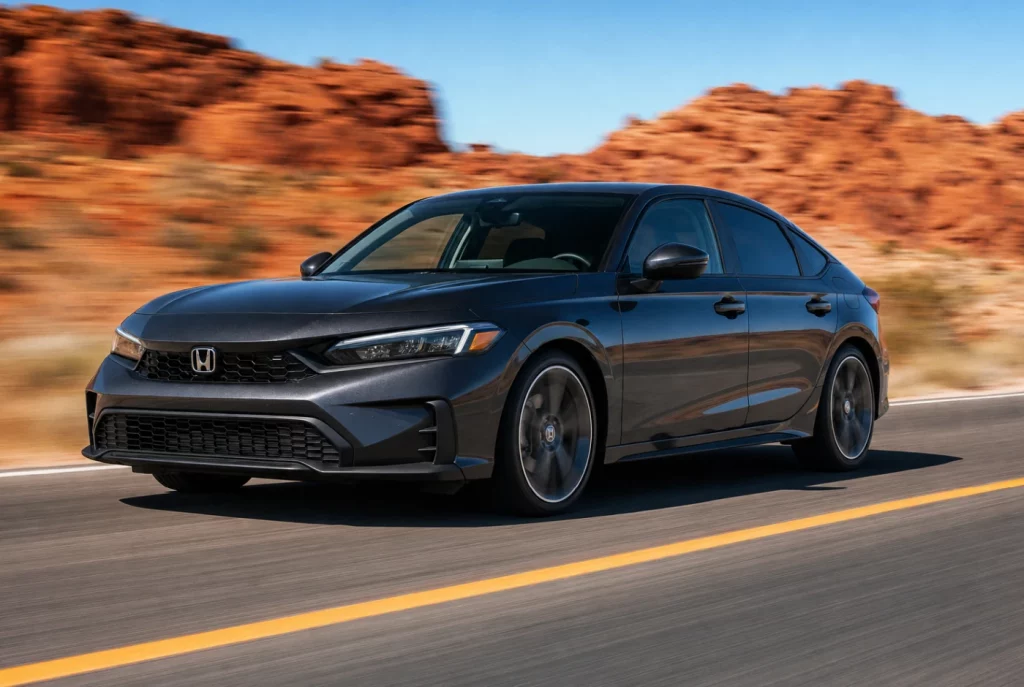
This article compares the three main Civic performance engines — K20Z3 (8th-gen Si), L15B7 (10th-gen Si), and K20C1 (FK8/FL5 Type R) — across five common mod tiers. All power figures are realistic, repeatable numbers drawn from tuner logs, forum compilations, and vendor dyno charts. All costs include parts at street pricing and a professional custom tune. Labor is excluded because it varies by region and DIY capability.
Mod Tier Definitions
| Tier | K20Z3 (8th Gen Si) | L15B7 (10th Gen Si) | K20C1 (FK8/FL5 Type R) |
|---|---|---|---|
| Stock | Factory configuration | Factory configuration | Factory configuration |
| Intake + Tune | Cold air intake + FlashPro tune | KTuner V2 + OTS basemap | Hondata FlashPro + jailbreak + custom tune |
| FBO (Full Bolt-Ons) | CAI + RBC manifold + race header + 3″ exhaust + FlashPro + tune | CAI + downpipe + intercooler + flex fuel kit + KTuner + custom tune | Intake + downpipe + intercooler + charge pipes + catback + Hondata + custom tune |
| Drop-In Turbo / Cams | FBO + stage 2 camshafts + valvetrain upgrade | FBO + 27WON W1 or W2 drop-in turbo + custom tune | FBO + MHI Stage 2 or RV6 R660 drop-in turbo + upgraded fuel system |
| Big Turbo / Built | FBO + 12.5:1 pistons + rods + cams + ported head | PRL GTX2860R/GTX2867R adapter kit + built block + fuel system | Full-Race EFR kit or PRL P700 + built engine + full fuel system + flex fuel |
These tiers are not perfectly parallel between platforms because the engines respond to fundamentally different modifications. The 8th-gen Si stops AT NA power limits; the turbo engines keep extracting power through boost and fuel system capacity. The comparisons below use the same tier structure but the component content within each tier differs by platform.
Baseline Comparison: How Each Engine Starts
| Metric | K20Z3 (8th Gen Si) | L15B7 (10th Gen Si) | K20C1 (FK8 Type R) |
|---|---|---|---|
| Stock WHP (Dynojet) | 170-175 whp | 180-182 whp | 287-300 whp |
| Stock WTQ (Dynojet) | 130-135 lb-ft | 200-206 lb-ft | 260-283 lb-ft |
| Displacement | 2.0L NA | 1.5L turbo | 2.0L turbo |
| Redline | 8,000 rpm | 6,500 rpm (stock ECU) | 7,000 rpm |
| Peak boost | N/A | ~16.5 psi | ~23 psi (overboost) |
| Fuel system | Port injection 310cc | DI 55 MPa + port 105cc | DI 20 MPa + port 270cc |
The 8th-gen Si produces the lowest torque of the three but revs to 8,000 rpm and makes power at the top of the tach. The 10th-gen Si makes more torque than horsepower at every point in the curve. The FK8 Type R starts at nearly 300 whp from the factory, leaving the other two platforms multiple tiers behind at baseline.
The gap in stock output is important context for WHP-per-dollar analysis. The 8th-gen Si owner needs ~$4,000-5,000 to match a stock FK8. The 10th-gen Si owner can equal a stock FK8 for roughly $2,000 in bolt-ons and a tune.
Tier 1: Intake + Tune — The Best $/HP on Any Civic
| Platform | Parts Required | Total Cost | Resulting WHP | Net Gain | $/WHP (total) | $/WHP (incremental) |
|---|---|---|---|---|---|---|
| K20Z3 | Injen/Skunk2 CAI ($250) + FlashPro ($700) + custom tune ($400) | $1,350 | 195-200 whp | +25-30 | $6.90 | $45-54 |
| L15B7 | KTuner V2 ($650) + TSP/KTuner basemap ($0-200) | $650-850 | 230-237 whp | +50-57 | $2.90 | $11.40-17 |
| K20C1 | Hondata FlashPro + jailbreak ($1,050) + custom tune ($300-500) | $1,350-1,550 | 330-340 whp | +40-50 | $4.30 | $27-39 |
Sources: CivicX official 10th-gen Si dyno thread, 2026 (182 whp stock vs 237 whp TSP Stage 1 tune); JST Performance FK8 dyno results, 2018 (287 whp stock vs 342 whp Ktuner Stage 1 + intercooler); 8thCivic K20Z3 dyno sheet compilation, 2009 (170 whp stock, 195-200 whp intake + FlashPro tune).
The 10th-gen Si offers the best dollar-per-horsepower at this tier. A $650 Ktuner V2 with a basemap adds 50+ whp and over 75 lb-ft of torque. The gain comes entirely from raising boost pressure, which costs nothing in hardware beyond the tuning device. The 8th-gen Si and K20C1 both require a tuning device plus complementary hardware to see meaningful gains — the K20Z3 needs an intake to overcome the restrictive stock airbox, and the FK8 needs a tuner and fuel quality to raise boost safely.
The 8th-gen Si’s $45-54 per incremental horsepower is the most expensive at this tier because NA engines cannot add boost for free. Every horsepower requires an airflow improvement that costs money per CFM.
Tier 2: Full Bolt-Ons — Where the Curves Diverge
| Platform | Parts Required | Total Cost | Resulting WHP | Net Gain | $/WHP (total) | $/WHP (incremental) |
|---|---|---|---|---|---|---|
| K20Z3 | Tier 1 + RBC manifold ($300) + race header ($500) + 3″ exhaust ($350) + tune ($400) | $2,900 | 220-225 whp | +50-55 | $13.20 | $31-36 |
| L15B7 | Tier 1 + PRL CAI ($350) + catted downpipe ($400) + intercooler ($500) + flex kit ($400) + custom tune ($300) | $2,500-3,000 | 280-300 whp | +100-120 | $10.00 | $8.30-13.60 |
| K20C1 | Tier 1 + PRL HVI ($436) + catted downpipe ($550) + catback ($800-1,200) + intercooler ($749) + charge pipes ($220) + custom tune ($500) | $4,700-5,200 | 375-390 whp | +85-100 | $13.10 | $17-23 |
The L15B7 provides the best incremental cost-per-horsepower at the FBO tier because the intercooler, downpipe, and flex fuel kit collectively allow the stock turbo to run higher boost with cooler intake air and ethanol’s knock resistance. The gain of 100-120 whp over stock for ~$2,500 totals roughly $10 per horsepower, with the incremental gain from the tune-only baseline costing only ~$8-13 per horsepower.
The K20C1 FBO path is the most expensive in absolute dollars but achieves 375-390 whp, which is within 10-15 whp of what many owners considered a “stage 2” build a decade ago. The intercooler upgrade alone on the FK8 is not a power adder — DSPORT found it actually reduced peak torque by 15 lb-ft on the dyno — but it prevents the 15-20 whp heat-soak loss that occurs on the stock intercooler after repeated pulls. The real gain from FBO on the K20C1 comes from freeing up the exhaust side: the downpipe and intake reduce restriction that limits the stock turbo at higher boost levels.
The K20Z3 FBO path plateaus at 220-225 whp because the stock Compression Ratio and camshafts cannot extract more from the same induction improvements. This is roughly 50 whp over stock, matching the 10th-gen Si’s FBO gain, but the 10th-gen Si started 10-15 whp higher and gains 100+ whp total because boost keeps climbing.
Tier 3: Drop-In Turbo / Cam Upgrade — The Big Jump
| Platform | Parts Required | Total Cost | Resulting WHP | Net Gain | $/WHP (total) | $/WHP (incremental) |
|---|---|---|---|---|---|---|
| K20Z3 | FBO + BC Stg2 cams ($700) + Supertech valvetrain ($450) + RDX injectors ($150) + tune ($400) | $4,600 | 240-248 whp | +70-78 | $18.80 | $26-34 |
| L15B7 | FBO + 27WON W1 drop-in ($1,400) + clutch upgrade ($500-800) + custom tune ($300) | $4,700-5,200 | 310-330 whp | +130-150 | $15.50 | $12-20 |
| K20C1 | FBO + MHI Stage 2 ($2,800) or RV6 R660 ($2,599) + install kit ($150) + clutch ($900) + Hondata fuel system ($1,500) + flex ($400) + tune ($500) | $8,200-9,500 | 480-540 whp | +190-250 | $16.80 | $16-20 |
Sources: 27WON W2 design blog Pt 5, 2020 (W1 vs W2 power comparison — ~256 whp OEM turbo, ~258 whp W1 91 octane, ~347 whp W2 ethanol); 27WON W1 product page ($1,399.99, +65 whp E85); 27WON W2 product page ($1,799.99, +45 WHP over W1, 375+ whp); CivicX 27WON FBO dyno thread, 2020 (280 whp / 290 wtq 27WON W1 + 93 octane); DRob 27WON W1 vs PRL 2860r comparison (CivicX, 2022 — W1 stronger below 4,500 rpm, PRL stronger at peak on ethanol); SBX Performance drop-in turbo guide FK8/FL5/DE5, 2025 (MHI Stage 2 ~380-430 stock fuel / ~500-560 full fuel; RV6 R660 ~520-570 full fuel); Full-Race MHI Stage 2 turbo page ($2,849.99, 500+ hp); 4Piston Racing Full-Race EFR kit page (450+ whp stock injectors, 550+ whp DI system); K20A.org K20Z3 dyno results thread, 2023 (225 whp BC Stg2 + RBC + Skunk2 Alpha header); Speedy Auto RRC + Kelford cam install, Import Tuner Magazine (243.7 whp Kelford cams + RRC + DC Sports header + tune).
The L15B7 W1 drop-in turbo provides the most balanced WHP-per-dollar at this tier. At roughly $4,700-5,200 total for a car that started at 180 whp and ends at 310-330 whp, the whole-build cost lands at ~$15-16 per horsepower. The incremental gain from FBO to the W1 is roughly 30-40 whp for an additional ~$1,900 (turbo + clutch + tune), working out to ~$48-63 per incremental horsepower — not as good as the tune or FBO stage, but the resulting car is now faster than a stock FK8 Type R.
The K20Z3 sees diminishing returns at this tier. Adding BC stage 2 cams to a full FBO car costs roughly $1,700 in parts and tune and returns 20-25 whp. That is roughly $68-85 per incremental horsepower — the worst value in any tier across all three platforms. The reason is fundamental to NA tuning: once the intake, header, and exhaust are optimized, the only remaining path to power is increasing volumetric efficiency at the valve events, and camshafts alone cannot match the gains from boost.
The K20C1 drop-in turbo tier is the most expensive in absolute dollars but delivers the largest absolute gains. An MHI Stage 2 turbo ($2,800) on an FBO FK8 with upgraded fuel and ethanol adds roughly 100-150 whp over the FBO baseline. The total build cost of $8,200-9,500 produces 480-540 whp at roughly $16-20 per horsepower. The incremental gain from the FBO baseline is roughly $48-60 per horsepower — similar to the L15B7 W1 — but the resulting power level is competitive with cars costing three times as much.
Tier 4: Big Turbo / Built Engine — The Ceiling
| Platform | Parts Required | Total Cost | Resulting WHP | Net Gain | $/WHP (total) | $/WHP (incremental) |
|---|---|---|---|---|---|---|
| K20Z3 | Built bottom end (rods + 12.5:1 pistons) ($2,500) + FBO + Stg3 cams + valvetrain + oil pump + ported head + Hondata + tune | $6,000-7,500 | 255-265 whp | +85-95 | $25-28 | $85-120 |
| L15B7 | PRL big turbo adapter kit ($3,000-3,500) + GTX2860R/2867R + built block ($3,500) + fuel system ($1,500-2,500) + flex + tune | $9,500-12,000 | 375-430 whp | +195-250 | $26-29 | $28-45 |
| K20C1 | Full-Race EFR kit ($5,000+) or PRL P700 ($2,699) + built block ($4,000) + full fuel system ($3,000) + Motec/Hondata fuel + flex + tune | $12,000-18,000 | 550-640 whp | +260-350 | $22-28 | $28-42 |
Sources: PRL Motorsports Project Snow White Part 4, 2018 (354 whp / 359 lb-ft GT2860RS .86 A/R 93 octane); CivicX PRL big turbo owner thread, 2022 (GTX2860R ~325-350 whp on pump, GTX2867R ~360-400 whp with fuel); 27WON W3 product page ($2,483.99, 400+ whp drop-in); 4Piston Racing Full-Race FK8 EFR kit page (506+ whp EFR 7163, race gas); SBX Performance FK8/FL5 drop-in turbo guide, 2025 (P700 ~420-480 stock fuel / ~500-640 full fuel + E); K20A.org K20Z3 high-compression build thread (240-257 whp with 12.5:1 pistons + aggressive cams + RBC + header).
The big turbo / built engine tier is where WHP per dollar drops sharply across all three platforms. The L15B7 and K20C1 still return acceptable incremental value because boost keeps scaling with fuel system and turbo size, but the total build cost balloons past $10,000 for the 1.5T and past $15,000 for the Type R.
The K20Z3 sees the worst returns at this tier. A built high-compression NA build costing $6,000-7,500 over stock returns only 85-95 whp total. The incremental gain over the cammed FBO setup is roughly 15-20 whp for an additional $2,500-3,000 in pistons, rods, head work, and oil pump. That works out to $125-200 per incremental horsepower — the single worst value in this entire comparison. This is not a criticism of the K20Z3; it is a fundamental limit of naturally aspirated four-cylinder tuning. The power ceiling for a 2.0L NA K-Series on pump gas is roughly 260-265 whp, and the last 15-20 whp cost disproportionately more than the first 85.
The L15B7 big turbo path offers the best value among the three at this tier. PRL’s GTX2860R adapter kit costs $3,000-3,500 and with a built block and fuel system can deliver 375-430 whp. The total build cost of $9,500-12,000 returns $26-29 per horsepower across the entire build. The incremental gain over the W1 drop-in turbo is roughly 60-100 whp for an additional $5,000, working out to $50-83 per incremental horsepower — expensive but justifiable for owners chasing 400+ whp.
The K20C1 big turbo tier is the most expensive but also the most capable. A Full-Race EFR 7163 kit or PRL P700 with built block and full fuel system runs $12,000-18,000 and returns 550-640 whp. The total build cost per horsepower works out to $22-28 — similar to the L15B7 at this tier. The incremental gain over the drop-in turbo tier is roughly 70-100 whp for an additional $4,000-8,500. The wide cost range reflects whether the owner chooses a bolt-on P700 ($2,699) over the stock turbo location or a full-frame EFR kit that requires the Full-Race v-band manifold, external wastegate, and custom charge piping.
Side-by-Side: WHP per Dollar Across All Tiers
| Tier | K20Z3 Total Cost | K20Z3 WHP | K20Z3 $/WHP | L15B7 Total Cost | L15B7 WHP | L15B7 $/WHP | K20C1 Total Cost | K20C1 WHP | K20C1 $/WHP |
|---|---|---|---|---|---|---|---|---|---|
| Stock | $0 | 172 | — | $0 | 182 | — | $0 | 295 | — |
| Intake + Tune | $1,350 | 197 | $6.90 | $750 | 235 | $3.20 | $1,450 | 335 | $4.30 |
| FBO | $2,900 | 223 | $13.00 | $2,800 | 290 | $9.70 | $4,900 | 383 | $12.80 |
| Drop-In / Cams | $4,600 | 245 | $18.80 | $4,900 | 320 | $15.30 | $8,800 | 510 | $17.30 |
| Big Turbo / Built | $6,800 | 260 | $26.20 | $11,000 | 405 | $27.20 | $15,000 | 590 | $25.40 |
The table shows a clear pattern. The L15B7 consistently produces the lowest $/WHP through the first three tiers because boost-based gains cost less than airflow or displacement-based gains. The K20C1 produces the highest absolute power at every tier but at a higher per-dollar cost in the FBO and drop-in turbo tiers because the tuning device and supporting mods cost more than the 1.5T equivalents.
The K20Z3 starts competitive at the intake+tune tier but its $/WHP climbs faster than either turbo platform after FBO. The primary reason is that NA gains require hardware that replaces existing components (cams, header, intake manifold) rather than software that raises boost. The 8th-gen Si is not a bad platform, but its value proposition changes depending on the owner’s power target. If 200-210 whp is sufficient, the K20Z3 offers reasonable value. If 240+ whp is the goal, the L15B7 delivers more power for less total spend.
Cumulative Cost-to-Power: What Each Dollar Buys
| Target WHP | Best Platform | Mod Path | Estimated Total Cost | Cost per WHP |
|---|---|---|---|---|
| 200 whp | K20Z3 or L15B7 | K20Z3: intake + FlashPro tune ($1,350); L15B7: KTuner basemap ($650) | $650-1,350 | $3.25-6.75 |
| 240 whp | L15B7 | KTuner V2 + TSP Stage 1 tune ($650-850) | $750 | $3.10 |
| 300 whp | L15B7 | FBO + flex fuel + custom tune ($2,500-3,000) | $2,800 | $9.30 |
| 350 whp | L15B7 | 27WON W1 + FBO + flex + tune ($4,700-5,200) | $4,900 | $14.00 |
| 400 whp | K20C1 | Hondata + intake + downpipe + tune ($2,200) | $2,200 | $5.50 |
| 450 whp | K20C1 | FBO + Hondata + flex tune ($4,500) | $4,500 | $10.00 |
| 500 whp | K20C1 | Drop-in turbo + FBO + fuel system + flex ($8,500) | $8,500 | $17.00 |
| 600 whp | K20C1 | PRL P700 + built engine + full fuel + flex ($15,000+) | $15,000 | $25.00 |
This table answers the question most Civic owners actually ask: “What do I need to spend to hit my target?”
The L15B7 is the cheapest platform to 300 whp, requiring roughly $2,800 in parts and a tune. The same 300 whp on the K20C1 would cost $0 because a stock Type R already makes 295 whp — but buying the car costs roughly $15,000-20,000 more than an Si.
The K20C1 becomes the cheapest platform to 400+ whp because a base tune and intake already push it past that threshold. The L15B7 cannot reach 400 whp without a built block, upgraded fuel system, and big turbo — roughly $11,000 total. The K20C1 reaches 400 whp with $2,200 in mods.
Hidden Costs That Change the Equation
The WHP-per-dollar calculations above assume the car is healthy and properly maintained before modifications. Several costs can shift the value significantly:
Clutch upgrade: The 10th-gen Si’s factory clutch begins slipping around 270-300 lb-ft of torque. A TSP Stage 0 tune (245 whp / 278 lb-ft) can be run on the stock clutch. Any tune exceeding 300 lb-ft requires a clutch upgrade at $500-1,200 installed. The FK8’s factory clutch handles the stock torque level but begins slipping above 400 lb-ft. A retro-fitted FK8 clutch kit runs $900-1,500. The 8th-gen Si’s clutch holds roughly 200-210 lb-ft before slipping, which most NA builds do not exceed.
Fuel system limits: The 10th-gen Si DI system maxes out at roughly 30% ethanol content before injector duty cycle hits 100% (PRL testing, 2018). An upgrade to higher-flowing DI injectors or a port injection auxiliary kit adds $1,000-2,500. The FK8’s fuel system reaches roughly 450-480 whp before the HPFP and injectors max out. The Hondata fuel system upgrade adds $1,500. The 8th-gen Si uses port injection with RDX 410cc injectors ($150-200) that support up to 260 whp.
Cooling: The FK8 is notorious for heat soak on track. PRL’s intercooler does not add peak power on the dyno but prevents a 15-20 whp loss after repeated pulls (DSPORT magazine testing). The 10th-gen Si benefits from an intercooler upgrade for consistent power in hot climates. The 8th-gen Si’s NA configuration does not experience heat-soak power loss, though oil cooling becomes relevant for extended track sessions.
Which Platform Should You Build?
The cost-per-horsepower data supports different conclusions depending on the buyer’s starting point and power target.
If you already own an 8th-gen Si and want a fun daily with 200-220 whp, the FlashPro + intake + header + exhaust path costs roughly $2,500 and returns a responsive, reliable NA car that revs to 8,000 rpm. The WHP per dollar at this level is competitive with the turbo platforms. Pushing past 220 whp on the K20Z3 becomes expensive quickly — the last 30-40 whp cost more than the first 50.
If you own a 10th-gen Si, the tune-only tier is the best power-per-dollar in the entire Honda lineup. A $650 KTuner V2 and a basemap add 50+ whp. At $3 per horsepower, no other modification on any platform comes close. If you want to exceed 300 whp, the FBO + flex path costs roughly $2,800 and works reliably on the stock turbo. Beyond 330 whp, the drop-in turbo path costs roughly $5,000 total and is the most cost-effective way to exceed a stock FK8’s power output.
If you own a Type R, the cost to reach 400+ whp is lower than any other platform because you start at 295 whp. A Hondata + intake + downpipe + tune package costing roughly $2,200 pushes past 400 whp. The FBO path to 450-480 whp costs roughly $5,000. The drop-in turbo path to 500-550 whp costs roughly $8,500-9,500. The cost penalty for the FK8 is the entry price of the car itself, not the modifications.
☐ L15B7 tune-only is the best WHP per dollar in the Civic lineup at ~$3/HP for 50+ whp gain
☐ K20Z3 FBO + cams costs ~$18.80/WHP total — competitive at 200-220 whp but diminishing returns beyond
☐ K20C1 reaches 400+ whp for ~$2,200 in mods because stock baseline is 295 whp
☐ L15B7 FBO + flex fuel delivers ~100-120 whp gain for ~$2,800 total
☐ L15B7 27WON W1 drop-in turbo + supporting mods runs ~$4,900 total for 320 whp
☐ K20C1 drop-in turbo (MHI Stg2/RV6 R660) + FBO + fuel = ~$8,500 for 500+ whp
☐ K20Z3 built high-compression NA build costs $25-28/WHP — worst value for chasing top-end power
☐ K20C1 PRL P700 or Full-Race EFR + built engine + full fuel = ~$15,000-18,000 for 600 whp
☐ K20Z3 incremental gain from FBO to full built NA costs $125-200 per HP — 8x more than L15B7 equivalent
☐ L15B7 maximum value stops at FBO + flex; beyond 330 whp, cost per HP doubles
☐ K20C1 cost per HP stays below $20 through 500 whp; breaks above $25 past 600 whp
☐ All platforms require clutch and cooling costs that change effective dollar-per-HP above 300 lb-ft torque