

Buying your first Honda Civic is a rite of passage. Millions of Americans have done it before you, and millions will do it after. The Civic is the default first car for a reason — it is reliable, cheap to maintain, and there is an endless supply of parts and knowledge. But the Civic ecosystem is also a minefield for the unprepared. There are eight generations of used cars on the market, five different engine families, three transmission types, and a parts market that ranges from OEM Honda to Chinese eBay specials. This guide covers everything you need to know before you hand over cash — from chassis codes and engine personalities to specific failure points by generation and the real cost of ownership. The goal is simple: make sure your first Civic is a good one, not a financial mistake.
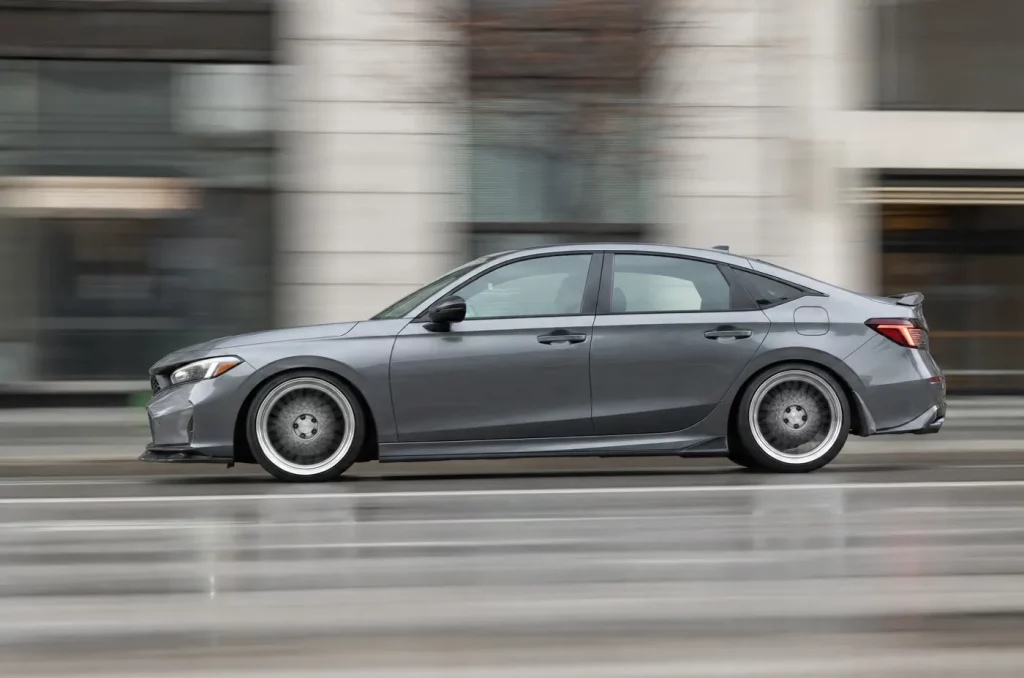
The most important rule of buying a used Civic: Condition and maintenance history matter more than mileage. A 150,000-mile Civic with service records is a better buy than a 90,000-mile Civic with no history and a cheap set of coilovers.
Which Civic Should You Buy — Generation by Generation
The Civic has been in production since 1972, but the used market for first-time buyers realistically starts with the 8th generation (2006–2011). Earlier cars are too old to recommend as a daily driver. This section covers the 8th through 11th generations — what each offers, what they cost, and what goes wrong.
| Generation | Years | Best For | Main Risk | Sweet Spot Trim | Typical Price Range (2026) |
|---|---|---|---|---|---|
| 8th Gen | 2006–2011 | Cheap daily, first car, DIY project | Cracked engine block (R18, 2006–2009), clear coat failure | EX or Si (if you want performance) | $3,000–$8,000 |
| 9th Gen | 2012–2015 | Value daily, commuter | CVT shudder (if fluid not changed), infotainment glitches | EX or Si | $6,000–$14,000 |
| 10th Gen | 2016–2021 | All-around daily, modern features | 1.5T oil dilution (2016–2018), AC condenser failure | Sport with 2.0L or EX with 1.5T | $12,000–$22,000 |
| 11th Gen | 2022–2025 | Newer daily, hybrid efficiency | Sticky steering (2022 only), price | Sport or Sport Hybrid | $20,000–$33,000 |
8th Generation (2006–2011) — The Cheap Entry Point
The 8th gen is the oldest Civic I would recommend to a first-time buyer. It is cheap, simple, and has a massive aftermarket. The R18 engine (1.8L) is reliable and fuel-efficient, but the 2006–2009 model years have a well-documented cracked engine block issue. Honda issued a warranty extension for this, but many cars have not had the repair done. Check the rear of the engine block for Coolant leaks. The K20Z3 engine in the Si is one of Honda’s best naturally aspirated four-cylinders — 197 hp, a screaming VTEC crossover, and a fantastic 6-speed manual. The Si is also the most fun you can have in an 8th gen, but it comes with higher insurance and fuel costs.
The clear coat on 8th gen Civics is famously fragile. Dark colors (black, blue, red) are the worst. Look for peeling paint on the roof, Hood, and trunk. This is not a cheap fix — a proper repaint costs $1,500–$3,000. If the paint is already failing, either negotiate aggressively or walk away.
What to check on an 8th gen: Engine block for cracks (coolant leaks near the transmission side), paint condition, 3rd gear synchro on Si models (test under hard acceleration), and the condition of the Lower Control Arm bushings.
9th Generation (2012–2015) — The Value Sweet Spot
The 9th gen is the best value for a first-time buyer. It is newer than the 8th gen, has a nicer interior, and is still affordable. The 2012 model year is the exception — Honda cut costs during the recession, and the interior quality suffered. The 2013–2015 facelift cars are significantly better. The R18 engine continues in base trims, and the K24Z7 engine powers the Si with 201 hp and 170 lb-ft of torque.
The CVT in 9th gen Civics is reliable if the fluid has been changed every 30,000–40,000 miles. If the fluid is dark or the transmission shudders at low speed, walk away — a CVT replacement costs $3,500–$5,000. The VTC actuator on K24 engines can rattle on cold start. This is a common issue, and the repair is $800–$1,200 at a dealer. It is a good negotiating point.
What to check on a 9th gen: CVT fluid condition and service history, VTC actuator rattle on cold start, infotainment screen responsiveness, and rear bushing condition.
10th Generation (2016–2021) — The Modern Daily
The 10th gen is the first Civic with a turbocharged engine option for mainstream trims. The 1.5T (L15B7) produces 174 hp and 162 lb-ft of torque — a significant upgrade over the 2.0L naturally aspirated engine. But the 1.5T has a documented Oil dilution issue, particularly on 2016–2018 models in cold climates. Gasoline can bypass the piston rings and mix with the engine oil, causing the oil level to rise and the oil to smell like fuel. Honda issued a software update and extended the warranty on affected cars. If you are buying a 2016–2018 1.5T, check the oil level and smell the dipstick. If it smells like gas, either negotiate hard or walk away.
The AC Condenser failure is another common issue on all 10th gen Civics. Honda extended the warranty to 10 years/unlimited miles, but replacement is still a hassle. Test the AC on a hot day before buying. The infotainment system on 2016–2017 models is slow and can delaminate. The 2018 model added a physical volume knob and is generally more reliable.
For a first-time buyer, the 2.0L naturally aspirated engine (K20C2) in the LX and Sport is the safer choice. It is less powerful but has no oil dilution concerns and is simpler to maintain.
What to check on a 10th gen: Oil level and smell (1.5T), AC operation, infotainment screen condition, CVT fluid service history, and whether the 1.5T software update has been applied.
11th Generation (2022–2025) — The Premium Choice
The 11th gen is the most refined Civic ever built. The interior quality is a significant step up from the 10th gen, and the hybrid powertrain (introduced for 2025) is genuinely excellent. For a first-time buyer, the 2022–2024 models with the 2.0L engine or 1.5T are solid choices. The 2022 model has a Sticky Steering issue that affected approximately 790 cars — check if the steering gearbox recall (24V-744) has been completed. The 2025 hybrid is the best daily driver in the lineup, with 200 hp, 232 lb-ft of torque, and 49 mpg combined. The downside is price — a 2025 Sport Hybrid starts at $30,100.
What to check on an 11th gen: Steering feel (2022 models), Honda Sensing operation, infotainment responsiveness, and whether the car has been serviced per the Maintenance Minder.
The Engine and Transmission Cheat Sheet
Understanding the engine code is the first step to understanding any Civic. Here is what each engine means for a buyer.
| Engine Code | Generation | Horsepower | Torque | Transmission Options | What to Watch |
|---|---|---|---|---|---|
| R18 | 8th–9th | 140 hp | 128 lb-ft | 5AT / 5MT / CVT (9th) | Cracked block (2006–2009), timing chain tensioner wear |
| K20Z3 | 8th Si | 197 hp | 139 lb-ft | 6MT | 3rd gear synchro wear, VTEC solenoid leaks |
| K24Z7 | 9th Si | 201 hp | 170 lb-ft | 6MT | VTC actuator rattle, timing chain stretch |
| K20C2 | 10th–11th | 158 hp (10th) / 150 hp (11th) | 138 / 133 lb-ft | CVT / 6MT (10th) | Reliable. No major issues. Atkinson-cycle in 11th. |
| L15B7 | 10th | 174–180 hp | 162–177 lb-ft | CVT / 6MT | Oil dilution (2016–2018), AC condenser, head gasket on tuned cars |
| L15CA | 11th | 180 hp | 177 lb-ft | CVT | Oil dilution less common, still DI carbon buildup |
| 2.0L Hybrid | 11th | 200 hp system | 232 lb-ft | e-CVT | Battery cooling filter, new system — long-term data limited |
The transmission decision: The 6-speed manual is the enthusiast choice. Honda makes some of the best shifters in the industry — the feel is precise and mechanical. The CVT is the practical choice. It is smooth, fuel-efficient, and reliable with proper maintenance. But it is not fun. The CVT fluid must be changed every 30,000–40,000 miles. If the fluid is neglected, the transmission will shudder and fail. The 5-speed automatic in the 8th gen is durable but dated — it hunts for gears on hills and is less efficient than the CVT.
For a first-time buyer: If you are buying a 10th or 11th gen with a CVT, ask for the service records. A car that has had the CVT fluid changed is a sign of responsible ownership. A car that has not is a red flag.
The Pre-Purchase Checklist — What to Check Before You Buy
This is the section that will save you money. Do not skip steps. Do not trust the seller’s word. Verify everything.
Exterior Inspection
- Panel gaps: Uneven gaps between the hood, fenders, doors, and trunk indicate accident repair. Look for overspray on the rubber seals or under the hood.
- Paint condition: Check the roof, hood, and trunk for Clear Coat Failure (fading, peeling, or “crows feet” cracking). This is common on 8th and 9th gen Civics.
- Headlights: Cloudy or yellowed headlights reduce visibility AT night. They can be polished, but the cost should be factored into the offer.
- Windshield: Look for cracks, chips, or pitting. A replacement windshield costs $300–$600.
- Rust: Check the rocker panels, wheel arches, and underbody. Rust is a dealbreaker — it is expensive to fix and often indicates neglect. If you are in the Rust Belt, inspect the rear Subframe and fuel tank straps.
- Tires: Check the tread depth and wear pattern. Uneven wear indicates alignment issues or suspension wear. A set of four tires costs $500–$1,000.
Engine Bay Inspection
- Oil leaks: Look around the Valve Cover, oil pan, and front crank seal. A few drops are normal on high-mileage cars, but significant leaks indicate neglect.
- Coolant leaks: Check the Water Pump area, thermostat housing, and radiator. Pink/blue crust indicates a leak. On 8th gen R18 engines, check the rear of the block for coolant leaks — this is the cracked block symptom.
- Belts and hoses: Check the serpentine belt for cracks. Check the radiator hoses for swelling or soft spots.
- Engine mounts: Look for cracks in the rubber. A broken mount causes vibrations and clunks.
- Battery: Check the terminal connections. Honda batteries are small — if the battery is old, factor in a replacement ($150–$250).
- Aftermarket parts: Look for evidence of modifications — hacked wiring, cheap intake filters, or missing heat shields. Modified cars are not automatically bad, but they require more scrutiny.
Cold Start Test
Never buy a used Civic without seeing a cold start. If the seller has warmed up the car before you arrive, it is a red flag. A cold start reveals issues that a warm engine hides.
- Cranking time: The car should start within 1–2 seconds. Extended cranking indicates a weak battery, Fuel Pump, or starter issue.
- Startup noise: Listen for rattles or grinding. A brief rattle on startup (1-2 seconds) could be the VTC actuator on K24 engines. A loud grinding noise could be the starter or Timing Chain tensioner.
- Idle: The idle should be smooth and stable at approximately 700–800 rpm. Rough idle indicates vacuum leaks, dirty throttle body, or ignition issues.
- Smoke: White smoke on startup is normal on cold days. Blue smoke indicates oil burning. Black smoke indicates a rich fuel mixture.
- Exhaust smell: A strong fuel smell from the exhaust on a 1.5T engine could indicate oil dilution.
- Warning lights: All warning lights should turn off after startup. If the check engine light stays on, read the code. If the ABS, VSA, or EPS lights stay on, there is a system fault.
Test Drive — What to Feel For
- 0–20 mph: The car should accelerate smoothly. On a CVT, listen for whining or shuddering. On a manual, the clutch should engage smoothly without slipping.
- 20–50 mph: The car should pull cleanly. On a CVT, there should be no hesitation or jerking. On a manual, the synchros should not grind.
- Highway speed (50–70 mph): The car should track straight. A vibration in the steering wheel indicates wheel balance issues. A vibration in the seat indicates driveline or suspension issues. Wind noise is normal, but excessive noise indicates door seals or window issues.
- Braking: The pedal should feel firm. If the pedal pulsates, the rotors are warped. If the car pulls to one side, the Calipers or alignment are off.
- Turns: Turn the wheel full lock in both directions. Listen for clicking — this indicates worn CV axles. Feel for clunks — this indicates worn suspension Bushings or ball joints.
- Steering: The steering should be smooth and responsive. On 10th and 11th gen Civics, feel for sticky steering — the wheel should not hesitate or stick in the center position. Sticky steering is a known issue on 2022 models.
Underbody Inspection
- Oil pan: Check for leaks or damage. A dented or cracked Oil Pan is a red flag.
- Transmission: Check the transmission pan for leaks. On CVT models, check the CVT fluid level and condition.
- CV axles: Check the boots for cracks or tears. A torn boot leads to CV Joint failure.
- Exhaust: Check for rust, holes, or loose hangers. A rusted exhaust is common on older cars.
- Suspension: Check the control arm bushings, ball joints, and Tie Rod ends for wear. Squeaking or clunking over bumps indicates worn components.
- Subframe: Check for rust or damage. In the Rust Belt, the rear subframe is a common failure point.
OBD-II Scan
Bring an OBD-II scanner to the inspection. Do not rely on the check engine light being off — some sellers clear codes before showing the car.
- Stored codes: Read all stored codes. Write them down.
- Pending codes: Check for pending codes — these indicate intermittent issues that have not yet triggered the check engine light.
- Readiness monitors: Check the readiness monitors. If they are not ready, the seller may have recently cleared the codes or disconnected the battery.
- Misfire counts: Check for Misfire counts. Repeated misfires indicate ignition or fuel system issues.
- Fuel trims: Long-term fuel trims should be within +/- 5%. Higher numbers indicate vacuum leaks, fuel delivery issues, or sensor problems.
- Transmission codes: On CVT models, check for transmission codes. These are often stored even if the check engine light is not on.
- ABS/VSA/SRS codes: Check for ABS, VSA, and airbag codes. These systems are expensive to repair.
Do not just scan for engine codes. A clean engine code does not mean the car is problem-free. Scan all available modules — ABS, VSA, SRS, and transmission.
Modified Civics — Buy or Walk?
The Civic has one of the largest aftermarkets in the world. This means many used Civics have been modified — some well, many poorly. Modifications are not automatically bad, but they require more scrutiny.
Usually fine: Wheels, tires, mild lowering springs, OEM-style audio upgrades, mild exhaust changes (axle-back). These are cosmetic and can be reversed.
Need inspection: Cold air intakes, aftermarket exhaust (cat-back or header), coilovers, ECU tunes, intercooler upgrades (on turbo cars). These indicate the car was driven harder than stock. Check for proper installation, quality parts, and any warning lights.
Major red flags: Hacked wiring, unknown ECU tune, cheap eBay turbo kits, welded engine mounts, stripped interior, track-day modifications, engine swaps with no documentation. These cars are projects, not daily drivers. Avoid them unless you are an experienced mechanic looking for a project.
⚠️ The most dangerous modified Civic: A base LX with cheap coilovers, a chipped ECU, and a catless exhaust. This car was almost certainly driven hard by a previous owner who could not afford proper parts. The maintenance was likely neglected. Walk away.
What to Ask the Seller
- Why are you selling it? (The answer reveals the seller’s motivation.)
- How long have you owned it? (A short ownership period is a red flag.)
- How many owners? (Check the Carfax — the seller should match.)
- Any accidents? (Even minor accidents affect value.)
- Any rebuilt or salvage title? (If yes, walk away unless you know what you are doing.)
- Any engine or transmission work? (Replacements are not necessarily bad, but they need documentation.)
- When was the last oil change? (Service records are better than verbal answers.)
- When was the CVT fluid changed? (On CVT cars, this is the most important maintenance question.)
- Any warning lights? (If the seller says “it just needs a sensor,” be skeptical.)
- Any modifications? (If yes, who installed them? Are there receipts?)
- Do you have service records? (If yes, the seller is likely an attentive owner.)
- Can I see it cold? (If the seller says no, walk away.)
- Can I scan it? (If the seller says no, walk away.)
- Can I take it to an independent shop for a PPI? (If the seller says no, walk away.)
The PPI rule: A pre-purchase inspection from an independent mechanic costs $150–$300. It can save you thousands in hidden repairs. If a seller refuses a PPI, they are hiding something. Walk away.
Common Problems by Generation — A Quick Reference
| Generation | Years | Most Common Issues | Approx. Repair Cost |
|---|---|---|---|
| 8th Gen | 2006–2011 | Cracked engine block (R18, 2006–2009), clear coat failure, 3rd gear synchro (Si), lower control arm bushings | $2,500–$4,000 (block), $1,500–$3,000 (paint), $800–$1,200 (synchro) |
| 9th Gen | 2012–2015 | CVT shudder (if fluid not changed), VTC actuator rattle (K24), infotainment glitches | $3,500–$5,000 (CVT), $800–$1,200 (VTC) |
| 10th Gen | 2016–2021 | 1.5T oil dilution (2016–2018), AC condenser failure, infotainment delamination (2016–2017), CVT wear | $900–$1,500 (AC condenser), $900–$1,800 (infotainment), $3,800–$5,500 (CVT) |
| 11th Gen | 2022–2025 | Sticky steering (2022 only), minor electronic glitches, Honda Sensing false alerts | Free (recall) or $500–$800 (out of warranty) |
New vs Used — The Real Decision
A new 2025 Civic Sport costs approximately $26,100 at fair purchase price (mid-2025 data). It comes with a full warranty, the latest safety technology, and no maintenance history questions. The downside is higher monthly payments and steep first-year depreciation — approximately $4,000–$5,000 in year one alone.
A used 2021 Civic Sport with 40,000 miles costs $19,000–$22,000. It has proven long-term reliability, lower insurance costs, and less depreciation risk. The trade-offs are a remaining warranty that is likely expired, potential out-of-pocket repairs, and older technology — a 7-inch screen with wired CarPlay instead of wireless, and no Google built-in.
For a first-time buyer with a stable income and an emergency fund: The new Sport is the safer choice because the warranty covers unexpected repairs. The hybrid is the better long-term choice if you drive enough to offset the premium.
For a buyer on a strict budget or paying cash: A well-inspected 2021 Civic is the smarter financial decision. The middle path — a 2024 Civic with low miles and some factory warranty remaining — is worth searching for if the local market has one at a fair price.
First-Year Costs — What You Will Actually Pay
MSRP is not what most people pay. Kelley Blue Book fair purchase prices for mid-2025 show the 2025 Civic Sport sedan landing around $26,100 — about $1,300 below MSRP. The Sport Hybrid sedan comes in around $28,700.
First-year cost breakdown for a 2025 Civic Sport ($26,100, 10% down, 4.5% APR, 60 months):
| Category | Monthly | Annual |
|---|---|---|
| Car payment (60-month loan) | $438 | $5,256 |
| Insurance (driver age 20–24, full coverage) | $330–$490 | $3,960–$5,880 |
| Fuel (12,000 mi/yr, 34 mpg, $3.50/gal) | $103 | $1,236 |
| Maintenance (year 1, per KBB/Edmunds) | $6–$7 | $66–$78 |
For comparison — used 2021 Civic Sport ($20,500, 7% APR, 60 months):
| Category | Monthly | Annual |
|---|---|---|
| Car payment (60-month loan) | $357 | $4,284 |
| Insurance (same driver) | $280–$410 | $3,360–$4,920 |
| Fuel (12,000 mi/yr, 33 mpg, $3.50/gal) | $106 | $1,272 |
| Maintenance + repairs (year 1, no warranty) | $20–$50 | $240–$600 |
The gap between new and used is about $80–$130 per month over the life of the loan. Over 60 months, that is $4,800–$7,800 — the effective cost of having a full warranty and newer safety technology. First-time buyers should also factor in that KBB estimates average annual maintenance for a 2025 Civic at approximately $644 per year over five years, while the Auto Reliability Index puts annual repair costs at $368 — $158 below the compact car average of $526.
Insurance — What First-Time Buyers Miss
Insurance is the most underestimated cost for a first-time buyer. Rates drop significantly with age, and the difference between insuring an LX and an Si can be hundreds of dollars per year.
| Driver Age | Annual Premium Range (2025 Civic, Full Coverage) | Monthly Equivalent |
|---|---|---|
| 17 | $7,175 – $8,145 | $598 – $679 |
| 20 | $4,520 – $5,849 | $377 – $487 |
| 22 | $3,876 – $4,777 | $323 – $398 |
| 25 | $2,458 – $3,427 | $205 – $286 |
Data from CarEdge and Insuraviz, 2025 rates for a male driver with a clean record. A single at-fault accident can increase premiums by 30–50 percent. A Civic Si can cost 30–40 percent more to insure than an LX because insurers classify it as a performance vehicle. Getting quotes from at least three providers before choosing a specific trim prevents surprises at signing.
Insurance pro tip: The Sport trim is the sweet spot for insurance. It looks sporty but is not classified as a performance vehicle by insurers. The Si and Type R are in a different category — expect higher rates.
After the Purchase — First 30 Days
Once you have bought the car, take care of the basics immediately. Do not wait.
- Week 1: Change the engine oil and filter (0W-20). Check the coolant level, Brake Fluid, and power steering fluid. Check tire pressure and condition. Scan the car with an OBD-II scanner to establish a baseline.
- Month 1: If the car is over 60,000 miles and the CVT fluid has not been changed, do it now. Change the brake fluid if it is dark. Replace the engine air filter and cabin air filter. Check the battery condition — Honda batteries are small and often fail after 3–4 years.
- Check the brakes: If the pads are thin, replace them. If the rotors are warped, resurface or replace them.
- Check the suspension: If the car clunks over bumps, inspect the bushings, ball joints, and Sway Bar links.
Service records rule: If the seller did not provide service records, assume nothing has been done. Start with a clean slate — change all fluids and filters. This is the best way to ensure the car lasts.
Quick Reference — Final Checklist
☐ Pick a generation — 8th, 9th, 10th, or 11th. Each has different strengths and weaknesses.
☐ Pick an engine — 2.0L for reliability, 1.5T for power, 2.0L Hybrid for efficiency.
☐ Pick a transmission — 6MT for fun, CVT for efficiency. Both are reliable with proper maintenance.
☐ Check the VIN — NHTSA recall database, Carfax history, title status.
☐ Check the paint — 8th and 9th gen clear coat failure is common.
☐ Check the engine — coolant leaks, oil leaks, belt condition, mounts.
☐ Check the underbody — rust, leaks, suspension wear, CV axle boots.
☐ Cold start — listen for rattles, check idle, check exhaust smoke.
☐ Test drive — acceleration, braking, steering, transmission behavior, highway stability.
☐ OBD-II scan — all modules, not just engine. Check for pending codes and readiness monitors.
☐ Ask the seller — service records, accident history, reason for selling.
☐ Schedule a PPI — independent mechanic, $150–$300, worth every dollar.
☐ Estimate insurance — call three insurers with the VIN of the specific trim.
☐ Budget for immediate maintenance — oil, fluids, filters, tires, brakes.
☐ Do not spend your entire budget on the car — keep $500–$1,500 for immediate repairs.
Sources: NHTSA complaint database, Auto Reliability Index, Honda service bulletins, class-action settlement records, Kelley Blue Book Cost to Own, Edmunds True Cost to Own, CarEdge insurance data, Insuraviz, CivicX and 8thCivic forum owner reports. Prices and rates are approximate and may vary by region and market conditions.