

The 10th generation Honda Civic (2016–2021) was the first Civic to earn a perfect 5-star sweep from NHTSA and Good ratings across nearly every IIHS crashworthiness test. The 11th generation (2022–present) was billed as having the most rigid body structure in Civic history, with enhanced ACE body architecture, new airbag technology, and structural reinforcements in every major crash load path. But the NHTSA star scores for both generations are essentially identical — 5 out of 5 across every category. So the question is legitimate: how much safer did the new platform actually get?
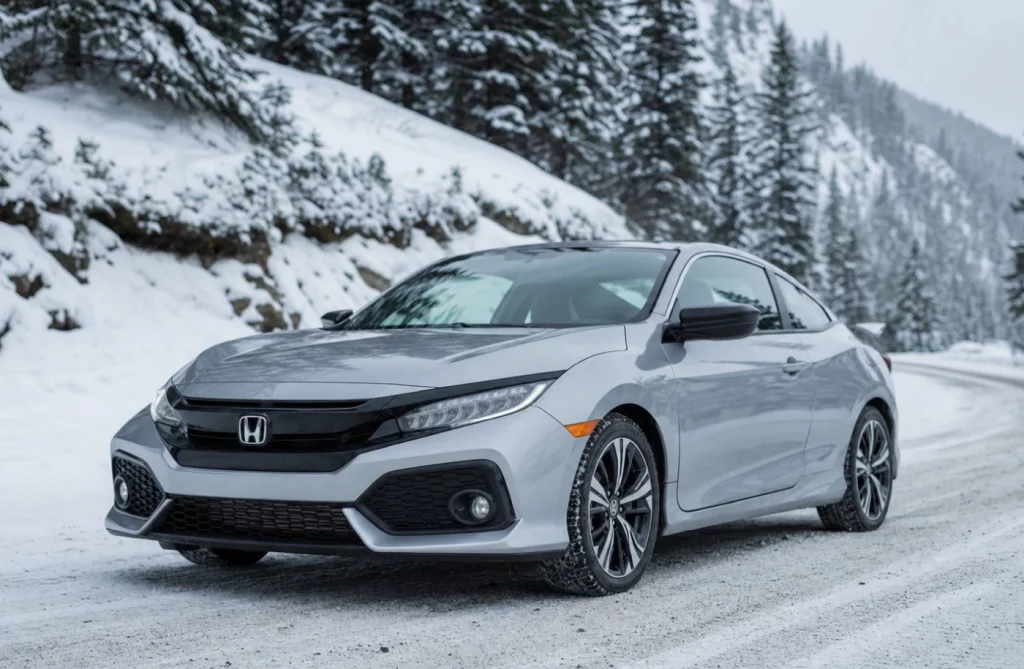
The answer depends on which metrics matter. On NHTSA scores alone, there is effectively no difference. On IIHS structural metrics, the 11th generation is measurably better — but the improvements matter most in specific crash scenarios. On IIHS headlight ratings, front crash prevention, and pedestrian protection, the 11th gen is clearly superior. On roof strength and occupant compartment intrusion, the 11th generation is in a different class.
This article compares the 10th and 11th generation Civic across every available safety metric, with the structural data needed to decide whether the new platform represents a meaningful safety upgrade.
NHTSA 5-Star Ratings — The Score Tie
Both generations earn 5 out of 5 overall for the sedan and hatchback. The 10th generation was the first Civic to achieve a perfect 5-star sweep across overall, frontal, side, and rollover categories. The 11th generation matches this with 29 out of 30 possible points across six sub-categories (NHTSA NCAP).
The practical difference is zero for NHTSA-rated scenarios. A buyer choosing between a 2021 Civic (10th gen) and a 2022 Civic (11th gen) will see the same 5-star overall rating for both. The 11th generation’s 29/30 score vs the 10th generation’s 30/30 perfect sweep is a rounding-level difference — both are AT the ceiling of the current NCAP protocol.
The coupe rating is not applicable for the 11th generation because Honda discontinued the 2-door Civic after 2020. The 10th gen coupe earned 5/5 overall with 4/5 rollover.
IIHS Small Overlap Front — The Largest Measurable Difference
The small overlap front test (25% driver-side offset at 40 mph) is where the 11th generation’s structural improvements are most visible. The 10th generation Civic already set a high bar with 3 cm of hinge pillar intrusion — a fourfold improvement over the 9th generation’s 12 cm. The 11th generation reduced intrusion further to 1 cm on the driver side and 0 cm on the passenger side (IIHS, 2016, 2022 Civic ratings).
The head injury metric (HIC-15) tells the same story: the 11th gen recorded 217 vs the 9th gen’s 394 (the 10th generation did not publish a single HIC-15 value for this test, but the 3 cm intrusion suggests significantly lower head risk than the 9th gen). The practical implication: in a severe small overlap crash, the 11th gen Civic’s cabin deforms approximately 67% less than the 10th gen, and the occupant is exposed to roughly half the head injury forces of the 9th gen.
The passenger-side small overlap test is also worth noting. The 10th generation did not have a passenger-side rating at launch — it was added for the 2018 sedan and 2020 hatchback after bumper modifications. The 11th generation earned Good on both sides from day one, with the same minimal intrusion profile (IIHS, 2022 Civic rating).
Roof Strength — The 31% Structural Improvement
Roof strength is the most objective structural metric available because the IIHS test protocol has not changed since 2009. The numbers:
| Metric | 10th Gen Sedan (2016–2021) | 11th Gen Sedan (2022–2025) | Change |
|---|---|---|---|
| Curb weight | 2,738 lbs | 2,845 lbs | +107 lbs (+3.9%) |
| Peak force | 15,829 lbs | 21,689 lbs | +5,860 lbs (+37.0%) |
| Strength-to-weight ratio | 5.78 | 7.62 | +1.84 (+31.8%) |
Sources: IIHS roof strength test results for 2016 and 2022 Civic 4-door sedan.
The 11th generation’s 7.62 SWR is the highest of any Civic generation ever tested — 31% higher than the 10th generation’s already-strong 5.78. This is not a score effect (both are Good, and both would remain Good until the SWR drops below 4.0), but it is a real structural safety margin. In a rollover event, the 11th gen’s roof can withstand 21,689 lbs before failure vs 15,829 lbs for the 10th gen. The additional 5,860 lbs of peak force capacity represents a meaningful improvement in upper body structural integrity — particularly relevant for multi-rollover scenarios where the roof is subjected to repeated impacts.
The peak force increase is also disproportionate to the curb weight increase (37% vs 3.9%), confirming that the improvement comes from structural design and materials, not simply adding mass.
Side Impact — Updated Test and Structural Reinforcement
The side impact comparison is complicated by IIHS protocol changes. The 10th generation was tested on the original side impact protocol and earned Good. The 11th generation has been tested on both the original protocol (Good, 2022–2024) and the updated protocol (Good, 2025–present).
The 10th generation’s original side test showed strong performance: B-Pillar stopped 17.5 cm short of the driver seat centerline, and injury measures were within Good thresholds for all occupant regions. Rear passenger torso deflection was 27 mm with 2.90 m/s deflection rate (IIHS, 2016 Civic side test data).
The 11th generation’s updated test data (2022–2024) is measurably different. The updated side test uses a heavier barrier and a higher impact speed. The 11th gen showed a 47 mm maximum torso deflection on the driver side with a 4.57 m/s deflection rate — still within Good thresholds but representing a more severe test condition. The 2025 model year received additional side structure improvements that reduced pelvic force from 5.1 kN to 3.7 kN (IIHS, 2022–2025 Civic test data).
The structural improvements that drive this performance are specific and documented: Honda added stiffer structures in the roof, side sill, B-pillar, doors, rear wheel arch, and C-Pillar for the 11th generation. A wheel arch stiffener was added specifically to reduce deformation in side collisions (Honda Newsroom, April 2021; Steel.org, 2022).
Airbag Technology — The Unquantified Difference
The 11th generation Civic introduced two airbag innovations that the 10th generation does not have, and these are not captured by any single star score or IIHS rating.
Front airbags. The 11th gen driver front airbag uses a donut-shaped structure designed to cradle and hold the head to reduce rotation — Honda’s first application of this technology in any vehicle. The passenger front airbag is a three-chamber design. Both are intended to reduce brain injury risk in angled frontal collisions by limiting head rotation and brain shearing forces. Honda described this as a “world’s first application” at launch (Honda Newsroom, April 29, 2021; Repairer Driven News, April 30, 2021).
Rear seat side airbags. The 11th generation was the first Civic to include rear outboard side airbags, bringing the total airbag count to 10 vs the 10th generation’s 6. This is relevant for families carrying rear passengers and for ride-share use (Honda Newsroom, 2021).
These features are not scored by either NHTSA or IIHS. IIHS does not test rear passenger airbag coverage in the side impact test (the rear passenger injury measures exist, but the presence of rear seat side airbags is not a rated variable). The practical benefit is real but difficult to quantify numerically.
Headlights — The Single Biggest Usability Difference
IIHS headlight ratings show a clear and testable improvement between generations. The 10th generation Civic earned Poor headlight ratings on the LX, Sport, EX, and EX-L trims across all model years. The halogen reflector projectors produced inadequate low-beam reach (under 100 meters on the right straightaway) with excessive glare. The only 10th generation Civics with Good headlights were the 2020–2021 Touring and Si trims built after November 2019, which used LED reflectors with high-beam assist (IIHS, 2016–2021 Civic headlight ratings).
The 11th generation improved to Acceptable across all trims, with standard LED projectors. Low-beam reach improved to approximately 130 meters on the straightaway. High-beam performance is better than the 10th gen but still below the top tier for the segment (IIHS, 2022–2025 Civic headlight ratings).
For a safety metric that affects every drive, the headlight improvement from Poor to Acceptable is one of the most practically significant differences between the two generations.
Moderate Overlap Front — Near-Identical
Both generations earned Good in the moderate overlap front test. The 10th generation tested at launch in 2016; the 11th generation tested in 2022 and also passed the updated moderate overlap test (2024 criteria adjustment for rear passenger measurements). The structural improvements (ACE body structure enhancement, new upper A-Pillar, side frame reinforcement) improved compatibility with larger vehicles, but the score outcome is the same (IIHS, 2016, 2022 Civic ratings; Honda Newsroom, 2021).
Front Crash Prevention — Standard Equipment Makes the Difference
Both generations can achieve Superior-rated front crash prevention when equipped with the full Honda Sensing suite. The key difference is standardization timing.
The 10th generation: Honda Sensing was optional on 2016–2018 LX, EX, EX-T, EX-L, and Touring trims. It became standard on all trims for the 2019 model year. This means a 2016–2018 Civic may or may not have automatic emergency braking depending on whether the original buyer selected the option.
The 11th generation: Honda Sensing is standard on every trim from day one, including collision mitigation braking, adaptive cruise control, lane keeping assist, road departure mitigation, and traffic sign recognition. Every 2022 or later Civic has the full suite (Honda Newsroom, 2021; IIHS, 2022 Civic ratings).
For a used-car buyer, this means any 11th gen Civic has standard AEB, while a 10th gen buyer must verify whether the specific car has Honda Sensing.
Pedestrian Protection — A New Dimension
The 11th generation includes pedestrian protection features that the 10th generation does not have, and that NHTSA and IIHS do not fully score in the same way. The 11th gen has a new front bumper beam safety plate designed to decrease leg injuries, and a Hood with an embossed inner structure designed to improve head protection performance for pedestrians (Honda Newsroom, April 2021). Euro NCAP data for the 11th gen Civic shows 75% pedestrian protection scoring (31.7 points), but no comparable Euro NCAP score exists for the 10th generation in the US-spec configuration (Wikipedia, 11th gen Civic article).
The Structural Engineering Behind the Improvement
The 11th generation’s safety improvements are the direct result of specific structural engineering changes that Honda has documented in detail. These changes explain why the roof strength, small overlap intrusion, and side impact performance improved even though the NHTSA star scores did not change.
Body rigidity. The 11th generation body is 8% stiffer in torsion and 13% stiffer in bending than the 10th generation (Honda Newsroom, April 29, 2021). A separate presentation by Honda at a steel industry conference cited 19% torsional rigidity improvement (Steel.org, 2022) — the difference may reflect a specific trim or body configuration.
Materials distribution. The 11th generation uses 29% Advanced High Strength Steel (Cold Rolled), 19% Very High Strength Steel, and 16% Ultra High Strength Steel. The 10th generation used aluminum for the front bumper beam and composite for the lower front bulkhead. The 11th generation applies 10 times more structural adhesive to critical body joints than the 10th generation (Steel.org, 2022).
Specific structural additions (Steel.org, 2022):
- New upper A-pillar structure designed to route crash energy around the cabin in angled frontal collisions
- Reinforced side frame end at the lower firewall
- New dashboard cross member to reduce foot area deformation
- New cross-section front bumper beam to minimize collapse and allow shorter overhang
- Wheel arch stiffener added to reduce side collision deformation
- Laser-brazed roof joint (replaces traditional roof molding, adds structural rigidity)
- Aluminum front Subframe (new lightweight design with truss and rib structure)
- Tailgate changed from steel to resin (20% weight reduction for hatchback, lowering center of gravity)
Complete 10th Gen vs 11th Gen Safety Comparison Table
| Metric | 10th Gen (2016–2021) | 11th Gen (2022–2025) | Winner |
|---|---|---|---|
| NHTSA overall (sedan/hatch) | 5/5 | 5/5 (29/30 pts) | Tie |
| NHTSA overall (coupe) | 5/5 (4/5 rollover) | Civic coupe discontinued | N/A |
| NHTSA rollover (sedan/hatch) | 5/5 | 5/5 | Tie |
| IIHS small overlap driver | Good — 3 cm intrusion | Good — 1 cm intrusion | 11th gen |
| IIHS small overlap passenger | Good (2018+ sedan, 2020+ hatch) / Not tested (2016–17) | Good from launch — 0 cm intrusion | 11th gen |
| IIHS moderate overlap front | Good (original test) | Good (original + updated test) | Tie |
| IIHS side impact | Good (original protocol) | Good (original + updated protocol) | 11th gen (tested harder) |
| IIHS roof strength (SWR) | 5.78 (15,829 lbs) | 7.62 (21,689 lbs) | 11th gen (+31%) |
| IIHS headlights | Poor (most trims) / Good (late 2020+ Touring/Si) | Acceptable (all trims) | 11th gen |
| IIHS front crash prevention | Superior (2019+ with standard Honda Sensing) | Superior (standard on all trims) | 11th gen (standardization) |
| Airbag count | 6 | 10 (first rear side airbags on Civic) | 11th gen |
| Driver front airbag tech | Conventional | Donut-shaped head-cradling (world’s first) | 11th gen |
| Body torsional rigidity | Baseline | +8% to +19% (source dependent) | 11th gen |
| Body bending rigidity | Baseline | +13% | 11th gen |
| ACE body structure generation | Next-generation ACE | Enhanced ACE for larger-vehicle compatibility | 11th gen |
| Structural adhesive usage | Minimal | ~10x more than 10th gen | 11th gen |
| Pedestrian protection | Standard hood | Embossed hood + new bumper beam safety plate | 11th gen |
| Wheelbase | 106.3 in | 107.7 in (+1.4 in) | 11th gen |
Sources: IIHS vehicle ratings (iihs.org/ratings) for each model year. NHTSA NCAP 5-Star Safety Ratings. Honda Newsroom (April 29, 2021). Steel.org (2022) Honda Civic structural presentation. Repairer Driven News (April 30, 2021).
How Much Safer Did the New Platform Actually Get?
The answer splits into three tiers.
Tier 1 — No meaningful difference (NHTSA scores, moderate overlap front, side impact on the original protocol). On the standard NCAP star ratings, the 10th and 11th generation Civics are equivalent. Both are 5-star cars. The moderate overlap front result is Good on both. The original side impact protocol does not distinguish between them. A buyer who cares only about NHTSA stars sees no difference.
Tier 2 — Measurable but situational difference (small overlap intrusion, roof strength, airbag technology). The 11th generation’s structural improvements are real and measurable, but they matter most in specific crash scenarios. The 31% higher roof SWR matters in a rollover — a scenario that affects a small percentage of real-world crashes. The 67% reduction in small overlap intrusion matters in a specific type of frontal collision that accounts for roughly 25% of serious frontal crash injuries. The new airbag technology matters in angled frontal crashes where brain rotation is a risk factor. These are not everyday improvements, but they are meaningful in the crashes that cause the most serious injuries.
Tier 3 — Clear everyday improvement (headlights, front crash prevention standardization, pedestrian protection). The headlight improvement from Poor to Acceptable affects every night drive. The standardization of Honda Sensing means every 11th gen Civic has AEB, while a 10th gen buyer must verify. The pedestrian protection features affect a real-world risk category. These are the differences that affect the driving experience and crash avoidance on a daily basis.
10th Gen vs 11th Gen Safety — Quick Reference:
☐ NHTSA scores: identical 5/5 overall for sedan and hatchback. No difference for NHTSA-rated scenarios (NHTSA NCAP, 2016–2025)
☐ IIHS small overlap: 11th gen reduces cabin intrusion by 67% (3 cm → 1 cm driver, 0 cm passenger). Passenger-side covered from launch (IIHS)
☐ Roof strength: 11th gen SWR 7.62 vs 10th gen 5.78 — 31% higher peak force capacity (IIHS, 2016, 2022)
☐ Headlights: 11th gen Acceptable across all trims vs 10th gen Poor on most trims. The most practically significant difference (IIHS)
☐ Airbags: 10 total vs 6. Rear seat side airbags are a Civic first. New donut driver airbag and 3-chamber passenger airbag (Honda Newsroom, 2021; Repairer Driven News)
☐ Body structure: 8–19% torsional rigidity improvement, 13% bending improvement, ~10x more structural adhesive. New upper A-pillar, side frame, dashboard cross member, wheel arch stiffener (Honda Newsroom; Steel.org, 2022)
☐ ACE body: enhanced for larger-vehicle compatibility — new upper A-pillar structure routes crash energy around cabin (Honda Newsroom)
☐ Front crash prevention: standard on all 11th gen trims. 10th gen optional on 2016–2018, standard starting 2019 (IIHS)
☐ Pedestrian protection: 11th gen adds embossed hood + bumper beam safety plate (Honda Newsroom, 2021)
☐ Side impact: both Good, but 11th gen tested on the updated (harder) protocol. 2025+ models added side structure improvements (IIHS, 2022–2025)
☐ Answer: 11th gen is measurably safer on structural and equipment metrics, but the NHTSA star rating is identical. The improvements matter most in rollovers, small overlap crashes, angled frontal impacts, and night driving — not in everyday NHTSA-scored scenarios