

Honda Civic Curb Weight Uncovered — 11th Gen vs 10th Gen
There is a persistent narrative that the 11th generation Honda Civic Si got heavy. The numbers tell a different story. The 11th gen Si sedan weighs 2,952 lbs according to Honda’s official specifications (source: Honda Newsroom, 2022 Civic Si specs). The 10th gen Si sedan weighs 2,906 lbs (source: Honda Newsroom, 2017 Civic Si specs). The difference is 46 lbs — roughly the weight of a gallon of gas and a backpack. Not the 100+ pound jump that forum threads and comment sections routinely claim.
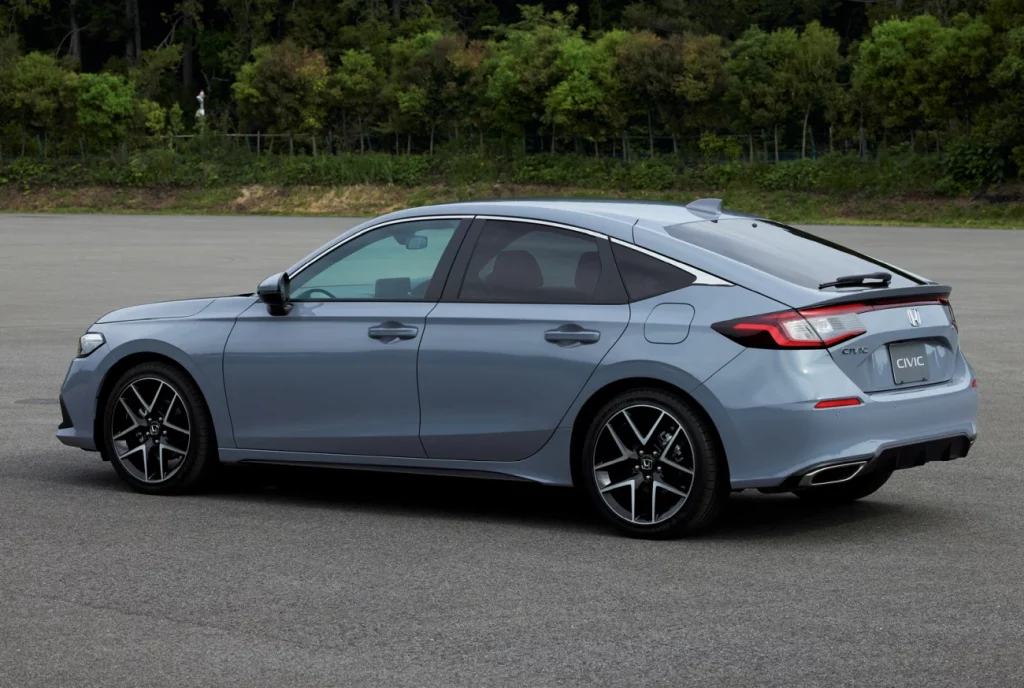
The narrative of weight gain comes partly from comparing non-Si trims across generations. A 10th gen Civic LX coupe with a manual transmission weighed 2,739 lbs (source: CivicXI forum, 2018 LX coupe specs). An 11th gen Civic Sport Touring hatchback with a CVT weighs 3,102 lbs. That is a 363 lb difference — but it reflects trim and body style divergence, not generational bloat. The Si stayed lean because Honda did not give it a moonroof delete option, did not add hybrid batteries, and kept the manual transmission, which is lighter than the CVT.
Curb Weight Comparison — All Generations
| Generation | Model | Curb Weight | Weight Dist. (F/R) |
|---|---|---|---|
| 8th Gen (2006–2011) | Si Sedan | ~2,750 lbs | ~62/38 |
| 9th Gen (2012–2015) | Si Sedan | ~2,875–2,900 lbs | ~61/39 |
| 10th Gen (2017–2021) | Si Sedan | 2,906 lbs | 60.3 / 39.7 |
| 11th Gen (2022–present) | Si Sedan | 2,952 lbs | 60.6 / 39.4 |
The Si gained 46 lbs over four generations. The 10th gen gained 31 lbs over the 9th gen. The 9th gen gained roughly 125–150 lbs over the 8th gen. The largest single jump was between the 8th and 9th gen, when Honda moved from the K20 to the K24 engine and added significantly more sound deadening and structural reinforcement. The jump from the 10th to the 11th gen is the smallest in the Si’s recent history.
Where the Weight Actually Went — 11th Gen vs 10th Gen
The 46 lb increase between generations did not come from a single source. Here is what changed and what it weighed:
Chassis rigidity. The 11th gen uses additional structural adhesive, laser-brazed roof joints, and extra crossmembers in the floor and rear panel. Honda claims a roughly 8% increase in torsional rigidity compared to the 10th gen (source: Honda Newsroom, 2022 Civic body structure release). The added bracing and adhesive weight accounts for an estimated 15–20 lbs of the gain.
Interior refinement. The 11th gen added sound-deadening material in the firewall, floorpan, doors, and rear wheel wells. The cabin is measurably quieter than the 10th gen AT highway speeds. Sound deadening materials — butyl sheets, acoustic foam, mass-loaded vinyl — are heavy. Estimated contribution: 10–15 lbs.
Safety equipment. The 11th gen Si added rear cross-traffic alert, blind spot monitoring with radar sensors, and a wider side-curtain airbag deployment zone. The extra sensors, wiring, and control modules add roughly 5–8 lbs. The 10th gen Si did not have rear cross-traffic alert or blind spot monitoring from the factory (source: Honda specifications comparison, 2020 vs 2022 Si).
Heavier brake components. The 11th gen Si uses larger diameter front rotors than the standard Civic. The 10th gen Si shared the same rotor size as the non-Si model but with upgraded pads. The larger rotors, caliper brackets, and additional Brake Fluid volume add roughly 5 lbs.
Revised suspension hardware. The 11th gen Si uses new damper tuning with stiffer rear Bushings and a thicker rear stabilizer bar. The hardware changes add negligible weight — estimated 2–3 lbs.
The remaining difference falls within normal production variance between model years. None of these changes are gratuitous weight gain. Every pound serves a measurable purpose.
Performance Impact of the Weight Difference
Forty-six pounds on a car that already weighs roughly 2,900 lbs is a 1.6% increase. In isolation, that margin is undetectable behind the wheel. But the 11th gen also lost 5 HP (from 205 to 200), which shifts the power-to-weight ratio unfavorably by a larger margin than the weight alone.
| Metric | 10th Gen Si (2020) | 11th Gen Si (2022) | Source |
|---|---|---|---|
| 0–60 mph | 6.4 sec | 6.8 sec | Car and Driver |
| Quarter mile | 14.9 sec @ 93 mph | 15.1 sec @ 94 mph | Car and Driver |
| 70–0 mph braking | 165 ft | 160 ft | Car and Driver |
| Skidpad | 0.97 g | 0.94 g | Car and Driver |
| Power-to-weight | 14.2 lbs/hp | 14.8 lbs/hp | Calculated |
The 0.4-second slower 0–60 time is attributable to both the weight gain and the horsepower loss. The power-to-weight ratio went from 14.2 to 14.8 lbs per horsepower — a 4.2% penalty. The engine’s torque peak moved 300 rpm lower (2,100 to 1,800 rpm), which helps daily driving feel but does not help the stopwatch.
Braking improved by 5 feet despite the extra weight, because Honda fitted larger front rotors on the 11th gen Si. The 10th gen Si used 12.3-inch front rotors — the same size as the non-Si Civic — with performance pads. The 11th gen Si uses larger rotors specific to the Si, giving it more thermal capacity (source: Car and Driver technical specs, 2020 vs 2022 Si).
Skidpad grip dropped from 0.97 g to 0.94 g. That is within test-to-test variation on the same tire compound, but the extra weight and the 0.3-inch wider front track did not compensate for the mass shift. Motor Trend measured the same 0.94 g on its 2022 Si test (source: Motor Trend, 2022 Si first test).
Does Heavier Mean Safer?
Not automatically. A heavier car is not inherently safer in a crash if the structure is the same. What matters is the structural design, not the weight itself.
The 11th gen Civic earned an IIHS Top Safety Pick+ rating, the highest award available in 2022. The 10th gen Civic also earned a Top Safety Pick+ in its final model years, though with different headlight requirements (source: IIHS ratings, 2020 vs 2022 Honda Civic). The 11th gen improved in two areas that contributed to the rating: standard headlight performance and standard front crash prevention across all trims, not just higher trims.
| Safety Aspect | 10th Gen | 11th Gen | What Changed |
|---|---|---|---|
| IIHS Top Safety Pick+ | Yes (later years) | Yes | 11th gen achieved it from launch |
| Small overlap front (driver) | Good | Good | Equivalent structure |
| Small overlap front (passenger) | Good | Good | Equivalent structure |
| Blind spot monitoring | No (LaneWatch camera) | Yes (radar) | Adds sensors, wiring, weight |
| Rear cross-traffic alert | No | Yes | New feature on 11th gen |
The safety improvement between generations comes from the addition of active safety features and the availability of better headlights, not from the weight gain. The structural crashworthiness — small overlap, moderate overlap, side impact, roof strength — is rated Good on both generations. The 46 extra pounds did not make the car safer. The extra sensors and better headlights did.
In a collision between an 11th gen Si and a 10th gen Si, the outcome would be determined by the specific impact geometry, not the weight difference. A 2017 Civic Si and a 2024 Civic Si share the same fundamental crash structure architecture. The 11th gen has additional structural adhesive in the body, which helps maintain cabin integrity in offset impacts, but this is a design improvement, not a mass-driven one.
Real-World Driving Feel — Can You Feel the Weight?
Behind the wheel, the 46 lb difference between the 10th and 11th gen Si is undetectable. The factors that change the driving feel are not the weight but the steering calibration, the suspension tuning, and the rev-match system.
The 10th gen Si has heavier steering effort in Sport mode and a sharper initial turn-in response. The front-end feels lighter and more eager to rotate. The 11th gen Si uses a revised Steering Rack with different assistance mapping — it feels slightly more isolated on center, though on-center precision is improved. The car does not feel heavier; it feels more refined.
The 8th gen Si, at roughly 2,750 lbs, is a different story. That car feels genuinely lighter in every maneuver — turn-in, braking, transitional response. A 200 lb difference (2,750 vs 2,950) is something a driver feels on the first corner. The 8th gen’s K20 engine with 8,000 rpm redline and cable-operated throttle (2006–2008) delivers a different sensory experience entirely. If the question is “should I prioritize low weight in a Civic Si,” the answer is the 8th gen, not the 10th or 11th.
Non-Si Curb Weight Breakdown — Where the Real Gains Happened
The 46 lb Si gain is small. The non-Si lineup tells a more dramatic story. The 11th gen Civic sedan ranges from 2,877 lbs (LX CVT) to 3,077 lbs (Touring CVT) — a 200 lb spread across trims. The 10th gen Civic sedan ranged from roughly 2,770 to 2,970 lbs depending on trim. The heaviest 11th gen trims (Touring, Sport Touring Hybrid at 3,252 lbs) are carrying equipment weight — moonroof, power seats, premium audio amps, acoustic glass, hybrid battery — that the Si never had.
| 11th Gen Trim | Curb Weight | Weight vs LX | Key Differences |
|---|---|---|---|
| LX Sedan CVT | 2,877 lbs | — | Base trim, no moonroof, smaller wheels |
| Sport Sedan CVT | 2,935 lbs | +58 lbs | Moonroof, larger wheels, additional speakers |
| Si Sedan Manual | 2,952 lbs | +75 lbs | LSD, larger brakes, sport suspension, manual transmission |
| Touring Sedan CVT | 3,077 lbs | +200 lbs | Moonroof, Bose audio, power seats, acoustic glass |
| Sport Touring Hybrid CVT | 3,252 lbs | +375 lbs | Hybrid battery + motor, all luxury content |
The Si sits in the middle of the weight range. It is heavier than the LX and Sport because of the limited-slip differential, larger brakes, and sport suspension. It is lighter than the Touring and Hybrid because it lacks a moonroof, power seats, premium audio, and a hybrid system. If Honda had given the Si a moonroof, it would weigh roughly 2,990 lbs — within 15 lbs of the Touring.
Quick Reference Checklist
11th gen Si is not significantly heavier than the 10th gen: 2,952 lbs vs 2,906 lbs — 46 lbs. The narrative of “fat Si” comes from comparing non-Si trims, not Si to Si.
The 8th gen Si (2,750 lbs) is the lightest modern Si: The jump from 8th to 9th gen (+125–150 lbs) was the largest single gain in Si history. The 10th to 11th gen jump is the smallest.
Heavier does not mean safer: Both generations have Good IIHS crashworthiness ratings. The 11th gen’s safety advantage comes from active safety features and better headlights, not weight.
The 11th gen brakes better despite the weight: 70–0 mph in 160 ft vs 165 ft, thanks to larger front rotors — a 5 ft improvement.
0–60 is 0.4 sec slower on the 11th gen: The weight gain plus the 5 hp drop equals a 4.2% power-to-weight penalty. The impact is measurable but modest.
The Si is still lighter than the Touring trims: At 2,952 lbs, it is 125 lbs lighter than a Touring CVT — no moonroof and no power seats save real weight.
Tuning does not change the weight: A tuned 11th gen Si is still a 2,952 lb car. Weight reduction (wheels, seats, battery, exhaust) is the only way to close the gap to the 10th gen’s power-to-weight ratio.
On the road, the difference is in steering and suspension tuning, not weight: The 11th gen is quieter and more refined. The 10th gen is sharper and more raw. Neither feels heavier in isolation.