

For decades, the Toyota Prius has been the undisputed king of fuel economy. It was the car that made hybrids mainstream, the car that said “I care about the planet” without needing a plug. But the 2026 Honda Civic Hybrid has arrived to challenge that throne — and it’s not playing nice. With 200 horsepower, 232 lb-ft of torque, and nearly 50 mpg, the Civic Hybrid is the most compelling hybrid Honda has ever built.
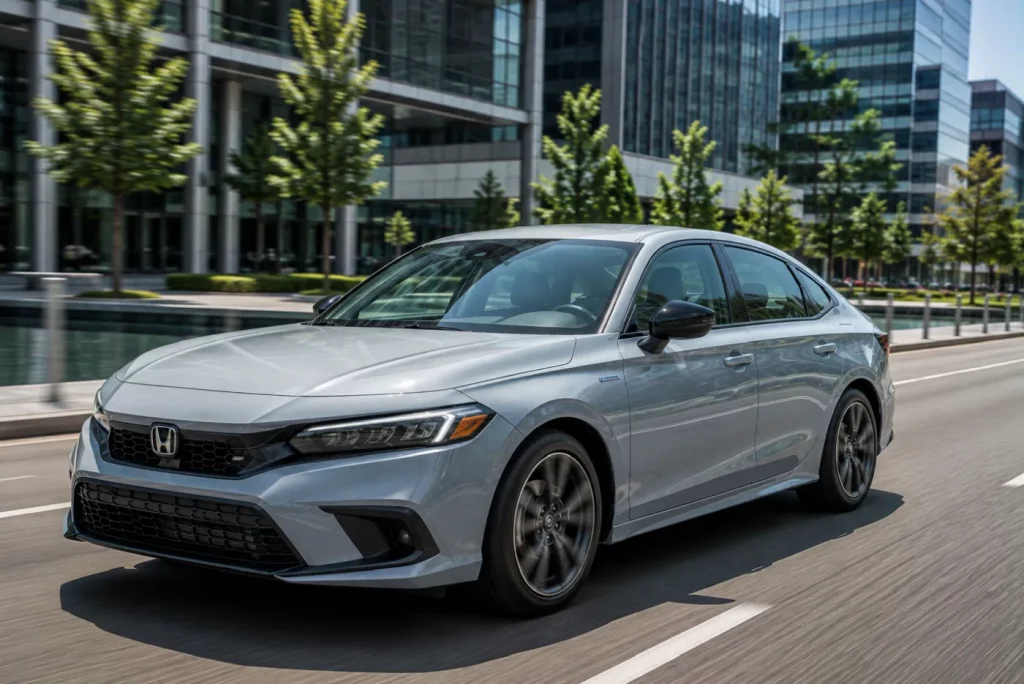
The question isn’t which car is more efficient. It’s which car is better to live with every day. The Prius still leads in fuel economy, but the Civic Hybrid offers something the Prius cannot match: driving engagement without guilt. As one comparison put it, the Civic Hybrid “drives like a car that happens to be a hybrid. Steering is precise, the chassis is composed, and the 200-horsepower powertrain delivers with genuine enthusiasm”.
This isn’t a comparison about which hybrid is greener. It’s a comparison about which hybrid makes more sense for the way you actually drive.
The Toyota Prius LE FWD remains the fuel-economy champion AT 57 mpg combined, with available all-wheel drive and a striking design. The Honda Civic Hybrid delivers a more engaging driving experience with 200 hp, 232 lb-ft of torque, and a 0-60 time of 6.1-6.3 seconds — while still achieving 49 mpg combined. The Civic is also quicker than the Civic Si. Choose the Prius for maximum MPG and AWD; choose the Civic for performance, space, and daily driving enjoyment. The $337 fuel-cost gap over five years is smaller than most buyers expect.
Fuel Economy — The Numbers That Matter
Let’s start with the obvious. The Toyota Prius is still the most fuel-efficient non-plug-in hybrid you can buy. The 2026 Prius LE with front-wheel drive achieves 57 mpg city, 56 mpg highway, and 57 mpg combined. That’s the highest combined fuel economy of any car sold without a plug.
The Honda Civic Hybrid sedan achieves 50 mpg city, 47 mpg highway, and 49 mpg combined. The hatchback version drops slightly to 48 mpg combined. The Civic Hybrid gives up about 8 mpg combined to the Prius LE.
But here’s where the comparison gets interesting. The Prius LE’s 57 mpg rating applies only to the base LE trim. Move to the XLE, Nightshade Edition, or Limited with 19-inch wheels, and it drops to 52 mpg combined. Add all-wheel drive to those trims, and it falls to 49 mpg combined — which is level with the Civic Hybrid sedan.
In other words, three of the four Prius trims with all-wheel drive fitted are no more efficient than a Honda that costs $350 less and makes more power.
| Model | Combined MPG | City MPG | Highway MPG |
|---|---|---|---|
| 2026 Prius LE FWD | 57 | 57 | 56 |
| 2026 Prius XLE FWD | 52 | 52 | 52 |
| 2026 Prius LE AWD | 54 | 53 | 54 |
| 2026 Prius XLE AWD | 49 | 49 | 50 |
| 2026 Civic Hybrid Sedan | 49 | 50 | 47 |
| 2026 Civic Hybrid Hatchback | 48 | 50 | 45 |
Real-World Observations: The Prius’s EPA ratings are optimistic. Testing has recorded a front-wheel-drive Nightshade averaging 44.4 mpg across a varied week and 39.2 mpg on a mountain loop driven in Sport mode. Meanwhile, a Civic Hybrid hatchback on a 200-mile loop returned 52 mpg — bettering its EPA estimate. The Civic’s figures appear closer to what owners actually achieve.
The $337 Question — What the Fuel Gap Actually Costs
Over 60,000 miles, the Prius LE saves $687 and 172 gallons against a Civic Hybrid sedan. The Civic claws $350 of that back at the dealership, which leaves $337 across five years. That works out to $67 a year, or less than a single tank of gas.
Anyone choosing between these two on running cost is choosing on a rounding error, and the honest reading is that the money is a tie and the cars are not. The real-world cost difference between 49 and 57 mpg over 15,000 annual miles is roughly $150 to $200 per year.
Choose any Prius trim other than the LE and most of that saving disappears.
Performance — Where the Civic Changes the Conversation
This is where the Civic Hybrid completely redefines the hybrid category. The Civic’s 2.0-liter hybrid system produces 200 horsepower and 232 lb-ft of torque — more torque than the Civic Si‘s 192 lb-ft.
The Civic Hybrid is genuinely quick. MotorTrend recorded a 0-60 time of just 6.3 seconds for the hatchback. Hagerty clocked it at 6.1 seconds. Car and Driver recorded 6.2 seconds for the sedan. That’s faster than the Honda Civic Si.
The Prius, by comparison, is no slouch. The fifth-generation Toyota Hybrid System delivers 194 horsepower (196 HP with AWD) and a 0-60 time of 7.1 seconds in Car and Driver testing. That’s a massive improvement over previous Prius generations — the old model took 10.5 seconds to reach 60 mph — and more than adequate for daily driving. But it’s still a full second slower than the Civic Hybrid.
The Civic’s 232 lb-ft of torque is the key difference. Electric torque is instant, and the Civic’s system delivers it immediately from 0 RPM. The Prius’s 139 lb-ft of engine torque (plus electric motor torque) simply can’t match the Civic’s shove.
- 200 hp / 232 lb-ft torque
- 0-60: 6.1-6.3 seconds
- 49 mpg combined (sedan)
- FWD only
- Sportier driving character
- 194 hp / 139 lb-ft torque
- 0-60: 7.1 seconds
- 57 mpg combined
- AWD available
- More efficient, less engaging
Handling — The Hybrid That’s Actually Fun
The Civic Hybrid isn’t a sports car, but it’s significantly more engaging than the typical hybrid commuter. The 11th-generation Civic platform is stiff and composed, and the hybrid’s additional weight (from the battery pack) is managed with revised springs and dampers. The steering is precise and well-weighted, body roll is minimal, and the chassis communicates clearly.
The Prius has shed its reputation as automotive broccoli. The current generation is lower, wider, and meaningfully more engaging than any Prius before it. With 194 horsepower and a wider track, it rides well and handles with more confidence than most people expect. But the steering is lighter, the chassis is softer, and the overall experience is more focused on comfort than engagement.
As one comparison noted: “The Civic Hybrid drives like a car that happens to be a hybrid. Steering is precise, the chassis is composed, and the 200-horsepower powertrain delivers with genuine enthusiasm. It’s the one you buy if you want efficiency without giving up the feeling that driving should be fun”.
Interior and Practicality
This is where the Civic Hybrid pulls ahead. The Civic’s interior is spacious and well-designed, with 2.6 inches more rear legroom than the Prius. The cabin is quiet, the seating position is natural, and the visibility is excellent.
The Civic Hybrid hatchback offers 24.5 cubic feet of cargo space behind the rear seats. The Prius LE offers 23.8 cubic feet, but higher trims with 19-inch wheels drop to 20.3 cubic feet. The sedan keeps its full 14.8-cubic-foot trunk because the battery doesn’t intrude into the cargo area.
The Prius’s dramatic roofline creates visibility issues. The windshield has a steep angle, creating large blind spots, and the instrument panel is positioned above the steering wheel, which can obscure the speedometer for some drivers. The Civic’s more conventional design provides better visibility and a more user-friendly cabin.
All-Wheel Drive — The Prius’s Secret Weapon
This is the one area where the Civic simply cannot compete. The Prius offers all-wheel drive for $1,400, using a rear electric motor rather than a driveshaft, on any Prius trim. The Civic Hybrid is front-wheel drive only.
If you live in an area with winter weather, the Prius AWD is a genuine advantage that the Civic cannot match. The AWD Prius LE still achieves 54 mpg combined — barely behind the Civic’s 49 mpg.
Price and Value
The Civic Hybrid starts at $29,395 for the Sport Hybrid sedan, with the Sport Touring Hybrid hatchback reaching $33,595. The Prius LE starts at $29,745.
The Civic Hybrid is slightly more expensive than the base Prius, but it delivers more horsepower, better handling, and a more practical interior. The Prius is slightly cheaper, more efficient, and offers AWD — but gives up performance and refinement.
Which Version to Buy
Toyota’s answer is the LE at $29,745 and there is no second place on the numbers. It is the only Prius rated 57 mpg combined, and it also holds the most cargo in the range at 23.8 cubic feet.
Honda’s answer depends on the body rather than the trim. The sedan keeps a 14.8-cubic-foot trunk and the 49-mpg rating; the hatchback gives up 1 mpg and gains 9.7 cubic feet. If cargo matters, the hatchback is the better car and it beats every Prius on volume.
Final Verdict — Which Hybrid Should You Buy?
Buy the Toyota Prius if:
- Maximum fuel economy is your top priority
- You want all-wheel drive for winter conditions
- You value the striking exterior design
- You don’t need a sedan body style
- You’re okay with less rear headroom and less driving engagement
Buy the Honda Civic Hybrid if:
- You want a genuinely engaging daily driver
- You need more passenger and cargo space
- You want a sedan or a more practical hatchback
- You value a quieter, more polished cabin
- You can live with FWD and slightly lower MPG
The Toyota Prius is the most fuel-efficient car you can buy without a plug. The Honda Civic Hybrid is the best hybrid to drive. Choose based on what matters more to you: efficiency or enjoyment.
FAQ — Civic Hybrid vs Toyota Prius
Which is more fuel-efficient, the Civic Hybrid or the Prius?
The Toyota Prius LE FWD is more fuel-efficient at 57 mpg combined, compared to the Civic Hybrid’s 49 mpg combined. The Prius LE AWD still achieves 54 mpg, and the Civic Hybrid is the least efficient of the two. However, the Civic Hybrid is still remarkably efficient for a car with 200 hp.
Which hybrid is faster, the Civic Hybrid or the Prius?
The Honda Civic Hybrid is significantly faster. It achieves 0-60 mph in 6.1-6.3 seconds with 200 hp and 232 lb-ft of torque. The Prius LE FWD is slower at 7.1 seconds with 194 hp. The Civic Hybrid is quicker than the Honda Civic Si.
Does the Civic Hybrid have all-wheel drive?
No — the Honda Civic Hybrid is front-wheel drive only. The Toyota Prius offers all-wheel drive for $1,400 on any trim using a rear electric motor. If you need AWD for winter driving, the Prius is the only choice.
Which hybrid has more cargo space?
The Civic Hybrid hatchback offers 24.5 cubic feet behind the rear seats, compared to 23.8 cubic feet for the Prius LE. The gap widens against higher Prius trims with 20.3 cubic feet. The Civic also offers a sedan body style with a 14.8-cubic-foot trunk.
Which hybrid has more rear seat space?
The Civic Hybrid has a 2.6-inch advantage in rear legroom over the Prius. The Prius’s dramatic roofline also reduces rear headroom, making the Civic a better choice for taller passengers.
Is the Prius worth the extra money over the Civic Hybrid?
The Prius LE starts at $29,745 compared to the Civic Hybrid’s $29,395 — the Civic is slightly cheaper. The Prius offers better fuel economy and available AWD, while the Civic offers better performance, more space, and a quieter cabin. The better value depends on your priorities.
Which hybrid is more reliable?
Both Honda and Toyota have excellent reputations for reliability. Toyota’s hybrid system is more proven with decades of Prius reliability data. Honda’s hybrid system is newer but built on the company’s extensive hybrid experience.
Does the Prius have a plug-in hybrid version?
Yes — the Prius is also available as a plug-in hybrid (Prime) with 220 horsepower and a 6.6-second 0-60 time. The plug-in version offers electric-only range but costs more than the standard hybrid.
Which hybrid is better for long road trips?
The Civic Hybrid is quieter at highway speeds and more comfortable for long drives, with more passenger space and a more polished cabin. The Prius’s efficiency advantage means fewer fuel stops, but the Civic is the better road-trip car overall.
Should I buy a Civic Hybrid or a Prius?
Buy the Prius if you want maximum fuel economy, available all-wheel drive, and a striking design. Buy the Civic Hybrid if you want a more engaging driving experience, more passenger and cargo space, and a quieter cabin. The Prius is the more efficient choice; the Civic is the more enjoyable daily driver.